Omni-channel Automated Warehouse

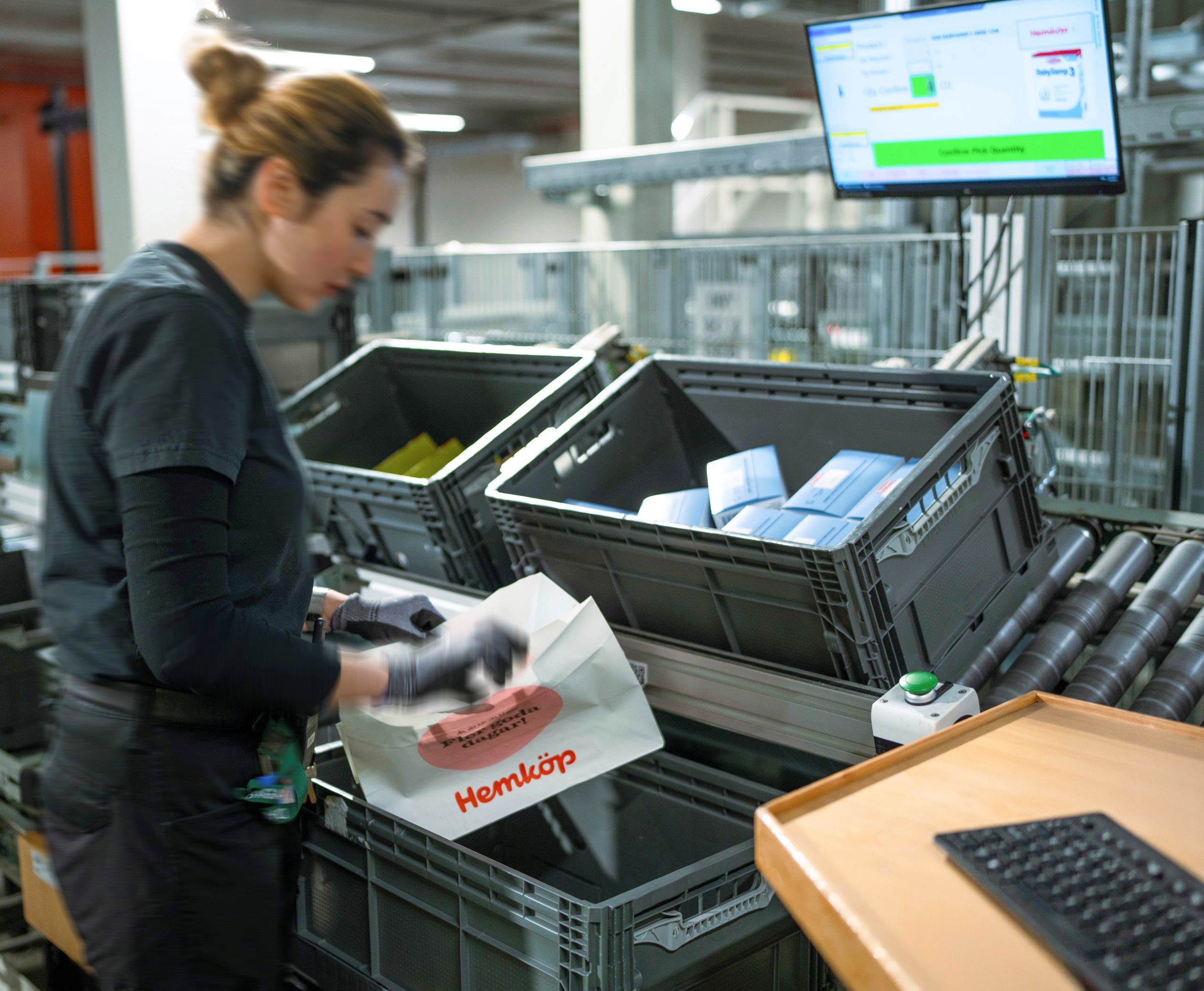
40km northwest of Stockholm is the site of an innovative logistics centre. The food retailer Axfood and its partner WITRON designed and implemented a leading-edge omni-channel DC. It will supply 1500 stores and thousands of consumers from a range of 22,000 dry, fresh, and frozen items.

“Together with WITRON, we have implemented a system that sets standards in the logistics world due to its efficiency, quality, and cost effectiveness – and despite additional challenges such as the Covid pandemic and the war in Ukraine, it went into operation on schedule”, says Raymond Lundmark, Head of Logistics at Dagab, Axfood’s purchasing and logistics company. “All parties involved in the project can be very proud of this. We have shown what is possible with passion and outstanding teamwork,” agrees WITRON Project Manager Holger Weiß.

It is uncommon for WITRON to speak with such admiration about a project that is ‘functionally extremely demanding.’ But when Weiß talks about ‘his’ Axfood logistics centre, the scale of the implemented task becomes clear. “We have never seen such an interplay of systems, IT, and mechanics of this magnitude and intensity. We are experiencing omni-channel logistics at its best and in terms of business process integration, it is the most challenging project in our history to date.”

Impressive Figures

The figures are truly impressive: 103,000 square meters of logistics space, more than 22,000 different products – frozen pizza, fruits, vegetables, convenience products, sausages, meat, bread, cheese, pasta, cosmetics, and toys are stored in temperature zones ranging from -26 degrees Celsius to +18 degrees Celsius. More than 1.6 million picked units leave the DC every day.

Three years ago, the facility had not yet been completed. Nicholas Pettersson, the former president of Dagab, was already certain: “WITRON will make our vision of an omni-channel warehouse come true.” He and his team travelled around the world, looked at many reference solutions, and finally awarded the order. “We were very pleased with the statement and, to be honest, we also felt a bit of pressure,” laughs Weiß who, as the responsible project manager, supported the project right from the design phase.

Axfood is the second-largest food retailer in Sweden and has repeatedly faced capacity problems in the logistics area in recent years due to its growth. “The existing warehouses, especially the manual ones, were permanently operating at full capacity,” explains Lundmark. Axfood wanted to establish a long-term strategic position for the future. This also included safeguarding growth and meeting their own demands for high quality in logistics in terms of customer service across all different distribution channels. Omni-channel was the buzzword.

Same Automated Warehouse Technology

The online business has access to the same inventory as the store business. Processes that would have to be handled in two separate sectors and subsequently consolidated with conventional warehouse logistics at great expense are now managed in a single integrated warehouse logistics system. The result is significant efficiency, performance, and quality increases of the picking and packing processes as well as considerable investment savings. At WITRON, this is referred to as OCM.

“OCM stands for the integration of all horizontal and vertical players in an omni-channel network – encompassing suppliers, logistics centres, transportation, and the various distribution channels such as stores, home delivery, click + collect, and drives,” explains WITRON CEO Helmut Prieschenk. The objective is to create a high-performance, end-to-end retail logistics network where all nodes communicate with each other continuously and optimize each other. “The decisive factor here is that this project was not a pure automation or supply chain project, but a corporate transformation project. Consequently, the concepts of parallel worlds and self-sufficient silos are no longer viable options. The current focus is on achieving comprehensive cross-company optimization. Based on this, Axfood’s project goals – high cost-efficiency, high delivery reliability, best delivery quality, and assortment expansion – can be implemented ‘end-to-end’ across the group,” he adds.

Closely Interlinked

WITRON implemented a module mix that is closely interlinked: the OPM for classic store delivery, the CPS for large-volume and bulky goods, and the AIO in the small parts warehouse. In addition, a fully automated shipping buffer optimizes the entire shipping process in the store on a just-in-time basis. A sophisticated solution was also found for preparing e-commerce orders for dispatch. Here, the totes are sorted and stacked fully automatically by a route sequence buffer immediately after picking, allowing a shipping employee to load them into the respective trailer in a route- and sequence-friendly manner.

Depending on the respective distribution channel, deliveries are made using a variety of load carriers including store-friendly packed pallets and roll containers, frozen food containers, totes, specially developed freezer-compatible delivery boxes, and environmentally friendly paper bags. Innovative algorithms ensure efficient consolidation from the various product and temperature zones for each store or online order, as well as space-saving stacking onto or into the optimal shipping container.

The new DC provides more than 700,000 storage locations for wooden and plastic pallets, roll containers, totes, and deep-freeze containers. It is also equipped with more than 200 stacker cranes and 30+ km conveyor technology – all controlled by a multi-functional warehouse management system with open interfaces extending from the WMS to the customer’s supplier systems, route scheduling and sales systems. A WITRON OnSite service team with more than 200 staff members ensures a permanently high availability of all components and processes in multi-shift operation around the clock.

Deep-freeze sector

The numerous different load carriers presented a significant challenge, particularly within the frozen food sector. “We also developed a new load carrier along the way,” Lundmark says. A novel tote system for the purpose of cooling frozen goods in e-commerce orders has been developed. This system utilizes specially insulated totes and frozen lids that serve as cold packs, replacing the conventional use of dry ice. These lids are pre-cooled in the warehouse for two or three days in special freezing zones and then automatically placed onto the totes. After delivery, the lids and totes are returned, refrozen, and re-used. “Many e-commerce companies avoid the handling of frozen goods as they do not know how to solve the problem. Now, we have a solution that is also very efficient economically,” explains Lundmark.

But what happens in Bålsta when an e-commerce customer orders frozen peas, chocolate, and shower gel? “Consolidation takes place in special route sequence buffers, where the totes are sorted and stacked fully automatically immediately after picking, before they are delivered to the end customer,” explains Weiß. The process entails online ordering → distribution according to temperature zones → order picking (where the appropriate part of the order is picked separately in the respective temperature zone) → consolidation in the route buffer → automatic sorting according to shipping routes → loading → delivery.

Technology and Culture

Fine-tuning the material flow is a typical final task in a project, but one that is particularly important. “No one has ever implemented a project of this magnitude and functionality before and there are few comparable ones in the world,” Lundmark states. “This only works if you work closely together as a team, think in terms of solutions and master challenges together. It was a very satisfying experience to implement the project together. As a strong partner, WITRON has the necessary know-how and decades of experience to successfully implement a project of this magnitude. Their corporate culture aligns seamlessly with our own, which I believe is a pivotal factor in the successful execution of this ambitious logistics initiative. Technology and culture must fit together.”

The project’s commencement coincided with the onset of the Covid pandemic, followed by supply chain disruptions due to bottlenecks in automation components. These challenges were further compounded by the conflict in Ukraine, resulting in further disruptions to supply chains. “Despite the challenges, we successfully managed all of these tasks and went live on schedule,” says Weiß. ”We can state with great pride that the project goals we set ourselves in terms of service level, efficiency, and sustainability have already been more than achieved. We have set a new standard.”

Optimised Production Logistics

To master the growing complexity of internal material flows for combine harvesters, forage harvesters and other agricultural machinery, CLAAS has upgraded to the latest version of its intelligent transport control system.

It is the dream of many children growing up in the countryside to one day harvest crops from the field with a combine harvester and gain first-hand experience of the power of these huge agricultural machines. “The enthusiasm for our technology has naturally brought many employees to CLAAS. It’s fun to see our own products at work in the field,” reflects Andreas Lonnemann, project engineer for production logistics at CLAAS. Responsible for in-house transport logistics, Lonnemann accompanied the upgrade project of the ‘SYNCROTESS’ transport control system from the Aachen-based optimization specialist INFORM.

Efficient Material Flow

CLAAS manufactures combine harvesters, self-propelled forage harvesters, and system tractors at its main factory in Harsewinkel, Germany. To date, the company has sold more than 400,000 combine harvesters. For the assembly of the machines, an average of 8,200 internal transports takes place daily. These bring the necessary material, prefabricated components or auxiliary materials to the right place in the assembly hall. This internal material flow, which is carried out by forklifts, tractors and tugger trains, has been controlled and optimized by the add-on system since 2006.

“Placing transport orders with slips of paper, as was once the case, is no longer conceivable with this volume of orders,” explains Lonnemann. “We are already two steps ahead and for efficient production logistics, what we need most is optimization powered by intelligent algorithms such as those provided by SYNCROTESS.” The transport control system centrally manages and optimizes all in-plant logistics processes using mathematical optimization models. From a bird’s-eye view, the system analyses all transport orders issued by the ERP system or entered manually and, factoring in numerous constraints and parameters, calculates time- and route-optimized paths. The result: fewer empty runs, on-time deliveries to the assembly line, and maximized use of available resources.

Higher Demand, Less Time

In 2020 CLAAS upgraded the system to the latest version as part of a site-specific modernization project. The expanded functions favour the handling of increasing complexity: the merging of two production lines into one central, optimized, and digitalized line increased the volume of internal transports, notes Lonnemann. “We now need more precise delivery, often with smaller material amounts.” In addition, agricultural machinery is becoming larger, more complex and more customized, increasing the range of parts. However, certain transports must not take longer than 20 minutes, especially for assemblies or commissioned goods that are needed per machine in a correct sequence within the cycle time of the assembly line.

To further increase flexibility, CLAAS is also advancing the shift from forklifts to tugger trains. “When materials are placed on rollers, we can operate more quickly and simultaneously reduce the risk of accidents within the plant,” adds Lonnemann. However, planning tugger train routes comes with specific challenges, as loading doors can be positioned flexibly on either the left or right side of the vehicle. “From an efficiency standpoint, incorrect loading can be disastrous. Turning a tugger train is time-consuming or even impossible in one-way systems on factory grounds,” says Matthias Wurst, Head of Business Development Industrial Logistics at INFORM. “To address this, we developed a dedicated logic in SYNCROTESS that optimizes tugger train transports by factoring in such constraints.”

This transition also supports CLAAS in achieving its sustainability goals within production logistics, such as reducing traffic and avoiding trips by diesel-powered forklifts in the production areas. For better air quality at the workplace and less noise pollution, most of the vehicle fleet has already been converted to electric drive. The transport control system only guides the remaining diesel-powered transports outside the plants.

Response to Disruptions

Illness and delivery shortages are part of everyday business and cannot be prevented by any artificial intelligence. But with SYNCROTESS, CLAAS can now react much better to delays in internal transport, says Lonnemann. “Dispatching can manually assign individual transports a higher priority in the event of shortages. The system’s optimization algorithms then automatically schedule the order on the nearest resource so that delivery is made as quickly as possible.” Running the software in the cloud also offers key advantages in the event of staff substitutions, holidays, or remote work scenarios. Users can log in from anywhere via the internet and immediately get a real-time overview of the current order situation in a modern interface. This makes transfers effortless and reduces the potential for errors.

“The cooperation with INFORM has always been very good,” Lonnemann sums up. “During the go-live, our contact person was always at our side and actively supported us on site during the critical phase.” This meant that not only was the timetable maintained, but technical irregularities were also quickly solved. Following just a few days of initial training on the new software and hardware, the 45 employees in the internal transport department were able to resume smooth operations.

First and Last-Mile Deliveries Digitized

FarEye, a global provider of last mile logistics technology, has announced a strategic partnership with Intereuropa, a leading logistics provider in Southeast Europe, to digitize and optimize first and last-mile delivery operations across the region.

This partnership marks a significant step forward in Intereuropa’s strategic pivot to tech-enabled logistics, as it prepares to scale its parcel delivery footprint in the region. As Intereuropa expands its parcel network across Croatia, Slovenia, Serbia, and beyond, the company is investing in FarEye’s AI-powered platform to streamline delivery orchestration, empower drivers, and enhance customer experience at scale.

The transformation will replace legacy delivery processes with real-time visibility, automated route planning, digital payment integrations, branded customer notifications, and seamless returns. Both owned and subcontracted fleets will be onboarded digitally with mission-level control.

Intereuropa currently manages parcel deliveries across 9 countries but faces fragmented visibility, lack of ETA communication, and limited route optimization, especially for B2C volumes. Manual planning, physical coupon reconciliation, and the absence of dynamic rerouting were resulting in lost delivery attempts, missed revenue, and high carbon footprints.

Through FarEye’s SaaS-based delivery orchestration platform, Intereuropa will implement dynamic route optimization, centralized visibility for both in-house and outsourced fleets, digital onboarding for merchants and franchisees, and real-time branded customer notifications. FarEye’s platform will also integrate with locker systems, COD payment gateways, and offer digital wallets for merchants, bringing flexibility, efficiency, and transparency to the entire order-to-door journey.

“Our customers expect speed, predictability, and convenience. FarEye enables us to deliver on all three, while keeping costs and emissions in check,” said Marina Mazić Bandić, Manager for Strategic Projects at Intereuropa. “FarEye’s technology is the backbone of our next-gen logistics strategy,” she added.

“Intereuropa is reimagining how parcel logistics should work in a complex and distributed geography,” said Kushal Nahata, CEO, FarEye. “Together, we are building an agile, tech-first delivery network that raises the bar for performance and sustainability” he added.

Podcast: The Role of Mezzanines in Automated Warehouse Design

In this episode of Logistics Business Conversations, host Peter MacLeod sits down with Nathan Miller, Key Accounts Manager at MiTek, to explore the evolving role of mezzanine floors in automated warehouse design. Recorded live at IMHX in Birmingham, the discussion delves into the complexities and innovations in integrating automation with mezzanine structures. Nathan shares insights on how MiTek addresses the unique challenges of automation, emphasizing the importance of maximizing vertical space to enhance warehouse efficiency.

Listeners will gain an understanding of how mezzanine floors are not just about creating additional space but are integral to supporting automated solutions. Nathan highlights the need for flexibility and scalability in design, ensuring that solutions are future-proofed to accommodate growth and technological advancements. The conversation also touches on the importance of sustainability and the role of steel and timber in construction, reflecting a growing client focus on reducing carbon footprints.

The episode provides a comprehensive look at the coordination required in large-scale projects, where MiTek collaborates with system integrators to deliver tailored solutions. Nathan’s expertise offers valuable perspectives on the practical and technical considerations in automation projects, from loading requirements to installation logistics.

Join us for an insightful discussion that uncovers the strategic thinking behind mezzanine floor integration in modern warehouses, and learn how MiTek is positioned to meet the demands of a rapidly evolving industry. Don’t miss this opportunity to hear from a leader in the field about the future of warehouse automation and the pivotal role of mezzanine floors.

Subscribe

Get notified about New Episodes of our Podcast, New Magazine Issues and stay updated with our Weekly Newsletter.