Cost of Disruption in Automotive Supply Chain

83% of auto industry logistics executives describe their organisations as resilient. However, new data from DP World shows that disruptions could cost the sector over $13 billion annually – close to 5% of an automotive logistics market valued at $295 billion.

The most cited causes of disruption are geopolitical instability and trade volatility with 91% of supply chain leaders interviewed highlighting these factors. Other threats include port congestion and detours from established shipping lanes.

The report lands at a time of intensified change for automakers and suppliers, driven by electrification and software-defined vehicles. Global shocks such as geopolitical tensions, tariffs, extreme weather and cyber attacks are adding further strain. These pressures continue to expose the fragility of just-in-time production models, where even minor delays can lead to stalled lines, missed deliveries and commercial damage. In this landscape, the confidence gap between performance and reality is a strategic risk.

This risk is already visible across the industry. In disrupted years, 60% of automotive companies lose more than a month of operations. Four in five report more customer complaints, 72% have lost business or contracts, and 63% say their brand reputation has suffered. Supply chain failures are no longer only operational issues. They also impact customer trust, contract value and long-term brand strength.
As a result, logistics are increasingly on the boardroom agenda: 91% of auto supply chain leaders say disruptions have been escalated to senior executives, signalling a growing strategic importance at the top level of organisations.

DP World’s research also highlights how integrated logistics investment can strengthen resilience. Companies that take a coordinated approach, investing in areas such as warehousing, international freight, last-mile delivery, compliance, production logistics, and sustainability, report around 20% lower disruption costs and recover up to 60% faster than those with limited investment focus. The most significant performance gains come from risk management and resilience planning, which directly help manufacturers anticipate, absorb, and recover from shocks. For lean, time-sensitive supply chains, this difference can protect margins, preserve customer relationships, and strengthen competitiveness over time.

As the industry navigates the transition through electrification and software-defined vehicles amid continued threats of disruption, closing the confidence gap will be critical to sustaining growth.

Beat Simon, Global Chief Operating Officer, Logistics, DP World, said:

“Our research reveals a clear confidence gap. Many automotive companies believe they are resilient, but our data shows a strategic blind spot costing $13 billion a year. As an end-to-end supply chain partner to the global auto industry, we believe these insights are critical for OEMs and their ecosystems. In just-in-time environments, even small delays can lead to broader commercial and brand risks. This is where a focus on resilience becomes essential, and our findings show a strong link between resilient supply chains and commercial performance.”

David D’Annunzio, Global Vice President and Automotive Vertical Lead, DP World, said:

“ We understand the pressure our OEM customers face to deliver in a constantly changing environment. Every delay has a ripple effect on production schedules, partners and customers. That’s why we’re investing in solutions that help manufacturers build resilience, recover faster and maintain reliability, even in the most complex supply chains.”

These findings are drawn from a wider global study of 680 senior logistics leaders across eight industry verticals, including 75 senior supply chain decision makers within automotive businesses. It includes primary surveys and a data model which connects disruption costs with logistics investment, company size and reputational impact – providing a robust and executive-level view of supply chain resilience and the cost of disruption.
Public Charging Map for EV Trucks

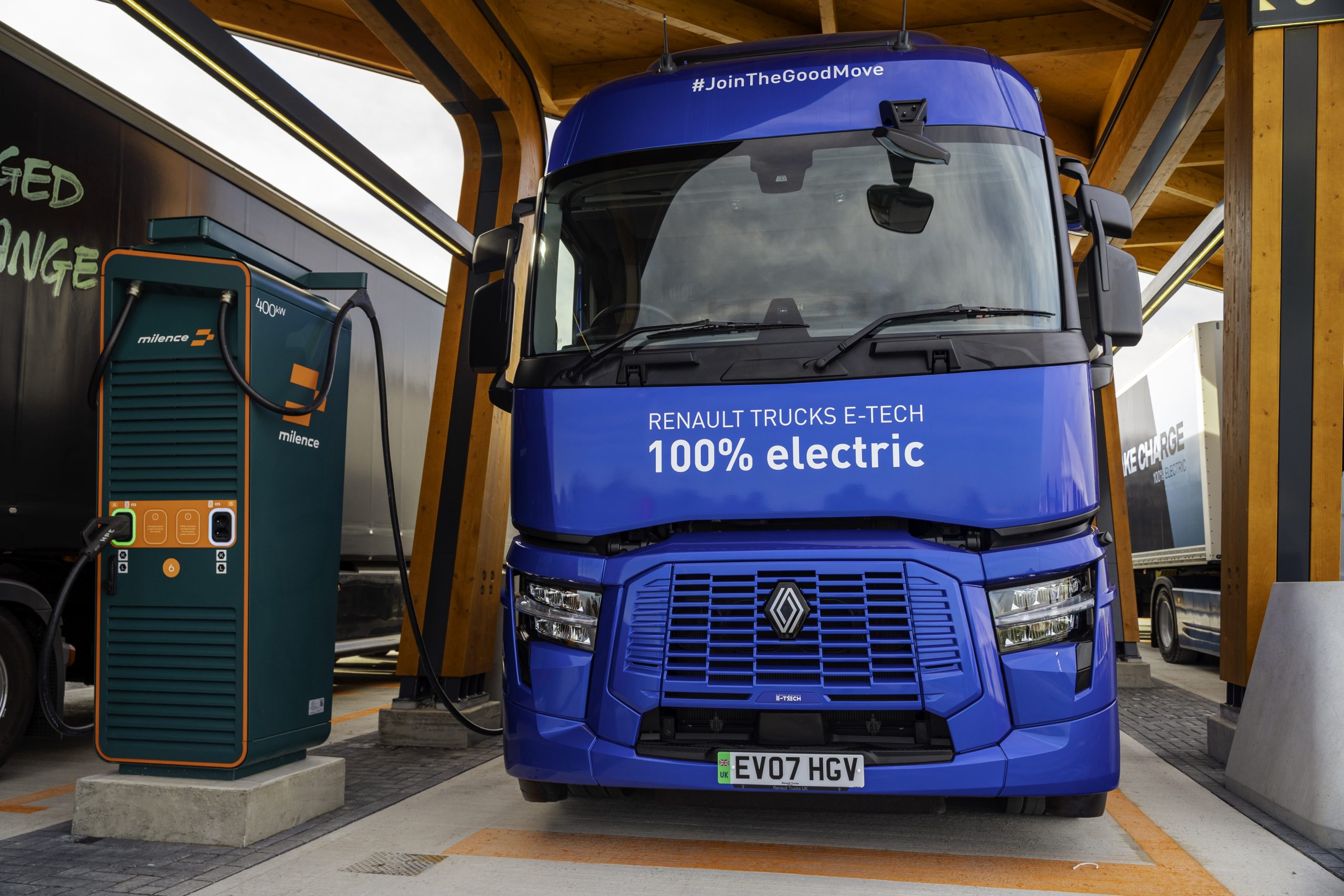
Renault Trucks is publishing an open-source map on its corporate website showing the location of public charging hubs for electric trucks in Europe. This is convenient tool giving a clear up-to-date overview of the current and planned state of the network. It provides proof that low carbon transportation is not just a promise, it is a reality: the charging infrastructure already available along the main highways means that electric trucks can now operate efficiently over long distances.

A high-performance, dense and easily accessible public charging network is a prerequisite for a successful energy transition for freight transport. The charging facilities already in place or under development along the main European transport corridors allow transport operators to plan smooth electric truck journeys even over long distances.

Renault Trucks’ open-source map is regularly updated. It lists nearly 500 existing or soon-to-be-operational public charging hubs for trucks in Europe. The numbers as of 30 September 2025 were:

• 191 truck-specific operational charging hubs
• 157 operational charging hubs suitable for trucks
• 135 truck-specific charging hubs in the pipeline

These facilities allow drivers to recharge their vehicles during regulatory breaks without negatively impacting productivity. They already cover the main European transport routes.

• The North Sea – Baltic corridor (Amsterdam – Warsaw – 1,200 km) includes 13 truck-dedicated stations, 7 of which are under construction or planned.
• The Rhine-Alpine corridor (Rotterdam – Genoa – 1,240 km) has 13, including 3 currently being deployed.

In addition to these, there are also charging points compatible with heavy-duty vehicles, although not specifically designed for them.

In the near future, mega-chargers will make it possible to recharge trucks in a matter of minutes.

Speed up the deployment of public charging hubs to encourage the adoption of electric trucks

If electromobility is here to stay, it is essential to speed up the rollout of public charging infrastructure suitable for trucks. The Volvo Group, to which Renault Trucks belongs, is proactively contributing to this movement via Milence, a joint venture founded with its partners to develop a pan-European high-power charging network for trucks and coaches.

The map represents an additional aid for pioneering electric transport operators and further testifies to the company’s role as a driving force behind energy transition. The purpose is to provide greater visibility, reassure operators and prove that low-carbon transportation is already a reality on the majority of European transport corridors.

Port Expands Electric Terminal Vehicle Fleet

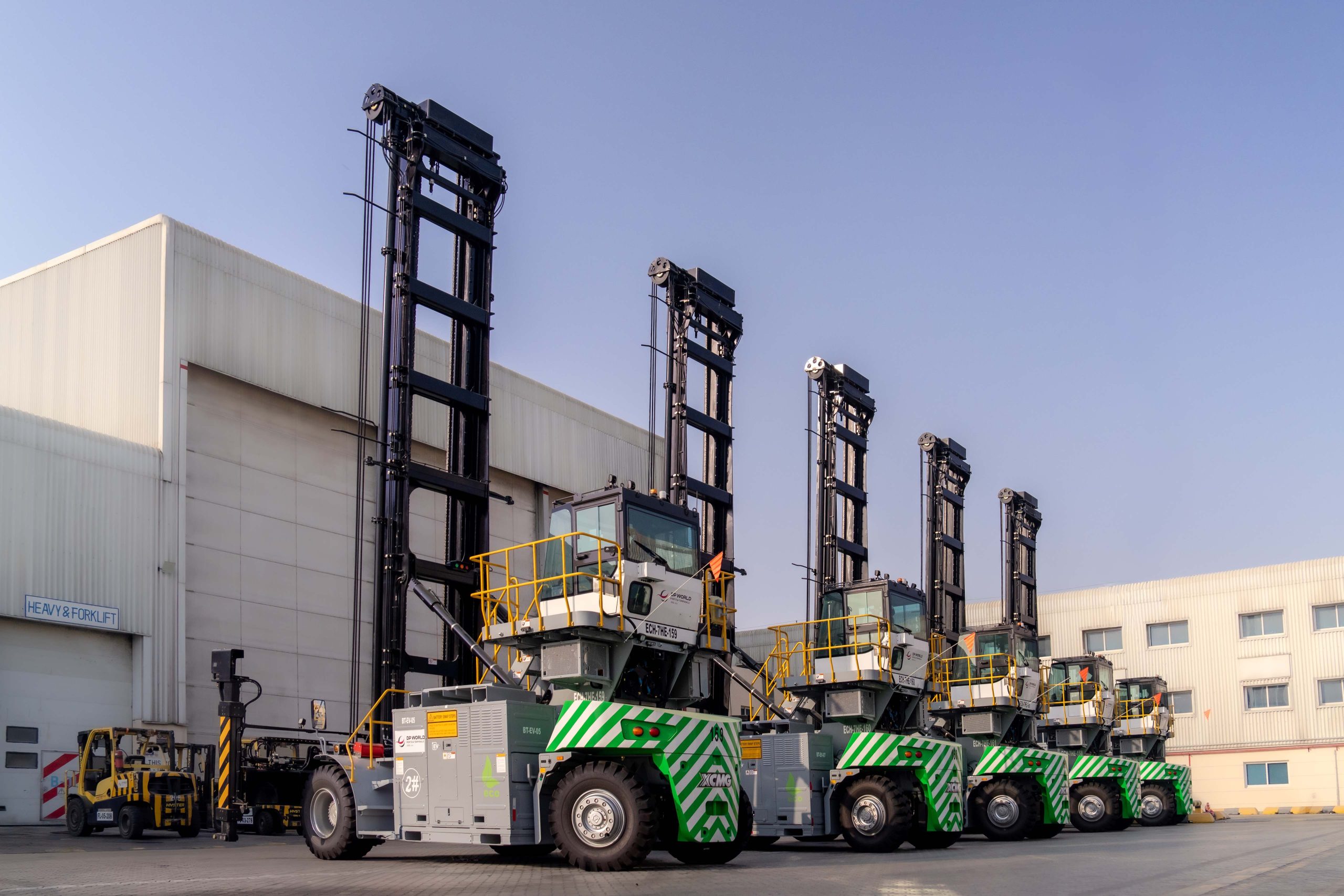
DP World has expanded its electric internal terminal vehicle (eITV) fleet at Jebel Ali Port from 14 in December last year to 146 units as of October 2025, one of the largest in the Middle East. The expansion will cut diesel use and reduce greenhouse gas emissions by over 10%, equivalent to taking 2,255 cars off the road annually.

eITVs are used to shuttle containers between quay cranes, yard stacks and gates. The upgraded Terberg fleet includes 35 diesel models converted to electric by DP World’s in-house engineering teams as well as over 100 new vehicles sourced from leading global manufacturers.

The fleet is supported by a network of rapid-charging stations and represents one of the single largest deployments of electric port vehicles in the region.

Alongside the addition of eITVs, DP World has also rolled out 11 electric empty container handlers which are used for stacking and moving empty containers within the terminal. Together, these steps are reshaping port logistics into a more sustainable model.

Abdulla Bin Damithan, CEO and Managing Director of DP World GCC, said: “Electrifying our port operations is a strategic priority that supports UAE’s Net Zero 2050 ambitions. By scaling our electric fleet and transitioning to cleaner energy at Jebel Ali Port, we are building future-ready and more resilient supply chains that benefit our customers and the communities we serve.”

With maritime transport globally accounting for around 3% of transport-related emissions, scaling electric fleets at major hubs like Jebel Ali is a tangible step toward decarbonising trade. Without action, emissions could reach 130% of their 2008 levels by 2050. By combining operational efficiency with environmental responsibility, Dubai is setting a regional benchmark for green port operations and sustainable supply chains.

Subscribe

Get notified about New Episodes of our Podcast, New Magazine Issues and stay updated with our Weekly Newsletter.