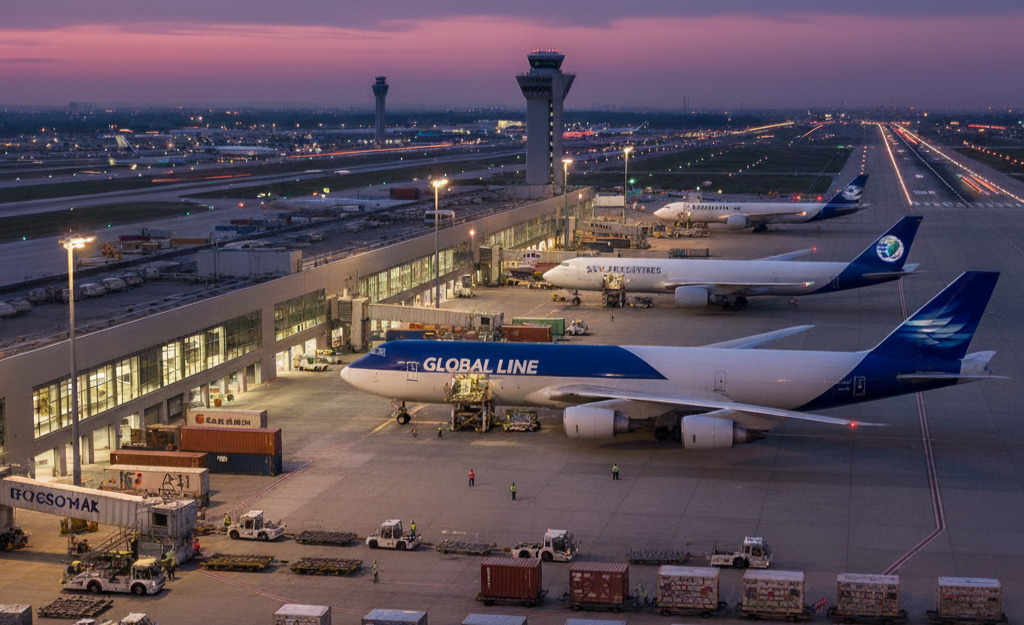
Air Cargo Growth Accelerates Amid Logistics Surge

The Cathay Group has reported steady year-on-year growth in both its passenger and cargo operations for September 2025, reflecting continued recovery across the global air logistics sector.

Cathay Pacific and HK Express carried a combined total of over 2.7 million passengers, up 20% compared with September 2024. Meanwhile, Cathay Cargo carried over 130,000 tonnes of cargo, slightly higher than the same period last year as the airline entered the traditional peak freight season.

Cathay Chief Customer and Commercial Officer Lavinia Lau said:

“September typically marks a quieter period for our travel business following the end of the summer travel peak, though we continued to see year-on-year growth in the number of passengers carried as a Group. Cathay Pacific and HK Express carried a combined total of over 2.7 million passengers, 20% more than September 2024. Meanwhile, heading into the traditional air cargo peak season in September, Cathay Cargo carried over 130,000 tonnes of cargo, slightly higher than the same period last year.”

“In September, Cathay Pacific also announced non-stop passenger flights between Hong Kong and Changsha starting 4 November 2025, bringing the Group’s overall Chinese Mainland network to 24 destinations. Cathay Pacific is also increasing frequencies on other Chinese Mainland routes including Beijing, Guangzhou, Chengdu and Shanghai this coming winter season, and as a Group we will be operating more than 330 return flights per week between Hong Kong and the Chinese Mainland.”

Cargo Performance

Cathay Cargo carried 1% more cargo in September 2025 than in the same month last year, while Available Freight Tonne Kilometres (AFTKs) increased by 4%. In the first nine months of 2025, total tonnage increased 10% year-on-year.

Lau said:

“While tonnage in September declined against the previous month due to the impact of typhoons, it continued to rise year-on-year as a result of the additional capacity we provided. Our Cathay Expert and Dangerous Goods solutions also recorded double-digit growth, driven by machinery movements within Northeast Asia and exports of newly launched high-tech products from the Chinese Mainland and Southeast Asia.

Looking at October and beyond, we observed solid demand during the National Day holiday. We have also added a new seasonal freighter service to Madrid, providing customers with more capacity to and from this important European market during the traditional peak months.”

Wider Logistics Context

Cathay’s results reflect a broader stabilisation in global air cargo markets, as manufacturing output and e-commerce volumes continue to underpin freight demand across Asia. With Hong Kong acting as a major regional logistics hub, Cathay’s network expansion and investment in specialist cargo services position it to capture ongoing growth in high-tech, machinery and time-sensitive exports.

Across the first nine months of 2025, the Cathay Group reported 27% passenger growth and 10% cargo tonnage growth compared with the same period in 2024, suggesting continued strength in Asia’s aviation and logistics recovery.

Logistics Business’ Ian Wright Set to Cycle for Transaid

Our colleague Ian Wright is gearing up for an exciting return to cycling next year, taking part in the Kilimanjaro to Coast ride in support of the transport charity Transaid.

Taking place in September 2026, the event will see riders travel from the foothills of Mount Kilimanjaro to the Tanzanian coast, raising funds for Transaid’s work improving transport, road safety and access to healthcare in developing regions.

Ian’s fundraising page is live on JustGiving — you can support his effort here: https://www.justgiving.com/page/ian-wright-logistics-business

Ian is no stranger to the sport. In his youth he was a professional racing cyclist, spending many years living and working in South Africa before joining Logistics Business. After some time away from competitive riding, he’s excited to be back on the bike and part of an organised race once again — especially one supporting such a meaningful cause.

“Cycling has always been a big part of my life, so I’m really looking forward to getting back into the saddle for this event,” Ian said.

“Transaid does fantastic work improving access to healthcare and livelihoods through better transport. It’s great to combine something I love with helping a worthy cause.”

At Logistics Business, we’re proud to support Ian and the work of Transaid. We’ll be following his progress as he trains and takes part in this special event.

If you’re inspired by Ian’s story and would like to take part yourself, you can find full details about the event here: https://www.transaid.org/event/kilimanjaro-to-coast/

For more information or media enquiries, please contact us via our contact page

Warehouse Efficiency: Inside a Successful Automation Upgrade

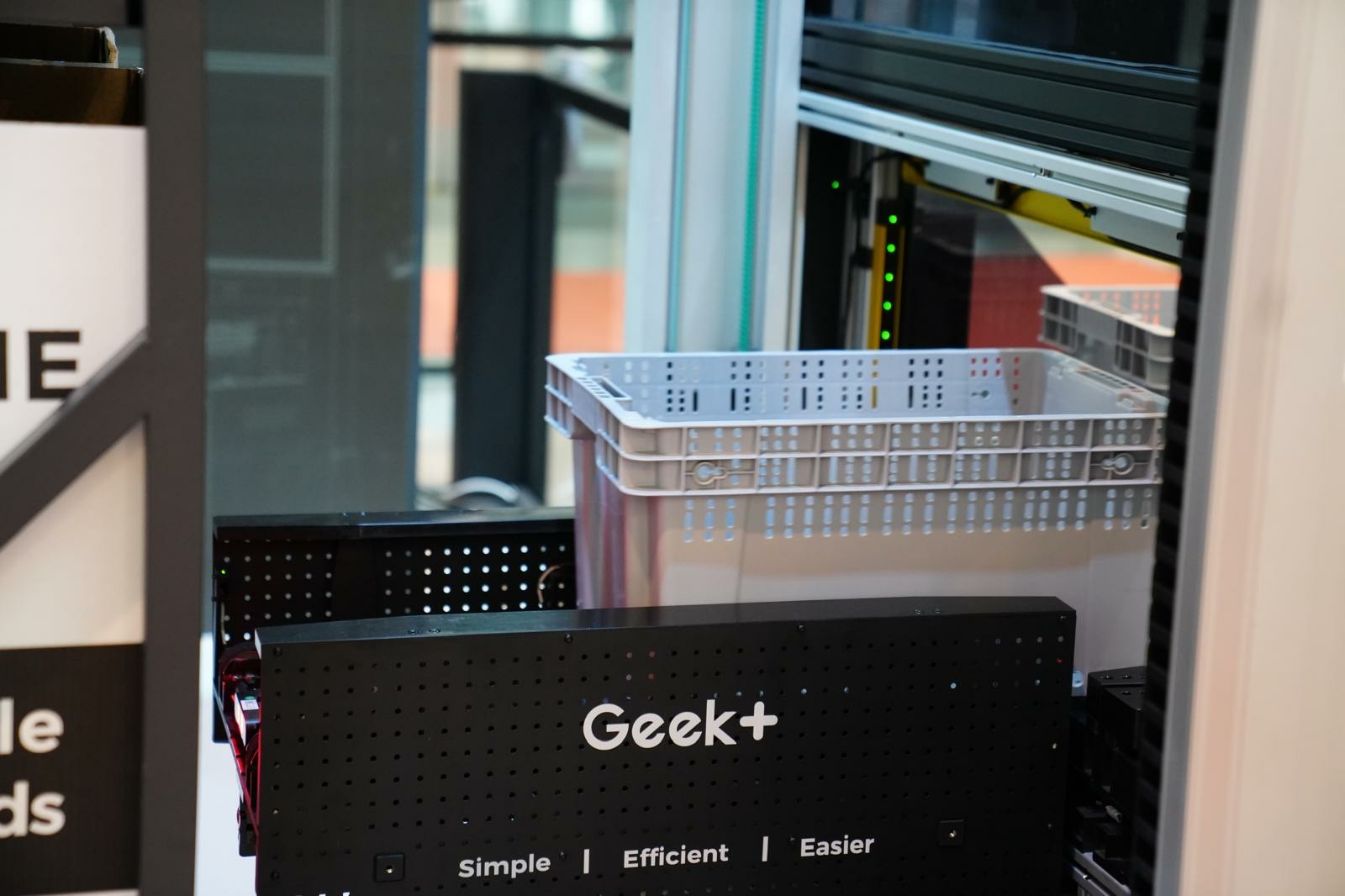
Warehouse robotics company Geekplus, together with STL, their official partner in the Nordics region, are proud to announce the successful deployment of the new PopPick Lite solution for the Danish lifestyle retailer Søstrene Grene at their distribution center in Venlo (Netherlands). This marks the eight project together with STL and the landmark for more future projects during the following months.

The project is another success of an implementation of the Shelf-To-Person system together with our partner STL. In this case, a total of 64 P1200 robots, 8 picking stations, more than 400 racks and 300 pallet location are working together on a surface of around 3000 sqm to increase warehouse efficiency.

“We saw a need to automate our warehouse systems, primarily to handle a changing product range and increasing volumes—something that would otherwise require extensive development of our logistics setup. That made STL and Geekplus the right match for us,”

says Claus Tjærby, Chief Supply Chain Officer at Søstrene Grene.

“We are incredibly proud to collaborate with such a prominent Danish retail chain as
Søstrene Grene. The project in the Netherlands has been both ambitious and meaningful—and the completed setup is a strong example of how automation can future-proof logistics,”

says Ole Madsen, CEO of STL.

The new PopPick station brings a different way of working for employees that improves their ergonomics while increasing throughput and accuracy. The system, which brings pallet and boxes for picking operations, is a clear example of flexibility and modularity: both operations can be processed at the same time; boxes are connected to a put wall with conveyors; compatible for different size of products and with the possibility to scale at any time while reducing the space for fixed machinery.

A partnership built for replication

From Denmark’s first PopPick to fashion and retail projects across the Benelux, STL and Geek+ have delivered repeatable mobile-robotics systems that shorten implementation and are shaping the Nordic robotics playbook.

“Our partnership with STL shows how fast, flexible automation can be rolled out. This is our eight project together and represent a prove of how to work quickly and efficient as we released this new product in March during LogiMAT and we can say outloud its implementation is already a success,”

said Simon Houghton, Sales Director for Northern Europe at Geekplus.

UK’s New V Levels Could Strengthen Logistics Workforce

A major overhaul of the UK’s post-16 education system could help tackle one of the logistics sector’s biggest challenges — the ongoing workforce shortage.

The Government has confirmed plans to introduce V Levels, a new qualification route designed to bridge the gap between academic study and practical, career-focused training. Logistics looks set to be a major beneficiary.

Targeting the Logistics Skills Gap

With more than 2.7 million people already employed in UK logistics, the sector underpins manufacturing, retail, and e-commerce. Yet companies continue to face shortages in warehousing, transport planning, and supply-chain operations — particularly as automation, sustainability and digitalisation transform the industry.

The new V Levels, announced by the Department for Education (DfE), are designed to give young people a clearer vocational pathway into sectors like logistics, where hands-on skills and technical understanding are in high demand.

What Are V Levels?

Launching from September 2027, V Levels will sit alongside A Levels and T Levels as new Level 3 vocational qualifications for 16–19-year-olds. Students will be able to combine V Levels with A Levels, giving greater flexibility than the full-time technical T Level route.

The DfE says the reform will simplify the current patchwork of more than 900 vocational qualifications and make it easier for employers to identify relevant skills.

Opportunities for Logistics

The logistics sector is expected to feature prominently as V Level subjects are developed. Potential pathways could include:

  • Warehousing and Inventory Management
  • Transport and Freight Operations
  • Digital Logistics and Data Systems
  • E-commerce and Fulfilment
  • Sustainable Supply Chains

Because the qualifications will be co-designed with employers, logistics companies can directly influence course content — ensuring learners gain real-world knowledge in areas like compliance, routing, automation and sustainability.

Enginuity, the charity dedicated to closing the skills gaps in the UK’s engineering and manufacturing sector, welcomes the publication of the Post-16 Education and Skills white paper and will help ensure that the voice of the vital SME community is heard by the Government.

The charity says that lessons can be learned from the roll-out of T Levels, which illustrated the importance of supporting careers advisors, parents, employers and other stakeholders understanding and confidently communicating the benefits of the new offer to young people. 

Industry Engagement Essential

Employer participation will be key to success. Logistics firms can:

  • Partner with colleges and training providers
  • Offer placements and site visits
  • Help define occupational standards
  • Provide input on emerging technologies and skills needs

Such involvement would ensure graduates are work-ready, reducing onboarding costs and strengthening the sector’s recruitment pipeline.

Preparing for 2027

The Government’s consultation on post-16 qualifications runs until January 2026, giving logistics organisations the chance to shape how the V Levels framework is implemented.

Training providers should also begin preparing for delivery — investing in modern teaching environments such as warehouse simulators, digital management systems and electric-vehicle technology.

Building the Workforce of Tomorrow

If delivered effectively, V Levels could help logistics close its talent gap, support the transition to low-carbon operations and raise the profile of vocational careers.

For a sector vital to the UK economy, the introduction of V Levels marks an opportunity to create a clearer, more respected pathway into logistics — one that connects education directly to the needs of a fast-moving, technology-driven industry.

Subscribe

Get notified about New Episodes of our Podcast, New Magazine Issues and stay updated with our Weekly Newsletter.