The UK Autumn Budget is approaching, and logistics businesses across road transport, warehousing, ports and freight forwarding are watching closely. The sector is uniquely exposed to shifts in operating costs, taxation and infrastructure funding; This year’s Budget could influence investment decisions and supply-chain strategies well into 2026.
Rising Cost Pressures
Operating margins in logistics remain historically tight, and any Budget measures that increase core costs could hit profitability almost immediately.
Fuel duty is expected to receive significant attention. Fuel remains one of the largest direct costs for road haulage operators, and any increase in duty would directly raise transport rates and push inflationary pressures down supply chains. With consumer demand already softening in some sectors, many operators have limited ability to absorb increased costs.
“For the first time, there could also be an increase in how the electricity for EVs is taxed. Currently, VAT is set at 5% for home charging, while public charging is at 20%. The government could bring these charges closer together or even add a small charge to rapid public chargers, to recover some of the revenue lost from falling fuel duty.”
Employer National Insurance and other employment-related charges are also a concern. Logistics is labour-intensive, particularly in warehousing and last-mile distribution. Any rise in employment costs risks exacerbating ongoing recruitment challenges and may accelerate investment in automation as an alternative to expanding workforce numbers.
Business rates for large distribution centres are another pressure point. Logistics facilities occupy significant square footage, and rate increases would disproportionately impact the sector — especially in high-growth logistics corridors around major ports, airports and motorways.
Potential Upside: Investment Incentives and Infrastructure
There is also cautious optimism. Recent policy direction suggests continued focus on infrastructure, supply-chain resilience and accelerating the shift to cleaner vehicles and more efficient transport networks.
A continuation or expansion of tax incentives for capital investment, such as full expensing for plant, equipment and fleet purchases, would be welcomed. For warehouse operators, fleet owners and port operators, such measures help justify investment in automation technologies, loading solutions, storage systems and electric or alternative-fuel vehicles.
The sector is also hoping for clarity on long-term infrastructure funding, particularly around strategic freight corridors, road maintenance and port access improvements. Delays or uncertainty in infrastructure upgrades often cause inefficiencies that ripple through national supply chains.
If the Budget reinforces commitments to strengthening freight transport networks, it could unlock new capacity, reduce congestion-related delays and improve reliability in time-critical logistics segments such as pharmaceuticals, grocery and express freight.
Strategic Considerations for the Sector
The Budget is unlikely to deliver a single transformative policy; instead, its cumulative impact will depend on the balance between cost pressures and investment support.
Logistics firms are encouraged to plan proactively:
Model different cost-increase scenarios, especially around fuel and employment-related taxes.
Assess investment timing, particularly if fleet replacement, warehouse automation or decarbonisation projects are planned in the next 12–36 months.
Monitor workforce planning to ensure competitiveness in a tight labour market.
Stay engaged with industry bodies that advocate for infrastructure prioritisation and regulatory simplification.
The sector is also increasingly focused on decarbonisation strategy. If the Budget strengthens incentives for zero-emission HGVs, charging infrastructure or alternative fuel corridors, first movers could gain both operational efficiency and reputation advantage.
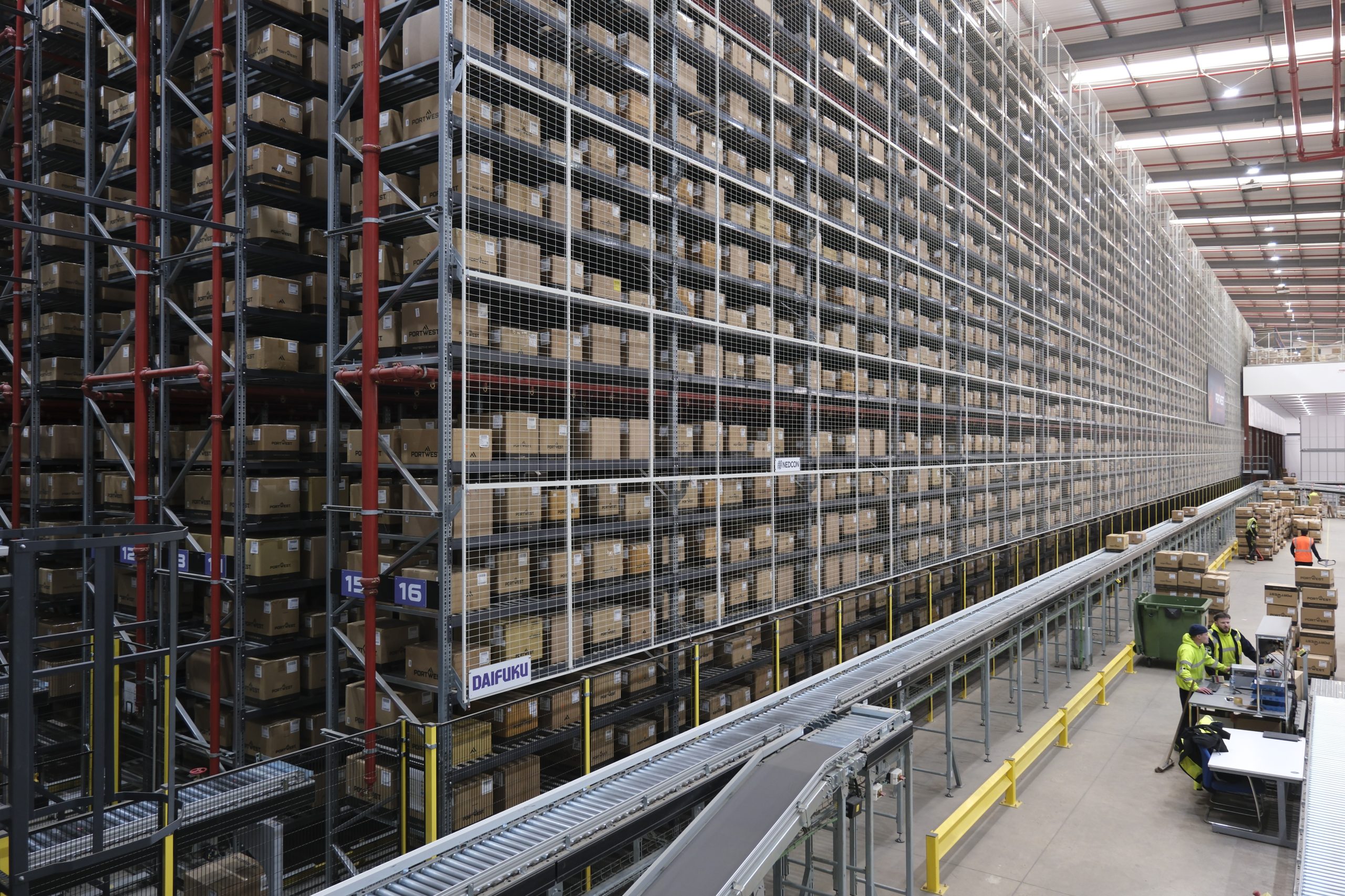
Portwest, one of the world’s fastest growing online workwear companies, has successfully commissioned a new, fully automated storage and retrieval system (AS/RS) at its distribution centre in Barnsley UK. Designed and installed by Japanese automation specialist, Daifuku, the system replaces what was formally a fully manual fulfilment process, transforming the business’s ability to satisfy demand for its products.
Following the implementation of Daifuku’s four-crane AS/RS system, Portwest has increased its productivity levels tenfold. Glynn Clyde, global warehouse and logistics executive at Portwest explained: “Prior to our adoption of automation, our fulfilment process was entirely manual. In practice, this meant that we were able to complete no more than 30 boxes an hour. With our new automation system, we can now fulfil 300 picked boxes per hour. It was a very labour-intensive process. Moving to automation changed our whole operation.”
Automation has dramatically reduced the rate of mis-picks, therefore increasing service levels and customer satisfaction. This clearly demonstrates the positive impact automation can have on UK warehouse productivity.
Fully operational by late summer 2024, the new warehouse automation system at Portwest’s 15,000 sq m facility in Barnsley has more than doubled handling capacity, thereby enabling the business to meet anticipated demand for its products, which include high viz jackets, PPE kits and safety gloves.
Crucially, this has not seen any redundancies at the business, which from the outset wanted to prove that investment in automation could be used as a stepping stone to further growth, as well as more enriching roles for staff.
Automated high bay storage
Daifuku’s AS/RS comprises four high bay aisles serviced by four automated twin-fork Mini-Load cranes. High-density racking creates more than 76,000 unique locations within the upgraded facility. At more than 130 metres in length, the racking installation at Portwest is believed to be one of the longest installations of its kind in the UK.
A key feature of the system is its double-deep design and the ability of the cranes to store and retrieve two cases simultaneously. This enables greater storage capacity while providing high throughput, allowing greater warehouse efficiencies to be achieved.
Technology in operation
In simple terms, the Portwest operation works on the basis of a central in-feed of cartons, which are transported to appropriate zones (A, B or C) of the high-bay storage racking, depending on their demand profile. Daifuku worked closely with ULMA, its preferred European partner, to develop and install all of the in-feed transit conveyor systems.
Driven by a bespoke PLC, the conveyors interface with Invar’s software, which in turn communicates seamlessly with the client’s well-established M3 system.
Daifuku’s four cranes, the heart of the Mini Load system, are highly versatile and can handle, plastic containers, trays or in this case cardboard cartons. With nearly 60 years of experience and over 34,000 stackers cranes made, Daifuku’s AS/RSs are globally respected for their reliability and quality. Furthermore, with updates and development over the years, the cranes have been made lighter and employ smaller motors, reducing electricity consumption.
When called, cartons are delivered from the AS/RS facility into one of three lines:
Lane one – these items replenish the adjoining Autostore, which serves pick and pack orders.
Lane two and three satisfy bulk orders to customers, supplying cartons for onward despatch via next day delivery.
Russell Hutchinson, Daifuku UK sales manager, said: “One of the benefits of this system is its simplicity. Once a consignment of goods arrives, all operators need to do is enter a carton into the system and we will do the rest. As long as it has a barcode or label, our automated storage system will store it away until it is called upon.”
Automation for the nation
Portwest’s experience demonstrates that appropriate technology within the intralogistics function can transform the efficiency of manual handling processes. The business’s adoption of warehouse automation has drastically reduced mis-picks, doubled capacity and also created new roles at its site in South Yorkshire.
Clyde continued: “This exercise was never driven by a desire to cut manpower as it’s the people that make our business thrive. We’ve demonstrated that using automation in a considered way can bring operational efficiencies, while creating new, more enriching roles for people within the organisation.”
Portwest – Key automation highlights:
• The 76,000 storage locations are serviced by four Daifuku cranes, each operating its own Mini Load AS/RS system. • Based on 80% utilisation, this system can handle 2,400 cartons on a dual cycle basis on any 12-hour day.” • Each M Shuttle has been designed to handle box cartons. Utilising extendable side plates with movable pins at both ends, two cartons can be moved simultaneously from and to their desired location. • Benefitting from extended arms, each shuttle also facilitates the use of double deep storage, further driving the productivity of the system. • The AS/RS system is controlled by a bespoke WMS system, which integrates with Portwest’s incumbent Infor M3 ERP software. • At 130m in length, the high bay racking at Portwest is believed to be one of the longest in the UK. It houses 76,000 locations.
Richard Kearns always knows how his supply chains, his new warehouse in Hernando, Mississippi, or his logistics processes are performing – because he receives immediate feedback every single day. As Executive Vice President of Distribution & Logistics at Associated Wholesale Grocers (AWG), he serves demanding customers: the store operators are independent retailers who expect to be impressed by logistics performance every day. This is made possible by a highly automated full-range logistics centre, designed and implemented by WITRON, which supplies 3,400 stores with a portfolio of currently 54,600 different dry, fresh, and frozen items. The facility is designed for a daily picking capacity of more than 460,000 cases and ranks among the most innovative and high-performance logistics centers in the United States. The results achieved are impressive. Labour and transportation costs have been significantly reduced.
AWG is a member-owned cooperative where 1,100 store owners operate more than 3,400 supermarkets across 33 U.S. states jointly generating over $25 billion in annual sales.
Growth requires new stores, new cooperative members – and logistics has become a decisive factor in deciding to join AWG. Unlike traditional U.S. retail corporations, every retailer here is both a member and an owner: All profits are returned to the members. “My team’s mission is to provide our members with all the tools, products, and services they need to be competitive in their respective markets and to deliver outstanding consumer service – on time, in full, at the highest quality, and at the lowest cost,” explains Richard Kearns.
There was no way around automation
The demands placed on him and his team have been steadily increasing for years. In addition to growing product diversity and market volatility, the ongoing shortage of skilled workers in warehouse operations, rising transport costs, and stricter regulations are putting particular strain on the distribution model. In response to this challenge, logistics plays an absolutely critical role in maintaining service levels while keeping costs under control. There is simply no way around automation.
Given these circumstances, AWG made the strategic decision to automate its distribution network and optimize operations with maximum efficiency. This initiative also marked the largest investment project in AWG’s nearly 100 year history. Initial evaluations began around 15 years ago – not yet as a specific construction project, but rather as a long-term strategic consideration within the management team. Over this period, various providers of automated systems were thoroughly analyzed – and from a shortlist of internationally leading manufacturers, the final decision was made in favor of WITRON from Parkstein (Germany).
The decision was based on a range of key criteria: the technical performance and reliability of the system in live operations, the impressive number of successfully implemented reference projects, consistently positive feedback and high level of satisfaction expressed by WITRON customers around the globe, and – not least – the cultural compatibility between the two companies. At the same time, AWG placed great emphasis on personal exchange: From management to technical and service staff, communication and collaboration across all interfaces were expected to run smoothly – „this is a key criterion“, explains Robert Venzl, WITRON’s Project Manager responsible for the automation project in Hernando, Mississippi.
The 81,000-square-metre facility features a total of 738,000 pallet, tote, and tray storage locations, 92 stacker cranes, and 11 kilometers of conveyor technology designed for a picking capacity of more than 460,000 units per day.
55,000 different items
“With the strategic decision in place, a two-phase implementation process followed. The first 12 to 18 months were dedicated to finalizing the detailed plans and erecting the building. Then, WITRON installed its technology,” says Robert Venzl. “Nearly 55,000 different items are stored and picked using the OPM (Order Picking Machinery), AIO (All-in-One Order Fulfillment), and CPS (Car Picking System) solutions – ranging from food and cosmetics to healthcare products, cigarettes, etc. As each new cooperative member typically brings additional items into the assortment, the system must offer a high degree of flexibility. WITRON technology is deployed across all temperature zones – dry goods, fresh products, and frozen items.
Nineteen fully automated COM machines stack store-friendly cases onto pallets in temperature zones ranging from +20 to -26 degrees Celsius, while large-volume items are picked in various temperature areas via route-optimized processes supported by pick-by-voice technology, using the semi-automated CPS logistics module. The AIO system enables compact storage and picking of small-volume items – both fast movers and slow movers – within the same logistics module. Efficient order consolidation across different logistics areas and modules is fully automated and system-controlled, supported by WITRON’s intelligent warehouse management system. This allows for a high packing density on the load carriers despite a very broad product range,” says the WITRON project manager. “The key was to synchronize the picking frequency of the various logistics modules and areas in such a way that goods are made available in the shipping area just-in-time and in the correct loading sequence for delivery.”
50 percent less workforce – 50 percent fewer truck trips
This is an impressive achievement for both the owners and logistics experts. “This is no longer just a warehouse – it is more like a production facility. Everything is well-structured. It is a high-performance facility,” says Richard Kearns. The plant has been up and running since mid-2023, with the new logistics center operating at full capacity. The commissioning of the various temperature zones was executed in stages, following a precisely defined ramp-up plan. “Now that we are working with the new technology across all areas of the facility, I can confirm that we have achieved our goals – we are delivering more efficiently, faster, and more reliably,” summarizes Richard Kearns.
“Not only have the processes within the logistics center improved significantly, but the entire supply chain has benefited. All stakeholders in our organization – procurement, suppliers, sales, transportation, stores, and consumers – are profiting from this end-to-end, company-wide transformation project.”
It goes without saying that a transition from a conventional warehouse landscape clearly requires professional change management – for both staff and leadership alike. “But WITRON supported us exceptionally well through this process.”
By consolidating three existing sites into one facility, AWG was able to reduce staffing needs by nearly 50 % and cut truck trips in half as a result of higher pallet density and optimized route scheduling.
“WITRON delivered a state-of-the-art automated facility that meets all of our members’ requirements across all temperature zones. At the same time, we were able to offer our employees attractive, ergonomic workplaces.”
These are important to Richard Kearns: “Training and onboarding times have been minimized. A safer working environment has been created. And a modern workplace environment plays a crucial role in attracting future talent. This logistics center is central to AWG’s HR recruiting strategy.”
Strong feedback from cooperative members
The new logistics center has noticeably improved delivery quality: The first shipment to the pilot store stood out with stable, ready-to-unload, and shelf-ready order pallets. Automated pack pattern algorithms group similar products by pallet layer, enabling more structured and faster unloading and shelf replenishment in the store. This significantly reduces breakage and return rates while increasing shelf availability. Pick errors are almost entirely eliminated. Individual preferences of store operators can also be accommodated very effectively. Not least, the facility also supports strict food safety protocols by further minimizing contamination risks through reduced manual handling.
Supplier management is often an underrated success factor in such projects. It is essential, for example, to collaborate in improving pallet and packaging quality. AWG maintains a continuous feedback loop: Suppliers receive input on damages, case integrity, and pallet stability to keep the material flow running smoothly at all times.
Future joint projects
The Hernando site has already been designed with room for future expansion. In parallel, AWG is evaluating retrofit options for existing distribution centers and planning new greenfield automation sites. The AWG leadership is committed to growth without compromising service quality for existing members. The owners are satisfied, expect high logistics quality, and Richard Kearns now has the right intra-logistics solution to meet those expectations – and with WITRON the right partner for future joint initiatives.
In the latest episode of Logistics Business Conversations, Peter MacLeod engages in a compelling discussion with Wouter Satijn, CRO and co-owner of Joloda Hydraroll. This episode delves into the transformative power of loading automation and unloading systems, highlighting how Joloda is tackling the persistent challenges of manual operations in warehouses and industry trends.
Wouter shares insights into the significant safety enhancements and environmental benefits that come with automation, emphasizing Joloda’s commitment to innovation and efficiency. The conversation also explores the broader implications of these advancements for the logistics industry, including reduced operational pressures and improved sustainability.
“We’re on a crusade to reduce manual loading and increase the install base of our automated solutions,”
says Joloda Hydraroll CRO, Wouter Satijn, underscoring the company’s mission.
Join us as we uncover how cutting-edge solutions are not only reshaping the logistics landscape but also setting new standards for safety and environmental responsibility. This episode is a must-listen for anyone interested in the future of logistics automation.
Subscribe
Get notified about New Episodes of our Podcast, New Magazine Issues and stay updated with our Weekly Newsletter.
Add Logistics Business MediaGet faster access to news, podcasts, magazines and your saved content.