Prologis report lays bare supply chain crisis

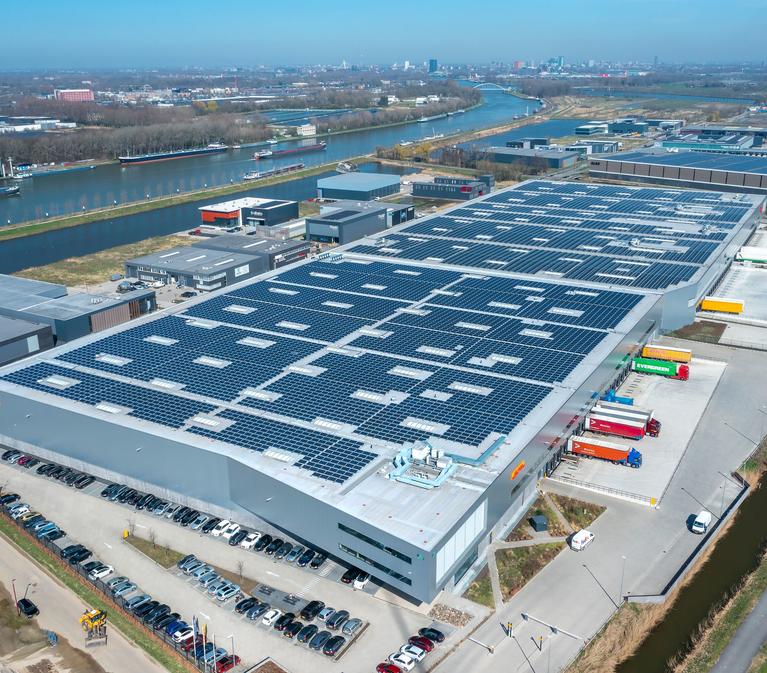
New research by Prologis, a global leader in logistics real estate, has highlighted the global supply chain crisis, with logistics space at an all-time low, a slowdown in the flow of goods and rising construction costs.

Prologis‘ Research team’s new paper, Persistent Disruption,  explores the shift logistics customers are making from “just in time” to “just in case” – or a permanent shift toward resilience. This shift will create powerful demand tailwinds in logistics real estate and could prolong or worsen the current shortage of space.

Highlights include:

  • Robust inventory-to-sales ratios are key to the future supply chain. Disruptions in the flow of goods will persist beyond the pandemic, driven by structural forces in climate, geopolitics and labour.
  • Higher inventories will require 800 million sq ft (74.3 million sq m) of logistics real estate or more to fix the shortage and build in resilience. Logistics real estate leasing is not yet reflecting this demand because companies need to first focus on immediate inventory challenges.
  • Gateway locations are poised to benefit as the first step on the consumption end of supply chains. Because these locations generally have high barriers to new logistics development, demand is expected to outstrip supply.

Eva van der Pluijm-Kok, Director, Research & Strategy at Prologis, commented: “During Q3, we saw a record low of 3.0% in vacancies in Europe. This trend already pointed towards increasing demand for space and for inventory stock up early on.

“In the UK, due to Brexit, the urgency to build supply chain resilience has been somewhat expected but we also saw that the disruption was more severe than predicted In Europe, demand to build inventory has been traditionally low. This is now slowly changing and leading to shortages.

“Both across Europe and the UK, findings show that the demand for logistics space and to increase inventories will continue as part of customers’ aim to build resilience.”

Furthermore, Prologis’ current Industrial Business Indicator (IBI), the company’s proprietary quarterly survey of customer activity and sentiment, reveal that strong retail sales and supply chain challenges are driving urgency in leasing. US net absorption reached a record high of 115 million sq ft (10.7 million sq m) in Q3 2021 and 280 million sq ft (26 million sq m) year-to-date – more than double the same period last year, pushing vacancy to a new low of 3.9%.

CLICK HERE to download the Persistent Disruption report by Prologis.


Intelligent conveying and sorting system empowers automation evolution

With the continuous development of the express delivery industry, the demands and requirements of various platforms for automated logistics and transportation is also increasing. An intelligent sorting and conveying system has become rigid requirements for companies in various industries to enhance their competitiveness.

Normally, the efficiency of the current semi-automated sorters (taking the cross-belt sorter as an example) is more than three times that of manual, and the efficiency of an automated sorter is more than six times that of manual sorting. An  intelligent sorting and conveying system can fully reduce manual identification and manual operation. The accuracy is much higher than manual sorting, and it also greatly reduces the loss of goods. Especially when the processing capacity reaches tens of thousands of pieces per day, manual sorting takes up a large area, high errors, and efficiency drops.

According to Logistics IQ, by 2030, the global next-generation supply chain market will reach more than US$100bn. Under such circumstances, China’s automated sorting industry is actively promoting innovation, accelerating product optimisation and equipment iteration, and enhancing user experience.

According to statistics, from 2012 to 2019, China’s automated logistics equipment market has an average annual compound growth rate of 26.8%, and the market size in 2020 had reached RMB175bn, with a compound annual growth rate of more than 25%, of which the market size of automated sorting equipment is about RMB21.35bn, the annual growth rate is about 29%.

China is transforming to a strong country on manufacturing. The automation of the manufacturing industry is increasing, coupled with the rising cost of labour and the declining demographic dividend. It is expected that the scale of domestic automated logistics equipment demand will continue to grow rapidly in the next few years, and the domestic market for automated logistics equipment will reach RMB368bn until 2025.

Kengic, a professional smart logistics and intelligent manufacturing solutions provider, focuses on providing domestic and overseas customers with smart logistics and intelligent manufacturing system and products with R&D, design, manufacturing, sales and services. It has many mature and successful conveying and sorting cases around the world, saving labour costs, saving operation space and improving the operational efficiency for many customers.

Take the E-commerce Distribution Project in South Korea as an example. The project covers an area of about 8,500 sq m where 763.2m loop sorting lines, 636 carriers, 10 automatic inductions and 138 spiral chutes are provided. By applying cross-belt sorter system, belt conveyor system, and telescopic belt conveyor system, the project is fully automated from unloading to infeeding and sorting.

In India, Kengic is also involved in the e-commerce and logistics industries. The project combines customer requirements and actual conditions to provide a complete solution. The conveying speed is 2.1m/s, the sorting efficiency is as high as 25000pph, and the accuracy rate is as high as 99.9%.

In addition, it also has very mature experience in the design and implementation of unmanned warehouses, such as the RRS Logistics Unmanned Distribution Center project. Covering an area of 18,000 sq m, the total number of goods is 14,000 and the picking and shipping area is 10,000 sq m.

Relying on a series of interconnected and autonomously controlled intelligent facilities and equipment such as intelligent AS/RS, robots, and AGV, under the scheduling of business operation systems such as WMS, WCS, TMS, etc., the intelligent and efficient operation of various operations in warehousing, transportation and distribution is realised to assist intelligent unmanned transformation and upgrading of bulk logistics.

At present, Kengic’s customers now cover many industries such as express & logistics, e-commerce & new retail, home appliances, furniture, automobiles, communication electronics, equipment manufacturing, national defence and military, medicine and health, materials, energy and chemical industries, etc. It says it has provided stable, flexible and cost-effective solutions for its customers worldwide and that it is committed to building strong partnerships with them in long-term cooperation.

The Intelligent Conveying and Sorting system, comprising a conveying system and sorting system, is an important part of material handling systems. The main equipment selected varies among the goods conveyed. Kengic’s conveying and sorting system is able to accommodate the conveying and sorting needs for a broad range of applications. By designing reasonable routes, Kengic can help customers improve sorting efficiency and accuracy and reduce labour costs.

Kengic says in the future it will continue to adhere to the development concept of “Gathering industry elites, Creating a world brand”, committed to the innovation and development of smart logistics and intelligent manufacturing, insisting on intelligent technology as the driver, independent R&D and innovation as the orientation, and realising smart logistics and intelligent manufacturing for customers to upgrade the system and make every effort to promote the transformation and long-term development of industrial digital intelligence era.

Paris multi-storey urban logistics asset acquired

Crossbay, the first pan-European urban logistics platform to target single-user distribution centres, has acquired a multi-storey urban logistics asset in Saint Denis for an undisclosed sum in an off-market transaction. The vendor is a private family office.

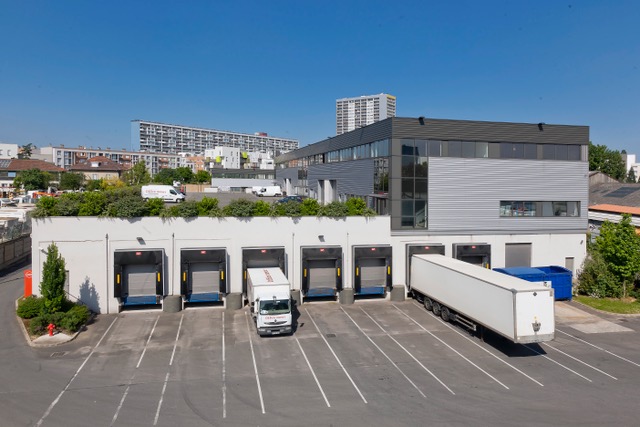
The 7,500 sq m asset, located a few kilometres from Paris, features 3,500 sq m of ground floor space, with platforms for heavy goods vehicles and light vehicles, as well as single-level doors on three sides. The rest of the site is divided into cells of approximately 500 sq m on the upper floors, with access to the quays.

The property, which is currently unoccupied, is being marketed to firms in the last-mile logistics sector.

The acquisition of the Saint Denis site builds on Crossbay’s growing footprint in France, with its 20 assets at an overall value of around €180m.

The platform has invested more than €100m in France this year, with the aim to target €500m in assets under management within the next two years.

Louis Radiguet, managing director of Crossbay France, said: “This acquisition, along with the secure pipeline, will allow us to exceed our objective of €100m in acquisitions for the year 2021. The site presents all the fundamentals of urban logistics, in terms of its location and its technical characteristics. It also has a strong potential for short-term value creation for the Crossbay fund, perfectly matching the type of asset we are looking for.”

Launched in May 2020 by leading private equity real estate investment manager MARK, Crossbay was designed to enable institutional investors such as pension funds and insurers to grow their exposure to the fast-growing last-mile logistics sector.

Crossbay focuses specifically on single-user distribution centres in locations no more than a 90-minute journey to the centre of the nearest city. Single-tenant assets require less intensive asset management than multi-let industrial units and are less exposed to the performance of the wider economy than larger ‘big box’ warehouses.

The platform’s 600,000 sq m portfolio hosts a high-profile tenant base, counting leading 3PLs such as FedEx and DHL, as well as major e-commerce brands like Amazon, as occupiers.

In December 2020, MARK announced a successful capital raise for Crossbay, securing €550m in equity commitments from a global range of investors. Investors included the Townsend Group, CBRE GI, Credit Suisse, Nuveen and QInvest LLC. The fundraise was then followed by a €400m debt facility from investment bank Citi in January 2021 to help further fund Crossbay’s growth and European expansion.

EP forklift importer gets finance boost

DF Capital has partnered with Handling Equipment UK Ltd to help support its dealers in the UK electric forklift market.

Handling Equipment UK is the UK importer of EP Equipment material handling machines. Based in Stourbridge in the West Midlands, it is a family-run business that employs 20 people. It currently works with over 40 material handling dealers in the UK.

DF Capital was initially approached by EP Equipment, a leading global manufacturer specialising in lithium-powered warehouse equipment. There is growing interest in EP Equipment’s Li battery-powered forklifts because these particular vehicles can now do everything a diesel or gas machine can do – including working outside – and they don’t produce any emissions when they are being used.

EP Equipment is continually expanding its footprint in the UK via distributor partners and introduced DF Capital to Handling Equipment UK. Handling Equipment UK was importing increasing numbers of EP material handling machines into the UK for supply to dealers and therefore was looking for a bespoke facility to support this activity.

A tailored £1m floorplan facility was created for qualifying dealers which provided Handling Equipment UK with the peace of mind to take orders, knowing they would be paid immediately. This also eased cashflow and managed any financial risk. A unique 60-day cost-free floorplan facility is offered to a number of qualifying dealers, allowing them to hold additional stock to meet the growing demand for the lithium-powered units, as they know that funding is guaranteed to them.

Handling Equipment UK has sold in excess of 200 EP electric forklifts in the last year.  Due to the considerable demand for the units, the company estimates that double this amount will be sold in 2022 and then twice as many again in 2023.  The inventory finance facility from DF Capital will aid this growth.

Andy Williams, managing director at Handling Equipment UK Ltd, commented: “The clock is ticking for companies across Britain, aiming to do their part to cut carbon emissions and meet stringent government targets. As part of this, electric forklifts are vital as part of the way forward and we have seen massive demand for them over the last couple of years.

“EP Equipment in particular has developed a first-rate machine that is both well-priced and ticks the ‘environmentally green’ box. The only thing missing – until now – was a sensible and flexible way to finance them, particularly when customers wanted to try before they bought them.

“We are delighted to be working with DF Capital because of its vast expertise in running floorplan facilities and the fact that it is providing us with the holy grail with its rental scheme.”

Brian Warbrick, head of vendor origination at DF Capital, said: “We’d been talking to EP Equipment for a while and it’s a pleasure to partner with one of its key distributors. Boosting environmental sustainability is always at the top of our agenda at DF Capital – we work with a number of innovative and ‘green’ companies and the electric materials handing market is a very exciting one and key to helping lower CO2 emissions.

“Handling Equipment UK is a rapidly growing player in this space and we are glad that we were able to help it support its dealers in a way that no other funder could.”


Combilift wins family business award

Combilift has been recognised as the overall winner of the Energia Family Business of the Year 2021.

Energia, the largest supplier of 100% Green Energy in Ireland, recently hosted its bi-annual awards ceremony virtually, with 19 awards being presented to Irish family businesses. The awards celebrate generations of families who work together and this year’s ceremony focussed on honouring businesses who have demonstrated outstanding leadership and resilience throughout the Covid-19 pandemic while continuing to thrive and grow.

Around 200 family business entries were submitted for consideration by the judging panel. Criteria for success was a business which has drawn on its family values to build a successful company, one which acts as a great ambassador for the sector and makes a significant contribution to society and the wider economy.

Combilift was nominated for two categories, Innovative Family Business Award and Manufacturing & Engineering Family Business of the Year. As the company claimed gold in both of these, it was  therefore eligible for the top award, the Energia Family Business of the Year 2021.

Combilift’s CEO and co-founder Martin McVicar commented: “Combilift are thrilled to receive both category awards and of course the overall Family Business award. We’d like to thank the sponsors of our awards, Energia and also NSIA, and the jury for recognising our company and its achievements with these prestigious accolades. This means so much to our team here in Combilift and their families, we are all very proud, and will celebrate accordingly!”


Open Logistics Foundation established

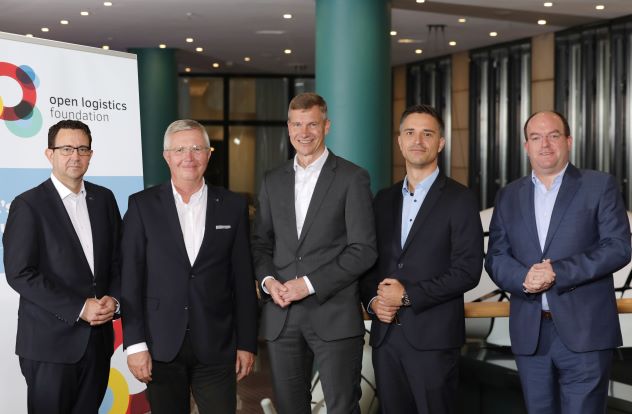
Dachser, DB Schenker, duisport and Rhenus have established the Open Logistics Foundation. The purpose of the non-profit foundation is to build a European open-source community aiming to promote digitalisation in logistics and supply chain management based on open source and standardise logistics processes through de facto standards. Not only is a technology initiative like this unique in logistics to date, the founding members are also taking on a pioneering role as to the future topic of open source.

“We want to drive the digitalisation of logistics forward together. That is why open source is an important success factor for the entire logistics industry and, at the same time, a driver for harmonised processes in digital supply chains. We consider the Open Logistics Foundation to be the first step towards a platform economy based on European legal standards and values. It is both a beginning and an appeal to the logistics sector to think of technology and processes together and actively participate in the open-source community,” the founding members declared in a joint statement. Now it is about anchoring open source in the logistics sector and implementing the internal structures to work with the corresponding hardware and software.

The foundation addresses all logistics-related companies and their IT developers. Through Open Logistics e.V., the funding association, which was also founded in Berlin, it is open to new members from all areas of logistics, ranging from industry, retail and services to freight forwarders and political organisations. Numerous companies already announced their participation in the funding association, including AEB, BLG Logistics Group, GS1 Germany, Lobster Logistics Cloud and the Bochum-based Setlog Holding, but also associations such as the Fraunhofer Gesellschaft zur Förderung der angewandten Forschung.

The core of the foundation’s work is the operation of the so-called Open Logistics Repository, a technical platform on which software and hardware interfaces reference implementations and components available as open-source under a free license (permissive license). All tools and components will be free of charge without restriction for commercial applications to promote broad acceptance within the logistics sector. Companies may use them, for example, to expand their platforms or to set up new products and business models faster.

The open-source approach guarantees an open standard for digitalising logistics processes while offering a significant degree of flexibility for individual customisation. Companies that use open source are usually more productive, reduce costs and prevent being tied to proprietary software. Another advantage is that the software solutions are not isolated, but all components are compatible, facilitating digital networking beyond company boundaries.

The main tasks of the foundation also include identifying collaborative projects to be included in the repository. It monitors the quality of the open-source software and guarantees neutrality in its development. Furthermore, it offers training for companies on how to work with the platform.

The set-up phase of the platform will take place in the coming year. In Berlin, some open-source projects have already been named, for example the first open-source digital consignment note (eCMR) as well as implementations for the digital load carrier exchange or the AGV interface VDA 5050. Further developments from the community will be added in the future.

On the foundation’s establishment, the board members were appointed. Jochen Thewes (Chairman), CEO of DB Schenker, Dr. Stephan Peters (Vice Chairman), Member of the Board of Rhenus, and Stefan Hohm (Vice Chairman), CDO of Dachser, were elected to the Executive Board. The Advisory Board is made up of Prof. Dr. Dr. h. c. Michael ten Hompel (Chairman), Managing Director of the Fraunhofer IML, and Markus Bangen, CEO of duisport, as well as Jakub Piotrowski CIO/CDO of BLG Logistics Group.

The Open Logistics Foundation was initiated by the Fraunhofer Institute for Material Flow and Logistics IML as part of its Silicon Economy research project, which is funded by the German Federal Ministry of Transport and Digital Infrastructure (BMVI) with €25m. More than 150 researchers are working on an open-source software and hardware infrastructure that enables companies to process their business operations in an automated way and to offer and use services and data securely across different platforms beyond company boundaries. The software and hardware created during the project duration until 2023 and the developments from the community Open Logistics Foundation will form the basis of the Open Logistics Foundation’s repository.

Statements

“If we want to digitise logistics successfully, we have to overcome silo structures. Hardware and software from open source can and will make a significant contribution to achieving this. The benefits are impressively simple: Everyone uses the same freight documents, for example, and everyone plans routes or offers tracking and tracing. In this respect, we want to jointly develop IT standards in logistics beyond company boundaries and make the results accessible to everyone. This open-source approach is intended to replace individual investments in the digitalisation of commodities. Every company will benefit from this.” Jochen Thewes, CEO of DB Schenker, Chairman of the Board of the Open Logistics Foundation

“Digitalisation is not an end in itself. It overcomes interfaces and pays off higher-level goals such as transparency, efficiency, and sustainability. Above all, however, it must also be economically feasible and successful on the market. 100 percent digital is not a dream, but our common future in more and more use cases. The open-source concept guarantees an open standard for digitalising logistics processes while offering a high degree of flexibility for individual adaptations. By founding the Open Logistics Foundation, we have laid the basis for the era of open source in logistics.” Dr. Stephan Peters, Member of the Board of Rhenus SE & Co. KG, Vice Chairman of the Open Logistics Foundation

“Intelligent logistics is based on high-performance IT systems. This principle has applied at Dachser for many decades and will certainly remain so. However, it hardly makes sense to program every line of code in a standard application yourself. This is neither economical nor does it provide a competitive advantage. On the contrary, quite often, it even prevents the pragmatic networking of partners and customers. Therefore, it is advantageous for all supply chain parties, if in the future, that selected software components are available to everyone free of charge as open-source elements and continuously updated via a neutral authority. Open source thus becomes another important competitive factor, and that is why we have supported the idea of the Open Logistics Foundation since the very beginning.” Stefan Hohm, Chief Development Officer (CDO), Dachser SE, Vice Chairman of the Open Logistics Foundation

“The logistics sector must become more software-driven to play a role in the forthcoming platform economy and to self-determine its future based on European legal standards and values. Digitisation is the goal, and open source is the key to taking all companies along this journey, regardless of size and sector. Dachser, DB Schenker, duisport and Rhenus have laid the basis with their donation of the non-profit Open Logistics Foundation. Now it’s a matter of what the logistics sector turns it into.” Prof. Dr. Dr. h. c. Michael ten Hompel, Managing Director of the Fraunhofer Institute for Material Flow and Logistics (IML), Chairman of the Advisory Board of the Open Logistics Foundation.

“After the presentation of the Open Logistics Foundation, it was clear to the Port of Duisburg very quickly that we would like to get involved. The primary goals of our commitment are an industry-wide dialogue, the identification of overarching challenges, and the creation of urgently needed standards to make cross-location collaboration technologically easier. The bundling of resources and topics offers us the unique opportunity to set de facto standards instead of creating further monoliths. The digitalisation of logistics can only be advanced by working together. The early involvement of all stakeholders creates important internal structures and also promotes the mutual exploration of existing needs and necessities as well as the identification of available resources.” Markus Bangen, Chairman of the Executive Board of Duisburger Hafen AG (duisport), Member of the Advisory Board of the Open Logistics Foundation

About the Foundation

The Open Logistics Foundation is a non-profit and operationally working foundation based in Dortmund that fosters open-source applications in logistics. The foundation’s primary purpose is to build a European open-source community to promote digitalisation in logistics and supply chain management based on open source and standardise logistics processes utilising de facto standards. The foundation operates the repository, a technical platform for open-source software (OSS) and hardware (OSH).

It makes interfaces, reference implementations and components available via open-source under a free license (permissive license). It monitors the quality and security of the open-source tools and guarantees neutrality in its development. The Open Logistics Foundation works based on European legal standards and values, it is independent and addresses IT developers and users from all areas of logistics.

The Open Logistics Foundation was initiated by the Fraunhofer Institute for Material Flow and Logistics (IML) as part of the “Silicon Economy” project. The founding members are Dachser, DB Schenker, duisport and Rhenus; other companies support the organisation. The foundation is open to further members through its funding association, Open Logistics e.V.

Elanders helping solve UK supply chain challenges

Elanders, a global print, packaging and supply chain management specialist, has converted 25,000 sq ft of additional space at its Newcastle Upon Tyne (UK) site to support customers in the light of all the current global supply chain challenges.

The logistics site, on New York Business Park, now has capacity for an additional 1,250 pallets to support its existing fulfilment services and capability.

The proactive investment meets Elanders’ current and new clients’ needs that range from being a modern facility, through to effective operational design, secure storage, separate caged areas and security access control.

These services will help businesses who are experiencing storage and fulfilment challenges, which will have been exacerbated by the recent global supply chain issues.  Elanders in the UK has ‘Excise warehouse’ status to support alcohol supply chain services and a ‘Bonded’ supply chain operational solution where utilising this capability will negate any double duty and UK tax payments for goods that are shipped to the UK from outside the EU and later sold to EU customers.

The additional space has been designed to work with small- to medium-sized businesses who operate in both the B2B and B2C markets. In all cases, the focus is on bespoke solution design and operational engagement that is focused upon the final customer needs.

Kevin Rogers, Managing Director for Elanders in the UK, said: “Supply chain solutions are under immense pressure today. The business situation has highlighted that many supply chain solutions are not that agile or flexible to mitigate significant challenge and disruption. New solutions and structural designs are now actually needed to meet a changed customer demand requirement. What Elanders has today is the flexible solution that can support both B2B and B2C activities – creating more localised responsive and personal supply chain solutions in a global economy.”

Elanders’ supply chain solutions support customers who also require add-on services to support their operational needs, such as order management and value adding services in addition to the core warehousing and logistics needs – including the reverse logistics of customer product returns.

Big Box provides expansion space for IPL Hull

IPL Hull (formerly known as Straight Manufacturing), a long-established plastics manufacturer, is currently undergoing an ongoing development and investment programme, and Big Box Buildings (part of The Big Box Group) has been a part of that.

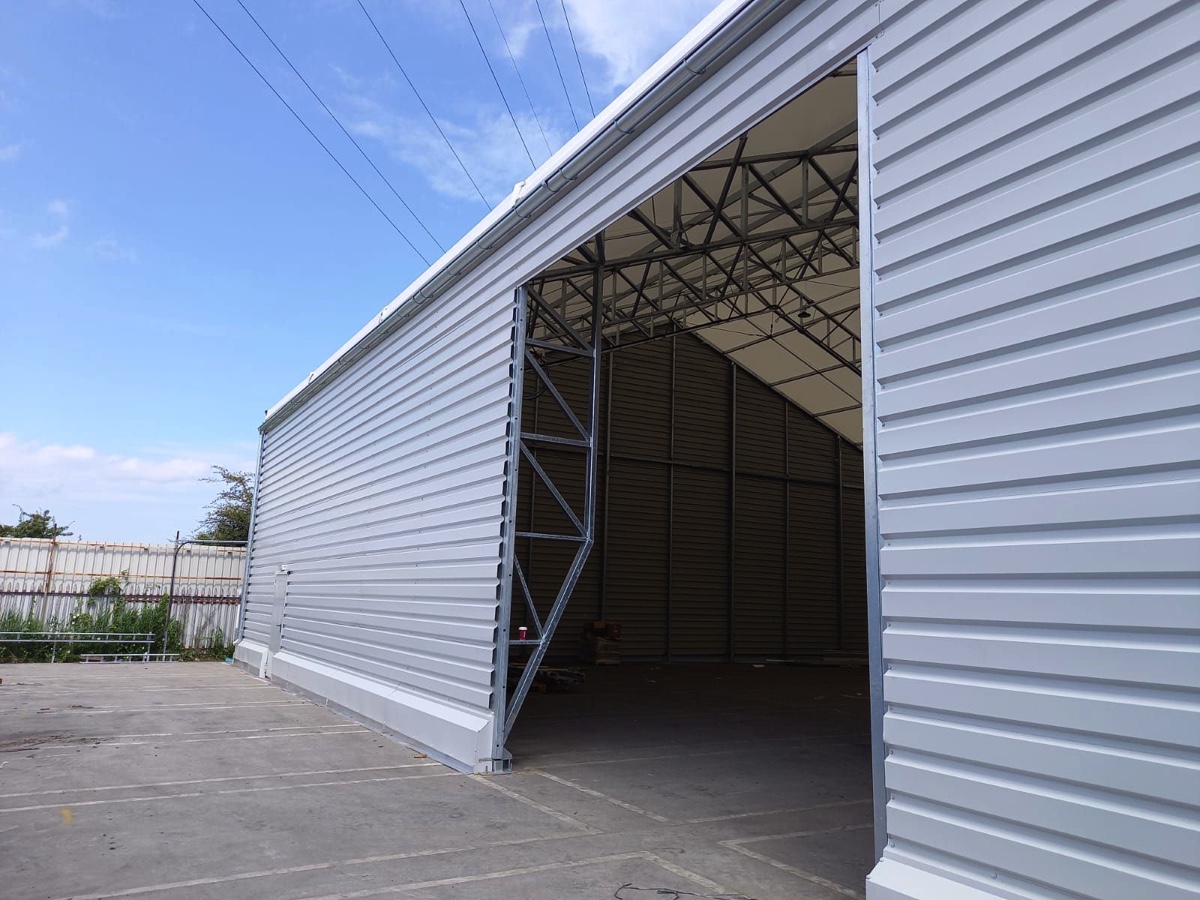
The significant growth of IPL’s business was putting increasing strain on storage space and the outside yard was fully used. Covered outdoor storage was desirable from a quality and auditing perspective and it required an L-shape format. Big Box was able to provide two steel-framed buildings joined together with a valley gutter.

The solution was both cost effective and efficient to build. It has a single-skin PVC roof which makes it economical and single-skin cladded steel walls, which also provides security.  A steel valley gutter runs down the middle and rainwater gutters/downpipes run along the sides.

Steel-framed buildings are considerably stronger than aluminium so have a much longer life expectancy. At larger sites and/or exposed windy locations, steel-frame buildings are often a great choice. Big Box Buildings’ steel-frame design can be retro-fitted to an existing concrete pad (or flat tarmac sometimes) without requiring costly groundworks.

Big Box Group has a long existing relationship with IPL Hull as a racking and safety goods supplier. In line with Big Box’s ‘turn-key’ solution approach, in addition to the building project, it also undertook ground works to an adjacent but unrelated area and supply of a small plant room.


Deadline approaches for IFOY entries

The application period for the IFOY AWARD 2022 is entering the finishing phase. Suppliers of products and solutions can apply only this week. The application portal at www.ifoy.org is open until 30th October, 2021. In addition to forklifts, warehouse technology and special vehicles, automated guided vehicle (AGVs), shuttles, robots, cargo bikes, drones, cranes, software and apps as well as successfully implemented, integrated warehouse solutions are also eligible for application.

Furthermore, outstanding technical details or components, such as ergonomic innovations, safety solutions or automation components, are also awarded. In the “Start-up of the Year” category, newly-founded companies with innovative prototypes or functional developments can apply for an IFOY AWARD.

Due to its expertise, the IFOY AWARD is considered the most important innovation award in intralogistics. The election by an international jury selected from internationally renowned trade journalists and the leading logistics media – including Logistics Business as the sole UK media representative – is preceded by an extensive audit with nomination and test cycles. The equipment and solutions nominated for the final undergo individually tailored driving or functional tests, including the test protocol comprising around 80 criteria and the scientific IFOY Innovation Check, on the occasion of the IFOY TEST DAYS from 18th – 23rd March, 2022 at the Messe Dortmund exhibition centre.

In addition, jurors and their teams of advisors from the business world will travel to examine the finalists themselves before casting their vote. As part of IFOY TEST DAYS, TEST CAMP Intralogistics will be held again in 2022, admitting B2B trade visitors interested in innovation. The number of participants is limited.

Applications can only be submitted online HERE.

OT Group opens new centralised hub

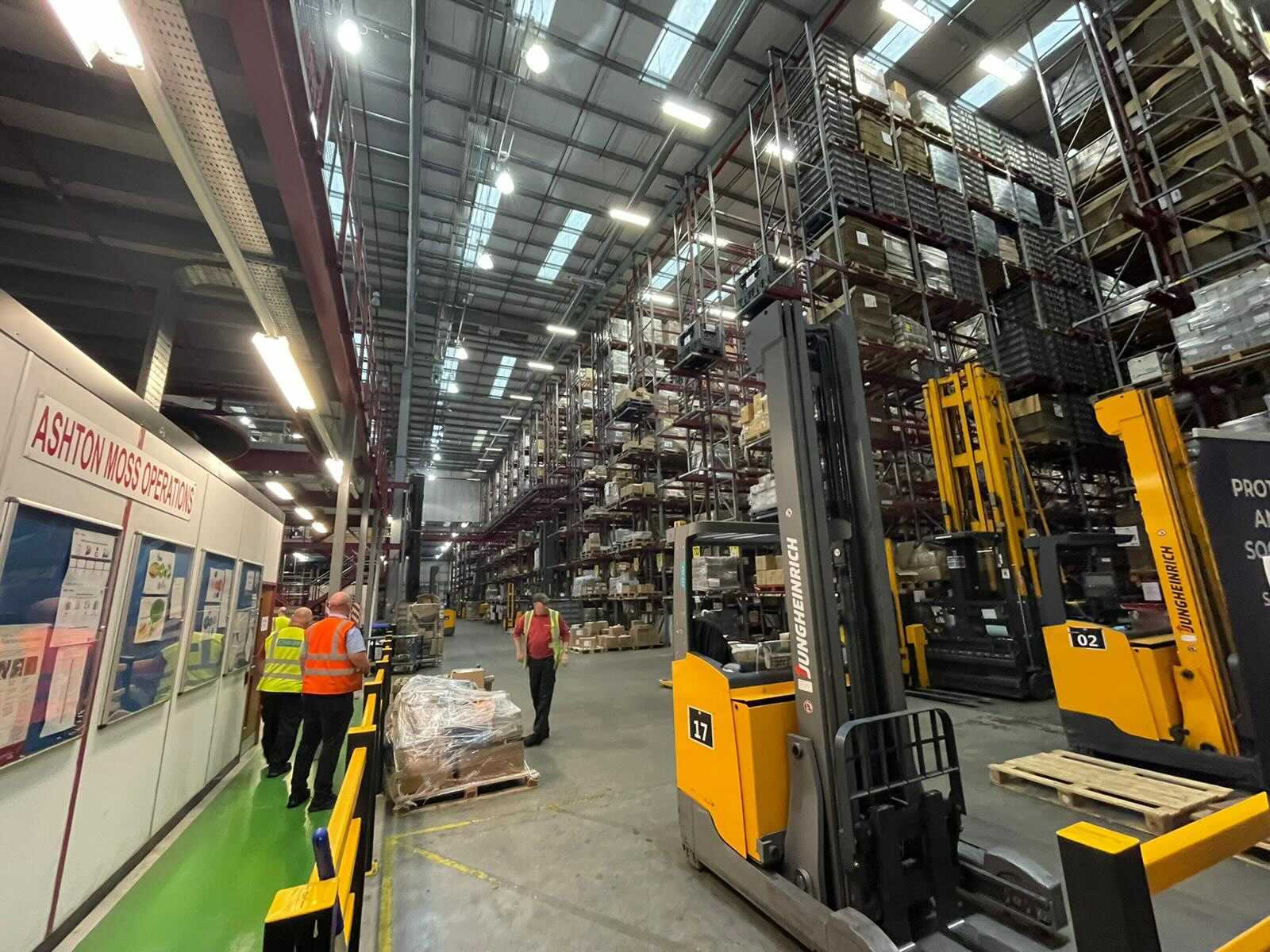
National business supplies and services provider, OT Group – which includes the OfficeTeam, Office Depot UK & Ireland, Zen Office, and Spicers Ireland brands – has relocated to its new headquarters in Ashton-under-Lyne.

The move comes as a result of the completion of OT Group’s acquisition of parts of Office Depot UK & Ireland’s contract arm earlier this year, which is already based at the location. Further significant investment is intended for the 275,000 sq ft site, with plans to bring up to 200 new jobs into the local area.

The move will enable the business to provide a higher quality service to its customers – with the facility having the capacity to hold over 22,000 products and, using sophisticated picking technologies, achieves a 99.8% order accuracy rate.

Previously located at its central distribution centre in Birmingham, the facility will provide greater stability for OT Group’s customers through improved distribution capabilities, at a time when supply chain turbulence is at an all-time high.

Andrew Jones, CEO of OT Group, commented: “We’re thrilled to be based in Ashton-under-Lyne – the area has so much to offer, and the site is more fitting with our long-term strategy thanks to its industry-leading technology and experienced team.

“It also serves to showcase the rapid growth the Group is undertaking – and evidences where we are innovating within our industry and leading within the market, while still providing the reliability our customers need.

“And, with a ‘local first’ recruitment policy in place, we’re excited to be looking to the talent pool of Ashton-under-Lyne and the wider Manchester area to fill any newly created positions.”

The Ashton-under-Lyne facility houses advanced warehousing and distribution centre technologies, meaning that OT Group will be able to provide an even more efficient, competitive, and responsive service to its customers as it continues with its rapid growth plans.

The launch of the new flagship site coincides with the acquired parts of Office Depot UK & Ireland business’ full integration into the OT Group, where it began trading under the new Group umbrella on 27th September 2021.


Subscribe

Get notified about New Episodes of our Podcast, New Magazine Issues and stay updated with our Weekly Newsletter.