Configuring Drive Systems to Customer Requirements

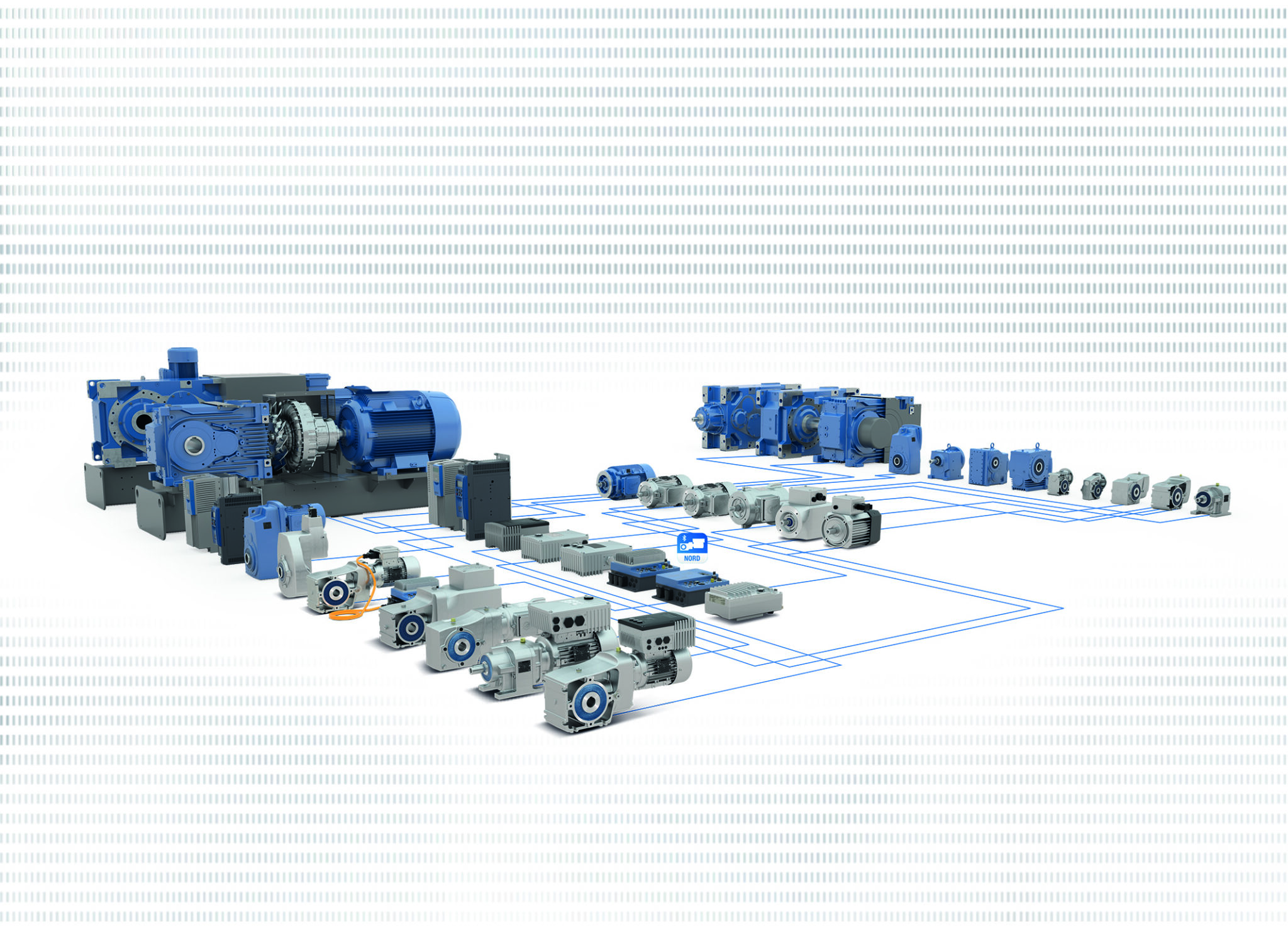
With the modular system, NORD DRIVESYSTEMS, as a full-service supplier in drive technology, offers a wide portfolio of drive components that can be individually combined. The company places particular emphasis on energy efficiency, version reduction and the Total Cost of Ownership (TCO).

NORD DRIVESYSTEMS supplies its customers from more than 100 industries with optimally matched drive systems that are precisely adapted to their individual requirements. The company is one of the leading international full-service suppliers of drive systems and develops and manufactures gear units, motors and drive electronics. The portfolio includes gear units for torques from 10 Nm up to more than 282 kNm, electric motors for power ranges from 0.12 to 1,000 kW and frequency inverters up to 160 kW.

Configurable for any application

With the modular system, drive systems can be combined individually for almost any application – this guarantees solutions which are perfectly tailored to the customer’s requirements. The competent Nord consultants develop tailored concepts that can be optimised with regard to energy efficiency, version reduction and the Total Cost of Ownership (TCO). Users can also configure their drive components online, using the product configurator.

Nord’s production is characterised by a high degree of vertical integration: All quality-determining components are produced at and manufactured in Nord’s own factories. The international production capacities and a network of local subsidiaries in 36 countries ensure a reliable and short-term worldwide supply with service support and spare parts.

Familiar with customer industries

NORD supplies efficient drive solutions for more than 100 industries and is very familiar with their specific requirements. For intralogistics and warehousing, for example, the drive specialist has just defined industry-specific optimised solutions. These solution variants are called LogiDrive and – depending on the required application – are offered in a basic and an advanced version.

The patented DuoDrive geared motor is recommend for applications in the food or beverage industry as well as in the pharmaceutical sector. An efficient IE5+ synchronous motor, which tops the highest defined efficiency class IE5, is integrated into a single-stage helical gear unit – which not only allows for a compact installation space but also ensures high system efficiency.

Complete or Phased Approach to Warehouse Automation?

With labour hard to find and performance at peak under scrutiny, businesses may be tempted to opt for a complete, turnkey warehouse automation project to solve all their problems in one move. But might a stepped approach make more sense? Dan Migliozzi, Head of Sales at independent systems integrator, Invar Group, considers the options.

There can be little doubt that automation is the future for all but the smallest of warehouse operations. New affordable technologies are now within reach of most small to medium sized businesses (SMEs) and these technologies, often involving robotics and AI, are transforming performance across intralogistics processes.

Driven by poor labour availability and increasing customer demands, many businesses will be thinking about a comprehensive review of their operations, and may be tempted to go for a full turnkey approach – introducing a whole raft of systems at the same time. However, whilst this may be appropriate for some companies, others may be exposing themselves to unnecessary levels of risk, and a more considered approach could yield greater gains.

For a major corporation with the luxury of multiple warehouses or distribution centres, and facing challenges or changes to their current operational model, it may be practical, even desirable, to take facilities off-line one by one and rebuild them. For smaller businesses though, this could be a highly risky strategy and may be unviable – a considered, step-by-step approach to the end goal of significant automation may be preferable, both financially and operationally.

Financial benefits

Financially, moving towards automation in planned stages limits the need for often significant up-front capital expenditure, a particular concern for start-ups and other companies in a phase of rapid growth when other demands on working capital can be considerable. A stepped approach that quickly takes advantage of ‘low hanging fruit’ can achieve an early Return on Investment and bring many other benefits – potentially helping to fund subsequent phases of automation.

But even if capital funding isn’t an issue, the risks of an ‘all-in’ approach are significant. Some degree of disruption is inevitable during installation, and even with the most careful planning, highest quality equipment and dedicated vendors and integrators, it’s rare for everything to work straight out of the box. The risk of a major delay or disruption could have a far-reaching impact on the business and may lead to lost sales and reputational damage.

A further consideration is, with a complete turnkey approach it’s usually not possible to revert to the old ways of working while the fixes are actioned. There is no redundancy in this situation.
So rather than playing with the entire operation in a giant sandbox, better by far to identify and address the most urgent or compelling challenges and opportunities as they arise. That way, processes can be better defined and understood, employees at all levels trained and other necessary capabilities – maintenance, for example – built up at a manageable pace.

Planning a phased migration

‘Step-by-step’, however, does not mean ‘piecemeal’. The planning for a stepped migration to more automated operations is just the same as it would be for a turnkey project – indeed the ultimate goals will be just the same – it’s merely a question of how to get there.

Firstly, and obviously, the company needs to know its objectives and requirements. Is automation needed because the business is in, or is anticipating, a period of rapid growth? Growth is good, but for many companies, perhaps in a mature or niche market, higher volumes and throughputs may not be the issue – greater efficiencies, lower costs and perhaps particularly better use of scarce labour may be the imperatives.

The company needs to map and understand its processes from cradle to grave, including processes which are unlikely to be directly addressed by automation. Where are the biggest wins, the greatest challenges, the most acute pain points? Address these first – paradoxically, trying to optimise a process that you know to be already very good often carries a larger downside risk.

Consider scaleability

But the automation plan can’t just address short term issues. The business may need to consider the extent to which the automation is scaleable – can a robotic installation, for example, be scaled up for future growth just by leasing more units, or will there be a point at which the racking and other physical attributes of the warehouse require major change? And if so, should that be done now, even though it may not be needed for some years?

The plan also needs to consider the pace of technological change. Evolution in fields such as robotics is lightning-fast. There is no shame in buying last year’s model if it does the job, but there are risks that equipment and systems may become ‘obsolete’, or worse, unsupported, much quicker than expected. This means that some of the steps in the automation road map may need to cover replacing or upgrading earlier and relatively recent investment steps. Robust continuity planning, in partnership with reputable vendors and integrators, is key.

Planning a stepped approach to warehouse automation cannot be just a top down, or a bottom up, process. It really does require the involvement of every stakeholder in the business. Clearly it needs high level strategic direction to ensure that the plan is aligned with the company’s goals, its financial capacity, and its appetite for risk. Operational input – will the proposals actually meet the requirements of, for example, seasonal peaks. Engineering – does the business have, or can it expect to establish, an adequate maintenance capability or will this have to be outsourced. HR may have views on how staff can be trained, and whether new staff with new skills need to be hired.

Technical capabilities

And then there is installation. Even quite modest steps in automation are likely to involve systems and equipment from multiple manufacturers and vendors and will require some level of integration, both with each other and with existing equipment and systems. ‘Plug and play’ is a much-vaunted term, but it’s hard to find evidence that it really exists in the modern warehouse!
Therefore, it’s important to find a reliable, independent integrator that has the necessary technical capability and in-house software skills to deliver a project successfully over several planned stages – an integrator that supports you every step of the journey.

Vertical Lifts, Ahead of the Curve

Traditionally a step ahead of the game with its vertical lift products, today, Kardex is a leader in warehouse automation. Peter MacLeod asked Kardex New Business Director for UK & Ireland Aaron Thornton to bring us up to date.

Aaron Thornton was persuaded to join Kardex after spending 20 years at a competitor. “When I was previously selling vertical lifts, it used to annoy me when customers would say they needed a ‘Kardex’. I’ve always had respect for the organisation, and a big part of the attraction of joining Kardex [two years ago] was their future commitment to automation. It is an organisation with a very stable background, excellent branding in the market and is correctly perceived to be the market leader. The company has a reputation for quality and stability.”

As Kardex continues its drive into the wider automation field, it has widened its focus from its previously core products – vertical lifts and carousels – and more on its newer technologies such as the Vertical Buffer Module. This, in conjunction with its picking software system (PPS), is driving the company to new heights and new segments.

“We’re a force to be reckoned with,” says Thornton. “We’re now able to attract a customer base that Kardex may not have communicated with previously, for example 3PLs and ecommerce businesses. We’re now looking at integration with conveyors, AMR solutions and robotics. Last year we also took on the AutoStore products to further widen our portfolio.”

My first touchpoint with Kardex would have been at an IMHX trade show in the early noughties. At the time its stand was dominated by a vertical lift that reached high into the rafters. “Back then, we were very product-led,” Thornton explains. “We don’t often take machines
to shows now. Yes, we have a leading product portfolio and that will continue to serve for many decades to come, but if you simply take a carousel or a vertical lift [to a show], that’s what you end up getting enquiries for. Kardex are now so much more than that.”

A solutions provider, Thornton says Kardex’s approach to Industry 4.0 is led by its software. “It takes our product range and lifts it to a different dimension. We also lead with pick technology and have a fantastic service offering called remote support. This enables us to dive
into the machines remotely in order to carry out assessments, for example servicing or cycles. We can see how the machines are performing live and plan preventative maintenance. That offers us a different dimension of sales support, which is a very exciting place to be.”

Kardex is particularly strong in an area Thornton calls ‘first-step automation’. “This is how we work with predominantly SMEs and larger businesses in order to lead them into their first foray into automation. “We are adapting as an organisation. We have robotics, conveyors, AMRs… That’s where the growth of the organisation lies, because that’s what customers demand. Automation was always something to
do with the big boys, but we can offer a level of automation at a relatively low cost, and that’s what makes us different.”

Vertical Lifts

Two major themes are emerging in 2023: labour shortage and high energy costs. Thornton believes Kardex is well equipped to address both of them. On the former, he says: “With a couple of machines and very good software we can manage pick patterns and throughputs that would previously require four or five people. We have discussions every week with our customers about the labour shortage, and we can help them overcome that.”

On the latter, he says: “We are always looking at the technology within our products to increase our green credentials. We have LEDs within
the machines to see what we can do to help lower customers’ energy bills. Companies that use a lot of automation look at their suppliers to
see how they can help them with that – we’re seeing kilowatt usage on motors becoming quite common in tenders.”

With a nod to Kardex’s heritage, this is a different company to the one I first encountered 20 or so years ago, and has its targets firmly set on the automated future of logistics.

New KleanTop Plastic Spiral Cage Belts

Regal Rexnord Corporation (NYSE: RRX), a global leader in the engineering and manufacturing of industrial powertrain solutions, electric motors and controls, power generation products and power transmission components, has launched its new Rexnord® 6400 Series KleanTop® Plastic Spiral Cage Belts for food manufacturers. The 6400 Series is ideal for customers who want to increase productivity while reducing system costs and food safety risks.

The new line features patented PowerKeyTM technology, delivering the strongest curve strength available in plastic spiral belting for maximum product throughput. In addition to the PowerKey, these modular spiral belts provide increased belt rigidity, allowing carry rails to be spaced 20% further apart, reducing system structural costs. The series features an open design for easy cleaning and sanitation, as well as a 45% open area, allowing for the appropriate balance of airflow and product support in food manufacturing applications.

6400 belts are easy to install and offer reduced maintenance and repair times. The plastic construction requires no cutting, welding or grinding to complete maintenance. Repair is fast and easy with no expensive tools necessary.

Modular Conveyor Belts Offer Increased Capacity

“For years, food manufacturers everywhere have trusted Regal Rexnord as a partner with proven expertise in plastic modular and metal spiral cage belts,” said Shelley Czerniak, Global Business Director – Conveying Food. “Today, Regal Rexnord is bringing this same expertise to plastic spiral cage belts with the Rexnord 6400 Series KleanTop® Belts. This lighter belt provides manufacturers the confidence to run wider, faster and longer to achieve greater productivity.”

The 6400 Series is developed specifically to benefit bakery, protein and ready-to-eat food manufacturers with proofing, cooling, refrigeration, freezing, buffering, accumulation, elevating and lowering applications.

Clad-rack Warehouse for Hardware Company

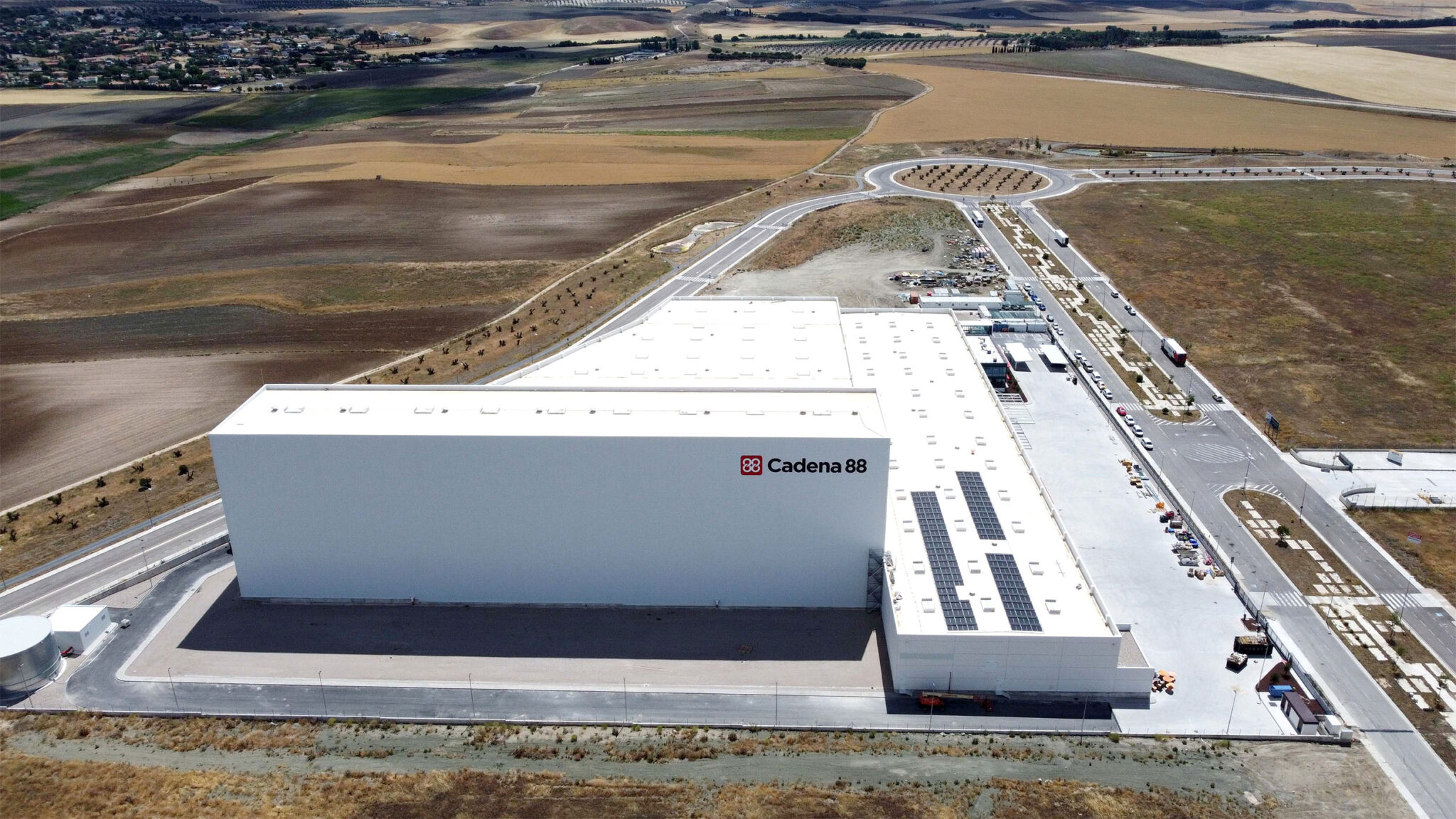
The hundred-year-old hardware products company EHLIS recently celebrated the launch of its new logistics centre in Illescas (Spain), where AR Racking has played a leading role with the installation of an automated clad-rack warehouse and an adjustable pallet racking warehouse. It is a logistics platform that required an investment of 30-35 million euros, and which will complement the one that the hardware leader has in Barcelona.

EHLIS, which this year celebrates its 125th anniversary, has a facility in Illescas that covers a total area of 60,000 m2, of which 40,000 m2 and 22,000 m2 are urbanised and built and where a miniload warehouse is located, plus a 36 metre high clad-rack warehouse for 30,000 pallets and a warehouse with adjustable pallet racking with a capacity for 15,000 pallets, the latter two being equipped with AR Racking racking systems. The clad-rack warehouse and warehouse designed with an adjustable pallet racking system cover an area of 3,220 m2 and 8,200 m2, respectively.

Delays in material deliveries, COVID and other matters meant that the launch of the logistics platform did not happen until the first quarter of 2023. A launch which will now improve the service that the company offers to its customers “firstly, by reducing delivery times, and secondly, by increasing the product range”, explained EHLIS’s managers at the opening held at the end of March.

“We have provided our expertise to the EHLIS logistics centre with our technical-logistics advice, our reliability as racking manufacturers and our engineering knowledge through our strong commitment to R&D&I”, commented Manel Bustos, AR Racking sales representative.

The logistics centre in Illescas has a capacity to prepare 1,000 order lines per hour. As confirmed by EHLIS’s management at the opening, the forecast is to increase the number of references with the increase in the logistics capacity. It currently has 16,000 permanent stock references plus a further 3,000 additional ones that fluctuate throughout the year.

AR Racking has a long track record in automated warehouse projects. These are projects that are always developed in collaboration with leading integration engineering companies that provide the automated and robotic means and where AR Racking designs and manufactures all the racking that supports the unit loads and/or building structure itself, such as with clad-rack warehouses. Likewise, in the warehouses with pallet racking solutions AR Racking fully develops the turnkey project concept, taking care of all the phases that cover the implementation of its storage solutions.

AR Racking is part of the Arania Group, an industrial group of companies with extensive experience and scope, and with a multi-sectoral activity based on the transformation of steel that dates back more than 80 years. AR Racking provides the market with a wide range of solutions with high certified quality standards and a comprehensive project management service. AR Racking’s industrial storage systems stand out for their innovation, reliability and optimum efficiency.

IFOY Test Report: NIMMSTA Light Tag

As we enter the week when the IFOY Awards are handed out in Dortmund (on Thursday June 22nd), we continue our look at all of the 2023 finalists and share the verdict from the IFOY test conducted during the evaluation by an expert jury in March. Our next entry is the Light Tag pick-by-light solution from NIMMSTA GmbH.

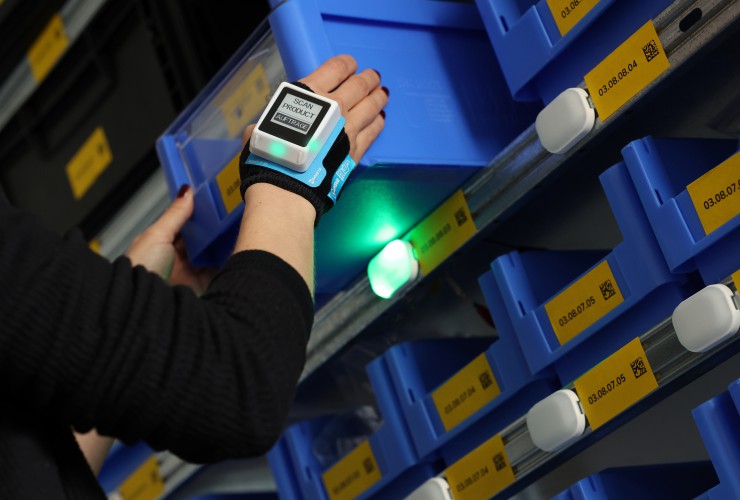
The NIMMSTA Light Tags represent a completely new approach to a pick-by-light solution that achieves up to 80% more efficiency without integration effort and in combination with the NIMMSTA Industrial Smart Watch.

IFOY category: Special of the Year

IFOY Test Report

NIMMSTA had set up a shelf at its booth where visitors to IFOY TEST DAYS could try their hand as a picker. So what could be more natural than putting on one of the company’s hand straps and getting started? The task for visitors was to pick five products. Without assistance from NIMMSTA’s system, it took the tester 112 seconds. But it can be even better. With support from the Light Tags, the time could be reduced to 74 seconds.

The approach to the solution is completely new, because the “Light Tags” contain only battery-powered LEDs (battery life: three to five years) that light up in different colours and patterns. All the logic is in the NIMMSTA wearable, which personnel wear directly on their bodies. This combination makes all intralogistics processes digital and more efficient.

Via Bluetooth, a position is assigned once to each light tag in the NIMMSTA app. The light tag is then attached to the corresponding storage location with an adhesive strip. As soon as the picker is sent to position 1 via the NIMMSTA smart watch and the picker approaches position 1 within a radius of 10m, the smart watch and the light tag light up in the same colour and pattern. Based on the Freehand workflows and the pick-by-light solution with the light tags, the processes run up to 80% more efficiently, because the storage location is additionally immediately visually recognisable for the personnel. In the process, the wearable creates the conditions for up to a 50% percent increase in efficiency and the light tags contribute up to 30%.

Remarkably, no integration effort is required to use the system. Alternative pick-by-light systems are complex and costly to implement, both on the software side and the electronics or wiring at the racks. NIMMSTA’s pick-by-light solution is simple and smart: the intelligence is not in the display system, but in the industrial smart watch, which only addresses the corresponding light tag. With the help of this solution, processes can be transformed into freehand workflows.

IFOY test verdict: The potential for the solution in intralogistics and production is considerable. The provider’s goal is to optimize not just one process step, but the entire value chain. The focus is on creating more efficiency for the user, increasing process quality, and consequently securing the user’s productivity and growth. At the same time, however, the working environment of the personnel in intralogistics and production is to be improved.

IFOY Innovation Check

Market relevance: With increasing turnover figures in the mail order business, the topic of picking efficiency is gaining in importance. With the combination of “Industrial Smart Watch” with scanner as well as the “Light Tags”, NIMMSTA offers a cost-efficient solution to achieve a significantly higher picking speed than with handgun scanners when manually assembling consignments of goods. The market relevance is particularly high for small and medium-sized warehouses (in SMEs) where no investment in automation solutions is planned. However, the solution also scales into large warehouses and can pay for itself within 4 to 8 months.

Customer benefit: In addition to the 50% increase in efficiency already measured in customer applications using the wearable, the light tags are expected to improve search time at the shelf by a further 30% while reducing picking errors. Since the battery-operated light tags are only stuck to the shelf and integrated into the system with a one-time scan, setup is extremely simple and also very cost-effective compared to other solutions.

Novelty / Innovation: The combination of wearable with a pick/put-by-light solution without cabling effort and with very simple installation can be considered as a special novelty, which promises high efficiency increases in manual picking with very low investments and costs at the same time.

Functionality / Type of implementation: In terms of functionality, great importance was attached to simple usability in all relevant processes. Starting with the quick installation by simple sticking and one-time booking in the system, over the stringent user guidance via wearable and display of the next product by the light tags in the colours of the picker up to the replacement of the AAA batteries after the 3 to 5 years’ runtime in the tags for uninterrupted operation. The high battery life is achieved through extremely low-power communication strategies between the light tags and the wearable, and because no data processing takes place in the tags. By concentrating all intelligent functions in the wearable and via its cloud connection, a wide variety of other processes (goods receipt booking, inventory, stock transfer) can be added.

Verdict: The NIMMSTA pick-by-light solution enables a significant increase in efficiency of manual picking and putting processes, innovatively implemented through a technically simple display technology for the shelves in the warehouse that can be easily integrated by sticking and scanning. Due to the high level of user-friendliness, the comprehensive connection to a wide range of warehouse management systems and the very short payback period of usually a few months, the system is considered to have very high market potential.

Market relevance ++
Customer benefit ++
Novelty / Innovation +
Functionality / Type of implementation ++
[KEY: ++ very good / + good / Ø balanced / – less / — not available]

Food Logistics Operator Equips Warehouse

Choví, the sauce manufacturer, breaks into the food logistics sector with the creation of Choví Logistics, for whom AR Racking has installed a combination of dry and cold storage systems in its new logistics platform in Massalavés, Valencia.

The new business unit of Choví, dedicated to logistics and which operates as a supplier for other companies in the food sector, entrusted AR Racking to maximise the productivity of its new 8,000 m2 warehouse. The AR Racking team has manufactured and designed a comprehensive storage solution, combining a selective storage system, adjustable pallet racking, and a compact system, live pallet racking.

Adjustable pallet racking, which is highly versatile, resistant to all types of loads and allowing direct access, stores 5,400 pallets. For its part, live pallet racking, with its high-density storage and with an incline and rollers to facilitate the movement of the load, has a capacity for 1,200 positions. The height of the racking is 11,000 mm, with the top level at 10,500 mm. “Our service is comprehensive, going beyond the mere manufacture and installation of racking. Together with the customer, we believed that the combination of an adjustable pallet racking system and a compact one would more effectively meet the stock rotation needs of the different products”, commented Javier Miquel, AR Racking Sales Representative.

What’s more, around 2,000 m2 of the total area of the warehouse is dedicated to cold storage of between 3ºC and 5ºC. In any case, AR Racking’s galvanised racking guarantees the optimum storage of food thanks to its resistance to extreme temperatures.

According to David Moyá, Managing Director of Choví Logistics, “we now have a warehouse worthy of our experience in the food sector and that can meet our customers’ logistics needs”. The Valencian company has been striving for years to reach new markets and diversify its portfolio.

AR Racking is part of the Arania Group, an industrial group of companies with extensive experience and scope, and with a multi-sectoral activity based on the transformation of steel that dates back more than 80 years. AR Racking provides the market with a wide range of solutions with high certified quality standards and a comprehensive project management service. AR Racking’s industrial storage systems stand out for their innovation, reliability and optimum efficiency.

Lithium Battery Power for Cleaning Machines

Battery technology for use within the cleaning industry has not significantly improved over the last 40 years. Until now. Three years ago, a 36V Lithium high capacity option was considered bespoke and very expensive compared to 24/48V versions, which were primarily developed for the forklift market.

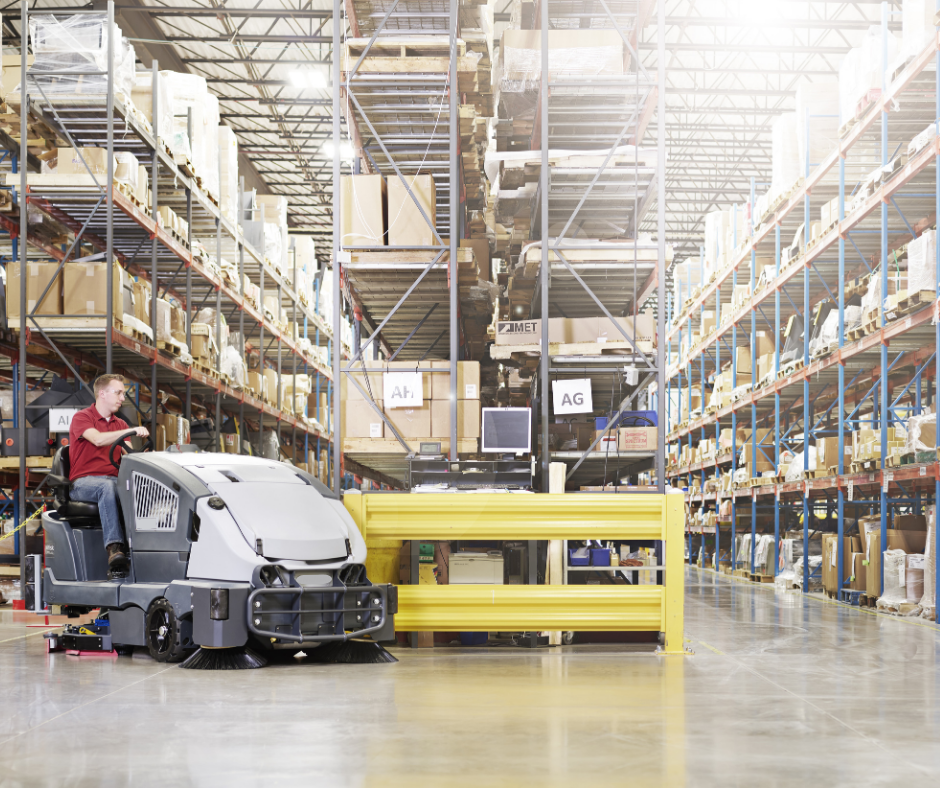
Since then, Lincoln Cleaning Technology (LCT) has worked extensively with their battery supplier, Battery Service Hub (BSH), to develop an innovative 36V Lithium battery to fit their ATS50BE combination sweeper scrubber. This machine had already proved a popular alternative to LPG and diesel machines of a similar size, especially with companies keen to reduce their carbon footprint.

The idea was first discussed when one of LCT’s customers, a national distribution company, became frustrated with conventional lead acid battery technology when visiting their warehouses around the UK to find cleaning machines parked in a corner with a battery that hadn’t been charged or maintained and which subsequently needed replacing after only a couple of years.

Traditional batteries have an average life expectancy of three years, depending on the number of charges and discharges. Charging a traditional battery from 80% discharged takes 10-12 hours, with any deviation potentially causing damage. With current cleaning regimes within many industrial buildings, often more than one machine is therefore required to cope with the recharging downtime. Lithium, however, allows opportunity charging without causing any damage to or shortening the life of the battery – and the operator does not have to maintain it.

MHE Manager at Culina Asset Management, Andy Miszkiel, is delighted, saying “We find Lithium the ideal fuel for a cleaning machine due to the way they are used operationally. They have short charging windows without having to take the machine out of operation for extended periods, as we do with lead acid.”

Cleaning machines

Director at BSH, Andy Riddle, explains “Because of the quick recharge time from (4 hours from 90% discharge), they would not be without a machine if it was needed outside of the usual cleaning window. The faster recharge time can mean that fewer machines are required, saving additional labour cost, capital outlay and storage space.”

LCT’s Sales Director, Simon Jackson, added “The cost of Lithium over the last three years has come down to a commercially viable level, allowing us to offer extended hire terms to offset the cost difference, delivering a robust commercial and operational solution for our customers.”

With 3,000 charging cycles, shorter charging time (50%-60% faster), no hazardous gases when charging and no requirement for diesel of LPG, the 36V Lithium battery provides flexibility and creates an opportunity for cost savings in warehouses and distribution centres in areas such as electricity consumption and maintenance.

IFOY Test Report: ff Fördersysteme

It’s the turn of ff Fördersysteme’s 3D conveyor and drive system in the spotlight as we continue our run-through of all the IFOY Award finalists ahead of the announcement ceremony in Dortmund on June 22nd.

Category: Start-up of the Year

IFOY Test Report

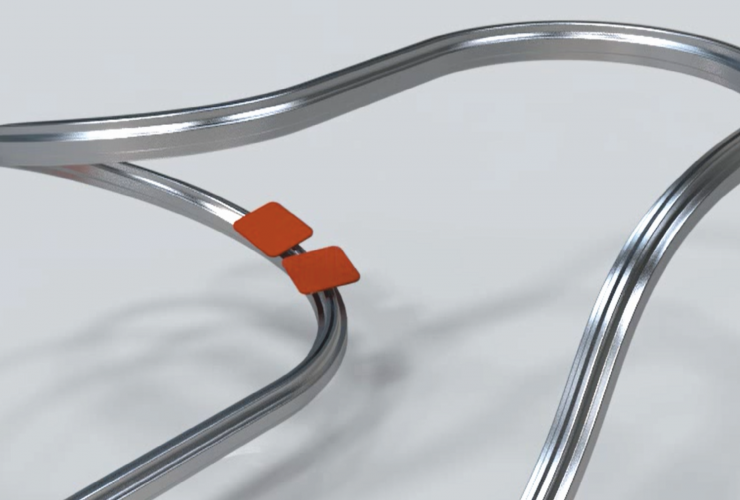
ff Fördersysteme offers a flexible basic system for conveyor and transport systems of all kinds. On the basis of a three-dimensionally movable chain and a guide system consisting of straight and curved segments, conveyor sections that are precisely adapted to the respective requirements can be implemented without interfaces in the smallest of spaces. By adapting the system with various transport drivers, it is suitable for a wide variety of applications.

The basis of the conveyor system is a patented, three-dimensionally movable drive chain. The free movement of the chain is made possible by an axial axis of rotation. In contrast to conventional conveyor chains, this 3D chain can thus twist on a helical path and run straight into it on a continuing path. This allows the conveyor chain to follow any guideway and curvature in space.

The chain consists of two chain links, which are connected to each other by means of an axial pin. These links can be manufactured in different sizes and materials depending on the requirements. The chain is guided in an aluminium profile. This profile is open on one side so that a carrier for the transported material can be placed directly on the conveyor chain. The load is transferred via the guide rail.

The modular 3D chain drive system consists of straight and curved components that can be flexibly linked together, allowing a system to be converted or retrofitted as required. This allows the tightest radii and any inclines to be mastered and the shortest possible conveying distance to be realised. No interfaces, interruptions and associated drives, sensors, etc. are necessary. By attaching different transport carriers such as conveyor belts, plastic boxes, overhead conveyors and possibly even a lightweight robot, the system can be used in a wide variety of ways. The technology thus also offers the possibility of converting an existing conveyor system or managing an entire production process with a single basic system.

Innovation: The simplicity, flexible use by means of different transport attachments and the three-dimensionality of the system are particularly noteworthy. Most conveyor lines, with curves, ramps, elevators, etc., consist of a large number of combined modules. Each module usually has its own drive and sensors. This results in numerous transfer points and all drives must be integrated into one control system. Gradients are often only possible to a limited extent.

The ff conveyor sections consist of a single drive train, which can be designed three-dimensionally in space as required and can be linked to various transport attachments. Whether transporting, tilting, swivelling, rotating: various tasks can be solved in one track. 3D systems offered on the market do not offer full freedom of movement and are also mostly designed for a specific application. This opens up new possibilities in plant design with ff conveyor systems. An example application could be a spiral conveyor that can travel up a transport path once and back down again in the same piece. This endless loop allows such a system to serve once as a buffer, packages can be fed in, but also removed again. This results in enormous space savings.

Market relevance: The 3D chain drive offers a technical and economic alternative in many areas. For example, the system can be used in the industrial sector, but also in passenger transportation. In the field of passenger transportation, this technology can be used as a new drive technology for a three-dimensional escalator.

Main advantages for the customer: ff Fördersysteme offers a basic system for installations that are not only designed and built for a specific purpose. Flexible adaptation allows them to be converted to meet a wide variety of requirements – today transporting battery components, tomorrow parts for a hydrogen drive. The three-dimensional mobility eliminates the need for a modular design of a conveyor system. This results in significantly reduced engineering and equipment requirements with enormous cost and resource advantages. The possibility of new routing also offers additional space advantages. Last but not least, the assembly, installation and maintenance effort is low.

IFOY test verdict: ff Fördersysteme offers a flexible basic system for conveyor and transport systems of all kinds. Based on a three-dimensionally movable chain and a guide system consisting of straight and curved segments, conveyor lines precisely adapted to the respective requirements can be realised in a very confined space without interfaces. The adaptation of the system with various transport carriers makes it suitable for a wide range of applications.

IFOY Innovation Check

Market relevance: Optimally suited for complex existing buildings due to the very flexible geometry and the high number of degrees of freedom. However, it is certainly not a standard solution for every application. In the environment of limited space, for example for future urban solutions, certainly of importance, but also here dependent on the price. The envisaged area of passenger transportation also sounds particularly interesting, although this is not yet described further in conceptual terms.

Customer benefit: All spatial directions and even a rotary movement around its own axis can be implemented. This means that a high degree of space economy can be achieved. Furthermore, the chain and the chain carrier can be designed for virtually any application. This means that practically any load carrier is possible in the field of small load transport. Possible applications can be found in various industrial sectors, both as a pure drive element in multidimensional conveyors or, with the appropriate load carrier, as an independent conveyor system.

Novelty / Innovation: Very good, patented idea for driving multidimensional conveyors with a maximum number of degrees of freedom. Due to the special design, the drive motor can be accommodated almost anywhere, drives positively and almost without polygon effect. This results in very smooth running for a chain conveyor. The design itself is a clear leap forward in innovation, but the application and available construction kit has yet to be developed. It should be possible to cover long distances with a closed drive train, although the maximum lengths that can be implemented have not yet been described in detail.

Functionality / Type of implementation: Since this is a start-up category, the idea has so far only been implemented as a prototype, and the chain guide has been realised as a 3D print. Even as a prototype, the high-quality, robust design is clearly evident, which is also suitable for dynamic and demanding industrial use and certainly ensures a long service life with all its flexibility.

Verdict: Nice, purely mechanical idea, which can certainly offer great advantages for specific applications due to the very flexible geometry. However, the cost side is quite little known, also the performance can only be estimated. The product is still at a very early stage. The innovative leap is definitely neatly present in the mechanical area, but as an overall system it is still difficult to estimate.

Market relevance Ø
Customer benefit +
Novelty / Innovation +
Functionality / Type of implementation +
[KEY: ++ very good / + good / Ø balanced / – less / — not available]

Blue Giant Celebrates 60th Anniversary

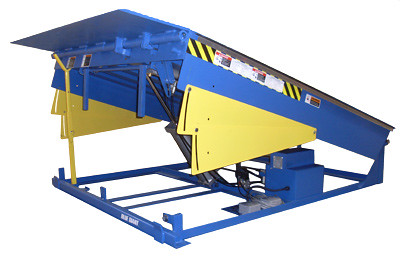
Blue Giant Equipment Corporation is celebrating its 60th anniversary of serving the needs of customers around the world. The company describes itself as the premier provider of safe, effective, and innovative loading docks and material handling equipment solutions.

Blue Giant was founded in 1963 by Kurt Larsen and quickly became a leading manufacturer of dock levellers and hand pallet trucks. The company’s consumer base expanded rapidly, leading to new product offerings in loading dock and material handling solutions. The company has grown to become a major global presence, exporting to more than 40 countries and boasting manufacturing facilities in four countries.

With an eye to the future, Blue Giant continues its vision as a solutions provider. Its mission is to be the global leader in loading dock safety systems and ergonomic solutions.

“With this milestone, we are honouring our past and inspiring our future. I am thankful to the many dedicated Blue Giant Employees who have contributed to our global success throughout our history and those that are a part of our bright future,” said Steve Barbosa, Blue Giant President.

“We are formalising our commitment to quality through QMS certification, expanding operations in Mexico, advancing our Blue Genius controls to an HMI platform and are destined to be a software company with our Connected Equipment Solutions development. To our customers, distributor partners, suppliers and employees we thank you for 60 years, our best years are ahead!”


Subscribe

Get notified about New Episodes of our Podcast, New Magazine Issues and stay updated with our Weekly Newsletter.