The goldmine that is returns data

Far from being a problem, do returns conceal a golden opportunity? Neil Adcock, Managing Director at Bis Henderson Consulting, reveals how to unlock the value hidden in returns data.

The news that Zara is to introduce a modest charge for returns may be the ‘permission’ other retailers need to reconsider their whole approach to returns.

It may be hard to believe, but until recently most retailers only allowed returns if there was some fault with the product. Partly in recognition that online customers can’t try on clothes many e-retailers started to offer more flexible returns. In today’s competitive market this has spiralled into many customers now enjoying the convenience of unlimited returns.

Unfortunately, returns have grown significantly and not just in the fashion sector. But far from being a problem, there may be a hidden, golden opportunity.

In the US last year, 20.8% of goods bought online were returned – that is across all categories, with figures above 30% cited for clothing. And expectations around returns have infected the physical market: the rate of returns across all channels increased from 10.6% to 16.6% between 2020 and 2021.

The challenge of handling returns is only likely to grow, as are the costs. Estimates vary, but a typical finding is that returns are costing retailers 21% of order value. If the return results in an exchange that may just about be supportable – if, as is often the case, it results in ‘no sale’ and a refund, then that is a serious impact to the bottom line.

The standard advice is to accelerate the returns process, both to get cash back into the customers’ pocket so they can spend it again, and to ensure that returned items are made quickly available for resale – but how, without even greater cost? To determine the appropriate returns strategy retailers need to understand what is going on and tapping into returns data may unlock some important insights.

Returns have many causes, such as: manufacturing faults, damage in transit, the wrong goods being despatched, goods not matching the online description or image, and in fashion/apparel, garments not fitting as expected. Consumers have rights and simply tightening up on the criteria for returns, or red-lining ‘problem’ customers, not only risks generating adverse consumer sentiment, but may not be legal. Instead, find the causes, and act on them.

The necessary data can only come from the consumer, but returns data is often scant, manual, and unreliable. Retailers could be missing out on a goldmine of useful insights. Good data and sound observations can inform the best route for processing items, providing valuable feedback about the product and also about the customer’s preferences, the ways they shop and what they value. Such insights may hold the key as to how they may be influenced.

Getting hold of the data

Capturing that data is the first hurdle. Interactive returns portals and good RMA (Returns Merchandise Authorisation) systems would be an obvious starting point. Yet strangely, a recent survey by retail systems specialist Brightpearl found that 69% of retailers are not using tech solutions to automate and process returns.

Even if they are, do retailers ask the right questions? A review of current reason codes, encouraging free text and investing in reading what comes back could be eye opening?

All too often the return form has a very restrictive list of leading questions, and this may result in a customer worrying about their return being approved. So selecting the reason that is least incriminating they will tick ‘fits differently than expected’ rather than genuine reasons like ‘selected multiple sizes to determine best fit’.

Encouraging more detail is key. When a clothing product is cited as too big, where is it too big – all over, the sleeves, the neckline? Or is it really that the shape and style is wrong for that customer, hence it appears too big. Understanding the true reasons for an item being returned is invaluable, informing product design, website description, and may highlight ways of influencing customers’ product choices. Additionally, retailers regularly only allow for a single return reason, even though the customer could be returning multiple items, or have several points of dissatisfaction.

Mining these insights may prompt investment in other forms of technology. In the apparel space, for example, there are systems that claim to match the consumer’s true size and dimensions against different brands’ notoriously variable interpretations of ‘size’. Drapr, for example, claims this can reduce returns by 26%. Another business, Truefit, extends this to fabric ‘feel’ and other factors, and suggests that users also create profiles for friends and family thus ‘taking the guesswork out of gifting’ – a notorious source of returns. Some also claim that, by working with what the consumer is reporting, they can generate more exchanges, and fewer refunds.

Returns costs

Even the best-run retailer will have some returns. A self-service portal can make life easier for the customer and provide the business with an opportunity to manage costs in a way that could offer real benefits to the business – particularly if that business fully understands its costs-to-serve.

The cost of processing returns may include:

  • A carrier or fleet cost – to return the item(s) from the customer or a local hub to a processing location – which may or may not be the retailer’s own distribution centre. There may be ‘first mile’, consolidation, and trunking elements. If the commerce is cross-border there may be additional complications involving Customs, VAT etc, all of which raise costs.
  • An admin cost – to both understand the return reason(s) and to initiate a refund
  • Assessment costs to ascertain condition. That might be a simple visual inspection, but it could require electrical testing, for example.
  • A processing cost – to make the item re-saleable, such as steam cleaning or re-boxing.
  • Disposal costs for packaging that can’t be re-used.
  • A restocking cost – to get the item back in to stock both systemically and physically.

Attached to many of these activities may be some fairly significant facility or warehousing costs. Different types of products and their sales and returns channel will attract different processes and costs. Plus consideration needs to be given to minimising any environmental impacts.

Getting the customer to provide more details for a return, for example the nature of any damage, can help reduce some of those in-house costs and reduce the processing time.

A smart algorithm can determine whether the item being returned should be expedited, to maximise resale value, via the quickest return route (often at higher cost) or whether the item can be returned via the most cost-efficient route. Some companies go as far as offering a customer a discount to keep the item, or asking them to donate it to charity instead of incurring the cost of processing the return.

Other factors around returning stock include environmental and brand considerations, such as responsible disposal for damaged goods, and exit routes for now out of season or surplus items.

Product feedback

Conventional product reviews are often written well after purchase and by very happy or very unhappy customers. The data gathered during the returns process can offer as much, if not more, insight into the product itself. This can help retailers understand trends in SKUs, issues with quality, fit, price or just where the digital presentation does not match the reality of an item. Capturing intelligence in a timely way may allow faster in-season decisions around website descriptions, product promotion or markdown cycle.

Fashion returns rates are driven largely by product sizing. Seeking the right feedback from the returns process can help to prevent further returns, for example, altering how a product is presented digitally. Such intelligence can also inform future product design.

Customer feedback

Returns data can be a rich source of insights into customer behaviour. What gets returned is a story of how a customer buys, when they buy, how they prefer to interact and provide feedback, and how they prefer to physically return items. Knowing how they are influenced by, for example, home collection or non-retail drop off locations, can suggest how the returns network can be designed for a positive customer experience, at the lowest-cost and with minimal environmental impact.

In summary

Zara has let the genie out of this bottle, and the policies and strategies retailers adopt around returns may prove critical. The first step is to truly understand the cost of returns to your business, then ask yourself if you have a handle on your returns data – are you really extracting all the value it can genuinely provide for the product, sales and supply chain functions?

Understanding your returns cost to serve, or competitor benchmarking may be a useful next step in your journey. Our experts will blend pragmatic experience, market insight and operational expertise to help you turn your returns conundrum into an opportunity.

New IFOY jurors appointed

The IFOY organisation has announced the appointment of three jurors to the IFOY AWARD jury. Newly elected to the international committee are Alejandra Cabornero, Editor-in-Chief of the Spanish logistics magazine “Logística Profesional” and Michal Stengl, Editor-in-Chief of the Czech trade title “Transport a Logistika”. Re-elected to her new position as Editor-in-Chief of “Cuadernos de Logística” in Spain was long-time IFOY juror Isabel Rodrigo.

This means that a total of 26 editors-in-chief of leading international logistics publications from 19 nations are represented in the IFOY jury, including Peter MacLeod of Logistics Business representing exclusively the UK. They will be allowed to test and judge the world’s best new innovations among intralogistics products and solutions again in March 2023.

The application phase for the IFOY AWARD 2023 is currently in progress, and companies offering products and solutions can apply with their new releases and warehouse projects in a total of 12 categories until October 30, 2022. Start-ups also have the chance to win a trophy.

Due to its expertise, the IFOY AWARD is considered the leading innovation prize in intralogistics. The election is preceded by an intensive audit with nomination and test cycles. The equipment and solutions nominated for the final undergo the IFOY test and scientific innovation check individually at Messe Dortmund. In addition, jurors and their teams of advisors from industry travel to evaluate the finalists themselves.

The IFOY Audit will take place again in 2023 as part of the TEST CAMP INTRALOGISTICS. The new hands-on testing event for innovations and new developments will enable decision-makers from industry, trade and the service sector with a concrete interest in innovation and investment to test the selected exhibits extensively themselves on 10,000 square meters of hall space. This year’s CAMP featured a total of over 50 innovations and 960 participants.


RTITB launches pivot steer truck training materials

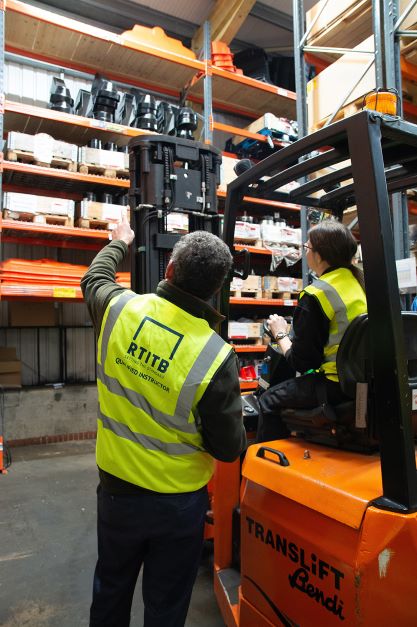
RTITB has released updated training materials to help improve rider-operated Pivot Steer truck safety through high-quality training. It also prepares candidates for the RTITB Basic Operating Skills Test.

“We have seen a 23% increase in demand for Pivot Steer training compared to before the pandemic,” says Laura Nelson, Managing Director for RTITB. “Employers must be aware that articulated machines are very different to ‘standard’ counterbalance lift trucks. So different operator training is needed, even for experienced operators.”

The new Pivot Steer training materials have been designed to give qualified Instructors and Trainers everything they need to deliver high quality, standardised training. The digital materials include an Instructors’ Guide and PowerPoint presentation. As well as mock theory papers, associated knowledge question papers, course handouts, and test marking sheets.

In-house Instructors and external training providers can use the new materials to deliver courses for novice and existing operators. They can also be used for conversion and refresher training for industrial pivot steer trucks (sometimes referred to as Bendi, Flexi, or Aisle Master trucks).

The course culminates with a formal test to verify that the training candidates can meet the minimum recognised basic safety standard. Candidates must demonstrate understanding of pre-use checks. It also covers identifying faults, taking the appropriate remedial action, and reporting. A practical test is also required. There is also a written or oral associated knowledge examination. All elements must be passed to successfully complete the course.

While the new course and test covers the basic principles of Pivot Steer operation – such as manoeuvring, stability fundamentals, stacking and destacking – Specific Job and Familiarisation will play an important part in operator training.

“Most Pivot Steer trucks are used to work with loads in high density racking systems. Here, there may be big differences in the tasks required and lift configurations,” says Laura. “It is the responsibility of the employer to deliver training that applies to the specific situation that the operator will be working in, accounting for the complexities of the tasks at hand, and the specific type of equipment that will be used in the live environment.”

The new materials are provided paperless on USB. This helps businesses to save money by only printing what is needed.

To support businesses going paper free, the MyRTITB TrainingFriend App – part of the RTITB Accreditation service – has been revised with the new testing standards. The app enables 100% digital administration and assessment.

The RTITB eLibrary has also been updated with the new materials. For an annual subscription, the RTITB eLibrary gives access to a full range of ready-to-go lift truck, plant and LGV training materials in a single online portal.

The new RTITB Pivot Steer guide is available now from the RTITB Shop for £110+VAT. It has been updated and written in line with the current P1 Accrediting Bodies Association for Workplace Transport (ABA) code. The ABA standards have not yet been updated for this equipment type, so the materials do not include an ABA test. However, the new RTITB guide reflects the ABA philosophy, helping to align and heighten standards in the interim.

The new training materials can be purchased online at https://www.rtitb.com/shop/.


Verdion completes iPort speculative phase

Pan-European logistics real estate specialist Verdion has completed a further facility at iPort, the multimodal logistics hub just outside Doncaster, bringing new Grade A space to the undersupplied Yorkshire market.

iP10 offers 259,266 sq ft of high-quality distribution space in a steel portal framed warehouse unit with double-storey offices, HGV and car parking and a secure 53-metre-deep yard.

It is the final completion in Verdion’s latest round of speculative development, which also included two buildings leased to Woodland Group and Euro Pool Systems respectively. Verdion has also signed a new long-term lease with Maritime Transport, which has doubled the size of its facility at iPort to reflect its growth in the region. Unit iP2f is also currently available offering 174,380 sq ft for immediate occupation.

Jamie Young, Asset Manager at Verdion, said: “With clear demand in this Yorkshire market for high quality logistics space, this new unit offers over 250,000 sq ft with immediate availability and outstanding road and rail transport links. It also means that our latest speculative development programme has been delivered very smoothly despite wider supply chain challenges in the market and, with occupier appetite showing no signs of slowing, we are now focussed on bringing forward future opportunities at the park.”

iPort is one of the UK’s most advanced multimodal logistics hub, with capacity for a total of 6 million sq ft of 24/7 of logistics and light industrial accommodation close to Junction 3 of the M18 and the East Coast Main Line. It also benefits from an award-winning multimodal on-site rail freight terminal. iPort Rail, is increasingly being used by companies based on-site and across the region looking to cut carbon across their supply chains, with rail connections to major UK sea ports.

Other occupiers include Amazon, CEVA, Fellowes, Lidl, Dusk, Kingsbury Press, Woodland Group and Euro Pool Systems, while its remaining 1.7 million sq ft includes capacity for buildings of up to 800,000 sq ft.

AR Racking extends manufacturer’s warehouse

PFERD-Rüggeberg S.A., leading brand in grinding tool solutions for treating surfaces and cutting materials, has extended its logistics manufacturing warehouse in Júndiz (Álava, Spain) entrusting in the industrial storage specialist AR Racking for the advice, design and installation of the warehouse extension.

PFERD’s ongoing commitment to quality and improvement processes have led to the recent extension of one of its eight production centres worldwide. AR Racking has installed an adjustable pallet racking system in the 2,500 sq m Júndiz warehouse. PFERD’s priority was that this extension would provide it optimum stock control and agile warehouse operations.

Adjustable pallet racking (or selective racking) is a very versatile system and also allows immediate access to all the unit loads. This installation has provided PFERD with a capacity for almost 3,200 pallets which took AR Racking just two weeks to complete.

According to Juan Zubieta, PFERD’s Planning and Purchasing Manager: “AR Racking offered us a solution in line with our needs to continue improving and to be more competitive in an incredibly demanding market, and the truth is that the project was completed in full conformity and with a high-quality service.”

AR Racking provides comprehensive industrial storage support, advising on and planning the installations, delivery times, product and installation instructions. Mikel Bilbao, AR Racking Sales Executive commented: “The solution installed will optimise the loading and unloading operations, reducing times, which will allow PFERD to provide a better customer service.”

PFERD, a German multinational, is one of the most important manufacturing companies internationally. It currently has more than 2,000 employees worldwide and is present in more than 100 countries.

CLICK HERE to watch the video.

similar news

Racking Aids Warehouse Expansion


Hörmann industrial door offers ‘impressive’ speed

The new high-speed industrial sectional door from Hörmann UK, the Series 60, has been designed and developed to provide quality construction, high security, and easy installation. When fitted with the new WA 500 FU operator, the Series 60 can achieve an impressive door opening speed of up to 1 m/s making it the fastest sectional door on the market, helping speed up warehouse operations and reduce building heat loss.

To illustrate just how fast the Series 60 is, Hörmann has produced a speed test film which clearly demonstrates the superior speed of the new door when compared directly with an older version of the door.

Not only does the Series 60 door offer an exceptional opening speed, but optimised track radii and enlarged rollers result in up to 5 dB(A) quieter door operation together with improved stability, leading to low wear and smoother door travel. Easy fitting and maintenance are aided by reduced components and the provision of press-fitted screws, whilst transition sleeves provide a precise fitting of the track and radius. The door is supplied factory set to the optimum speed but can be easily adjusted and the speed varied to suit individual operational requirements.

For added security anti-lift kits are fitted on both sides of the bottom section of the door as standard, and optional RC 2 security measures are available according to DIN/TS 18194. Operator safety is enhanced by the inclusion of an in-line light grill which automatically stops the door if an obstruction occurs whilst the door is closing.

The new WA 500 FU operator features soft-start and soft-stop for gentle, smooth door travel, and constant travel speed for both high-lift and vertical track applications.

The set-up and commissioning of the Series 60 door is fast and simple with the provision of an innovative Bluetooth app. Accessible using either a mobile phone or tablet, the app provides users with friendly, easy to follow step-by-step instructions and also provides straightforward fault finding and diagnostic data.

Phil Thorpe, Industrial Division Manager at Hörmann UK, comments: “We are all excited about the opportunities the new Series 60 sectional door offers the industrial door market. It can provide the opening speed normally associated with a spiral door, combined with the inherent qualities of a sectional door – all at a competitive price point.

“Obviously seeing is believing, so our short speed test film has been produced to illustrate the fast-opening speed in an informative and fun manner.”

CLICK HERE to watch the Series 60 comparison video.


Toyota scheme cuts cost of operating hand pallet trucks

To support companies during these financially challenging times, Toyota Material Handling UK is offering an easy way of operating pallet trucks at the lowest cost and at a fixed annual rental rate with no capital outlay.

Toyota’s ‘Pallet Truck Plus’ scheme is a hand pallet truck rental option that enables users to receive a new pallet truck from the Toyota BT Lifter range for an agreed two-year monthly rental fee that can be as little as the equivalent of 79p/day.

Throughout the ‘Pallet Truck Plus’ agreement period, the truck – or trucks – will be fully serviced free of further charge by Toyota’s experienced and dedicated pallet truck service team as part of an agreed structured maintenance schedule.

In addition, in the unlikely event of a truck suffering a mechanical breakdown between scheduled service calls, Toyota’s Pallet Truck Specialists will visit free of any further charge.

Tony Sharpe, Head of Service Development and Hand Pallet Truck After Sales at Toyota Material Handling, comments: “Hand pallet trucks are in near constant use in countless warehouses, retail outlets and manufacturing sites across the country. ‘Pallet Truck Plus’ provides quality equipment at the lowest rates and complete cost transparency for users. And, of course, because fees are agreed up-front, budget forecasting becomes far simpler.

“Furthermore, the ‘Pallet Truck Plus’ service schedule will identify any potential issues with a truck that may compromise productivity or staff safety and thus prevent significant downtime – with all the cost and disruption to a business that can mean.”

While a strict servicing and maintenance regime is the best way of preventing significant downtime truck build quality is also a major factor in maintaining operational efficiency and in work-cycle tests trucks in Toyota’s BT Lifter range have lasted up to five times as long as other hand pallet trucks.

Sharpe adds: “Toyota’s BT hand pallet trucks have been setting standards in strength and performance for over 60 years and today’s BT Lifter range from Toyota Material Handling maintains these values with tests proving that these trucks are the most durable on the market.”

The full Toyota BT Lifter range – including top selling models such as the BT Quick Lifter, the BT Lifter Stainless and the BT Lifter Wet Spec – is available through ‘Pallet Truck Plus.’


QleanAir cleans the air at Swedish warehouse

Health wholesaler Life Logistics constantly works to improve the working environment in its warehouse, and has been using air cleaners for a long time. It has now upgraded to QleanAir’s new FS 90 models because they are mobile, take up less space and make less noise.

Life Logistics is Sweden’s largest wholesaler within health products and supplies resellers with one of the Nordic countries’ broadest assortments. Life Logistics is responsible for the supply of goods to Life’s many stores and its e-commerce customers, but also to independent stores.

Within the Life Group, people are passionate about helping customers stay healthy naturally. It also protect its employees’ health by systematically improving the working environment when it comes to ventilation, air quality, noise, ergonomics, etc. At the warehouse, large amounts of corrugated board are handled during unpacking and packing, which generates a lot of troublesome dust. Therefore, ceiling-mounted air cleaners have long been used to improve the working environment for employees. In connection with a rebuild, they had to dismantle the air cleaners, and took the opportunity to expose their supplier at the time to competition.

QleanAir won the tender with two floor-standing QleanAir FS 90 units because they are mobile and easy to place close to the source. They are also smaller in size than the predecessor, about half the size, and quieter. Despite the difference in size and the fact that there are only two air cleaners compared to the previous three, the air quality is the same or even better.

“We prefer QleanAir’s air cleaners because they are more mobile, quieter and smaller,” says Conny Löwenmark, operations manager at Life Logistics.

Before the new units were delivered, the warehouse was without an air cleaner for two months. This made it harder to breathe and the warehouse became so dirty it had to be cleaned all the time. Now weekly cleaning is sufficient and the air quality is good.

“It is very easy to work with QleanAir. We have a service agreement which means that a service technician from QleanAir changes the filters and checks the air a couple of times a year,” concludes Löwenmark. “Otherwise, we don’t notice the air cleaners.”

Life Logistics continues to work with the working environment. In the next step, focus will be on the noise levels in the warehouse. All so that the employees have the best workplace possible.


Garbe acquires brownfield site in Salzgitter

Garbe Industrial Real Estate GmbH has acquired an industrial wasteland in Salzgitter (Lower Saxony, Germany). Following a comprehensive redevelopment of the site, a high-quality and sustainable new building for the storage and handling of industrial goods is to be constructed on the 51,000 sq m site. The logistics property is scheduled to be commissioned in the third quarter of 2024. Garbe Industrial Real Estate is investing around €43m in the conversion project.

The Hamburg project developer took over the property from Alstom. The deal came about as a result of the good cooperation between the two companies. Garbe Industrial Real Estate had previously realised a 30,000 sq m logistics property for the rail vehicle manufacturer on its factory premises in Salzgitter in 2014. The area now acquired is in the immediate vicinity.

Before construction can begin, the site must be cleared of contamination – including foundations of former buildings, concrete slabs, shafts and possibly also explosive ordnance. The potentially contaminated soil will be carefully removed and professionally disposed of. Then a levelling layer is applied and its surface is completely sealed.

“In the process, we bring our many years of experience in dealing with so-called brownfields to bear,” emphasises Adrian Zellner, Member of the Executive Board at Garbe Industrial Real Estate. “With the revitalisation of this area, which has been lying fallow for years, we are enhancing the value of the soil enormously, raising previously unused property reserves without sealing valuable green spaces and thus creating significant settlement potential.”

The complex conversion process is completed by the construction of a modern logistics property with a total area of 32,000 sq m in three fire compartments. For protection, a foil is drawn under the floor slab so that substances that may be hazardous to water can also be stored. At least 28 dock levellers and three ground-level sectional doors are planned for loading and unloading trucks. There will be 140 parking spaces for cars and six for trucks in the outdoor area. Some of them will be pre-equipped with e-charging stations.

A photovoltaic system will be installed on the entire roof area to generate renewable energy. Several green spaces are planned on the property. In addition, the logistics property will not be supplied with fossil fuels. This is entirely in line with Garbe’s corporate strategy of realising project developments with the highest sustainability standards, taking into account all ESG criteria. Garbe Industrial Real Estate is therefore also striving for certification of the property to at least the Gold Standard of the German Sustainable Building Council.

The location is characterised by its central position south of the city triangle of Hanover, Wolfsburg and Brunswick. It is only a few kilometres to the A 39 motorway, which connects Salzgitter in a northerly direction with Wolfsburg and the A 2 Dortmund – Berlin motorway, and in a southerly direction with the A 7 Hamburg – Ulm motorway. There is also a connection to the public transport system. The nearest bus stop is 200m away.

Initial talks with potential users of the logistics centre are already underway. Garbe Industrial Real Estate expects the centre to be let during the construction period.


XPO receives BRCGS ‘AA’ accreditation for Arla facility

XPO Logistics, a leading global provider of freight transportation services, has again received BRCGS ‘AA’ accreditation for satisfying rigorous safety and compliance standards at the Arla Foods Ltd dairy plant in Aylesbury, Buckinghamshire. Arla Foods, a centuries-old dairy cooperative, is the largest supplier of fresh milk and cream in the UK.

XPO earned its initial BRCGS accreditation for Aylesbury in 2021, after being awarded a contract by Arla Foods to store and deliver over 14 million litres of milk per week to retailers in South East England. The two companies then expanded their relationship to include a distribution centre in Hatfield, Hertfordshire, where XPO manages transport. XPO received BRCGS accreditation for Hatfield in 2021, and recently completed the 2022 audit.

Dan Myers, managing director, transport – UK and Ireland, XPO Logistics, said: “The Arla brands stand for food quality and safety, and their reputation is built upon that. Arla and XPO strive for the best standards recognised by the BRCGS ‘AA’ accreditation. We focus on this crucial goal as a joint team effort.”

BRCGS (Brand Reputation through Compliance) was founded in 1996 to harmonise safety standards across the supply chain. BRCGS global benchmarks for food safety, consumer product safety, packaging materials, storage and distribution, ethical trading and other standards help assure consumers that products are safe, legal and of high quality.

XPO provides technology-enabled transport solutions for customers across a range of sectors in Europe, including chilled and ambient food and beverages, retail, trade and industrial goods, and e-commerce, as well as world-class events, such as the Tour de France.

Subscribe

Get notified about New Episodes of our Podcast, New Magazine Issues and stay updated with our Weekly Newsletter.