Battery and Operator Rejig Boost Linde Picking Visibility

Driving up to the shelf, dismounting the truck, retrieving products from the shelf, loading them onto the goods carrier, climbing back onto the truck – and off to the next picking position: Manual picking is one of the most labour-intensive, piecemeal tasks in goods handling. Linde Material Handling says its latest N20 low-lift order picker generation improves all these work steps in one go. “The vehicle optimally supports the employee in all subtasks,” says Linde Material Handling Product Manager Eloïse Lévêque.

This is made possible through a unique vehicle layout: With the Linde N20, the operator stands in front of the battery – rather than behind it as is usually the case in the industry standard version. This gives the driver a more immediate and therefore better visibility ahead. When leaving an aisle, for example, the driver sees oncoming vehicles sooner and consequently does not have to slowly inch his way forward.

This design principle also offers a manoeuvrability plus: The service space in front makes it easier to steer the unit through narrow aisles and past obstacles. “This increases safety and at the same time enables the ability to work faster and achieve higher pick rates,” says expert Lévêque. The driver himself is protected by a massive cast steel front bumper.

Another unique feature of the Linde N20 is the fully suspended operator compartment which reduces the physical strain on the operator. Advanced damping technology absorbs vibrations and shocks that would otherwise have a negative impact on the performance and health of employees. “We have been able to reduce the driver’s exposure to human vibration transmitted via the steering wheel and operator platform by around 30 percent,” says Product Manager Eloïse Lévêque.

Other ergonomic features include a rounded backrest, cushioned knee protection and a height-adjustable steering wheel.

Dematic Wins Dispatch Automation Project for Vectura AS

Dematic has won a multi-million euro contract to supply an automated collation and sequencing solution to Vectura AS, described as Norway’s leading logistics company for alcoholic beverages.

The new system will be an extension to the company’s automated pallet warehouse in Gjelleråsen, Norway, and will enable the business to process up to 75 pallets per hour and sequence up to 400 pallets at any one time – all within the existing footprint of the building.

As the first phase of a major project aimed at introducing higher levels of automation to the company’s order preparation and dispatch operation, the system will be installed on a new mezzanine floor above the dispatch area to make maximum use of space.

Installation will be coordinated to avoid disruption to business, which sees 50 million units a year dispatched to government-owned Vinmonopolet stores, wholesalers and the hotel and catering industry. The project is due to go-live in the summer 2020.

Andy Blandford, Senior Vice President & Managing Director, Dematic Northern Europe, says: “We are delighted to have been selected by Vectura for this important project, aimed at delivering greater productivity and throughput for their Gjelleråsen operation. We are confident that this is the start of a fruitful and long-term business relationship between Vectura and Dematic.”

Christian Granlund, CEO, Vectura AS, comments: “Our company believes in creating competitive advantage by investing in our value chain. This project will help future-proof our business by enabling us to provide the efficient and responsive service we are known for, as we grow.”

Pictured are Christian Granlund, CEO, Vectura AS and Andy Blandford, Senior Vice President & Managing Director, Dematic Northern Europe.

Win Wine with Marangoni Industrial Tyres at IMHX

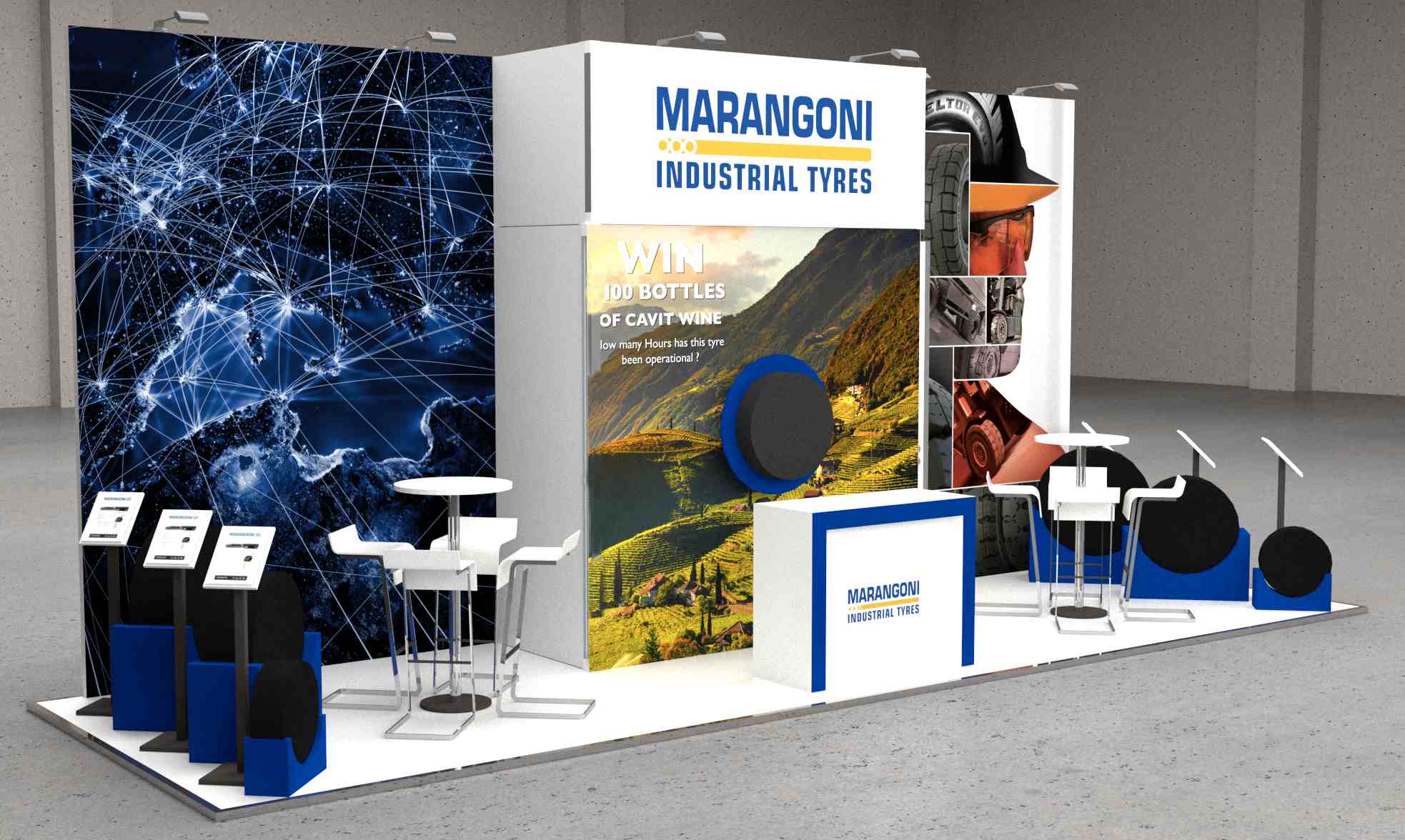
Marangoni Industrial Tyres is to run a competition at IMHX, offering the chance to win 100 bottles of wine from the Trentino wine region, where the company’s head office is based.

Visitors are encouraged to visit its exhibition stand at the event, to be held from September 24-27 at the NEC Birmingham, to enter its competition as well as to see its product range.

Marangoni Industrial Tyres has been a specialist in forklift tyre manufacture since the 1980s. With a history deeply rooted in Italy and working with rubber compounding the company has built a reputation for producing quality products. With an ever-expanding range of products to meet each customer requirement and a new factory soon to be opened, it says it is well positioned to meet customers’ needs and exceed expectations.

Meet Marangoni Industrial Tyres at Stand 6E 230.

Narrow Aisle Launches Online Flexi Parts Store

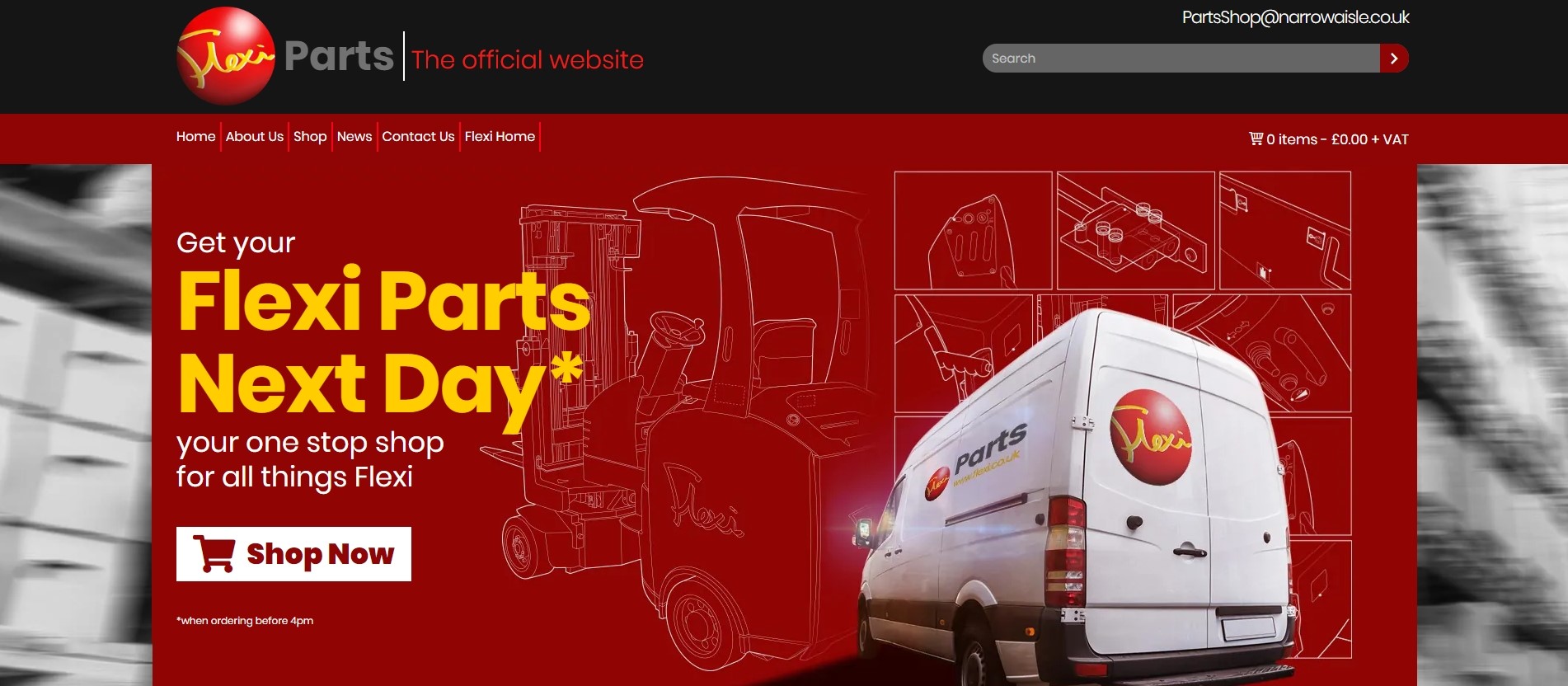
Narrow Aisle Ltd – manufacturer of the Flexi range of articulated warehouse truck-based space-saving intralogistics solutions – has launched a dedicated online spare parts store. At www.flexitruckparts.com Flexi customers around the world will find all the original parts and accessories they need to ensure that their Flexi lift trucks operate at optimum efficiency.

All orders received by 4pm are picked, packed and despatched for same-day dispatch to the UK, Europe or overseas to ensure spare parts are delivered promptly to maximise truck uptime. In addition, a click and collect option means orders can be picked-up directly from Narrow Aisle’s Tipton, West Midlands-based spare parts hub within two hours of being confirmed. Parts orders can be secured by major credit card payment, while trade customers with an account can confirm orders by email should they prefer to do so. All Flexi spare parts are covered by Narrow Aisle’s no quibble warranty and any items which – for any reason – are unused can be returned and a refund issued to the customer’s account.

More than 9,000 Flexi articulated warehouse truck units are in operation worldwide supported by Narrow Aisle’s global network of over 60 authorised distributors.

Middle East Transporter Saves Millions with Routing Software

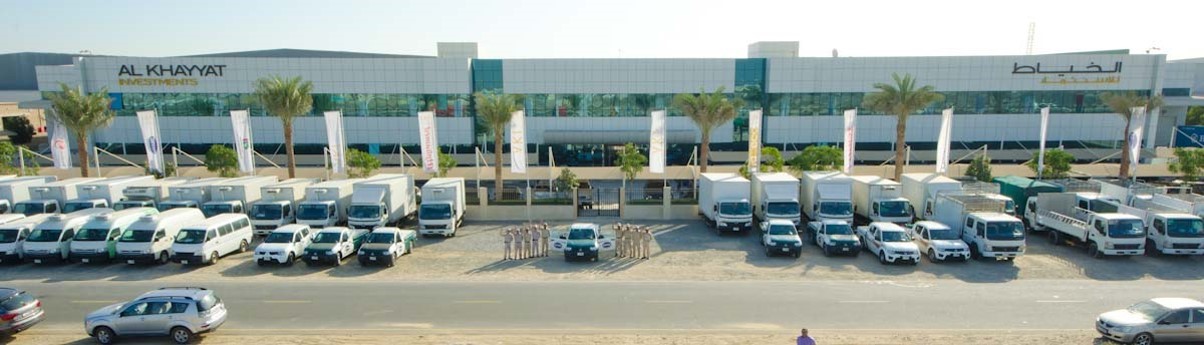
Middle-East based transport provider the AKI Group says it has achieved annual savings of more than $1 million by using Paragon’s routing and scheduling software to transform its in-house transport operation. The company says it has dramatically improved productivity and reduced costs since investing in the transport planning solution by better managing its vehicles and drivers that operate across the UAE. By increasing average deliveries per vehicle by 164%, the AKI Group has been able to lower the average cost per delivery by 65% and reduce fleet size by 38%.

“Changes in the economy of the UAE are forcing supply chain operations in the region to get more focused on cost savings and improved productivity,” explains Gary Grindlay, Group Head of Logistics at the AKI Group. “We are bringing together the best technology solutions available to address these challenges, with Paragon’s routing and scheduling software now a crucial part of our commitment to operational excellence.”

The AKI Group processes around 25,000 orders a month, typically equating to 12,500 deliveries each month to up to 5,500 customer sites across the UAE. The company recognised that manually planning such a large multi-drop delivery operation was resulting in inefficiencies, so selected Paragon’s routing and scheduling software to enhance the performance. The solution also includes Street Level Mapping and Average Road Speed Data to achieve even higher levels of route accuracy, as well as Route Execution to provide real-time visibility of the operation.

Having implemented Paragon’s routing and scheduling software, the AKI Group saw significant operational improvements across a number of essential transport KPIs. In particular, the company has been able to reduce the size of its fleet from 84 to 52 commercial vehicles, while average deliveries per vehicle increased from 4.7 to 12.4. The solution is also enabling the AKI Group to better manage delivery volume peaks, which see around 45% of orders being placed in the last four days of the month.

The transport operation provides delivery services on behalf of a diverse range of business units including retail, consumer and healthcare. Within the UAE there are strict regulations governing commercial vehicle usage for food, non-food and pharmaceutical loads, so the AKI Group operates a mixed delivery fleet with a number of multi-temperature, compartmentalised bodies. The transport team uses Paragon’s routing and scheduling software to automatically factor in vehicle restrictions when planning deliveries, so it can maximise capacity while achieving regulatory compliance.

Since the adoption of the advanced routing and scheduling software, the AKI Group has consolidated its planning resource into a centralised planning function. The team is responsible for managing all deliveries, monitoring the transport in real-time and analysing planned versus actual performance to target continuous improvement.


Change of Location for Interroll Plant Build in Germany

Interroll has altered its location planning in southern Germany, with the construction phase for a planned plant in Obrigheim in the Heidelberg area of Germany is due to begin soon. A total of around €40 million will be invested in this project. Interroll plans to start operations at the future site with around 150 employees.

It means that a new plant will not be built as originally planned in Kronau, in the Karlsruhe area, but in the Heidelberg area, approximately 45 km away, with around 15,000 square metres of production space and around 1,700 square metres of office space. Interroll will gradually invest a total of around €40 million and plans to complete the plant by January 2021.

The company has acquired a total of 161,000 square metres of land in the intermunicipal Neckar-Odenwald Technology Park (TECH•N•O). Interroll’s activities in the area of conveyors can be bundled there on a single site. This means that in future, two Interroll plants will be operated in the Heilbronn/Heidelberg area—the existing sorter site in Sinsheim, Germany, and the new Obrigheim site for conveyors. Activities, such as the production of belt curves and spiral lifts, at the existing Kronau location, which currently employs around 60 people, will in future be integrated into the new location in Obrigheim. The company has already presented the new concept to its employees in Kronau and Sinsheim.

“The growth opportunities in Obrigheim are proving to be ideal for our long-term plans,” explains Jens Strüwing, Interroll Group Executive Vice President Products & Technology. “An important criterion for us is medium- and long-term flexibility on-site—even beyond our current concrete plans, which can now also be realized in the long term with a site size of over 161,000 square metres.”

With its proximity to the A6 and A81 motorways, the new location offers excellent connections to the transport network and international airports. In addition, it is located close to the existing Interroll plant in Sinsheim, so that established supply chains remain in place. “With our employees, we will remain in the region, which offers a very good environment for us as a globally active industrial company,” says Strüwing.

Medical Device Manufacturer Expands with inconso WMS

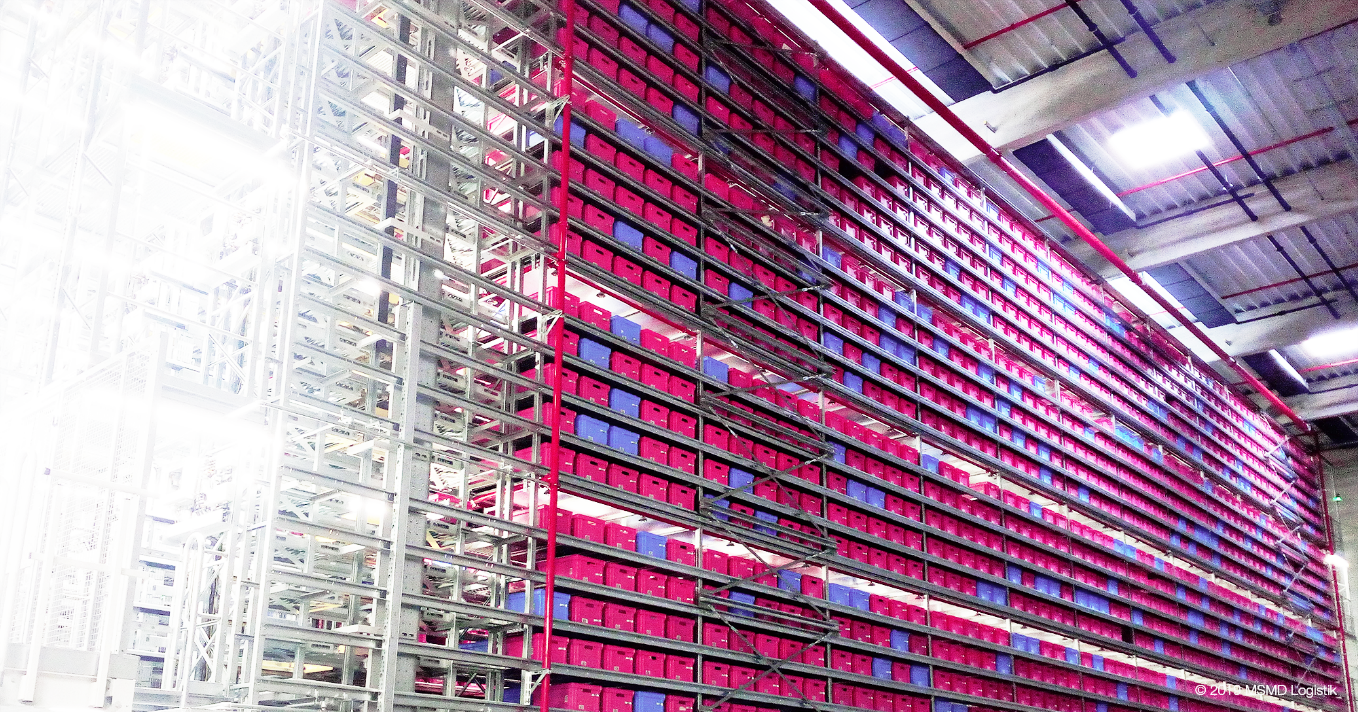
MSMD Logistik GmbH, the logistics service provider of the medical device manufacturer medi GmbH & Co. KG, has completed the expansion and optimisation of its central logistics centre in Bayreuth. This included the expansion of existing building sections and integration of a shuttle warehouse with picking and packing areas, a retrofit of existing conveyor components and the seamless integration of all components. The warehouse management system inconsoWMS from the logistics software specialist inconso takes over the superordinate logistic control of the modernised plant.

The go-live of the software components consisted of two stages and included the connection of the new plant that includes a four-aisle shuttle system with 26 levels and six efficient picking locations. “The go-live was a success and MSMD Logistik can now support and secure the long-term growth of the medi Group,” emphasizes Dieter Kramer, Head of Logistics. “Through the implementation of the shuttle warehouse, it was possible to increase the technical system output to 2,800 double cycles per day. This alone is a significant increase in efficiency. In addition, there are picking strategies that increased the performance in this area by a factor of 6.”


WMS Innovator Launches Analytics and Reporting Package

WMS innovator SnapFulfil has launched a fully featured and configurable analytics & reporting solution to help customers instantly identify business trends.

‘SnapData’ amalgamates data from various sources and locations into one cloud-based central dashboard and gives access to a number of pre-configured base reports and a holistic view of the operations inventory and resources.

Powered by the latest Tableau software, SnapData can manipulate and blend stored information and client data to generate business performance metrics, plus it uses a replica database to avoid congestion on your production environment.

SnapFulfil Database Analyst, Craig Lievesley (above), explains: “SnapData allows you to see and understand all your data and create and display key and bespoke KPIs relevant to your business – including operational KPIs with your financial and supplier KPIs.

“It’s an interactive environment that makes your data work harder for you and the KPI dashboard can be drilled down into further – producing granular reports for other managers such as shipping reports, warehouse heat maps, operator tracking and picking performance. There’s also a sandbox area to create further and tailored in-house reports.

“This ease of access all helps drive efficiency, productivity and profitability – it’s all about much more data quality and better resources allocation and process flow – and because it’s not interrogating your production data it won’t slow down or even crash the system.”

“With you fully in control of your data and properly owning it, the possibilities are pretty much endless and the extra great thing about SnapData is that it’s constantly evolving and being upgraded and improved.”

SnapData is analytics & reporting as a service, with no DBA knowledge required and no need to worry about hosting, SQL Enterprise licensing or analytics engine administration, as it’s all managed by SnapFulfil in a fixed monthly cost.

“Customer Experience Overtakes Cost as Driver to Innovation”, says Report

BluJay Solutions, a leading provider of supply chain software and services, this week released the findings from its second annual research study in the report, “Focus on Customer Experience: Research on Supply Chain Priorities and Investments.” Commissioned by BluJay and conducted by Adelante SCM, in partnership with the Council of Supply Chain Management Professionals (CSCMP), the research explores key topics including customer experience, technology investments, barriers to innovation, partner connectivity, and data in the context of supply chain and logistics innovation.

Supply chain professionals from industries including manufacturing, retail, and logistics service providers (LSPs) were surveyed, with 438 qualified respondents answering a series of questions about innovation, customer experience, and technology. Participants self-identified their company’s performance relative to industry peers, along culture relative to technology adoption (Above Average Performers v. Average or Below Average Performers, and Innovators/Early Adopters v. Laggards/Late Majority, respectively).

“One of the important concepts revealed by the research is that successful companies show by their priorities that they focus on the end result first – in this case, the customer experience,” said David Landau, Chief Product Officer, BluJay Solutions. “As opposed to starting with a trendy technology and figuring out ways to use it, there’s an interesting case to be made from this data about having greater success with a ‘results-oriented supply chain’ approach; that is, starting with an end goal of what to accomplish, then figuring out the how. Companies leading in performance and technology adoption show an emphasis on capabilities that deliver tangible benefits to the customer.”

Patrick Maley, BluJay’s Chief Marketing Officer adds: “We commissioned this research in 2018 to explore the impact of customer experience in the supply chain industry, with a hypothesis that technology adoption, investment drivers, and financial success were becoming more connected. The second annual survey goes further to suggest that customer experience is not only a key driver, but also that being successful in this focus requires seamless partner connectivity and data quality to deliver value efficiently.”

Key findings from the survey include:

Customer Experience Reigns Supreme
Overall, 61 percent of survey respondents Agree or Strongly Agree that customer experience will overtake price and product as the number-one brand differentiator in the next five years. In addition, ‘To deliver an enhanced customer experience’ rose to the top of the list as the main driver for supply chain innovation, receiving 30 percent of top factor votes and pulling ahead of ‘To reduce costs.’
There was a notable difference, however, between the importance that large and small companies place on the customer experience. More large companies (31 percent) Disagree or Strongly Disagree that customer experience will become the number-one brand differentiator over the next five years when compared with smaller companies (18 percent). The data may indicate that smaller companies view customer experience as a more effective way to compete against their larger peers rather than trying to contend on price alone.

Growing Demand for Real-Time Visibility and BI/Analytics
Respondents ranked their top supply chain investments, and overall BI/Analytics received the most top factor votes (22 percent), followed closely by Visibility (21 percent) and Transportation (16 percent).
Real-time freight visibility is one of the hottest investment areas for shippers and LSPs today. Real-time Visibility is also the most important supply chain capability for delivering an enhanced customer experience, according to survey respondents.

Greater Trading Partner Connectivity Leads to Better Supply Chain Performance
The survey results show that companies that are more electronically connected to their trading partners are more likely to have better supply chain performance.
Electronic Data interchange (EDI) and Email are the two most common ways data and information are exchanged with trading partners, but APIs are gaining ground, especially among Innovators/Early Adopters.
The survey uncovered that data quality remains an area for improvement across the supply chain. Poor data quality results in poor supply chain visibility, which in turn results in negative consequences including lost sales, higher transportation costs, excess inventory, and reduced customer satisfaction. These results underscore the need for companies to clearly define roles and responsibilities around data quality and start viewing it as a valuable asset worthy of investment.

Making Supply Chain a C-Suite Conversation is Critical to Driving Innovation
The survey findings revealed that ‘Lack of upper management support for funding/resources’ is a top barrier to supply chain innovation. Particularly for Laggard/Late Majority companies, it is the biggest barrier to innovation, receiving 23 percent of top factor votes (compared to 10 percent for Innovator/Early Adopter companies).
These results suggest that Innovators/Early Adopters and Above Average Performance companies are better at developing and communicating the business case for supply chain innovation investments than their counterparts. It could also mean that upper management teams at Innovators/Early Adopters and Above Average Performance companies are doing a better job of creating innovation-driven cultures.
These findings highlight how important it is for supply chain executives to claim a seat at the leadership table and continue to communicate how the supply chain matters to overall business success.
Read the full report, “Focus on Customer Experience: Research on Supply Chain Priorities and Investments” at www.supplychainresearch.info/2019.

Why Safe and Secure Parking Areas are Vital

Matthias Maedge, IRU’s General Delegate for Brussels, makes the case:

The significance of road transport cannot be overstated. In the EU, the road transport industry is responsible for around three quarters of inland freight, and by making sure goods are transported safely and efficiently it forms a backbone of the European economy. However, while commercial truck drivers undoubtedly carry out work that is vital to both our societies and economies, some of the conditions they face in their day-to-day lives on the road are contributing to a growing shortage of qualified drivers. This shortage is harming the industry both today and in its future outlook.

One particular area of concern lies in insufficient driver parking areas and rest stops across the continent. Currently, Europe has only 300,000 parking spaces available, despite total demand for overnight parking sitting at approximately 400,000 HGV spaces per night. This shortfall is so severe that IRU data shows that the majority of both drivers (83%) and transport operators (86%) say that the number of safe and secure truck parking areas (SSTPAs) in the EU is insufficient.

As a result, The European Transport Worker’s Federation (ETF) and IRU are calling for an additional 100,000 parking areas to be created across Europe. This is a crucial first step in providing decent and dignified working conditions for drivers. Unfortunately, the shortage of rest spaces is not the only problem. Those parking areas that do exist are in desperate need of an upgrade, with just a fraction of the spaces that are available guaranteeing basic services and security levels.

Many of the current facilities offer drivers a level of comfort for their rest periods that is simply unacceptable. In fact, IRU joined a European project on SSTPA that shows that there are just 50 parking areas in Europe that meet the SSTPA standards. In some countries and on certain transport corridors, drivers are not able to rely on the availability of certified secure parking.

This lack of secure parking spaces is one reason contributing to the fact that one out of every four drivers has been a victim of violence or an attack in Europe. Shockingly, 64% of the few female drivers operating in the industry have experienced unsafe situations at overnight parking areas.

It is therefore vital that as well as tackling the lack of driver rest spaces, the facilities at existing parking areas are also improved and certified. This is not just necessary on a safety and security level but also on an economic level, with poor working conditions a major contributing factor in turning away drivers from the profession.

The safety risks that come from the lack of SSTPAs detract many potential truck drivers from signing up, in particular the female and younger recruits so desperately needed to plug the gaps left by the burgeoning driver shortage.

IRU data shows that Europe currently has a driver shortage of around 21%, and the problem is only set to get worse. The average age of a truck driver in Europe today is 50. In Germany as an example, some 40% of the truck and 55% of bus driver workforce is expected to retire by 2027, creating a shortfall of around 185,000 drivers. Equally in the UK, the country’s exit from the European Union arrives just as its shortage of drivers is estimated to be growing at a staggering rate of 50 drivers per day.

A significant part of the challenge the industry faces is the lack of female drivers in the profession, who make up just 2% of Europe truck drivers. Research carried out by IRU earlier this year looking into the roots of the shortage found that 80% of female drivers believe difficult working conditions to be the top cause, demonstrating the sheer impact of the problem.

If not addressed, the driver shortage will have serious implications on the European economy. Business will soon be forced to pay higher rates and face longer waiting times for the movement of goods they rely on. If we are to tackle this situation, the issue of SSTPAs must be addressed. For this reason, IRU and ETF recently met with EU Commissioner Bulc to share their concerns about SSTPAs and the remedial action which must be taken.

IRU and ETF are calling on all EU Member States and European Institutions to make building and improving SSTPAs a policy and funding priority. This means adopting EU parking standards and delivering an ambitious European plan to roll out the core of an EU network of SSTPAs during the next legislature.

The European Commission has recently finalised a study on SSTPA and the IRU and ETF expect this to remain a priority for the new commission. For her part, Commissioner Bulc pledged to prioritise safe and secure parking as part of the Connecting Europe Facility (CEF), which acts as one of the key funding instruments for transport in Europe. So optimistically we will see greater investment over the next few years.

The driver shortage can only be addressed if stakeholders across the road transport sector in Europe work together to tackle problems at its source, like the lack of SSTPAs. Solving this security challenge is not only the right thing to do, but it’s also a critical step in preventing the potentially devastating impact of the driver shortage on businesses and the wider economy.

In February 2021, IRU will host Logistics and Innovation Forum in London. The event will welcome delegates from transport operators, service providers and national transport associations from across Europe to share knowledge, connect with each other and drive new solutions around one of the most important topics in road transport – safety. Participants will be able to capture the business potential offered by new technologies which could drive innovation in this area, as well as learn about the very latest in best practice.

Subscribe

Get notified about New Episodes of our Podcast, New Magazine Issues and stay updated with our Weekly Newsletter.