New Business Win for Sanderson Proteus WMS

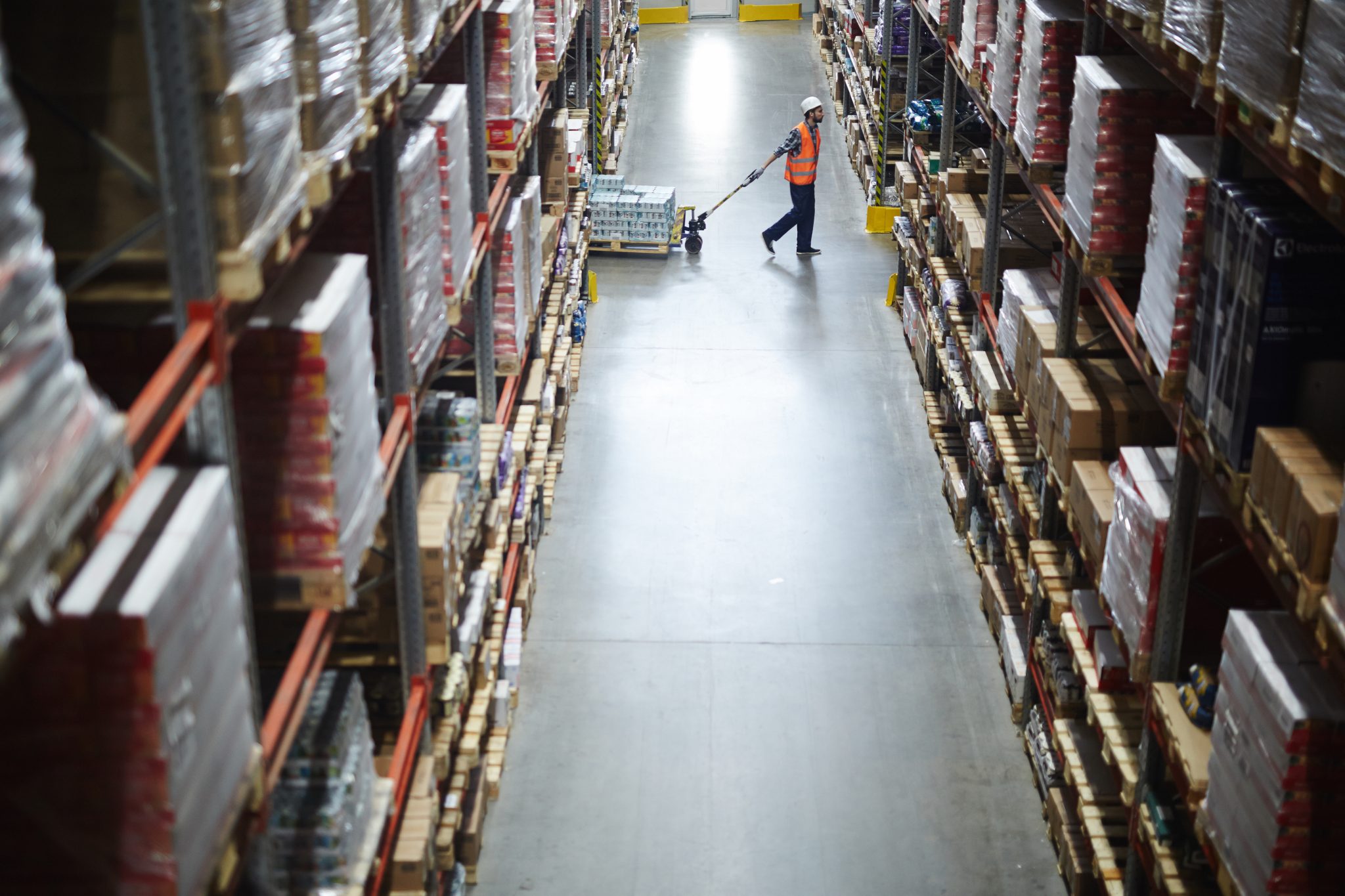
Asian food importer and supplier SOP International has selected Sanderson’s Proteus WMS to run their new 60,000 sq. ft. warehouse in Harlow, UK.

Originally established in 1971 as a packer and processor of edible oils, SOP have enjoyed a period of sustained success and growth in the last decade. As a result, in 2003 the business opted to move their head office from Runcorn to Hertford, UK, where it began to import and distribute a wide range of Oriental and Asian foods. SOP’s specialist knowledge enables them to source the highest quality products from approved suppliers throughout the Far East.
In 2017, SOP decided they needed a powerful, innovative, on-premise warehouse management system (WMS) to operate their new, purpose-built warehouse. Sanderson’s Proteus WMS was among those systems which prompted SOP to begin an exploratory phase with the Sanderson team. Having supported SOP International throughout their selection process, Sanderson’s Proteus WMS was chosen.

SOP International Operations Director Raf Chowdry said, “We are looking forward to working with the Proteus WMS team from Sanderson. We really feel they are going to bring a lot to the table, with the ability to advise and guide us in future IT investments. Their system will help keep us both operational and competitive.”

Neil Olsson, Proteus WMS Account Manager said, “We are delighted that SOP International have selected us as their WMS supplier. This will give us the opportunity to work in true partnership with the company to provide them with a state-of-the-art system to match their new warehouse.”

The Proteus WMS team looks forward to working with SOP International in their latest chapter in business growth.

New Air Cargo Facility at Frankfurt Airport

Fraport AG and Swissport Cargo Services Deutschland GmbH today laid the foundation stone for Swissport’s new airfreight facility at Frankfurt Airport (FRA), marking another milestone in the future development of FRA as an airfreight location.

The new building at CargoCity South will expand Swissport’s handling capacities by almost 50 percent, says the team. “The property meets every requirement for state-of-the-art airfreight handling. The warehouse concept includes a material handling system that allows containers and pallets to be automatically stored in and removed from the warehouse,” said a spokesperson. “Swissport is expanding its range of special temperature storage for customers from the pharmaceutical industry. The new cargo centre will be fitted out in accordance with the strict IATA criteria and will be CEIV Pharma-certified after going into operation.”

The roof of the freight hall will also be home to the first large-scale photovoltaic system at Frankfurt Airport. It will generate 1,550,000 kilowatt hours of electricity yearly – an amount that would power more than 450 four-person households for an entire year. With this move, Fraport is increasing its focus on the use of independently generated renewable energy to cover the electricity requirements of its home-base airport in Frankfurt.

Almost 50 percent of Germany’s airfreight volume is handled at Frankfurt Airport – over two million metric tons in 2018.

Facts and figures on the new air cargo warehouse:
• Capacity: over 200,000 metric tons per year
• Storage space: 17,000 square metres
• Office and communal space: 2,400 square metres
• Outside/manoeuvring space: 12,500 square metres
• Temperature zones in the pharma centre:
o 1,300 square metres (15–25°C)
o 280 square metres (2–8°C)
• 31 docks for trucks/vans, including five truck docks for ULD handling

Foundation Stone Laid for Swissport Air Cargo Warehouse at Frankfurt Airport’s CargoCity South. (from left: Mike Flörke, Division Manager at Goldbeck, Felix Kreutel, Senior Vice President of Real Estate and Properties at Fraport AG, Karl-Heinz-Dietrich, Senior Executive Vice President Retail and Properties at Fraport AG, Willy Ruf, Senior Vice President Central & Eastern Europe von Swissport)

Konecranes Launches Lifetime Truck Support Plan

Konecranes has launched Lifetime Advantage, a long-term commitment to improving the safety, productivity and endurance of lift trucks around the globe. Ongoing support across each truck’s lifecycle benefits customers with consulting, training, spare parts, upgrades and much more – everything needed to keep lift trucks running efficiently in the unique conditions of each customer’s world.

With Lifetime Advantage, Konecranes aims to show its dedication to outstanding quality, uptime and productivity, so that each customer can advance its own business in the ways that matter most. It means continuous support, from the initial offer throughout the entire lifecycle of one lift truck or a whole fleet, with the aim of achieving a higher level of performance.

Konecranes believes that maximizing uptime is the result of decisions already made at the offering stage. This means making smart choices when it comes to such options as energy-efficient Ecolifting, safety enhancement and Smart Connected Lift Trucks digital services. What is decided together with customers will shape their experience in terms of equipment performance. Additionally, the pace of digitalization promises to revolutionize maintenance practices and create exciting new advances for operational efficiency.

Meanwhile, after delivery Lifetime Advantage continues through upgrades and retrofits, Konecranes’ genuine spare parts, business services, digital solutions and education, all making upkeep of the trucks easier and supporting a longer lifetime and more efficient maintenance.

As part of this commitment, Konecranes is now launching the first of several upgrade packages, containing themed solutions that can be retrofitted to customers’ existing Konecranes lift trucks. These packages are not meant to service the trucks but improve them with updated technology.

“From the start, it was obvious to us what should be the first upgrade package: safety,” says Johan Kårhammer, Global Spare Parts Operations Manager at Konecranes Lift Trucks. “We’ve always cared deeply about improving safety in the workplace, and we believe that these additional features will be of great use to customers who want to address safety risks in their operations but are not sure where to start. In the near future, we’ll be releasing more types of upgrade packages and solutions to advance existing trucks and fleets.”

Six safety upgrades have so far been developed to address common operational risks, such as blind spots, yard staff working in the same space as moving trucks, engine overheating, impaired drivers and more. A reverse camera, reverse warning alarm, fire suppression system and ignition alcolock are just some of the solutions that address these problems. Each one is a simple addition to existing trucks, greatly improving everyday work safety to make sure that everyone returns home safely at the end of every shift.

The Konecranes global distributor network will play a key role in implementing the Lifetime Advantage commitment.

“Located in over 100 countries around the world, our distributors are local faces who can be there to help customers address their daily challenges, improve current operations and provide support whenever and wherever something unexpected happens,” says Patrik Lundbäck, Director and Head of Sales and Distribution at Konecranes Lift Trucks.

“They play a big part in the Konecranes Lifetime Advantage. This commitment is full of initiatives in very different service areas, but they all have one unique aim: to support customers to maximize their uptime and extend the lifecycle of their lift trucks as much as possible,” Lundbäck said.

Software Specialist inconso Unveils LogiMAT Highlights

Logistics software specialist inconso will present solutions that can increase the efficiency of logistics along the entire value chain from March 10-12, 2020, at LogiMAT in hall 8 (stand A50). The focus will be on innovative end-to-end solution scenarios and brand-new showcases of advanced robotics. In addition, the new release of the slotting module continues to advance the AI-based development of inconso solutions.

With the seamless integration of autonomous mobile robots (AMRs), for example, picking processes in the warehouse can be completely redefined. Due to their high flexibility, such as dynamically adapting to the area’s layout, they can be used in manually managed areas and in highly automated environments. inconso will present these optimization scenarios for advanced robotics based on the inconso Logistics Suite.

inconso will cover all tools for efficiently planning and controlling the logistics network through its comprehensive range of services. This includes the advanced solution for slotting management, which enables the continuous optimization of the warehouse’s organization via an AI-based algorithm and embedded simulations based on the what-if scenarios. The inconso Logistics Suite’s plethora of functions is another highlight and provides integrated solutions for full logistics network control for warehouse management, yard management and transport management – on-site and in the cloud: secure, flexible, scalable and immediately usable.

As an SAP service partner with recognized expertise, inconso will also present its latest developments for the SAP Supply Chain Execution platform and migration scenarios for seamless migration to the SAP S4/HANA Business Suite. In addition to covering logistics process control with SAP EWM, SAP TM and SAP YL, inconso will include technological topics like SAP Fiori and HTML5 based on SAPUI5. Also, inconso will address the functions of SAP S/4HANA Stock Room Management so that SAP LE-WM can still be used after 2025.

Intralogistics innovations will be presented by the Business Area Körber Logistics Systems at their joint stand C16 in hall 1. inconso’s sister company Voiteq will present modern Pick-by-Voice solutions in hall 8, stand D15.

Case Study: Container Legs in LNG Innovation

Rohe Solutions, a Finnish company, is a joint venture between Hamina Energy and Alexela Energy, which sells natural gas and liquefied natural gas. Offering LNG services based on the needs of industry, heavy cargo transport and seafaring, ranging from LNG deliveries to turnkey solutions, Rohe works with the best in business in each field of industry.

Hamina Energy and Alexela, operating together as Hamina LNG Ltd, are the forces behind the Hamina LNG Terminal joint venture, a 30 000 cubic metre LNG storage tank being built at the Port of Hamina, Finland. As building is progressing according to schedule, the Terminal will be finished in the beginning of August 2020, and commercial operations will commence in the beginning of 2021.

Rohe Solutions provides LNG for the needs of industry in the township of Lieksa.

LNG is brought to the plant in separate tank containers on trailers and the containers are placed on ConFoot container legs to wait for being used.

There are two 45 cubic metre tanks present at the same time while a third tank is being filled.

The use of ConFoot container legs requires a very low level of investment, and with the container legs the LNG tank containers operate also as a logistical solution.

Mika Simola, Technical Manager of Rohe Solutions: “The starting point of the solution planning was to eliminate all separate container handling methods – e.g. reach stackers – from the container unloading area. These would have been expensive investments, and they would have required a large operational area compared with the container handling method chosen.

Working in the LNG container unloading area is now very flexible and can take place without any intermediate steps when a new container is brought to the area.

We have used ConFoot container legs for over a year now, and they have proven to be an effective and cost-efficient solution.”

ConFoot designs and manufactures patented, detachable shipping container legs that require only one person for operation.

With each leg weighing under 25 kilos, ConFoot container legs are lightweight, low-cost and have a long lifespan.
ConFoot container legs are the only portable container handling solution in the world.

The new ConFoot CF model with a capacity of 34 tons was introduced in the summer of 2019, offering extended range of use for tank container operators in particular.

More to Manufacturing Woes Than Brexit, Says Pallet Truck Provider

Following recent news that insolvency in the manufacturing sector is at a five-year high, a leading materials handling expert in the UK is urging businesses to look beyond Brexit and examine the other factors fuelling today’s manufacturing woes. Midland Pallet Trucks, a provider of hand pallet trucks, manual stacker trucks, and lift platforms, believes that while Brexit is undoubtedly playing a part, there are other issues currently affecting manufacturing that are being overlooked due to politics.

Midland Pallet Trucks is speaking up following research by Moore, a global accountancy firm which has recently announced that insolvency amongst manufacturing businesses in the UK has risen by 7 percent in just 12 months, bringing the figure to 1,466; the highest since 2014. The report cites Brexit uncertainty and a reluctance for European businesses to partner with UK-based manufacturers as prime reasons. Midland Pallet Trucks is ready to throw another potential reason into the mix.

According to statistics published by the Health & Safety Executive (HSE), 1.4 million workers believe that they are suffering from a work-related illness, whether caused directly by their role or exacerbated by the job and, in total, more than 580,000 people were injured at work during the 2018/2019 period. Additionally, manufacturing has one of the highest rates of fatality, second only to agriculture, forestry, and fishing.

“Absolutely we must consider how the possibility and the long drawn out process of Brexit is impacting the manufacturing industry, but it is irresponsible to be looking at Brexit as the sole cause of the problem when there is very clearly another factor in play here” says Midland Pallet Trucks Managing Director Phil Chesworth. “Occupational injuries are on the rise, and my opinion is that the state of the manufacturing industry wouldn’t look nearly as dire if we were to focus efforts on improving workplace safety and employee wellbeing through the implementation of improved handling equipment and greater provision of training to minimise absences

Brexit has certainly had an impact on the manufacturing industry, with some UK organisations believing they have been cut out of the supply chain due to the potential for shipping delays and tariffs that could increases costs in a no-deal Brexit.

However, production cannot be overlooked as a major concern. Health & Safety Practitioner reports that workplace illnesses are on the rise, with sick-related absences standing at 2.3% last year, up from 2.2% in 2017, with the average worker taking 5.3 days sick leave per year. This figure is higher for those in manual roles, with manual workers taking 6.8 days on average compared to 3.9 days for non-manual job roles.

Logistics Boost at Abu Dhabi International Airport

Abu Dhabi Airports and Etihad Cargo, the cargo and logistics services arm of the Etihad Aviation Group, have announced a major project to enhance Abu Dhabi International Airport (AUH) into a state-of-the-art global air cargo centre of excellence.

Abu Dhabi Airports and Etihad Cargo will implement a multi-phased cargo infrastructure development strategy, starting with the imminent upgrade of Etihad’s existing air cargo terminal facilities on the Southside airport perimeters. The program will culminate with the inauguration of Etihad Cargo’s future home, a new state-of-the-art air cargo terminal in the East Midfield section of the airport, an area designated by Abu Dhabi Airports for future integrated cargo, logistics and integrator activities.

The plans revealed that the first phase, the upgrading of the Southside Etihad cargo facilities, will commence immediately and is due for completion in phases between fall 2019 and end of Q3 2020. The scope includes the enhancement of RFS loading docks with levelers, insulation and floor works for faster and more efficient loading with stricter temperature controls, increased storage space and additional build-up and breakdown zones to improve production workflow, and upgraded cool chain facilities for both its fresh and pharma handling and storage operations.

This phase will not only increase efficiency and productivity in the existing facilities to support air cargo growth at Abu Dhabi International Airport for the coming five years, but it will also enhance Etihad’s pharmaceutical logistics capability through a dedicated Southside Pharma Terminal, adding 3,500 sqm’s of space for temperature-controlled handling and storage across both 2-8 degrees Celsius and 15-25 degrees Celsius categories. This further complements Etihad Cargo’s recent success in the domain, having become the first airline in the Middle East to gain CEIV Pharma certification for both its airline and terminal operations in January.


Case Study: Doubling Productivity with SSI Schaefer Automation

Pet supplier Fressnapf opted for a sustainable system concept and SSI Schaefer’s intralogistics competence when extending its European distribution centre. Thanks to the holistic automation solution, Fressnapf was able to more than double its capacities, dynamics and productivity in order processing.

When it comes to your pet’s well-being, Fressnapf is your first choice. The Fressnapf group headquartered in Krefeld, Germany, is Europe’s number one for pet supplies. About 13,000 items ranging from pet food to accessories, care products and toys to cat litter and birdhouses are on sale. The products are sold throughout Europe in 1,500 plus stationary markets, more than 900 in Germany only, and the online shop established in 2009. In total, the group of companies’ employees more than 12,000 people. 800 of them are responsible for the professional processing of logistics throughout Europe and the supply chain. In addition to an import warehouse in Duisburg Logport, two regional warehouses in Southern Germany and a warehouse exclusively dedicated to e-commerce in Eastern Germany, the European distribution center (EDC) at the headquarters in Krefeld, which was established in 2000 and is continuously extended, is in focus.

“Supplying downstream storage locations, picking according to layout for store delivery and the growing number of products have continuously increased the number of tasks in recent years,” explains Christian Buschmann, Head of Inbound Logistics & Technology at Fressnapf. “For now, we have stored about 10,000 different products in our EDC. Against this background, we started our latest expansion and automation project for the logistics center in 2013 to increase our capacities and efficiency in order processing.”

Fressnapf opted for the intralogistics experts, SSI Schaefer, as general contractor for the implementation of a material flow and system concept as well as equipping a 13,000 m² system complex with a 10-aisle pallet narrow-aisle warehouse, a 3-aisle miniload for replenishment supply and a 4-aisle picking miniload, pallet and bin conveying system, 38 workstations, 12 of which in the preparation area and 26 in the picking area as well as 60,000 bins.

“The solution concept with the intelligently linked systems for merging and buffering the multi-step order picking perfectly implemented the requirements considering structural data, growth targets, process efficiency and extension options and furthermore ensures highest availability,” Mr. Buschmann explains, highlighting the choice of this supplier based on ideas competition and tender. “The result did not disappoint us: 100,000 new packages per day considerably increased our productivity after commissioning the new warehouse complex and, at the same time, more than doubled our turnout.”

In the middle of 2017, SSI Schaefer handed over a system for mainly automated logistics processes with store-friendly picking and provision. The focus was on increasing capacity and efficiency, especially in the small parts segment. “Small parts are primarily stored in Krefeld and account for about 50% of the products on stock,” tells Mr. Buschmann and refers to the Fressnapf product structure. “The non-food segment includes accessories such as leashes, toys and nestable feeding dishes. Furthermore, the food sector of our product range comprises, among others, snacks and special food in different varieties and package sizes.” Correspondingly, SSI Schaefer adapted the system concept to optimize storage and efficient picking processes for bagged goods and small parts. “We automated processes wherever economically advantageous to relieve our employees,” says Buschmann. “SSI Schaefer’s concept of different picking areas for different order requirements is ideal for varying turnover rates of the diversified product range in our EDC.”

SSI Schaefer directly connected the conveying system to the existing warehouse area creating a multi-user-friendly storage complex. “In parallel, the complex processes are integrated into a holistic material flow,” explains Matthias Häußler, SSI Schaefer project manager. For instance, the goods-in area was covered by a double-story steel platform construction. On level zero, the goods delivered on pallets are processed, recorded and transported to storage according to the specifications of the warehouse management system (WMS).

After registration, forklift trucks transport the delivered goods first to a 10-aisle narrow aisle warehouse with 5,840 storage locations for temporary storage. It serves as replenishment supply for the miniload and provision of entire pallets. For direct supply with promotion items, a rack system with about 300 pallet locations was installed.

For automated processes of pallet supply to the preparation workstations, forklift trucks hand the pallets over to the pallet conveying system on the bottom level of the goods-in platform. The pallets are transported on a platform above the goods-in area to two transfer carriages. These carriages supply two transfer conveyors, which hand over the pallets to 24 lifts. The lifts transport pallets to and from the 12 depalletization locations on the upper level of the goods-in platform; each workstation is supplied by two lifts. At the depalletization workstations, the goods are separated. For this purpose, the stations are equipped with a three-story conveying system: On the center level, the empty bins are supplied while target bins are taken away on the bottom level and used cartons are removed on a belt conveyor on the top level. The conveying system transports the target bins containing the separated items or packages either to the miniload or directly to one of the 8 Schäfer Carousel Systems (SCS) for picking.

The miniload consists of two storage blocks according to functional areas: Three aisles with almost 35,000 bin storage locations serve as buffer stock. From there, the four aisles of the picking miniload with 22,300 bin storage locations for fast movers are supplied. A total of 7 storage and retrieval machines, type Schäfer Miniload Crane (SMC) are responsible for storage and retrieval. On the bottom level of the picking miniload, picking sations have been installed including dynamic channels for replenishment from behind. The stations are separated into individual conveyor branches equipped with a Pick by Light (PBL) system.

“This design facilitates picking with short walking distances,” explains the project manager, Mr. Häußler. An automatic carton erector provides cartons, which receive a routing label on both sides upon order start. The labeled target cartons are transported on a continuous vertical conveyor to the circulating conveying system. Integrated scan technology together with the WMS ensure that cartons stop at stations required for order picking. There, the pick faces of the PBL system show the pickers the corresponding compartment as well as the picking quantity. After confirming picking, the cartons continue to the next station on the conveying section. Once picking has been completed, the shipping cartons are compacted and closed by an automatic tape carton sealer and after a weight check, a shipping label is applied. The conveying system transports the cartons directly to the gravity roller conveyors in the shipping area or to one of the two SCS especially equipped for carton handling for temporary storage. Shipping cartons from different picking areas are merged there and stored temporarily.

In addition to the picking miniload, Fressnapf has more than 10,000 more locations for medium and slow movers available in 8 further picking SCS. The SCS are located on two levels and equipped with a Pick to Tote (PTT) workstation each for dynamic picking processes. The pickers receive the source bins in sequence and are able to pick up to seven orders in parallel directly into the shipping cartons. Once picking has been completed, the shipping cartons are again compacted and closed automatically and a shipping label is applied. Optionally, the system can also be used for e-commerce as it enables Fressnapf to divert shipping cartons for e-commerce customers directly after completion at one of the 6 intended CEP workstations to the goods-out area using a spiral conveyor and a specially designed gravity roller conveyor. Order positions for store delivery are conveyed to a downstream consolidation buffer for order consolidation. It contains more than 8,700 storage locations for tour- and store-friendly palletization. In parallel, order cartons for manual palletization may be diverted directly to the 50 shipping lanes in the goods-out area. There, order consolidation with palletized bulky items from other storage areas takes place. “SSI Schaefer ensures the required availability and high clock rate for picking,” summarizes Christian Buschmann. “As a consequence, we could considerably increase efficiency, productivity and customer services. Features, such as volume-optimized shipping effectively improved our cost structure. We are especially happy that the working environment for our employees is extremely more comfortable thanks to the ergonomic workstations.”

Case Study: From Pick to Shout to Pick to Light

Pcdata Logistics Automation, a Dutch system integrator and specialist in PTL techniques, supplied a Pick and Put to Light system to food producer Castaño in Chile. This is the story in their own words.

On a daily basis, Castaño supplies freshly produced product to both its own stores and retail chains such as Walmart. Depending on the product groups (fresh or packaged) and the sales channel, Pick or Put processes are chosen. The Pick and Put to Light technology is a major advance in productivity and reduces picking errors. Before implementing the system Castaño used what it calls “Pick to Shout” technology.

By digitizing the order picking process, food manufacturer and distributor Castaño has considerably increased both productivity and accuracy. The Chilean company has installed Pick to Light for order picking of packaged, long-life products and Put to Light for the distribution of daily fresh pastry products and other food products. Co-owner Cristobal Castaño: “We now have much more control over the process.”

Castaño shops form an inseparable part of the street scene in Santiago. People constantly walk in for a sweet pastry, fresh salad or a savoury empanada. The number of stores in the Chilean capital and surroundings is growing. The 100th store opened last summer. “We also supply fresh products and pastry to other retail stores, plus we produce various packaged bread products that we sell through supermarket chains in Chile, including those of Walmart, ” says Cristobal Castaño, who manages the company together with his brothers.

The production for Castaño and other stores shows major differences with the production for the supermarket chains. For the first case, it concerns 150 plus locations and an extensive range of more than 200 daily fresh items with a shelf life of one or two days. For the second case, the company supplies supermarkets – 600 plus locations throughout the country – with a range of up to 80 longer-lasting, packaged items. “Around fifty percent of the products we make in Santiago go to the supermarket chains. The rest to our own branches and those of other customers like Starbucks,” explains Castaño.

From “Pick to Shout” to Pick to Light
For many years preparing the orders was a manual, labour-intensive process. The management was vocal and was in the hands of the team leader. Castaño smiles, not Pick to Voice but Pick to Shout. “The accuracy has been inadequate. It often happened that products were exchanged or orders were partly delivered.”

Castaño installed Pick to Light for the packaged products. Later the installation of Put to Light for the daily fresh products followed. “Given the range and the customer base, that was the best choice for both operations,” explains Castaño, who is satisfied with both systems. “The reliability and stability is great”.

Higher productivity, fewer errors
The most important advantage of Pick to Light is the increased order processing capacity of 50%. “That means that our people have time for other activities” says project leader Ronald Aguirre.

At Put to Light, the increased accuracy is striking. The number of picking errors has decreased considerably, so that the Castaño stores hardly complain about missing products. Aguirre adds. “The capacity has also increased thanks to Put to Light. This does not mean that we have time left over when distributing fresh products, but that we have more time after each wave to prepare for the next wave. As a result, we now have more control over the process. “

Online Resource Aims to Aid Container Buy and Sell Decisions

A new online resource aims to help industry stakeholders to make better informed decisions in the container market.

Forecasting the availability of containers in order to make buy, sell or repositioning decisions is difficult, but the Container Availability Index aims to make the process much easier. The index takes more than 2 million data points (tracking and transactions data) into consideration to forecast the availability of containers in 10+ locations for up to 3 weeks.

The CAx forecasts the availability of containers in five Asian ports, five European ports and in the port of Durban, South Africa – three weeks in advance. It covers weekly availabilities, year-on-year availabilities and the delta between two port pairs.

The idea is that container users and owners employ the data to make better decisions about container repositioning as well as the buying and selling of their equipment.

Find out more here.

Subscribe

Get notified about New Episodes of our Podcast, New Magazine Issues and stay updated with our Weekly Newsletter.