Industry View: Maintaining Efficiencies and Cutting Stockpiling Pressure

By SnapFulfil’s CEO, UK & Europe, Tony Dobson:

The global impact of Covid-19 is going to be felt for years, long after the virus has been brought under control, with governments and economies struggling to get back on their feet.

But what this crisis has already revealed is the true spirit of human inventiveness as many businesses have adjusted their game plans overnight – whether introducing direct to consumer e-commerce or new lines to meet changing demand.

For many this is going to be a permanent change too, with the need to switch suppliers, invest in automation, reinforce online operations and identify risk mitigation strategies.

At the heart of this is advanced cloud-based WMS technology, such as SnapFulfil, that is key to ensuring the smooth flow in and out of goods, even when having staff on the ground is compromised due to sickness and there is a need to stockpile products.

Here are five ways WMS can maintain efficiency and reduce the pressure of stockpiling:

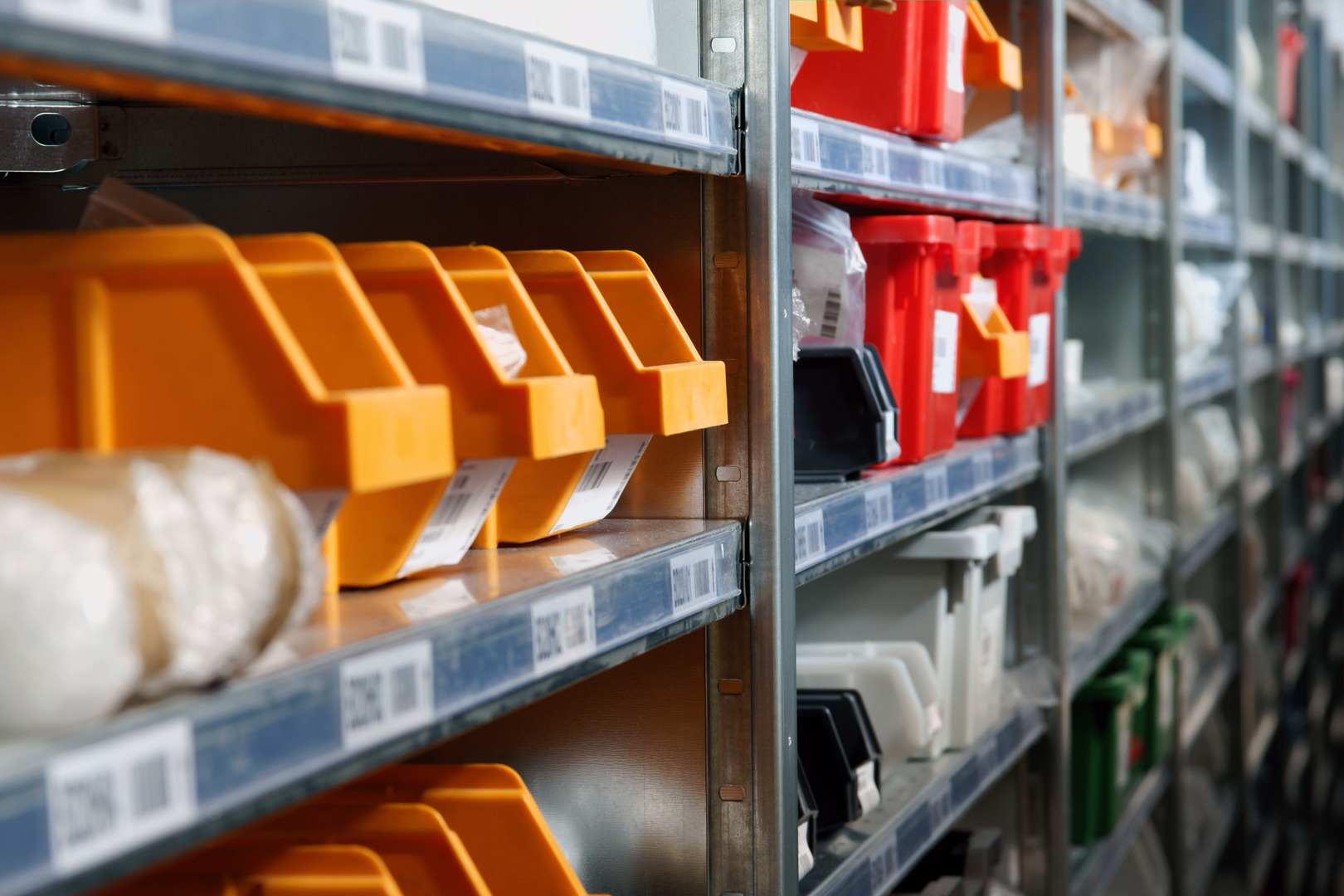
1. Location, Location, Location: WMS automates your putaway process and helps you to identify the best ‘location’ to store your goods based on the frequency items will be picked and whether they have special storage requirements. The aim should be that every item has a location, so pickers know exactly where to find things and a reference when it’s time to get it out the door.

2. Pick Planning: A WMS like SnapFulfil will use data from the day’s orders to generate electronic ‘pick lists’ based on product locations. A pick list will offer pickers the most efficient routes to take, which can improve efficiency and productivity by up to 30 per cent, which is welcomed when operatives are in short supply!

3. First In, First Out: By using the first in first out principles, a WMS will manage stock rotations based on a product’s shelf life, reducing waste and making sure products are as fresh as possible for your customers. This will also minimise shrink as all stock movements are accurately recorded and will let you know exactly when you need to re-order items.

4. Quality Control: A cloud-based WMS brings control to a warehouse, which can be a complex and chaotic environment. It removes piles of paperwork by automating processes, helping to maintain efficiency and identify any issues within the warehouse. This could be a picker who is consistently slower than average at pulling orders, allowing you to address the situation appropriately.

5. Realtime Data: Data is a key feature of WMS, giving you access to a plethora of reports and trend analysis. These reports allow you to make better forecasting decisions based on solid fact and paint a detailed picture of a product’s lifecycle across the supply chain – from what you’ve sold to where you’ve sold it and frequency.

In Summary:
While we are all absorbed by Covid-19, investing in a WMS might seem the furthest thought from your mind. But now is the ideal time, as downtime is the best time to get your warehouse in order to manage the brave new world.

The truth is, it’s possible to have a cloud-based WMS, such as SnapFulfil, up and running remotely in 45 days or less and it’s not expensive to set in motion, or difficult to realign across multiple locations.

With our unique low cost monthly payments, including equipment lease, the financial barriers are lifted giving you the opportunity to have a world class WMS with no major capital investment.

The benefits are clear with total control over your warehouse logistics – from stock and where to find it, storage space optimisation, improved pick efficiency, despatch accuracy and most significantly, a quick return on investment.

Finding a solution that has the flexibility to not only integrate with other technology platforms but also grow with your business are other important considerations when looking for a WMS partner.

Start-Up Synfioo Offers Free Transparency for Truck Monitoring

Potsdam-based start-up Synfioo is offering its OnTime Navigator for three months free of charge during the current international crisis. The tour management application allows the retrieval of ETA (Estimated Time of Arrival) predictions as well as movement and disruption data from any computer. The OnTime Navigator data thus enables the people involved to better react to unexpected developments in the transport process in the wake of the corona crisis.

“Security of supply is currently a very important commodity. With our decision to make the use of OnTime Navigator available free of charge to potential interested parties, we want to play our part in optimizing road freight transport processes during the corona crisis,” emphasizes Marian Pufahl, CEO of Synfioo. “Because only those who have correct data on the position of the trucks and the disruptions ahead can make the right decisions for the further course of the transports. The same applies to precise arrival time predictions for raw materials and semi-finished materials, which have a major influence on the demand-oriented design of production processes.”

Find out more at the English landing page: https://ontimenavigator.de/en/ too. Customers can register until 30.04.2020 and can cancel the tour management application within the three free months. Otherwise, the registration of users would then be transferred to a regular payment service.

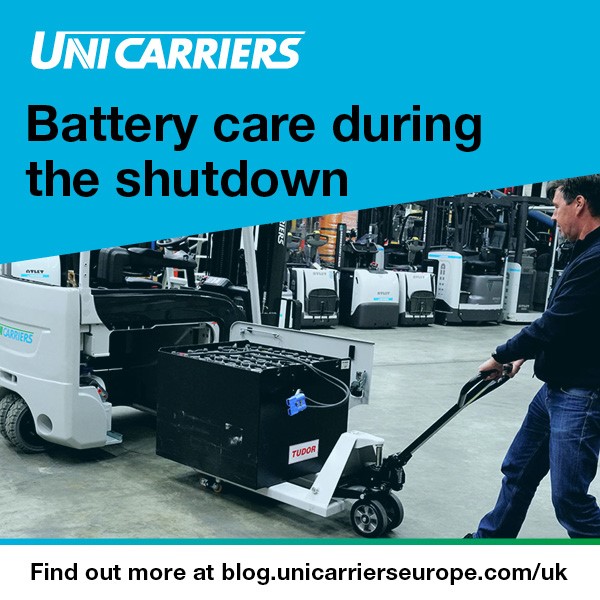
Expert Insight: How to Store Your Forklift Battery During the Shutdown

The coronavirus crisis is creating huge amounts of disruption for business and society all over the world. Companies are having to deal with high levels of staff absence, reduced demand for services and products and even mandatory shutdowns in some countries.

Many businesses’ services have become even more vital – for example, in the food distribution or medical equipment industries. However, other sectors are experiencing a serious slowdown, and for companies that have a materials handling operation, their forklift fleet may be at a complete standstill or utilised much less than normal.

If you have had to shut down your operation, your forklifts will be able to stand still for long periods without any problems. However, lead-acid forklift batteries must be stored in a much more careful way if you want to be able to resume your operation quickly when things get back to normal, without having to waste time on battery service or recharging.

Courtesy of Charles Carey of UniCarriers, here are some of the most important rules to follow if you need to store your forklift batteries unused for long periods:

Make sure that your batteries are fully charged before storing them
If you need to store unneeded batteries over long periods, make sure they are fully charged first. This helps prevent sulphation, which can be difficult and expensive to fix and seriously affects your battery’s performance and lifetime.

Store the forklift batteries in a dry, frost-free environment
It may be getting warmer across the country as spring approaches, but temperatures may still dip below zero in certain regions, especially overnight. Always make sure your batteries are kept indoors, away from moisture or frost to ensure their good performance in future.

If the batteries are still in the trucks, disconnect them
Even when your truck isn’t turned on, if a battery is connected to the truck it will still slowly discharge over time as it may be under a ‘parasitic load’. When this occurs, you will find that your batteries are completely discharged when it’s time to start work again. If you must keep your unused batteries mounted on trucks, disconnect them.

Refresh charge the batteries once a month
Even if you are expecting that your batteries won’t be used for a long time, you should still refresh charge them once a month. This ensures that they’ll be fully charged and ready to go when you need them again. If you are storing them in charger racks, keep the batteries connected to the chargers. The chargers can be programmed to automatically refresh charge the batteries when needed, making sure they will be fully operational when business resumes.

This health crisis is creating disruption for everyone, and it’s having a major effect on business. Recovery may take time, but if you follow these basic battery care rules while your batteries are out of use, you can at least be confident that they will be able to perform when you need them again.

If your materials handling operation has been affected by the crisis and you need advice on how to get through it before business get back to normal, click the button below to get in touch with us. Our team of materials handling experts will be able to provide solutions to your problems during this difficult time.

PSI to Present Software Solutions at Virtual Trade Fair

To compensate the cancelled Hanover Fair, PSI will be presenting integrated software solutions for production and logistics at its own virtual trade fair. Interested parties for the April 20 to 24, 2020 event can get information online in various webcasts and individual consultations.

Based on the PSI technology platform, an integrated solution consisting of Enterprise Resource Planning (ERP), Manufacturing Execution System (MES), Predictive Maintenance and Quality, Warehouse Management System (WMS) and AI-based applications will be presented for agile production and logistics.

The showcase demonstrates the integration of order management, detailed planning and the control of the manufacturing process using an Enterprise Service Bus. Here, the parameterization and control of tools is completely automatic. The processes and data exchange are modeled easily and without programming using workflows based on BPMN 2.0. In addition to AI-based applications, the factory monitor for visual monitoring of the manufacturing process and worker assistance with numerous functions for optimization and error reduction are used.

Two webcasts highlight how production processes can be improved with ERP and MES software, which meats the specific issues of mechanical and plant engineering as well as the automotive industry. Personal consultations with PSI experts round-off the virtual fair.

More information and registration options (only in German): www.psi-automotive-industry.de/de/aktuelles/veranstaltungen/virtuelle-messe-fuer-intelligente-produktion/

Streamlined Warehouse Processes with inconsoWMS From the Cloud

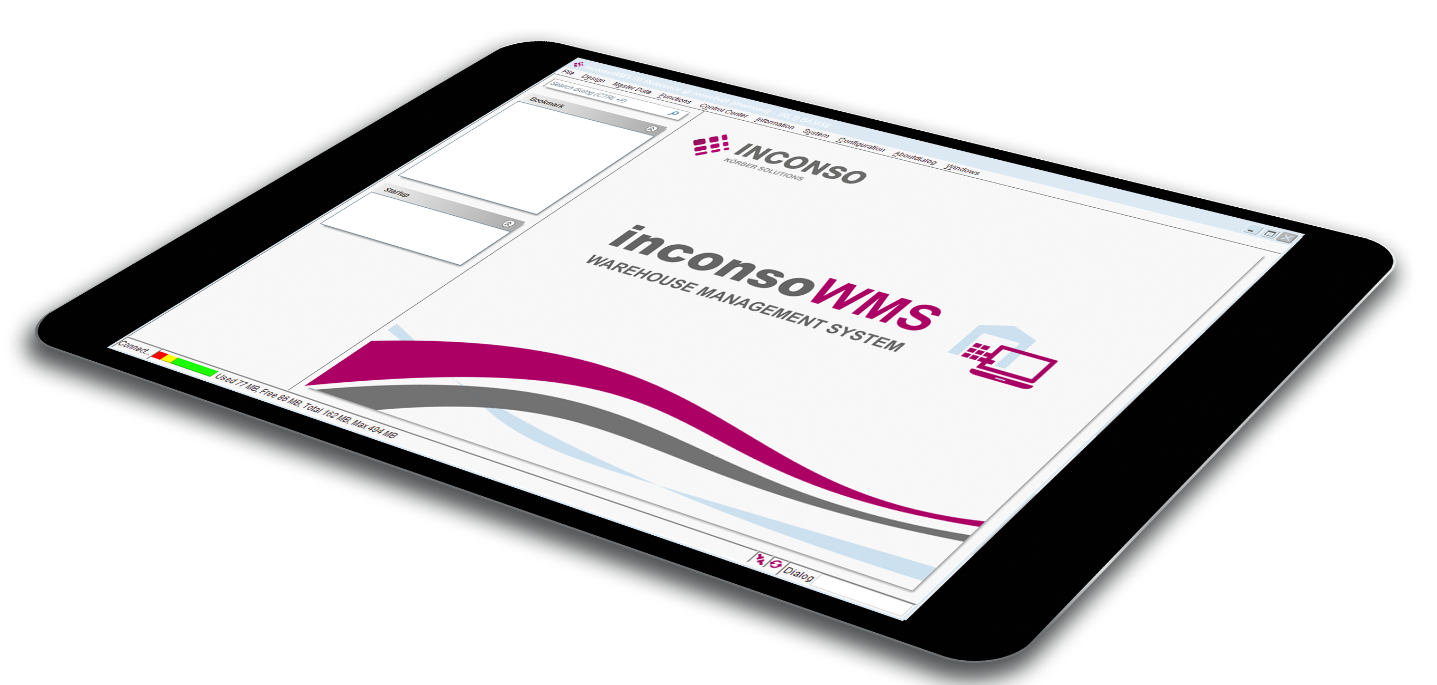
Logistics software specialist inconso is outlining the benefits of the cloud with the new generation of its warehouse management system inconsoWMS: Flexibility, scalability and immediate operational readiness are included in the latest cloud release that the company says serves as an excellent starting point for IT-supported warehouse management – and was designed with high availability and IT security in mind.

As a cloud service, the proven inconsoWMS combines all basic functions for mainly manual or forklift-controlled processes in goods receiving, store-in, picking and packing. In addition to standardized processes, inconsoWMS from the cloud also has special functions for dashboards, stock taking and stock management. It is suitable for small and medium warehouses and multi-warehouse users who want to easily and quickly implement additional warehouses and hubs.

This cloud-based solution provides higher security by being run at a certified data centre (ISO 9001, ISO 27001 and SOC 1 and 2) with global service teams. With an availability of over 99.5 percent, the cloud infrastructure makes use of powerful virtualisation, server, storage and network technologies that increase flexibility in system deployment. “We can handle seasonal fluctuations dynamically with these system resources,” explains Wilfried Pfuhl, CEO of inconso. “However, the cloud inconsoWMS was also designed for peak loads, growth and process modification. This makes the new, highly flexible cloud software a welcome addition to the inconso Logistics Suite’s range of solutions and enables our users to overcome all future logistics challenges.”

The cloud-based inconsoWMS is available immediately, unlike standard warehouse management systems. Users do not have to worry about the necessary infrastructure or major security measures. Regular updates provide expanded functions and ensure system security is always up to date. The cloud release’s appearance is based on the familiar user interface of the inconso Logistics Suite.

Software Specialist Everysens Makes TMS Freely Available

Logistics software specialist Everysens is joining the solidarity effort created by the current international crisis by making available a Launch version of its collaborative transport visibility platform free of charge, for 2 months. This version will include a set of real-time functionalities to simplify deployment and quick returns without changing their processes.

This means being able to manage the execution of transport by synchronising with different teams remotely, by going digital in order to obtain real-time field visibility and having business collaboration tools that simplify the implementation of transport processes. Industrials and freight forwarders will thus be able to edit their consignment notes in a simplified manner or even monitor the progress of their deliveries (ETA) and inform their customers at the end of the chain.

Everysens says that 72 hours will be enough to set up an account, and to connect the customer’s transport
team and users, so that everyone can collaborate, wherever they are. This will ensure the continuity of operations, so that a high level of service can be maintained despite the current circumstances.

Apply for the system here.

Shipping Data Confirms Migration to Online Solutions

Logistics software specialist Consignor has released shipping data confirming the very clear switch to online solutions as a result of the Covid-19 pandemic.

Details include:

• 13% increase in the number of parcels shipped overall
• Rise of B2C ecommerce shipments of 17%
• 9% increase in parcels shipped domestically
• 2% decrease in parcels shipped across borders
• Retail parcel volume down 8% compared to expected volumes

The figures compare sets of data for January-March 2019 and January-March 2020, on a like for like basis, removing new business growth from the data sets used.

Peter Thomsen, CEO at Consignor said: “Looking at the traffic numbers on our platform I believe we are seeing a huge shift from retail stores to e-commerce solutions.

“We are committed to supporting organizations as they attempt to navigate their way through the increasingly challenging delivery landscape.”

Sitma Launches Advanced Customer Assistance Service

Italian-based global packaging machinery specialist Sitma Machinery has launched “We Care”, a customer-assistance program based on advanced strategies to allow both predictive and remote work on machines and systems. This allows the company to operate from a global perspective and cover diverse, constant needs. Though based on an advanced technological platform, the service focuses on the competence and experience of its operators.

Since its founding, Sitma has shown that it has a mindset devoted to innovation and change. Its customer support system, part of the We Care program, is the result of this philosophy. It’s supported by a CRM strategy that was implemented first in sales and, more recently, in after-sales management to track and plan requests, needs and customer interventions in a smart way.

“This tool will lead to an increasingly global, integrated and proactive approach in managing the post-sales phase,” explained Fabio Moro, After Sales Manager at Sitma. “It operates according to the logic of predictive maintenance and servicing to improve line performance and operations. The CRM operation is based on cutting-edge software, but human skills remain the core of our approach with the customer,” he added.

The pride of Sitma’s customer service is, and always has been, its operators’ incredibly high specialization and unique knowledge of the machines. Over time, Sitma’s technical staff has expanded its know-how, integrating mechanical knowledge with new skills in electronics, programming and planning. Today, Sitma’s assistance specialists are mechatronics experts with multidisciplinary skill sets.

Technology remains a fundamental aspect of the equation and effectively supports all assistance activity. Every Sitma machine is now equipped with an IoT system for remote connection and diagnostics. Thanks to the integration of virtual channels, these solutions – which were implemented several years ago and are supported by an articulated network of sensors collecting various types of data — facilitate remote assistance by reducing any downtime. Sitma has also developed specific algorithms that, through data collection, predict maintenance and performance optimization. Every single critical component of the machine is monitored to avoid downtime during production.

Three macro areas make up the We Care program: After Sales, Consulting and the Sitma Academy. Here as well, a team of specialists with key technical skills has been assembled to support the effort.

“For us, consultancy plays a fundamental role within the concept of assistance,” Moro said. “At Sitma, we’re constantly studying new customer needs as they arise. We make ourselves available to evaluate solutions that improve production performance, and we propose customized programs that fully embrace the customer’s needs while minimizing fixed maintenance costs.”

The Sitma Academy draws on more than 50 years of know-how to train customer staff that operate and maintain the lines. The company organizes customized training courses designed according to the needs of each individual customer.

Finally, the web provides additional support. A dedicated page on the corporate website allows customers to request information, assistance and advice. An e-commerce portal also lets customers order and purchase consumable components with ease. Soon, the platform will be extended to cover spare parts and machine components that are subject to wear.

phs Teacrate Responds to Surge in Demand for Crate Rental

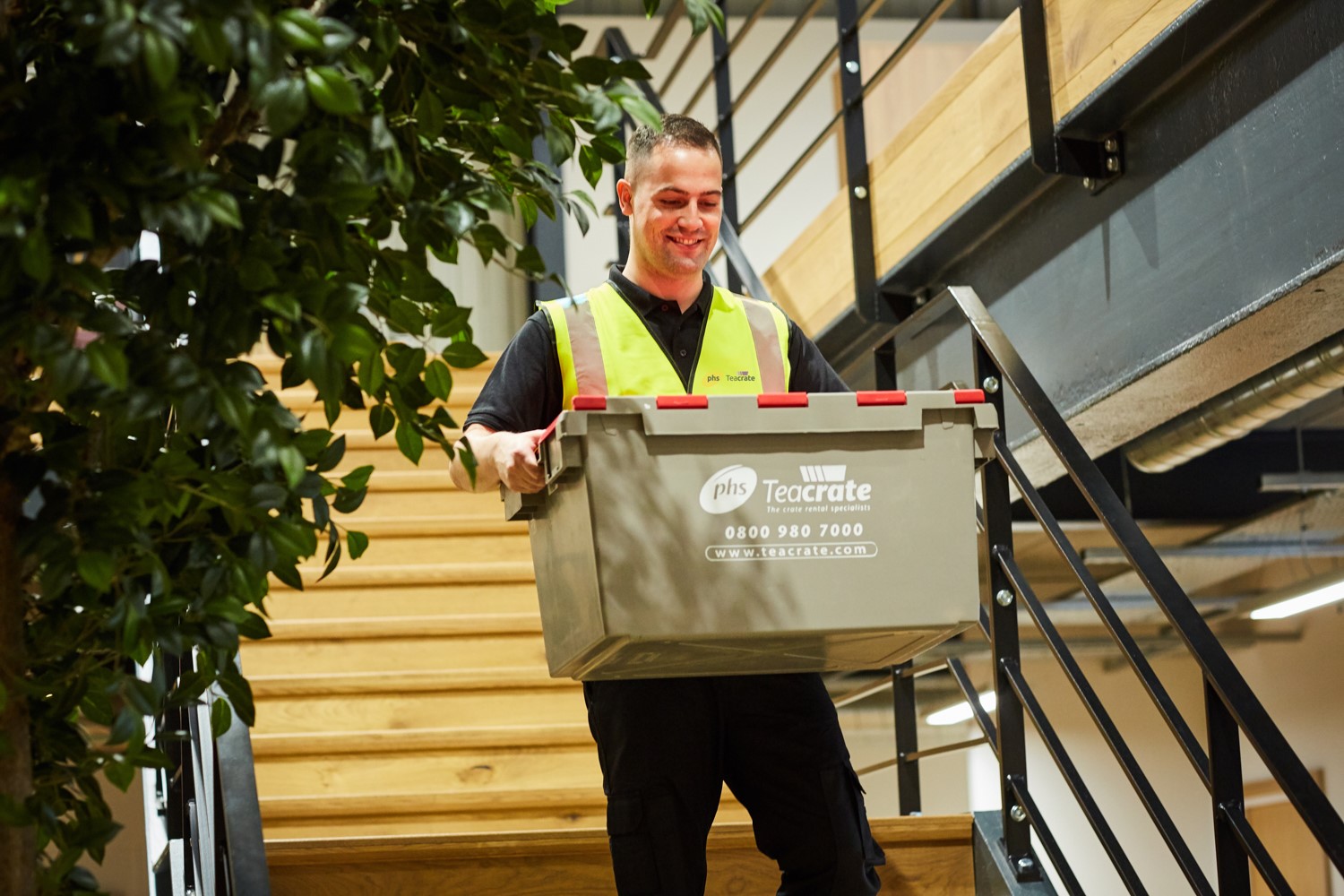
Crate-rental provider phs Teacrate has geared up to support organisations who are continuing to supply essential services to the public and seeking to combat the spread of coronavirus.

Some sectors of the food industry are being put under pressure with demand for home delivery in particular rising sharply. This has created unique logistical demands that the food industry and key suppliers to the sector are overcoming together. As a result, Teacrate, which provides crate rental services to food suppliers and retailers among others, is operating at full capacity to meet this need. Supplying crates for online supermarket deliveries and the distribution of fruit and vegetables in store is not just about having the appropriate number of crates held and distributed across the UK from a network of depots, it is also important to ensure that the crates are hygienically distributed and thoroughly cleaned. Teacrate has therefore introduced new infection-control measures which include stringent product sanitisation, contactless delivery and collection, full use of PPE and rigorous hand-washing procedures and cleaning protocols.

In the office market, Teacrate has been busy supplying crates for businesses to transport essential work items for home workers. It has launched a new, homeworking bundle and has officially become a government-approved supplier via the Crown Commercial Service to supply crates and packaging materials to central government and across the public and third sector. In addition, Teacrate’s products are being used by companies providing care packages to the vulnerable ‘at home’ community and by charity organisations providing food banks.

Dan Lee, managing director of phs Teacrate, said: “Across the UK many essential services are doing a fantastic job of supporting the nation through these unprecedented times. As an essential services supplier, we understand our role in delivering an efficient and effective service our dedicated staff and our wide range of products and services mean that we can be relied upon throughout these tough times as well as when things get better for us all.”

Automated Document Reviewing “Now Available in Minutes”

Envoy Group has teamed up with TradeSun to offer an automated document reviewing process which, it claims, will significantly reduce the time taken to complete trade finance transactions.

Manual documentation review processes, which are still common practice in trade finance, can take 4-6 weeks to complete and have very little protection against double-entry fraud and human error. This partnership allows Envoy’s clients to remove the margin for human error and complete the document review and validation process in a matter of minutes – helping mitigate risk and fraud whilst expediating global trade.

Envoy uses blockchain technologies to bring efficiencies to global supply chain and trade finance. Built on enterprise software firm R3’s Corda blockchain platform, Envoy says it accelerates the $17 trillion annual global trade flows into the digital age by reducing inefficiencies and injecting vital and once-unattainable liquidity.

TradeSun uses AI to automate the document reviewing process. Its technology has been in development for more than 10 years. Since inception, technologies such as text analytics, entity extraction, AI and NLP have been added to its offering. It has a management team with over 100 years of Financial Services Experience and includes experts in Trade Finance, AI, IOT and Blockchain.

Lee Tarone (above), CEO of Envoy Group, commented: “In 2020, the processes that our global trade relies on still are incredibly archaic. In order to expediate trade finance and bring it into the modern day, we need to do away with the rubber stamps and paperwork that fill it with risk. Faster, safer trade finance means faster, more effective business for all stakeholders.”

Subscribe

Get notified about New Episodes of our Podcast, New Magazine Issues and stay updated with our Weekly Newsletter.