Witron to Build Automated Logistics Centre for German Retailer REWE

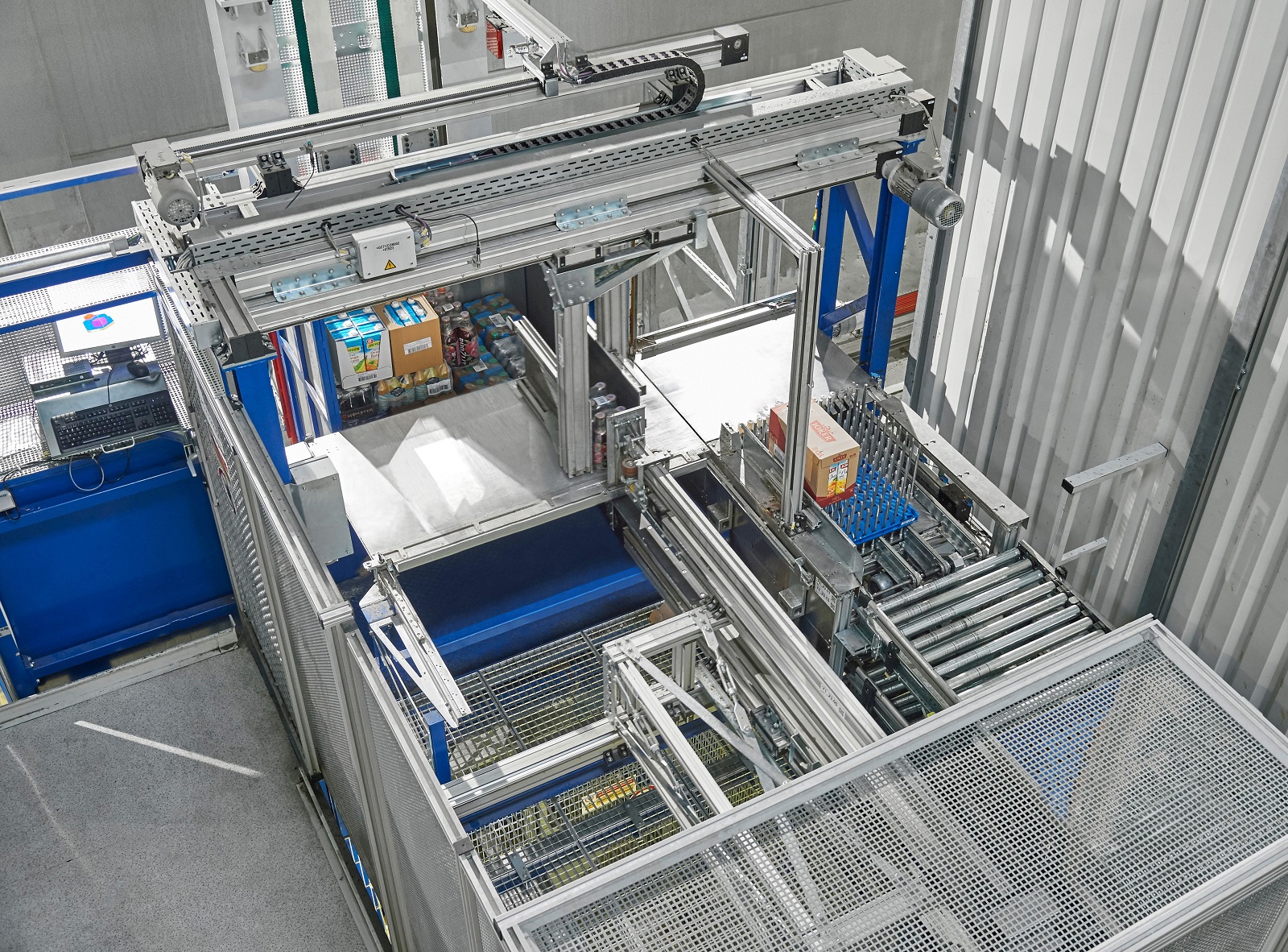
Integrator Witron is to design and implement a new automated logistics centre for German food retailer REWE. The Henstedt-Ulzburg site will supply more than 350 stores from August 2022.

Implementing Witron’s OPM (Order Picking Machinery), DPS (Dynamic Picking System), CPS (Car Picking System), and DPP (Display Pallet Picking) solutions, will enable REWE to pick up to 165,000 cases on a peak day in a store-friendly manner at the automated logistics centre. The 86,500 square metres / 931,100 square feet site will store more than 12,000 different items from a dry and fresh food assortment.

“The most important reasons for this investment decision were both ecological and economic factors”, says REWE’s Business Unit Manager Logistics National / Supply Chain Management, Matthias Bähr. “This includes a high level of cost-efficiency along the supply chain as well as a long-term guarantee of an excellent supply of our markets, even in times of crisis. Our sustainability strategy also includes other aspects such as ergonomic workstations, the reduction of CO2 emissions through optimally packed load carriers and, as a result, the reduction of trailer tours. And last but not least, the construction of the warehouse and administration site in accordance with the DGNB Gold Standards (DGNB = German Sustainable Building Council).”

CEVA Renews for Five Years with Italian Publishing Giant Mondadori

CEVA Logistics has renewed its contract with Mondadori Group, the pre-eminent Italian publishing house for books and magazines.

The new contract between Mondadori Group and CEVA Logistics extends a partnership begun in May 2017, for further five years. Logistics activities under CEVA’s management will be concentrated between Stradella 4 and Verona.

CEVA will be in charge of distributing around 65 million items per year on behalf of Mondadori and move around 340,000 different titles.

Christophe Boustouller, CEVA Logistics Managing Director Italy, says: “We are very proud to have achieved the renewal of Mondadori contract and would like to thank Ernesto Mauri, CEO of Mondadori Group, for this operation.

“This is a concrete proof that CEVA, is a major player in Italian logistics” he adds.

Filling and Packaging Specialist KHS Prevents Costly Downtimes

Filling and packaging specialist the KHS Group has launched what it calls a supplier component discontinuation offensive – essentially making sure that beverage plant equipment stays up and running and preventing costly machine downtimes. With the availability of significant components becoming ever shorter, the topic is gaining in importance in the digital age, where electronic components have shorter product life cycles.

KHS Service is proactively tackling the problem of supplier components no longer being available and having to be replaced by new solutions. “We support our partners with our knowledge of any technical changes required to make sure that machinery continues to function and production runs smoothly at beverage bottling plant,” states Klaus Thatenhorst, head of the Standards Department at KHS. “By replacing the necessary components in good time, we ensure that our machines have long service lives and are thus sustainable.”

1,700 discontinuations in 2019 alone
KHS is able to react fast to any changes thanks to its holistic system of data management. Through this the systems supplier always knows which part on which machine belonging to which customer is likely to be affected by a discontinuation. This shortens response times should new components be needed. This is especially relevant when modifications have to be made to the machine’s engineering. In 2019 1,700 discontinuation solutions had to be found. Half of these required much more than a simple replacement, with intensive technical work necessary.

So that it is better prepared for the possible discontinuation of system parts, KHS is in regular close contact with its suppliers. It is already common knowledge, for instance, that robot manufacturer KUKA will only be supplying its current KR C2 controller until 2024; this has an impact on two series of KHS palletizers, among other machinery. The Dortmund engineering company is thus preparing itself and its customers for the pending conversion well in advance. The KHS Group is also able to offer fast and flexible systems and solutions for short-term discontinuations. Its parts management system stocks replacements for as long as possible for precisely this purpose.

Replacements for greater line efficiency
This may all initially sound like an expensive and time-consuming undertaking for the bottler yet it yields great benefits on several counts. By changing components quickly, the systems provider avoids unplanned downtimes over a longer period of time caused by the failure of a part no longer available. Furthermore, beverage producers can sometimes even improve line efficiency by installing new replacement components and at the same time carry out other useful upgrades. When converting a machine KHS Service not only removes and replaces discontinued components but also takes them back and reworks them.

In our digital day and age discontinuation management is an issue which is becoming increasingly important. While mechanical parts such as gear motors are usually available for up to ten years, according to the German Mechanical Engineering Industry Association (VDMA) some electronic components last just two years. Accordingly, the number of replacements for comparable parts required as a result of discontinuation is already currently increasing at shorter and shorter intervals.

PSI Logistics Listed Among “Germany’s Most Innovative Companies”

PSI Logistics GmbH has joined the top list of “Germany’s Most Innovative Companies 2020”. The award recognizes the consistency of development performance and innovative strength of the logistics software provider. In cooperation with Germany’s established business magazine Capital und Statista, one of the market leaders for data collection and analysis, the award “Germany’s Most Innovative Companies” is being presented for the first time this year.

According to the jurors, the awards go to companies in which “bright minds are driving forward progressive business models” and those “that have made a mark with particular innovativeness”. A panel of experts selected the innovators from about 1,800 candidates. Among the award winners for “Germany’s Most Innovative Companies 2020” PSI Logistics was awarded in the Technology category. The list of best companies has been published in the current issue of the business magazine Capital (3/2020).

The award is based on recommendations and evaluations from 3,000 experts, experienced leaders in the fields and for innovation. Key aspects included “products and services”, “process innovations” and “corporate culture”. The published top list is dominated by companies from industries that have been promoting technological progress in Germany for many years and where, as with PSI Logistics, digitization is part of the core business. “The evaluation gives rise to the hope that the German economy is in a position to defend itself – if it helps to shape the future in an innovative manner,” is how the jurors summed it up.

GEFCO Supplies Urgent Automotive Parts and Mask Deliveries from China

Automotive logistics specialist GEFCO, has transported 750 tons of key automotive spare parts to France, including turbo compressors, pistons, control panels, doors and mouldings, in eight chartered flights to prevent production stoppages over the last two months.

The door-to-door solution included the collection of parts from several suppliers, via truck, from many remote Chinese locations. The urgent parts were consolidated and loaded onto the chartered cargo planes in Shanghai, China before flying to Vatry and Charles de Gaulle Airport, France.

With car plants ceasing activity across Europe, GEFCO has found solutions to store the parts in local airport warehouses to ensure fast access for clients as soon as production resumes. To aid manufacturers further in restarting their production, GEFCO has shipped over two million masks to ensure the health and safety of the customers’ employees when sites reopen.

GEFCO also provided all documentation and customs clearances and a seamless palletised solution in Europe for speed and efficiency to the European factories.

Paul-Henri Freret, Executive Vice President, GEFCO Air & Sea, commented, “The safety and health of our employees remains paramount and I am proud of the commitment of our GEFCO operating teams that have been able to secure charters of this magnitude, while working remotely.

“The capability of our teams in China and France operating together across airfreight, warehousing and road to support our customers with time critical shipments is an excellent showcase of our Partners, Unlimited ethos.”

Kite Packaging Designs Protective Face Visor for UK NHS

Kite Packaging has taken just a week to devise, design and supply a new protective face visor for the NHS – with 10,000 units dispatched within seven days. They used their team of 12 engineers to design concepts for the visor and a prototype was tested locally by medics last weekend to allow production to start as soon as possible.
An initial batch will reach front line medical staff in the next few days and Kite is confident that they can produce 100,000 of the masks a week and will be able to supply them directly to help speed up supply to staff working for health trusts and organisations across the region and the UK.
Gavin Ashe, Managing Partner of Kite, said: “Like many companies we wanted to help and realised that we had the capabilities in-house to design a face visor which would fit the requirements of the medics and workers who are on the front line of the fight against Coronavirus.
“Once our engineers had finalised the concept and we spoke to a range of companies in the industry, they have all responded magnificently.
“All of them realised the urgency of the requirement for protective ware and that we had the skills to turn around a product quickly.
“One of the suppliers is Staeger in Coventry while two of the others are based in the wider region. I know there is really good work going on across this area and that the tradition of design and engineering, which is so embedded in regional industry, is well suited to undertaking this sort of work.”
The visors are being supplied in kit form for the medical staff to put them together at the point of use which minimises packaging and speeds up distribution.
The visors feature a foam forehead pad which allows them to fit all head sizes, and they allow for a medical mask to be worn underneath.
They have so far been ordered by the George Eliot Hospital NHS Trust, University Hospitals Coventry & Warwickshire NHS Trust, Shropshire Healthcare Procurement Service (SHPS), Alliance Boots, Warwick Hospital (South Warwickshire NHS Foundation Trust), Guys and St. Thomas’ NHS Foundation Trust, North East London NHS Foundation Trust, and Royal Free London NHS Foundation Trust.
Kite has previously worked with the Coventry and Warwickshire Local Enterprise Partnership (CWLEP) Growth Hub, and its Managing Director Craig Humphrey, said the speed of response underlined the engineering and manufacturing expertise of the area.
He said: “Kite and their suppliers have been superb in their desire to help, the speed of their response, technical expertise and also their level of co-operation. There are companies across our area responding in similar way and they all deserve massive credit.”

SICK SensorApps Ensure Smooth Docking for Pallets and Dollies

A 3D camera and SensorApp solution from SICK has enabled rapid, damage-free guidance of automated and driver-assisted high-bay forklifts into pallet pockets, as well as the precise and efficient pick-up of dollies by automated guided vehicles (AGVs).

The SICK Pallet Pocket and SICK Dolly Positioning SensorApps run on SICK’s Visionary T-AP 3D time-of-flight snapshot camera. They promise to cut out delays associated with lining up both automated and manual forklifts to load pallets in high-bay warehouses, as well as positioning AGVs to collect dollies.

The new Apps, developed in SICK’s AppSpace software environment, work by positioning the camera in front of the pocket or dolly chassis within a working range of 1.5m to 3m. Using a single shot of light, the SICK Visionary T-AP 3D camera captures a 3D image, then pre-processes and evaluates the co-ordinates of the pallet pocket or space under the dolly, before outputting to the vehicle controller. The information can also be sent to a driver display to aid manual forklift operation, particularly useful in high-bay warehouses.

“For autonomous industrial trucks, and in manual high-bay forklift operations, where the driver cannot easily judge where the forks are entering into the pallet pockets, there is a high risk of damage to the forks, pallets, bay or the products themselves. Manually, it’s a trial and error process of aiming for the correct position, which can be time consuming. Automated systems using distance or photoelectric sensors could require significant programming effort and may not be as reliable,” explains Neil Sandhu, SICK’s UK Product Manager for Imaging, Measurement and Ranging.

“To position an AGV to approach and slot neatly under a dolly can be slow and prone to error if relying on work instructions, marks on the floor, or point by point navigation. SICK has developed these new SensorApps to offer a highly reliable, robust new method of guidance which promises to make materials handling and logistics operations faster and more productive.”

The SICK Visionary T-AP is a robust 3D imaging camera that captures high-resolution 3D data with a single shot of light. It builds up a detailed and accurate real-time 3D image of fixed or moving objects with excellent results regardless of angle, surface finish, material or shape of object. It combines different aspects of the light scattered by the object to build up a detailed picture of shape, distance, reflectivity and object depth.

The SICK Pallet Pocket and SICK Dolly Positioning SensorApps are supplied already loaded onto the SICK Visionary T-AP camera and ready for use. As self-contained hardware components, they are easy to fit to existing machinery, as well as being available for use in new industrial truck designs. Setting up the sensor is easy with the SICK SOPASair configuration and diagnostics tool, and it can be easily adjusted to a wide range of pallet and dolly types.
The SICK Visionary T-AP uses Time-of-Flight measurement of a light signal between the device and the target for each point of the image. The CCD/CMOS imager develops a pixel matrix, with each pixel containing depth and intensity information. The camera is designed to capture more than 25,000 distance and intensity values to create real time 3D images at up to 30 frames per second.

Vargo and Korber Supply Chain Announce Alliance

Vargo, a leading provider of material-handling systems integration, warehouse execution software and equipment solutions for major fulfilment and distribution centres, today announced an alliance partnership with Körber, the global supply chain technology leader from software to material handling automation.

This alliance provides a referral program through which Körber will offer Vargo’s Continuous Order Fulfillment Engine (COFE®) warehouse execution system (WES) and other Vargo solutions in North America. In turn, Vargo will provide Körber’s warehouse management system (WMS) as part of its design solutions for customers.

“In designing solutions for its clients, Vargo provides a comprehensive material handling systems integration approach, which includes designing, implementing and supporting optimized solutions based on the customer’s needs,” said Bart J. Cera, president and COO of Vargo. “This partnership with Körber provides an integrated cross-selling model of products, which allows both of our companies to bring a total proven business solution to the industry.”

“Today’s supply chains are under more pressure than ever before,” said Chad Collins, chief executive officer for Körber Supply Chain – Software. “Partnering with VAargo exemplifies our dedication to providing the solutions and expertise businesses need to handle any complexity that comes their way. Be it more products, suppliers, distribution channels or competition, we provide a range of solutions to fit any business size or strategy.”

Körber’s industry-leading WMS, empowers quick and efficient tracking of all materials entering, being managed in and leaving the distribution center. The WMS uniquely handles the needs of small businesses to global enterprises. This includes handling diverse day-to-day operations, rapid growth, and complex workflows requiring personalized solutions.
VARGO®’s COFE® WES manages the elements that make up the outbound workflow. It synchronizes and sequences all work resources — equipment, devices and personnel — and keeps orders flowing by providing real-time visibility and controlling automation, labor and other elements. The ever-advancing growth of e-commerce has challenged companies to address both efficiency and expediency in their fulfillment centers. Just this past peak season, the top seven fulfillment centers powered by COFE® experienced a 20-percent growth from 2018 to 2019 in the number of units they processed in one peak, seven-day period after Thanksgiving.

The Körber Business Area Supply Chain is part of the international technology group Körber. Formerly Körber Logistics Systems, this consists of Aberle, Aberle Software, Cirrus Logistics, The Cohesio Group, Consoveyo, DMLogic, HighJump, inconso, Otimis, Langhammer, Riantics and Voiteq. Based on 40+ years of experience, Körber uniquely provides an end-to-end offering for all supply chain needs, spanning software, automation, voice/vision/mobility, robotics, materials handling equipment, systems integration and consulting. The company already has proven success with thousands of companies worldwide.

Wheels and Castors for the Medical Industry in AUT Portfolio

Wheel and castor specialist AUT has highlighted the ready stock it has available for the medical and pharmaceutical industry as the current crisis develops.

“The range of use in the medical industry is huge,” said the company. “Castors for the medical industry are used on wheelchairs, beds, trolleys, hoists and much more. Plastic body castors feature heavily.”

The company’s Andy Warburton stressed that the company is well placed to service current needs. “We would like to remind our customers of our unique position in the marketplace with regards to stock and logistics support,” he said. “With the current global challenges around supply and lead times, we are here to help. We hold circa £1M worth of stock at our Manchester warehouse and circa £6M worth at our bulk warehousing facility in Germany.”

The Lancashire-based firm, which is celebrating 40 successful years in 2020, can be contacted on 01457 837772 or see its medical range here.


Industry View: Overcoming Challenges to Delivery Efficiency in Difficult Times

The current Coronavirus pandemic has presented challenges for every industry, organisation and individual across the world. In particular, the increased pressures that have been placed on ensuring efficient deliveries; to stores and to homes – have never been experienced before. With the Government placing the UK on police-enforced lockdown, not only has panic-buying ensued, but with the public unable to purchase items from stores – ecommerce demand has seen huge growth, with a resultant exponential increase in the number of home deliveries for all types of goods. So what are the main pinch points for delivery that have been caused by the crisis, and how can they be addressed? Andrew Tavener, Head of Marketing at Descartes, explains.

Delivery to store

In light of panic-buying and stockpiling caused as a result of the outbreak, many supermarkets have struggled to keep up with demand and keep shelves stocked. We’ve already seen certain measures come into effect to support retailers, such as the relaxation of the enforcement of the EU drivers’ hours rules, as well as changes to MOT testing requirements on commercial vehicles to keep deliveries moving. But while these initiatives will all contribute to the overall effort to streamline delivery to stores, with the temporary lack of regulated checks, implementing vehicle safety technology to make sure vehicles are roadworthy and drivers are safe when they go out is more important than ever before.

Additionally, the government has announced that it will be temporarily relaxing elements of competition laws to allow retailers to work together and share resources to take some pressure off of supply chains; sharing stock data, pooling staff, delivery depots and vans, as well as coordinating opening hours to allow for shelf stacking time. When it comes to sharing delivery capabilities, an online, remote, centralised system is essential, so that everybody can access it in order to provide maximum visibility and capitalise on technology to get more out the existing resources in place, as they come under increasing pressure.

Crucially, supermarkets are now closing overnight to allow for deliveries and stacking to take place. This is where dock appointment scheduling becomes a critical component, to be able to manage demand in line with resources and capacity, to prioritise deliveries and create a foundation for better carrier/supplier collaboration – addressing this significant pinch point during a critical time can help to streamline the delivery process. One well known supermarket is currently coping at four times its peak with the use of Dock Appointment Scheduling, demonstrating how effective the tool can be.

Home Delivery

Add to all of this the growing concerns over the delivery driver shortages, especially as many may have to start self-isolating depending on whether they experience symptoms or not, the use of technology to optimise delivery efficiency has never been more important.

Steps have also been put in place by delivery companies relating to the actual delivery at the addressees’ homes, including leaving the goods in a specific place and not requiring a signature from the person accepting the item for proof of delivery.

A routing and scheduling solution that continually assesses the resources available, versus actual visibility throughout the supply chain, from initial collection through to the last mile of the home delivery process, offers the opportunity to maximise operational efficiency. Integrated telematics and mobile data communications provide increased visibility for the fleet manager and consumer, as they can see in real-time, exactly where a vehicle is against the plan and route set out by the scheduling software. This added insight allows transport operators to add or amend jobs to avoid disruption, such as traffic, as well as send automatic updates to the customer about any changes to their delivery. One well known pharmacy that relies on semi-retired drivers – those at higher risk to Coronavirus – is coping with a 15% absence rate with the use of routing software, demonstrating how the technology is enabling the pharmacy to keep up despite driver shortages.

Moreover, in light of temporary changes to drivers’ hours law enforcement, by combining digital tachograph analysis and reporting with driving licence and driver CPC verification with the DVLA, as well as digital driver vehicle safety checks, all in one platform, operators can practice proactive compliance management to underpin optimisation of fleet efficiency. Operators need a simple and convenient way to stay on top of their compliance requirements, especially as more changes are likely to come into effect as the situation unfolds.

Growth of ecommerce

The Coronavirus crisis has meant that retailers have had to go back to the drawing board when it comes to forecasting. For example, despite warmer weather approaching, comfy tracksuits are booming as people are staying at home, rather than purchasing evening wear or prom dresses. Home and garden, DIY and workout gear is also seeing a surge. While retailers can prepare for peak-periods such as Christmas, many are struggling to cope with this unexpected surge in demand.

With the public turning to online delivery during lockdown, businesses that have not had an online presence have realised that given the current state, this could mean the difference between surviving and going under. Even for those businesses with ecommerce in place, they have likely never had to deal with such an unprecedented crisis we are currently facing.

Primark, for example, has no online business to offset its lack of in-store revenue, now all of its 189 UK stores have closed. Estimates calculate the lost sales at Primark to equate to about £85M of gross profit, even before store closures. But all is not lost for those retailers that have not yet set up an ecommerce channel. With rapid turnaround remote solutions, warehouse management software can be deployed without the need to physically visit a site to get up and running. As long as warehouse facilities are available, businesses can deploy a logistics platform in three to four weeks, not months.

Moreover, with the likelihood that businesses will see more staff shortages as increasing numbers of workers will need to self-isolate, an efficient way of picking, packing and shipping is essential to keep up with increasing demand. And as consumers have no choice to turn to online shopping methods, it’s also likely that many will continue with online shopping even after the pandemic is over – especially if they have received a good experience. Retailers need to be prepared for the shift in consumer habits to not just be a temporary change in operations.

With technology that provides continuous background optimisation of resources, operators can get more out of their existing resources. Drivers and the public can be kept safe with real-time updates on delivery ETAs and mobile applications for proof that your goods were left in a safe place or outside your door for ‘contactless delivery’. These are testing times for every business, but those that can adapt now and capitalise on technology that can unlock valuable efficiencies will be the ones that will come out the other side stronger and in a better position to ride the wave of future demand fluctuations.

Subscribe

Get notified about New Episodes of our Podcast, New Magazine Issues and stay updated with our Weekly Newsletter.