Covid Compliant Intralogistics

What intralogistics solutions can keep warehouses covid-compliant, allowing staff to work safely and productively? Edward Hutchison of Bito makes some suggestions.

As we move cautiously into a still fluid business environment, one thing remains certain: goods need to be picked in warehouses, with the prime consideration of staff health, who must be kept separate – and productive. These two requirements are not always mutually exclusive. Take for example live storage flow racks. They have a long established advantage of goods being replenished – often using forklift trucks – from the aisle behind the rack of flow lanes and picked – often by pedestrians – from the aisle in front.

Add a conveyor to the pick face and zones can be created to allow a picker to remain within a localised area, being responsible for picking items for an order in that zone before sending the
order tote on the conveyor to the next zone. The density of storage provided by live systems allows a greater number of pick locations within a zone than would be possible with traditional
racking. As one carton or pallet is emptied, it is removed for another to flow down the lane to take its place at the pick face – ensuring items are constantly available. In addition to keeping staff separate, live storage maximises their productivity, as pickers sticking to their zones need not waste time and energy traveling long distances during the day.

Driverless transport devices can offer greater agility than a fixed conveyor when it comes to transferring goods from a pick zone. They can take over transport journeys from staff, allowing them to
remain in the pick zones where they are most productive. Bito’s LEO Locative container transporter, for example, can link workstations located between pick zones, the Goods In area, dispatch or, if in a manufacturing plant, to the production lines. No expensive software is required; users simply lay down an adhesive coloured line on the facility floor to mark the route for LEO to follow. Stations where the transporter needs to stop and  any tasks that must be performed at each location are also specified using markers applied directly to the floor.

The ease of set up means it can be completely managed in-house – keeping procurement costs low. The user is always in charge of specifying routes and stopping points for the transporter and can scale up simply by adding units when necessary, without committing to large initial capital expenditure. Read the whole story, from our last issue here: https://flickread.com/edition/html/index.php?pdf=5f3d1fcf3160d#42

similar news

Latest UniCarrier Aims to Beat Stop-Start Picking Process


Combined Transport from Road to Water

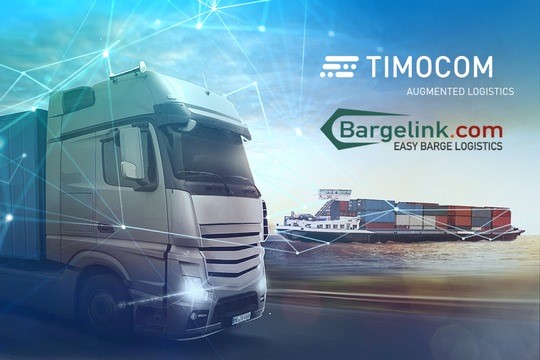
the FreightTech company Timocom is expanding its reach with a further strategic partnership. The company has started a cooperation with Bargelink, a marketplace for European inland shipping. These digital innovators are working together to provide their customers with new options for finding business partners – including for combined transports – thus helping them to expand their field of business.

Timocom has been digitalising the road transport supply chain since 1997. Transport customers such as freight forwarders and companies from trade and industry use the Smart Logistics System to find service providers for their freight and vehicle offers. On Bargelink, claimed to be the first and only online marketplace for European inland shipping, shipping companies and private owners can search for freight and offer cargo space on their ships. Logistics service providers, as well as commercial and industrial shipping agents, can offer their freight for transport and search for cargo space on ships.

By cooperating with one another, TIMOCOM and Bargelink allow their customers to expand their service provider networks to included combined transport operations. This means they save time and process costs, and can find transport alternatives at better prices, on both the roads and waterways. They are bringing freight and vehicle space together, quickly and easily, leading to optimal capacity utilisation for various modes of transport.

“Our cooperation with Bargelink is an additional step towards networking within the transport industry with partners who, just like us, are driving digitalisation of logistics processes,” says Gunnar Gburek, Timocom’s spokesman. “Customers on both sides of the equation profit: they expand their network of transport customers and service providers, and have the option of utilising alternative modes of transport.”

Especially in the face of fluctuating demands resulting from the coronavirus pandemic and the associated economics policy decisions, often made at short notice, a large European network provides the flexibility that businesses need right now. It helps them to stay agile when needed, and to find new business partners – regardless of mode of transport. Every month, around 700 barges and up to 200,000 tonnes of freight are offered over Bargelink. In total, there are over 1,500 registered ships with a carrying capacity of around 3 million tonnes. As neutral service providers, Bargelink and Timocom give their customers access to independent marketplaces for goods transport across all of Europe. http://www.bargelink.com

similar news

New Transport Application on Show From TimoCom


Dachser and Fraunhofer Institute Continue Research Partnership

The Fraunhofer Institute for Material Flow and Logistics IML and Dachser are extending their collaboration in the Enterprise Lab for a further three years. Their partnership will continue to focus on research and development projects with practical application benefits for the Dachser network. These include digital technologies such as data science and artificial intelligence (AI), real-time locating systems (RTLS), 5G and the Internet of Things (IoT), autonomous vehicles, and adaptive warehouse systems.

“The first step in our joint research work in the Dachser Enterprise Lab is to gain a detailed understanding of new technologies and their potential for logistics. Then we build on that to develop prototypes and concepts that add tangible value for Dachser and our customers, turning them into innovations,” explains Stefan Hohm, Corporate Director Corporate Solutions, Research & Development at Dachser, who will head the new IT & Development executive unit as of January 1, 2021. “So far, the work we’ve done together has proven that we can transform research results from the Enterprise Lab into new processes and services throughout the entire logistics network,” Hohm says.

“We’re delighted that Dachser is continuing its collaboration with Fraunhofer Institute. Our research results up to now and our new research contracts show just how important applied research is for logistics and supply chain management,” says Prof. Michael ten Hompel, Managing Director of Fraunhofer IML. “We’re particularly proud that the lab teams have continued to work effectively despite the restrictions imposed by the coronavirus pandemic. Of course, technical aids such as video conferences and collaboration tools have been a great help. But above all, it’s the extraordinary commitment and motivation of everyone working at the Enterprise Lab that is key to successful research in challenging times,” ten Hompel says.

In the Dachser Enterprise Lab, Dachser logistics experts and scientists from Fraunhofer IML work in mixed lab teams on various research and development assignments. The partnership between the logistics service provider and the research institute was launched in October 2017 and will now run until October 2023.


Secure data exchange in the age of industry 4.0

Networked production processes and digital factories provide an important key to securing Germany’s competitiveness and innovative strength as a business centre. This is the subject of the lighthouse project IC4F – Industrial Communication for Factories – in which STILL has been significantly involved for almost three and a half years. The Hamburg-based intralogistics provider also hosted the final event, at which the results achieved with the project partners were presented on October 22nd.

 For years, everyone has been talking about the future project Industry 4.0. However, essential tools for putting the new industry standard into practice are still lacking. The PAiCE support programme (Platforms, Additive Manufacturing, Imaging, Communication, Engineering) of the Federal Ministry of Economics and Technology is intended to remedy this situation. An associated lighthouse project is IC4F (Industrial Communications for Factories), in which the Hamburg intralogistics company STILL is playing a major role. “The 15 project partners from industry and research – including Robert Bosch GmbH, Siemens, Deutsche Telekom AG and Nokia – have spent the past three and a half years developing a technology kit for a trustworthy industrial communication and computing infrastructure,” explains Ansgar Bergmann, project manager at the Technology & Innovation department, who is responsible for STILL’s share of the project. This technology kit is based on an open architecture and allows modular extensions for new applications and communication technologies. Bergmann: “The results of our research will enable users to select suitable information and communication technologies according to industry 4.0 requirements and a specific migration approach”. These secure, robust and real-time communication solutions for the manufacturing industry will use key technologies from the areas of 5G, multi-access edge computing (MEC), cloud computing, virtualisation, industrial monitoring and analytics.

Ansgar Bergmann is particularly proud of the fact that STILL not only “simply took part” in this project, but was able to contribute their expertise to the fullest extent and decisively influence the development. “We have put our wealth of experience, which we have in the areas of industrial networking and Industry 4.0, to good use. In doing so, we benefited from the fact that we have already helped to develop several industry guidelines on behalf of the Federal Government and the VDMA in the past,” says the STILL expert. At the same time the Hamburg intralogistics company was also able to benefit from participating in the IC4F project. Bergmann: “First of all we proved to ourselves that we know how to successfully network processes in the warehouse and that our approaches work. In addition, we were able to gain many new insights, which we will now use in the cooperation with our customers to the benefit of both sides”.


Live demonstrations to underscore project success

On October 22, this work was provisionally completed. STILL invited project partners and internal stakeholders to the company headquarters on the Elbe. There, Nokia set up a mobile radio campus network, which was specially required for the project implementation and which will also serve as a pioneer for new communication technologies such as 5G. In several live demonstrations the equally important and groundbreaking results of the project work were then presented. One of the live demonstrations (“Use Case Truck-to-X Communication”), which was mainly developed by STILL, dealt for example with door control in a factory hall. In this use case both forklift trucks and other factory installations were integrated into a common communication environment.  The indoor localisation system supplied the position data of the forklift trucks, which were then processed by various applications of the partners involved in the live demonstration.  In this example, the door control was carried out purely from a virtual world.  The door opened automatically as soon as a forklift truck approached it.  This door control was implemented as a so-called administration shell. For this purpose, digital twins were generated from the forklift truck and the gate. In the submodels of the administration shell, all physical properties of the forklift and the gate, also called assets in this context, were then made permanently available.  The virtual model, which also controlled the processes, was thus continuously able to compare these data and, for example, to open the door only when the dimensions of the forklift really fit through.  In addition, the truck’s drive control is accessed and the driver is warned.  Door damage as it occurs today would thus be a thing of the past.


Excellent customer benefit

During the event in Hamburg, several live demonstrations and a number of new or extended industrial use cases were shown, such as the “Bring your Own Network” approach developed by Siemens to facilitate the installation of Multi Tennant networks in companies, or a modern “Certificate Management via the Cloud” solution by Telekom, which increases both security and convenience in the field of industrial communication.  “These proof-of-concept implementations serve to test the methodology and validate the use cases,” says Ansgar Bergmann. However, the STILL expert is firmly convinced that much of the knowledge and experience gained from the IC4F project will also be incorporated into industrial applications later on and will be of great benefit to STILL’s customers. Ansgar Bergmann is convinced that “with this experience as a basis we are the ideal partner when it comes to industrial 4.0 topics or warehouse networking.”

Customers Invest in SaaS Transitions

Iptor, the Swedish based leader in enterprise resource planning, supply chain management, planning and logistics software and services has achieved exceptional success in Norway, Sweden and Finland in the first half of 2020. Despite the COVID-19 pandemic the business has secured four major ‘wins’ with both new customers and significant increases in investment from existing customers. The company, which was acquired by Bregal Unternehmerkapital alongside investment from CEO Jayne Archbold and Chief Marketing and Product Officer Christopher Catterfeld, in January, has announced the following new contracts:

Swedish lubricating grease manufacturer Axel Christiernsson has increased its investment in Iptor by adopting its Iptor DC1 SaaS solution to improve efficiency and simplify processes. The company, which has production plants in Sweden, the Netherlands, France and the U.S.A and operates globally, needed to future-proof its technology. Adopting Iptor DC1 will help it reduce time consuming processes, become more streamlined and ensure capacity flexibility without additional cost – and always with high application availability.

Finnish high-performance luxury sailing yacht manufacturer Nautor has invested in Iptor SaaS to drive efficiency and expansion by upgrading to Iptor DC1 v11 and Project Chain Management. Moving from its previous on-premise software to SaaS means Iptor now takes care of Nautor’s entire ERP platform and infrastructure enabling the company to focus on its core business – producing the famous luxury Swan sailing yachts.

Norwegian headquartered Tess, which produces special hoses, hose fittings and other products related to hydraulics and subsea and is also the country’s largest distributor of welding and gas equipment, has selected Iptor as its provider of Cloud Managed Services, running Iptor DC1, its flagship cloud-based ERP solution. Iptor replaces Tess’ current hosting provider. With products distributed through more than 140 service centers across the country, all with locally adjusted products, services and inventory, the ability to be flexible and better manage capacity fluctuations without additional investment, was a key factor in the selection of Iptor.

Finnish heavy transport specialist VTA Tekniikka Oy has upgraded to Iptor DC1 v11. The company, which imports and sells lifting devices and cargo space temperature control equipment plus special technology for trucks, needed a technology solution that enables it to efficiently and simply manage its operations, allowing for capacity flexibility whilst maintaining quality standards. As well as the upgrade, VTA Tekniikka Oy are also implementing the Iptor Aperio open API platform. This allows VTA Tekniikka Oy to take advantage of the flexibility of advanced API based integrations and mobile solutions.

Jayne Archbold, Iptor CEO, said, “The challenges of the past six months have been unprecedented. However, it has also been a time where efficient operations, distribution and supply chains have never been more important, and technology plays a crucial role in this. Our customers have recognized the need to continue to invest in their IT and we are delighted they have shown trust in Iptor. We have made substantial investments in our technology over the past 18 months as well placing great emphasis on building long-term partnership with our customers. We look forward to continuing this for many years to come.” http://www.iptor.com

Plus Retail B.V Optimises Supply Chain

The food retail company, Plus Retail B.V. is optimizing its dry assortment supply chain. At the heart of the project is the construction of the new “National Distributioncenter” in the city of Oss. From there, all store orders will be processed centrally. The company will use sustainable and leading-edge logistics systems that are linked with one another. The warehouse logistics processes, which had previously been operated conventionally, will now be completely automated. The order for the design and implementation was awarded to the German general contractor WITRON.

The facility is set to supply 270 stores around The Netherlands. The supply chain project will go live in 2022. On a peak day the fully and semi-automatic  WITRON systems are able to pick and consolidate more than 410,000 cases onto roll containers and into totes. This will be achieved via OPM (Order Picking Machinery) with 20 COM machines, DPS (Dynamic Picking System) with 12 workstations, and CPS (Car Picking System) .

A mechanized pallet warehouse will be integrated into the facility. There will be 26,800 storage locations, a tray warehouse with 357,000 storage locations, as well as a tote warehouse with 27,500 tote locations. Highly dynamic conveyor system elements from WITRON’s subsidiary FAS as well as the intelligent WITRON software portal 4.0 will ensure a material flow that is perfectly connected in a physical and data-related manner.

The Dutch food retailer, Plus Retail B.V., headquartered in Utrecht generated sales of 2.61 billion Euros with 19,000 staff members in 2019. The market share in the Netherlands amounts to 6,5%. The retail company sells its products through its entrepreneurs and its online portal.

Navigating the Perfect Route to AGV Productivity

There is a boom in the use of automated guided vehicles (AGVs). Research from Grand View Research predicts that the global market will reach USD $9.1 billion by 2027. As many operations managers consider the benefits of AGVs, they face two fundamental questions: what type of AGV best fits my operation (e.g. pallet jack, tugger, forklift etc.) and what type of AGV navigation methodology should I utilize?

There are numerous technologies available in the market for guiding an AGV around a facility. Making the wrong choice of navigation system at the outset can have a dramatic effect on the cost and efficiency of the solution. However, selecting the optimum solution can be a complex challenge.

Grégoire Terrien, the VP of Development at BlueBotics, explains the different navigation options available.

Line following

Line following vehicles utilize magnetic tape, inductive wire, or painted lines to guide the AGV. The vehicle has a sensor that looks down at the line on the floor. It measures the left and right error and then uses this information to correct the vehicle’s trajectory. It is a simple approach that is ideal for applications in which a vehicle moves continually around a loop. An example is automotive manufacturing, where automated vehicles move parts from station to station.

Although a simple and precise technology, line following has drawbacks. First, it takes time to lay out or modify routes (especially in the case of inductive wire, which is literally installed in the floor itself), and the lines themselves can require regular maintenance. If fleet management is needed it can quickly become complex, especially when many lines are crossing each other. Traffic management can potentially become difficult for complex installations. Line following is, however, exceptionally reliable, accurate, and stable.

Tags

Within the broad category of tags there are a myriad of technologies such as QR codes, RFID tags, and magnetic points that are embedded directly in the floor. The vehicle is equipped with a specific sensor to follow a route defined by these tags. In that sense it is like line following. A common use is within eCommerce, where simple path layouts are the norm.

The pros and cons of tag navigation are similar to those for line following technologies.It is exceptionally reliable and robust in operation, but modification may be neccessary. Maintenance should also be expected over time.

Laser triangulation

The working principle of laser triangulation is similar to GPS navigation, in that it uses a minimum of three references to triangulate the position of the vehicle. Unlike GPS however, which uses satellites, this methodology utilizes a laser scanner that sits on top of the vehicle. Its beams are reflected off reflective targets that are installed in the environment. Unlike line followings and tags, where the logic of the mission is described by what is on the floor, with triangulation the logic must be programmed using software. This solution therefore requires dedicated software tools to make programming AGV missions easy.

Laser triangulation technology is exceptionally reliable. Accuracy is good, and relatively fast vehicle speeds are possible. As this technology uses virtual paths instead of the physical ones, maintenance costs are lower. Effective fleet and traffic management are much easier than with line following and tags. Route modifications are also quick and simple, unless significant changes require the installation of additional on-site reflectors.  One of the drawbacks, though, is that laser triangulation systems can take a lot of time to design and install.

Another disadvantage is that the LiDAR scanners used for vehicle positioning often need to be mounted high on the vehicle to recognize reflectors and avoid humans or moveable objects that might hide these references. This additional component increases vehicle cost and effectively constrains buyers to certain types of vehicle, since there is nowhere to place such an extra sensor on an automated guided cart (AGC) or ‘mouse’ AGV.

Vision guidance.

Vision guidance is like how humans look at the world. It uses cameras in place of our eyes to recognize features in the environment. These are then compared to a 3D map, allowing the vehicle to calculate its position and navigate.

The installation of vision guidance AGVs is quite simple and quick, as vision guidance does not require any alterations to the existing infrastructure. The user simply drives the vehicle along the route, continuously collecting images all the while, in order to learn the path and construct the 3D map. The time and cost of maintaining a vision-based system are also low, as changing routes just requires an operator to re-teach the vehicle, driving it manually around the new routes required.


However, this technology suffers from the usual drawbacks associated with vision: changes in lighting conditions, such as glare or darkness, can impact the system’s accuracy, as can camera or image resolution, and changes in the environment can also have the same effect.

Natural feature navigation

Natural feature navigation uses laser scanners such as a vehicle’s built-in safety scanners. It compares the current 2D scanned image to a map, created previously, to calculate the vehicle’s position.

Natural feature navigation technology typically uses one of two methodologies: either a so-called ‘scan matching’ or a ‘feature matching’ approach. With scan matching, the raw laser data gathered is compared to the original map and this map is updated if new objects are detected. This approach requires the scan to be high quality (no deformation for example) in order to match correctly. The type of map used – grid based with low cell resolution – also affects this positioning accuracy.

By contrast, with feature matching, a relatively small number of natural, permanent environmental features – such as walls, columns and permanently installed machinery – are used as references to localize the vehicle. This method is highly robust as it requires few references to ensure accurate localization. And as the map never changes – unless required by a major infrastructure change – accuracy is retained over time. With this system there is no need for inductive wires, magnets, or reflectors for triangulation. As a result, setups are simple and economical to both install and maintain, whether a single automated guided vehicle or a large fleet of AGVs.

Similar to vision guidance, natural feature technology is simple to install because it requires minimal infrastructure changes. At most, a few reflective stickers might be needed. Similar to laser triangulation, natural feature navigation employs dedicated software tools that are used to program a vehicle’s routes and actions during installation. As natural feature is still a relatively recent navigation approach, most suppliers do not yet offer advanced or intuitive software tools, which can make installation a prolonged process.

Scan matching-based natural feature navigation is often based on frameworks such as the open-source Robotic Operating System (ROS), which is a great system to start with but requires high investment to industrialize.

There can be problems, however, for this type of natural feature navigation when slight changes occur to the environment, as it needs to identify at least 60% of the environment to calculate the vehicle’s position. If the environment changes, the accuracy can be affected, and the overall reliability of the system could drop. Much like laser triangulation systems, many scan matching suppliers install the laser higher on the vehicle, which can add to the cost and restrict the types of vehicles available.

Modifying operations with natural feature navigation is a quick and efficient process, since paths are virtual and there are no time-consuming infrastructure changes required. Fleet management functionality is widely available. However, since many natural feature suppliers are new to the market, advanced fleet solutions remain few and far between.

The best of both worlds

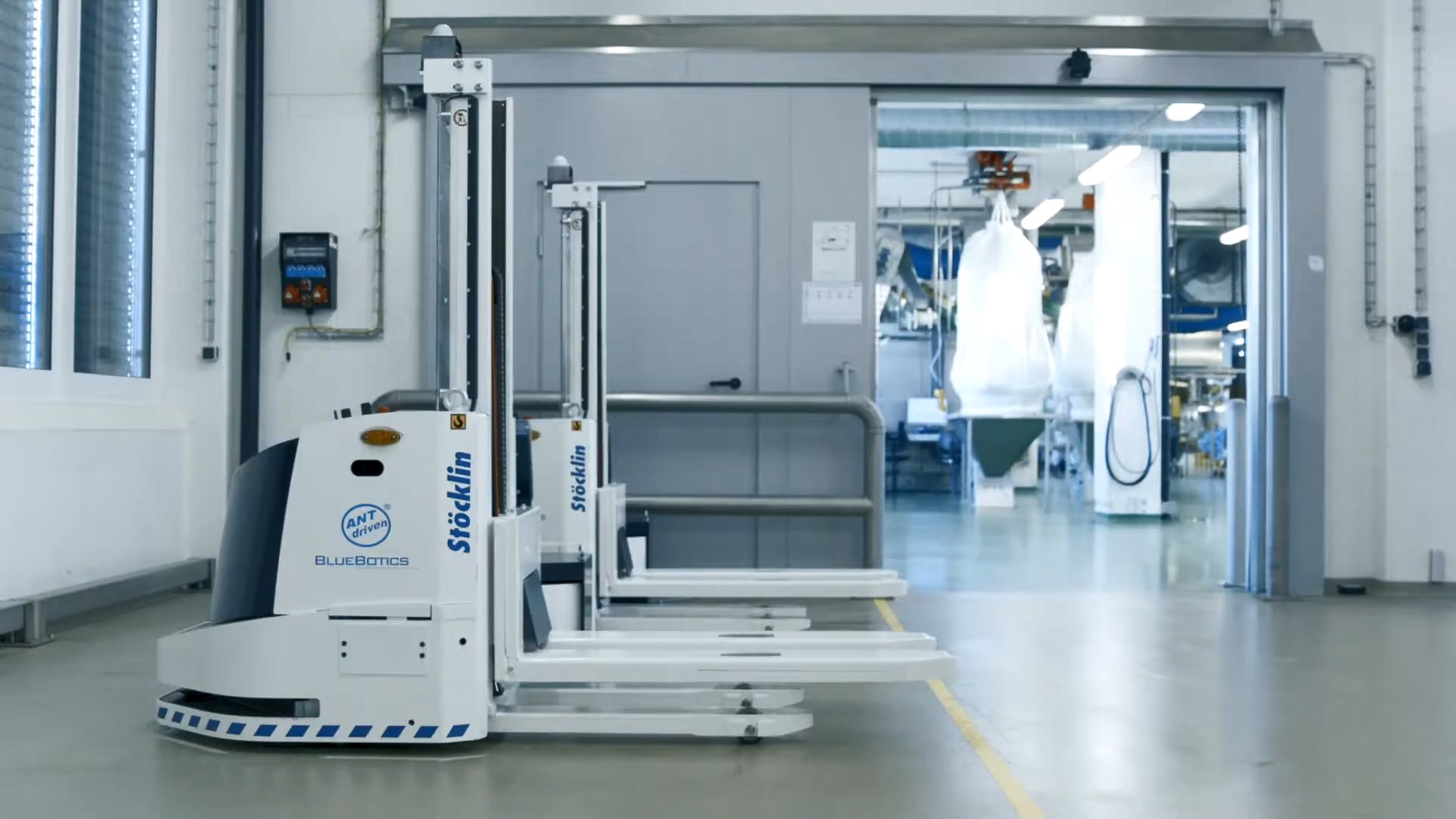
Unlike other natural feature technologies, ANT® by BlueBotics uses a feature-matching approach. The map it uses for vehicle localization is based on features rather than scan-matching’s grid-based map — meaning features are compared to features, rather than laser points to laser points.

Like other natural feature solutions, ANT® is simple and quick to install, with minimal infrastructure changes required. Since paths are virtual, the maintenance and modification of routes is also fast and cost-effective. ANT® offers similar accuracy and reliability as the most established triangulation technologies. Given BlueBotics’ 20 years of experience in the industrial AGV market, in contrast to other natural feature offerings, ANT® is a notably more mature product. In addition, because ANT® maps are feature-based and not grid-based, they are exceptionally light in terms of file size and much easier for companies to handle.

When it comes to managing fleets of AGVs, BlueBotics’ ANT® server fleet management platform makes creating and managing vehicle missions straightforward, including traffic management. Uniquely, ANT® server is also vehicle-independent, meaning ANT® driven vehicles from different brands can work together seamlessly, effectively widening a user’s choice of vehicle types.

In summary, the first generation of AGV navigation technology was physical: line following and tags. These technologies are reliable and accurate, but costly to install, maintain, and modify. Then came the first revolution: laser triangulation. This transitioned physical routes to virtual ones, reducing the cost of route maintenance and modification, while vastly improving fleet management functionality.

More recently, laser-based natural feature and vision guidance came to the market. These reduced the cost of installation, which had been a barrier to the adoption of AGVs. Unfortunately, with these benefits of simple installation came a trade-off in terms of accuracy, reliability, and robustness.

In our view, ANT® fits between laser triangulation and natural navigation (sometimes referred to as SLAM navigation) in the marketplace. ANT® offers vehicle makers and operators the best of both worlds: the speed and flexibility of natural feature navigation with the triangulation-like maturity and functionality of a solution that has been in the market for several years.

The Path to Navigation Success

Nine important considerations when assessing AGV navigation systems:

  1. Cost of infrastructure. The expected cost of changes to a site’s infrastructure, for example, installing laser triangulation reflectors, tags or inductive wire throughout.
  2. Vehicle installation time. The total time taken to commission one or more vehicles on site. The longer it takes to make the vehicle operation work, of course, the higher also the installation costs.
  3. Accuracy. This refers to the accuracy of a vehicle’s positioning, for example, when docking to recharge batteries or pick up pallets. ±1 cm / ±1° is a common requirement and very achievable with natural feature navigation.
  4. How long a navigation system can typically operate without error and therefore, the need for human intervention. In other words, this factor reflects how mature a technology is.
  5. Robust versus environmental change. If the environment changes, for instance, pallets or the objects move, how capable is the navigation technology of continuing to operate effectively without, for example, AGVs losing accuracy?
  6. Vehicle speed. How quickly can an AGV travel safely on its mission?
  7. Cost of maintenance. The cost of any maintenance excluding the maintenance of the vehicle itself. For example, ensuring the laser reflectors used for triangulation are not broken, or replacing tags or tape that ripped up over time.
  8. Cost of modification. Similar to the cost of installation. This is based on how long it takes to change a vehicle’s route. This modification might be purely digital, i.e. software-based, or involve instead the physical updating of tags, tape, or reflectors. An important consideration here is not only the change themselves but the retesting required afterward.
  9. Fleet management. How effectively can the system handle fleets of different sizes?

The TPPL Battery Choice

Matteo Todesco of EnerSys argues that TPPL battery technology has broadened battery choice for electric material handling vehicles.

Warehouses and production areas are under increasing pressure to maximise productivity and return on investment. This has led to more attention on the role of materials handling vehicles,
particularly the cost and performance of the batteries and technology that power them. As an example, users of material handling vehicles today will not accept a loss in productivity due to
battery-related downtime. It is simply no longer possible to remove a vehicle from service to charge or change out batteries and perform routine maintenance tasks. In addition, there is a trend to lease vehicles instead of making an outright purchase.

Changing a battery during a lease term is undesirable because the new battery will not be spent by the end of the contract, leading to waste.

Broad technology spectrum

Choosing a battery solution is affected by factors like initial cost, performance, maintenance, charging, stock management and recycling. High performing technologies, such as Thin Plate Pure Lead Batteries (TPPL), offer an attractive alternative to both the traditional solutions of lead-acid or new-comers such as lithium-ion (Li-ion). There are two main types of TPPL battery. The first is a ‘standard’ TPPL solution supplied as a direct alternative to lead-acid batteries. The second is a TPPL solution enhanced with carbon addition. This battery offers a high-performance and cost-effective alternative to Li-ion batteries, especially in heavy-duty applications, thanks to greatly extended cycle life.

Each battery type has different charging and safety requirements, which impact on truck productivity. Flooded lead-acid batteries typically need long charging cycles during or after a shift. This means taking a vehicle out of service or changing the battery. For safety reasons, lead-acid batteries require dedicated charging rooms with ventilation. Regular water top-ups are part of normal operation, but also create the risk of acid spills.

Also, overcharging batteries by 10–20% minimises stratification but adds to the energy demand. All these factors contribute to the total cost of ownership (TCO) for a lead-acid battery setup. Gel type valve-regulated lead-acid (VRLA) batteries have advantages over flooded lead-acid batteries. They do not require water top-up, and their overcharge factor is only 8–10%, thus reducing the energy demand for charging. However, they do not allow for opportunity charging or fast charging with high currents. Batteries must be taken out of service for charging, which takes from 8 to 10
hours.

Read the whole article from our last issue here: https://flickread.com/edition/html/index.php?pdf=5f3d1fcf3160d#38

similar news

TPPL Battery Technology Boosts Kuehne + Nagel Turkey


Smart Weighing, No Stopping

Smart attachments like Ravas iForks demonstrate how to shift forklift value away from mere materials handling and in the direction of data sampling. Logistics Business reports.

Smart logistics and Industry 4.0 have created an ever-growing demand for data input as a tool to optimise supply chains and reach required profit levels. A notable example is the Ravas iForks forklift scale, a brilliantly simple concept which works by replacing standard truck forks with smart weighing forks. Thus, via the integration of connected forklift trucks, real-time in-process data on
material flows is made available to the appropriate people and software platforms in your organisation.

Smart Weighing

Are there any particular market sectors within the warehouse for which the iForks are particularly appropriate? “Actually, you can use iForks for almost all applications within the warehouse, or production facility, for that matter,” says Rob de Ridder, International Sales Manager at Ravas Mobile Weighing. “From cross docking for road, sea and air freight, stock control, batching and
dosing, filling, inbound/outbound, waste management and dimensioning in terms of weight and volume. Eliminating errors in order picking is another important application, but we have other integrated scales that are more suitable for that process. Basically, our solutions are suitable and available for logistics and production sites in all kinds of industries.”

“Take the example of an LTL carrier, handling a constant stream of inbound pallet shipments every day, and shipping them out to their destination in freight trucks and sea containers,” Rob de Ridder continues. “Picture a fleet of connected forklift trucks that offload these pallet shipments from inbound freight trucks, providing a continuous stream of data on these materials to the company’s WMS or ERP system. Every pallet lifted out of the freight truck is identified and weighed on the forks of the lift truck. The resulting data set on the pallet shipment is communicated with the WMS or ERP system. And all this on the fly, en route from a freight truck to a buffer zone in the company’s warehouse.”

Read the whole article here: https://flickread.com/edition/html/index.php?pdf=5f3d1fcf3160d#36

One Size doesn’t Fit all

David Thomas is General Manager at ZoneSafe – Proximity Warning & Alert Systems

The boom in online retail in recent years has undoubtedly boosted warehouse and logistics operation in the UK while the circumstances of 2020 continue to fuel further growth within the industry as consumers steer clear of the high street; opting instead for online shopping and delivery. The nature of warehouse and logistics operations mean workplace accidents are common. With increased demand, comes increased responsibility as warehouses and storage facilities come under immense pressure to meet consumer needs whilst ensuring a safe working environment for staff.

Employers in all sectors have both a legal and moral duty to ensure the health and safety of their employees and visitors. Serious injuries including fractures, dislocations and amputations are reported every day in the UK so it is imperative employers take sufficient measures to mitigate risks to employees particularly in high risk industries. A warehouse is a notoriously dangerous working environment with falls from height, vehicle collisions, crushing incidents and fatal injuries all too common. Earlier this year, even the world’s largest online retailer Amazon found itself accused of “failing to provide a safe working environment” after a string of serious incidents  were reported to have taken place at its UK storage facilities over the last three years

Transport in the workplace

One of the greatest risks to workers in the warehouse environment remains that of collision between pedestrians and vehicles.  Every year, there are over 5000 reported accidents across various sectors involving transport in the workplace with around 50 of these resulting in death[2]. Pedestrian/vehicle collisions provide one of the greatest threats to worker safety with forklift trucks being involved in a disproportionate number of incidents. Forklifts are crucial to logistics operation but pose a significant threat to workplace safety with Britsafe reporting forklifts as the most dangerous form of workplace transport accounting for 25% of workplace transport injuries in the UK. In a busy work environment where staff and machinery operate in close proximity, maintaining situational awareness is crucial. Innovative technologies that minimise the risk of collision including proximity warning and alert systems, 360° cameras, active RFID tags, and other interactive equipment is now available and provides an enhanced level of awareness to those working in close proximity to vehicles and plant machinery.

One size doesn’t fit all

The approach to any investment in safety solution should be consultative with equipment designed and adapted where necessary to fully align with the needs of a business and its workforce.  Rather than simply accepting a one size fits all approach, employers should engage with manufacturers and work collaboratively to find the most effective and safe solution for their business.  Manufacturers of safety equipment should treat each company as individual, tailoring products where necessary to deliver optimum safety standards that can be maintained to provide long term protection for the business and its people.

Employers are obligated to meet general safety standards but how these are achieved is open to interpretation. The wide range of products and services available from suppliers to help deliver safe working practice can be overwhelming so it is important businesses identify what is best for their operation and specific circumstances. When it comes to safety, businesses shouldn’t be afraid to challenge manufacturers to adapt or develop safety solutions that fully meet the exacting requirements of the organisation and its staff. By working with suppliers collaboratively, the highest standard of safety can be achieved.

[3] https://www.britsafe.org/publications/safety-management-magazine/safety-management-magazine/2017/a-very-costly-forklift-accident/


Subscribe

Get notified about New Episodes of our Podcast, New Magazine Issues and stay updated with our Weekly Newsletter.