Further lift trucks added to product range

Materials handling manufacturer Clark has announced two additional low-lift trucks with Li-Ion technology and load capacities of 1,500 and 1,800 kg. This follows the launch of the pedestrian low-lift pallet truck WPio20 and the PPXsio20 low-lift pallet truck with folding driver’s platform., Clark thus has a complete series of low-lift trucks with load capacities of 1.2 to 2 tons.

The WPio series models are designed for efficient goods transport over short distances. They are idea in distribution centers, production or warehouses settings. All vehicles are equipped with the durable and powerful Li-Ion battery, suitable for the logistics sector. The operator requires minimal physical effort thanks to the electric lifting and lowering capability. The vehicles boast ease of maneuverability, particularly inly in confined spaces such as in storage areas.

The WPio15 has a maximum load capacity of 1,500 kg. It is equipped with a 24 Volt (30 Ah) Li-Ion battery. It can transport light loads reliably and safely at a maximum speed of 4.5 km/h. The user-friendly tiller arm can be operated intuitively by both right- and left-handed operators. To ensure safety in application, the vehicle brakes automatically when the tiller is released.

Optimally adjusted lateral support rollers improve stability when cornering. With an L2 dimension of only 400 mm and a turning radius of 1,390 mm, the WPio15 is compactly built and ideally suited for use in confined spaces and for carrying on trucks. The weight of this flexible storage assistant is only 160 kg including battery.

The WPio18 is equipped with a 48 Volt (20 Ah) Li-Ion battery, making it the powerful all-rounder of this series. With a maximum load capacity of 1,800 kg and a driving speed of 5 km/h, the truck is ideally suited for transporting medium-heavy loads. The WPIo18 also brakes automatically when the tiller is released. Its L2 dimensions and turning radius correspond to the values of the WPio15 – with a tare weight of 170 kg including battery. This means that this vehicle is also compact and ideal for confined spaces and for carrying on the truck. The ergonomic tiller with its easy-grip positioning of the controls is suitable for both right- and left-handed operators.

The Smart Display integrated in the tiller provides information about important driving parameters, such as battery level, operating hours, driving program, display of error codes and battery management. The truck is started via Smart Key to protect the vehicle from unauthorized access.

Space for Success

How are equipment manufacturers coping with the unexpected change in circumstances that 2020 has brought? Combilift has a positive story to tell, as Paul Hamblin finds out.

Combilift has a well-merited reputation in product innovation, so it was no surprise when the Monaghan-based lifting equipment manufacturer was first out of the blocks in May with what is fast becoming a staple of the post-Covid world, the online press conference. Managing Director Martin McVicar was in his usual ebullient mood as he outlined his firm’s response to the twin threats of Covid and (once again) Brexit.

“Changes to the production facility due to the health emergency were obviously paramount,” he says. Social-distanced product floor To ensure continued production, Combilift has introduced a two-shift system to replace its traditional one-shift operation. This means that there are only around 350 employees per shift on site in the 46,500m² manufacturing facility. It has also segregated the plant into eight segments. Employees are scanned by thermal cameras when they arrive on site and if their temperature is above normal this is signalled to the HR department as well as the employee.

Clocking-in is now done via a touchless key fob and doors are kept open whenever possible. Those that cannot remain permanently open have been fitted with copper coatings – this significantly reduces the time that a virus can be harboured on the surface when compared to steel. There are multiple hand sanitisers strategically placed across the whole facility, floor markings indicate the 2m distance to be maintained by employees and it is mandatory to wear face masks. The 2m message is driven home further still on the staff hi-vis vests.

The company has closed its main hot canteen and has opened smaller canteens in the eight new factory segments. “I give regular updates by video instead of the personal staff assemblies that we previously did every six weeks and this ongoing communication ensures that employees are continually informed and therefore understand that the measures we are taking are in everyone’s best interests,” says McVicar.

Production has not ceased on any Combilift model, thanks partly to the above measures and also because the company has been able to avoid supply chain and component issues. “We don’t have many Chinese suppliers in any case,” reflects McVicar, “and while we did experience some difficulties from our Italian suppliers from mid-February onwards, we were still well above 50%. Crucially, Combilift does not operate a just-in-time operations, so that was a significant plus.” The company has not seen any disruption in Germany and Northern Europe, he adds.

Getting product to customers through the worst of the lockdown has been a challenge, but achievable, he notes. The company’s famous Straddle Carrier, outdoor star of many a trade show, has a complicated assembly process which has often required an accompanying Combilift expert to supervise. “Good expertise has been built up in local territories,” McVicar points out.

Read the whole article, from our September issue, here: https://flickread.com/edition/html/index.php?pdf=5f3d1fcf3160d#30

Similar News

Heightened Lifting Success


On site, without being there

Machine malfunctions and standstills that are not eliminated as fast as possible may become expensive for manufacturing companies. BEUMER Group developed their Smart Glasses as a pioneering product that supports users quickly and easily. The BEUMER Customer Support technicians use them to take a virtual look over the shoulder of the customer’s service technician to solve the problem together. This digital solution reduces travel times and costs.
 
“With the BEUMER Smart Glasses, our customers can get in live contact with our service experts anywhere and at any time,” promises Christopher Kirsch, team leader of BG.evolution. With this spin-off at the university location of Dortmund, the company brings digital innovation from outside into the company. In other words: “We are working on a customer problem with the support of start-ups to develop ‘Minimum Viable Products’. These are minimally equipped prototypes whose market potential and customer acceptance we put to the acid test,” explains Kirsch. This makes it easier for the BEUMER Group to decide quickly whether a new technology makes sense to develop into a finished product – such as the BEUMER Smart Glasses.

Together with their colleagues from BEUMER Customer Support and the Department for Research and Development in Beckum, the employees in Dortmund made this digital solution ready for the market. “From October 2018 to January 2019, long-term tests were carried out with various customers, including one with live testing with a long-term customer from the building materials industry. We were successful in concluding this phase,” reports Kirsch. The user has been using a high-capacity palletiser BEUMER paletpac and a high-capacity packaging system BEUMER stretch hood for years.

If there is a problem during operation, this may easily result in production bottlenecks. In the worst case, this results in delays of day-to-day operations. “If a machine suddenly breaks down, the problem must be solved as fast as possible,” says Kirsch. This is the only way for the users to save time and money. If the users are not in a position to handle this by themselves, the BEUMER Group sends their globally located technicians to prevent longer downtimes. In addition to service technicians, Customer Support also provides qualified telephone support for trouble shooting, which is available 24/7. However, it can be challenging to successfully communicate complex problems quickly and clearly over the phone. Imagine if the customer had the opportunity to have a BEUMER technician take a quick and easy look at the problem at any time – on-site support, without actually being there. The BEUMER Smart Glasses make it possible.

The employee at the machine puts on the glasses and starts the BEUMER Support app via voice command. The employee transmits a service number and a pin code to the hotline. A connection with image and sound is then established. The BEUMER technician receives the same image as the customer. The technician can directly give instructions and display all relevant information in the field of vision. The employee has both hands free to follow the expert’s instructions to carry out the necessary actions. Faults can be solved quickly and precisely – at any time. The BEUMER experts are available around the clock. “Language barriers or the lack of specialised knowledge are no longer relevant for trouble shooting,” explains Kirsch. “Together with the user, we can also better validate why the fault occurred based on the recorded images.”

“As part of the comprehensive BEUMER Customer Support, users add the BEUMER Smart Glasses as an extension to their monthly or annual hotline service agreement. Together with BG.evolution, the BEUMER Group is currently developing further digital products under the umbrella of “Smart Solutions”. “Many of our customers are already showing clear interest in the BEUMER Smart Glasses,” explains Christopher Kirsch.

Geek+ Launches new Online Customer Experience

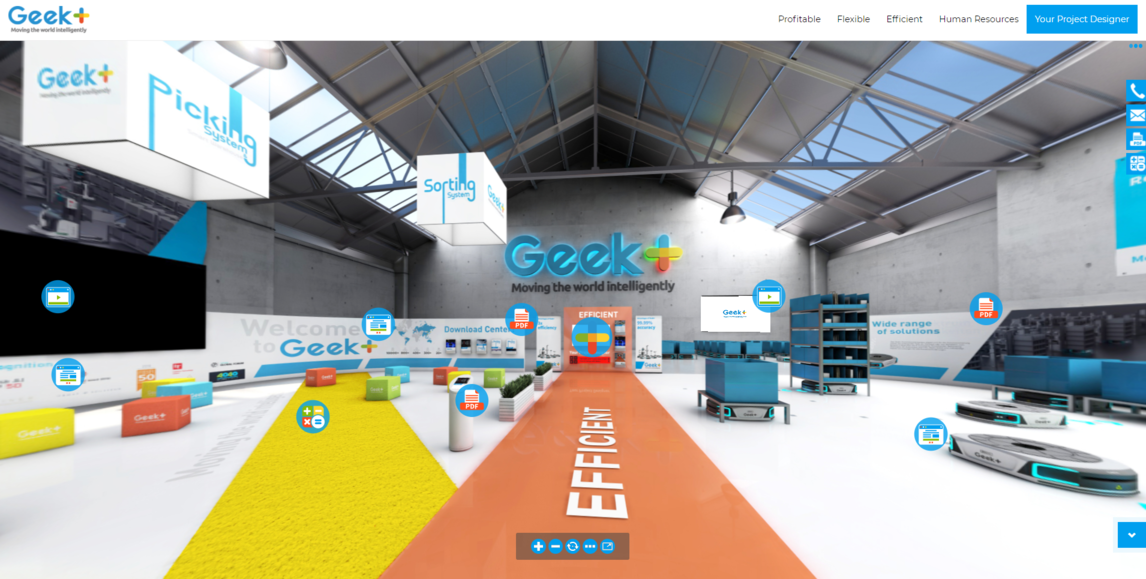
Geek+, an AMR leader has announced the launch of its new next-generation Virtual Booth. The virtual space allows visitors to experience robotics automation in a dynamic digital environment and provides them with the tools to make informed decisions on automation.

In light of Covid-19 and the prevalence of social distancing needs, large parts of the physical world have moved online. The Virtual Booth is the latest effort in a series of actions undertaken by Geek+, such as fully remote project implementations, online trainings and virtual seminars. This enables the company to continue driving the discussion on AI and robotics and enable customers to secure business continuity.

Hong Yu, Chief Marketing Officer at Geek+ comments: “As robotics and automation pioneers, we pride ourselves on being solutions-oriented. We can flexibly adjust to any challenge that lies ahead. We’ve created this digital space to provide a dynamic, fun, and interactive way of learning about our products. It gives our visitors access to the technologies that will bring much-needed stability and value to their logistics operations. In times of great change and uncertainty, innovation does not stop. It is our duty to help our audience access it.”

Upon entering the virtual booth, visitors can access an interactive online application called Your Project Designer. This provides a customized automation solution based on customers’ own business needs. The virtual booth is organized around the four main logistics challenges of today: efficiency, flexibility, profitability, and human resources. The stand allows visitors to safely and dynamically learn about the benefits of AI and robotics. It can also help users discover how it can impact their business operations.

similar news

Intralogistics Performance is Paramount


Opening the Door to Enhanced Fire Safety

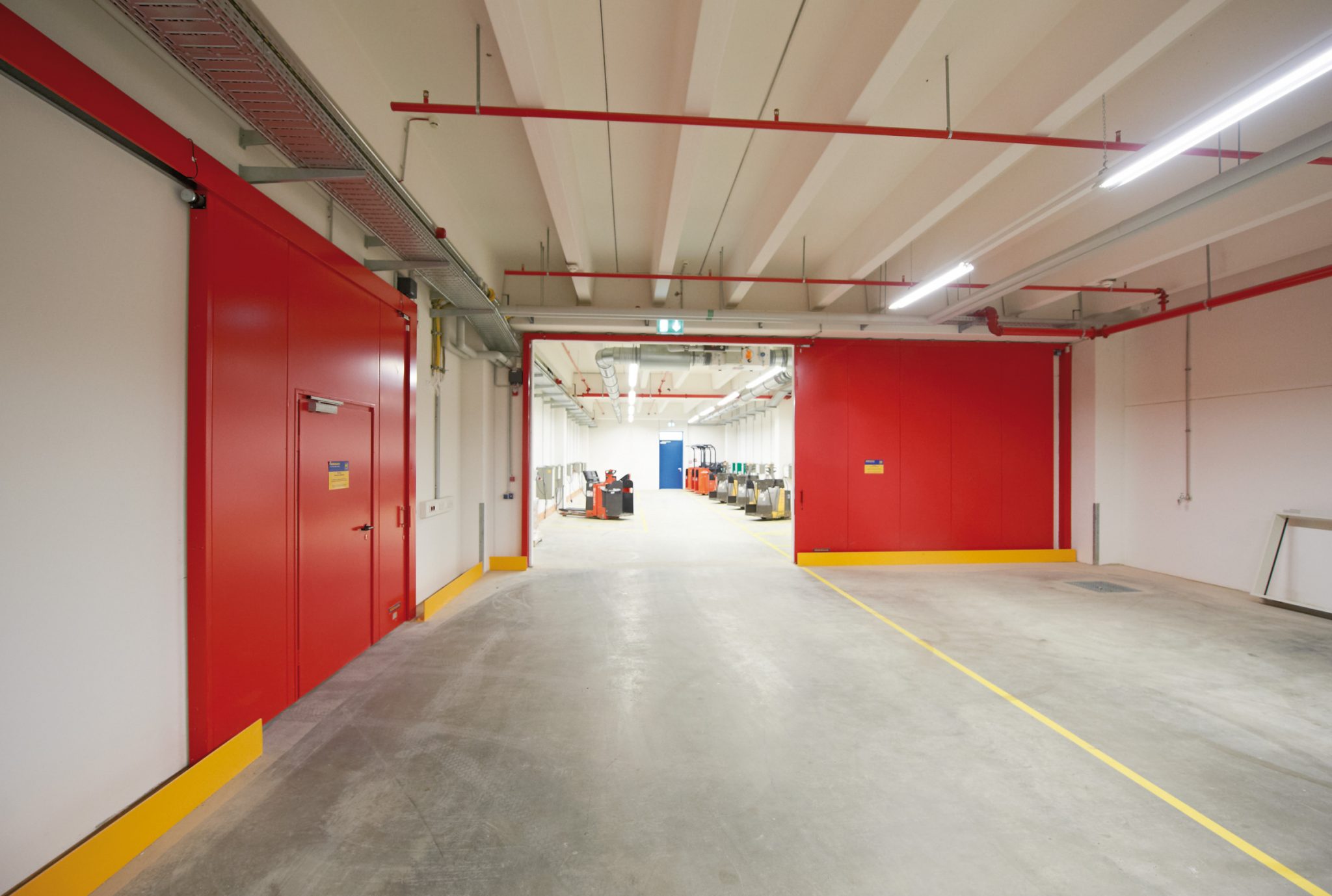
Fire safety can be enhanced by New Fire Rated Sliding Doors have been launched for the industrial and commercial construction sectors. Compliant to BS EN 120 and BS EN 240, the single-leaf fire sliding doors, by door providor Hörmann UK are available in two variations. There is the FST 120-1 BS Fire Sliding Door offering 120-minute fire resistance. There is also the FST 2410-1 BS providing 240-minute fire resistance.

The two latest models are an extension of Hörmann UK’s product portfolio of sliding doors. These fire safety doors are availble with a range of optional additions to meet the requirements of each individual specification.

Paul Tulley, Key Account Manager for Hörmann UK, said: “Our new Fire Rated Sliding Doors, which are compliant to British Standards, are a key addition to our extensive range of fire rated sliding and functional doors. They are suitable for installation across a wide range of developments and industries. The steel or stainless-steel doors can withstand heavy usage cycles with ease. This is due to their quality of construction.”

The doors can be operated in conjunction with an FSA-Basis hold-open device control centre, which combines the power supply, warning signals, fire detector evaluation, manual release button and reset device in a compact housing.

This is supported by LED lamps or acoustic signals, which communicate the status and alarm states of the door. Additional safety elements, including fire detectors, magnets, recess flaps and fire alarm systems can also be quickly connected for easy integration.

The doors can also be operated utilising Hörmann UK’s FSA-Plus hold-open device control centre, which features a battery backup for reliable operation, even in the event of power failures.

The doors are also compatible with Hörmann UK’s SupraMatic operators, which provide fast opening and closing and are also available with soft start and soft stop available as standard, delivering gentle and quiet door travel. In case of fire, a patented compensator release system will unlock the operator, enabling the door to be closed via weights.

Will Darkness Protect us from COVID-19?

Sunlight was supposed to be the answer to COVID-19. However, fully automated warehouses that no longer need lighting or heating are helping to keep supply lines open during the pandemic. Here Neil Ballinger, head of EMEA sales at automation equipment supplier EU Automation, explains why retailers and distributors are investing heavily in fully automated distribution centres.

The COVID-19 pandemic has accentuated a divide between those companies that have embraced technology and those that have not. Retailers who had invested in automation and e-commerce fared better than their competitors. In 2020, the share price of Ocado, a British online supermarket, doubled while the share price of Marks and Spencer, a traditional high-street retailer, has halved. Clearly, in the eyes of investors the future of retail is online.

Behind the scenes of the race to online shopping, retailers and distributors are working hard to automate their warehouses and gear them towards new shopping behaviour. Amazon has emerged as one of the pioneers in logistics automation. The first generation of logistics professionals at Amazon had cut their teeth at Walmart. When they started working for Amazon, they quickly learned that shipping individual parcels directly to end customers required a different set of processes compared to shipping pallets of goods to stores.

Dark Warehouse

According to Brad Stone, the author of The Everything Store, Amazon executives realised that if they improved how orders were fulfilled, they could turn this into a competitive advantage. They invented a software to calculate the best way of combining the products in each individual order, factor in the address of the customer and ship it all in the least expensive way. Fast and cost-effective, picking, packing and shipping became a strategic advantage for Amazon.

The next frontier in warehouse automation is to seamlessly integrate the processes of sorting, picking and packing. Boxing-up parcels has traditionally been a very labour-intensive process. Last year, Amazon started to invest in packing machines built by CMC, an Italian automation specialist, which pack up to 700 boxes per hour. Automated packaging is currently booming. In Germany, Dm-Drogerie Markt, the country’s largest drugstore, has invested 100 million Euros into a new distribution centre. It contains state-of-the-art automation systems built by Swisslog, a Swiss logistics automation supplier. In the UK, The White Company, a clothing retailer, is planning to install a Quadient CVP Everest, also an automated packing machine, in August 2020.

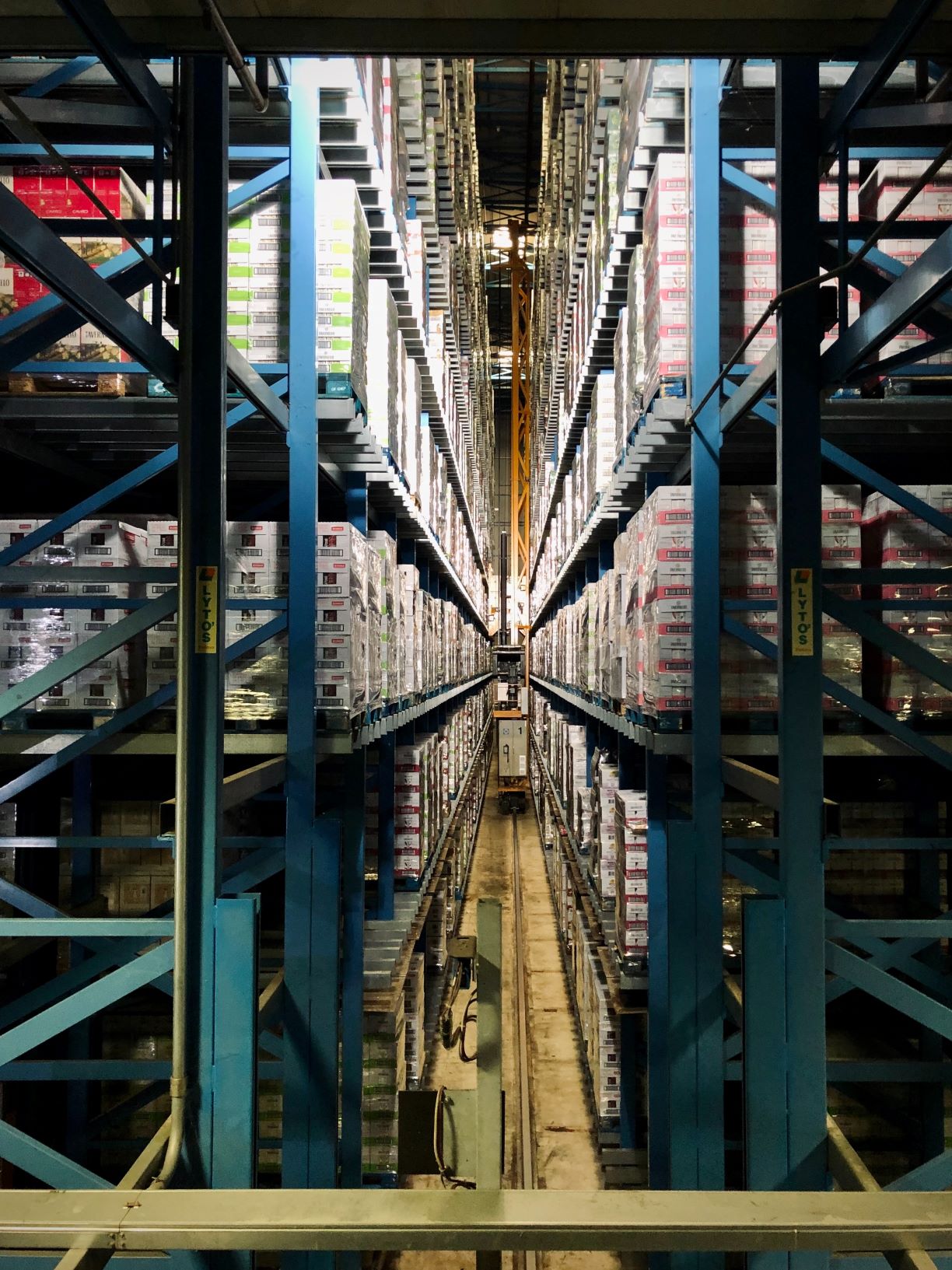
Does a fully automated warehouse still need lighting? In a recent newsletter, Swisslog’s Paul Stringeman described the distribution centre of the future as follows: “no staff driving back and forth on forklift trucks, no load handlers examining products and picking items onto pallets, not even an electric light – just sky high racking, shuttles, lifts, robots, conveyors and autonomous vehicles choosing their own paths through the darkness”.

COVID-19 accelerated the use of technology in logistics. When a warehouse is fully automated, it no longer needs flickering neon tubes to keep running. Lights-out logistics is fast becoming a reality. http://www.euautomation.com/us/

similar news

Industry View: Automation and the Future of Warehouse Racking


Volvo Selects Michelin for Record-breaking Road Tests

Michelin says tyres from its X Line Energy range – designed for fleets seeking the lowest possible carbon footprint – were fitted to two Volvo trucks which have set new fuel efficiency records on demanding press road tests in the UK.

Earlier this month the next generation 4×2 Volvo FM 420, operating with a tri-axle trailer at 40-tonnes, averaged 10.31mpg around Commercial Motor’s 760km road test route. This followed less than 12 months after a 6×2 Volvo FH 460 with I-Save set a new record of 9.49mpg at 44-tonnes. Both tractor units were specified with Globetrotter sleeper cabs and tyres from Michelin’s most fuel-efficient range. The FM rode on 355/50 R22.5 X Line Energy Z (steer) and 295/60 R22.5 X Line Energy D (drive) tyres, whilst the FH with I-Save was equipped with 385/55 R22.5 X Line Energy F (steer & mid axle) and 315/70 R22.5 X Line Energy D (drive) tyres.

Martin Tomlinson, Head of Media, Truck Demonstration & Driver Development at Volvo Trucks UK & Ireland, says: “In the minds of most customers, fuel is everything. We’ve pioneered world-leading technologies and fuel saving strategies that can make a huge difference to a fleet’s bottom line, but you also need the right tyres to help squeeze the most out of every drop. Michelin X Line Energy tyres have become my default choice for our long-haul demo fleet as they help us to drive further on less fuel. Plus they match this with impressive safety, handling and durability.”

Chris Smith, Managing Director of Michelin UK, says: “Manufacturers such as Volvo Trucks hold a wealth of data on vehicle performance in different configurations, so it’s a huge compliment to see our tyres being repeatedly chosen for their demonstration fleet.”

Michelin X Line Energy tyres are designed specifically for trucks and coaches used on long-distance routes, and where the majority of time is spent travelling at sustained high average speeds. They are the product of Michelin’s continued investment of more than €600m in research and development every year, which has helped to push the limits of rolling resistance even further and unlock greater sustainability benefits for customers. The test took place using a standard tri-axle curtainside trailer, supplied by Dawsongroup. It ran over a set route which runs from Nuneaton up the M6, crossing the country close to the border with Scotland on local roads, before returning south on the M1. The route covers 494km of motorway, 121km of severe gradients and 145km of trunk roads.

The Volvo FM broke Commercial Motor’s previous 40-tonne record of 8.6mpg, set in 2008, despite today’s speed limits allowing the overall average speed to rise from 69.6kph to 74.9kph, while emissions have also improved from Euro-5 to the latest Euro-6 Step D standard. The Volvo FH with I-Save beat the previous 44-tonne record of 8.65mpg, which had been set in 2017.
https://business.michelin.co.uk/

similar news

Michelin launches UK fleet management brand


Fresh Produce Rail Route Expands its Network

A fresh produce rail route is to have its network expanded and will include many key destinations in Europe. The service will operate under the name CoolRail powered by Transfesa Logistics. Transfesa Logistics and Euro Pool System (EPS) have signed an agreement to operate the CoolRail service.

The new service boasts the first direct rail connection for refrigerated products between Valencia and Rotterdam. Other destinations will include to the UK, the Nordic countries, Germany and Poland.

The CoolRail service will use the vast infrastructure of DB Cargo, the main shareholder of Transfesa Logistics.

The new fresh produce rail route will enable British customers to have a faster and more sustainable transport solution.

The CEO of Transfesa Logistics, Bernd Hullerum, said “The association with Euro Pool System is a great opportunity. It means for the fresh produce market that the railroad can be just as fast and reliable as road service. In addition, it contributes to achieve more environmentally friendly supply chains. A train emits nine times less CO2 than a lorry.”

Gerjo Scheringa, the CEO of Euro Pool System confirms that Euro Pool System is excited about this next step: “It is our goal to achieve greater sustainability in the logistics sector across Europe and this partnership will help to reduce CO2 emissions by replacing road traffic with a direct rail connection.”

User-friendly Lithium-ion Trucks

AMAB has recently chosen Toyota Material Handling as a partner for their lithium-ion trucks. The user-friendliness of the trucks and lithium-ion solution was a determining factor in their choice.

AMAB offers a variety of services and one-stop-shop total solutions, on their own premises or at their customers’ sites. They are specialised in packaging: co-packing, repacking, electro assembling. “Our workers are people with a physical or mental disability. Together with the occupational therapist we decide which role they can fulfil despite their disability. We try to regularly switch their tasks to bring variety in their job,” says Rudi Crombé, manager of the technical department in Zaventem, where the introduction to lithium-ion has just been completed.

“Before this purchase, most of the machines at our 3 sites were already Toyota trucks, which we always have been satisfied with. That’s why it was a logical step for us to also buy our next trucks from Toyota,” he adds. He also immediately expresses that AMAB appreciates the fact that a Toyota representative always comes on site to introduce new machines and give a clear explanation. “In 2015 we merged with our other branches. We used this opportunity to establish an inventory and ask 3 potential candidates for a service contract.

“Toyota eventually came up with the best offer. The majority of our fleet consists of Toyota trucks, which makes it easier for the technician. This way we only have to call in one technician, which requires less kilometres, and less impact on the environment,” says Crombe. Preventive maintenance and repairs are therefore also planned more efficiently this way, keeping transportation to a minimum. For a few months now AMAB has several lithium-ion-powered pallet trucks and stackers in operation at their site. After much deliberation, they decided not to go for traditional lead-acid batteries, but for lithium-ion instead. When asked why they chose lithium-ion, Crombe’s answer is clear: “It’s easy to maintain, easy to use, and the initial cost offers an ROI on the long term because of the lowered energy consumption and longer battery life. After all, battery change takes up a big part of our maintenance budget. While lead-acid requires supervision, check-ups and a separate charging area, this is not the case for lithium-ion. It’s very easy to use, which makes it ideal.

“Our employees often prioritise habit and routine. So for them, the implementation required some adjustment. Before, they had to drive the lead-acid trucks until the battery was empty before charging them. We noticed they often waited to charge the lithium-ion trucks as well because the battery was not empty yet. But now they are used to it and it has become a routine. When the workers end their shift, they automatically charge them. The batteries are never empty again! Before, a truck would stand still here and there, leaving them to work with one machine less. Our available space is restricted, which is why trucks standing still are not an option. Now we can use all trucks efficiently and we don’t lose any parking space.” https://toyota-forklifts.eu

similar news

Hyster Launches 7-9T Range With Fully-Integrated Lithium-ion


VPK Group NV and Encase Ltd Reach Acquisition Agreement

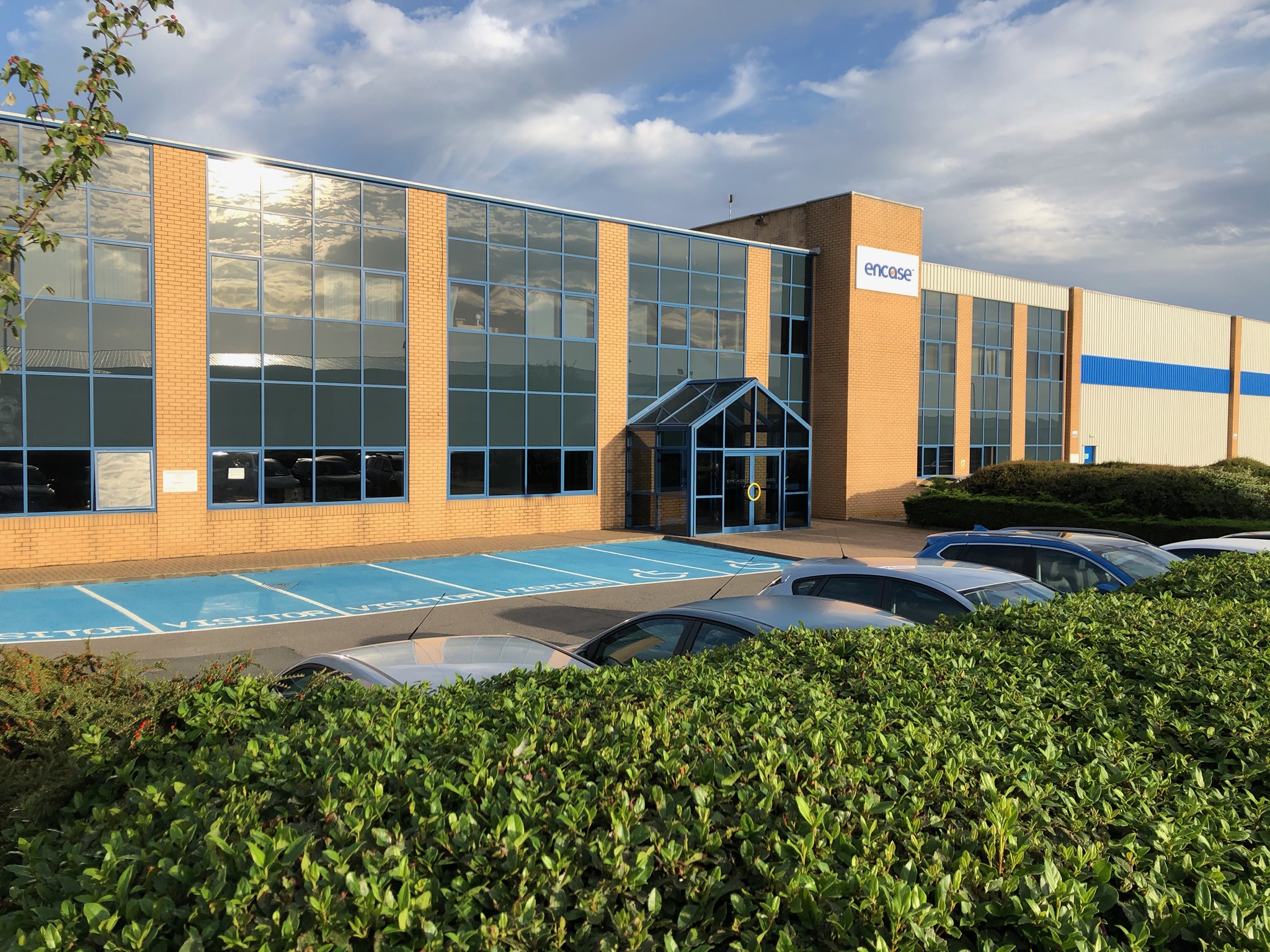
VPK Group has come to an agreement with COPI Holding to acquire Encase Ltd. Encase is a manufacturer and designer of corrugated cardboard packaging. Encase Ltd operates two integrated corrugated packaging plants in England and one sheet plant in Scotland. VPK intends to merge Encase with its UK corrugated operations, formerly known as Rigid.

VPK’s corrugated operations in UK and Ireland, formerly known as Rigid Containers and recently rebranded as VPK Packaging, experienced consistent yearly growth since entering the VPK Group in 2000.

Under its ownership, VPK invested more than £100 million into the division. Desborough was transformed into the UK flagship site, whereas greenfield sites in Wellington and Selby gradually increased capacity to fully mirror operations on all three sites.

In 2015, the acquisition of ICS Europaks in Limerick, Ireland, further strengthened the geographical spread.  Earlier this year, VPK acquired a majority stake in Corrboard UK Ltd,  a leading supplier of corrugated cardboard sheets located in Scunthorpe.

As part of its long-term strategy, it is now VPK’s intention to fully merge Encase with the existing VPK UK corrugated operations. The combined businesses are expected to achieve yearly sales of more than £200 million in corrugated packaging and sheets. All six corrugators combine a yearly containerboard consumption of 300.000 Tons. This represents a major part of the non-integrated recycled containerboard consumption in the UK.

VPK has a proven track record of successful investments and acquisitions. These include four sheet feeding plants in Poland and Germany – known under the brand name Aquila. A greenfield investment project in Halden (Norway) was recently put into operation. VPK also accquired Viallon Emballages in France. With regards to containerboard production, the pioneering conversion in Strasbourg, France, of the former UPM Stracel assets by Blue Paper, set a new standard for the recycled containerboard industry.


Subscribe

Get notified about New Episodes of our Podcast, New Magazine Issues and stay updated with our Weekly Newsletter.