New Smart Radio Designed to Increase Productivity

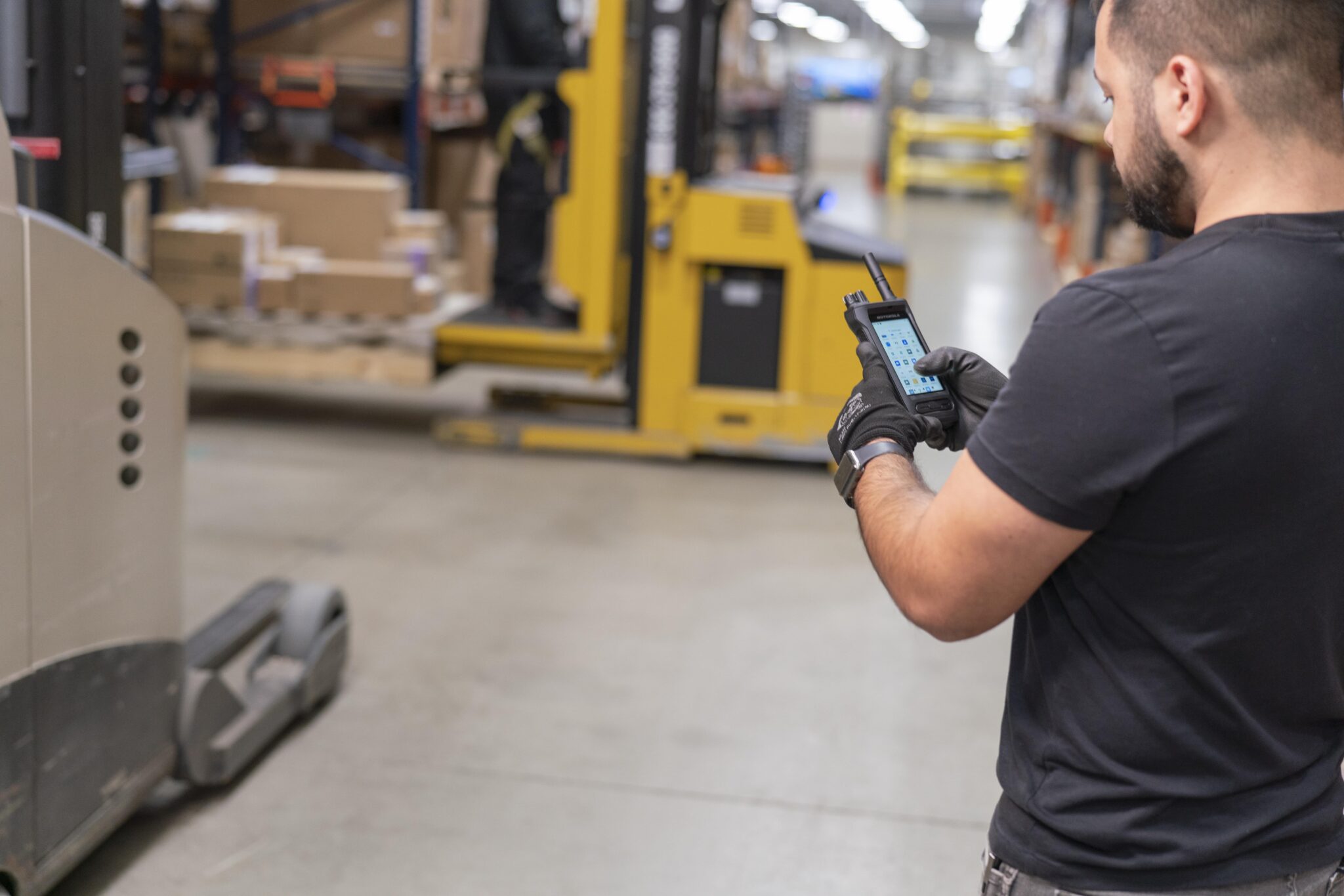
A new smart radio has been launched by Motorola Solutions, designed to connect teams and keep businesses running smoothly.

The global pandemic has driven businesses to shift and adapt operations to meet changing demands and new challenges. For many, this has meant a greater focus on collaboration and productivity, bringing to the forefront the need for simple and reliable voice, video and data communications, as well as applications that make individuals and teams more efficient.

The MOTOTRBO Ion smart radio brings real-time intelligent data to existing business workflows. Its fully open Android application ecosystem allows for seamless integration of the mobile data applications that commercial industries depend on, such as those used for enterprise-grade barcode scanning, as well as team communication platforms used for messaging, meetings and shared content. A 13-megapixel camera and 4-inch, high-resolution touchscreen lets workers attach photos to work tickets, use video chat for remote diagnostics and view detailed images, schematics, diagrams, photos and videos. This simplifies device management and security, allowing businesses to move toward the use of a single device that offers the simplicity and reliability of push-to-talk radio with the additional capabilities of a smartphone, scanner and tablet.

 “Having robust and reliable voice communication is paramount when you’re working in the vicinity of loud industrial equipment and in hot, dusty, damp and humid underground environments,” said David Sibthorpe, a plant manager for CPB Contractors, which was contracted to support the Sydney Metro extension, Australia’s largest public transport project. “That is never more important than when you’re working in the vicinity of a 130-ton [metric] road header and need to instantly tell the operator to stop. The MOTOTRBO Ion smart radio combines reliable voice communication with data capabilities for quick access to valuable data such as system diagrams, online inspection forms, weather forecasts and group messaging applications, helping to bring more efficiency into a worker’s day.”

The MOTOTRBO Ion smart radio works on the digital mobile radio (DMR) standard, Wi-Fi, public LTE and private broadband networks. It is built to support searching, tracking, ticketing, scanning and collaboration to boost productivity, especially within industries such as manufacturing, transportation, logistics and hospitality that rely on mobile workers. It enables airport workers to coordinate the safe and timely flow of passenger services, truck drivers to receive vital route information via digital job tickets and security personnel to stream high-definition video from across stadiums or theme parks.


“We have spent thousands of hours listening to our enterprise customers, observing their needs and understanding the demands on them to drive efficiency at every level,” said John Zidar, senior vice president, Global Enterprise & Channels, Motorola Solutions. “They face countless moments each day where clear communication and collaboration is needed to manage tasks safely and efficiently. With the MOTOTRBO Ion smart radio, we have designed a product that meets their unique industry requirements, so that the technology supports the worker, and not the other way around.”


The MOTOTRBO Ion smart radio is purpose-built for a variety of enterprise environments. The dual microphones, speaker size and audio engineering provide crystal clarity and noise suppression for powerful audio that outperforms smartphones, especially in loud environments. With an ultra-rugged design, it stands up to harsh conditions and exposure to dust, water and repeated drops. It features cloud-based programming and provisioning, remote updating and real-time device monitoring, allowing businesses to deploy and maintain their radio fleets with minimal touch and downtime.

Sunny new era for International Energy firm

SUNLIGHT, a member of the Olympia Group and a leading international technology firm in energy production and storage has updated its corporate identity to reflect its new business strategy.
Having recently completed a joint venture with Italian energy storage manufacturer, BMG Energy, and with plans to open a new subsidiary in North Carolina, USA, the company is bolstering its aim to dominate the international batteries and energy storage market by enhancing its business model. The new model will help the company provide innovative and green energy storage options to its customers in more than 100+ countries around the world.

With its new tagline, ‘Power is knowledge’, the company is defining the ethos it has stood by since its founding: the importance of gaining a deep understanding of the needs and challenges of the market and utilizing data to provide solutions that empower its employees, customers, partners, and the members of the community in which it is active in.

As part of its new business strategy the company is investing €105 million into research and development (R&D) for green energy with innovative lithium battery technology and creating a new research centre in Athens, Greece in the first quarter of 2021. It is also strengthening its c-suite team by recruiting high-level executives from the domestic and international markets, recent recruits include Dr Nikos Tsiouvaras as Lithium R&D Director, Roberto Denti as Operations Director and Ioanna Gavrielatou as Marketing Director.

The transformation of the company includes its entire corporate identity, as well as its logo, which is inspired by the mix of blue and yellow, like the lead technologies (yellow) in which the company has major market shares internationally, as well as the lithium technologies (blue) engrained in its investment strategy. At the same time, it symbolizes the cities around the world in which Sunlight has factories, recycling plants and subsidiaries, namely Greece, Italy, and the USA.

“Our new corporate identity signifies the change we want to bring to the entire energy ecosystem, by providing top tech solutions in the sector,” said Ioanna Gavrielatou, SUNLIGHT’s Marketing Director. “Our goal is to combine Big Data with technology trends (such as Machine Learning and Customer Personalization), and to create innovative products that serve our customer’s needs and improve everyone’s life.”

JLL and Miebach Consulting Enter into Strategic Alliance

German-based international supply chain consulting and material flow engineering firm Miebach Consulting and global real estate professional services firm JLL announce that they have entered into a strategic business alliance. The alliance will integrate both firms’ real estate, technology, sustainability supply chain and material flow expertise to deliver end-to-end strategy and execution services for clients in the logistics and production sector.

Miebach is one of the leading firms in supply chain consulting and material flow engineering with extensive experience in the design and implementation of state-of-the-art supply chains and logistic infrastructure. For the holistic supply chain optimization Miebach is using data analytics and digital twins in order to achieve best results and company goals. With over 24 offices around the world, Miebach develops strategies and executes solutions for supply chain structures, processes and facilities throughout the supply chain.

JLL and Miebach will deliver a holistic supply chain solution including the real estate financial element, offering customers and the market a joint value proposition helping them face the supply chain operational and financial challenges that have been exacerbated by Covid-19 pandemic. The alliance will also leverage technology to enable a data-driven decision-making process to pinpoint the right locations within the network and drive more flexible, efficient and customer-oriented supply chains. Companies will benefit from deeper insights of how factors such as automation, digitalisation, building specification and global network optimisation will shape the warehouse of the future.

The alliance comes at a time of heightened demand for supply chain services by businesses across the globe. Despite the reopening of many physical stores, the continued boom of e-commerce is putting supply chain management in the spotlight and accelerating the demand for logistics space globally.

Guy Gueirard, Head of JLL Supply Chain & Logistics Services, EMEA, added: “The link between supply chains and real estate is now more important than ever. The adoption of e-commerce accelerated by the disruption of brick-and-mortar retail at the height of the pandemic has strained global supply-chain networks. It has also highlighted the criticality of logistics and resilient supply chains for key sectors around the world.

This alliance is an important step forward in reinforcing our supply chain growth strategy, which will enable to offer clients more responsive, technology driven, flexible and sustainable solutions. Clients will benefit from the unique combination of Miebach’s supply chain consulting and engineering experience and our established real estate expertise. We look forward to working together with Miebach as we develop and service a mutual client base in the future.”

Jürgen Hess, CEO of Miebach Consulting, commented: “As omni-channel retail, e-commerce, automation and other drivers become stronger features in a fundamentally changing supply, production, distribution, and storage landscape, the ability to design and implement effective and dynamic supply chain networks that include adaptable real estate and facilities within flexible occupational portfolios, and which explore a range of financial options, will be an imperative for our clients.

The business alliance is centred around offering clients single source, end-to-end advice to enable them to accelerate business growth. Our clients operating internationally will benefit from an alliance that combines international scope with local knowledge.”

What can the Logistics Sector Learn in 2021?

2020 was a year of extremes – particularly for logistics businesses, where a global pandemic polarised the sector, creating both winners and losers depending on how end-user markets were impacted. Some were forced to reposition themselves in the wake of COVID-19, while others had to positively adjust to manage a sharp increase in volume.

Against the unexpected backdrop of coronavirus, the long and drawn-out saga of Brexit has sat heavily on the sector’s shoulders – two uncertainties that combined have piled considerable pressure on the industry.

So, as the page is turned on 2020, what are the key takeaways from last year and what can we expect from the next 12 months, writes Jason Whitworth, M&A Partner, BDO

2020 – a year like no other

COVID-19, economic disruption, uncertainty surrounding our future trading relationship with the EU, and underlying issues around driver shortages and skills, have created significant upheaval in the UK logistics market. Battling on all fronts, it’s hardly surprising that the sector remains pessimistic about the state of the market, with our recent Barclays-BDO Confidence Index falling from 49.7 in 2019 to 47.1 in 2020 – its lowest level since the survey began in 2012.

Given the unprecedented impact of COVID-19, perhaps the only surprise is that last year’s fall in confidence was not more pronounced. This is particularly so when you consider that more than two-thirds of logistics companies (67.1%) said trading was tougher in 2020 and almost a quarter (24.2%) said market conditions are much more difficult than in 2019 – the highest proportion since the second half of 2012.

As with so many other industries, COVID-19 has shaken up the logistics sector by rapidly accelerating a number of existing trends. This includes the move to e-commerce and manufacturers increasingly going direct to end consumers – not to mention the disruptive effects (both positive and negative) on demand, as well as on supply chains. This was clearly visible amongst those focused on e-commerce, last-mile deliveries, pharmaceuticals and healthcare, which fared relatively well; others operating in manufacturing sectors, such as automotive, saw unprecedented levels of disruption. 2020 really was a year like no other.

Industry reset

Amongst all the upheaval, the industry has been forced to reset and, from that, we have seen a number of positives. This includes an unwavering commitment to the green agenda, with companies continuing to focus on environmental investment, despite the pandemic. The top ‘green’ areas include optimising fuel used by existing fleets; recycling initiatives; warehouse-related improvements, such as installing LED lighting; and introducing and expanding alternative energy vehicle fleets. This is in response to increasing numbers of city clean air zones, which impose a charge on non-compliant vehicles.

What was particularly evident in 2020 was the acceleration of new technology adoption – whether that was replacing and upgrading current systems, such as those used for transport management (TMS), warehouse management (WMS) and Enterprise Resource Planning (ERP), or investing in new applications and technology, with particular focus on automating warehouses to tackle ongoing skills and labour shortages, while simultaneously increasing efficiency.

Coupled with that, there was a strong focus on staff management and wellness during the pandemic. In fact, nearly two-thirds of respondents (63.3%) in the Barclays-BDO Confidence Index Report said they now run wellness programmes for staff and, encouragingly, these appear to be playing some part in addressing the skills and talent shortage.

Of those who offer wellness programmes 79.3% said they have experienced reduced staff absenteeism, 56.9% reported higher productivity and performance from employees, and well over half (55.2%) said it has led to people staying in their jobs for longer.

Challenges ahead in 2021

While a focus on staff management and wellness has clearly had a positive impact on retention, the perennial issue of skills and talent will continue to pose a significant challenge for the logistics sector in 2021. Once again, up there at the top is the enduring lack of skilled drivers which has plagued the industry for many years. The knock-on effect of the pandemic and Brexit combined has led to a reduction in the number of EU nationals in driver roles, which had helped to mitigate the issue in previous years. Government support with measures, such as funding for training and improved national facilities for drivers, is being sought to encourage UK workers to fill these vacancies. However, it is a concern over the number of warehouse staff that is the biggest shift in talent-related issues and one that has only been exacerbated by COVID-19 and Brexit. To alleviate these talent shortages, operators are working hard to attract more young people into the industry, improving pay and conditions and strengthening training.

As we continue to unpick the detail and understand the true meaning that the end of the Brexit transition period has brought, the way in which the industry responds and reacts over the next few months will prove vital. The deal announcement will have undoubtedly been met with some relief. However, what is very clear is that the post-Brexit world that we now find ourselves in will undoubtedly create greater inefficiencies through layers upon layers of additional bureaucracy. The Free Trade Agreement has established zero tariffs on goods but, with it, it has put up new barriers to the flow of goods, including fresh paperwork, customs checks, and health/standards checks for food and agricultural products and, consequently, added new costs to the expense of cross-border trading.

The key is preparedness, although this may depend on the resources of the business – with larger companies able to implement systems in advance more easily, and smaller distributors missing that support. The Road Haulage Association (RHA) estimates that 50% or more of small-to-medium-sized companies might not be ready for the border checks, and warns that much of the ensuing chaos will be invisible, with freight instead held up at distribution centres round the country.

At the end of 2020, we witnessed the immediate impact that a new variant of COVID-19 can have on export, import and international travel; that, combined with the ramifications of Brexit, will continue to pile significant pressure on international freight. Thankfully, at the time of writing this, there have been only a few instances of drivers not having the right paperwork. However, we are currently in the holiday season, the quietest time for trading in the year, and many anticipate delays as volumes increase later this month, with new post-Brexit customs systems largely untested. Reports that businesses have been stockpiling in anticipation of supply difficulties may mean less disruption in the short-term, with a longer curve before trading resumes at normal levels.

As such, queues, blockages and delays, may unfortunately become a familiar sight in the early parts of 2020 as we adjust to a new way of working. Richard Burnett, the chief executive of the RHA, has been very clear and outspoken about the challenges facing the industry, highlighting the need for 50,000 more customs intermediaries to handle the mountain of new paperwork after transition, with Government support to recruit and train those extra people ‘woefully inadequate’. He recently said: “We know that traders and haulage operators will face new customs controls and processes and we know that if they haven’t completed the right paperwork their goods will be stopped when entering the EU.”

There will also be other important wrinkles to iron out as the detail of the agreement is absorbed. Not least with the reduction in cabotage, with large trucks restricted in the Free Trade Agreement to three movements within the EU before returning to the UK. This will restrict the ability to tramp across the EU, impacting specific markets such as live events. With 85% of European concert logistics businesses currently based in the UK, without an exemption this may present barriers in European touring – a sector already struggling following the pandemic.

What is interesting to see is the tendency of Brexit to polarise views: ranging from predictions of chaos, excessive paperwork and higher prices for vehicles and parts, to potential new opportunities as UK businesses adjust their supply chains and inventory levels and require new logistics operations to serve their customers.

With change comes opportunity

So, as we embark on a new year, the focus has shifted once again to adapting to the new constraints and market conditions, and recognising the opportunities that are emerging.

COVID-19 and Brexit aside, fulfilment e-commerce is clearly here to stay, and it presents existing and new players with a perfect platform on which to build upon the success that has spawned from 2020.

For more insight into the logistics sector, you can sign up to our newsletters here.

Industrial Printer Portfolio Strengthened

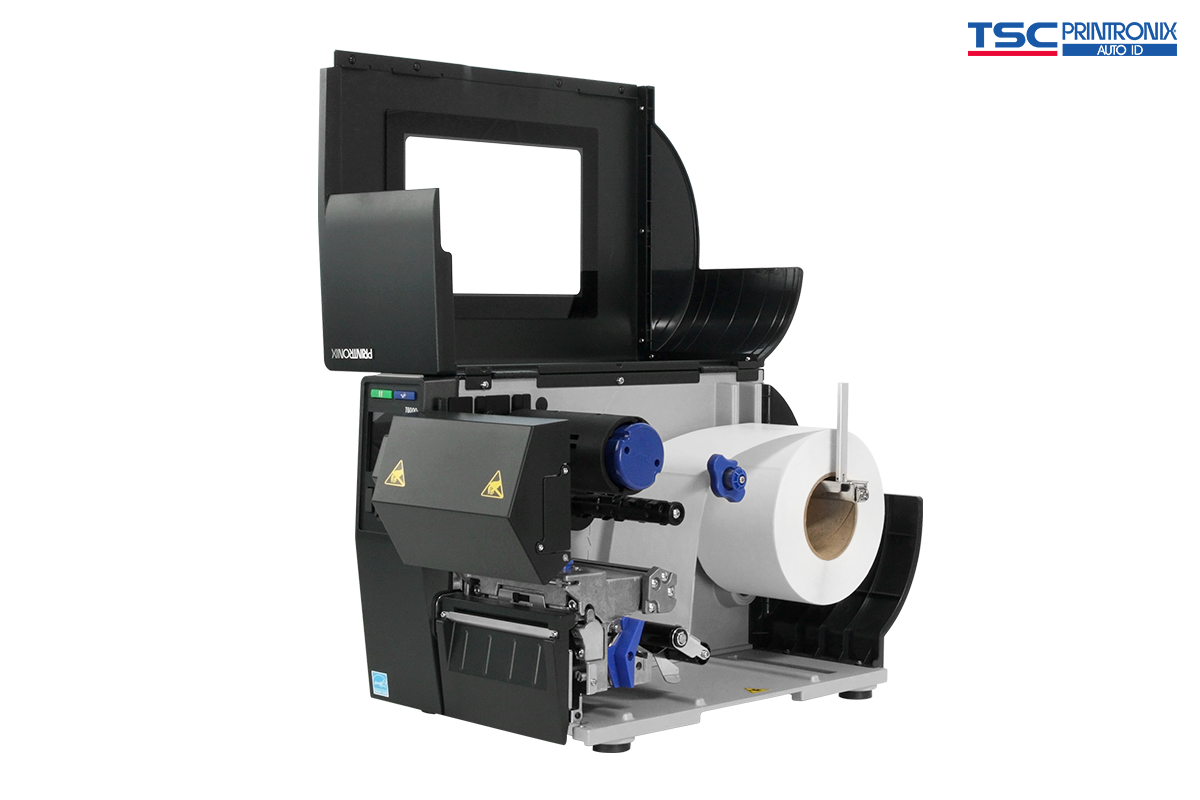
TSC Printronix Auto ID, a global leader in barcode label printing solutions, adds real-time 1D and 2D barcode verification tools to its popular Printronix Auto ID T6000e series mid-range industrial printers. The announcement further reinforces the company’s commitment to invest in the advancement of thermal printing technology including online barcode verification.

Previously only available on the T8000 enterprise-level industrial class printer, the addition of 2D barcode verification to the T6000e series printers enables a new level of value and affordability for compliance and regulatory applications where label barcode quality must meet minimum grade requirements. “Offering high-performance ODV-2D technology to the mid-range thermal printer category removes another barrier to the broader adoption of real-time barcode verification,” stated Neil Baker, TSC Printronix Auto ID Sales Manager UK, Ireland, BeNeLux and South Africa.

The ODV-2D verifier grades barcodes on labels as they are printed. The technology meets industry standards with grading that is based on ISO 15415 and ISO 15416 standards for both 1D and 2D barcodes. Customers can print with confidence due to the enhanced measurement accuracy of this technology. Labels that fail to meet the required quality or standards for their application are marked with a partial pattern so they can be identified as incorrect or unreadable barcodes.

Similar to the T8000, the T6000e ODV-2D system can provide users confidence that every barcode label they send out will be accurate and printed at the required standard. With ODV-2D barcode verification, the printer has the power to generate grading reports for each print job. This is extremely beneficial in the event that the readability or grade of a user’s labels are questioned. They will have documented evidence of every barcode label printed and their grade at the time of printing. Additionally, the Printronix AutoID Data Manager software application can capture grading measurements for every barcode printed on each label. “We have customers using this data capture tool to successfully defend barcode quality chargebacks,” said Baker.

The T6000e barcode label printer with ODV-2D barcode verification technology can also be used in conjunction with the integrated RFID option, enabling customers to not only encode and verify their RFID labels, but also guarantee the grade of the barcodes printed on them. This industry leading capability is ideal for retail supply chain applications where vendors not only struggle with barcode quality but are also required to use RFID labels on their shipments.

DB Schenker sign to Additional Space Tamworth

St. Modwen Industrial & Logistics has completed a deal with global logistics solutions and supply chain management company, DB Schenker, to expand its current premises at Centurion Park in Tamworth.

DB Schenker, which is one of the world’s leading global logistics providers, has signed a seven-year lease on an additional 153,064 sq ft unit at the 21-acre site, creating up to 100 new jobs as a result of the deal.

An existing St. Modwen customer, DB Schenker is expanding on its current premises at another of the developer’s schemes, St. Modwen Park Doncaster, where it occupies 41,095 sq ft of space, alongside its 140,000 sq ft unit in Tamworth.

The new unit will be used by DB Schenker as a shared user facility accommodating new customer growth and provides the occupier with 14 dock level doors, two level access doors, and 141 car parking spaces.

Strategically located adjacent to Junction 10 of the M42, Centurion Park lies at the heart of the Midlands motorway network and is a popular logistics and distribution centre, boasting a high-profile occupier line up which includes DFS, Aldi, AAH Pharmaceuticals, and Speedy Hire.

Gemma Butler, Development and Leasing Manager at St. Modwen Industrial and Logistics, said: “We are pleased that DB Schenker has chosen to expand its premises at Centurion Park. As a long-standing customer of ours across the UK, we’re looking forward to seeing the firm grow and DB Schenker remains a great asset to our national portfolio of industrial and logistics occupiers.”


Eoghan Turner, Head of Real Estate, UK & Ireland at DB Schenker, added: “We are delighted to be upscaling our operations in the West Midlands and it was extremely helpful that we were able to expand our floor space without having to uproot and relocate. Right next to the motorway network, the location of Centurion Park is ideal for us and we look forward to growing our campus model here in Tamworth.”


Joint agents for the scheme are Lambert Smith Hampton and M1 Agency.


Matthew Tilt, Industrial and Logistics Director at Lambert Smith Hampton, added: “Centurion Park continues to perform well for St. Modwen and the convenient location makes the scheme a prime site for industrial and logistics firms of all sizes.”


Myles Wilcox-Smith, Partner at M1 Agency, added: “The popularity of the business park has evidenced the growing market demand for logistics space across the UK and highlights St. Modwen as a market-leader in delivering speculative, high quality industrial and logistics builds.”


This deal is the second major letting by St. Modwen since the beginning of 2021 and follows closely behind the letting of T321 at St. Modwen Park Tamworth to a large global ecommerce solutions provider.

Mini Yellow’ sortation robots help ZTO meet the demands of ‘singles day’ 

With a client list that includes such e-commerce giants as Alibaba, PDD and JD.com, ZTO Express’s share of the Chinese express parcel delivery market is approaching 20 per cent, which makes it one of China’s most significant parcel handling businesses.

The company operates a highly scalable partner network model – in effect a ‘hub and spoke’ system ­­- that enables it to provide online retailers with cost-efficient, countrywide reach.

ZTO’s network partners are responsible for first-mile pick-up and last-mile delivery services, while the mission-critical transportation and sorting processes that take place in between pick-up and parcel delivery are undertaken by ZTO.

At one of its many smaller satellite sortation facilities that serve the city of Hangzhou, ZTO processes between 10,000 and 50,000 parcels each day using a system that, until recently, had relied heavily on manual labour.

However, with the number of parcels passing through the site increasing, the manual approach was beginning to struggle and incur additional costs. For example, at peak periods such as the hugely popular annual shopping festival initiated by Alibaba known as ‘Double 11’ or ‘Singles Day’ (which, this year, saw a mind-boggling 580,000 online orders placed every second at the busiest times), the workforce at this Hangzhou unit had to be supplemented by temporary staff to ensure that throughput targets were met – which, course, meant an increase in operational overheads.

Clearly a new approach was required but with the site’s typical daily throughput not considered sufficient to justify the introduction of a traditional (and costly and inflexible) automated cross-belt sortation system, alternative technologies were appraised.

After a comprehensive review of its needs, ZTO introduced ‘Mini Yellow’ autonomous mobile robots (AMR) technology from LiBiao Robot at the Hangzhou site.

LiBiao’s ‘Mini Yellow’ range has been developed as a flexible alternative to fixed tilt-tray and cross-belt conveyor-based sortation systems and can be quickly and easily deployed at sites where space is restricted for a fraction of the cost of old-style conveyor-based parcel sorting technology.

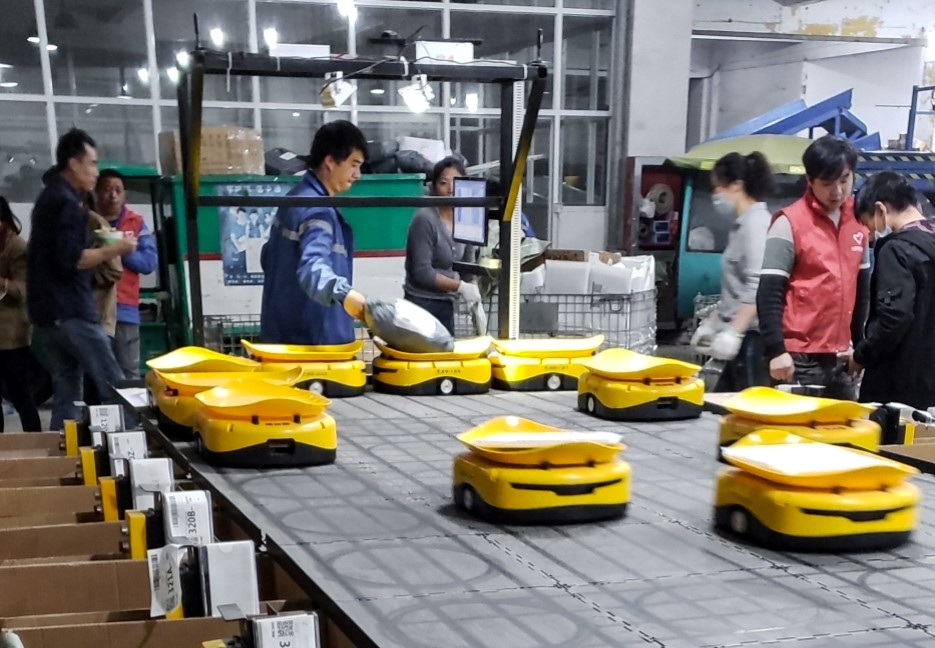
At the Hangzhou facility where LiBiao technology has been adopted 20 LiBiao robots operate on a simple platform which has been erected in a floor area measuring less than 50 sq metres. The LiBiao  sortation robots process around 2,000 parcels per hour, however, if required, additional AMRs can be introduced to increase handling capacity at the site to 7000 parcels every hour.

The sorting procedure is incredibly straightforward: each parcel arrives at the sorting platform and is simply placed on to the first available ‘Mini Yellow’ robot, the parcel’s destination code is scanned and the information transmitted to the ‘bot which then travels along the ‘table’ platform and deposits the package into the appropriate bagging station. Just a single worker is required to operate the system.

Apart from the obvious savings in labour costs, a further benefit to ZTO is the ‘Mini Yellow’s’ flexibility: additional robots can be introduced as and when they are needed and the technology is fully portable – meaning systems can be switched between sites if required.

Thanks to the operational benefits delivered by the LiBiao solution combined with the rapid payback on its investment at this relatively small site in Hangzhou, ZTO is planning to roll-out additional ‘Mini Yellow’ systems at other sortation facilities across China.

LiBiao Robot’s founder and chief executive, Xia Huiling, comments: “Such are the high levels of customer satisfaction with ‘Mini Yellow’ technology, that some 70 per cent of the businesses that have introduced the system so far have become repeat customers.

“Online shopping is growing at a tremendous pace across China and driving up the number of parcels handled, so companies such as ZTO are looking to invest in technology that will ensure that they keep pace with the needs of the market. Companies that install the ‘Mini Yellow’ sorting system recover the cost of their investment very quickly.”

More than 10,000 LiBiao autonomous mobile robots are in operation at ‘blue-chip’ client facilities worldwide – including Walmart in the US, Uniqlo in Japan and Kmart in Australia ­– and it is estimated that some two billion parcels a year are processed using LiBiao AMRs.

LiBiao Robot recently announced that two models from the ‘Mini Yellow’ range are now available in Europe  – a 5kg tilt-tray robot and a 30kg cross-belt model. Both types have CE certification.


Real Time Yard Management Solutions

Today, the largest European logistics platform gets one step closer to becoming real time in everything it does and expands its visibility solutions into Real-Time Yard Management. In addition, Transporeon announces a strategic partnership with Peripass to offer enhanced Yard Management Solutions. Peripass dedicates its expertise and technology to help companies digitize and optimize their logistics processes. Thanks to this partnership, companies can benefit from extended real-time visibility capabilities.

Today, most transport or warehouse activities are often optimized with Time Slot Management. Combining Time Slot Management with Real-Time Visibility information allows dynamic rebooking of time slots and provides a real time view on yard activities. Only few companies have invested in digitizing their entire yard operations in real-time. Nevertheless, yard management is key to gain total visibility on the entire digital supply chain. Yet for many companies, this is still a missing link in supply chain. Although transport or warehouse activities are often optimized or automated, relatively few companies have already invested in digitizing their yard operations. The yard is where a lot of additional value is ready to be collected. This fragmented and reductionistic view and management of the yard makes it very difficult for Shippers, Retailers, Carriers and Logistics Service Providers to utilize all available resources in the best possible way leading to reactive processes, a lack of flexibility and also increased waiting times.

Transporeon’s launch of Real Time Yard Management and its partnership with Peripass, the Yard Enabler, will deliver an experience of simplicity in a fully automated real time yard ensuring hassle-free logistics and augmented visibility. A solution that aims to ease yard management and automate different visitor and logistic flows, enables significant efficiency, cost savings and safety & security improvements for all Shippers, Retailers, Carriers and Logistics Service Providers running warehouses and cross-docks in Europe.

Stephan Sieber, Transporeon’s CEO, said: “Launching Real Time Yard Management and partnering with Peripass will deliver tremendous value to carriers, shippers and forwarders. By combining the two best offerings approaching the yard from the timeslot and from the physical yard and all in real time demonstrates the strength of our platform and delivers a fully integrated experience to our customers. The whole Transporeon team is excited about the cooperation with a thought-leading and dynamic team at Peripass that shares our passion of delivering outstanding value to our customers.”

Leander Naessens, Peripass CEO, added: “By offering a combined solution, we join forces, with on one hand innovative Yard Management Solutions from Peripass, and on the other hand time slot and dynamic slot management capabilities from Transporeon. This integrated solution increases real-time visibility between transport and yard operations. This is an absolutely unique offering for the digital logistic market and Peripass is proud to be part of it.”

Transporeon has been working on this co-innovation with key pilot customers in Europe and plans to release the product and make it generally available by April 2021. We have already common projects in our pipeline to have the solution combined which will soon lead to real cases.

Warehouse Management System Control new DC

The warehouse management system PSIwms supplied by PSI Polska Sp.z o.o will control the logistics processes in the new distribution centre of the clothing manufacturer LPP S.A. in Brześć Kujawski in Poland.

The new 75,000 square meter distribution centre is scheduled to open in early 2022. LPP wants to strengthen its delivery and distribution network and also enable broader diversification. Up to eight million items of clothing and accessories are to be sent to LPP stores and warehouses in around 12 countries every week. The logistics processes are controlled with PSIwms and planned with the integrated Warehouse Advanced Planning module.

PSIwms already controls the logistics centers in Pruszcz Gdański and the fulfillment centers in Gdansk, Romania and Slovakia. This ensures that online orders are delivered quickly. The close partnership between PSI and LPP, which has existed since 2007, as well as the PSI systems used, support LPP’s growth in the long term. Based on algorithms for artificial intelligence, PSIwms optimizes the picking routes in order to ensure the sharp rise in online orders.

Based on its own software products, PSI Group develops and integrates complete solutions for optimizing the flow of energy and materials for utilities (energy networks, energy trading, public transport) and industry (metals production, automotive, mechanical engineering, logistics). PSI was founded in 1969 and employs more than 2,000 people worldwide.

Advanced Key-based Mobile Computer Launched

Datalogic, a global leader in the automatic data capture and factory automation markets, is pleased to announce the Skorpio™ X5, a new ultra-fast, high-performing key-based mobile computer featuring the largest multi-touch display in the Portable Data Terminal (PDT) market.

Maintaining rapid, accurate and seamless data capture to provide real-time visibility is essential in applications like warehousing, fulfillment, inventory, store operations, shipping & receiving. The new Skorpio™ X5 enables Retail, Transportation, Logistics, Manufacturing and Healthcare companies to reach new levels of reliability and flexibility. Operators in any of these industries can carry out their tasks efficiently with its ultra-fast and dominant computational CPU power. The most demanding enterprise applications can simultaneously run seamlessly, leveraging the high-performing processor of the market-leading 2.2Ghz CPU Qualcomm Snapdragon 600® platform.

For utmost productivity, at 4.3 inches the Skorpio X5 features the largest and brightest rugged Gorilla© Glass screen display in the PDT market. The large screen provides plenty of viewing space for the most modern, feature-rich applications and display of product pictures. Skorpio X5 provides unrivaled readability in any light condition, including bright outdoor lighting. The Skorpio X5 also features the latest generation of scan engines specifically designed and developed by Datalogic. Customers can choose the scan engine that will fit best with their business needs: Linear imager, Standard 2D imager, the new and unique Mid-Range imager, and soon-to-be available Auto Range version for extra-long-range readings. Workers using the Skorpio X5 can immediately read any barcode, in any condition, whether labels are damaged or scratched, visible or covered.

The Skorpio X5 is a fully rugged device constructed to withstand the harshest environments and circumstances. Proven to sustain multiple drops up to 1.8m / 6ft onto concrete, hermetic to dust, and protected against waterjets with an IP65 rating. Its lightweight, ergonomic, and perfectly balanced design reduces users’ fatigue while enhancing productivity in all scan-intensive applications. The functional keyboard design delivers enhanced tactile feel from key presses for faster data entry. Exclusive ergonomic features that give added value include the highly visible function keys serving as shortcuts for frequently used applications, and the virtual floating scan trigger, SoftSpot™ technology.

The Skorpio X5 wireless charging models are the only PDTs in the market with this future-proof charging technology, providing top reliability and the lowest cost of ownership. The ultra-reliable contactless charging models provide a much lower maintenance cost since charging contacts are more prone to failure and can be receptacles for dust accumulation and microbial growth. As an ‘Android Enterprise Recommended’ device, the Skorpio X5, meets the elevated enterprise requirements as specified by Google™ in terms of hardware and software. The unmatched intuitiveness, user experience, stability, and security are guaranteed by running the latest Android™ 10 version and leveraging Google Enterprise APIs for security, provisioning and deployment. Furthermore, the user-friendly GMS (Google Mobile Services) platform allows access to Play Store to download only verified and virus-free applications.

The Skorpio X5 will allow no interruptions in the most demanding and scan-intensive applications. Options of standard or high-capacity batteries, hot swappable battery technology, and the Datalogic Smart Battery Management application allows use for extended shifts. Battery conditions can be easily monitored through an exclusive visual LED indicator. Beyond the ultra-reliable performance of the Skorpio X5, there are a variety of tailored configurations available for specific operator needs. This versatile form-factor allows multiple configurations based on the application requirements, with the possibility to choose from two convertible form-factors, two charging technologies, two memory configurations and three scan engines or keyboard layouts.

Andrew Duncan, SVP Product Marketing at Datalogic, commented: “The Skorpio X5 is the most advanced key-based mobile computer on the market, and features wireless charging capabilities. It brings the highest computational CPU power, the largest and brightest screen display, and the latest generation of scan engines, including a unique Mid-Range imager. With the Skorpio X5, businesses will be able to reach new productivity levels”.

Subscribe

Get notified about New Episodes of our Podcast, New Magazine Issues and stay updated with our Weekly Newsletter.