Barcode Labeling Manufacturers Combine

Loftware, Inc., the global leader in Enterprise Labeling & Artwork Management Solutions and NiceLabel, a leading developer of label management systems have announced that they are combining under the Loftware corporate umbrella. This union gives customers and partners an expanded choice of solutions, while providing enhanced labeling capabilities and the benefits of greater investment in cloud-based solutions and technologies. It also brings together 60 years of combined expertise in solving labeling challenges for companies of all sizes throughout a wide range of industries across the globe.

“Our customers, channel and technology partners and the overall market will benefit from our strategic vision to provide broader and deeper labeling solutions in addition to expanded scale, world-class services and global support. It also unites the best talent in the industry to drive new levels of innovation,” commented Loftware President and CEO, Robert O’Connor, Jr. “Loftware and NiceLabel have both seen sustained growth and expansion over the past several years, especially in 2020 when labeling solutions have become so critical to supply chain continuity. This move brings together two thriving organizations, providing momentum for significant expansion over the next decade and beyond,” he added.

NiceLabel’s extensive global partner network includes resellers, ISVs, OEMs and print technology partners that deliver NiceLabel labeling solutions and technology. In a complementary fashion, Loftware brings deep experience in selling, servicing and supporting Enterprise Labeling and Artwork Management solutions to large global organizations. The combined organization will continue to offer both Loftware and NiceLabel products, providing the broadest range of cloud-based labeling solutions for direct and channel partner customers across the globe. Together they will further enable supply chain agility, support evolving regulations and optimize business operations for companies across a wide range of industries including life sciences, manufacturing, food & beverage, retail, automotive, consumer products, apparel and more.

“We are delighted to combine with Loftware and look forward to expanding opportunities for our channel partners and end customers by providing new solutions and innovations to help them grow their business,” stated NiceLabel CEO, Chris Walsh. “The two companies offer truly complementary solutions that are more vital than ever. This combination represents a terrific opportunity to further accelerate growth especially as organizations look to address evolving customer and regulatory requirements and standardize labeling across worldwide operations,” he commented.

Cobots.ie Becomes a Distributor for MiR in Ireland

Cobots.ie, a leading distributor of collaborative robotic solutions, today announced its new partnership with Mobile Industrial Robots (MiR) which sees Cobots.ie become a distributor for MiR in Ireland. This new collaboration will enhance Cobots.ie long term growth strategy and will strengthen the deployment of advanced robotic solutions in Ireland. MiR is a leading global supplier of autonomous mobile robots (AMR’s) in a growing international robotics market. MiR’s fleet of flexible, easy to program and safe AMR’s are a proven solution for companies looking to optimize their production and increase their competitiveness.

Cobots.ie is experiencing an increasing demand for flexible automation solutions. With their strong presence in the Irish market and excellent reputation, Cobots.ie are well placed to become the leading distributor for MiR in Ireland. “With the addition of the MiR range to our product portfolio, we are giving our customers not only the possibility of task-oriented automation but also the option of automating internal logistics,” said Dan Buckley, CEO, Cobots.ie.

“MIR represents everything we look for in a partner, a global leader in terms of innovation and product development. We can ensure our customers are investing in quality products that have the flexibility to adapt to an evolving industrial landscape,” Buckley added. The MiR range of products with its impressive handling capabilities and intuitive interface manage internal logistics easily and cost effectively often with a payback period of less than a year. “Often, we find the main block for companies when it comes to automation adoption is where to start the automation journey. When demonstrating our range of collaborative robotic solutions to customers, they are often surprised at the flexibility and ease of use. The MIR range offers the same level of flexibility and ease of use as the other collaborative solutions we offer, and we look forward to a very successful partnership,” says Martin Buckley, CTO, Cobots.ie.

Cobots. ie will offer the entire fleet of MiR’s flexible range of AMR’s which are leading the way in terms of how businesses move goods within their facilities. Both the MiR1000 and MiR500 are both designed to automate the transportation of heavy loads and pallets. The MiR100, MiR200 and MiR250 are more suitable for the transportation of lighter goods. The MiR250 is the latest addition to the MiR family and is even more agile than its predecessors and the most adaptable to challenging environments particularly where space is restricted.   Customized top modules from the MiRGo range such as bins, racks, lifts, conveyors and even a collaborative robot arm are also available. “We are excited to partner with Cobots.ie to bring MiR solutions to more customers in Ireland. Cobots.ie is a leading collaborative automation solutions provider that offers a product range where MiR’s collaborative and autonomous mobile robots are a good fit and will add value,” says Jakob Møhl Bebe, Sales Director Scandinavia, UK & Ireland, MiR.


Brexit’s Impact on the Logistics Sector Says C H Robinson Director: “Tighter customs, more administration and additional duties,”:

The UK and EU reached a last-minute trade deal before the start of Brexit however, the UK’s withdrawal from Europe has brought uncertainty, confusion and widespread change amongst supply chains.

While a robust trade deal is vital to keep the flow of goods moving between the EU and UK, equally important is logisticians knowing precisely what’s required of them to ensure their shipments comply with new and extensive border rules.

Chris Mills, director of account management, transportation at C.H. Robinson Europe (pictured above), the multi-modal transportation platform provider, said: “Not all UK businesses were as prepared for Brexit as they could have been, but this was understandable given the uncertainty created by the trade deal negotiations going down to the wire.

“Even though Brexit is now ‘done’, and a trade deal has been agreed, it has become evident that leaving the EU has placed an increased burden on supply chains thanks to the raft of new complex process now in place. Indeed, some major retailers have temporarily suspended shipments between Great Britain and Northern Ireland due to ‘Brexit red tape’[1].

“The impact on the logistics industry looks set to remain during 2021 and beyond. Tighter customs, more administration and additional duties have become a reality and it’s vital everyone involved in shipping understands the changes – and keeps on top of any future developments – to ensure the efficient movement goods.

 Mills points to the most direct consequences on logistics following the UK’s departure from Europe, including:

  • There are no applicable import duties and quotas on general cargo between the EU and UK
  • Import and export declarations need to be issued for crossing the EU-UK border
  • Zero duties are for EU/UK origin goods only, so shipping to the EU/UK from a third country will not change and import duties will be charged
  • When shipping to the EU from a third country and the import is done in the EU, moving the shipment onwards to the UK must be customs cleared. The UK will also charge import duties, because of origin third country
  • Non-EU companies registered in the EU for import/export activities who need to have the same options in the UK must apply for a UK EORInr/VATnr

Mills concludes: “The new border between the EU and UK needs time to settle and the logistics world is quickly getting up to speed with what’s required of them. For example, there have been well-documented delays at ports, many as a result of incomplete or incorrect paperwork and entire consignments can be held up if only one item doesn’t have the correct customs forms. This is just one thing that piles on additional pressure on supply chains as parcels need to be returned to customers so the required data can be provided.

“Of course, not everything is going to be plain sailing from the outset and it’s going to take time to get used to the new norm. However, logisticians should take advantage of the raft of help and advice readily available the ensure the smoothest transition possible.”

[1] https://www.bbc.co.uk/news/business-55583244

IAG Cargo Transports Over a Million Doses of COVID-19 Vaccines Worldwide

Over a million Covid-19 vaccines around the world have been transported by Global Network IAG Cargo as its Constant Climate product springs into action to support countries fight against Covid-19.

Through IAG Cargo’s dedicated facilities at London Heathrow, Madrid and Dublin over a million doses of Covid-19 vaccines have been transported to North America and Europe. Amongst the IAG Cargo shipments to date are 80,000 doses from its Madrid hub to the Canary Islands and the first batch of the Moderna vaccine to Dublin and Gran Canaria.

IAG Cargo’s Constant Climate product already plays a vital role in the distribution of vaccines, transporting millions of temperature sensitive pharmaceutical products every year. In addition to IAG Cargo’s extensive global network of over 100 approved stations supported by constant climate specialists, its hub at London Heathrow remains the only airside facility to be GDP certified and WDA licensed by the UK’s Medicines & Healthcare Products Regulatory Agency (MHRA); and in 2019 the business opened a brand-new pharmaceutical centre in Madrid dedicated to processing temperature-sensitive pharmaceutical products. 

 John Cheetham, Chief Commercial Officer at IAG Cargo, commented: “I am delighted that we have already successfully transported over a million doses of the COVID-19 vaccine around the world”

“Transporting Covid-19 vaccines represent the latest effort in our ongoing work to support the fight against COVID-19. Since the start of the pandemic in March, over three quarters of our 1000 charters in 2020 were used to transport thousands of tonnes of crucial medical supplies, PPE and ventilators. We remain committed to continuing to offer our expertise to help support the fight against Covid-19 during 2021.

Last month Chris Evans from Colliers International described the Sea and Air Freight Challenges around the distribution of Covid-19 Vaccines and how the increased volumes of cargo was causing congestion at major ports. Click here for the full story.

Automated Solution for BLG Logistics Group

The BLG Logistics Group is investing in an Automated Guided Vehicle (AGV) system from Jungheinrich at its Bremen site. Two ERC 213a automated trucks will take over the supply and disposal of materials for a coating line in the Bremen logistics centre, from which BLG provides comprehensive services for the automotive sector. The order represents the first automation project of this kind for BLG.

Christian Reining, Senior Project Manager for Innovations & Digitisation Projects at the BLG Logistics Group explains: “We are delighted to have found a partner like Jungheinrich to help us implement our first AGV project. This project serves as a beacon and will hopefully demonstrate further opportunities for use within BLG.” The aim of using AGVs at BLG is to automate parts of the internal pallet transport system in the Bremen logistics centre. Thanks to its laser scanner, the ERC 213a can navigate independently through the warehouse. At the same time, the AGVs are able to recognise different load carriers, even if they are oversized, and stack empty pallets.

The AGVs are connected to the BLG Warehouse Management System via the Jungheinrich logistics interface. Thanks to this interface, the transport orders generated by the Warehouse Management System are transmitted directly to the ERC 213a and processed by the AGVs. Vehicles and warehouses thus form one comprehensive intelligent system.
“Automated Guided Vehicle systems are at the heart of automated intralogistics. Based on tried-and-tested Jungheinrich series trucks, which are supplemented by automation components and controlled by intelligent software, we have designed a system for BLG that handles recurring transport tasks with large handling volumes particularly safely and efficiently”, says Gregor Ringwelsky, Key Account Manager at Jungheinrich.

The ERC 213a is the latest model in Jungheinrich’s AGV portfolio. Thanks to its compact design, the automated stacker truck is specially designed for transport processes in confined spaces. Equipped with the latest lithium-ion technology, the AGVs can drive at full capacity for up to eight hours. The battery is charged at pre-defined periods or, if necessary, can be charged automatically at charging stations. This increases the availability of the system and allows the AGVs to be used around the clock. The ERC 213a can store loads of up to 1.3 t and can reach top speeds of up to 2.5 m/s. A 2.8 kW 3-phase AC motor provides constant power and an electrical lift motor ensures safe lifting at lift heights of up to 4400 mm.

Thanks to its steel frame and enclosed chassis, the ERC 213a has a particularly robust design. Safety systems such as the standard personal protection scanners check the route for obstacles during use. Furthermore, the layout of the personal protection scanners around the truck provides a contactless safety system in the drive direction, load direction and when cornering. Navigation takes place by means of a laser. Reflectors on the route or a combination of reflectors and distinguishing features can be used for navigation purposes.

Steve Richmond, Director of Logistics Systems at Jungheinrich adds: “Automation is becoming increasingly important in intralogistics. By supporting BLG in providing an automated solution at its Bremen logistics site, we are promoting operational efficiencies within the warehouse in a way that also prioritises safety for the company. Using our ERC 213a automated stacker trucks, equipped with lithium-ion technology, BLG can be confident it is optimising both time and energy. We look forward to an ongoing partnership with BLG and supporting its continued operations.”

New Automatic Vertical Lift Module

More ergonomic. More functional. More innovative. The Italian Ferretto Group takes a further step forward in warehouse automation by launching the new generation of Vertimag; already chosen as a vertical storage system by leading companies globally, now comes in an updated version to respond even more effectively to the needs of the most varied markets and sectors.

The ongoing work of the Research and Development center has made it possible to further highlight the benefits of Vertimag, leading to concrete advantages in terms of efficiency and productivity: space optimization creates a 90% reduction in the footprint compared to a traditional warehouse, ergonomics and flexibility are complemented by the versatility offered thanks to the widest range of tray combinations in the market. Innovation is not limited to the efficiency of goods storage, it also benefits the operators: the user-friendly interface, the ergonomic bay, the simplicity of management, the safety elements all permit a better user experience.

Vertimag combines more than 60 years of experience, continuous investment in research and development, and the quality of a solution designed and built entirely in-house. The new VLM brings all this together and allows Ferretto Group to offer companies a truly cost effective, innovative and functional solution to provide concrete advantages in terms of productivity and process optimization.

Available in versions from 3 to 12 meters in height, the VLM has a maximum capacity of 70,000 kg and can store materials of any format, weight and size up to a height of 695 mm. The new Vertimag stands out primarily for its flexible solutions: 15 models, 6 types of picking bay (Ergo-Tech, single internal, double internal, single external, double external, removable) and 120 combinations of tray sizes allow this outstanding product to meet the demands of the most diverse production sectors.

Special attention has been paid to safety: barriers for operators, full compliance with anti-seismic standards, and a quieter operating system. The push for innovation has also made it possible to strengthen the equipment supplied with the system, resulting in a more efficient management software designed in-house with a new generation graphic interface and an easy integration with external management software. Vertimag has been designed and tested for robustness; furthermore, the management software includes preventive maintenance algorithms which, in combination with the design, improves the system uptime.

The software has a user friendly and customizable dashboard through which it is possible to quickly check the status of all the machines, dynamically manage the compartments of the trays, and monitor in real time the stock levels and the position of items in the trays. To optimize the operator’s working conditions, a wide range of accessories is also available sliding console, a trolley for tray removal, laser pointer, alphanumeric LED bar, barcode reader, piece counting scale and label printer.

New Electric Chain Hoist for Positioning Applications

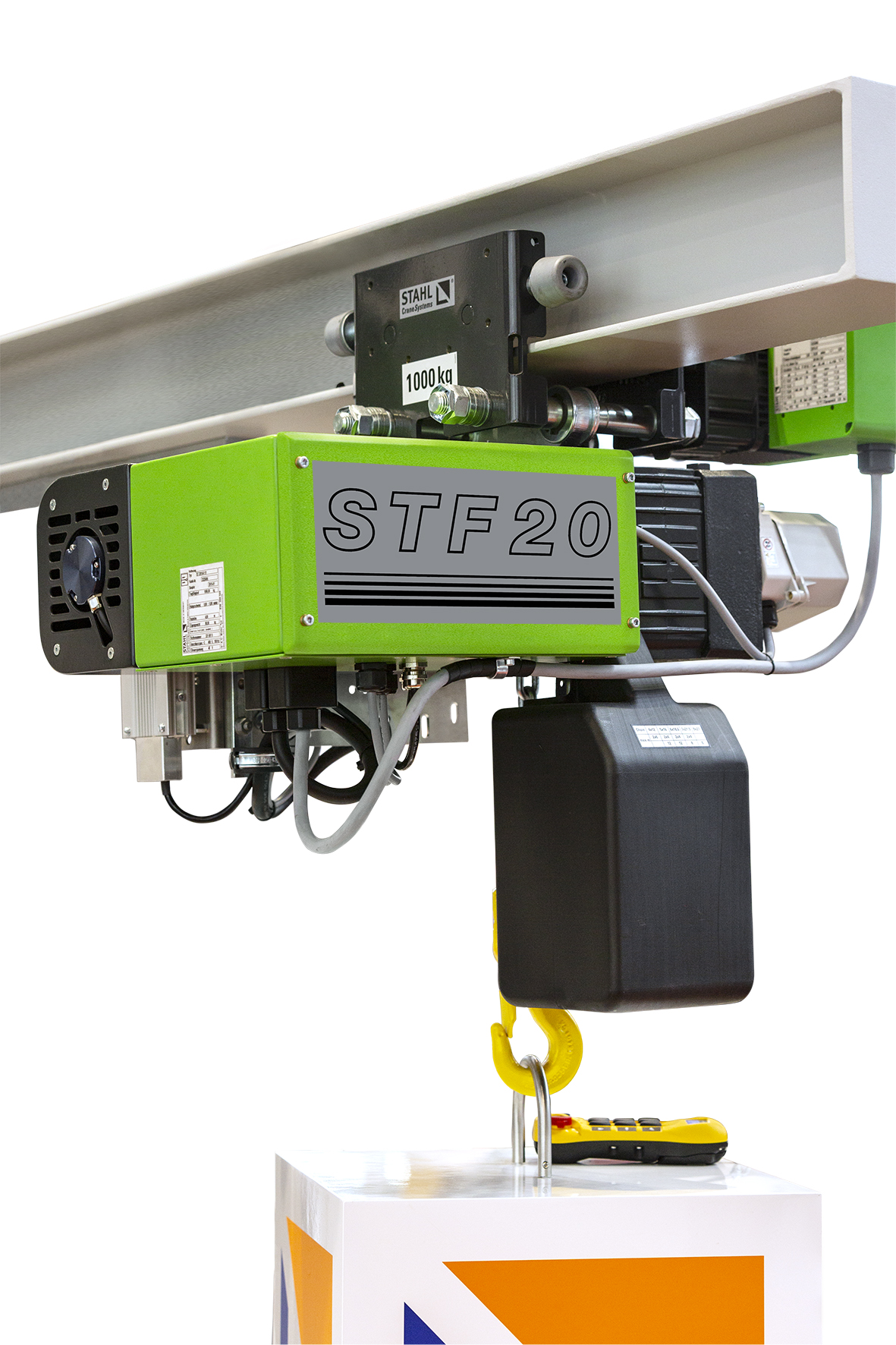
Providing best-in-class safety and precision control, the new STAHL CraneSystems® STF electric chain hoist from Columbus McKinnon is specially designed for stepless lifting and positioning applications. Columbus McKinnon is a leading designer and manufacturer of motion control products, technologies, and services for material handling. Equipped with industry-leading Magnetek® IMPULSE®G+ Mini drives, STF hoists provide infinitely variable speed for applications requiring precision control, ensuring greater operator safety and lower stress on the crane mechanical and control components.

“The STF hoist combines the high-performance and reliability you expect from a STAHL CraneSystems chain hoist with industry-leading design and control features Magnetek provides,” said Marc Döttling, STAHL CraneSystems Product Manager. “Since the frequency inverter can be connected to field bus systems, such as Modbus, Profibus, or Ethernet, the STF chain hoist is an important step towards Industry 4.0. The control technology of the IMPULSE drive not only enables precision movement, but also provides valuable diagnostic and performance information, such as hoist status, through communication with IoT networks.”

The STF hoist also offers increased safety. If the hoist controls detect unintentional movement, for example the motor brake slips under load, the hoist drive will stop, and it can no longer be operated. This helps prevent the load from dropping and potentially damaging equipment and injuring the operator. In addition, an overspeed protection device prevents the motor from exceeding its maximum allowable speed range in the event of a drive malfunction, which protects the hoist against a possible load drop.

The hoist features a 1024 PPR encoder with a simplified mounting for reliable feedback in rugged operation and permits rapid evaluation of speed signals. The quick programming feature of the Magnetek frequency inverter paired with the ease of chain hoist commissioning gives customers a safe, highly reliable, and simple plug-and-play application.

Like all STF chain hoists, the new variable speed model is designed for ambient temperatures from -10° C to 40° C (14°F to 104°F), optionally up to 50°C (122°F) and is suitable for all available mains voltages with a large number of adaptation options.

In addition, the STF chain hoist meets the special requirements of protection class IP54 (optional IP65 / IP67 for outdoor use), which prevents the ingress of water and moisture. The STF is also extremely durable and maintenance friendly, featuring hard-wired control elements in place of commonly used board controls.


The STF is available in EMEA, APAC, and Latin America. For more information on the STAHL CraneSystems and Magnetek product portfolios, visit www.columbusmckinnon.com.

FTL and Groupage Contract Win with Conglomerate

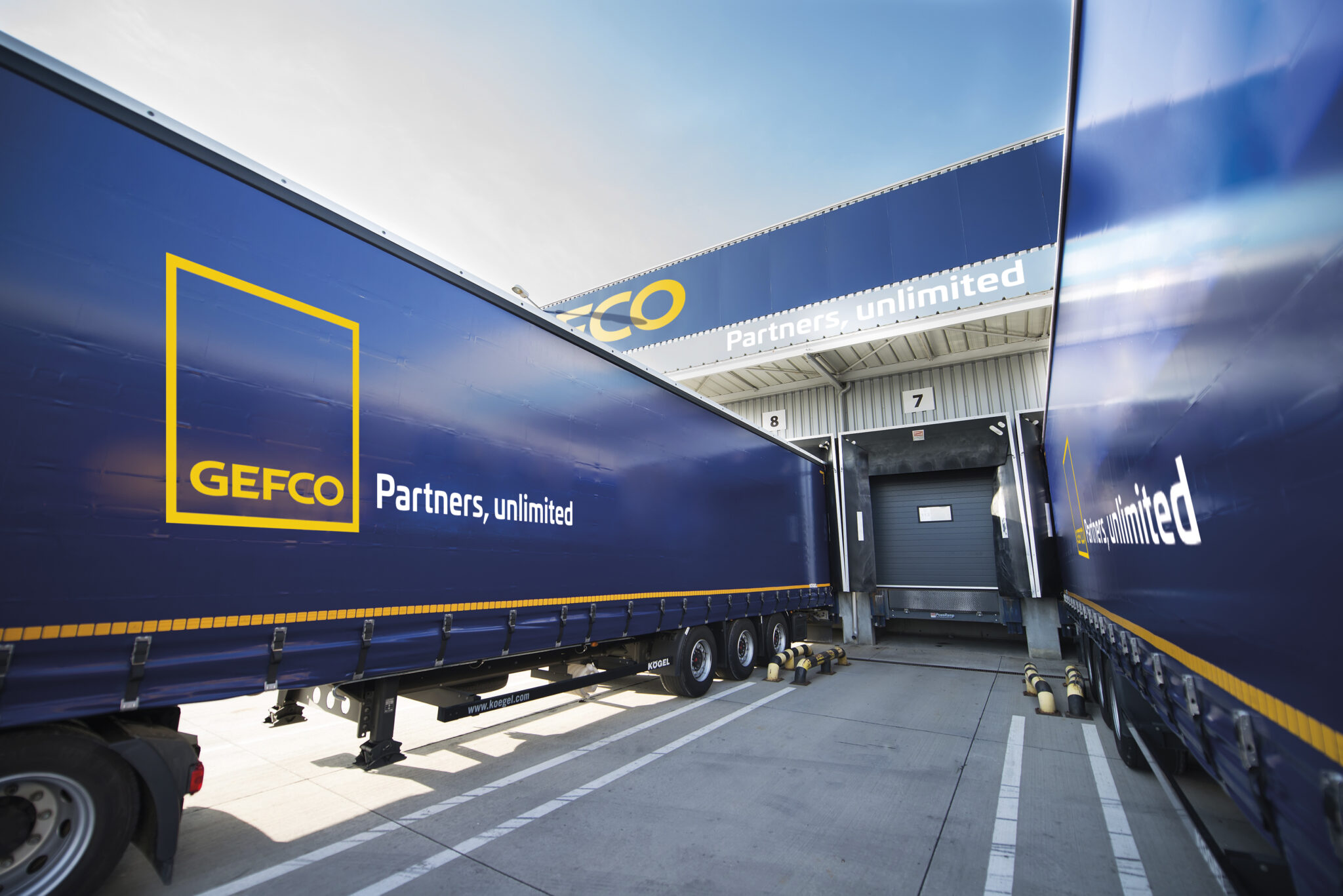
GEFCO UK has been awarded a three-year contract with a multinational conglomerate, specialising in science-based technologies, to provide FTL and groupage services to its consumer goods and healthcare business areas.

The contract award comes as part of GEFCO UK’s plans to explore new market sectors and push for further diversification across its client portfolio. The new client, a US-headquartered, science-based technology company, works across a number of business areas, including industry, worker safety, US health care, and consumer goods.

Already an overland FTL/LTL customer of GEFCO Group in several other international markets, the new client has partnered with GEFCO UK following a RFQ process which began in Q4 2019 and entered its final negotiation phase during the height of the COVID-19 pandemic. Amid the challenging business landscape, much of the contract discussions took place remotely from March with mutual commitment to a flexible approach to negotiations.

GEFCO UK is providing domestic next day part and full trailer loads, with daily collections from the company’s distribution centre in Rugby equating to an average volume of 150 shipments per day. Further ad hoc collections will be made from a second site in Newton Aycliffe, County Durham.

Vicky Arnold, Sales Director at GEFCO UK Ltd. said: “Our new partnership comes as our business looks to expand and diversify its offering, the importance of which has been underlined by the current COVID-19 situation. As such, this is a significant opportunity for GEFCO UK to demonstrate our flexibility and commitment to outstanding customer service during these challenging times. We’re thrilled to be able to support our new client’s operations in the UK and hope to become a valuable and trusted partner for them.”

New High Bay Cold Storage Facility

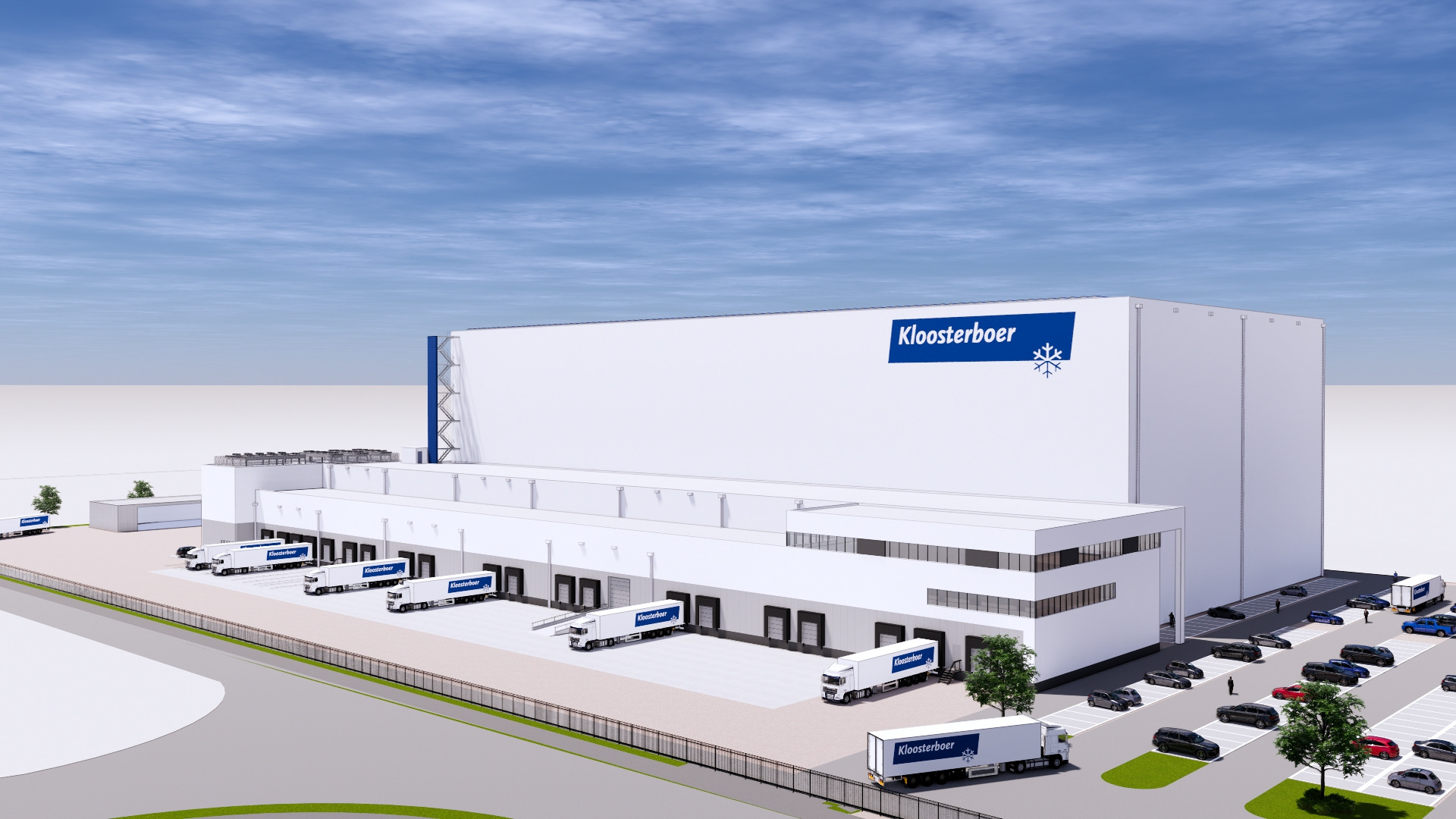
Kloosterboer, one of the leading logistics service providers in Western Europe, commissioned SSI Schaefer with the supply and construction of steelwork for an impressive deep-freeze warehouse located in Port of Rotterdam in the Netherlands. The logistics service provider offers innovative and sustainable supply chain solutions for temperature-controlled storage and distribution of food related products, such as fish, meat, fruit, fruit juice and juice concentrate, milk and potato products. SSI Schaefer has proven to be a reliable partner in past joint projects, which led to the awarded project.

A fully automatic, deep-freeze logistics center will call the City Terminal Rotterdam home – Cool Port 2. SSI Schaefer will supply about 4,100 tons of steel to erect a 6-aisle high bay warehouse with impressive dimensions too; 69 m length, 139 m width and 41 m height. The high bay warehouse consists of a silo design with the lateral walls and roof cover attached directly to the steelwork. Being a steelwork supplier, SSI Schaefer has erected numerous high bay warehouses with this type of silo design worldwide. Since Kloosterboer already did several successful projects with SSI Schaefer, it was an easy decision to award the contract to the reliable intralogistics experts.

The requirements of the British sustainability certificate BREEAM (Building Research Establishment Environmental Assessment Method) are adhered to during the construction. SSI Schaefer has designed the roof construction of the high bay warehouse for a future photovoltaic system for additional energy savings. The roof will be able to accommodate 2,700 solar modules.

With a storage capacity of 60,000 pallets in Cool Port 2, Kloosterboer will serve a variety of customers. The construction of the steelwork has started in fall 2020, the completion is scheduled for summer 2021. The deep-freeze warehouse will be commissioned in January 2022.

Commissioning a System From Over 4000 Miles Away

Thanks to digitalisation, it is no longer unusual to parametise and commission single components remotely. BEUMER Group thinks ahead and, for the first time, commissions a complete packaging line including palletiser – from a distance of over 4,000 kilometres.

Helping customers in the event of faults or shutdowns of existing systems is no problem for BEUMER Group – even from a distance. The system provider was confronted with a completely new situation when a planned commissioning, which involves the dispatch of service personnel to the site, could not be carried out due to travel restrictions caused by the COVID-19 pandemic. BEUMER Group was flexible and set the course for “remote commissioning” – commissioning from a distance.

“The trigger was clearly the pandemic,” explains Peter Teichrib, a department manager in Engineering at BEUMER Group. However, this is not the only scenario that requires BEUMER’s new service remote commissioning. Everything that makes personal access to systems and users difficult or impossible requires new solutions.

As a concrete example, Teichrib mentions the packaging line of the cement manufacturer Norm LLC in Azerbaijan, which was almost completely erected on site. This line consists of two bag transport systems, the layer palletiser BEUMER paletpac 5000 and the BEUMER stretch hood A packaging line. “All components were already completely installed. Only some electrical installations and commissioning still had to be carried out when our experts had to leave the country due to the worldwide travel warning”. A delicate situation for the customer who has already included the capacity of the new packaging line in his calculations. If the line does not start up, the customer faces the thread of delivery bottlenecks and loss of market share.

Test run required
BEUMER Group decided to launch remote commissioning as a pilot project. “The conditions were exceptionally good, which certainly cannot be taken for granted,” emphasises Teichrib. In general, a number of conditions must be met before the “remote commissioning” project can even be considered. The system must be tested in-house in advance. “With this system, we had indeed carried out an extended in-house commissioning, as the BEUMER paletpac 5000 was running with the new PLC S7-1500 for the first time,” says the department manager. “We wanted to make sure that everything would work perfectly later. Finally, it was this circumstance that made remote commissioning possible in the first place.” BEUMER Group also recommends to supply the BEUMER stretch hood with the film tested in advance. This way, possible differences in film quality can be excluded as a source of problems during commissioning.

Know how meets technology
In general the customer needs qualified maintenance and operating personnel who is preferably familiar with BEUMER systems. This is another prerequisite for successful remote commissioning. On the hardware side, several IP cameras provide the necessary overview of the complete system, while BEUMER Smart Glasses, specially developed data glasses, connect the BEUMER experts audiovisually to the user on site. “A broadband Internet connection is, of course, required,” says Teichrib. The data glasses allow a detailed view: The BEUMER Customer Support sees the same thing as the wearer on site and can directly specify the correct actions to be taken. In this way, the user is guided step by step through the commissioning process.

The cameras and BEUMER Smart Glasses are part of the plug-and-play set for remote commissioning. This also includes a WLAN router for the BEUMER Smart Glasses and a VPN client installed on an mGuard router. The IP cameras must be connected via LAN cable to ensure sufficient image quality and stable transmission. “First, we installed the hardware and software components in our factory and tested the configuration. The complete package has been shipped to Norm LLC,” says Teichrib. This procedure has proven itself and is also planned for future remote commissioning projects.

Keeping the overview
BEUMER Group set up a separate back office for this project at short notice: Using four monitors and a laptop, the service staff always had an overview of the images from the IP cameras, the field of view of the BEUMER Smart Glasses and the data of the system sent via the VPN client.

“Broadband Internet access, technology and know-how – at Norm LLC we encountered ideal conditions, which we made the best possible use of,” explains the department manager. “Within a very short time we were able to develop a concept that will guide us safely and reliably through future remote commissioning projects. Standardised processes enable us to eliminate sources of error and offer our customers a reliable service – quickly and flexibly.”

Regardless of external circumstances: If BEUMER Group digitally takes the users by the hand via “remote commissioning”, the understanding and know-how of the systems grow. This motivates the customer’s personnel on site, a fact from which the user benefits as much as BEUMER Group – a better understanding of the system will significantly simplify future remote maintenance and services.
The remote commissioning of the packaging line at Norm LLC has shown that with adequate framework conditions, such as well-trained maintenance personnel and technically high-quality IT equipment, new ground can be broken. BEUMER Group’s technology and competence have impressively confirmed this.

Subscribe

Get notified about New Episodes of our Podcast, New Magazine Issues and stay updated with our Weekly Newsletter.