Frozen veg group gets clad-rack warehouse

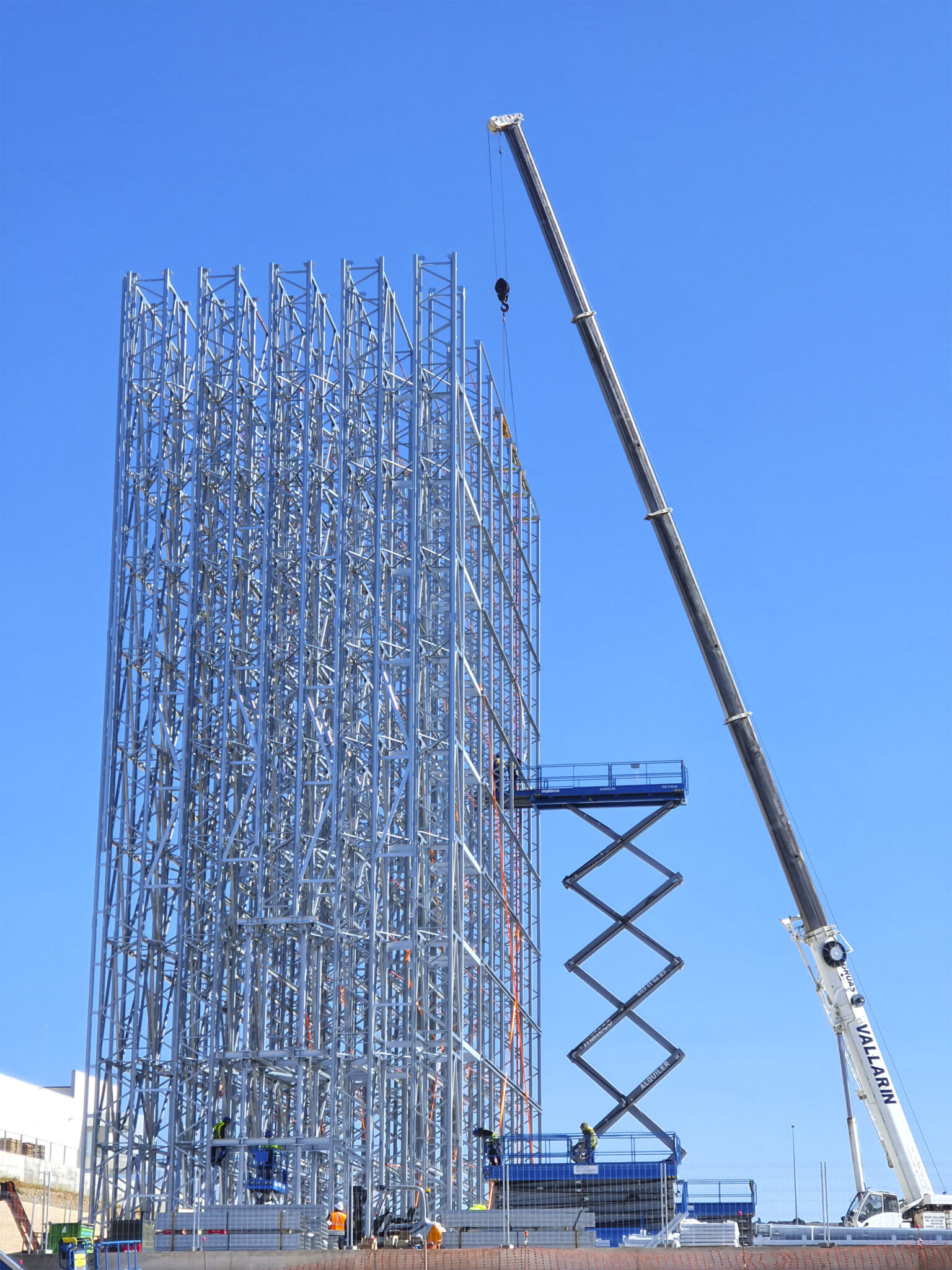
AR Racking and Swisslog have started the installation of a new clad-rack warehouse in Funes (Navarra, Spain) for Virto Group, a leader and reference in the production and distribution of frozen vegetables for retail, food service and industry.

The new clad-rack warehouse, which covers 11,020 sq m and will be 38m high, will have a storage capacity for 56,166 europallets, which will allow Virto Group to have a stock of between 50 and 70 million kilograms of frozen products.

AR Racking’s 100% galvanised racking, apart from supporting the external exposures and external forces of the warehouse, will be designed to integrate a Swisslog compact storage system with 31 transfer cars for pallet handling. An ideal solution for high-density storage and maintaining maximum operational speed, with flows of 350 pallets per hour.

“We fully trust AR Racking’s expertise in industrial racking systems, having worked with them on previous occasions to fulfil our storage needs in other frozen product facilities that we have in Segovia, Badajoz and La Rioja,” explained José Antonio Baldero, Technical Director of Virto Group.

“Clad-rack warehouses provide great low density resulting in significant savings due to lower investment. Our racking also adapts perfectly to warehouses that require cold work such as that of Virto Group, which will be at a temperature of -24°C,” added Roberto Arriaran, Director for Integration Business Unit at AR Racking.


MOSCA introduces UCB machine with banding technology

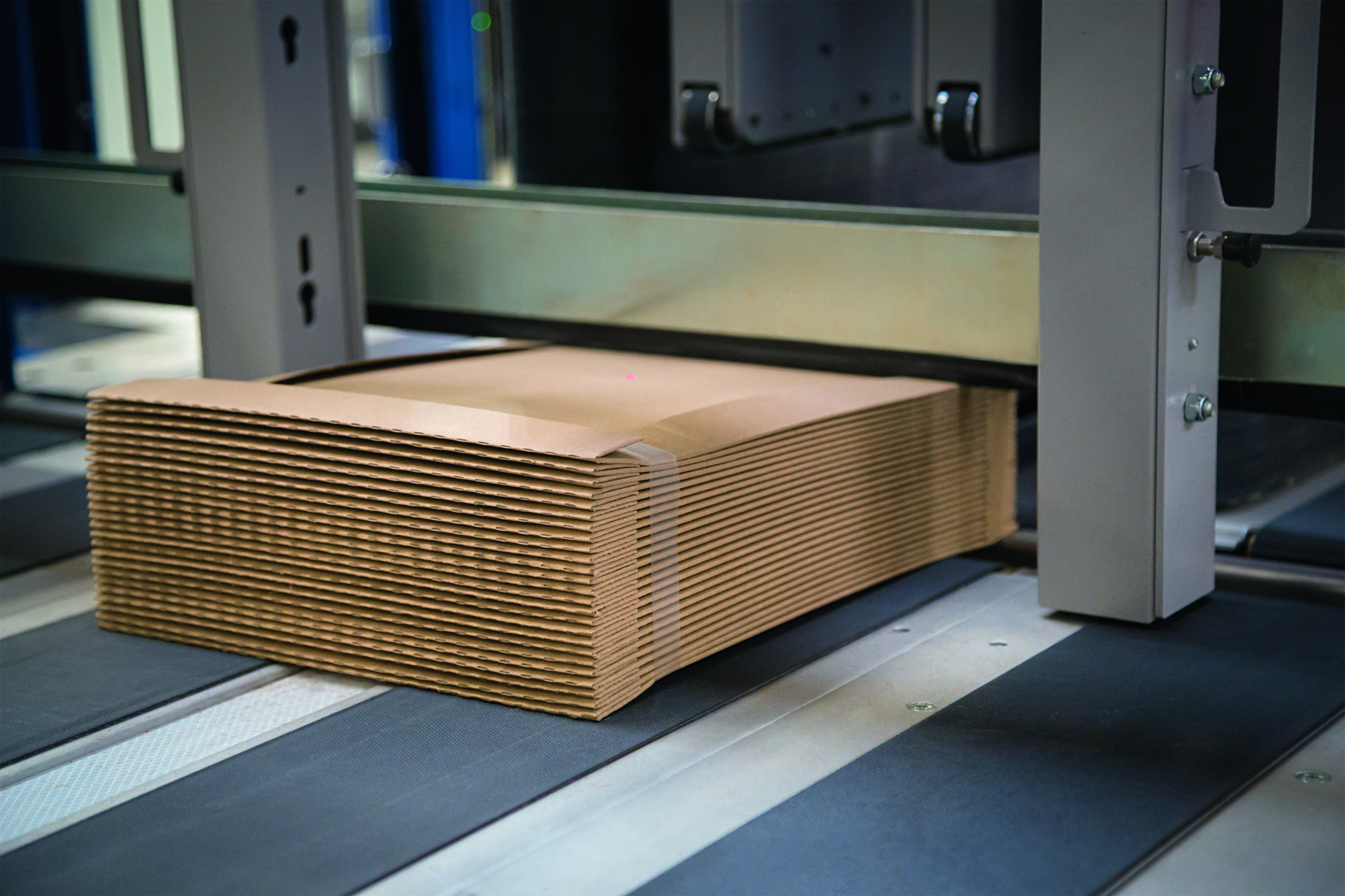
To meet the demand for the best possible transport security for every product, MOSCA is integrating a banding system into its UCB fully automatic corrugated cardboard strapping machine. This model will now be capable of reliably and gently securing even the most fragile products.

“Our UCB strapping machine has been established in the corrugated board industry for many years. We can now equip this model with a banding system specially designed for glossy printed materials or other fragile products that consumers expect to be 100% damage free,” MOSCA CEO Timo Mosca explains.

The integrated banding system was developed by the Waldbrunn-based strapping specialists in cooperation with their long-standing partner ATS Tanner. “Joint projects like these enable us to continuously advance our technologies and develop innovative approaches for our standard models as a means of more effectively supporting our customers’ processes.”

Similar to the strapping process, the UCB machine automatically secures product stacks with banding material. The operator simply places the stack of corrugated cardboard into position and the machine takes over. It aligns the stack on up to six sides, which makes banding complex 4- and 6-point folding boxes possible without the slightest problem. Then the UCB gently applies a band to the aligned stack and securely bundles the package.

The width of the band is a key factor when it comes to avoiding product damage. The UCB uses a 20mm-wide banding film that bundles products more gently for optimum transport safety. Similar to the process used for strapping, MOSCA relies on ultrasonic technology to seal the banding film. Unlike a thermal process, energy is only required at certain points and there are no warm-up phases.

The UCB enables more sensitive banding with its self-learning teach-in function. The machine precisely measures new products and stores their dimensions. The band can then be applied gently and accurately to all subsequent products of the same type.

Mondi GmbH, a MOSCA customer who specialises in corrugated cardboard, tested the banding technology for six months to bundle folding boxes in stacks of 15 to 20. Mondi production manager Jörg Erhardt was satisfied with the test run: “Machine operation was easy and proved to be no problem for our staff. Of course, there was an adjustment phase, but we managed it well – thanks to the great teamwork with MOSCA. If we had any questions, someone was immediately available to support us.”

“Combining strapping and banding technologies in a single machine enables our customers to adapt their bundling operations more flexibly to each product,” Timo Mosca explains. Only a few manual steps are required to switch between banding and strapping. The machine shuts down automatically and the banding unit can be pulled out and replaced with the strapping unit. There’s no need to change parameters: the machine automatically adjusts to the selected process. The changeover is completed in just a few minutes and can be carried out, for example, during a product change on the upstream folding box gluer without any additional downtime.

The sealing unit and dispenser are easy to access, which simplifies maintenance and cleaning. “This is a big advantage – especially in the corrugated cardboard industry, where there’s a lot of dust,” adds Jörg Erhardt.

UPS Healthcare accelerates cold chain capabilities

UPS is expanding its specialty pharmaceutical offerings by establishing UPS Cold Chain Solutions, a comprehensive suite of cold chain technologies, best-in-class capabilities, and new and expanded global facilities providing complete, end-to-end temperature-controlled logistics.

“Our customers have been taking advantage of our cold chain capabilities for years, but the pandemic caused UPS to move even faster to enhance an integrated set of cold chain solutions to support the future of the pharmaceutical and medical device industry,” said Wes Wheeler, UPS Healthcare president. “UPS’s near-perfect, on-time delivery of the COVID-19 vaccine proves how effectively and efficiently our network handles biologically derived drugs, even at extreme temperatures.”

Chronic and life-threatening diseases, including cancers, respiratory, autoimmune and cardiovascular conditions, are the fastest growing disease categories in the world, creating a rapid acceleration in the development of biologically derived, temperature-controlled drugs and therapies.

According to the Biopharma Cold Chain Sourcebook, cold chain trends show 48% growth between 2018 and 2024 for drugs that require at least 2-8°C storage and shipping. Additionally, the overall market for cold chain services (packaging, transportation and data services) is expected to significantly accelerate growth over the next three years, growing by 24% by 2024, after posting a 10% increase from 2019 to 2020.

“The future of the healthcare and specialty pharmaceutical industries will increasingly rely on robust cold chain networks to safely deliver temperature-controlled drugs and therapies to customers,” said Kate Gutmann, UPS chief sales and solutions officer and SVP, UPS Global Healthcare. “The continued evolution of our cold chain offerings ensures UPS is ready for the future and can continue to provide long-term value for our healthcare customers.”

UPS Cold Chain Solutions is purpose-built to provide pharmaceutical companies, healthcare providers and laboratories a full, end-to-end cold chain service offering, including storage and distribution, transportation, visibility, and quality assurance capabilities to meet their complex demands for critical products around the world.

As part of a continued, aggressive strategy to build sophisticated capabilities in cold chain logistics, UPS Healthcare is expanding and augmenting its temperature-controlled products and services, including:

Cold chain GMP storage capacities – roughly 390,000 sq ft (36,200 sq m) of coolers and freezers installed at UPS facilities to support the storage of biologics ranging from 2°C to as low as -80°C

Packaging customisation – recommendations for specific temperature-controlled packaging options to minimise total cost while ensuring safe and efficient transportation of products

UPS European cold chain ground network expansion – adding more ground transportation fleets, better connection between gateways and teams of experts to create customisable solutions that fit our customers’ needs

Transportation efficiencies – four flexible, temperature-regulated service options via air or ocean freight that can be configured to meet the needs of the pharmaceutical packaging and help keep customer costs down

Precise monitoring with UPS Premier technology – protocols to provide pinpoint visibility into covered pallets, boxes, trailers and packages within 10ft       (3m) of their location anywhere in the UPS network

Facility updates – construction of two new GDP-compliant, healthcare-licensed distribution facilities in Italy and Australia, as well expansions and cold chain retrofit projects to facilities in The Netherlands, Czechia, Poland, Hungary and the US

“UPS sets a high bar for excellence in cold chain delivery and logistics, and these current and future investments in innovative solutions will ensure we keep pushing the bar higher,” Wheeler said. “For our customers, we will remain focused on delivering on our commitment to ‘Quality Focused. Patient Driven.’”

MSC and GBRf sign new five-year rail deal

Mediterranean Shipping Company (UK) Ltd. (MSC) and GB Railfreight (GBRf) have announced a new five-year deal, further strengthening their long-established relationship and joint commitment to delivering sustainable solutions for customers.

GBRf has been a provider of rail services to MSC since 2002. Its knowledge and expertise in supplying locomotives and wagons combined with MSC’s extensive line haulage services enables the two companies to deliver market leading door-to-door services to their customers.

The new agreement will be volume-based and is expected to increase wagon utilisation that in turn will help further reduce carbon emissions.

MSC commented: “MSC is once again delighted to confirm a new five-year deal with GBRf, who have been supporting MSC with our intermodal rail services since 2002. Our priority was to continue to offer unparalleled capability and flexibility to our line haulage customers in a fast-paced and ever-evolving UK intermodal market. Increased wagon utilisation was a key component from the start, and engagement with ports and inland terminals to support this initiative took place early on.

“We are delighted that our new shared contract will allow both MSC and GBRf to continue our work in taking steps to reduce CO2 emissions by moving containers via rail, closer to final destination.”

The services will operate from Felixstowe and London Gateway to both the Midlands and Yorkshire, with a minimum commitment of five days a week. Over the course of the next five years, the deal will remain agile and be able to provide flexibility to changing market dynamics while supporting MSC’s intermodal volume growth.

John Smith, Managing Director at GB Railfreight, said: “We are thrilled to have signed this contract with MSC. They are a long-standing partner and one of the leading shipping and logistics companies in the world, and we are delighted to be able to continue working with them for the next five years.

“Given MSC’s projected future growth, we have struck a flexible agreement which will allow both parties to make better use of the services we share. As a business we always put the clients first and we are delighted to be able to cater to MSC’s needs with this contract renewal.

“With the economic picture looking uncertain, I am pleased we will continue working with MSC – a move which shows that the rail freight market is in good shape and will be needed more than ever as we begin the road back to recovery.”

With proven records of ability to adapt to fast-paced, changing economic and market climates, both GBRf and MSC will be further supporting their customers’ supply chains with increased stability, flexibility and sustainability.

Priority Freight transports rapidly auto parts

Priority Freight recently transported two tonnes of automotive parts from China to Europe in less than 36 hours.

Priority Freight says it is an expert in providing the fastest, most cost-effective and reliable time-critical logistics solutions – with an industry-leading reaction time of under 15 minutes and an on-time delivery rate of 99.6%. The company’s specialist services were called upon by an automotive manufacturer who required immediate support transporting two tons of automotive parts from Tianjin, China to Spain in just 48 hours.

When the call came in from the customer in Spain on Thursday evening, the relevant Chinese manufacturers and airlines were already closed. However, scenario planning began immediately and the client was offered the express tariffs that Priority Freight already had secured with airlines operating out of China in advance.

The cargo needed to be collected from two different Tianjin-based manufacturers which, at the time of the booking, were closed and had no idea the emergency transport was already being organised.

Priority Freight prepared the relevant paperwork needed for customs and was ready with two vehicles to pick up the parts as soon as the Chinese manufacturers started work for the day, transferring to Shanghai airport (PVG) for the first available flight on Friday.

To ensure the goods would arrive in Spain by Saturday evening, Priority Freight knew the only solution would be air freight to Frankfurt (FRA) and then an air charter to Madrid (MAD). Priority Freight having its own regional office at FRA airport played a big part in the success of the operation. The company secured a direct flight to FRA for all two tonnes of cargo, where the team was able to expedite customs for a re-route to Stuttgart airport (STR). There, the chartered SAAB 340ª aircraft was waiting to fly to MAD on Saturday morning.

The capabilities of Priority Freight’s 24/7 team made a huge difference in this case. Priority Freight’s night team in Europe was able to liaise with the partners in China and, as soon as the truck arrived to collect the goods at the factories, they communicated independently with the manufacturers, knowing exactly what was needed, acting on the customer’s behalf while their offices in Europe were closed.

By the time Priority Freight’s Spanish customer had woken up, all cargo had been loaded from both loading points and the vehicles were able to make the deadline to PVG.


Forklift safety ‘time bomb’ post-Covid

RTITB has revealed lift truck training and assessment statistics for 2020 which could indicate an upcoming ‘safety time bomb’, where thousands of candidates are operating without up-to-date training.

“Prior to the Covid-19 pandemic, the number of operator tests taking place each year was fairly steady, but we saw declines in all areas in 2020,” says Laura Nelson, Managing Director for RTITB, the UK and Ireland’s leading workplace transport training accrediting body. “Covid-19 did of course present risks and challenges for training and assessment, but operators without the correct training also pose a serious danger to the supply chain.”

Statistics from RTITB show that Counterbalance Lift Truck Operator tests declined by 24.7% from 2019 to 2020, accounting for around 10,000 operators across all candidate types (Novice, Refresher, Conversion). The number of Counterbalance Lift Truck operators being tested for the first time was down by 29.2%, with an even bigger decline of 32.8% for Reach Truck operators. Overall, across all candidate types, there were around 2,400 fewer Reach Truck operator tests in 2020, compared to the previous year.

“With the number of new operators down by around 30% and overwhelming demand in the supply chain, it begs the question of who is filling these gaps?” asks Laura. “Are untrained people operating trucks? Or are qualified operators working extremely long hours to cover the deficit and risking fatigue, which could also be jeopardising safe operation.”

Refresher training also saw a significant decline, with Counterbalance and Reach Truck operator tests down by 22.2% and 23% respectively from 2019 to 2020.

“Worryingly, this means that almost a quarter of the candidates due for refresher training are potentially out there operating without any update on skills – how long before there is a serious incident as a result of this?” asks Laura. “Some might suggest that these operators may have left the industry, but this is unlikely considering the huge demand on the supply chain during the pandemic.”

As well as a decline in operator test numbers, Lift Truck Instructor examinations have also seen a huge dip of 50% in 2020.  This lack of instructors could also be a key contributor to the deficit in operator training and testing.

“After 2020, many supply chain organisations need to catch up on their operator training,” says Laura. “But with less instructors qualifying or re-qualifying, who is going to deliver this?

“Though the pandemic has meant the training industry has had to adapt, delivering both operator and instructor courses in a Covid-secure way is possible, and in most cases, there is no real need to delay training,” she continues. “In addition, the HSE suggests that eLearning can be used for operator training, and we have seen this really help training plans from falling behind in many organisations.”

For example, RTITB eLearning programs can be used to help top up a qualified operator’s knowledge so they can extend their refresher period, or can be used to provide comprehensive, engaging novice theory training.  Courses are available for Counterbalance and Reach Truck operators, alongside many other equipment types, including Pallet Trucks, MEWPs, VNA, Order Pickers and Tow Tractors. Selected eLearning courses are also available for Plant and LGV training.

Webinar: Intelligent automation with smart robots

Geek+ is presenting a webinar entitled How to deliver intelligent automation in supply chain & logistics, showing how companies can benefit from autonomous mobile robots (AMRs) and how smart logistics solutions are helping a wide range of businesses build supply chain resilience and gain competitiveness.

Today, businesses everywhere face a wide range of challenges caused by the rise of e-commerce and widespread labour shortages. As CoVID-19 and following safety measures have intensified the need for online shopping, warehouse professionals have started to consider the benefits of robotics-driven automation for more efficient supply chain operations. AMRs are flexible, cost-effective, and scalable – a must to respond quickly to changes in demand and increase business resilience.

Robotics is a fast-growing industry – and so are the trends and opportunities for how robots can be applied. Powered by algorithms and intelligent software, robotics-enabled logistics solutions, such as Goods-to-Person and Bin-to-Person solutions, continue to evolve.

The are many benefits provided by AMRs. First and foremost, they support the existing workforce, making labour more productive by taking over time-consuming tasks such as finding and moving around the warehouse. Once an incoming good has been registered, a robot will choose the quickest route to find and move the item to an employee positioned at a workstation.

They also offer opportunities for optimizing warehouse layout. Due to the robots’ size and robot-compatible racking, more racks can be installed for more storage capacity. By optimising labour and real-estate utilisation, robotics-powered warehouses can lead to a three-fold increase in labour productivity and improved inventory capacity by 40%.

Want to know how your company can benefit from AMRs and how smart logistics solutions are helping a wide range of businesses build supply chain resilience and gain competitiveness? Sign up for Geek+’s webinar “How to deliver intelligent automation in supply chain & logistics”, hosted by Geek+’s Simon Houghton, Head of Sales & Marketing for UK & Ireland, and James Mottershead, Solution Specialist – Voice & AMR, Körber Supply Chain. The free, 1-hour long webinar will be on 27th May, 11:00BST/12:00 CEST. Places are limited. Sign up here for the webinar.

About the hosts

Simon Houghton has been part of the distribution, logistics, and supply chain sectors for over 30 years, having worked for large systems integrators, warehouse storage companies and managing a national distribution centre for over 10 years. He leverages his supply chain experience to help customers solve their pain points with robotics solutions which he sees as changing how we view automation in the warehouse environment in the next decade.

James Mottershead has 20 years’ experience within the logistics industry such as a Purchasing and Warehouse Manager. At Körber, he works in partnership with the Development, Implementation, and Sales teams. In his role, he reviews and understands complex logistics operations to find solutions to operational and IT problems, ensuring that “best practice” processes are always adhered to.

CLICK HERE TO SIGN UP FOR THE FREE WEBINAR

Plastic waste reduced with high-capacity packaging system

Many packaging system owners who fix and package goods ready for dispatch by using stretch film for trans-shipment on pallets have been unsettled by a new packaging law in force since the beginning of 2019. Its aim is to avoid waste and increase recycling. Therefore, many films will contain more recycled material in future, which might considerably change their properties and also the handling.

Can the owners of packaging systems continue with the use of their systems? Yes, says Beumer Group.

“At the centre of the packaging lines we install with our customer’s is the high capacity Beumer stretch hood A packaging system,” says Jörg Spiekermann, sales manager for palletising and packaging systems in the Consumer Goods area of Beumer Group. No matter if it is washing machines, paint buckets, barrels or champagne boxes on pallets: the system always covers each product efficiently with a highly elastic stretch hood.

This is also possible if the content shall not come in contact with the surface of the container, for example. This is the case for lubricants and adhesives, antifreeze, resins, brake cleaners, as well as for bulk material such as pellets. The inside of the barrel or of another container is lined with a film hood.

“During trans-shipment and outside storage, the merchandise is protected reliably against environmental influences such as sunlight, dirt and humidity,” Spiekermann explains. “Furthermore, the packaging ensures that the products remain stable on the pallet on the loading space of the trucks without moving.”

The Beumer stretch hood A packaging system is able to package reliably up to 110 pallet stacks per hour with a stretch hood made of conventional films, having film strengths reaching between 40 and 150 micrometers. But what about thinner films or films which are more rigid, smoother or less elastic? These are the questions posed more and more by the owners of packaging systems since the new packaging law came into force at the beginning of 2019 changing a lot of things.

More recycling in Germany

When it comes to recycling, the multiple properties of plastic become a problem. In Germany, for example, more than 90% of all plastic waste is collected again, but only 43% of it is recycled and then reused. Well over half, 55% in total, end up in incineration plants and are used to generate electricity and heat or are processed into alternative fuels.

In order to change this, the manufacturers of consumer goods, building materials or furniture as well as the film producers have to change their way of thinking. Currently, most of the plastic is extracted as primary material from crude oil. In the future the parts of recycled plastic should perceptibly increase: this is what politicians and recycling companies in the European Union want.

“Our target is less plastic packaging and more recycling. To achieve this target we need all parties involved: manufacturers, trade and consumers,” says Federal environment minister Svenja Schulze. “With the new law, we in Germany will recycle considerably more than before.”

For example, the recycling rate for plastic packaging will increase from 36% to 58.5% and to 63% by 2022. This means that the owners of recycling systems must be able to prove that they recycle an appropriate part of the packaging they accept. The new packaging law is mainly intended to prevent waste and increase recycling.

Recycling is efficient

For the film manufacturers who supply Beumer Group, this is an economical solution to recycle their own production waste. The old material can be processed into regranulate and fed back into the production cycle. The utilisation of one’s own regranulates permits the manufacturer to conserve resources, reduce emissions, minimise waste by recycling and avoid environmental impacts. Ideally: their quality can be even compared to that of new material. “In this case, nothing changes for our packaging system,” emphasizes Spiekermann.

However, the film properties can considerably change due to the portion of recycled material. The Beumer sales manager mentions a film manufacturer, who relies simultaneously on high quality and less material. “The stretch films are therefore thinner but more efficient than conventional films,” he says. Thus, the packaged products are secured in optimum way and at the same time less material is used. The result is a higher production throughput and less exchange of film rolls at the machine.

Spiekermann: “We have thoroughly tested the film with our Beumer stretch hood A packaging system, which handles these thin films in a safe and reliable way.”

Together with the film manufacturers, the Beumer experts have performed tests and analyses with various films in their in-house R&D centre. “We have noticed that films with a high portion of recycled material behave like conventional plastic material during processing,” says Spiekermann.

Clean packaging as usual

So everything is clear? “Yes,” the Beumer expert is sure. “We welcome the new packaging law. After all, sustainability is part of our corporate philosophy.”

Thus, the users can continue to use the high-capacity packaging system to cover detergents, paint buckets, barrels or champagne boxes on pallets with a highly elastic stretch hood. The film fits very tightly, ‘like a second skin’, to the entire stack and thus, ensures the necessary stability even with the new films we tested,” Spiekermann describes.



Staying safe in the warehouse with STILL

Hamburg-based intralogistics supplier STILL recently presented a webinar highlighting ways in which it has harnessed technology to help make the warehouse workplace safer.

In Germany alone, more than 20,000 reportable occupational accidents involving forklift trucks and warehouse equipment occurred last year. So much for the bad news. The good news: there are effective assistance systems that help prevent such accidents. STILL presented some of these innovative safety solutions in a webinar entitled Safe around the warehouse with industrial trucks.

To demonstrate where hazards lurk in the warehouse, Jürgen Wrusch and Janos Poppe took the webinar participants on a virtual warehouse tour. On the way, the two STILL experts explained that each warehouse has specific features and, as a result, an individual risk ranking.

Access and usage control

As early as at the beginning of the shift, hazards may arise from willful or negligent misconduct. For example, when vehicles are used without permission. This could be people who either do not have a driving license or whose driving ability is impaired. Or those who – without thinking of the consequences of their behaviour – want to use damaged vehicles or vehicles unsuitable for the task.

“Each of these reasons conjures up incalculable dangers,” emphasised Poppe. This can be remedied by systems that ensure that only competent operators use a suitable vehicle in proper technical condition. One of these systems is the pre-shift check feature of the STILL Easy Control on-board computer: before the start of each shift, or at user-defined intervals, drivers must confirm the vehicle’s operability via the on-board computer before they can operate the vehicle with all its functions.

STILL’s FleetManager access control system also offers a comprehensive suite of reports and telematics applications that can be used to monitor the use of trucks and drivers on the site. Acceleration sensors can also be used to monitor the driving style of the operators and – if necessary – intervene in the vehicle control.

“The sensor detects mechanical shocks and immediately generates a speed reduction. Road hogs whose wanton misbehaviour poses a danger to people and equipment are thus quickly unmasked and slowed down,” says Poppe.

Collision accidents

After successful access control, movement through the warehouse begins. From this moment on, there is a risk of collisions with other people or vehicles. “One way to prevent this is to use visual warning signals. These significantly increase the perceptibility of the vehicles,” explained Wrusch to the webinar participants.

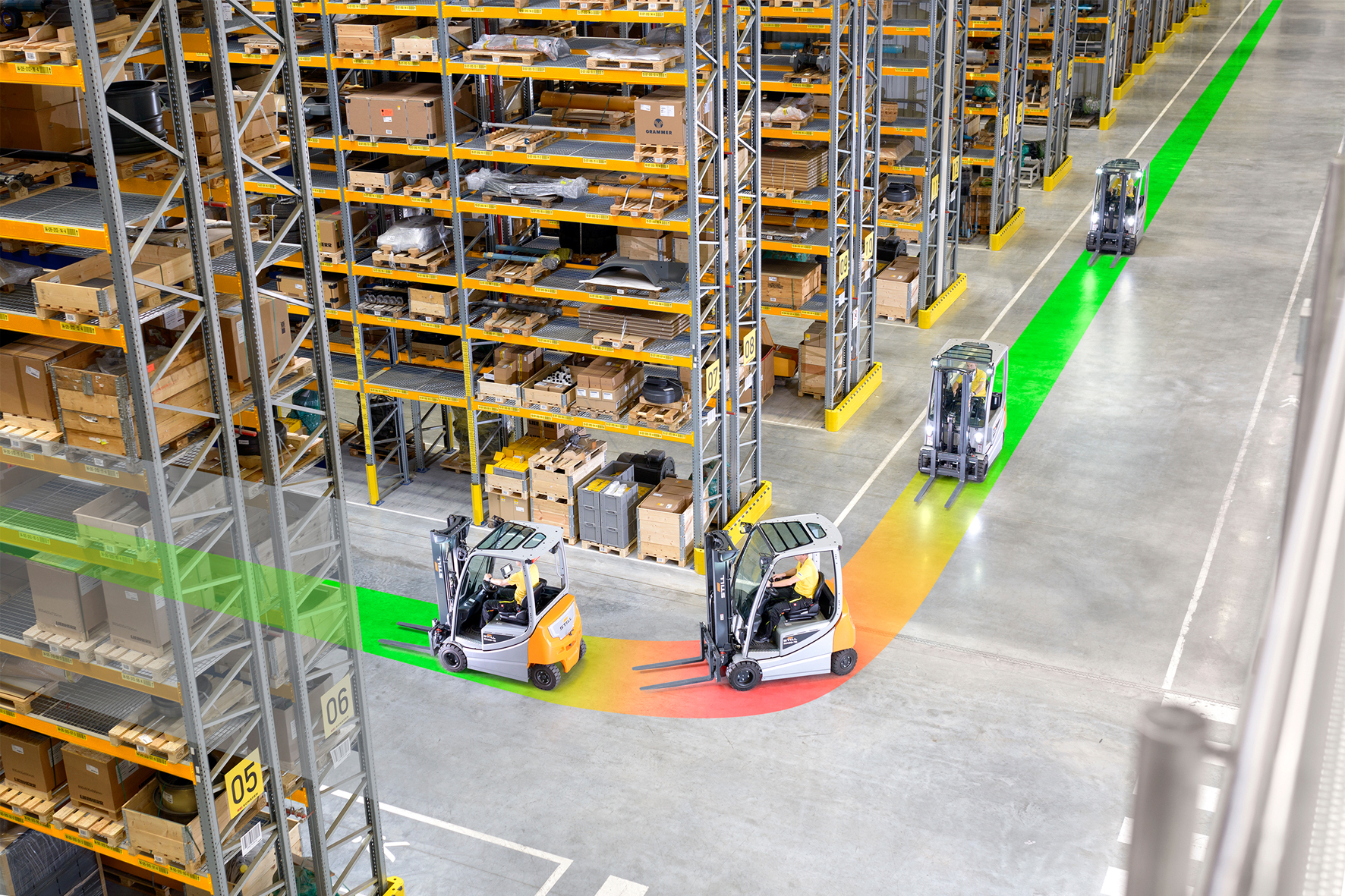
A proven solution for this is the STILL warning zone light. The optional lighting equipment acts as a visual warning for pedestrians and other drivers in the immediate vicinity by projecting luminous strips onto the side of the hall floor next to the vehicle. This makes the STILL warning zone light a good complement to the STILL Safety Light. This projects blue light dots onto the ground at a distance of approx. 5m in front of and behind the vehicle, which warn of the approaching vehicle and can thus prevent an imminent collision.

A big step towards completely avoiding collision damage to people and vehicles are radio-based safety systems.  “The basic principle of these systems is to establish bidirectional communication via radio waves between vehicles, pedestrians and stationary equipment even without visual contact. For this purpose, this equipment as well as all pedestrians and vehicles are equipped with radio modules,” explained Wrusch. With their help, vehicle control can take place automatically in danger zones, for example by reducing the speed or braking the vehicle if there is a risk of collision.

Tipping accidents

Whenever the forklift truck is in a hurry on its way to the next task, the top risk looms: a tipping accident. “These occur with heavy counterbalance trucks as well as with pallet trucks. The frequent cause is excessive cornering speed,” recounted Poppe.

However, STILL has a suitable remedy for this risk, too, in the form of Curve Speed Control. The steering angle-dependent speed limitation reduces a possible tipping accident by ensuring an appropriate cornering speed. This assistance function is available for various forklift trucks and warehouse equipment and automatically regulates the travel speed depending on the steering angle. This means that the driver does not have to worry about speed when cornering. The vehicle automatically brakes exactly to the point where the operator is safe and at the same time as fast as possible when cornering.

Tipping accidents also occur when drivers overestimate the load capacity of their equipment. If there is too much load on the front of the forks, the truck tips over into the racking. To prevent this from happening, STILL has developed the Dynamic Load Control assistance system. This system limits the lifting height in relation to the load weight and thus prevents the truck from being overloaded.

Wrusch: “The result can be described like this for counterbalance trucks: The higher and heavier the load, the slower the lift. A very effective assistance system that not only makes storage at great heights much easier, but also considerably safer.”

Another innovative system for accident prevention is the Active Load Stabilisation (ALS). An automatic compensation pulse quickly and effectively stops the mast vibrations that occur at great heights, which – in addition to the safety benefit – also reduces the waiting time at the racking up to 80%.

Conclusion

The vision of accident-free intralogistics seems within reach, as the results of the STILL webinar showed. In order to make this a reality, however, not only innovative technical solutions for trucks are needed, but also effective training concepts for warehouse employees to enable them to handle these trucks safely and responsibly.

This is also the purpose of the website specially created by STILL on the subject of safety: www.still.de/safety. Even if the ever more reliable technology can take many decisions away from the operating personnel: industrial trucks are – and will remain in the future – complex tools which safe operation must be properly learned.

Automation at your fingertips

Big Box Group has teamed up with ProGlove to make automation a more attractive, affordable and accessible proposition for small- and medium-size enterprises (SMEs), helping them identify better ways to save costs and improve efficiencies.

Jason Dyche, director of Big Box Automation – part of the Big Box Group – says the wearable and wireless scanning technology is an exciting and innovative solution for retail, ecommerce and third-party logistics (3PLs), as the importance of automation within the industries continues to grow.

He said: “We have one simple aim, and that’s to help our clients hit their targets and achieve their objectives. This partnership with ProGlove is just another way we can help them work faster, reduce dwell time and improve their return on investment (ROI).

“At Big Box Automation we use data to identify cost-saving opportunities. Picking, moving and sorting takes a varying amount of time depending on the technology you use, so we look at where the gaps are and provide solutions like ProGlove that can really speed up the process.”

ProGlove are barcode scanners designed to be mounted on the hand. They allow the wearer to get instant and reliable scans while leaving both hands free to focus on their job.

One client that has really benefited from the technology is ecommerce expert Rex Brown, which provides many of the world’s largest consumer goods businesses with best-in-class solutions for accessing marketplaces and social commerce channels.

Jason continues: “Rex Brown are picking 18% faster compared to the previous technology they were using. The accuracy of the scanner, which works from more angles and greater distances, is really helping them to pick faster, and more precisely, than before, especially when it comes to those hard-to-read barcodes.

“The data of the scan goes instantly to their existing mobile Enterprise Resource Planning (ERP) applications. Ultimately, it’s making life easier and less painful for them – and, crucially, it’s delivering on ROI.”

By observing the activity in warehouses, Big Box Automation is able to see where time and energy is being lost, and how its sister partnerships with Balyo and GreyOrange – in addition to ProGlove – can add value.

“Through our trusted partnerships, we have the ability to draw everything together and keep things simple and affordable for a scope of businesses, from SMEs up to blue chips,” adds Jason.

“Knowing what we have in the locker, we can collect data based on current activity and apply automation solutions to offer the best ROI to the client.

For the vast majority of businesses, automation has become a necessity to keep pace with the modern market.

Jason concludes: “We all know how technology has influenced our day-to-day lives through the emergence of online delivery, which is driven by automation and robotics. That same technology is now available across all business sectors.

“Almost every business is facing the same challenge, and what we’re trying to do is show – through our data analysis, ROI projections and partnerships – that automation and robotics can be a genuine solution for those businesses who perhaps thought it was beyond their budget.

“SMEs, 3PLs and ecommerce most certainly have a seat at the automation table. Being proactive today means being less reactive tomorrow.”

Subscribe

Get notified about New Episodes of our Podcast, New Magazine Issues and stay updated with our Weekly Newsletter.