WMS: What does and doesn’t work in the field

Most of you will be familiar with the term “30,000 ft. view” when describing a business concept that looks through a wider lens at the bigger picture. This is usually where we want to begin when starting our research on a particular topic that we’re still learning about. However, after taking in that sweeping vista from your business-class window seat for a while, you’d like to get on the ground and see what you’ve been looking at in more detail. Andrey Kazachkov, Head of Warehouse Automation at premier custom software development provider First Line Software, helps us to do just that.

Andrey Kazachkov, Head of Warehouse Automation at premier custom software development provider First Line Software

The view today will be from ground level looking at a few specific examples of WMS and the how’s and why’s of successful implementations, and some issues that could have been avoided in others. Hopefully by seeing what works and learning from what others should have done, you can get a better view regarding what’s needed to get your own Warehouse Management Solution off the ground.

Let’s begin with a couple of WMS integration mis-steps, and how they could have been avoided.

Losing Focus

Company X has a complex warehousing system where goods are continually moved from one storage facility to another. A technical brief was written up by Company X on how it wanted to implement automation for a more efficient flow of its goods within the system. As part of the brief, a simulation was created that (in-part) identified where their product was at various given points throughout the journey between the facilities.

It should be noted here that creating virtual simulations that actually prove how existing hardware, new equipment, and software can work together with a relatively high degree of accuracy is extremely complex and time-consuming. The simple term for any realistic simulation is: Very Expensive. However, it’s very useful as it’s far cheaper than buying and putting all of the actual hardware and software together and finding out your multi-million-euro investment does not work as it’s supposed to.

Here, Company X did the right thing and created the model. But, as the entire technical brief was reviewed by the vendors implementing the project, it became clear the model was not realistic for executing in the real world. The simulation was based not on what was possible for goods movement within the warehouse system, but what was desired. The desired process should have been tried manually several times to see if it was viable before spending time and money running a costly simulation in the technical brief. As the saying goes, “To properly landscape a garden, you must first walk the garden – only then, can you lay a path”.

Company Y is an international organisation that has warehouses in Europe and North America.

An automated WMS was already implemented and up and running in Europe. Company Y wanted to duplicate that successful warehouse in North America. It was thought that much of the development costs have already been absorbed in Europe, and that a “cut-and-paste” approach might save money when applying it to the warehouse being updated in North America.

This strategy would prove somewhat costly, as the WMS integration in North America should have been treated as an entirely separate project from Europe (or any other location for that matter). The majority of the technical brief was carried over to the West from the East and much of the development process was assumed to be relatively simple since it had already been done before.

Subsequently, the customer did not pay as close attention during the pre-production process to various decisions being made as it should have. The vendor ordered and implemented the systems and interfaces as were specified in the technical brief. As can be imagined, during the testing phase (not long before the updated warehouse was to go live) one of several problems became apparent; one of which was the system’s graphic interfaces did not make sense to the North American site. Various costly decisions had to be made on-the-fly before everything could work together as it should have.

Lessons Learned

There are a couple of points to be learned from these companies’ mis-steps. Specific to Company Y’s case, you need to know the equipment standards that are applicable in a given geographic area or country. Even equipment from the same manufacturer can be location-specific, and in some cases may not be compatible with your existing hardware or location.

Ultimately, the most important lesson to be learned by Company X and Y is this: You, the customer, need to control what is a very complex development process at all stages, and review your requirements as early and as often as possible. Close cooperation with the implementing vendor is key (preferably there is one vendor for both software and hardware). Both of you need to agree on the specifications of all the systems.

Ideally you will have no middlemen in the process. Direct communication between you and your software/hardware implementer will ensure the least number of problems before a successful WMS launch.

The next two companies faced some very challenging situations. Here’s how they dealt with them…

Hyper-Focused

A major international automobile manufacturer needed to update its legacy analog-to-digital data systems, and integrate new hardware with existing equipment in one of its central warehouses. As previously mentioned, simulators are invaluable here so they can imitate the legacy hardware to make sure it can integrate smoothly with the newly updated hardware and software choices. However, in this case, acquiring the raw data to feed into the simulator to make it as realistic as possible was a major challenge.

Observation and analysation of the system’s prior network traffic, data exchanges, and equipment movements were the first step. Unfortunately, in this first step there was a notable lack of existing documentation. It became necessary to create some of the raw data from scratch before a simulator could be developed.

Everything from highly sophisticated Programable Logic Controllers to reams of paper media were examined to understand the complex data streams from different systems. Web cameras were set up to monitor and record what was happening in the warehouse in real-time. This was a huge amount of effort to simply understand how the customer’s system processes its data before it could be used to create simulators.

All of this work had to be done just to determine the feasibility of integrating the desired new systems with the legacy systems. In the end, all of the front-end toil paid off as the legacy systems were smoothly integrated with the new, and the customer was extremely pleased with a modern, updated central warehouse.

Lastly, we’ll look at a heavy-equipment engineering company headquartered in Europe. Large equipment production is carried out at its 850,000 sq m plant. There was no dedicated storage area at its facility – the parts, from small items to giant assemblies weighing several tonnes, were manufactured in various workshops and then stored throughout the plant.

Therein lay the complexity of automating such a hybrid facility, as company representatives explained. Prior to the project, the stored parts were inventoried “on paper”. As a result, company management decided to automate the storage area of the plant by combining disparate storage racks into the general warehouse environment, and automate the loading and shipping processes.

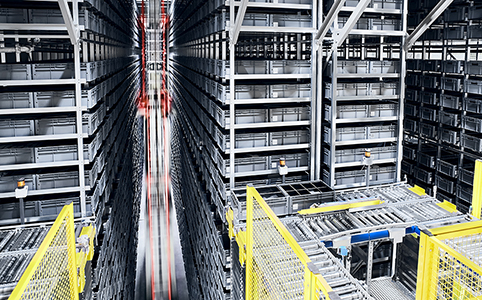
The German group viastore SYSTEMS Gmbh, with viadat WMS was chosen as the supplier. The set-up and customisation work were carried out by First Line Software, the official partner of viastore SYSTEMS. Project realisation took six months. During this time, the viadat WMS system was deployed on-location and integrated with the company’s own infrastructure. The project allowed the plant to get rid of paper records and streamline the process of unloading, while solving the problem of temporary storage.

The whole system is integrated so that the delivery of parts to the assembly shop originates from one place. What makes this successful WMS project so unique is the fact that it’s not strictly speaking a warehouse. The automation here is integrated in an incredibly dynamic, heavy manufacturing, and assembly environment.

The Take-Away

How do a major automobile manufacturer and a heavy-equipment company’s success stories apply to your future WMS needs? You may see two companies with large budgets that will allow them to overcome any obstacle when automating their respective processes. However, the underlying strategies to achieve their goals are relevant to you and your own WMS plans.

In the case of the automotive company, it did not skip any preliminary steps and was actively collaborating with the vendor to ensure absolute accuracy in the data it was collecting. This active communication allowed for an incredibly detailed Technical Brief to be created, which in turn made the actual hardware and software installation go smoothly.

The definitive smart play by the heavy-equipment engineering company was to utilise the “one-vendor” concept. This ensured smooth automation integration, and easier future updating and servicing of both software and hardware installations.

Not every WMS developer vendor can claim experience in these processes. Take your time in looking for a vendor with a similar attitude towards business and corporate culture as your own.

Perhaps there are greater lessons to be learned by making mistakes. But when it comes to bringing a Warehouse Management Solution to your business, take the right steps and allow your company to be a class example in how to do it right the first time.

CLICK HERE FOR MORE INFORMATION
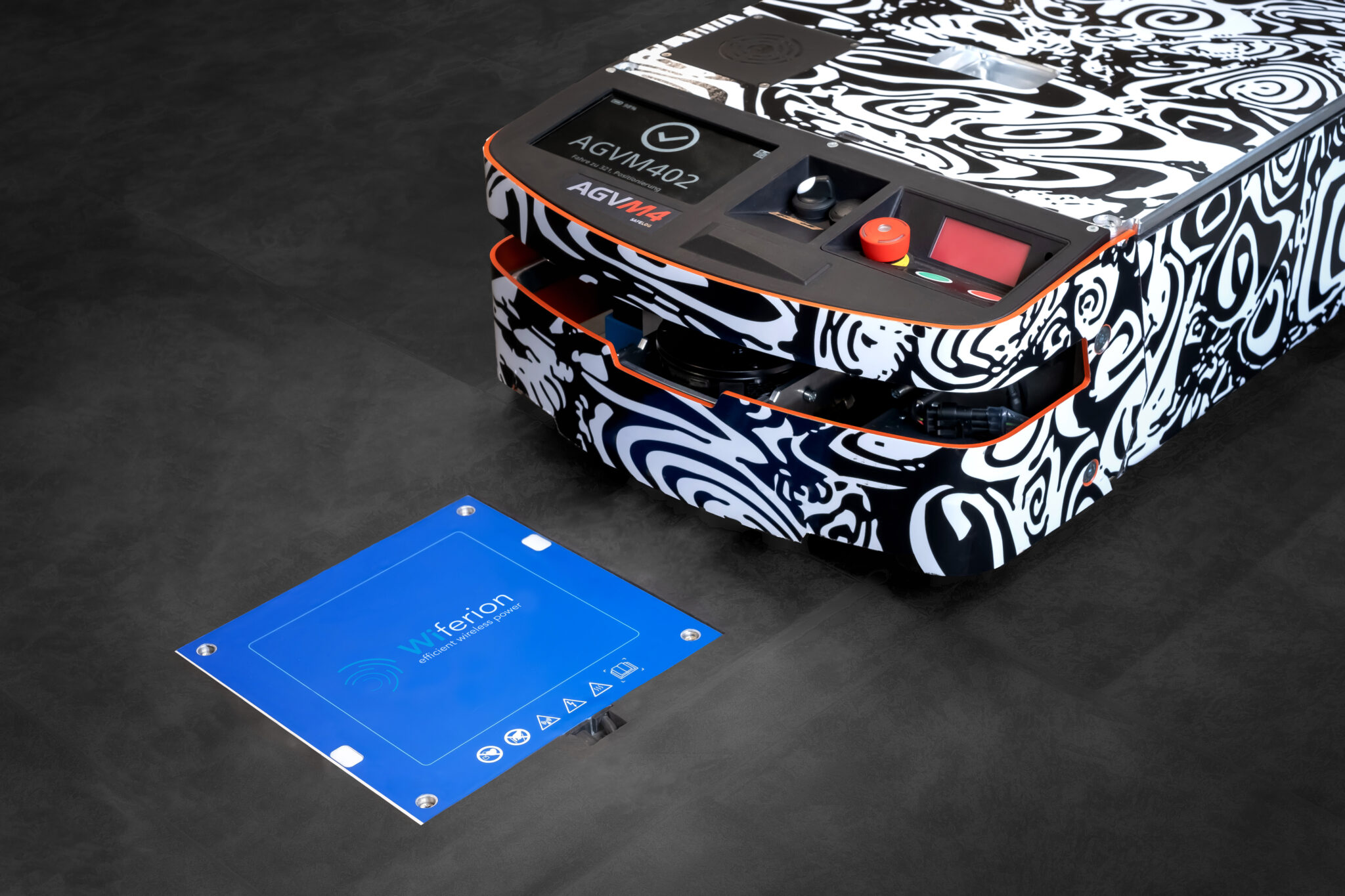
 

SAFELOG and Wiferion partner to improve AGV performance

Technology companies SAFELOG and Wiferion have become development partners to achieve the goal of jointly increasing the performance of automated guided vehicles (AGVs) and enabling new application concepts.

The cooperation involves the intralogistics expert SAFELOG equipping all new AGVs with Wiferion’s inductive point charging systems as standard in the future. In addition, the energy specialists from Wiferion will consistently further develop their wireless charging technology based on SAFELOG’s market requirements.

Easy integration, flexibility and maximum availability – this is the claim with which SAFELOG develops its automated guided vehicles. The company is considered one of the leading producers of flexible and scalable AGV models for internal transport tasks in production and intralogistics. The cooperation with Wiferion heralds the next stage in SAFELOG’s innovation cycle. With the advancing level of automation, the demands on AGVs and the periphery are also growing.

“In the future, inductive charging technology will play a key role in helping our customers increase their productivity in a process-safe manner,” explains SAFELOG Managing Director Mathias Behounek. “Our common goal is to gain further market share by bundling our competencies in the areas of vehicle development and energy supply with an intelligent and user-oriented automation solution.”

Inductive power supply integrated as standard

Inductive charging technology is integrated as standard in all new-generation SAFELOG AGVs. The energy supply is fully automated during operation without interrupting the material flow. Contamination of the working environment through abrasion, as occurs with sliding contacts, is eliminated. Process reliability is increased.

Like all SAFELOG AGVs, the new AGV models will also be equipped with agent-based control and will communicate with each other in the swarm as well as with the surrounding production and logistics facilities. This makes a higher-level control station superfluous.

As part of the technology partnership, Wiferion will continuously develop its inductive energy systems. “As a major supplier in the automotive and industrial sectors, SAFELOG knows exactly where tomorrow’s production requirements are heading. We want to respond to these signals from the market at an early stage and develop solutions that meet requirements,” says Julian Seume, CMO and Head of Sales at Wiferion.

Geek+ improves Siemens’ storage efficiency by 250%

Geek+, a global AMR leader, has successfully deployed AMRs in Siemens Switchgear Shanghai’s factory. By implementing a fully automated and flexible system, combining four AI-driven robotics solutions, the world-leading manufacturer has committed to provide better service to its customers and join industry 4.0.

Siemens Switchgear Shanghai started to consider automation after the company experienced a surge in demand for customised equipment, putting a strain on an already complex production process subject to inefficient storage of raw materials, labour-intensive material handling, and low visibility of the production process. After evaluating several automation solutions, the company chose the Geek+ solution to realise a more dynamic and efficient production process.

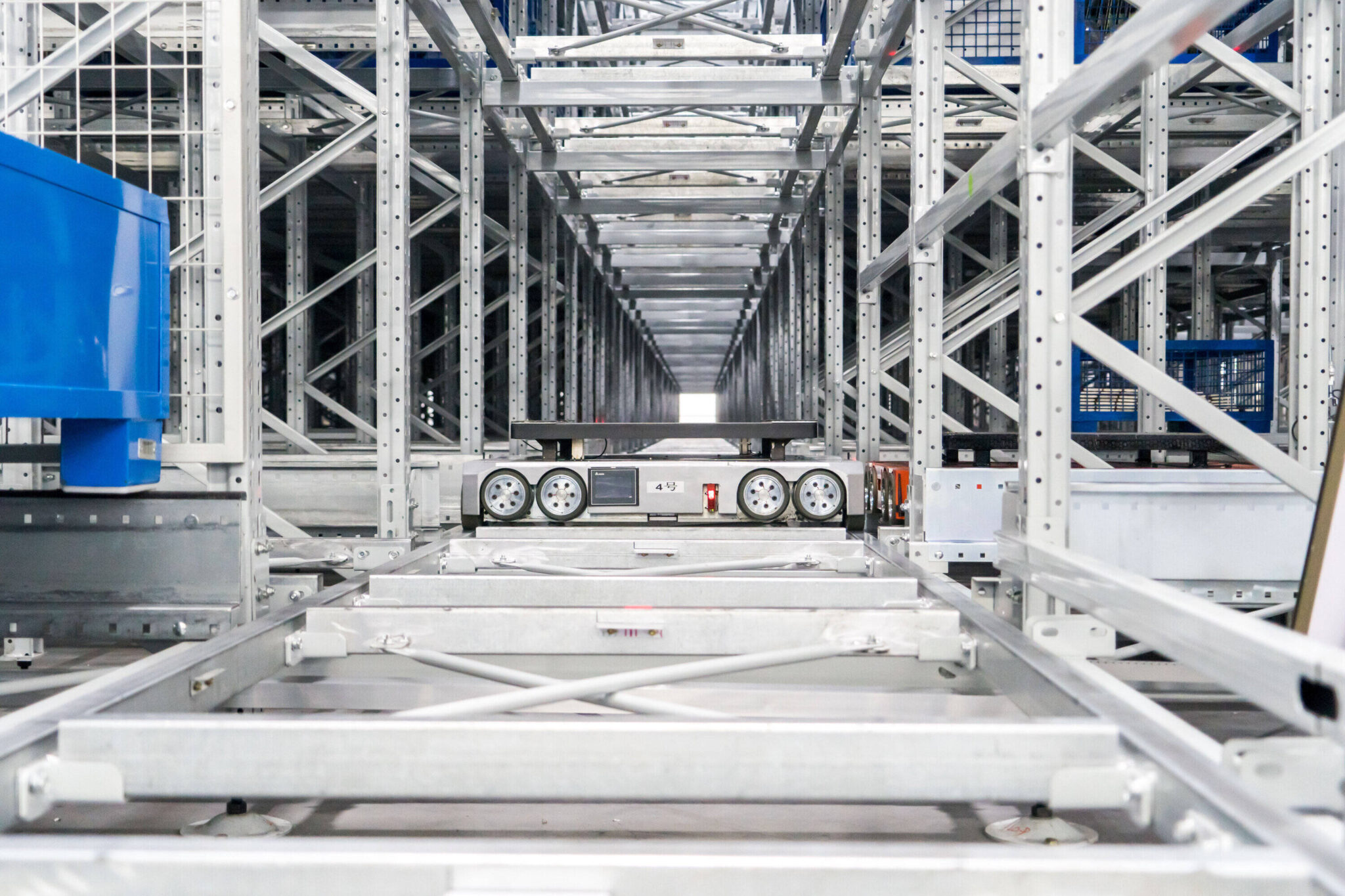
Through the seamless collaboration of four types of AI-driven logistics robots, including P800 Goods-to-Person robot, C200S Bin-to-Person robot, four-way shuttle, and heavy-load handling robot M1000, Geek+ has consolidated the process for receiving raw materials, quality checking, storing, outbound collection, and transportation of raw materials from storage to the production line. With 2-3 times more storage capacity, 99.99% accurate operations, 2.5 times storing efficiency, outbound collection process improved by 2.15 times, and 30% less manual labour needed, Geek+ has helped the customer streamline operations and realise an intelligent upgrade.

Intelligent robots can be easily integrated with other equipment and existing infrastructure, allowing a more dynamic installation. This has allowed the manufacturer to secure record-high production levels throughout the implementation process. Additionally, intelligent robots enable real-time visualisation of inventory as well as the unification of material information and the physical logistics scenarios, making it easier to follow, control, and adjust the manufacturing process.

Flexibility also implies a more responsive system that, powered by intelligent algorithms and heat map software technology, will adjust the logistics operations daily according to the production plan, for maximum efficiency.

Yong Zheng, CEO and founder of Geek+, says: “We are very happy that Siemens Switchgear Shanghai has chosen our solutions and look forward to continuing to work together to improve the production process. Since the life-cycle of products is becoming shorter and shorter while requirements for more customisation continue to rise, there’s a general need for more flexibility in industrial settings.

“Autonomous mobile robots represent a flexible automation technology that allows companies to adjust to market changes and realise rapid capacity expansion. Compared with traditional automation solutions, robot deployment is faster.”

By automating using Geek+‘s wide range of robotics hardware, Siemens Switchgear Shanghai has committed to providing better customer service and a safer environment for warehouse employees. Through the integration of big data and the opportunity to fine-tune the system, the manufacturer will continue to evolve and compete globally as we move towards industry 4.0.

New Reflex trucks feature proven innovation

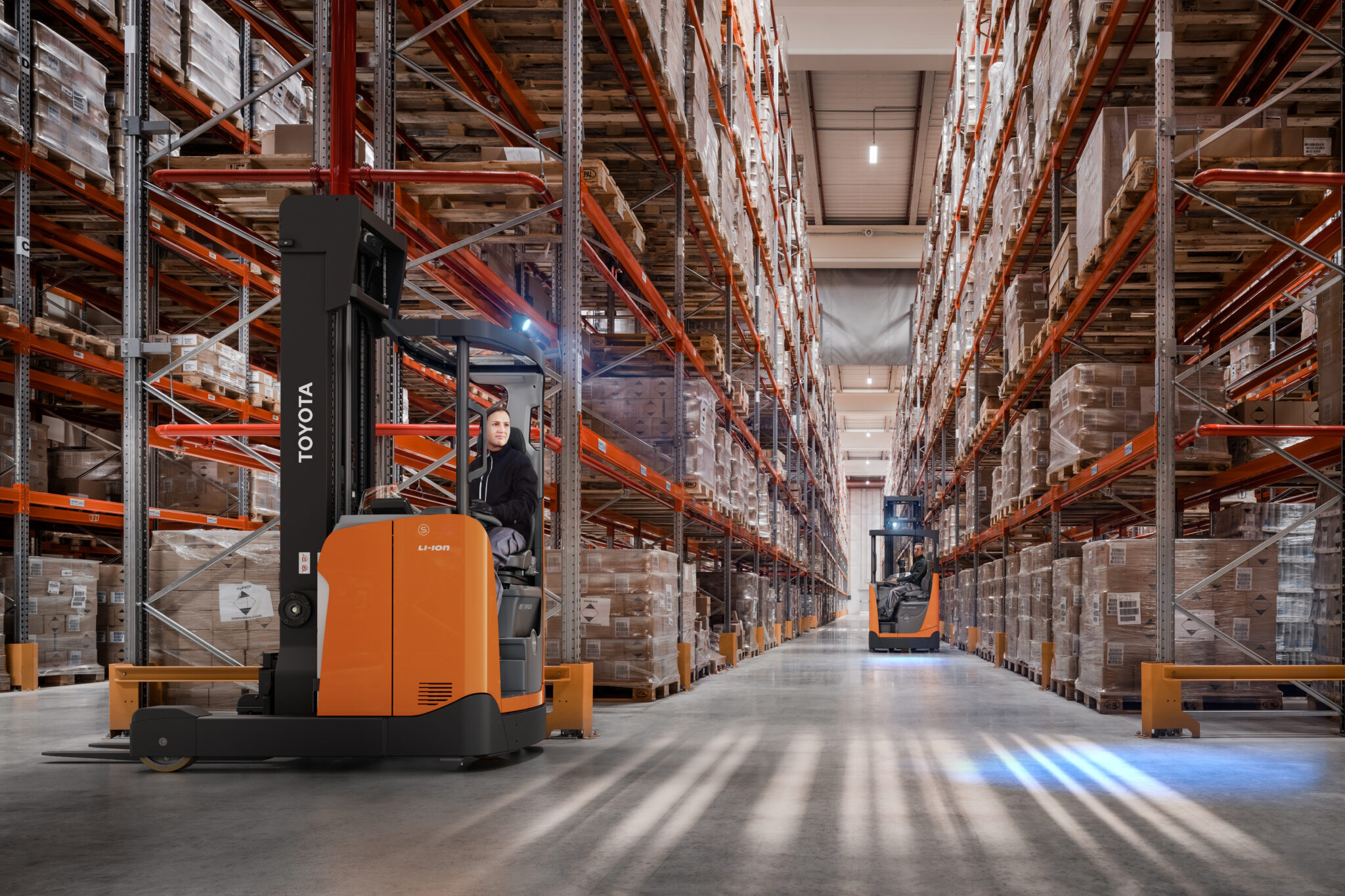
Toyota Material Handling Europe is launching the first three models in the new BT Reflex family: the high-performance R-series model, the E-series with unique tilting cab and the flexible O-series for inside and outside use.

The updated BT Reflex trucks will set new standards in terms of safety, energy efficiency and ergonomics. The innovative improvements include an updated ergonomic operator compartment with intuitive controls and an interactive colour touchscreen. All models come with intelligent lithium-ion energy packs, and can be easily connected to I_Site from Toyota.

Reach trucks from Toyota have been class-leading products with innovative features over the past 25 years. Unique tilting cab, transitional lift control, 360° steering, to name just a few. The new generation of reach trucks continues in the same direction, introducing new innovative features focusing in four key areas: intelligent energy, intuitive and interactive driver experience as well as providing more insight into material handling operations.

“With the theme ‘proven innovation’ we not only highlight the importance of our class-leading hero product, but also the fact that we aim to keep investing in innovation to continue to answer our customers’ needs, according to our value Kaizen (continuous improvement). With this product, we are reaching new levels in terms of safety, ergonomics and energy efficiency – and we will continue to focus on bringing customers sustainable and efficient material handling solutions in the future,” says José María Gener, Vice President Sales & Marketing, Toyota Material Handling Europe.

Intelligent energy packs

The new BT Reflex has been developed with three requirements in mind: cost saving, environment- friendliness and energy efficiency. Toyota Material Handling is offering a choice of three intelligent energy packs to fit customers’ application. They are based on Toyota’s own modular lithium-ion battery solutions to give maximum flexibility in operations.

Good charging disciplines can enable the new reach trucks with even the smallest energy pack to work around the clock. Providing businesses with high-quality, cost-effective and safe ways to power material handling equipment is of foremost importance, while keeping the environmental impact to a minimum.

Driver experience has been further enhanced on the new BT Reflex range with a redesigned operator compartment. It offers new ergonomic features and brings safety and performance to the next level.

The new cabin allows for intuitive operation, in all respects. The enhancements include a new steering unit with palm support for optimal driver feeling as well as a new main control console on the right-hand side. Driver comfort has not been forgotten on this new model as it comes with a high-quality air suspension seat as option.

Another noticeable addition to the range is the new large colour touchscreen display offering even greater levels of intuitive control as well as interactivity. The new touchscreen provides a clear and easy way to read critical information as well as direct access to programmable functions to guarantee a high level of performance.

Insight into your operation with I_Site

All reach trucks from Toyota are connected smart trucks, factory-fitted with integrated telematics and are easy to connect with I_Site. The driver interface has been improved, including I_Site features such as Smart Access to allow only authorised drivers to start the machine, but also with Pre-Operational Check to make sure an automated check is done by the driver before every shift.  Connected trucks with I_Site from Toyota allow users to measure and improve for higher safety and overall performance while achieving cost savings.

The new Toyota BT Reflex range features capacities of 1.4 up to 2.5 tonnes and lift heights up to 13 metres.  High performance, exceptional and unique features allow for maximum productivity without compromising on safety, energy consumption and ergonomics and this, even in the most high-intensive operations. Later this year, two brand new models will be added to the reach truck family; a cold store cab and a narrow chassis truck, the N-series.

Study raises hopes for increasing digitalisation

The latest trend report from the optimisation specialist INFORM reveals a positive development in internal logistics in German production companies. For a long time, they did not have technologically advanced or optimised in-plant logistics processes in place, but today, digitalisation seems to be a priority for specialists. However, the actual implementation is still slow.

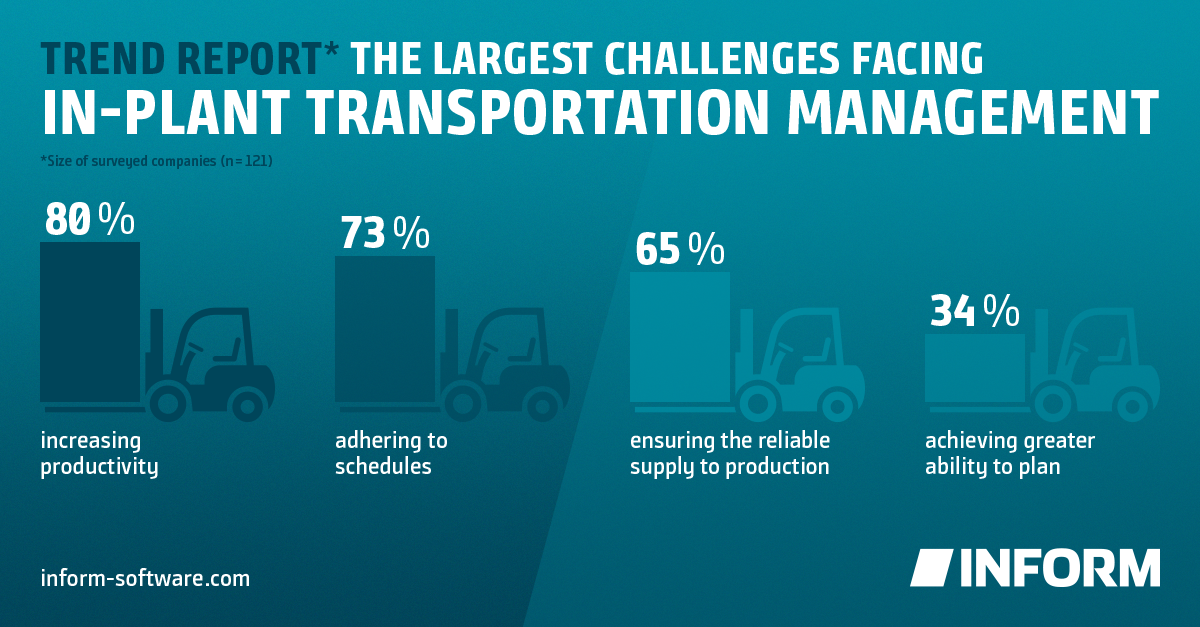
“76% of the 121 surveyed specialists and executives find in-plant transport jobs relevant or very relevant to the overall success of the company,” says Torsten Inkmann, Director of Industrial Logistics at INFORM. “Only 10% completely agreed that production is the core of the company and logistics are only a necessary secondary function. They consider increasing productivity (80%), adhering to schedules (73%) and ensuring the reliable supply to production (65%) as the largest challenges.

“Production in many industries is becoming ever more flexible, with greater options, and at the same time, increasing demands on deadlines for supply capacity. These developments also require transport that is more flexible and thus real time control over the ability to plan and react. Digitisation offers answers to exactly these questions.“

The key results of the study:

  • Digitalisation projects: The companies surveyed identified the following as the most critical solution strategies over the short to medium term: JIT/JIS supply (48%), driverless transport system (DTS) implementation, (47%), and transport control system implementation (42%).
  • On-site transports: More than 100 transport orders per day must be managed by 71.5% of the surveyed companies. They are faced with a complex transport planning situation. Typically, stackers (95%) are still used for transport in these cases, followed by tugger trains and towing vehicles (34% each) and lastly DTSs (25%).
  • Logistics-IT: Only half of the companies see themselves in a position to plan internal transports in advance. Yet, most companies use only warehouse management and ERP systems for transport control and material flow tracking. At least 80% of those surveyed do not use technologies with intelligent functions such as real time management, algorithmic optimisation, or planning against tangible limited capacities.
  • Spiraling costs: Yet two-thirds of companies never record the costs they incur for individual transport jobs or they simply assign them to a general cost centre. A mere 7% of those surveyed are able to provide information about the costs of individual transport jobs when asked.
  • Cloud systems: Half of the companies surveyed are open to cloud services for in-plant transportation management; however only 5% of the surveyed companies currently use these types of systems.
  • Compared to the results of a similar study conducted by INFORM in 2013, for example the percentage of companies relying on DTSs (25%) is almost twice. “It appears to me that the perspective has changed,“ watches Inkmann. Nevertheless, the study shows that many digitisation projects are still in their infancy.

The study surveyed 121 specialists and executives at German companies, primarily employed in the areas of logistics and supply chain management. They participated by completing an online questionnaire from the end of October 2020 until the beginning of January 2021. Three quarters of the companies that participated in the study are production companies from various industries, and one quarter of the participants are trading companies.

DOWNLOAD the study here: https://www.inform-software.com/logistics/transport-control-system/study

Hyster to discuss ‘Total Port Electrification’ at TOC

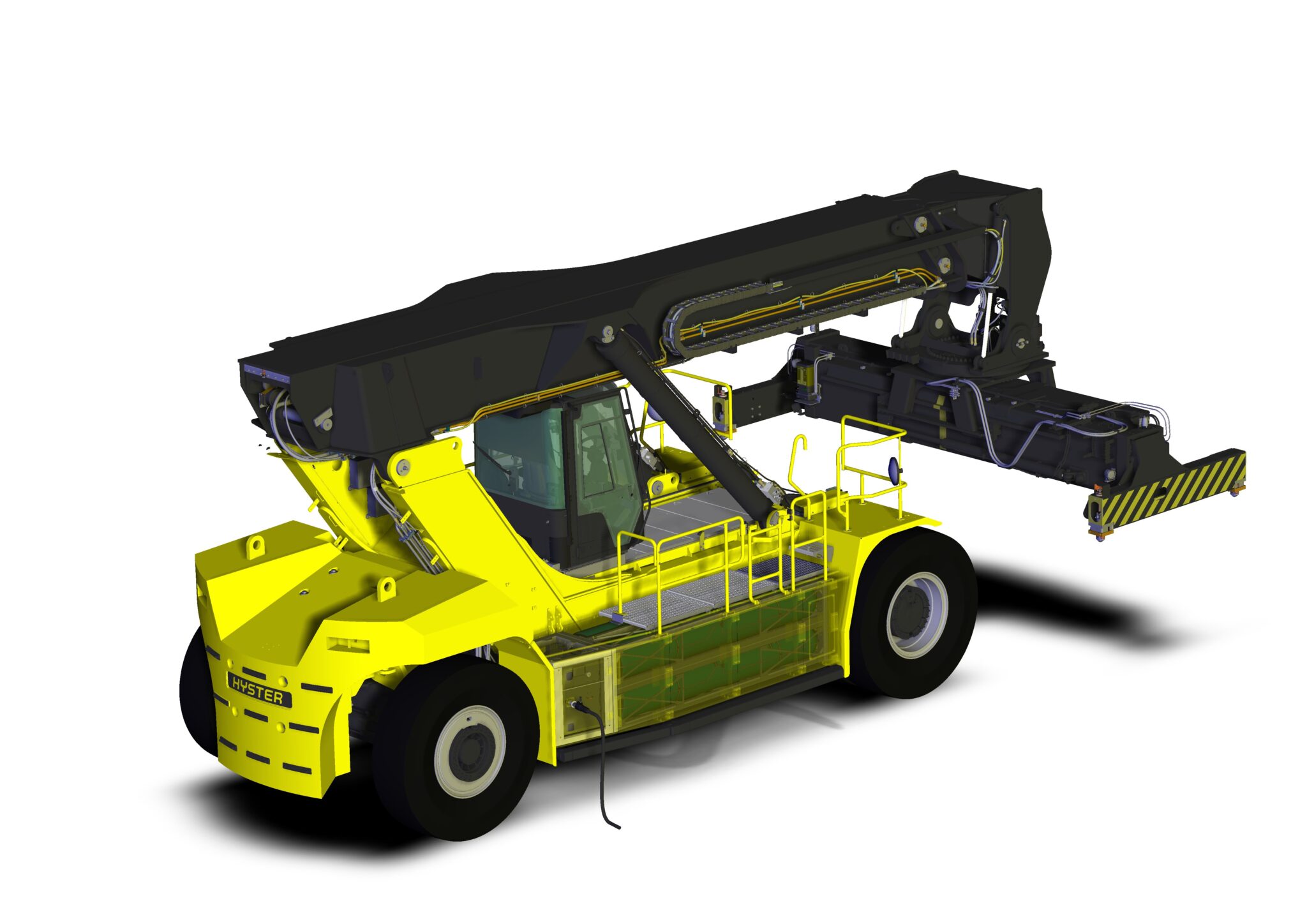
Hydrogen and lithium-ion power may move ports closer to total electrification, says Hyster Europe, as it prepares to update on its zero-emission Container Handler and ReachStacker projects at the TOC Global Showcase virtual event.

“For several years, Hyster has been working on unique zero-emissions container handling equipment for ports that incorporate lithium-ion battery and fuel cell technology,” says Willem Nieuwland, Big Truck Program Manager for Hyster. “However, we are now ‘extending the family’ and bringing these benefits to more equipment types to support total green operations from ship to store.”

Hyster recently revealed it was entering a partnership with Capacity Trucks to jointly develop electric, hydrogen, and automation-ready terminal tractors. This addresses growing demand for environmentally sustainable terminal tractor solutions in port, terminal, and distribution centre markets, with initial prototypes expected to be available in 2021 for testing in port applications.

The collaboration brings together Capacity’s robust terminal truck platform with unique Hyster lift truck electric powertrain technology for proven reliability and hydrogen fuel cells.  The Hyster solution in development has lithium-ion batteries and hydrogen fuel cell power integral to the design, rather than as a retro-fit option. It is expected that the final solution will be produced on a large scale, at an affordable price to help ports to reach their environmental goals.

“Importantly, the opportunities for hydrogen fuel cells are a key factor in this development, as this is a particularly interesting area for ports and something we’ve been progressing since 2017,” says Willem. “Hydrogen has the potential to provide the renewable energy model that is most attractive to environmentally driven businesses, without some of the complexities of electric vehicles – such as grid power availability for charging.

“What’s more, this is an area where funding and grants are available, making it feasible for ports wishing to explore zero-emissions equipment options,” he continues.

Hyster continues to develop Container Handlers and ReachStackers powered by lithium-ion batteries, either alone or combined with a fuel-cell range extender, as part of a number of funded projects for end users in the Port of Los Angeles and Port of Valencia.

However, in the past year, Hyster has also launched a number of product innovations that are available now to support zero-emissions handling with high productivity portside.

The new Hyster J7.0–9.0XNL electric forklift series with fully integrated lithium-ion batteries, carries up to nine tonnes, and gives port operations the benefits of comparable diesel engine performance, and rapid opportunity charging. These new trucks are designed with the endurance to support multi-shift, demanding operations, giving a credible alternative to an IC truck, thanks to the unique combination of a lithium-ion battery, a high-voltage drive system, and the use of multi-phase permanent magnetic motors.

Meanwhile portside stores may benefit from the Hyster PC1.5 ultra-compact lithium-ion pallet truck, which can deliver greater efficiency than a hand pallet truck, but without complex maintenance requirements. It is designed to be tough and reliable enough to stand-up to daily operational challenges, but with a low cost of ownership. When the lithium-ion battery needs replacing, operators get a re-charge alert and, in just six seconds, can exchange it, keeping the operation running with minimal interruption.

On Thursday 17th June 2021, from 10.00 – 11.00, Willem Nieuwland will discuss more around the total electrification of ports and the latest updates around zero-emissions Hyster Big Truck developments as part of the ‘Spotlight on the Green Transition’ session at the online TOC Global Showcase. Register to attend at www.toc-global-showcase.com.

UK Paper Hub secures SCA as a major new customer

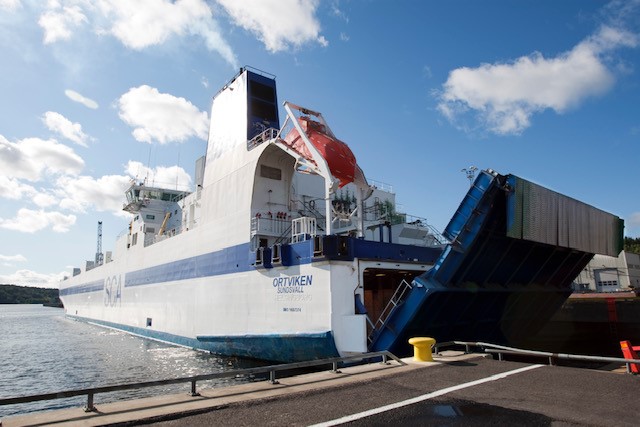
SCA, Europe’s largest private forest owner and producer of wood products, packaging paper, pulp and renewable energy, will return on a long-term deal to market leading UK Paper Hub located at London’s major port, the Port of Tilbury. The 50-acre facility on the Thames will become SCA’s primary UK logistics hub for the import of packaging materials to supply its UK customers.

Sweden-based SCA is a major European logistics supplier – calling at terminals including Umea, Sundsvall, Helsingborg, Oxelösund, Malmo, Iggesund and Kiel – and will see substantial volumes of packaging paper and other third-party cargoes regularly transported by its own Ro-Ro vessels from Sweden to the UK Paper Hubs’ dedicated berths.

SCA’s packaging materials will be used by customers in the UK for ecommerce, industrial and food packaging as well as many other retail packaging solutions – all contributing to the UK’s growing demand for renewable packaging materials.

Helping to keep global and domestic markets moving, UK Paper Hub will also assist SCA’s circular supply chain with the export of RDF (Refuse Derived Fuel), supporting circular economy and energy from waste solutions across Sweden.

Commenting on the new contract for Tilbury, Paul Dale, Asset and Site Director, said: “This is exciting news for the UK Paper Hub as we secure another market leader in the paper, packaging and forest products market. We warmly welcome SCA back to Tilbury and look forward to working collaboratively to ensure a world class, flexible, end to end service for their UK customers.

“As the paper and forest product port for the future, we are focussing on making a real contribution to the environment and net zero targets by reducing all forms of waste within the paper and forest products supply chain. Through our location and connections, we offer unrivalled opportunities at our all-in-one facility.”

Steve Harley, Managing Director for SCA UK Logistics, added: “2022 will mark our return to the Port of Tilbury. The move renews a long-standing relationship between SCA and Forth Ports which spans half a century. Ensuring that the logistics chain is as efficient as possible is our utmost concern and our Tilbury operation will align our shipping, warehousing and distribution activities with our customers’ geographical spread and service requirements. We look forward to a productive cooperation with the Forth Ports team.”

UK Paper Hub is the collective brand covering Tilbury’s handling, storage and distribution services for paper and related forest products (including graphical papers and newsprint, packaging paper and board, tissue and hygiene products, and pulp). The brand brings together the expertise and facilities of the paper handling terminals, previously known as Enterprise Distribution Centre (EDC) and London Paper Terminal (LPT), which the port owns and operates.

The UK Paper Hub can handle paper and forest products in any form, any quantity using any method of shipping or distribution, both short sea and deep sea. The Hub has access to a nationwide haulage network and connects the UK’s domestic industries with markets across the globe. Tilbury’s newest port, Tilbury2, opened in May 2020 and along with London Container Terminal, offers the Hub further connections and capacity for customers.


Swain plans distribution facility at London Gateway

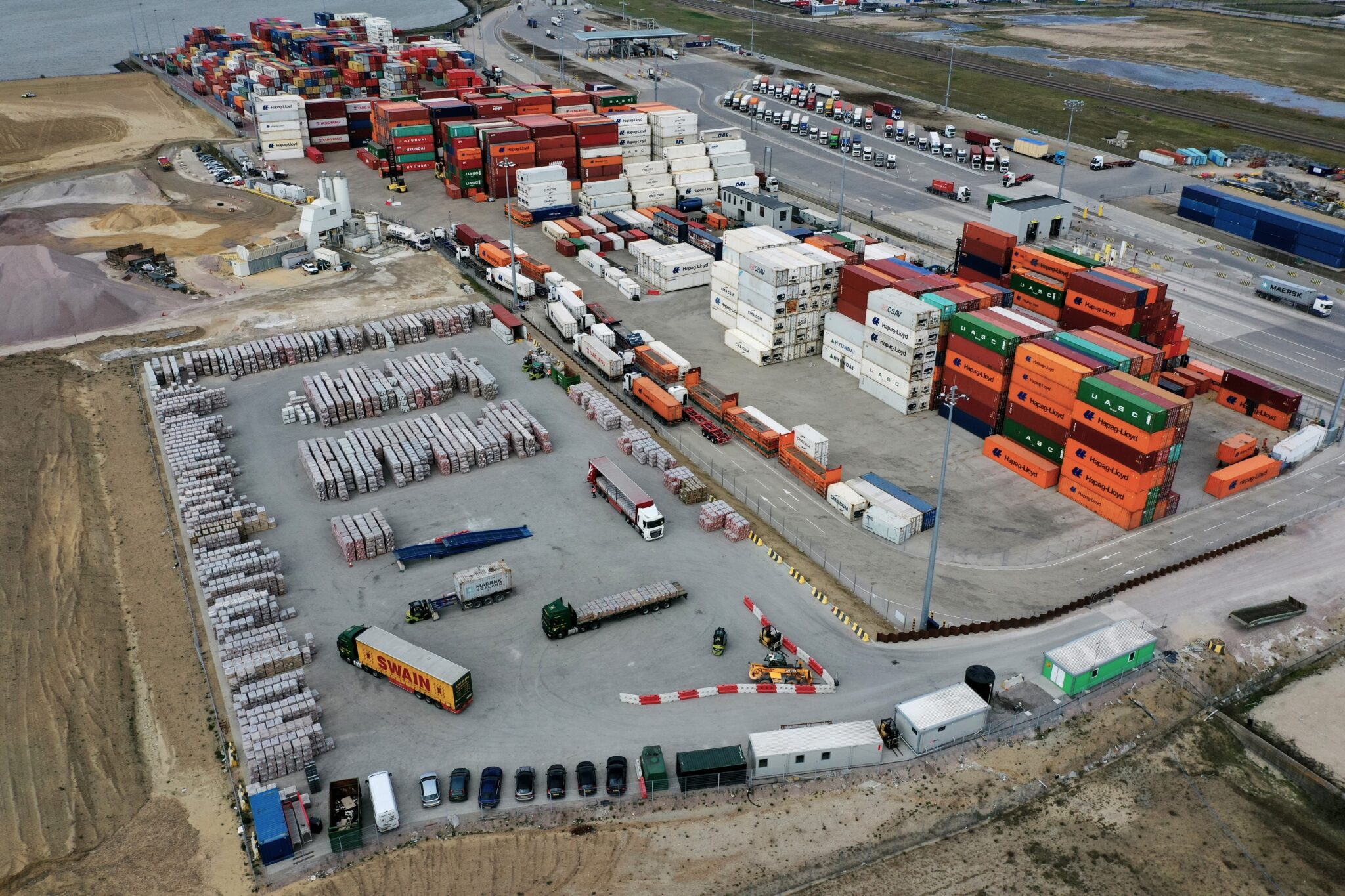
DP World has signed an agreement with the leading road transport operator Swain Group for a 2.25-acre distribution facility at its London Gateway freight and logistics hub.

Under the three-year agreement, Swain Group will use the quayside site for the temporary storage of imported construction materials such as stone and ‘next-generation’ offsite manufacturing to construct buildings faster, safer and to a higher quality before their onward distribution to the end customer by lorry. The location, 200 yards from London Gateway’s berth 7, will deliver significant cost and time savings.

Along with the Port of Tilbury and Ford’s Dagenham plant, London Gateway will form Thames Freeport after being awarded freeport status by the Government earlier this year, further cementing its critical role in the UK’s international supply chain.

Ernst Schulze, Chief Executive of DP World in the UK, said: “I am delighted that Swain Group have chosen to strengthen further their longstanding relationship with London Gateway. At DP World we think ahead and create smarter trade solutions and this lease is an outstanding example of the benefits of port-centric logistics.

“We aim to be a partner in our customers’ business success, providing fast, reliable and flexible links to international supply chains and markets. London Gateway has almost 10 million square feet of land with planning consent at the port and adjacent logistics park and I would urge companies looking to expand to contact us to find out more about how they could benefit from being part of a freeport.”

Matthew Deer, Managing Director at Swain Group, said: “We handle over 100,000 tons of building materials a year on ships arriving at London Gateway and expect this figure to continue to grow as construction in London and the South East picks up following the pandemic.

“On arrival at the berth DP World will shunt inbound containers to our facility, where our team will unpack the stone product, temporarily store it where necessary, and then assemble outbound orders for transport via our own fleet to destinations across Britain such as garden centres and builders’ merchants. This integration of the supply chain will generate cost and time efficiencies both for us and our customers.”

Founded in 1918, Swain Group is a fifth-generation family-run business which has grown to become one of the largest family-owned road transport operators in Britain. It has played a key supporting role in the development of London Gateway, with its heavy haulage division delivering machinery for the building of the port 10 years ago.

Norbord automates labelling of pallets

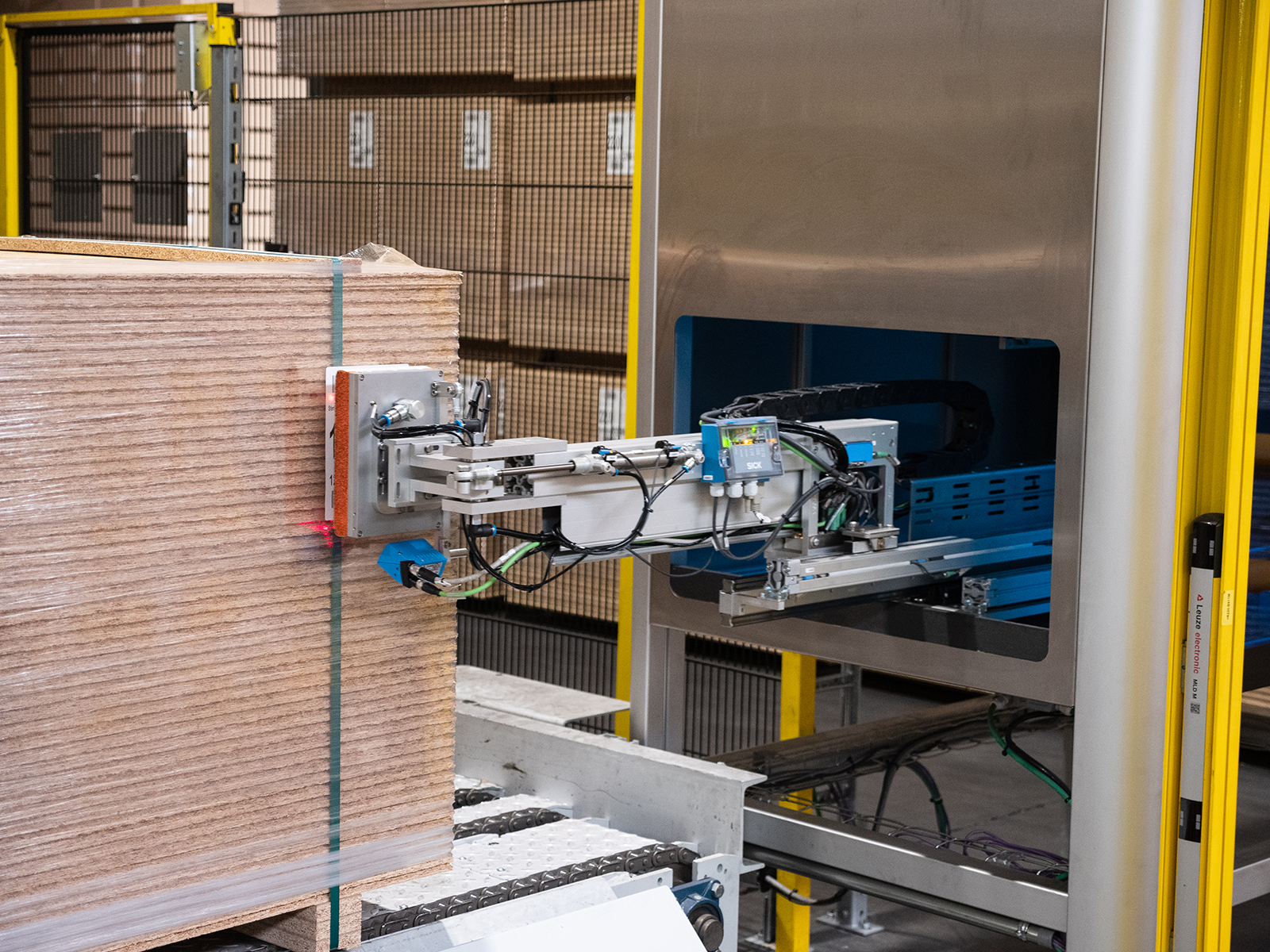
Norbord, one of the world’s largest manufacturers of wood-based panels, produces more than 1,200 square metres of OSB panels per day at its Genk location. Every day the logistics employees apply 1,400 labels to pallets in order to manage the panels and stock. This process was recently automated at Norbord’s Belgian location with a Zetes industrial labelling machine and ZetesAtlas identification software.

After the manufacturing process, the Norbord panels are placed on pallets and wrapped in protective film. Information about the pallets, the OSB panels and their location in the warehouse is stored in the ERP system. It also prints the labels that are applied to the respective pallets and scanned.

Until recently, these labels were printed in advance, so the forklift operators had to leave their cab each time to label and scan a pallet.

In order to automate the process, Norbord opted for ZetesAtlas, an integrated solution for identification and serialisation. After pallet wrapping, the machine applies the label – always in the same place – and automatically scans the barcode with the stock location and batch number. Then ZetesAtlas ensures that the pallet is shown correctly in Norbord’s warehouse management software. The forklift operator enters the stock locations only once at the start of their shift. Once the pallet has been scanned, the operator takes it to the designated place in the warehouse with an area of approximately 40,000 sq me.

Automation boosts safety and reduces errors

With the help of the automated solution, the forklift operators no longer have to leave their cabs to apply and scan the labels. This also dramatically improves safety, since there’s always a risk of falling every time a forklift operator exits or enters the cab.

“The difference since our project with Zetes is enormous,” says Steven Brouillard, Department Manager Finishing End Operations at Norbord. “We save time, and we are more efficient with fewer scan errors. We were just about to start up a second production line. Thanks to ZetesAtlas, we are now working with an additional line but with the same team. The new solution came at the right time.”

“It’s not easy to link industrial machines to ERP or WMS software”, says Stefan Nysen, Systems Developer at Norbord. “For us this worked out very well with smooth cooperation between our engineering and IT teams on the one hand and Zetes on the other hand. Instead of running on its own in a remote corner of the warehouse, our machine is fully integrated into our operations thanks to the ZetesAtlas identification software.”

Steven Brouillard concludes: “Zetes impressed us with their very professional approach. We started in March 2019 with the first contact, and six months later our two machines were already running at full speed. We also appreciate that we can call Zetes whenever we want to. Looking back, we could ask ourselves why we waited so long.”

VIDEO

Alliance to help protect vulnerable road users

Humanising Autonomy, a behaviour AI company, and VisionTrack, a leading in-vehicle video telematics and computer vision provider, have entered into a strategic partnership to bring advanced vulnerable road user (VRU) perception to vehicle operators globally.

Humanising Autonomy’s behaviour AI will be integrated into VisionTrack’s Autonomise.ai solution, enabling a nuanced understanding of human behaviour in fleet management and compliance, insurance, road safety and risk management settings.

Behaviour AI will enable drivers to receive real-time VRU collision warnings. By empowering vehicle camera technology to accurately analyse and predict human behaviours, the technology aims to generate earlier alerts to the driver with a higher degree of accuracy than traditional ADAS systems. The sophisticated Behaviour AI Platform will also enhance VisionTrack’s ability to identify safety challenges and key coaching opportunities for fleet customers by better analysing incident statistics and trends using advanced behavioural insight.

“Humanising Autonomy’s Behaviour AI Platform will help to better support and protect drivers and ultimately save lives on the road,” explains Richard Lane, Commercial Director of VisionTrack. “We are truly passionate about road safety and driver welfare, so we are thrilled about our new partnership with Humanising Autonomy. Together we will deliver cutting-edge technologies that not only benefit our customers, but all road users.”

Autonomise.ai is a next-generation IoT platform that is at the forefront of the video telematics sector. Launched last year, it uses computer vision to collect, process and analyse footage alongside supporting vehicle data from a growing number of connected camera devices. Autonomise.ai is also empowering the latest AI technologies including Advanced Driver Assist System (ADAS), Driver Status Monitoring (DSM) and Blind Spot Detection (BSD), with the aim of preventing collisions before they happen.

Said Humanising Autonomy’s Chief Executive officer Maya Pindeus: “For us, this partnership is further validation that our Behaviour AI Platform is critical in eliminating pedestrian deaths, and enabling safer fleets.” She continued, “We’re excited about the doors this opens for both parties.”

Tackling the industry’s core challenges with camera perception, the technology can be used in all lighting, road and weather conditions, as well as in areas with high densities of road users. Backed by a dataset of 1 billion human behaviours, Humanising Autonomy offers the best possible VRU detection and prediction and multi-camera support.

Subscribe

Get notified about New Episodes of our Podcast, New Magazine Issues and stay updated with our Weekly Newsletter.