Hubtex develops new platform transporters

With its SFX series, Hubtex is developing new platform transporters for loads of 25t, 40t and 65t. The compact, self-propelling vehicles for indoor and outdoor use have a large loading area for the transport of bulky, heavy loads. Thanks to its modular design, the base of the transporter can be equipped with various steering systems and a platform lifting option. The SFX module was developed for manual applications and can be further expanded into an AGV.

From July 2021, the portfolio of the manufacturer of custom-made industrial trucks will include the new SFX models for the load capacity ranges 25t (SFX-25), 40t (SFX-40) and 65t (SFX-65). Cross-series truck components and the addition of AGV functions make the series suitable for most customer requirements. The series is typically used for in-house transport of heavy-duty goods in the automotive and aviation industries. It is also a popular solution at various stages of the value chain in the metal industry, from foundries to trade, processing, and mechanical engineering.

The core element of all platform transporters is the running gear and the associated steering system. With single-axle steering used as standard on the front axle, a steering angle of up to 70° can be achieved. Multidirectional steering is also available for all three truck series for applications in which manoeuvring is to be avoided.

Due to the small turning radius, the amount of space required for the transporter can be further reduced in cramped production or storage areas. Another advantage of the new steering mechanism is the minimal amount of space required in the truck. This allows more compact designs than with the previous Hubtex models.

Another major plus point is the significant reduction in energy consumption due to the higher efficiency of the electric drives and the compatible components. While the two truck series up to 40t are designed to have two axles, the load capacity class up to 65t is available with three or four axles.

Surface flexibility is also required. For this reason, Hubtex has made the three SFX series for 25t, 40t and 65t available with PU-Soft tyres in addition to the standard polyurethane tyres. This means that all types of paved ground on a factory site can be negotiated and use is not restricted to indoor areas. Drive wheel and load wheel rockers ensure that the truck stays level on uneven floors. As a result, the materials are transported safely and reliably even with unfavourable ground conditions.

Modular construction

The high degree of modularity of the new platform transporters means that the vehicles can be adapted to a wide range of uses. The frame of the new SFX is divided into three fixed areas – the front axle, rear axle and central area. Due to a high level of variability at the interfaces of the assemblies, order-specific length and width adjustments can be made based on the transport task.

Thanks to pre-fabricated modules such as the wheel stool or the load wheel rocker and drive wheel rocker, comprehensive vehicle standards can be maintained. The optional lifting function controls either the cylinder or the entire platform. The hydraulic electrical cabinet can be used for all SFX series. Depending on the requirements, the modular electrical panels can also be flexibly expanded to include AGV functions, even when retrofitting. In this case, the SFX modules can be greatly enhanced by the Phoenix AGV series.

The pre-fabrication of standardised assemblies reduces working time and contributes to the short delivery times of the series. The transport vehicle is easily operated via wired or radio remote control as standard. Functions for integrating the platform transporter into automated processes can also be customised as required.

A communication interface compliant with VDA 5050 will be integrated in the future. In addition, special designs with driver’s cabins and individual superstructures are also available.

Watch the video here

Eco-friendly e-commerce mailing bags launched

The rapid growth of e-commerce has caused an inevitable soar in demand for easy returns. By reusing the original packaging, the environmental impact of a return is reduced by a minimum of half; Kite Packaging has launched sustainable kraft mailing bags to diminish this impact even further.

These packages are manufactured from FSC certified kraft which is sustainably sourced and grants the mailers superior strength to other papers. A heavy-duty material is essential for an item designed for reuse by a customer, though brown kraft is also 100% recyclable to ensure responsible disposal. This is guaranteed to significantly reduce a company’s carbon footprint while enhancing their green credentials.

The expandable gusseted sides offer extra capacity to fit a considerable range of different products while arriving flat-packed for convenient storage. To allow for effortless packing and returns, Kite’s product features a double peel and seal strip: one for securing an order to be delivered and the second should the goods need to be returned. The perforated easy tear opening provides excellent user satisfaction at the unboxing stage that is continued until the end of the transaction with this intuitive design.

Encourage consumers to shop with confidence, reassured by a user-friendly returns process that promotes repeat sales and all round positive transactions.


Honeywell launches new line of rugged computers

Honeywell has launched its latest family of rugged enterprise mobile devices designed for workers that pick, pack, sort and deliver e-commerce orders to keep the retail supply chain moving smoothly from factory to consumer.

Honeywell says its CT45 and CT45XP mobile computers are rugged, all-purpose productivity tools enabling mobile workers to efficiently execute tasks and access to business-critical data. These handheld devices are used by workers throughout a changing retail supply chain – including logistics, warehousing, in-store retail and last-mile delivery – that play a critical role in e-commerce fulfilment.

“Retailers are investing in technology to implement new consumer shopping options like click-and-collect and kerbside pickup while asking their employees to work smarter and more efficiently,” said Kevin Dehoff, president of Honeywell’s Productivity Solutions and Services business. “The combination of high customer expectations and a more digital-savvy workforce gives businesses the option to roll out these advanced mobile devices without the fear of a steep learning curve. We designed our CT45 to be the ultimate tool in the mobile workers toolbox to engage consumers and raise sales conversion while holding down costs.”

Shopping options like next-day home delivery, click and collect and kerbside pickup have rapidly accelerated due to the COVID-19 pandemic, and retailers are pushing digital transformation strategies to keep up with demand. A recent Euromonitor International/National Retail Federation Survey revealed nearly three-quarters of retail professionals said the pandemic accelerated their company’s digital transformation by at least a year and accelerated their company’s technology-related investments.

Built on the Honeywell Mobility Edge platform with the latest cutting-edge Qualcomm IoT mobile solutions, the CT45 offers a future-proof guarantee of continuous Android version support through Android 13, with a commitment of support through Android 14 and 15 if feasible. With the Honeywell Android Service, this ensures software patch support through 2032, enabling users to maximise the return on investment in their solution.

The CT45 XP is the first rugged handheld device in the industry featuring Wi-Fi 6 capability, allowing for faster, more reliable connections for multiple devices in crowded distribution centres, warehouses and retail stores.

Combined with Honeywell’s rich software ecosystem, including apps that can be downloaded through the Honeywell Marketplace, the CT45 family of devices gives businesses and mission-critical mobile workers the tools to make sure they can be successful in a hyper-competitive landscape.

Microlise to list on LSE

Microlise, a leading provider of transport management software to fleet operators, is set to list on the AIM market of the London Stock Exchange as Microlise Group plc on 22nd July 2021. The group has raised £61.2 million from investors through the issue of shares at a Placing Price of 135p per share, meaning Microlise has been valued at £156.5 million.

The decision to list on AIM will support Microlise’s next stage of development, including broadening the group’s product offering and growing the business around the world.

Established in 1982, Microlise is an award-winning business with around 350 employees based at the group’s headquarters in Nottingham, as part of a total staff of 500 globally. Microlise operates predominantly in the UK and has offices in France, India, and Australia.

Microlise’s transport management software helps fleet operators improve efficiency, safety and reduce emissions. These improvements are delivered through reduced fuel use, reduced mileage travelled, improved driver performance, fewer accidents, elimination of paperwork and delivery of an enhanced customer experience.

Microlise’s proprietary modular platform was specifically developed to provide an end-to-end technology solution for fleet customers. As a result, 58% of UK large HGV fleet operators (defined as comprising more than 500 vehicles) use the Microlise platform. The group has a diverse customer base, including organisations representing 88% of the UK grocery retail market by market share. Other customers include Culina Group, DFS, Hovis, MAN Truck & Bus UK, and Yodel.

The listing will help Microlise realise the significant revenue potential within the existing customer base and up-sell and cross-sell Microlise’s products. The group is looking to penetrate new geographies and market segments, including the market for smaller fleet sizes and different vehicle types, such as light commercial vehicles. Furthermore, the listing provides the opportunity to accelerate the group’s growth strategy through targeted M&A.

The money raised will support further investment in research and development.  In 2020, Microlise launched its Planning & Optimisation module to support operators to plan quickly and accurately to achieve a lower cost of completion. Earlier this year, Microlise launched its Trailer Brake Performance Monitoring technology, and has an advanced pipeline of other product developments. With more than 150 people in its development function, Microlise can deliver bespoke solutions to customers with specific or complex requirements.

Nadeem Raza, CEO, Microlise, said: “With an established track record of growth, proven management, and a market-leading position in providing technology solutions to fleet operators, Microlise is well set to capitalise on what we believe to be a major growth opportunity. Our customers are under pressure to meet increased environmental regulations and want more integration across supply chains. In addition, the challenges of the pandemic and Brexit have raised even greater awareness of the need to optimise the movement of goods efficiently and sustainably.

“As well as raising the profile of the group and increasing our ability to attract and retain the best talent, our listing will support the next stage of our development. This development means continued product innovation, growing our international operations, and entering new market segments such as light commercial vehicles. The listing will enhance our ability to serve and support our existing, as well as new customers. We are very excited about the future.”

Maritime takes delivery of straddle carriers at BIFT

Maritime Transport’s intermodal freight terminal in Tamworth (BIFT) has welcomed the arrival of two new ESC450 straddle carriers supplied by Kalmar. Maritime’s latest investment in plant machinery will deliver a significant boost to both service reliability and uptime at BIFT, as container volumes continue to grow.  

Featuring a highly-efficient, diesel-electric drive, the eighth generation models are designed to accommodate a four-high container stack with a 40-tonne lift capacity, and boast excellent manoeuvrability, low noise, and easy maintenance, as well as spacious, ergonomic cabins that provide operators with the best possible driving experience. Capable of handling containers of all sizes, the new straddles will also connect to Kalmar’s fleet management system, Insight, offering machine and driver performance data, and direct reporting of faults.

Both straddle carriers were ordered in Kalmar’s Q1 intake with delivery scheduled for Q3. Parts arrived at BIFT on 28th June, ahead of schedule. Kalmar’s technicians will spend the next four weeks assembling them to replace three SISU machines. Kalmar’s Complete Care service agreement on both machines will also provide Maritime with preventive and corrective maintenance services for the next ten years, enabling better operational and financial predictability, lower operational risk, and reduced downtime.

To date, Maritime has invested more than €3.75m in all-new top specification container handling equipment at BIFT, which now benefits from two Konecranes Noell N SC 644 E straddle carriers purchased in 2019, and two Sany SDCY100K6GC empty container handlers supplied through Cooper Handling Solutions as well as the new Kalmar machines.

John Bailey, Managing Director – Intermodal and Terminals, Maritime Transport: “The arrival of our new straddle carriers reinforces BIFT as one of the country’s most integral intermodal terminals with unrivalled access to the Midlands, and will play a key role in facilitating increased container volumes in the coming months as we introduce more services to our customers, including the BIFT to DP World London Gateway flow that commenced on 28th June.

“Kalmar has delivered cutting-edge container handling equipment across our terminals in Wakefield, Trafford Park, and East Midlands Gateway, and we will continue working closely with them as we invest in our infrastructure.”

Dave Patterson, Vice President, Market Area South & West Europe, Kalmar: “Kalmar straddle carriers are trusted by terminal operators across the globe, and the state-of-the-art ESC450 model in particular has a proven track record of enhancing container handling efficiency. It is great to be able to continue our strong cooperation with Maritime, supporting them with their business operations at one of the UK’s leading intermodal terminals.”

“The pandemic has changed the industry”

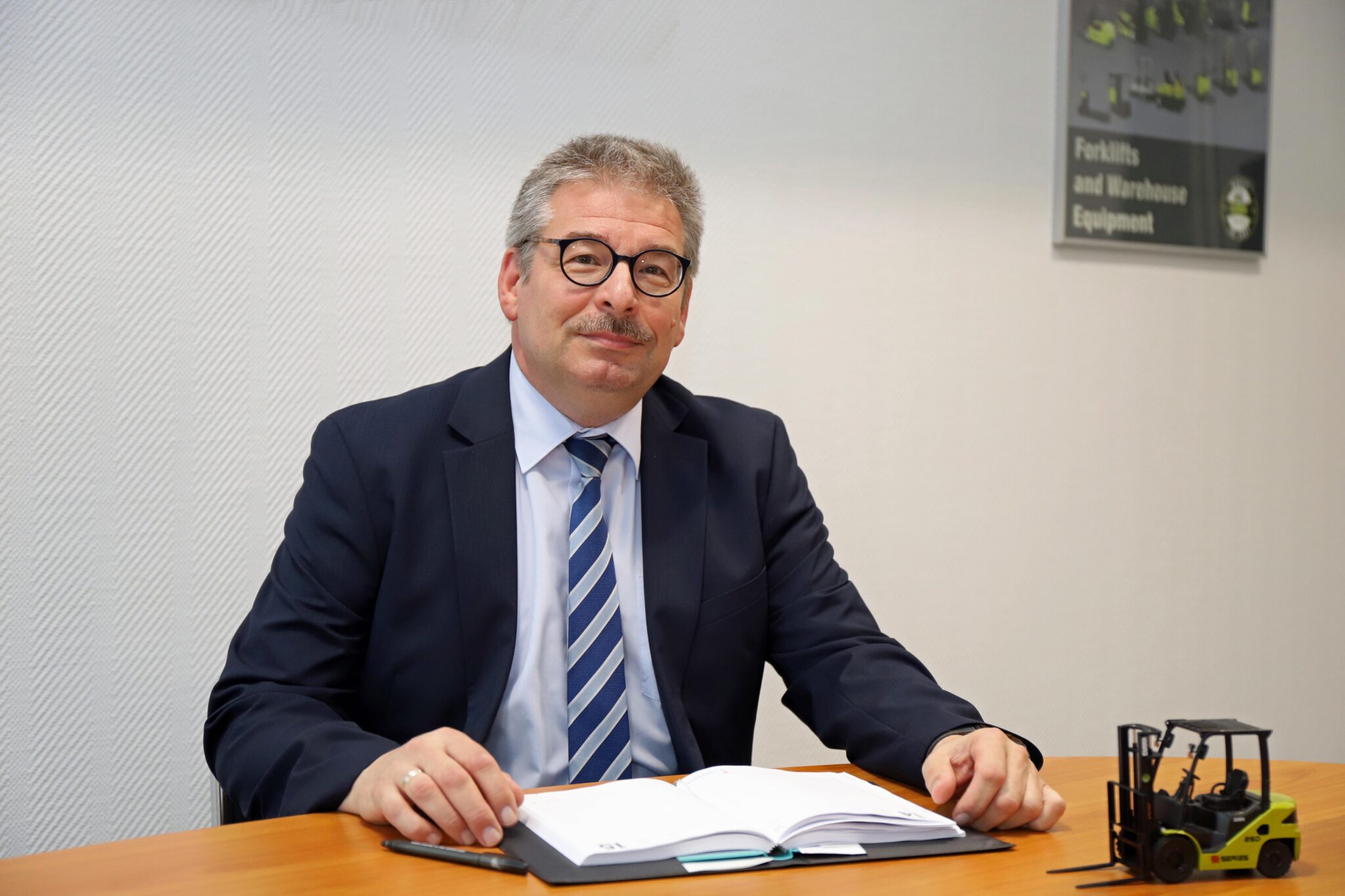
The Corona pandemic has posed major challenges to people around the world and has had a huge impact on all areas of the global economy. Rolf Eiten, President & CEO, Clark Europe, explains how the company is responding to the challenges it faces and how Covid-19 has changed the everyday business of the materials handling vehicle manufacturer.

We have been dealing with the Covid 19 pandemic for more than a year and a half. What has changed in Clark’s day-to-day business?

Home office and virtual collaboration have now become firmly established in our company. And we also communicate with our business partners or colleagues within the Clark organisation via video conference. The project work of our teams is done via digital whiteboards and we use virtual presentation platforms for training our sales partners. The Corona pandemic has shown us that virtual exchange works well and that we can save time and resources with it. However, it does not completely replace face-to-face events in the long run. Especially the cooperation with our business partners and customers thrives on personal contact on site.

How would you describe the economic situation of your company?

After the order situation was very poor in the 1st half of 2020 due to the Corona crisis, it picked up again strongly in the 2nd half of 2020, so that we were able to close the 2020 financial year with growth of just over 3% compared to the previous year. In the first half of 2021, the order situation is better than ever. The market for materials handling vehicles in our market region increased by 70% in 2021 compared to the previous year.

Globally, Clark was even able to increase the order volume by 50% compared to the result of the previous year. In the EMEA region – that is, in Europe, the Middle East and Africa – we were able to increase our order intake by 80% compared to the previous year. I don’t think anyone expected the market to pick up so much speed during the Corona crisis. One downer, however, is that we, like many of our competitors, have problems in the supply chain and in the procurement of components, as many vendor parts come from Asia.

The consequence for our customers is that they have to wait much longer for the delivery of vehicles. However, the supply chain is not the only challenge the market is currently facing. In addition, there is a drastic increase in freight costs, delivery delays due to bottlenecks in sea freight and the constantly rising prices of raw materials. The industry is currently operating in a very difficult environment.

Is the fact that for years not only the procurement of supplier parts, but also entire production processes were relocated abroad, and in particular to Asia, now falling on the manufacturers’ feet?

Trade relations between Europe and Asia have become stronger and stronger over the years. Companies have not only placed orders in the Far East, but also transferred technology. Today, there is almost no company that does not buy material from China. So, we are more or less facing the same dilemma here. I believe that the Covid 19 pandemic is showing us quite clearly how great the danger of this dependence on Asia really is, which we have all accepted so far – and yes, now it is falling on our feet that we have outsourced production to Asia in order to save costs. Now we are paying dearly in every respect.

What measures have you taken to at least counteract this?

To secure our supply chain, we ordered machines for our own stock at an early stage. In addition, we have taken a number of measures in conjunction with the Clark factories worldwide and the transporters: We visited our suppliers to get an idea of the situation on site and to find out how we can support them to speed up material procurement. For example, we have ordered parts in advance to help suppliers, changed suppliers to reduce costs and looked for new carriers to speed up deliveries. At the moment, therefore, production is running in all our factories and the supply chains are also largely intact. It just takes a little longer.

Do you now regret that the assembly production in Duisburg is not yet up and running?

No, on the contrary! I am glad that this project has been put on hold for the time being. Assembly production in Duisburg would not significantly change the current situation, because 95% of the parts would come from the Far East in a modular system. We would be in exactly the same dependency and would perhaps only have more flexibility in assembling the units.

Do you now use the capacities created for assembly production elsewhere?

Absolutely! We have put the focus on the used equipment business and the expansion of our direct business in the Duisburg area.

That means you use the free workshop capacities for reconditioning used equipment?

Exactly. Last year, we started buying used vehicles on a trial basis in order to learn how to refurbish used vehicles and to develop quality standards. Among other things, we invested in the existing paint shop and modernised and upgraded it. We can now paint equipment using the wet paint process, which makes the paintwork much higher quality and more durable. This means that the customer can count on very high-quality vehicles with Clark used vehicles. The first reconditioned vehicles were practically snatched out of our hands. Now we are expanding this business area bit by bit. Since visits to customers have become possible again, our direct business has also picked up strongly. So, we can’t complain.

Clark is also active in expanding the product range? In the field of warehouse technology, the range of vehicles with lithium-ion technology has been expanded?

Yes, that is correct. We expanded our range in the low-platform truck sector last year with the WPio series with load capacities of 1.2 to 2t. Operators will be able to benefit from the advantages of the lithium-ion battery with Clark in future: such as easy handling and freedom from maintenance, the high energy density with correspondingly high driving performance, fast intermediate charging without limiting the service life as well as gassing-free recharging of the battery.

With the COP1, we have brought an order picker to the market that is not only extremely efficient in picking goods, but also – thanks to the elevating work platform – proves itself as a rolling ladder or working platform. We have also expanded the range of hand pallet trucks with the HPT Eco and HPT Premium. Both trucks are characterised by high stability and easy operation and have a load capacity of 2500kg – the HPT Eco is designed for lighter and the HPT Premium for more demanding applications.

Has something also changed with Clark engine technology?

Absolutely! In 2020, Clark has launched a Kubota Stage 5 diesel engine with diesel particulate filter and diesel oxidation catalytic converter for the diesel forklift trucks of the C40-55sD and C60-80D900 series with load capacities of 4 to 8t. This opens up areas of application for Clark diesel forklift trucks that were denied to them in the past due to the lack of a diesel particulate filter.

You also presented a new solution for production logistics?

Correct. Clark brought a tugger train system onto the market at the beginning of the year. With this all-in-one solution, we have specifically addressed the specific requirements of industrial customers. The tugger train consists of the Clark CTX40-70 tractor with a trailer load of 4 or 7t as well as the CTR01 and CTR02 trailers. The CTR01 trailer, designed as a single U-frame, is designed for customers who mainly have to transport Euro pallets. It can accommodate a mobile trolley on which Euro pallets with a maximum load of 1200kg can be transported.

The Double U-Frame trailer CTR02 can accommodate both Euro pallets and other types of pallets commonly used in industry. Via a movable centre beam, the operator can flexibly choose between a trolley with a size of 1600 x 1000mm and a payload of up to 1600kg or two trolleys with a load weight of 800 kg each. We are currently realising a new customer project in this area. For this purpose, we have expanded our range of tugs to include vehicles with a load capacity of 3t.

3T wraps up new contract with PFF Group

Leicester-based 3T Logistics and Technology Group has recently been selected by one of the UK’s leading food packaging manufacturers to streamline its customer deliveries and help reduce the company’s carbon footprint.

Food packaging manufacturer PFF Group has recently invested in a new transport management system to supply packaging products to supermarkets and food manufacturers across the UK. With increasing changes to its logistics needs due to the continuing pandemic, PFF Group selected 3T as the ideal partner to help it fulfil its growing supply chain requirements.

PFF Group currently also manufactures disposable PPE aprons which are despatched from the company’s Washington site to Department of Health and Social Care depots and distributed for use by NHS frontline health and social care workers. This will be an important element of the new transport management system which is based on and delivered by 3T Logistics and Technology Group’s cloud-based software.

3T has a proven track record and enviable reputation in the logistics sector for its supply chain and transport management solutions. PFF Group will benefit from this expertise through the platform’s capability to consolidate loads and optimise vehicle usage, thereby reduce journeys and lower carbon emissions.

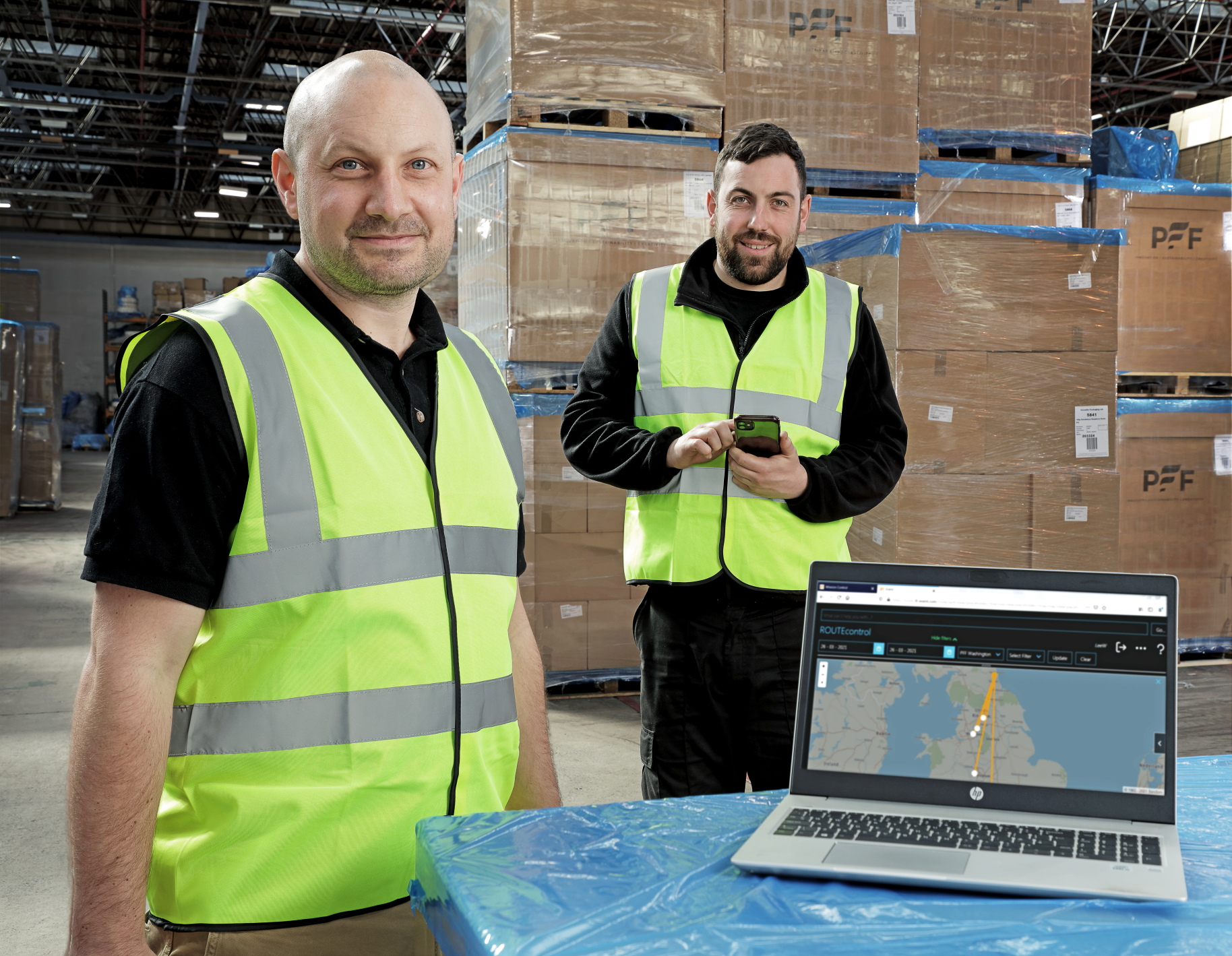
Lee Wilkinson, group supply chain manager (pictured, left, with Dan Mahan, transport planner) at PFF, said: “We work with a pool of hauliers and the software enables us to select the best carriers for locations where we can do multiple drop deliveries. By making sure we have filled the vehicles, we are reducing costs and the environmental impact as the amount of carbon per pallet delivered is reduced. The new system also tracks delivery lorries to ensure they arrive on time and manages proof of delivery. This means we are improving service to customers who are increasingly seeking suppliers with reduced carbon usage.”

Rob Hutton, sales and marketing director at 3T Logistics and Technology Group, believes the new partnership with PFF Group will see a reduction not only in costs for PFF Group but also in its environmental impact.

“We see the introduction of our TMS solution as a critical step in PFF’s digital transformation. PFF has a vision of reducing carbon footprint and with our transport management system, we will automate and optimise PFF’s transport operations, giving the firm full control of its transport management and bringing greater levels of transparency and visibility.

“The collaboration between 3T and PFF showcases two fast-growing British businesses with a global outlook that are using technology to drive efficiency and innovation. We look forward to working with PFF and providing the logistics solutions it needs to scale their business and further accelerate growth.”

3T is working with a number of high-profile companies across industry verticals, which value a logistics partner that can help them achieve their service, cost and environmental targets whilst digitising their supply chain.

Telematics overhaul needed to combat driver shortages

As the UK government continues to hold talks with hauliers over driver shortages which are affecting critical supply chains, Trakm8 is urging logistics firms to redouble efforts to drive up efficiency in existing fleets.

The logistics sector has been hit by two crises almost simultaneously; the UK’s exit from the EU’s freedom of movement arrangements and the COVID-19 pandemic, either one of which would have introduced significant headwinds on their own. Indeed, the two crises combined have led to a shortage of up to 100,000 drivers.

Trakm8 welcomes efforts to increase fleet capacity, but as recruitment efforts remain difficult, it is equally important to increase the productivity of existing fleets.

Peter Mansfield, Group Marketing Director at Trakm8, explains: “With a shortfall this significant, initiatives to find and employ new drivers are necessary, but do not go far enough. As specialists in scheduling and optimisation, we have seen time and time again how deploying a route optimisation platform can lead to more deliveries being made with the same assets, and help businesses get more out of their existing fleet.

“These benefits are often significant. Indeed, in real terms Trakm8 Optimisation has provided a 30% increase in delivery driver productivity and a 10% reduction in fuel expenditure to one of the UK’s leading supermarket chains. Of course, the system’s other benefits, such as a reduction in costs due to accidents and servicing, can free up expenditure to allow for a larger overall fleet.

“If we are to ensure that critical supplies are to be delivered and our supermarket shelves will be stocked as we expect, every business must look at its existing supply chains and ensure they are using the technology on offer to maximize their fleet’s potential.

Vision-guided robotics & AI: a guide for the non-technical

The automation industry is experiencing an explosion of growth and technology capability. To explain this complex technology, we use terms such as “artificial intelligence” to convey the idea that solutions are more capable and advanced than ever before. If you are an investor, business leader, or technology user who is keen to understand the technologies you are investing in, this article will help you gain a well-rounded view on vision-guided robotics and enable you to make informed decisions.

Types of vision systems used in warehousing and distribution environments

There are three primary applications of vision systems used in warehousing and distribution environments:

Inspection and mapping

Vision systems for inspection are used in a variety of industrial robot applications, providing outputs of “pass/fail”, “present/not present”, or a measurement value. The result dictates the next step in a process.

Mapping systems, on the other hand, are less frequently used but are similar to inspection systems in that vision maps do not directly translate into machine action. Both systems can be very sophisticated, but they do not require deep learning or artificial intelligence.

Pick-and-place without deep-learning

Pick-and-place vision systems with limited variables are deployed on most robotic cells installed today. The cameras direct the robot’s motion through closed-loop feedback, enabling the robots to operate very quickly and accurately, within their prescribed parameters. These systems do not have a “learning loop” but are instead pre-programmed for a fixed set of objects and instructions. While these systems are “smart”, they do not add intelligence or learning over time.

Pick-and-place with deep-learning

The most sophisticated vision systems employ “deep learning”, also referred to as “artificial intelligence”. However, many non-learning systems are marketed as if they have intelligent (learning) capability, leading to confusion. The deep-learning algorithms, subset of artificial intelligence, learn features that are invariant of the objects, in order to generalise over a wide spectrum of objects.

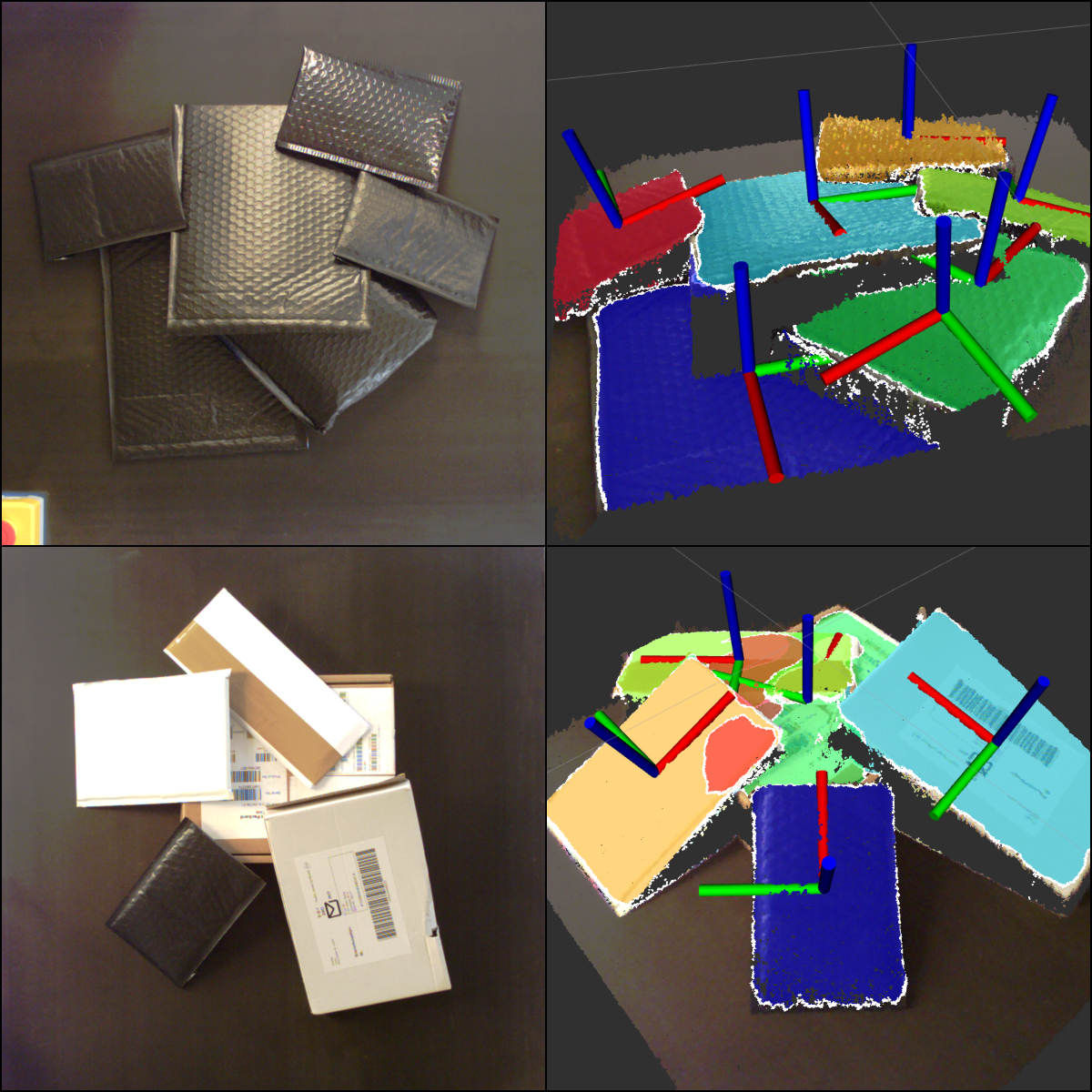
For example, through such algorithms, robots can recognise the edge of an object no matter the exposure of the camera or the lighting conditions. Something as simple as a change in lighting could affect the results and that is the reason behind deep-learning systems not relying on a single variable like colour.

It is crucial to note that all three types of vision systems include three main elements: an input (camera), a processor (computer and program), and an output (robot). They may use similar cameras and robots, but the difference lies in the program.

Basic building blocks for deep-learning systems

Vision-guided robots using deep-learning algorithms for industrial applications recognise various types of packaging, location, and other variables (e.g. overlapping items) and act based on those variables. Compared to self-driving cars, some variables for industrial robots are not as complex, but the underlying approach to learning and responding quickly is the same.

There are three co-dependent requirements for deep-learning solutions:

  • Computer processing power
  • High-quality and varied data
  • Deep-learning algorithms

Fizyr has optimised these three elements required for deep-learning systems.

Deep-learning vision systems for vision-guided industrial robots

Commercial applications using robots to pick, place, palletise, or de-palletise in a warehouse environment require three basic building blocks: cameras, software, and robots. The cameras and robots are the eyes and arms; the software is the brain. All three components must work together to optimise system performance.

Camera technology enables the flow of high-quality data. Cameras and post-image processing provide a stream of data ready for the deep-learning algorithm to evaluate. Some cameras are better suited for an application, but that itself is not what makes a vision-guided robot capable of deep learning. The camera supplies data but does not translate data into actionable commands.

This is where the role of software comes in, which is the deep-learning algorithm – data in from cameras, process, results out to robots.

The robot and end-effector (a.k.a. gripper) also play a critical role in system performance. They must provide the level of reach, grip-strength, dexterity, and speed required for the application. The robot and end-effector respond to commands from the deep-learning algorithm.

Conclusion

To summarise, there are three points to remember about artificial intelligence and vision-guided robotic systems:

  • Deep-learning algorithms classify data in multiple categories
  • Deep-learning algorithms require both high-quality and varied data
  • Algorithms become more powerful over time

Latest developments in camera technology and computer processing power serve as building blocks to advanced deep-learning software that improves robot performance. The future has arrived!

Read the full article here


AnyLogic: the right tool for simulating your supply chain

Simulation modelling, the process of creating and analysing digital prototypes of existing and proposed systems to predict their performance in the real world, has become one of operational research’s most important fields. The tools that simulation modelling provides both in engineering and business disciplines can reap abundant benefits for any organisation that utilise them.

Some of these benefits include:

  • Shorter design and development cycles with the ability to modify and re-test a model without the need to spend time and money building and testing multiple prototype iterations.
  • A virtual platform for creating realistic test scenarios. Other types of prototypes are not always practical for testing all possible operating conditions. With simulation, there are no ‘physical limits’ to the operational scenarios that can be modelled and tested.

Simulation modelling has advantages over more traditional approaches, such as mathematical forecasting, and optimisation. These approaches are more ‘theoretical’ and often-based on mathematical assumptions and constants about how an object and/or process will behave. With simulation, you do not need to make as many assumptions – with an accurate model design and the right simulation software, you can try different scenarios and know exactly what the behaviours of objects and processes might be.

Simulation modelling software is available in many forms. Some utilise spreadsheet scripts linked with relational databases and automations, which are regarded as the simplest and most universally used general purpose simulators. Whilst others provide more explicit discrete event simulation, with process-centric elements that model the transactions and flows within systems.

Additionally, some offer agent-based simulation or systems dynamics approaches, and only one, as far as we are aware, provides its users with a ‘hybrid’ multimethod approach for creating realistic and insightful scenarios. Multimethod modelling environments which ‘package’ discrete event, agent-based and system dynamics approaches can be used to simulate systems of greater complexity and at different granularities, more simply.

AnyLogic, a simulation package, serviced by DSE Consulting in the UK and Italy, is regarded as being the first tool to introduce multimethod simulation modelling. No doubt its competitors will follow with similar approaches, but for now, AnyLogic retains the pole position in its field.

AnyLogic provides its users with various visual modelling compatibilities that are embodied in process flowcharts, state charts, action charts, and stock & flow diagrams. It also provides animation and visualisation facilities too. Such capabilities are augmented by the fact that it can draw from extensive sets of 2D and 3D graphical objects to visualise vehicles, staff, equipment, buildings, and other items and processes related to business.

Moreover, it can convert a model’s logic and metrics into interactive dashboards, capturing your key performance indicators in an and integral way with CAD layouts and GIS maps within its outputs. These graphical features have been found to be particularly useful for engaging and informing stakeholders when simulation projects they add a positive ‘feel’ to the simulations which inspire confidence in the end results.

Additionally, AnyLogic uses an extensible Java IDE that allows users to import custom 3D models, icons, drawings, and other geometric and operational data files into its modelling environment. There is also an existing set of industry-specific libraries, which act as verticals for a range of  business processes and workflows to make modelling extremely rapid.

Software today would not be attractive unless it has a cloud component. AnyLogic has a range of cloud capabilities from subscriptions to local server-based, which position it for use on a range of platforms from the desktop to fully portables phones and tablets. Its private cloud infrastructure can be integrated into company workflows so that the models it outputs can be deployed virtually, anywhere.

DSE Consulting experience healthy sales of its multimethod simulation package and have caught the industry’s eye for innovation. It was recognised by the Midland Enterprise Board in 2020, as ‘best International software reselling business in the UK,’ in its field. The award was given for its help to organisations management teams and business leaders in solving the latest data analytics problems.

In 2021 the company became a headline sponsor for The OR Society’s Simulation Workshop, an event which celebrated the latest simulation and modelling breakthroughs, internationally, across industry and academia.


Subscribe

Get notified about New Episodes of our Podcast, New Magazine Issues and stay updated with our Weekly Newsletter.