Public heavily in favour of sustainable e-commerce

Two-thirds of UK consumers now believe the Government should crack down on online delivery CO2 emissions and force online retailers to invest in more sustainable options, a new survey has found.

Seven out of 10 consumers also believe a trustmark could help to ensure CO2 emissions on deliveries are made available to the public. A trustmark could either showcase whether an online retailer is actively reducing or compensating emissions, or could ultimately calculate the emissions per parcel.

Separate research from the World Economic Forum shows delivery emissions could be reduced by as much as 30% by 2030 if the public and private sector works together to prioritise the issue.

The survey, commissioned by e-commerce shipping platform Sendcloud, found a whopping 62% would even opt for alternatives to home delivery if a retailer provided emissions information at checkout, such as choosing to pick-up at a parcel locker compared to home delivery.

Retailers can easily meet this demand by offering a sustainable option alongside existing delivery options and highlighting it with a special icon. A next step could be to pre-select the green delivery option, as previous research shows that the amount of consumers that choose green delivery triples when it is chosen by default.

Luckily retailers don’t have to foot the bill alone, as 8 out of 10 consumers are willing to pay extra for green delivery options.

46% would be open to paying £1 or more on every parcel ordered, representing a significant investment in green delivery from the 2.8 billion UK parcels shipped during the 2019/2020 fiscal year.

“Consumers want more sustainable delivery options, but they also want to see the full effects of their purchases on the environment,” says Rob van den Heuvel, CEO and co-founder at Sendcloud. “Even though governmental action can help to accelerate the greenification of deliveries, there is still a lot retailers and consumers can do themselves.

“Providing information about CO2 emissions and/or pre-ticking the most sustainable choice as the default encourages consumers to choose the most sustainable delivery option at checkout. Even something as simple as a sustainability icon or compensating emissions by planting trees can go a long way in persuading consumers to go green.

“Retailers can do their own part now by communicating clearly to their customers and promoting the impact of their efforts. Retailers need to consciously encourage consumers by giving them the choice to go green and choose clean.”

Linde publishes 2020 Sustainability Report

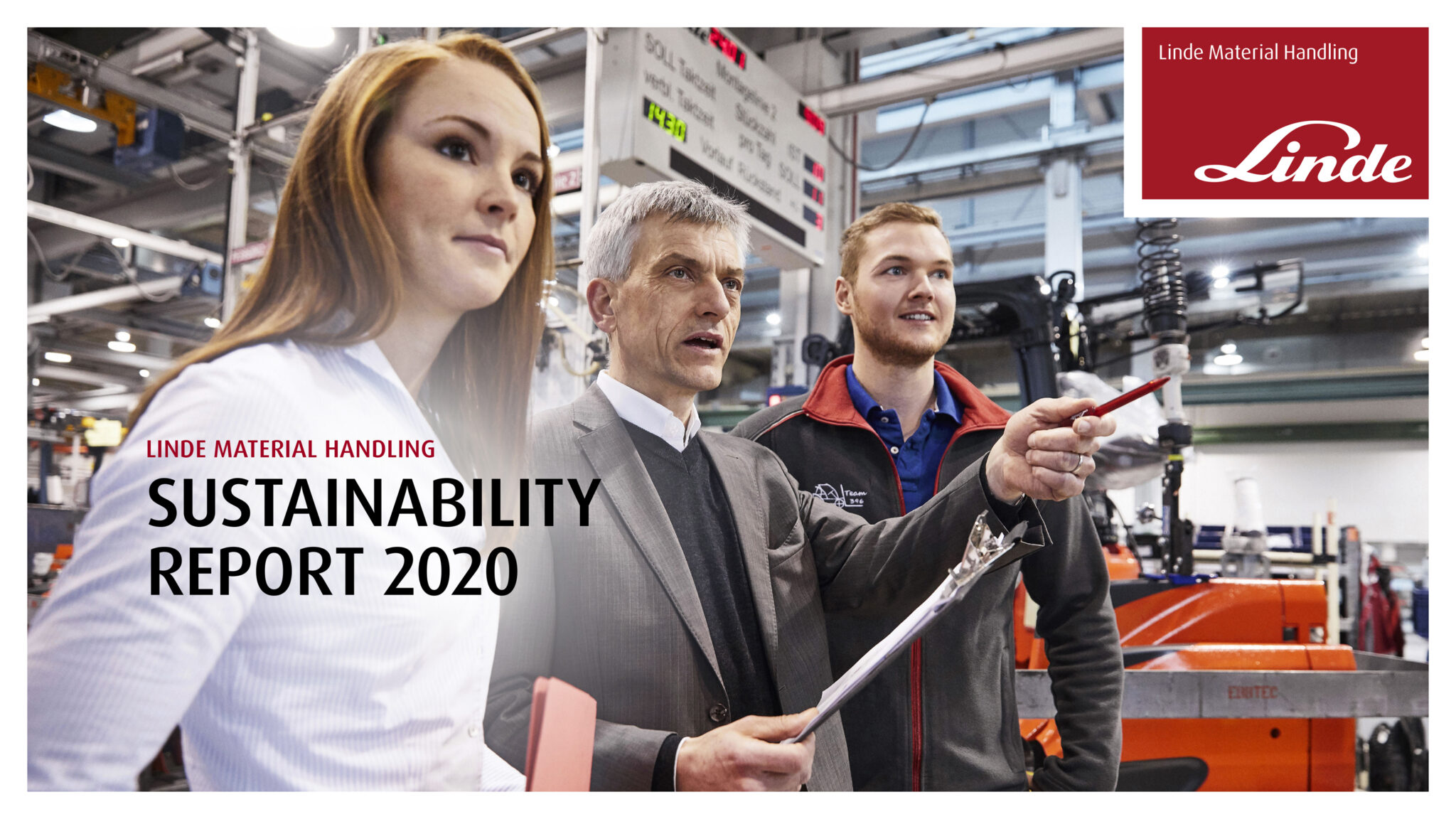
The Aschaffenburg, Germany-based intralogistics specialist Linde Material Handling (Linde MH) has released its sustainability report for 2020. It takes stock of major social, ecological and economic aspects of the company’s activities and sets out specific targets for the future. Sustainability is firmly anchored in the company’s corporate strategy. Going forward, regular updates will continue to be published to document the progress being made.

“At Linde Material Handling, we are convinced that sustainability has become a crucial factor,” says Stefan Prokosch, Senior Vice President Brand Management at Linde MH. “In this regard, we focus both on our own sustainable business practices and on the products and solutions we manufacture.”

The intralogistics company aims to be a responsible and reliable partner to its customers in helping them achieve their own sustainability goals by means of innovative technologies. The sustainability report summarises the status quo as well as company objectives for the coming years and is based on the international standards for sustainability reporting set out by the Global Reporting Initiative (GRI). It is initially available for download as an English version PDF on Linde MH’s website.

Linde MH has been reporting on its own activities since 2014 and has presented a comprehensive set of guidelines within its current publication: The main section, covering corporate organisation and strategy, employer profile, employees, health, safety and environment, products and supply chains, and social responsibility, is followed by a detailed appendix with tables of relevant key performance indicators. There is a clear commitment to sustainable business practices, and this goal, together with customer satisfaction and profitable growth, forms a triad within the 2027 corporate strategy.

“For us, sustainability has become a measure of success because it secures our company’s future viability,” explains Hans-Georg Connor, Director Health, Safety & Environment at Linde MH. Specific goals have been defined to achieve this, including an EcoVadis rating of at least 75 points by 2027, a 5% reduction in reportable accidents annually, certification of all company sites according to ISO 14001 and ISO 45001 by 2024, and an average illness rate of no more than 3.3% for 2021.

In its report, Linde MH recognises its employees as a cornerstone of success. Offering career opportunities and advanced training programmes as well as an environment that fosters teamwork, the international company presents itself as an attractive employer who has maintained its strong commitment to training even during the two years of the coronavirus pandemic. In the year under review, the company employed 334 apprentices training in 14 occupations all over Europe and 30 students pursuing 10 for-credit dual-course college programmes in Germany.

A further chapter is devoted to Health, Safety and Environment (HSE). It lists measures and targets designed to maintain the health of employees and prevent accidents wherever possible. The same applies to the area of environmental protection: An initial milestone is to reduce energy-related greenhouse gases by 30% by 2027, with the CO2 footprint generated in production, sales and services in 2017 serving as the basis. Some progress toward this goal has already been achieved: Around 79% of the electricity purchased in 2020 came from renewable energy sources.

The 57-page report devotes ample consideration to the contribution that Linde MH is making to greater sustainability with its products and solutions. Prokosch explains why the focus is primarily on the products’ use phase: “As we know from our life cycle assessments, this is where the greatest leverage for climate protection is to be found. And with the new generation of Linde electric forklifts, we are creating another prerequisite for achieving CO2 neutrality in the long term.”

In general, the topic of energy plays an important role for Linde MH. “We want to be energy consultants for our customers and deliver the best possible solution for every application. To enable us to do this, we have the broadest range of energy options available,” Prokosch continues. “When it comes to recycling lithium-ion batteries, a viable solution already exists. The recycling of cells remains a challenge, however – the recycling rate is still low today.” Here, the company is working closely with battery manufacturers.

With its numerous safety solutions, Linde MH also offers a holistic concept for improving safety in intralogistics. In addition to sensor- and ultra-wideband-based assistance systems, this includes safety consulting that can be used to identify and mitigate safety-critical points in operations. Last, but not least, the high product quality of the company’s industrial trucks also contributes to the responsible use of resources.

Linde Material Handling’s principles relating to supplier behaviour are becoming increasingly important. They set out the clear expectation that human rights will be respected and international social standards complied with. In particular, these include the prohibition of child labour and forced labour in accordance with the requirements of the International Labor Organization (ILO), as well as the enforcement of statutory minimum, health and safety standards.

In order to achieve the greatest possible transparency with regard to the sustainability of Linde MH’s supply chain, an EcoVadis rating or a comparable assessment is to be available for 25% of top-spend strategic suppliers by 2022, 100% of strategic and high-risk suppliers by 2023 and 100% of direct suppliers by 2025. Moreover, minimum requirements for sustainability in the supply chain are to be defined and communicated by 2023, and from 2027 they will become mandatory for all suppliers.

Click here to download the report

IVECO celebrates 600,000th Brescia-built truck

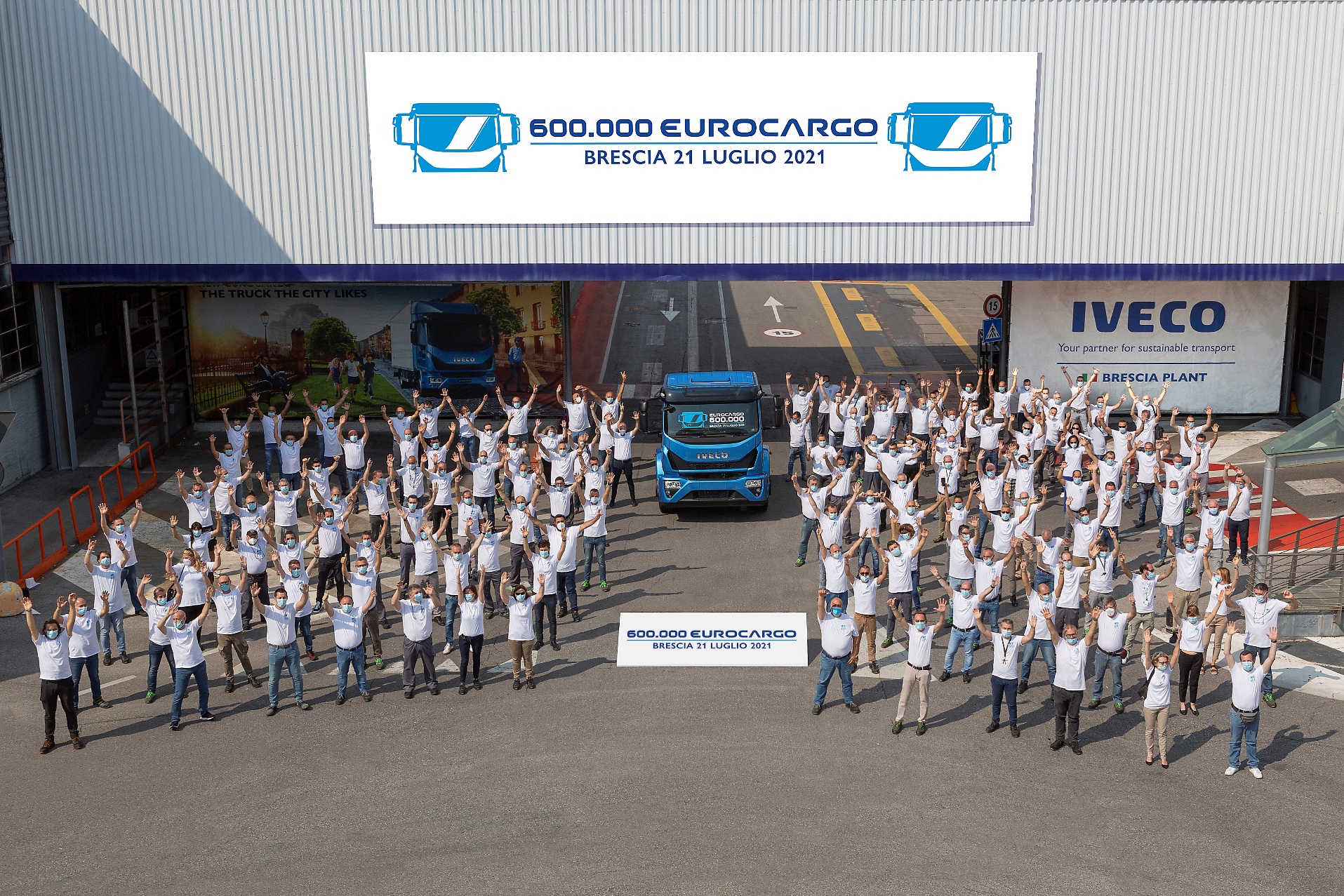
IVECO is celebrating the 600,000th Eurocargo produced at its Brescia plant, an iconic production site for the brand that has played a key role in every generation of this vehicle, whose glorious past goes hand-in-hand with constant, forward-looking innovation. The Brescia plant has always been the heart of production operations for the Eurocargo, thanks to the commitment and passion that its workforce of around 1,600 employees dedicate to their jobs.

Says Brescia plant director Marco Colonna: “It is with great pride that we are celebrating the production of the 600,000th Eurocargo, whose fourth generation has been enjoying a continued success for many years. This milestone vehicle could not be powered by anything else but compressed natural gas (CNG), a tangible reaffirmation of IVECO’s constant commitment to sustainable mobility.

“Launched in 1991, the Bertone-designed Eurocargo was conceived to be one of the most innovative industrial vehicles on the market – as reflected in its remarkable sales success – with a modular cab platform allowing extensive scope for vehicle customisation without driving up costs. The significant history that lies behind us now guides us on a path of continuous improvement and innovation which, over the coming years, will see our vehicles evolve to become greener than ever.”

A pioneer in sustainability, IVECO is engaged every single day in actively reducing CO2 emissions with its alternative energy vehicles, which offer the ideal solution for the energy transition of the transport industry. Natural gas benefits both the environment and the economy, as it is the most effective solution available today for the needs of tomorrow. Natural gas-powered Eurocargo models are also extremely quiet, making them ideally suited to all urban missions.

The Brescia-based team works in synergy in every phase of production, from assembly of the chassis to cab bodywork, painting and installation of the transmission, to fitment of the interior trim, all the way to final inspection. The factory also produces special versions for military applications and firefighting. This flexibility is made possible by teamwork and by the ‘World Class Manufacturing’ integrated production system, which was introduced in 2007 with the goal of achieving zero defects, inefficiencies, waste and accidents. This gives the Eurocargo an edge, not only for its design, but also for its performance.

The origins of the plant date back to 1903, when Roberto Züst founded Fabbrica Automobili, a company that went on to become Officine Meccaniche (OM) in 1928 and was acquired by Fiat in 1968. After initially manufacturing cars (including race cars), OM moved to the agricultural sector and then on to industrial vehicles. In 1975, OM was among the “founding partners” of the new-born company IVECO.

In 1991, the factory was chosen as the site where production of the new Eurocargo would begin. The plant thus became the “home” of this model, and went on to play a key role in plotting the roadmap towards high-tech, sustainable vehicles. The plant itself is committed to safeguarding the environment and sustainability, and over the next few months, approximately 20,000 sq m of solar panels will be installed at the site, cutting CO2 emissions by 1,300 tonnes per year.

EURODIS awards top performer prizes

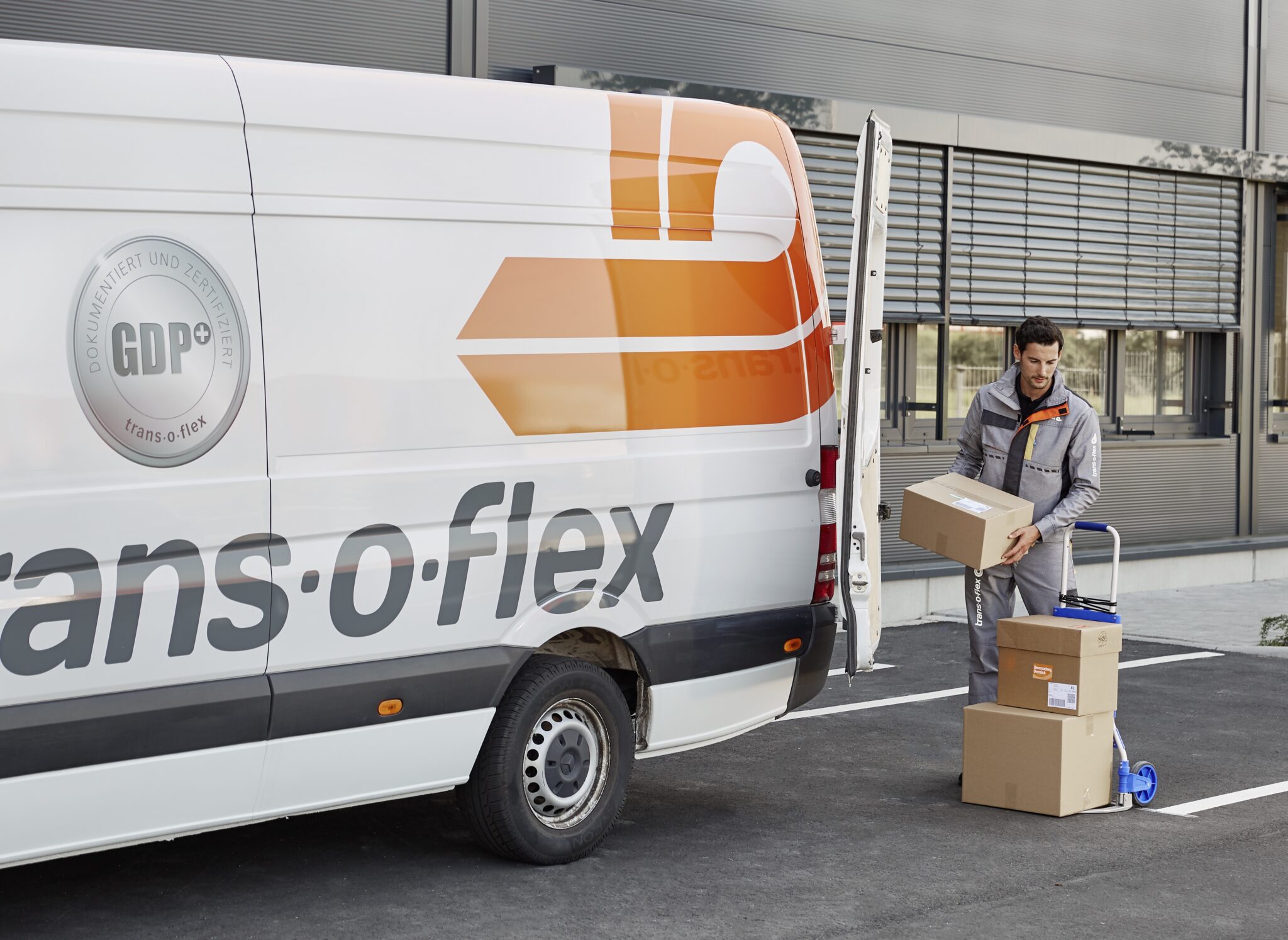
EURODIS, the fast growing international network for joint transport of parcels and pallets, has awarded the prizes of its annual competitions in an online ceremony for the first time. The top performers in terms of operational quality, customer service and sales in 2020 were the German member trans-o-flex Express, the Italian member SDA Express Courier and the Romanian member FAN Courier Express.

The award ceremony was integrated into the annual membership convention, which took place entirely online. More than 130 participants of the network, which is operating in 36 European countries, took part in order to find out about latest projects from EURODIS and its members, listen to customer voices and discuss with the Supervisory Board.

According to Jens Reibold, Managing Director of EURODIS GmbH, the network has outperformed the market again. “In the first half of 2021 we saw a volume increase of around 27%.”

Compared to 2020, when EURODIS increased volumes by 15%, the network nearly doubled the growth rate. “The reason for this huge acceleration was the same as in 2020: growth was mainly driven by additional B2C shipments.” EURODIS customers now send every third shipment to private addresses.

Referring to the awards of the annual competition, Reibold adds: “They are an important part of our quality management and moreover an ideal motivation and acknowledgement for the performance of the respective teams.”

For the fifth time in a row the prize for best quality went to German EURODIS member trans-o-flex Express. The most important criteria for this quality ranking are delivery lead time, status information, data transmission and proof of delivery (POD). These key operational data are measured and analysed daily, in order to continuously steer and improve processes.

Key criteria for the competition on best customer service, which was won by Italian SDA Express Courier, are how fast and how well members answer requests. “Customer satisfaction is our main focus and a fast and reliable customer service is key to ensure further growth in the network,” Reibold adds.

In the sales competition the EURODIS members compete with proven sales concepts and success stories. This category was won by FAN Courier Express. “The idea behind is as easy as effective,” comments Reibold: “Best practice learning! Especially in a cooperative network like EURODIS you needn’t reinvent the wheel again and again. Moreover, we are prompting our members to learn from each other. We encourage them to copy the best solutions and adopt them for their country.”

AR Racking sets up research programme

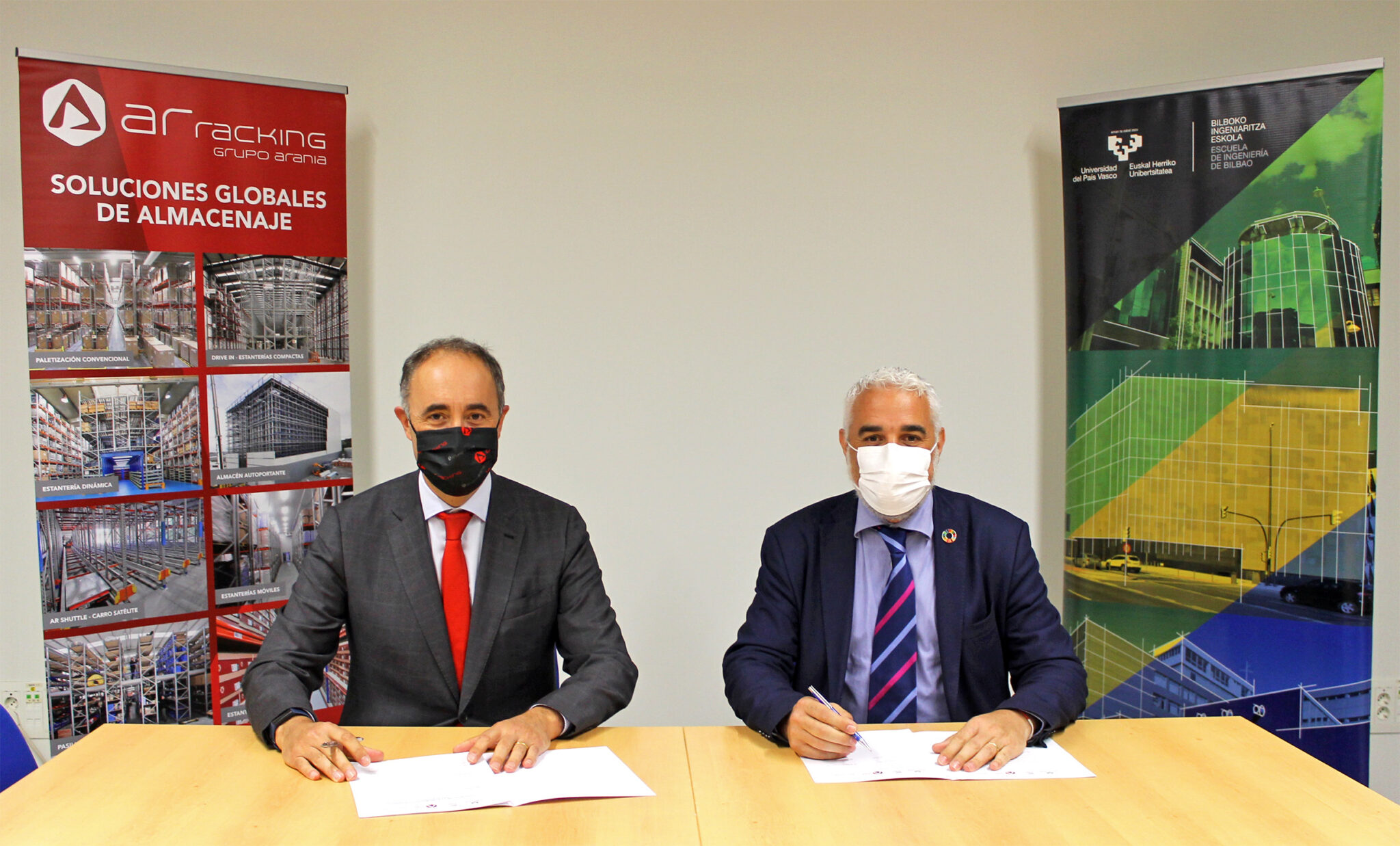
AR Racking and the University of the Basque Country (UPV) have signed an agreement to collaborate in a research programme that will take shape through the launch of the AR Racking Research Centre: Storage Solutions at the School of Engineering of Bilbao of the University in this city.

The agreement between both bodies was ratified on 15th July at the School of Engineering of Bilbao by Eric Arana (pictured on the left), Chairman of the Arania Group (the organisation to which AR Racking belongs), and by the principal of the School, Charles Pinto (pictured on the right). The inauguration was also attended on AR Racking’s behalf by Iñaki Arriola (Managing Director), Pablo Montes (Technical Director), Javier Ruiz (Product Manager) and Lorena López (Marketing and Communications Manager). Jesús Cuadrado (professor at the UPV and technical director of the research centre) also attended the agreement event. The centre will begin its activity in September, coinciding with the start of the next academic year.

It will be dedicated to analytical studies of structures made up of thin-walled profiles. In the short term, and as a matter of priority, the bases for carrying out the studies and research on fatigue in these types of profiles are being established. Other objectives include promoting studies on seismic analysis, the characterisation of components and spacers, and analyses of structural collapse mechanisms in case of fire.

Another of the main ongoing objectives of the AR Racking Research Centre: Storage Solutions is that it should serve as a career development space for member engineers, who will be able to join AR Racking’s structure to support the growth of the company, both in terms of actual projects in execution and in the product and solutions development area.

AR Racking, a company of the Arania Group with headquarters in Zamudio (Bizkaia), is specialised in the design, manufacture, calculation and installation of industrial storage systems for all types of loads. With an export rate of over 85%, AR Racking has a commercial presence in more than 60 countries. A trajectory marked by internationalisation and a clear and firm commitment to R&D&I. This is the second research centre provided by AR Racking and connected to the University after the collaboration agreement signed in 2019 with the University of Mondragón, where the AR Lab research facility and test bench is located.

The creation of research centres/labs is a valuable and effective instrument both for academic institutions and for companies for their contribution to technological development, the training of engineers and the generation of expertise in the industrial fabric. A goal shared by such an important institution as the UPV and by AR Racking, whose sound track record is clearly associated with a pioneering spirit of continuous improvement.

Teleroute strengthens in DACH region

Teleroute Freight Exchange, a leader in security, closed 2020 with remarkable growth in its customer base due to a higher retention rate and a 20% increase in new customer acquisition compared to the previous year.

Part of this growth is concentrated in the DACH region, where more and more companies trust Teleroute to improve the efficiency of their domestic and international transit. The freight exchange recently signed an agreement with three well-known companies in the sector: Vertex GmbH, Wildenhofer Unternehmensgruppe and Fercam Austria.

Vertex GmbH, based in Tyrol, has signed an agreement with Teleroute to include its four branches in Kirchbichl, Söll, Innsbruck and Vienna. Teleroute’s coverage in the region, number of freight offers, and security of the platform are mentioned as the key factors for choosing the freight exchange.

According to its CEO, Matthias Wallmann, Vertex GmbH has found in Teleroute its best partner to “improve truck traffic, especially in the French and Spanish markets, reducing empty kilometers and covering longer distances”.

Additionally, Wildenhofer Unternehmensgruppe, with its headquarters in Salzburg, is now joining the Teleroute community with its four branches (Tarragona in Spain and Schärding, Kufstein and Hallein in Austria) together with the other two companies in the group, Alpentrans and Wildenhofer Hispania.

Christopher Friedl, Branch Manager, says that what they value most about Teleroute are secure payments and the communication with customer service: “The payment guarantee service is very important to us, it ensures we get our money. We also value the swift response and communication with customer service in dealing with unfortunate events.”

Fercam, the renowned international transport company based in Italy with numerous branches throughout Europe, has also signed an agreement with Teleroute for the whole Austrian market, including access to its locations in Kundl, Salzburg, Seeboden, Sankt Pölten and Brunn Am Gebirge.

Christian Jarnig, CEO of Fercam Austria says: “Teleroute is an important and useful tool that allows our company to be competitive in the actual market. It is possible to find both good and liable transport partners and also loads in all Europe. We appreciate very much the support of the Teleroute Staff and the smoothly and intuitive, user-friendly functioning of the platform.”

Thanks to these new alliances in the DACH market, Teleroute, part of Alpega together with Wtransnet and 123cargo, is strengthening its commitment to help transport companies in this region to face the new challenges of the sector through innovation and safety, offering the best solutions for efficient fleet management and outsourcing of partners in a network of more than 85,000 trusted transport professionals.

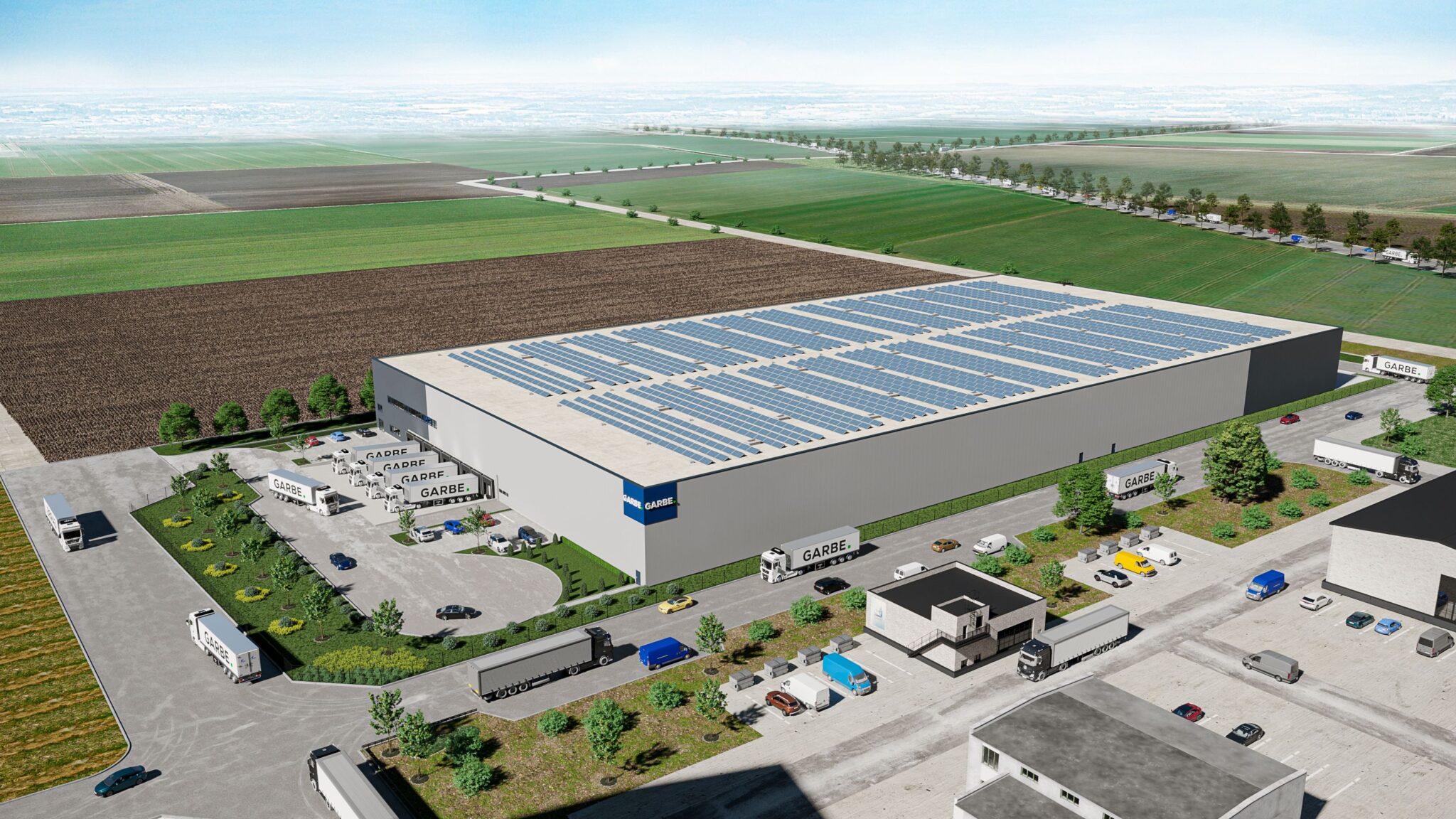
Construction starts on Hildesheim cross-dock facility

Garbe Industrial Real Estate has started construction of a state-of-the-art logistics property in Harsum (Hildesheim district in Lower Saxony). The new building is scheduled to be ready for occupancy in the second quarter of next year and will have a total area of 17,800 sq m. The Hamburg-based project developer is investing €14.8 million in the site.

The property is being built on a 30,500 sq m plot in the Nordfeld industrial estate in Harsum. This is located about 10km north of Hildesheim and about 10km south of the city limits of Hanover. The hall will be designed so that it can be divided into two units: one is to be 9,100 sq ft, the other 7,900 sq ft. “Thanks to the back-to-back formation of the two units, the new building is suitable both for management as a cross-dock property and also as a standard logistics area thanks to its construction height of 10.50m UKB,” emphasises Jan Dietrich Hempel, Managing Director of Garbe Industrial Real Estate GmbH.

The new building will be equipped with two ground-level sectional doors and 17 dock levellers. The floor in the smaller hall will be sealed with a special foil so that substances in water hazard classes 1-3 can also be stored or handled. Parking spaces for 36 cars and four trucks are being created on the outside area. About 830 sq m are earmarked for offices and social rooms in the property.

Transport links played a key role in the decision to locate the building here. The business park is within sight of the Autobahn 7, which connects Hanover with Kassel. The Hildesheim-Drispenstedt junction is approximately 4km away and can be reached in a few minutes via the B 494 federal road which runs directly past the industrial estate. At the Hannover-Ost junction, the A7 motorway connects to the A2 motorway, one of the most important east-west axes in Germany.

Garbe Industrial Real Estate is aiming for the property to be certified in accordance with the Gold Standard of the German Sustainable Building Council. A photovoltaic system will be installed on the entire roof area to generate renewable energy.

The new building will be constructed without fixed rental commitments. Talks with potentially interested parties have already begun. “The demand at this location is very high,” says Hempel. “Therefore, we anticipate full occupancy while construction is still underway.”

EFAFLEX unveils new IoT door solution

With the innovative system EFA-SmartConnect, high-speed door manufacturer EFAFLEX says is sets new standards in the intelligent networking of door systems. The module enables both the operation and the planning of customer service and maintenance processes in their own, protected WLAN network.

All parameters can be conveniently controlled and visualised regardless of location and without contact. The user is always connected to the network via the app and benefits from numerous individually adjustable features for efficient, cost-saving real-time door management.

In times of ever-increasing digital change, not only future-proof technologies, but also reliable data security systems are essential in order to make work processes efficient, scalable, sustainable and competitive. EFA-SmartConnect meets the increasing demands of this modern corporate world with the consistently digital handling of door operation in its own, protected WLAN network.

The IoT solution is operated via the EFA smartphone app, compatible with the common operating systems iOS and Android, the functions of which include the visualisation of the current door status, the parameterisation of essential door settings such as open time and the display of maintenance data, error memory and current error messages including descriptions and root cause analysis. Thanks to the smart network with the manufacturer, users can also send service reports directly to EFAFLEX if they wish.

These properties contribute to streamlining processes on the user side and thus creating new space for efficiency and productivity increases and ensuring maximum smooth door operation. Thanks to in-depth analysis and clear visualisation, the time required for function checks, service requests and troubleshooting in the event of a fault is reduced considerably.

In addition, users can precisely calculate the exchange of spare parts, among other things. This in turn prevents and reduces costly downtimes and reduces the cost of customer service. The fact that EFA-SmartConnect is not only intuitive to use, but also works independently of additional IT programs, for example for cloud services, makes handling particularly easy.

Doors communicate in a network

Several doors equipped with the smart system can be connected to each other within a network and subsequently communicate with each other and with the app. If a particularly high number of gates is to be integrated into the management, for example in large halls, this is also possible because several networks can be operated in parallel. The module continuously forwards the current status report of each individual door to the app, from which the user can forward relevant data to the manufacturer if required.

As the operator of the door systems, they decide which of the available information they make available to EFAFLEX for further steps, such as reports on status, faults or maintenance issues. Depending on the needs they have assessed themselves, the app user can supplement this with free text information, for example with explanations or the request of IT support or a technician. In addition, the messages to be sent can be illustrated with photos.

Effective immediately, EFAFLEX will install the module in selected door controls. In order to be able to record and operate doors already in operation with EFA-SmartConnect, an additional board is integrated into the existing system, provided with a QR code, a serial number and access data. Older door systems can also be easily added to the network via the app, so that operators can also take advantage of the innovative module.

Study reveals good air quality around Port of Tyne

Air quality around the Port of Tyne is “good” and well within the required national standards, an independent inventory of pollutant gas emissions has concluded.

The study, conducted by highly regarded air quality expert Ove Arup and Partners, has also verified that Port-related activity accounts for just 1-2% of total air pollutant concentrations and that levels can be officially classified as ‘minor’ when compared to existing background concentrations of air pollutants.

Tyne 2050 and ongoing green goals

Although emissions released to air as a result of the Port’s activities are already well below statutory requirements, the Port of Tyne will be continuing with its ongoing efforts to further improve air quality within the Tyne estuary. All port operations are on track become fully Net Zero Greenhouse Gas (GHG) by 2030 and the programme to replace gas oil-fired plant equipment with clean energy, electric equivalents, is well underway.

To encourage the early adoption of green shipping technology among its customer base, the Port of Tyne is evaluating the potential of a “Green Ship” Tariff. This would see the cost of using the Port’s facilities decrease for vessels powered by clean energy.

The final transition to ‘All-Electric Port’ is expected by 2040 and this will include the provision of shore-based power sources for visiting vessels. In addition to these goals, the Port is also keen to become a test bed for clean energy technology and further environmental impact automation.

“These results are extremely pleasing and although emissions are already low, we expect them to further decrease as we progress towards the Port’s 2050 goals,” says Steven Clapperton, Maritime Director and Harbour Master at the Port of Tyne.

“As always, our intention is to be completely open and transparent about efforts to improve air quality and to ensure that the highest levels of protection for people living and working in and around port areas are maintained. This assessment clearly demonstrates the Port of Tyne’s commitment to air quality and the considerable progress we have made towards improving quality of life for everyone within the wider Tyne Estuary.”

Scope of the Air Quality Strategy Study

  • The facilities used and commercial activities undertaken by the Port of Tyne which were monitored in the study included:
  • Vessel movements within the statutory harbour area and at berth
  • Non-road mobile machinery (NRMM) including cranes, tugs, wheel loaders etc on the port estate
  • Vehicle imports and exports on the Port’s North (VAG) and South (Nissan) estates
  • Vehicles using the Port of Tyne internal road network
  • Loading and unloading of  Roll-on/Roll-off (RoRo) ferries
  • Storage and handling of wood pellets
  • Rail operations and locomotives for the transporting of wood pellets from the Port of Tyne
  • The International Passenger Terminal (IPT)

Air pollutants measured during the study were CO2, SO2, NO2, Non Methane Volatile Organic Compounds (NMVC) and Particulate Matter (PM).

The monitored Port of Tyne statutory harbour area stretches from one mile beyond the piers at Tynemouth, to the tidal limit at Wylam, 17 miles inland to the West.

The study involved an impact assessment utilising complex atmospheric dispersion modelling to predict pollutant concentrations at identified sensitive receptors and their compliance with standards defined within the National Air Quality Regulations.

All ports in the UK with bulk cargo throughput in excess of one million tonnes per annum are required to develop an air quality strategy for their designated statutory areas in line with the Department for Transport’s Port Air Quality Strategy guidance. This requirement involves compiling an inventory of relevant emissions for the baseline year (which the Port of Tyne declared to be 2017) and this includes emissions from port related activities on land as well as emissions from all vessels visiting the Tyne in 2017.

Download a copy of the report here


Business as normal, but always changing

Leading temperature-controlled storage and distribution business Reed Boardall has been a long-standing user of the Empirica warehouse management system from Chess Logistics Technology. The two companies have worked together for over a quarter of a century, during which time Reed Boardall has grown to become one of the largest businesses of its type in the UK.

“Over the years as the business has grown and we have added new customers and new lines, the WMS has always been a constant that has allowed us to make those changes,” says Andrew Baldwin, Managing Director, Reed Boardall Cold Storage. “We have always been able to support the business with Chess.”

The scale of operations at Reed Boardall is undeniable. Its 55-acre facility in Boroughbridge, Yorkshire is the biggest in Europe and the company is the UK’s largest single-site frozen food consolidator, delivering more than 12,000 pallets a day to food service and retail customers across the UK with its fleet of almost 200 refrigerated vehicles.

A 10,200 sq m extension to one of the seven state-of-the-art cold store chambers, completed in early 2021, brought Reed Boardall’s total capacity to 168,000 pallets of frozen produce at any one time. Adding this much capacity could, on the face of it, have significant implications for the WMS. In reality, however, all that had changed from a WMS perspective was the number of locations and it was easy to add these to the application’s database. Empirica is scalable to meet evolving demands like this and the number of locations it can manage is effectively limitless.

The extension would represent a major undertaking at the best of times but it was completed on schedule against the backdrop of the COVID-19 pandemic that has presented challenges to all supply chain businesses. Reed Boardall is no exception and the business has experienced changes to its operations since March 2020. In particular, the lockdown resulted in fewer case-based orders from food service operators, many of which have been closed, but increased the full-pallet demands of retailers, most of whom have seen their sales increase. People have to eat, after all, and with limited alternatives available most have chosen to do so at home.

From a WMS perspective changes in order profiles presented few challenges. The system is designed to cope with all types of order and has the flexibility to respond and adapt to dynamic demands in real time.

“The processes have not changed much over the last 12 months from a business perspective,” says Andrew Baldwin. “Things that have changed have been outside our control but the WMS has always been the backbone and it’s always been there.”

It could be argued that the ability to adapt to fluctuating demands and ensure all orders are completed efficiently and delivered at the time required by the customer is the core requirement from a modern WMS. This is perhaps illustrated by the increasing shift by retailers to day-one-for-day-two delivery models over day-one-for-day-three or weekly deliveries. By definition, this shortens the time available to plan, assemble and despatch an order and the WMS has to be able to prioritise operations accordingly. Empirica achieves this by allowing users to set a wide range of parameters that the system uses to ensure all orders in progress are picked at the best time throughout each 24-hour cycle and despatched to meet expected delivery schedules.

Effective stock rotation is a key consideration in this process. Reed Boardall typically picks stock on a strict best before date basis as this allows for tight stock control with good end user availability and shelf life. This presents no problems for the WMS as sell-by date is one of many parameters that can be used to ensure one case or pallet is prioritised over another.

“The system allows us to do anything we need,” says Andrew Baldwin. “With strict best before day rotation, for example, Chess allows us to manipulate the system to do that.”

Cases and pallets in a cold store are little different to those found in other warehouses from a WMS perspective. Nevertheless, food supply tends to be reactive and there are seasonal factors which affect demand. Warm weather always leads to an increase in orders for party and barbeque food as well as ice cream. These demands can arise quickly and the WMS needs to cope. In addition, during 2020, the lockdown meant the usual dip in sales over summer when people go abroad for holidays did not occur. Towards the end of the year, like many warehouses, capacity was right on the limit as stock from the EU was brought in early to help avoid potential supply chain issues caused by the uncertainty over Brexit. Despite these challenges it was business as usual at Reed Boardall.

“Over the years as we have come across an issue – often driven by a customer – that changes how we operate, Chess has been able to step up,” says Andrew Baldwin. “We have covered pretty much every eventuality since we have been working with Chess.”

Changes in consumer shopping habits have led to food companies needing a more responsive logistics partner that is able to reliably consolidate products in order to cost-effectively deliver little and often. Reed Boardall’s single site business model has proved ideal for this. With support from key suppliers such as Chess the company has been able to grow and evolve its business to meet the ever-changing needs of the market.

Subscribe

Get notified about New Episodes of our Podcast, New Magazine Issues and stay updated with our Weekly Newsletter.