Yale adds Bahrain to dealer network

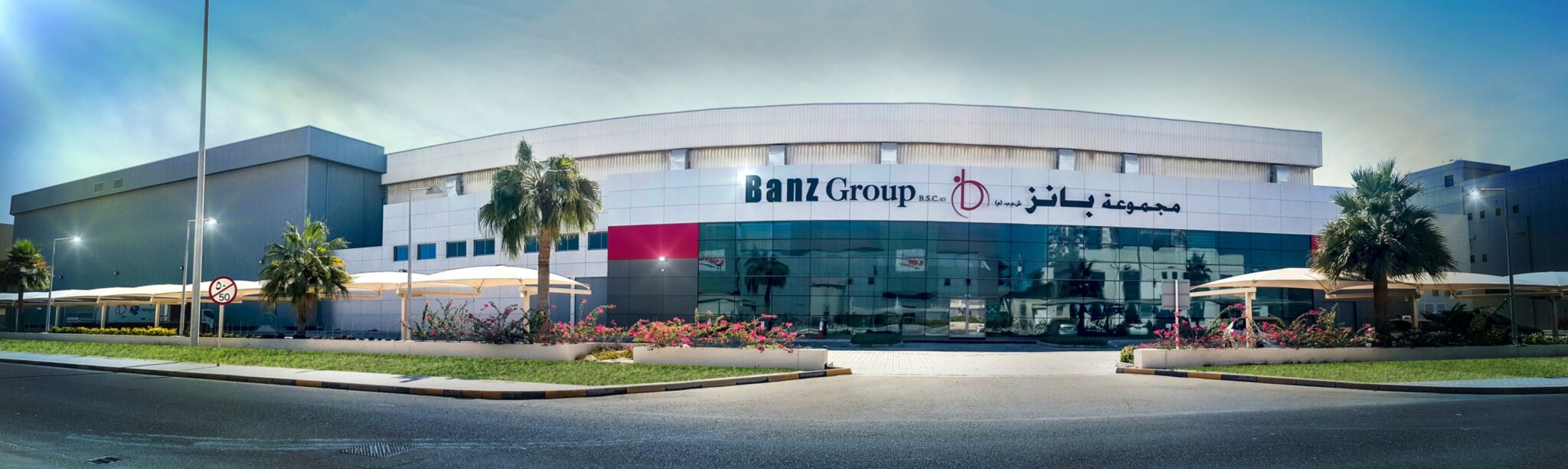
Yale Europe Materials Handling is increasing its footprint in the Middle East with the appointment of a new dealer in the Kingdom of Bahrain. Banz Trading & Contracting WLL will be the exclusive sales and service dealer of Yale® products in the region.

Banz Trading & Contracting WLL was founded in 1948 and is one of the oldest and most respected trading, engineering and contracting companies in Bahrain. Boasting over 70 years of expertise, the company has built a strong customer base of prominent clientele across many industries.

“We are delighted to welcome Banz Trading & Contracting WLL to the Yale dealer network and increase our coverage in the Bahrain market,” said Peter Madoc-Jones, Territory Manager MEA at Yale. “The company’s mission statement ‘Value Addition with Care and Commitment’ aligns perfectly with our own ‘People. Products. Productivity’ philosophy.”

“Our customers are looking for both extremes – high performance and quality at an optimum price. We share the same commitment as Yale to deliver high quality products, the lowest lifetime cost of ownership and outstanding customer satisfaction to customers in Bahrain,” said Shafeeq Ahmed, General Manager of Banz Trading & Contracting WLL.

Strategically situated in Sitra Industrial Area with over 100 staff, the company’s one-stop facility houses an engineering workshop, pump assembly workshop, fabrication unit for shelving and doors assembly, covered painting booth, stores and a sales office.

Customers of Banz Trading & Contracting WLL have service teams on standby to provide round-the-clock support whenever they are needed to help keep their operations running smoothy.

“We were founded over 70 years ago to provide Tier-1 products to the Bahrain market, and provide the service that is expected from our clients when purchasing these products,” explained Mr Ahmed. “We believe this makes Yale a natural fit to our offering, and we look forward to helping the company increase its market share in Bahrain with new sales, rentals and full-service activities at the heart of our partnership.”

7 steps to a successful retrofit project

In this article, written by Markus Kammerhofer, Director Sales Retro, TGW Logistics Group, we look at the most important factors for a successful retrofit intralogistics project.

Promising faster delivery and establishing resilient supply chains is only possible with state-of-the art intralogistics systems. Yet anyone planning a retrofit project needs to find a competent partner and to keep a few rules in mind.

Next year will mark the 60th anniversary of the opening of the first high bay warehouse (HBW). The trailblazer was Bertelsmann’s “Book Silo,” opened in Germany in 1962. Since then, thousands of HBWs have been built and some of them have been going for decades. But whether HBWs or automated mini-load warehouses, this fact remains: after years in operation, practically no system still exists in the same form as when it first opened. Steel components may be sturdy, but IT and control elements as well as mechatronics must be regularly updated to the state of the art. And with rapidly changing product ranges, volumes and customer demands, modernisation and expansion become inevitable.

Fundamentally, retrofit activities can be divided into three subcategories: adjustments, expansions and modernisation. The first subcategory consists of measures that often need to be taken within months of a system being put into operation, so that the company can keep up with new market requirements. Expansions are particularly important for companies that experience strong growth after go-live. Regular modernisation of the control systems and IT is generally necessary every four to five years because the technology changes. The mechanical equipment often does not have to be renewed until after ten or more years.

E-commerce growth, increased automation: the rising number of intralogistics systems means growth in the retrofit market as well. TGW now handles almost five times as many retrofit projects annually as it did ten years ago. Another important driver is the system users’ increasing awareness that they can only keep up with the competition if they adapt to their customers’ needs. And those who promise shorter and shorter delivery times have no choice but to establish a resilient supply chain. Unplanned system downtimes are a nightmare for supply chain managers, and long cycle times are a clear competitive disadvantage in today’s world of high-performance logistics.

Putting off retrofitting means taking risks. For one thing, spare parts could run out or technology could become unavailable. For another, knowledge is lost over the years when, for example, the IT experts who still know how to work with the programming languages C and C++ retire. Younger software specialists often do not have such expertise. The situation is similar for controls systems.

As the speed at which technology changes continues to increase, companies are gearing up for the future. Even just upgrading the software increases functionality. A new warehouse management system enables better connectivity with other systems, such as manufacturing execution systems, supply chain management systems and enterprise resource planning systems, allowing for a more continuous data flow. The goal is to be able to exchange information along the value added chain in real time. On top of that, with increasing regularity companies are looking to integrate autonomous technologies such as automated guided vehicles or robots into their overall system. That can only yield optimal results if the system is running on state-of-the-art technology. Modern warehouse management systems also have the option of touchscreen controls.

The advantages: they are easy to use and it does not take long to train employees. This is also true of the continuous zoom option for system visualisation. These days, users can zoom in down to the system’s sensor level to find defective components, for example. Maintenance is also faster and easier after a retrofit because modern components have been integrated into the system.

Since the subject of sustainability has come to the fore in politics, society and business, it has also become one of the drivers of retrofit projects. Generally speaking, these projects are inherently sustainable investments because they not only extend the lifespan of a company’s systems but also increase the company’s efficiency. Many companies have adopted ambitious programmes aimed at long-term emission reduction. They are more conscientious than before about resources and carefully and thoroughly examine every link in their supply chain to find out where they could cut down on emissions. In doing so, they delve deep and compare things like the energy consumption of different storage and retrieval machines or conveyor system elements.

The bottom line is, companies should not debate whether or not to undertake a retrofit, but rather when and how. Of course they have to budget for it. But what is the alternative? If the competition can fulfil customer wishes faster and better, the company runs the risk of losing customers, and in this digital age the competition is often no more than a click away. For example: in the past, a user would be satisfied with one delivery containing 50 order lines. Today, that customer wants the same volume delivered to ten different places, at ten different times, just as they have come to expect from the well-known B2C platforms. The customer wants to take advantage of that flexibility in their own company too. Looking at it that way shines a different light on investing in a retrofit and the corresponding return on investment.

Once a company has recognised the need for a retrofit or an expansion, they need to find the right partner to carry it out. Over the course of its more than 50-year history, TGW has worked out the most important success factors for such projects. Alongside experienced project managers, a structured plan and a functional specification, defining the migration phases is among the important success factors for a project. Additionally, employees need to be well trained so that the people working on-site are deeply familiar with the system. Another important factor is choosing the right moment for a retrofit. There are managers who assume they can wait until their systems are approaching the breaking point before thinking about it. But they are forgetting an important aspect: the lead time for a project can be up to a year and is often even longer now due to the corona pandemic.

TGW approaches customers when their systems have reached 85 percent capacity so that specialists and the user can develop a solution together that will afford the desired benefits in good time. The experts also make sure that retrofit specialists are trained in such a way as to accumulate comprehensive know-how. Furthermore, the products used in the projects are specially designed for retrofits.

In summary, here are the seven most important success factors for a retrofit project:

  1. Consider the lead time and start early enough
  2. Choose experienced partners and project managers
  3. Develop a structured plan
  4. Integrate specially developed retrofit solutions
  5. Create a comprehensive functional specification
  6. Clearly define migration phases
  7. Intensive employee training

Markus Kammerhofer is Director Sales Retro at TGW. He holds a degree in Computer Science and has been working for TGW since 2012. In April of 2013 he took over the Retrofit Sales department, and since the autumn of 2017 he has managed the Lifetime Services Competence Center Retrofit with a view to expanding TGW’s retrofit efforts worldwide. Kammerhofer has more than 20 years of professional experience in an industrial environment. His focus is on software, processes and automation engineering.

Delivery management firms become nShift

nShift, global provider of cloud delivery management solutions for e-commerce shops, retailers, manufacturers and 3PL companies, announces its launch. Bringing more than 53 years of shipping and returns management experience through the merger of Unifaun, Consignor and Returnado, nShift will unite under leadership of Lars Pedersen as new CEO. With over 100+ pre-built third-party integrations into e-commerce and other shippers’ most critical IT systems and a carrier library delivering connectivity into over 700+ carriers, nShift offers customers an end-to-end cloud platform to automate and optimize the entire delivery management process – from label creation to delivery tracking and last mile logistics to returns management.

nShift’s solutions have successfully enabled almost 1 billion annual shipments globally for e-commerce shops, retailers, manufacturers and 3PL companies. Through its extensive carrier library, nShift has shipping visibility and reach, unlocking significant scalability for its customers – from 1 to millions of shipments annually – across the globe.

“I am extremely honoured and excited to be joining nShift at such a pivotal time in its growth,” said Lars Pedersen, who was recently appointed CEO of nShift. “While our name is changing, we are more committed than ever to continuing to provide the vital connectivity in delivery management, visibility, and efficiency for which our 90,000+ customers rely on us. We are thrilled to announce our new brand together with our latest e-commerce innovations, nShift Checkout and nShift Return (formerly known as Returnado). Our platform enables customers to worry less and ship smarter with up to 10-20% higher e-commerce-shop conversions, 60% fewer delivery related support calls, and 30% increase in repurchase rates on returned products.”

Through the acquisition of Returnado, a Stockholm-based e-commerce returns management provider, nShift adds critical technology to its cloud delivery management platform with a streamlined return process for shippers, carriers, and recipients. Returnado’s returns expertise spans marquee brands such as Helly Hansen and Asket and demonstrates its significant capabilities to serve a very complicated portion of the logistics value chain.

Marlin Equity Partners and Francisco Partners, two of the world’s leading technology investors, will remain the majority stakeholders in nShift. Peter Chung, a Managing Director at Marlin Equity Partners, said, “We are excited to continue delivering against the nShift mission of enabling our customers to worry less and ship smarter via the Company’s collective scale and breadth of its consolidated, end-to-end cloud delivery management platform. Today, e-commerce and other shippers have a singular platform from which they can eliminate geographical barriers to growth and drive supply chain efficiency and visibility all while improving the overall delivery experience for constituents across the logistics value chain.”

Petri Oksanen, a Partner at Francisco Partners, added, “This is an exciting step forward and the beginning of the next chapter of transformational growth for nShift. With the recent acquisition and integration of Returnado, we are in a position now more than ever to continue to deliver the very best solutions for our customers and help them solve first-to-last mile logistics challenges, deliver tangible cost savings, and drive innovation in our industry.”

Dimensioning product gets Australian approval

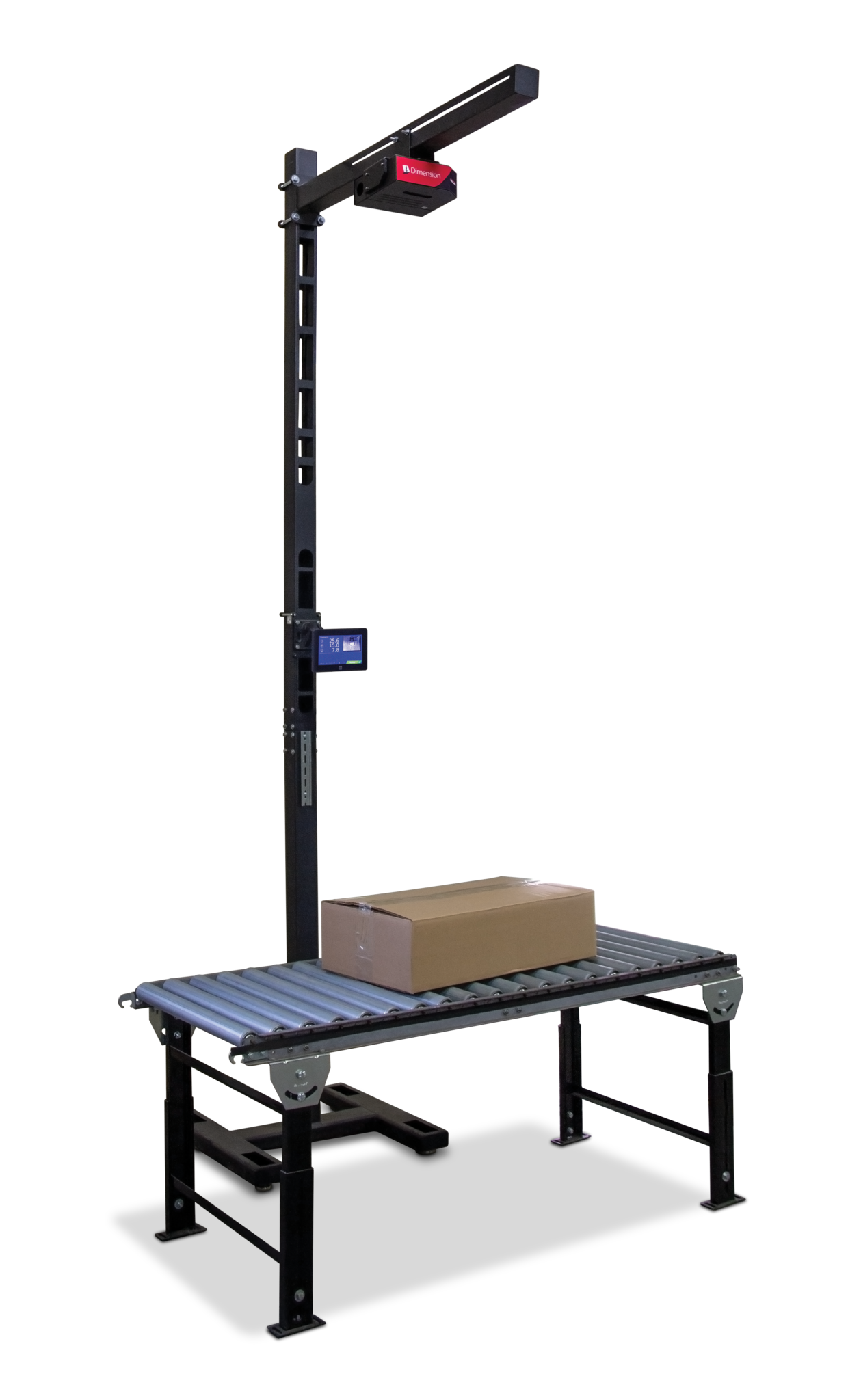
Rice Lake Weighing Systems is excited to announce iDimension Plus now has approval in Australia. Rice Lake’s iDimension Plus claims to be the fastest tabletop solution for calculating dimensions of boxes.

Australian approval allows iDimension Plus to be recognized and used in Legal for Trade applications. This approval is for measuring parcels in 0.5 or 1 cm increments. iDimension Plus eliminates revenue loss by providing accurate dimensional weight calculations required by parcel and postal carriers. There are configurable modes to measure flats, polybags, tubes and irregular shaped packages for non-approved application in 1 or 2 cm increments.

iDimension Plus measures parcels faster and more accurately than manual measurements, eliminating the risk of human error. It automatically measures parcels and packages in an industry leading 0.2 seconds. iDimension Plus now offers the option of a 4k camera to obtain high resolution image capturing.

Rice Lake Weighing Systems is a family-owned, ISO 9001 certified corporation, and has been manufacturing and distributing weight-related products and supplies since 1946. Today, Rice Lake Weighing Systems is a global leader in measurement and automated process control.

WMS supplier strikes it Rich with new CEO for USA

WMS technology innovator SnapFulfil is taking its North America business to the next level with the appointment of experienced transformational leader, Rich Pirrotta, as CEO.

He reports in to overall CEO Tony Dobson and comes on board as demand for SnapFulfil’s agile, responsive and cost-effective solutions has never been greater due to the explosion in e-commerce and faster moving goods.

Rich has over 30 years’ experience in line executive and management consultant roles for the likes of Procter & Gamble, Deloitte and Logicalis, across 35 countries worldwide. Over the years he has proven cross-organisational expertise in sales, operations, growth, strategy, finance and change management.

Hugh Stevens, Chairman of parent company Synergy Logistics, said: “Rich brings extensive global experience in complex, high growth enterprises across manufacturing, supply chain, technology and professional services. With SnapFulfil now positioned as the premier cloud-based WMS provider, he is the person to progress the US business as we meet the pivotal challenges of a post pandemic world.”

In the past 12 months, SnapFulfil has seen significant growth in demand for its SaaS solution, which has been boosted by market leading Remote Implementation (RI) and self-configuration capabilities.

Rich (age 55) said: “It’s an exciting time in the technology sector with companies really pushing forward with their digital transformations.
SnapFulfil’s advanced WMS software delivers strong value through rapid ROI, industry-leading deployment speed, superior functionality and low total cost of ownership (TCO).

“My focus is to enable the growth trajectory of our current and potential customers by providing their warehouse and fulfilment operations with leading edge capabilities. We have the team and track record to deliver.”

About SnapFulfil: It’s a best-of-breed, real-time warehouse management system (WMS) which drives highly efficient fulfilment operations, allowing companies to do more with fewer resources. An innovative, cloud-based subscription model has flexibility at its core – delivering cutting edge solutions and a lower total cost of ownership than traditional on-premise installations. This unique blend of Tier 1 functionality, proven delivery methodology and enterprise class IT infrastructure, means more and bigger companies are turning to SnapFulfil to optimise inventory, space and labour within their facilities.

UniCarriers launches heavy-duty electric counterbalance truck

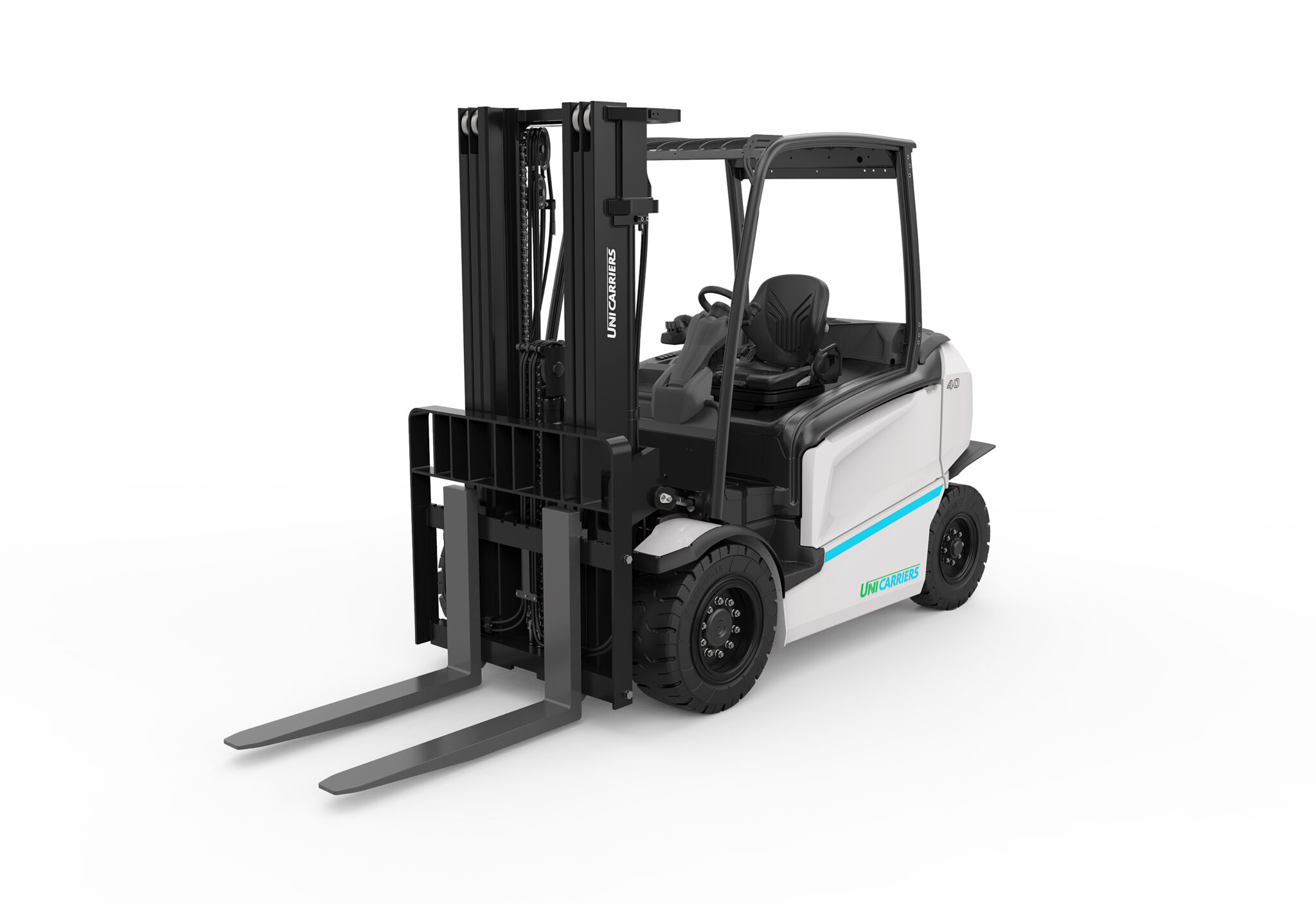
UniCarriers has announced the launch of their new MXL heavy-duty (4.0 – 5.5 ton) 4-wheel electric counterbalance truck, the first vehicle of its kind in the UniCarriers range: an electric forklift that’s built for the challenges of moving heavy loads in a modern freight environment. It offers its users the chance to go fully emission-free, and it’s every bit as tough, as fast and as powerful as any truck with a combustion engine. But more than that, it has unique ergonomics and comes with a lower total cost of operation than IC solutions.

With near-silent hydraulic pumps, the MXL can move heavy loads all day without the noise pollution of traditional powertrains. The loudest sound the driver will hear is the ventilation fan. And that’s not just a benefit for the driver, but for everyone else in the workplace, too. With improved cabin visibility, fully customizable controls, and better handling indoors and outside, the MXL is a performance-oriented tool for the ambitious forklift operator.

Best energy consumption in class

Electric vehicles are only as good as the battery that powers them, and here as well, the MXL offers best-in-class performance. A full charge lasts longer than a single shift, and the batteries can be charged during breaks or easily swapped out for a fully charged spare. So, whether the facility runs single, double, or triple shifts, whether the whole fleet is electric or the MXL runs alongside other drive systems, the energy source places no limitations on your workflow. For even better energy efficiency the MXL is available with high-performance Li-ION batteries to meet even the most challenging business demands.

Innovative boost functions

The motor and drive system have been engineered to impress. Automatic acceleration boost and extra torque when needed mean that electric trucks no longer need to compromise on performance, while an electric differential lock maintains perfect handling, even on slippery surfaces.

The new MXL heavy-duty electric counterbalance truck is built for the challenges of moving heavy loads in a modern freight environment and it’s good news for the bottom line, too. With lower maintenance costs and savings on energy consumption, a fleet of MXL vehicles offers a lower Total Cost of Operation than a comparable IC fleet.

Wearable scan/printer for logistics launched

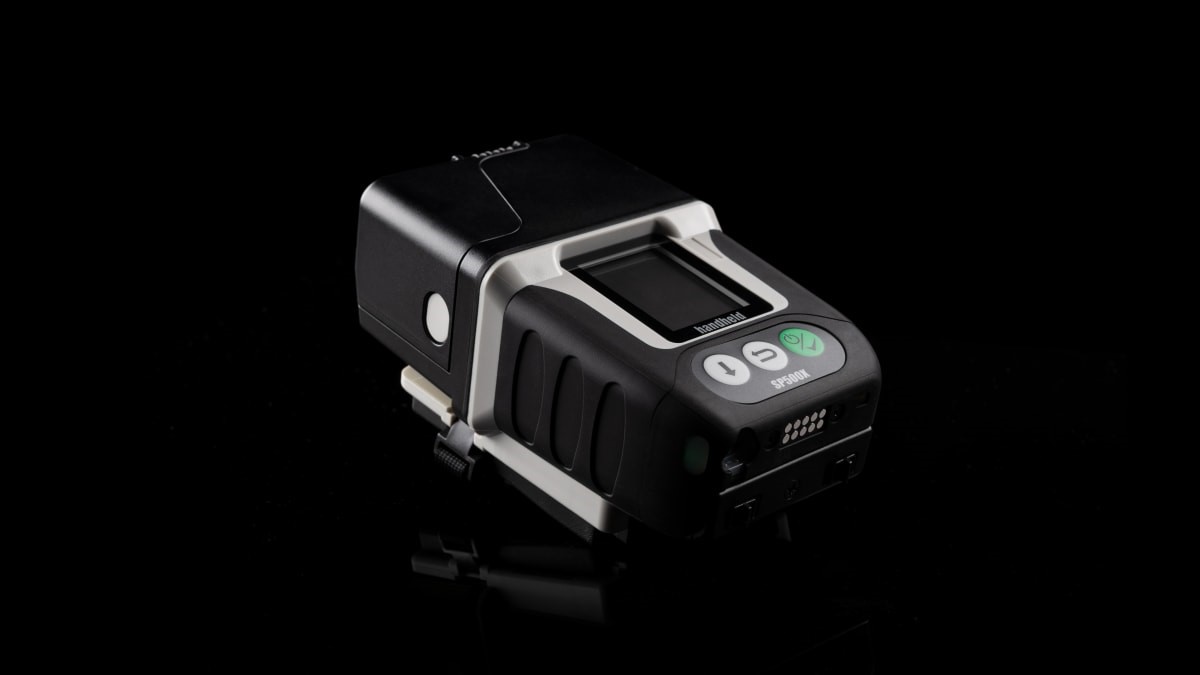
Handheld Group, a leading manufacturer of rugged mobile computers, today introduced the SP500X ScanPrinter, a wearable device that brings revolutionary technology and efficiency to logistics operations. With this device, Handheld is also launching a new segment to its line-up of rugged computers: rugged wearables.

The SP500X ScanPrinter is a unique, wearable scan-and-print solution that integrates 2D imaging, inkjet printing and wireless communication in one device. It’s designed to create a revolution in high-volume logistic operations that use manual scanning and labeling to sort packages. With Wi-Fi and BT, as well as an integrated printer developed in partnership with HP, the SP500X is truly mobile. You can quickly scan and print directly on packages anywhere in your facility, all while keeping both hands free.

“It helps to see the process, to understand just how ground-breaking the SP500X ScanPrinter is,” says Jerker Hellstrom, Handheld founder and Chairman of the Board. “There’s no other device like it in the world. You put on the device, grab a package and scan it. The scanner sends the data to your back-end system, which sends back information for printing. And nearly immediately, you print an address, a code or other information directly on the package. Your hands are free. You can move anywhere you need to work. You’re not anchored to a printer.”

New segment: Handheld rugged wearables

With the SP500X, Handheld is adding a new segment of rugged wearables to its portfolio of rugged mobile computers. More wearable devices will be added soon.

Autonomous Mobile Robots deployed in logistics centres in Japan

Musashi AI, a group company of Japanese Musashi Seimitsu Industry Co., Ltd., has successfully completed a POC for Autonomous Mobile Robots (AMRs) at Suzuyo & Co. Ltd, a leading Japanese 3PL company, in partnership with Israeli 634AI, a Musashi Group affiliated company and the developer of MAESTRO, an industrial automation and mobility management software.

Suzuyo, a Japanese logistics conglomerate with an annual turnover of circa $ 1.2 Billion, successfully tested Musashi AI’s AMR powered by MAESTRO, a platform-agnostic control tower for logistics automation developed by Israeli company 634AI. The AMR autonomously moved pallets in the facility from one location to another smoothly and efficiently. The POC was performed in Suzuyo’s Shinshizuoka distribution centre in Shizuoka prefecture.

Following the successful POC, the companies are now engaged in scale-up discussions to deploy 634AI’s cutting edge MAESTRO navigation and fleet management software with MusashiAI’s AMRs across Suzuyo’s distribution centres in Japan.

634AI and MusashiAI have been partnering since mid-2019 to leverage the unique combination of Israeli cutting-edge AI and computer vision software technology with Japanese world-renowned hardware engineering and industrial expertise, to bring practical, state of the art solutions to the Japanese market. Musashi AI’s core business is AI visual inspection and 634AI’s core business is software development for industrial mobility orchestration, including for AMRs. The companies plan to further increase their R&D and commercial collaboration.

Onn Fenig, CEO of 634AI said: “We are honoured to be partnering with Musashi and Suzuyo, two global industrial giants, to introduce the sizable benefits of our MAESTRO software system. This Proof of Concept has been another excellent showcase of our MAESTRO software, demonstrating its unique capabilities for orchestrating indoor logistics while providing insightful information to facilitate safe and effective floor operations. We are humbled and proud that Suzuyo is considering adopting our MAESTRO AMR navigation and Fleet Management software in their facilities across Japan.”

Murata Sota, CEO of Musashi AI said: “Our proprietary AMR technology, fully compatible with 634AI’s MAESTRO industrial mobility management software, is just another example of our vision to introduce practical solutions that solve real human problems. In a world of labor shortage, autonomous logistics becomes a viable solution for many companies wanting to increase their resilience and business continuity, especially following a global pandemic such as COVID-19.”

Ken Kawashima, General Manager of 3PL Business Development Department at Suzuyo said: “We are always thinking about improving the safety, quality and productivity of our distribution centers and providing our customers with a high level of distribution service. We believe MAESTRO offers a virtually unique ability to manage AMRs, and allows humans and robots to work together in sophisticated hybrid environments. Both Musashi AI and 634AI have the power to make the world’s logistics network function more efficiently than ever. We look forward to continuing our collaboration with these companies.”

Why Human Psychology is Key to Effective Human-robot Interaction 

Craig Summers, UK Managing Director of Manhattan Associates, reflects on Manhattan Associates’ annual virtual event, Momentum Connect and its biggest takeaway. This was being treated to an excellent speaker session from Kate Darling, Professor of human-robot interaction, tech policy and ethics at MIT, looking at how people project human traits, qualities and emotions onto not just animals, but also robots too.

The recent news from DHL that the logistics giant plans to deploy an additional 1,000 Locus Robotics (the Massachusetts-based robotic start-up) picking robots to more than twenty locations across the USA and Europe by the end of next year, is only the latest in a long line of news over the last twelve months to underline that robots (particularly in the warehouse and supply chain context) are very much here to stay.

Anthropomorphise

It’s critical that organisations not only look at the technology practicalities of these deployments (such as software, platform and API integration) but also the ‘softer’ elements such as the psychological interactions between human workers and their metallic co-bot colleagues.

If you own a pet, be it anything as small as a goldfish, right up to the size of a dog or even a horse, the chances are, you will have heard of the terms anthropomorphism. Deriving from its verb form anthropomorphise, itself derived from the Greek word ánthrōpos (ἄνθρωπος, lit. human) and morphē (μορφή, form), the term simply means to project human traits, qualities, emotions and behaviours onto non humans. According to Darling, these projections are not exclusive to just our pets, however instead they are tipping over into our increasing interactions with robots too.

Robots as Living Things

According to Darling, humans feel a certain empathy towards robots; even ones as simple as a Roomba vacuum cleaner. “It is not the most sophisticated machine in the world, it just moves around the floor cleaning it. Even so, 80% of people who own one have their own name for it. Furthermore, according to iRobot (the manufacturing company), when these Roombas suffer a breakdown, most people prefer to have their automated vacuum cleaners repaired rather than replaced with a new one.” This shows the illogical, yet very real bond humans will readily form with even the most basic of robots.

Darling went on to explain that even she (a professor in the study of human-robot interaction) has experienced feelings for basic robots in the past. In 2007 she bought a toy robot dinosaur; “because it had motors, touch sensors and an infrared camera. I thought it was really interesting because it  reproduced certain behaviours very well. When I showed it to my friends, some of them grabbed it by the tail and twisted it until it would cry. Even knowing that it was a robot, I felt a certain anguish.” It was as a result of this experience, the researcher became interested in the field of social robotics.

We are certainly at a very interesting moment in human history when it comes to the merging of the robot-human world. For at least the last six decades we have had robots in factories and warehouses, but now they are reaching out into other spaces, even our homes and workplaces. While the levels of AI and ML have rapidly accelerated, to the point that these new generations of robots can think, make autonomous decisions and learn, they are not alive and they cannot feel; instead it’s us as human beings who feel for them.   It’s this eureka moment of clarity that Darling insists we need to recognise, emphasise and keep in mind in order to integrate technology more effectively into our daily working (and personal) lives.

Different Types of Intelligence

A commonly made mistake according to the MIT’s Darling, is comparing artificial intelligence with human intelligence: “It’s an analogy that doesn’t make sense to me,” she commented. “Sure, it is true that there are already machines that are much more intelligent than us; that can do infinite calculations, beat us at chess and identify patterns that we would not recognize. However, they are not able to perceive the world or learn in the way that a human does – it is a different type of intelligence.”

Robots therefore should be seen as complementary to human roles not as a replacement for them, such as a co-bot interacting and assisting a picker in a warehouse environment when a product is too heavy or an awkward size.  A greater understanding of how we’re hard wired as a species to interact with other non-human objects, is the key to designing more effective and efficient robots. In relation to supply chains (more broadly) and warehouses (more specifically), both stand to significantly benefit from the exploration and advances in understanding our need to anthropomorphise robots.

With the pandemic finish line in sight - queue a collective inhalation of breath and crossed fingers - now is the perfect time to start assessing which areas of society, commerce and business have been most changed by the events of the past 18 months.   In terms of robotics, investments and uptake have gone through the roof in the last year for obvious reasons and certainly show no sign of slowing down any time soon, so now may well be the perfect time to seriously consider robotics and automation as part of your organisation’s long-term business strategy.

The Future of the Robot

Covid-19 is destined to have a long-term, profound and lasting impact on the way we all work and live; and increasingly, robots and automation are going to play a significant role in both. We may be on course for a true watershed moment in terms of robot uptake in warehouses and supply chains. With more research into the human need to anthropomorphise robots including both warehouse co-bots and in-house automated helpers, the robots of the future will likely look, feel (see I’ve done it right there; robots can’t feel!) and behave very differently to those which we interact with on a near daily basis today.

Read the article on this from our September issue here.

RFID tech firms merge

Omni-ID has announced that it has been acquired by HID Global, worldwide leader in trusted identity solutions.

Omni-ID brings to HID its extensive range of ultra-high frequency (UHF) radio frequency identification (RFID) devices, including passive hard tags and labels and a growing range of active devices that are used by world-leading companies to track and monitor manufacturing components, energy infrastructure, logistics containers, IT assets, and equipment on the International Space Station.

CEO Tony Kington, who was part of the team that founded Omni-ID when it was spun out of QinetiQ in 2007 commented, “Since Omni-ID started life as a dynamic and highly ambitious spin-out, we have been on a mission to provide our customers with a wide range of industry-leading passive and active UHF based hardware for a broad array of applications in the logistics, energy, manufacturing and IT sectors. HID Global provides the perfect platform to push our ambition even further, combining the RFID market leadership and structure of a major multinational organization with our renowned product development and agile engineering prowess”.

Omni-ID has developed original, patented technologies for on-metal tagging to enable a broad range of applications to improve asset tracking, inventory management and material flow management. Omni-ID continues to lead the way driving the Internet of Things (IoT) revolution in Manufacturing & Logistics, Oil & Gas, IT Asset Management, Transportation and Government & Defence, utilizing market leading technologies. Omni-ID’s versatile portfolio of award-winning products provides a complete range of tags with unprecedented accuracy in any environment. Omni-ID is a global company with offices in USA, United Kingdom, Europe, India and China.

HID Global powers the trusted identities of the world’s people, places and things. We make it possible for people to transact safely, work productively and travel freely. Our trusted identity solutions give people secure and convenient access to physical and digital places and connect things that can be accurately identified, verified and tracked digitally. Millions of people around the world use HID® products and services to navigate their everyday lives, and billions of things are connected through HID technology. We work with governments, educational institutions, hospitals, financial institutions, industrial organizations and some of the most innovative companies on the planet. Headquartered in Austin, Texas, HID Global has over 4,000 employees worldwide and operates international offices that support more than 100 countries. HID Global® is part of the ASSA ABLOY Group.

Subscribe

Get notified about New Episodes of our Podcast, New Magazine Issues and stay updated with our Weekly Newsletter.