Drone to bring autonomous inventory warehouse solution

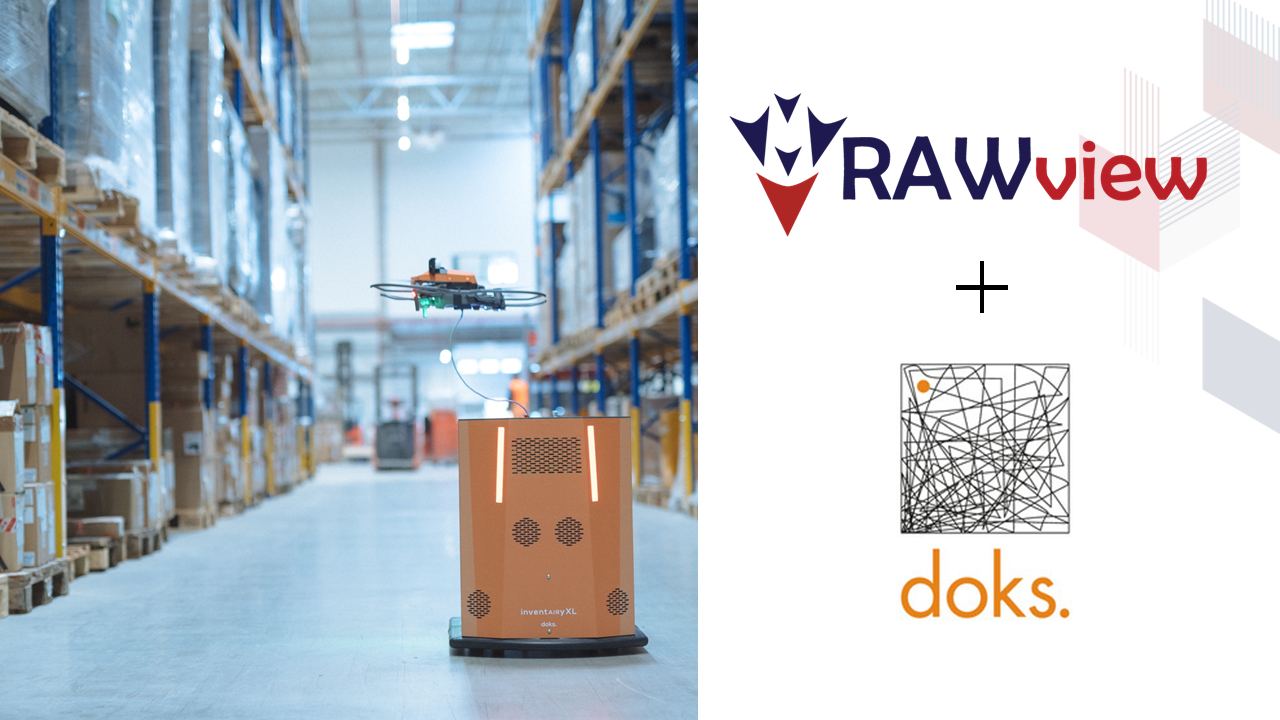
RAWview Drone Systems Ltd, a UK-based drone automation specialist has announced a new partnership with doks. innovation GmbH, a Germany-based developer of autonomous drone-based inventory management systems.

Thanks to ground-breaking technology, the fully autonomous inventAIRy XL drone system is now able to navigate through even the most complex of warehouse layouts to each individual rack location, where the contents are scanned and reconciled against ERP or WMS records, all without any human supervision or intervention and without any reliance on GPS. This is achieved by combining a drone with barcode scanning sensors, a ground vehicle for autonomous navigation and a docking station for autonomous battery charging. The result is an elegant solution that overcomes the biggest limitations of drone-based inventory control: flight endurance, unsupervised operation, and fully autonomous navigation within GPS and light-deprived environments.

Key selling points of the solution:
• Longest operating endurance on the market – 5 hours of fully autonomous operation, compared to approximately 20 minutes of other systems
• Highest workrate on the market – a single inventAIRy XL unit can scan in excess of 2000 rack locations per autonomous mission, compared to approximately 120 rack locations of other systems
• Zero modifications required to facility’s infrastructure
• Autonomous recharging – other systems require manual swapping and recharging of drone batteries
• Ability to operate completely unsupervised and in darkness, ie. between shifts or when warehouse is closed
More importantly, by combining their expertise, the two companies are taking away another major pain point of warehouse operators who are looking to implement drone-based inventory control – the time and resources required to fully deploy and integrate drones into inventory processes.

Traditionally, the process of finding and implementing an appropriate drone solution for autonomous inventory reconciliation is time-consuming, complex, and expensive. In contrast, this partnership gives warehouse management teams access to a 360-degree solution that encompasses pre-deployment feasibility, supply and installation of hardware and software, and ongoing customer support. This means warehouse operators can seamlessly and cost-effectively transition to fully autonomous drone-based inventory control, with virtually no disruption to their normal operation.

Joe Waldron, Product Integration Director at RAWview said:

“As warehouse and project management teams seek to reduce cost, improve safety, and protect themselves against falling labour resources, they are increasingly turning to task automation technologies – one of the latest innovations in this space is drone-based inventory reconciliation.

“During initial conversations with doks. innovations’ management team, it quickly became clear that both companies shared the same fundamental goal – to help businesses work safer, smarter, and more profitably. However, a shared goal was only the starting point; we needed to be sure that the technology behind our solution would meet the aspirations of our customers, and having conducted extensive analysis across the drone technology ecosystem, we concluded that doks. innovation offered a completely unique proposition, which is perfectly placed to resolve our customers’ most challenging inventory management problems, and one that will help us to meet and exceed our customers’ ROI expectations.”

Benjamin Federmann, CEO of doks. innovation added: “As any warehouse manager will know, manual inventory counts are ill-suited to high volume and high velocity operations. With accelerating supply chains, warehouses are forced to assign more time and labour resources to stocktaking activities. Furthermore, scanning thousands of bin locations manually is inevitably prone to human error, which leads to discrepancies in WMS inventory records. Manual inventory operations also present very real safety risks to warehouse employees. These are the issues we set out to eliminate with the inventAIRy XL system.

“Welcoming RAWview as a sales and support partner means that customers receive a critical layer of hassle-free implementation, service, and support – all provided by a leading drone technology specialist.”
3D view into the warehouse

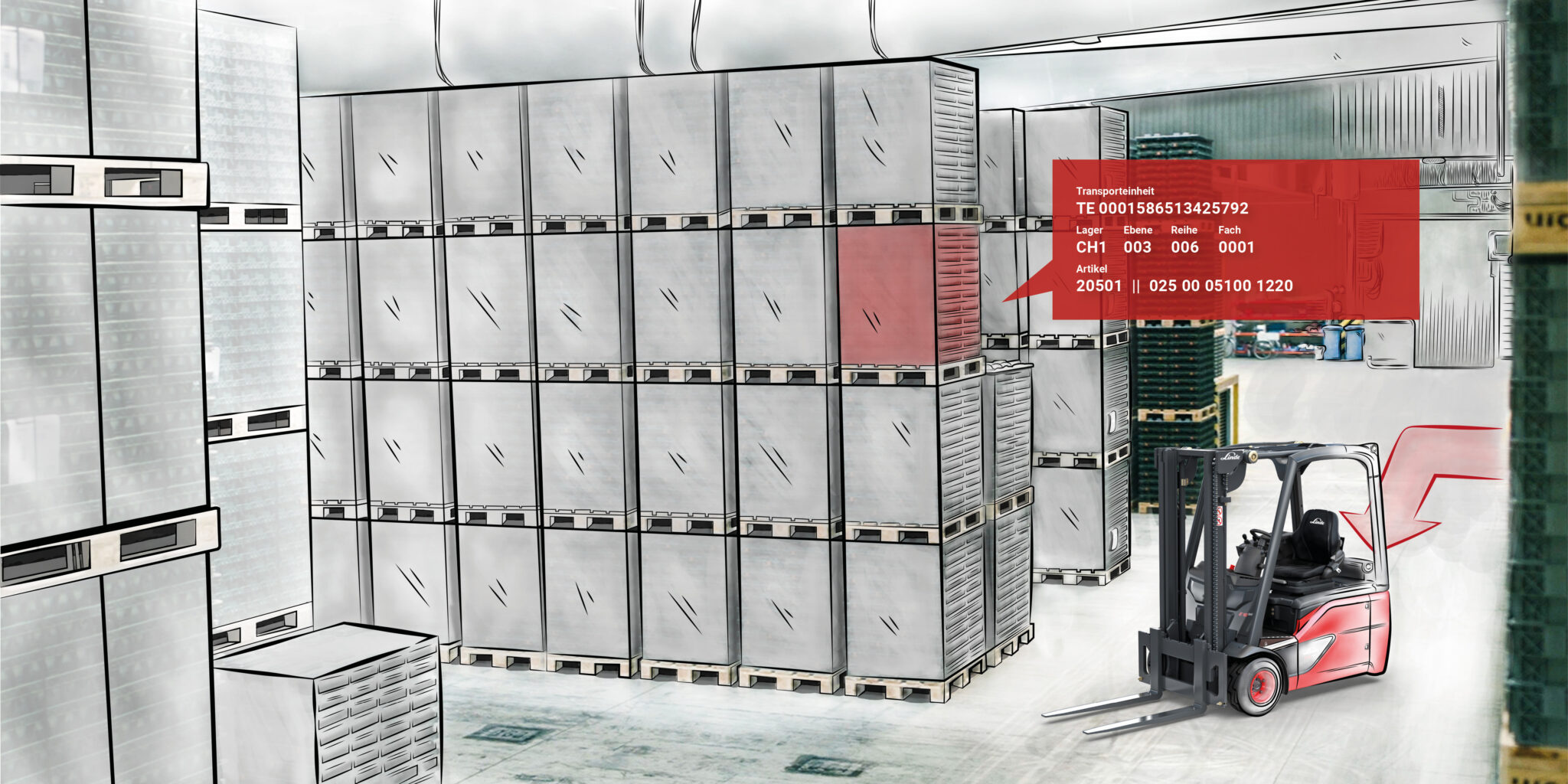
The Linde Warehouse Navigator helps small and medium-sized companies to digitally organize their entire warehouse processes. Consisting of a warehouse management system as well as an order picking and forklift guidance system, the modular solution enables long-term time and cost savings to be achieved and features various special options: A three-dimensional view visualizes the warehouse including goods in real time and shows drivers the fastest route to their destination. While doing so, the software automatically documents the movements of the load carriers across different storage locations.

Many small and medium-sized companies in Germany and other European countries still handle their warehouse processes manually using tables, lists and paper printouts. “In the long run, however, this is neither efficient nor up-to-date and is detrimental to profit and competitiveness,” says Christoph Hock, Product Manager Software Solutions. “Even with fleets of three or four forklifts, it quickly becomes confusing when incoming and outgoing goods processes as well as storage and retrieval operations are organized using paperwork.”

The Linde Warehouse Navigator provides a solution in the form of digital warehouse management. Its range of functions can be adapted to different warehouse scenarios and expanded step by step. The developers placed great importance on providing clear, configurable user interfaces, and ensured that mobile devices can be integrated in the system. Training and go-live support are part of every package solution. The required software licenses can be either purchased or rented via a monthly fee. This also includes the charges for cloud hosting.

Reliable goods tracking and complete overview

Once installed, the Linde Warehouse Navigator can be used for the paperless control, monitoring and documentation of all orders and inventories as well as goods movements in the warehouse. The basis is the warehouse management system (WMS) which is suited for all warehouse types as well as standard storage and retrieval strategies. “In addition, even the entry-level version offers customers an overview of specific key figures on the basis of which they can further improve their processes,” says Christoph Hock.

For Product Manager Hock, the highlight of the software is that it enables 3D visualization of all storage locations that shows the current occupancy for the entire plant site. Selected items are color-coded so that their position in the warehouse is easy to identify. “This function is particularly helpful for block warehouses,” says Hock. In addition to this is the continuous tracking of load carriers via the optional Real-Time Locating System (RTLS).

In conjunction with the RTLS, the forklift guiding system (FGS) coordinates the routes of the industrial trucks in real time and displays all forklifts and AGVs operating in the warehouse. Transport orders are either generated manually by the employees, for example via the “drag-and-drop” feature in the warehouse visualization system or via a forklift call system (call button). Alternatively, orders can also be assigned automatically, for example from the ERP system via an interface or when predefined thresholds are not met. The optimal route to the destination is shown to the drivers via arrows in the 3D view. The source and destination of the transport order are also highlighted in colour.

The third component of the Linde Warehouse Navigator is the order picking system. The system bundles smaller orders with various individual items for parallel picking (multi-order picking). Larger orders can be divided into several partial orders and consolidated afterwards.

Last but not least, the software solution helps harmonize the operational IT landscape and reduces the number of contacts involved. Very narrow aisle trucks and AGVs can be integrated via standard interfaces. “This ensures short commissioning times and reduces costs,” explains Christoph Hock.


Smart palletizing solution launched

Geek+, a global AMR leader, is proud to announce the launch of a new solution for Smart Mixed Case palletizing, co-developed with WSR Solutions, a provider of intelligent warehouse management tools. The solution combines Geek+ autonomous mobile robots and WSR’s intelligent palletizing algorithm to help warehouse operators systematically handle the processing of multiple outbound orders in an efficient, safe, and flexible way.

Lit Fung, Vice President of APAC, UK and the Americas at Geek+, says: “We are thrilled to work together with WSR Solutions to provide a tool that targets every aspect of the outbound logistics process, from how goods are stored and moved around the warehouse to how pallets are stacked, streamlining processes by eliminating the need for re-palletization, and optimizing overall space utilization.”

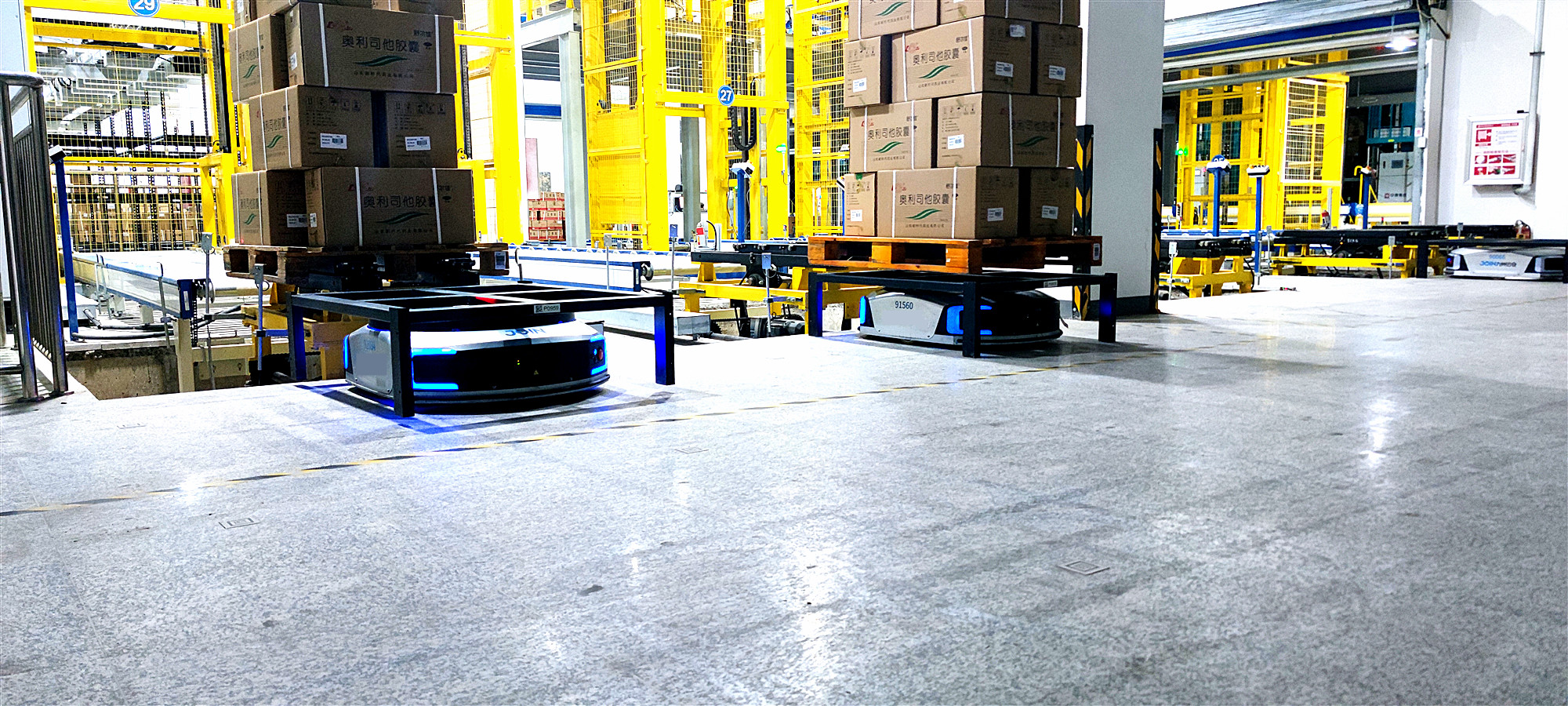
Based on real-time demand, Geek+ autonomous mobile robots optimize the movement of ordered goods between the storage area and picking station. At the picking station, WSR’s intelligent algorithm support warehouse operators to stack cases of varying weight, height, width, and so on in an optimal way. It is a one-stop solution that takes warehouse automation one step further, allowing operators to not only modernize logistics processes inside the warehouse but ensure agile supply chains through the efficient use of truck space.

Marcel van Schijndel, CEO of WSR Solutions, says: “Together with Geek+ we provide a full framework for the changing market requirements. Innovative mixed palletizing solutions that in effect serve one single goal: to optimize the customer’s supply chain with efficient, flexible, and affordable automation solutions.”

The solution has four key components – storage area, buffer area, case picking area, and loading area.

Storage Area

The storage area is built on multiple layers using high-density racking and bulk lifts for more storage capacity. After inbound processing, pallets of incoming goods (donor pallets) are stored in high-density racking. Donor pallets are then moved horizontally by four-way shuttles and vertically by lifts. The system flexibly solves bottlenecks caused by rapid changes in required throughput. With no need for wires and long installation periods, the number of shuttles can be flexibly adjusted to handle changes in required throughput, and peak values can be changed using the system’s scheduling tool.

Buffer Area
Upon receiving the outbound order, items of high outbound volume go to a buffer area between the storage area and the workstation. Upon registering an incoming order, a picking robot picks up the donor pallet from the storage area and moves it to the buffer area for temporary storage. At the buffer area, picking robots streamline the movement of pallets, ensuring the smooth supply and optimal sequencing of source pallets to the workstation.

Case Picking Area

At the workstation, an operator picks cases from a donor pallet and stacks them on an order pallet based on a pre-calculated stacking pattern. The user-friendly interface provides the operator with information on outbound orders such as required type and quantity of goods, and the SAT laser pointer specifies case placement.

If one type of good is included in different orders, picking robots will move the donor pallet of that good to the next workstation, and new donor pallets containing other SKUs will automatically arrive at the previous workstation for continued order picking. The remaining items that do not require further picking will go to the storage area, creating a dynamic transit cycle.

Loading Area

At the loading area, optimally stacked pallets are loaded onto trucks by autonomous forklifts without the need for re-palletization. By optimizing how pallets are stacked it improves truck space utilization, lowering the overall transport costs. The algorithm enables efficient organization and order sequencing of large-scale, mixed case combinations. It can be tailored to fit customers’ actual business needs for allocation and priority management, making a powerful tool applicable to a wide range of industry scenarios.

Voice rollout across 92 Coca-Cola bottling sites

The Ehrhardt Partner Group (EPG) has boosted its reputation with the successful rollout of its LYDIA™ Voice technology to 92 CONA locations, a total that is set to rise to over 100. CONA is the IT services company for the Coca-Cola bottling business in North America, with over 160,000 sales orders and an average of 30000 users per day. Its implementation and rapid rollout of LYDIA™ Voice is a fantastic endorsement for EPG, the Germany-based global supply chain software provider and voice picking innovator.

“LYDIA Voice is the best thing we have ever rolled out to the warehouse. Where has it been these last five years?” This is the valuable feedback coming directly from the bottlers of Coca-Cola who use EPG’s software on a daily basis. And this user experience is backed up by a number of facts. According to CONA, LYDIA Voice has brought productivity gains of up to 7% as well as clear voice recognition, the elimination of voice template training, and a more coordinated system architecture compared to the previous voice system. “The implementation of LYDIA at Coke One North America is of enormous significance for us,” emphasises Marco Ehrhardt, President of EPG. “The rollout to the 92 locations was completed in just twelve months.”

Consistency and clarity

CONA recognised the need to consider new voice solutions in 2019. Its previous system was prone to weak or intermittent connections. CONA required a solution that would al-low for continuous picking – independent of the network connection – should the Wi-Fi signal be weak or lost.
“Our previous voice system had a complex architecture and required the software to be hosted and run on individual servers at each deployment site,” explains Baron Jordan, CONA Chief Product Officer, Supply Chain. “There were also issues concerning inconsistent voice recognition.”

After an intensive eight-month investigation by CONA and a real-world test against an-other provider, LYDIA Voice emerged as the clear winner due to being able to meet all the tough requirements of Baron Jordan and his team. LYDIA Voice immediately resolved the architecture and support challenges across the 92 bottling sites thanks to its ability to directly integrate with SAP via a remote function call (RFC) without middleware.

The solution also offers an unsurpassed level of voice recognition, which is enabled by its deep neural network voice recognition. Training requirements are swept away altogether due to its immediate ease of use and its versatility. LYDIA is able to recognise more than 50 languages and a multitude of dialects.

A further advantage of the product is that it is device-independent, meaning that each location can select its preferred mobile voice device according to environment or preference. Customised adaptions in the voice dialogue can be independently created by the customer without having to call on EPG technicians or developers.

https://www.lydia-voice.com/gb/voice-know-how/case-studies/cona-services-success-story/

Managing change to smooth technology transition

A massive shift to digital solutions is now well underway in warehousing but, as more companies make the move from manual to automated processes, do we risk leaving our employees behind? By SnapFulfil CEO, Tony Dobson.

Bosses need to prepare their staff accordingly to embrace new technology as an opportunity, rather than perceive it as a threat. It takes both clear communication and a willingness to learn – and especially around the cultural shift to slick, best-of-breed WMS from an onerous and manual paper-based system.

At SnapFulfil, we’ve supported many clients in the journey away from paper-based warehouse management. In many ways, implementing the operational improvements is the most straightforward element of the transition to a WMS. Bringing your people along with you is more nuanced. Warehouse operatives will be used to a certain way of working and will need to truly understand the benefit of change and feel fully supported throughout the journey.

One of our clients summed up the challenge perfectly, suggesting that introducing a warehouse operative to a tier 1 WMS without the proper support is: “like putting people used to driving a Ford Fiesta into a F1 car and expecting them to figure it out!” So it pays to plan ahead and create internal comms and strategies to win the hearts and minds of managers and operators who cling to the old and established (but highly
inefficient) ways and resist change.

Any change management plan worth its salt must identify and communicate the obvious benefits in a meaningful way, so for me the following four established fundamentals go a long way toward achieving buy-in from your
employees:

Formalise what’s about to happen – start by developing a list of actions you have to take before implementing the WMS, including all the digital advancements, new dashboards and other systematic procedures you’ll need to learn.

Then define the change itself for all levels of staff to build a clear picture of the training and pre-emptive support required to get everyone on the same page.

Determine what to measure and how – state your goals clearly and also break them down relative to change management. How quickly do you want teams to start using the new system? What measurements are required after you implement a phase of the project? How can you ascertain if someone is using the software correctly?

Narrowing each big goal into a small measurable piece for each position helps you ensure that you’ve thought about the WMS holistically and are ready for the knock-on effects it may have. For example, more efficient workers mean inventory and accuracy both improve, with less time required to fix miss-picks and address performance issues, creating more opportunities to explore further cost-saving improvements.

Prioritise help and support – your team will have concerns and questions along the way, so providing a feedback tool is essential. You’ll also need to communicate that feedback to everyone involved. For example, consider setting up a series of online informational sessions, or lunch & learns, to build an open line of communication between management and your pick, pack and ship teams.

Promote training and professional development – help employees develop new skill sets to manage these more advanced WMS solutions. Providing training sessions is a great way to show you’re investing in people as well as technology and will help increase employee satisfaction and performance, as well as preparing them for their new roles.

In short, make it easy for your staff to ask for help and you’ve got the best chance of getting ahead of any implementation and adoption issues.

This along with proper planning, communication and investment will help speed your warehouse operations – and your employees – into this here-to-stay and rewarding age of digital fulfilment.

Battery maintenance for electric forklifts during downtimes

Extended downtimes – during long weekends or holidays, for example – present a particular challenge for the traction batteries of electrically powered forklift trucks. They can discharge independently during this idle time and, in the worst-case scenario, even lose their capacity. Professional battery maintenance is the best way to ensure that the forklift truck fleet is ready for use again as soon as the time comes to restart.

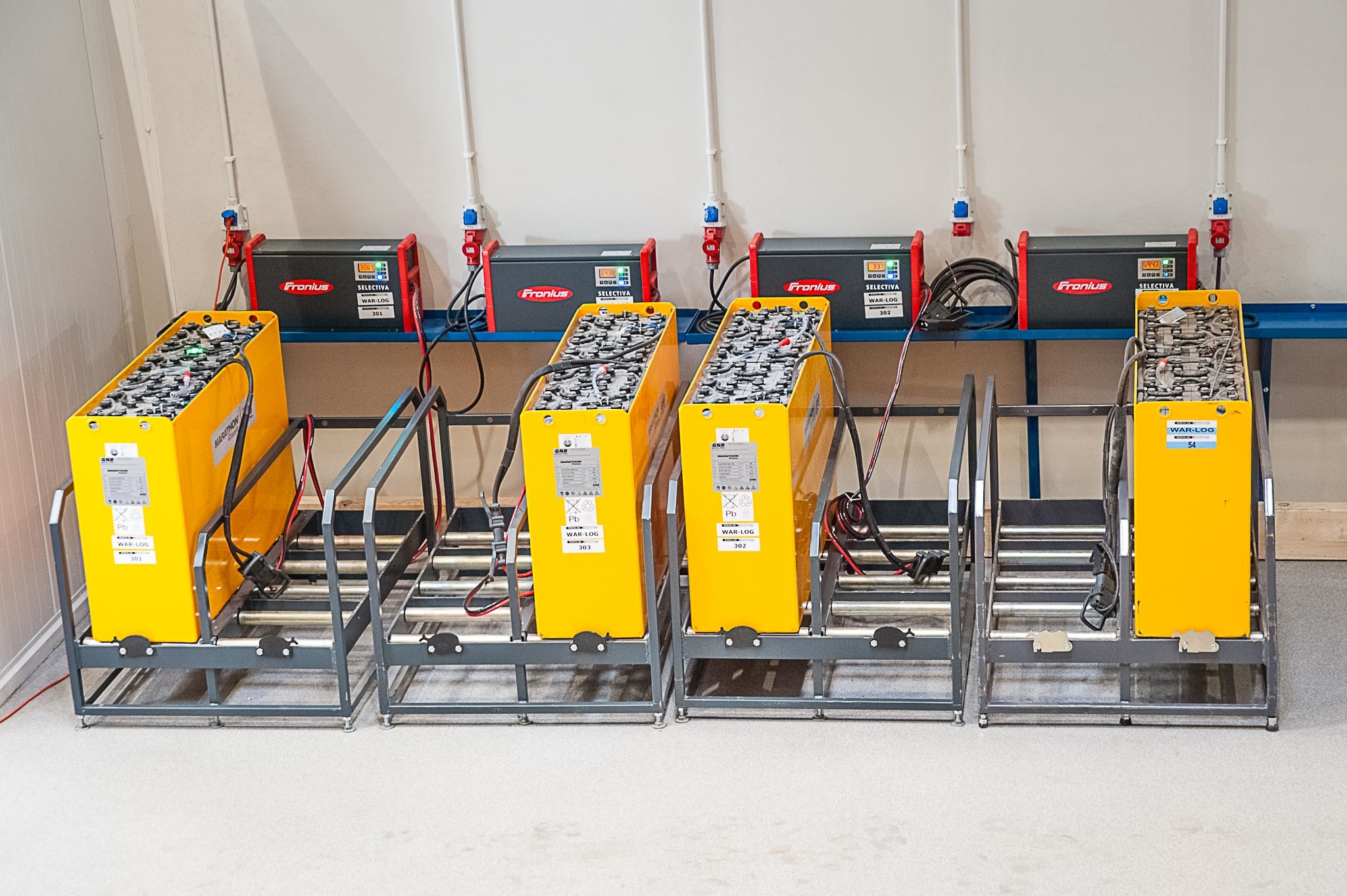
Lead-acid batteries are most commonly used to power electric forklift trucks. During extended downtimes, these should be stored in a charged state – otherwise there is a risk of damage, which can drastically reduce the battery life. Fronius battery chargers have a dedicated conservation charge feature, which continuously supplies the battery with power. The batteries are therefore ready to use immediately, even if they have been out of action for a long time. This avoids high costs for maintenance or new purchases.

Lead-acid batteries feature a liquid electrolyte that must be filled with water regularly during both operation and extended downtimes. Battery-quality water must always be used here and the specified fill level observed. This type of battery is also prone to the development of highly explosive oxyhydrogen – and downtimes are no exception. Proper ventilation of the battery charging rooms is therefore essential and smoke, sparks and any sort of open flames in the vicinity of the batteries must be avoided. In addition, users should never remove the vent plugs from the battery cells during charging.

On top of this, the Selectiva 4.0 battery chargers offer a special deep discharge characteristic that can be easily set on the charger itself. Harmful sulphation caused by extended downtimes or older lead-acid batteries is thus reliably reduced. This significantly improves the capacity and performance of the battery. A clear advantage over other battery chargers, which often fail when batteries are in a deep discharge state, as the battery voltage is too low and can no longer be detected.

It is also important that a compatible battery charger and battery are selected. Thanks to their automatic voltage detection, the devices from the Fronius Selectiva series are suitable for different types of batteries, with various voltages and capacities – this makes allocation significantly easier. As a result, forklift truck operators can fully depend on the readiness of their traction batteries, even after extended downtimes.

DSV Panalpina completes acquisition of Agility Global Integrated Logistics

All conditions and requirements for the acquisition of Agility’s Global Integrated Logistics business (GIL) have been met, and DSV Panalpina A/S (DSV) is now formally taking over GIL from Kuwait-based Agility. With the acquisition of GIL, DSV is becoming a global top-three player within transport and logistics and the aim is to continue to grow the business from this strong position.

Today’s expected completion of the acquisition of GIL marks an important milestone on the growth journey for DSV. Within transport and logistics, size is critical and with the acquisition DSV fortifies its position as one of the world’s largest transport and logistics companies.

“I am very pleased to welcome our new colleagues from GIL on this important day. There are many similarities when you look at our two companies both in terms of the business models and services and, not least, when we look at our shared focus on local empowerment and putting customers first. DSV and GIL simply constitute an excellent match. We will now start the integration, and, together, we are going to grow the business and bring even more value to our many customers, partners and shareholders than we do separately,” says Jens Bjørn Andersen, Group CEO, DSV.

The enterprise value of the transaction is approximately DKK 30.2 billion and the equity value approximately DKK 29.6 billion. The combination of DSV and GIL will have an expected combined pro forma revenue of approximately DKK 160 billion (based on last 12 months) and a combined workforce of 75,000 employees in more than 90 countries.

As consideration for 100 pct. of GIL, Agility receives DSV shares representing approximately 8 pct. of all post-transaction outstanding shares of DSV. This will make Agility the second largest DSV shareholder based on today’s shareholder register. After completion of the transaction, DSV has agreed to nominate an Agility representative to DSV’s Board of Directors.

Improved service offerings across all three divisions

GIL has an annual revenue of DKK 29 billion (USD 4.6 billion) with Air & Sea freight as the main contributor. This will be added to DSV’s existing global network. Moreover, the inclusion of GIL is building on DSV’s presence in both APAC and the Middle East. With 1.4 million square meters of warehousing capacity, GIL will be a strong addition to DSV Solutions, while the road freight activities in Europe and the Middle East will strengthen the DSV Road network.

“By adding the GIL network and competencies to our existing network, we improve our competitiveness across all three divisions: Air & Sea, Road and Solutions. This brings commercial synergies and cross-selling opportunities while at the same time providing our customers with an even higher service level and a one-stop-shop for logistics needs,” says Jens Bjørn Andersen.

The combined DSV and GIL business is aiming to use the strengthened position in the market to continue to grow through enhanced service offerings for customers, market-leading IT infrastructure and economies of scale.

DSV’s acquisition strategy has proven successful in both acquiring and integrating companies, most recently Swiss Panalpina in 2019 and American UTi Worldwide in 2016.

The focus on scalability remains one of the key competitive advantages in freight forwarding with significant operational and commercial benefits in a highly fragmented market.

Now the integration process of GIL can begin. The two organisations will be merged in a country-by-country process, which means that for customers and employees in many countries the coming period will be business as usual until the country-specific merger process is initiated. As has been a key focus in previous acquisitions, DSV will be approaching this integration with due respect for both organisational and individual considerations.

Despite the expected completion of the transaction today and in line with what has been agreed, regulatory clearances are pending in a limited number of jurisdictions where revenues individually and combined are insignificant compared to the combined post-completion revenue, and in each such jurisdiction completion of the acquisition and commencement of integration activities are awaiting the relevant regulatory clearance.

Digital excise tax connector SAP certified

The digitalization specialist Implico Group is proud to announce that the Avalara Tax Connector 1.0 is now officially SAP certified for integration with SAP S/4HANA and SAP S/4HANA Cloud. The helpful interface was co-developed by the company’s subsidiary in the United States, Implico, Inc., and the tax experts at Avalara. By connecting the powerful tax tool AvaTax Excise with the SAP ERP system, it enables automated excise tax calculation for North American suppliers, distributors, retailers, and traders in the energy sector and other industries.

The proper calculation of excise taxes is a complex task – especially for downstream companies. In each process, there are many different factors that influence the tax rate: Products and blends. Origins and destinations. Effective dates and exemptions. Branded and unbranded products. Gross and net volumes. Additionally, there is another challenge for companies registered in North America: There, the different tax rates are regulated by the Federal Government as well as State Governments and Local Governments. Independently of each other, these jurisdictions adjust the rates several times a year.

As cloud service or on-premise installation, the Avalara Tax Connector 1.0 integrates the proven tax tool AvaTax Excise into the standard sales and purchase functions of a company’s SAP ERP system. In turn, this facilitates automated tax determination and calculation for a wide range of processes. The benefits are manifold and meaningful: AvaTax Excise minimizes the chance of inaccuracies and errors. It empowers its users to ensure consistency and manage complexity as their businesses grow. And it frees space for the teams to stay focused and deal with their key objectives rather than getting overwhelmed by manual work. Via automatic updates, the software is always up to speed. At any point, it provides quick and easy access to all relevant information.

The SAP integration certification confirms the technical compliance of Avalara Tax Connector 1.0 with SAP certification procedures. It also qualifies Implico and Avalara’s interface software for listing in the SAP Certified Solutions Directory. This creates visibility and builds trust. According to SAP, selecting a certified partner solution helps companies ensure that they can cut implementation times, lower integration costs, and be confident of compatibility with their SAP technology infrastructure.

Bulk handling forces combine

Two bulk handling specialists have joined forces to combine their sixty years of experience to offer the sector a total-solution combining industry design expertise and established manufacturing skills.

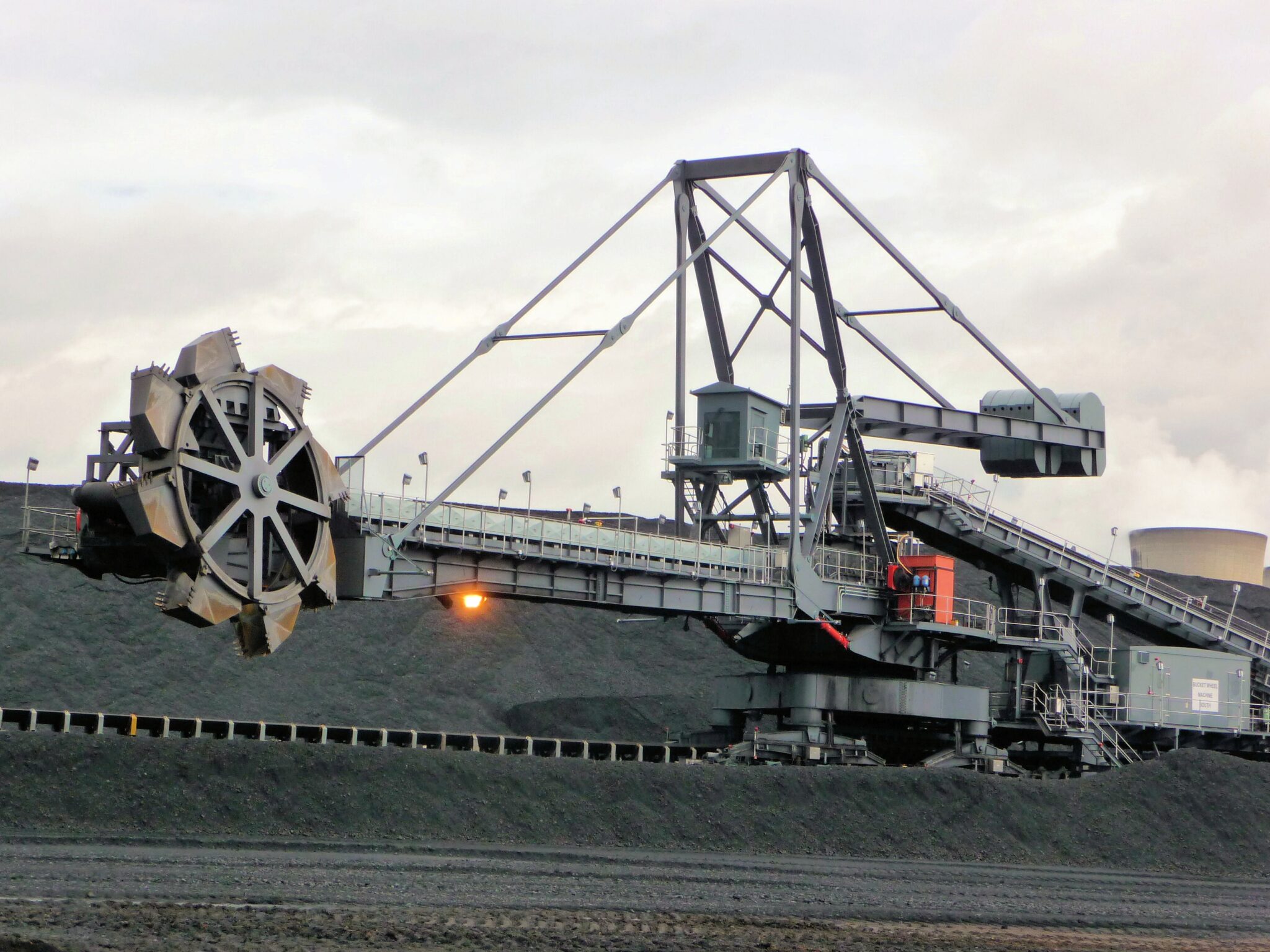
Specialist hydraulic manufacturer, Advanced Actuators and engineering designers, Ashton Bulk, have already fulfilled two multi-million pound contracts together for major clients in the bulk handling industry. They are now specialising in wagon tippling technology offering a full consultation and design service, along with the manufacturing facilities, creating a turnkey service solution. Mechanical, hydraulic and electrical design, intelligence and control systems can now be provided under one contract making customers’ projects much easier to manage.

Managing director of Advanced Actuators, Chris Woodhead, explains: “We have found from working together in the past that we offer complimentary services and work really well together. We’re aware of a gap in the market for a one-stop-shop where consultants can find experts to deliver their entire bulk handling projects from consultation, delivery and installation through to testing and commissioning. In short, we’re offering the brains and the muscle under one roof.

“We’re seeing a growing trend towards the use of tipplers over bottom dumpers in industries such as power, steel and ports, wherever unloading and stockyard equipment is used. It can be very costly to buy and maintain a fleet of bottom dumping wagons and tipplers tend to be more cost-effective and able to handle trickier loads such as outsized, frozen or sticky materials. We’re now able to service that market from end-to-end.”

The two companies first worked together in 2017 to deliver high-capacity train unloading systems for projects in South Africa and Guinea.

Joe Dudman, projects director at Ashton Bulk, adds: “Since teaming up with Advanced Actuators, we can provide all the expertise that engineering consultants need in one place. By carefully selecting a supplier at specification stage, it’s possible to save significant amounts of money, simplify the process with less suppliers, and ensure longer lifespan of plant.

“Well-made and maintained equipment designed to recognised design standards should last for up to 40 years, but those who have chosen to buy cheaper products from China and India in recent years will find that they will be replacing them much sooner than they should and any downtime is going to be incredibly expensive. Therefore, it’s recommended quality plant is specified from the very beginning of a project to avoid delays and expenses associated with repairs and replacements.

“We’re a smaller partnership than some of the big players, and that allows us greater flexibility and we’re much more willing to travel globally and to remote locations to provide a truly personal service and reaction times you are less likely to receive from larger organisations.”

Advanced Actuators has clients in the oil and gas, bulk handling, power, water and nuclear sectors such as Shell, Petronas, EDF Energy and BP, supplying standard and bespoke hydraulic engineering and servicing across the globe, including Europe, India the Middle and Far East.
Ashton Bulk provides engineering design and project management solutions to the bulk materials handling industries throughout the world and have engineers with experience dating back 50 years.

Floating cranes supply Vietnam with energy

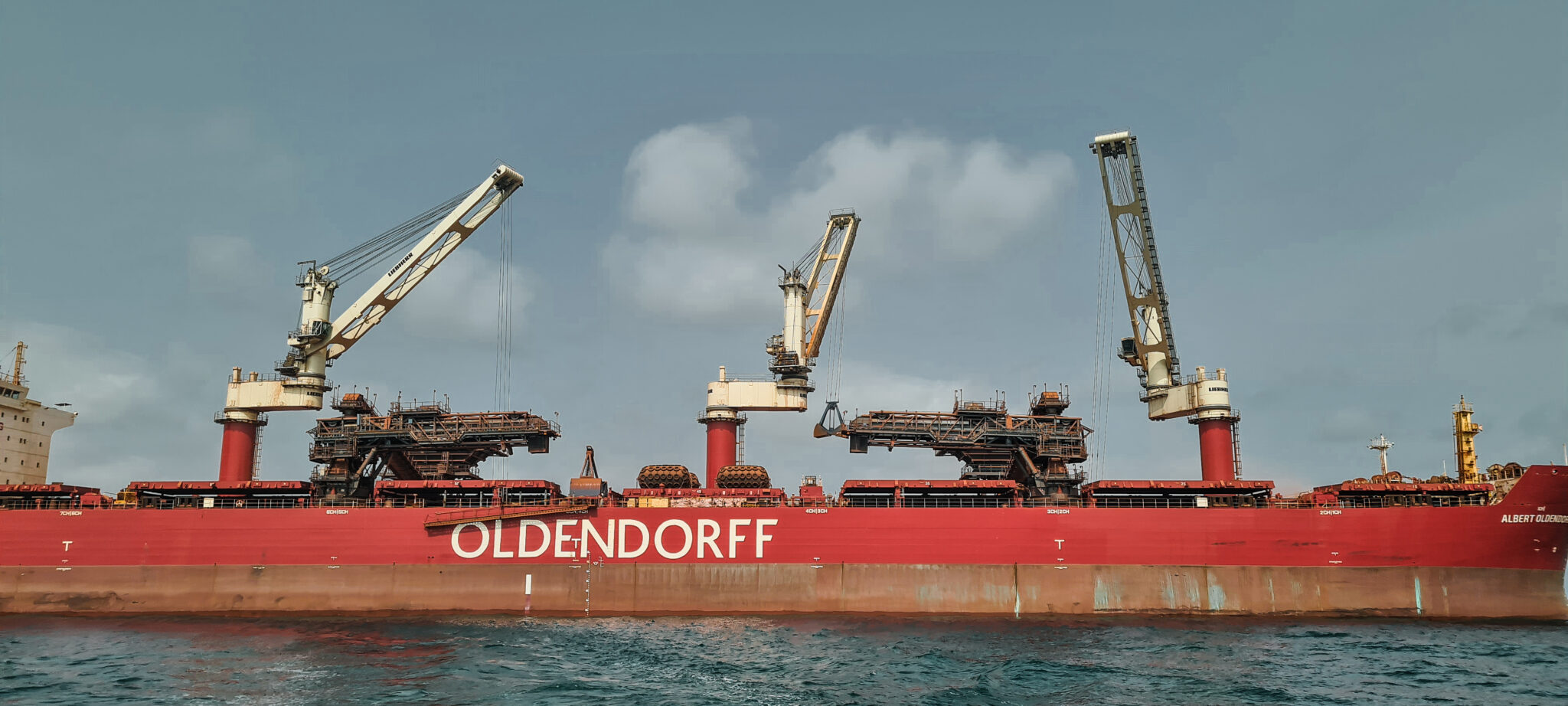
Liebherr has delivered four transshipment cranes, type CBG 360, to its long-term customer Oldendorff Carriers for a major project in North Vietnam. In the coming years, the cranes, which excel through their reliability and high operating speeds, will be used for power generation in the region. Another three cranes of the same type will be commissioned in West Africa for handling bauxite.

Handling and transporting 100 million tonnes of cargo in 25 years: that is the goal of the NS2 project of Oldendorff Carriers, Germany´s largest bulk shipping company. To achieve this, Oldendorff Carriers’ fleet will work with Liebherr floating cranes. The core of the North Vietnamese project are the power plant´s 2 x 600 megawatt power generation units, which supply the region with energy. The CBG-series ensures a continuous turnover of material for the power plant’s operation. The deployed cranes are characterised by their long service life and low maintenance requirements, which is a decisive advantage especially on the open seas and in remote areas.

Long-term partnership

Liebherr and Oldendorff Carriers can look back on decades of cooperation based on partnership and trust. Like Liebherr, Oldendorff Carriers is a family-owned company that has been operating successfully on the market for many years. For the large-scale project to supply energy to North Vietnam, they were looking for a low-maintenance handling solution. “Oldendorff Carriers values the reliability of Liebherr products and is therefore also counting on high-performance Liebherr four-rope grab cranes, type CBG 360, for this major project,” said Jan Breckling, Senior Sales Manager for transshipment and ship cranes at Liebherr Maritime Cranes. “The CBG is a heavy-duty crane designed for continuous operation. The new equipment will therefore play a crucial and at the same time permanent role in our customer’s long-term transshipment project.”

Extended action radius

Each of the four CBG 360 floating cranes is installed on a 10-metre-long eccentric platform. This allows an extended operating radius of 46 metres for a lifting capacity of 30 tons. The maximum lifting capacity of 36 tons can be utilized at up to 40 metres. The improved positioning and outreach creates more operational flexibility and makes the unloading of the cargo holds even more efficient.

Captain Johannes van Dijk, Technical Director Projects at Oldendorff Carriers, said: “We needed a robust, reliable cargo handling system for our project in North Vietnam. For that reason we chose Liebherr CBG 360 cranes which are high-performance cranes designed for continuous operation.”

The first transloader, “Calypso”, with two CBG 360 cranes went into service at the beginning of 2021 and start of work coincides with Oldendorff Carriers’ 100th company anniversary. Like its sister vessel, it has a length of 145 metres and a deadweight capacity of 18,000 tonnes. In West Africa, the “Albert Oldendorff” with three CBG 360 is in operation for bauxite handling. This transshipment vessel is equipped with hoppers and a conveyor system, which leads to a faster turnover of the material. The cranes are installed side-mounted and directly discharge into the hopper conveyer belt system.

Subscribe

Get notified about New Episodes of our Podcast, New Magazine Issues and stay updated with our Weekly Newsletter.