Supply Chain risks to retail profitability

In a thoughtful webinar today digital freight forwarder Zencargo co-Founder, Richard Fattal, and Bis Henderson‘s Louisa Hosegood debated the unprecedented pressures in the global supply chain this year and how they jeopardise retailer’s profitability.

There has been an undoubted change in consumer behaviour, including the acceleration of ecommerce uptake. Consumers remain fickle, increasingly conscious of their environmental footprint. They are evaluating purchasing needs and ethical choices. Omnichannel, where a consumer, for example, might buy online, collect in store and pick up another item there, then return something by mail. Reverse logistics and the management of returns has become even more important. Supply chains must therefore be flexible enough to manage this while maintaining prices, or profitability will fall. For example, cancellations of orders fall if long term lead time information is more detailed.

What is the expectation in each vertical or location? From a supply perspective disruptions have increased. Container spot prices are a record $14000 now (Far East to Europe). Airfreight availability is reduced due to lower belly capacity with fewer passenger jets flying. This volatility in delivery is likely to persist till late next year. New sourcing options are needed to maintain choice and increase efficiency. Retailers can only absorb some of the costs. Excess demand in the USA, combined with shipping and port handling capacity that cannot be increased quickly enough are also causing waves.

Some items are always price elastic and are expected to be in full supply at a low cost. Other products are more inelastic. Those SKUs can be re-worked over the short to medium term, making inventory changes to achieve agility.

Retailers should ask how risky their operating model is. There will always be a new challenge. Hope is not a strategy. It is important to co-ordinate teams internationally in supply chain management so that big decisions can be taken from a whole-business point of view. Own the total. Data then analysis then decisions.

Should retailers buy by price margin rather than just quality? The profitability of the route to market, holding and delivering, will lead to new KPIs. Teams such as purchasing and merchandising need aligning.

Strong security protection not enough against supply chain attacks

The European Union Agency for Cybersecurity (ENISA) has analyzed 24 recent software supply chain attacks – including those through SolarWinds Orion, Mimecast, Codecov and Kaseya – and concluded that strong security protection is no longer enough as supply chain attacks continue to worsen.

ENISA’s report found that 66% of supply chain attacks focus on the supplier’s code, while malware is the attack technique used in 62% of attacks. Expert comment from Ilia Kolochenko, Founder of ImmuniWeb and a member of Europol Data Protection Experts Network:

“The supply chain attacks complied by ENISA highlight impeccable coordination between cybercriminals amid comparatively simple hacking techniques. Most of the attacks, even those involving exploitation of 0day vulnerabilities, could have been prevented by defense-in-depth and zero-trust models. Worse, many of the large-scale intrusions exploited lack of attack surface visibility, vulnerable software with security flaws publicly disclosed many months or even a few years ago, or primitive password reuse attacks successful due to missing 2FA and other pretty simple security mechanisms designed to stop human-focused attacks. Thriving phishing attacks dominate the modern threat landscape, being evidence that the human factor remains the cornerstone of corporate cyber resilience.

“There is a clear trend to exploit misconfigured CI/CD pipelines and vulnerable cloud deployments. Amid the pandemic, countless organizations rapidly moved their IT infrastructure to a cloud, while trying to save money on training and cloud-specific security hardening. Combined with legacy IT infrastructure, third-party managed servers and software, the digitalization in 2021 made organizations a low hanging fruit for cybercriminals.

“Finally, cyber-gangs are much better organized compared to the cybersecurity industry. They meticulously plan and coordinate their attacks, leverage division of labor and eventually attain impressive efficiency. Contrasted to cybersecurity teams, bad guys are never on holidays or sick leave, and will even purposely conduct swift raids while the victim organizations are the most unprepared.”

Mechanical Unloaders in Malaysia Industrial Port

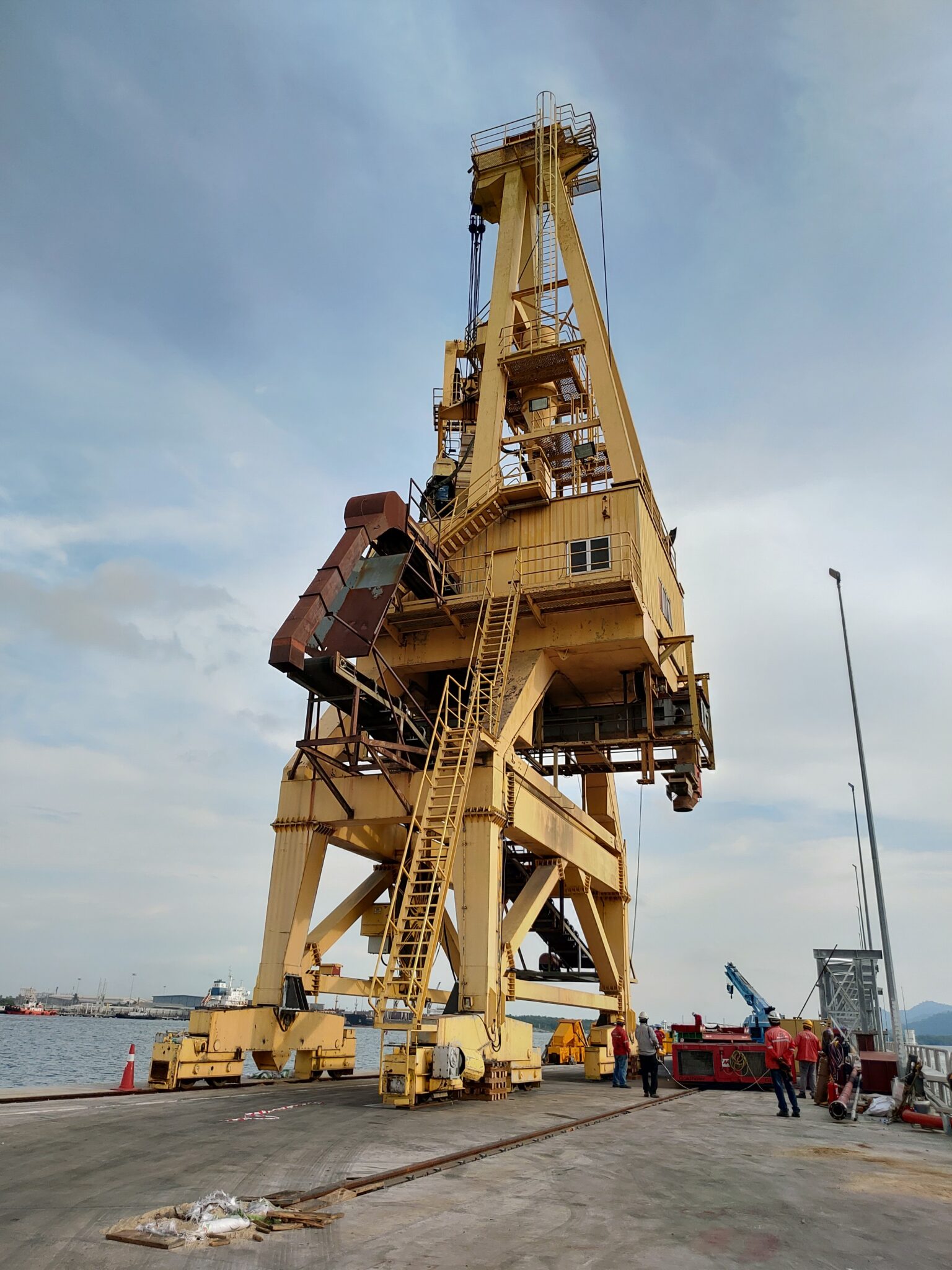
Megalift completes a highly critical job which was shifting two units of 31-m tall Mechanical Unloaders in an industrial port that is located along the Straits of Melaka, Malaysia. Not only did it require engineering expertise, they would not have successfully executed this without a team of experienced personnel. The mechanical unloader weighed 253 tons, with dimensions of L12.00 m x W4.60 m x H31.00 m. The Pneumatic Bulk Crane was 135 tons and dimensions of L7.60 m x W4.60 m x H31.00 m.

While the traveling distance was not very far, the coastal setting posed a considerably high risk with strong and unpredictable winds. Given the height of the cargo, it was also challenging adjusting its centre of gravity. From jacking up the cargo, moving along the trajectory and jacking it down at its final position, they had to take intervals of pauses to ensure cargo stability and gushes of winds to pass.

Since October of 2012 the XLProjects Network (XLP) has taken the independent project forwarding and chartering industry by a storm. Some of the best known project logistics companies in the world have been joining XLProjects and making business with one another.

XLProjects members by and large are proud of their relationship to our network because we allow only qualified members yet we get them all over the world. The management of XLProjects as well have been involved in this market on both sides of the business; from the networking standpoint as well as the project logistics field itself.

New Stockholm automated logistics facility

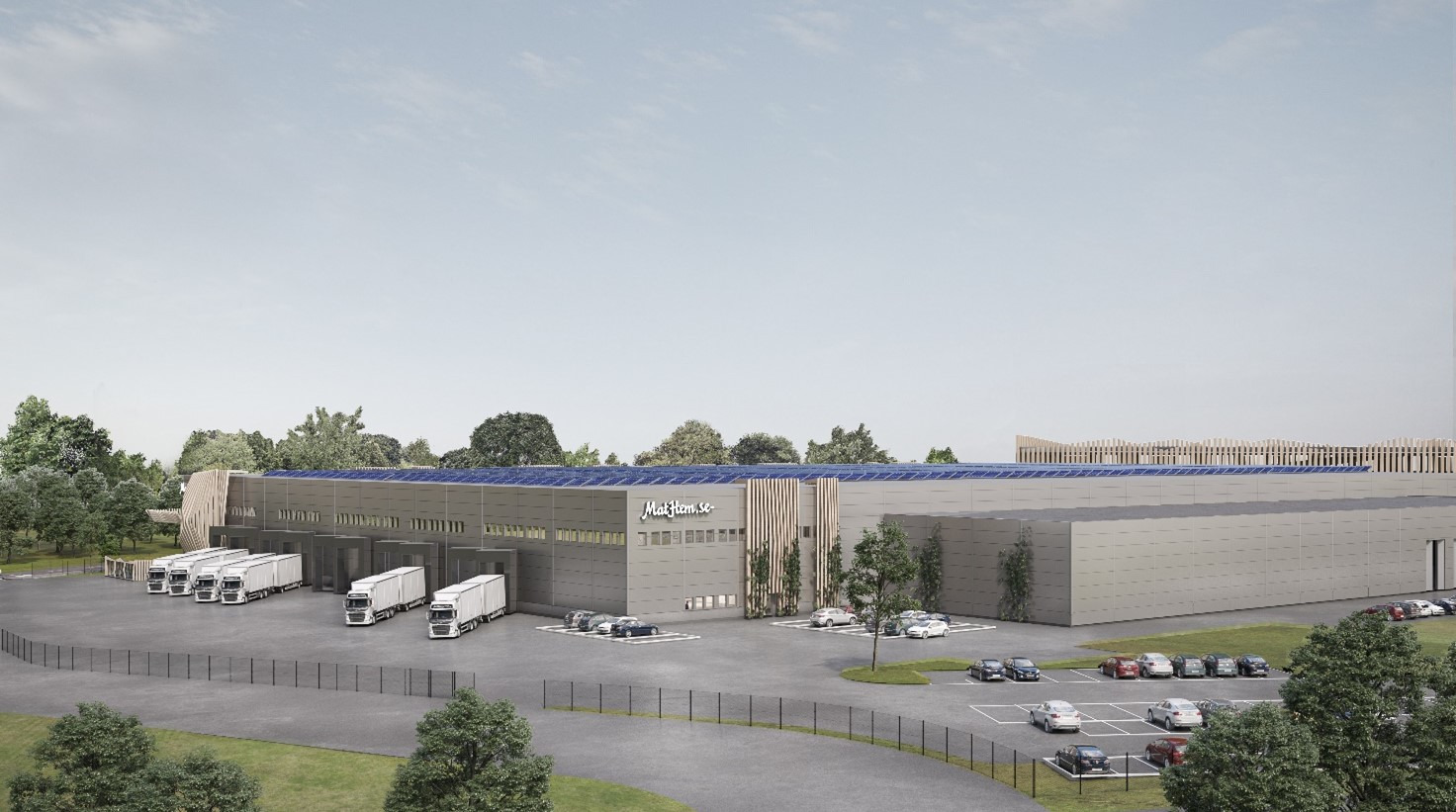
Mathem is growing at a fast pace together with the food retail e-commerce industry in the Nordic countries. The establishment of a new logistics facility in Larsboda, south of Stockholm, is an important piece of the puzzle for continued expansion. An equally important aspect is the specially designed automation solution from SSI Schaefer.

Mathem was established in 2007 as an online grocery store and has seen since a huge expansion with more and more returning customers. Currently the operations are conducted in Stockholm, Gothenburg and Malmö and their surrounding areas.

With a constantly evolving and changing customer offering, a high degree of flexibility is a must. The solution must also meet customers’ demands for increased and faster availability, which has been one of the major driving forces during the project. SSI Schaefer was selected because of its flexibility and adaptivity to Mathem’s business needs and productivity goals.

“E-commerce for food retail is an exciting industry where we have seen high growth rates all over the world, especially during the last year. Mathem is a very important project for us at SSI Schaefer. This clearly shows that we are at the forefront of efficiencies in the market segment that we see continuing to grow. It is exciting to be able to contribute to and support Mathem in achieving its goals,” says Hans Ekström, Solution Design Manager Automation at SSI Schaefer.

With Mathem’s project, SSI Schaefer position itself even stronger in e-commerce for groceries. An area that places higher demands on automation solutions than typical e-commerce in retail due to larger orders and higher capacity. SSI Schaefer already has extensive experience in automation for food retail with several large projects in the Nordic countries. For example, the largest automation solution in Europe for Coop and automation with a strong sustainability focus for ASKO.

“I am glad that the deal is finally through. In a short time, and in close collaboration with SSI Schaefer, we have found a solution that provides the conditions to continue our fantastic growth journey and to achieve our set profitability goals. Every day, tens of thousands of items, in any combination, must be picked and delivered to our customers as quickly as possible. The solution will also offer our logistics employees in Sweden the best working environment! We have come a long way and made many important decisions and now the real work begins to achieve this,” comments Henrik Peitz, COO at Mathem.

The installation will begin this autumn and the goal is to release the new facilities into operation during the second half of 2022.

Adding value through smart solutions

Business, and indeed industry itself, is constantly reacting and evolving, driving the race to discover new ways to gain a competitive advantage. While the focus is often on the ‘what’ — the physical products that come to market — Big Box Group Director Iain Gillard says the way technology is integrated is equally as vital in helping businesses achieve a more profitable future.

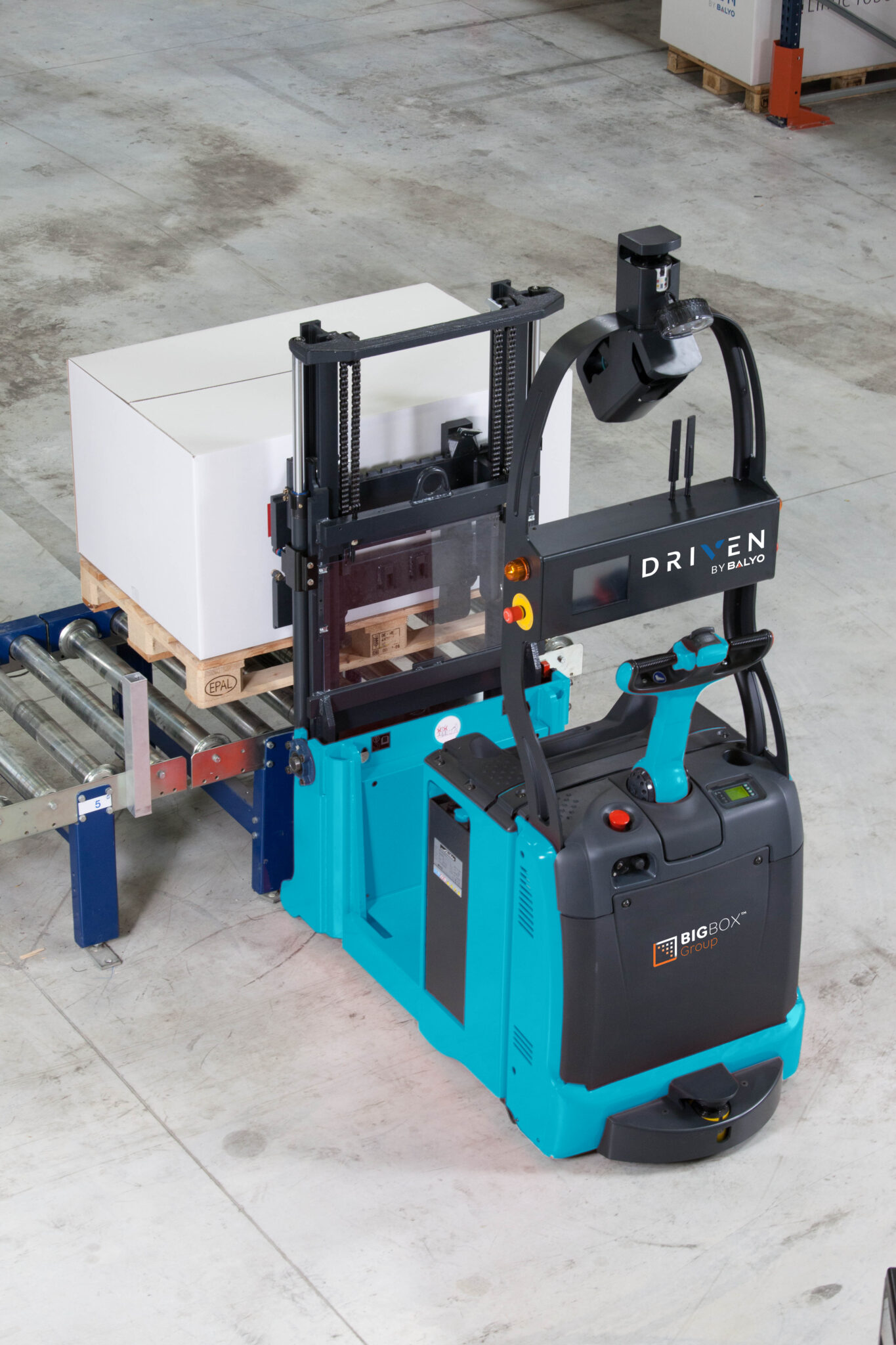
Automation has seen strong growth over the last 18 months and its advantages are obvious. Picking, moving and sorting with robotics can help improve efficiencies and, ultimately, the bottom line. But there’s more to it than that, says Iain.

“Businesses face challenges every single day. Often, they want quick, cost-effective solutions to solve it. Depending on what the challenge is, racking, handling equipment, a robot or even an entire building can plug that gap. However, we pride ourselves on delivering smarter solutions — making sure they are fit for purpose but also designed to improve the situation beyond what’s in front of the client.”

Big Box Group has been providing innovative solutions to a variety of businesses, from SMEs to blue chip companies, since its formation over twenty years ago. Its ability to solve complex issues is driven by an analytical and technological approach that is both proactive and creative.

With a wide range of cutting-edge and high-performing products to hand, Big Box Group can integrate exactly what’s needed, allowing any type of business — from manufacturing and warehousing to online fulfilment — maximise their return on investment.

Iain says: “We see the challenge, which we can solve, but we also see the opportunity by looking at the bigger picture. The opportunity to help our clients achieve a better return on investment can often be found in analysing the way they do things, how they use their space and the technology they already have.

“We can deliver market-leading technology. We can give our clients the solution they’re looking for. But the real difference is felt in how it’s all integrated. We look at the bigger picture, and look deeper at the operation, which means we strip things back and examine the challenge from different angles. That’s often when we discover areas where a client can make further gains.”

When a client came to Big Box Group requesting more racking, Iain and his team analysed the existing racking within the warehouse and proposed they reconfigure the space by making their aisles narrower to create a more streamlined and efficient operation, which maximised the footprint of the entire building.

“Sometimes, the solution isn’t as complex or as expensive as the client believes,” says Iain. “It just needs a bit of smart thinking. We’ll take the time to listen, to really understand the issue at hand. That’s how we can deliver an effective solution while also creating opportunities the client never knew they had.”

This approach allows Big Box Group to provide a unique take on a challenging situation. Everything they do is to add value and offer an advantage — all the while making their clients lives easier and simpler.

Iain says: “The tech and the products are one thing, but the creative approach and the integration to know they’re exactly what’s required is the thing that really drives efficiencies and long-term profit. Ultimately, it’s all about getting the right fit and, through our trusted partnerships and innovative approach, we’re perfectly placed to create smart and efficient integrated solutions.”

Collision warning turning it up to eleven

Sentry Protection Products has turned it ‘up to eleven’ with the release of the Collision Sentry® Corner Pro 211, the latest model of the company’s award-winning collision warning system.

The industrial environment is a noisy place. To be effective, an audio alarm needs to rise above the background noise to be heard. The volume on the earlier model (200) was set high enough to do that. But there are some circumstances – in very high noise areas – where the volume needs to be even louder.

With the Collision Sentry Corner Pro 211, we’ve turned the volume ‘up to eleven.’ What exactly does that mean? According to the Oxford English Dictionary, it means, “to reach or surpass the maximum level or limit.” So, when ten just isn’t enough, you need to turn it up to eleven. It’s based on a great joke from the file This is Spinal Tap.

The 211 model picks up where we left off with the previous model. The high volume on the Collision Sentry Corner Pro 200 is now the low volume on the Collision Sentry Corner Pro 211. The new 211 model high volume setting is double the volume of the low setting. There is still the option to turn the sound off completely if that better fits the situation.

Sentry was able to boost the volume without compromising a significant amount of energy efficiency or battery life. There are exceptions to that depending on usage and volume setting. The audio alarmed in synchronization with the video alarm makes for a powerful deterrent to blind corner accidents.

The Collision Sentry Corner Pro is a collision warning system that works to prevent accidents at blind corner intersections by sending both an audio and visual alert to warn of approaching traffic. Each patented unit is easy to install, self-powered, portable, compact, and lightweight and deploys immediately. Collision Sentry snaps on to pallet racks quickly using integrated magnet mounts. Anyone working in a high traffic facility understands the need for Collision Sentry®.

The upgraded units are in stock and available for purchase through Sentry distributors. The Collision Sentry Corner Pro 211 is offered at the same price as the previous model. For more information, please visit www.sentrypro.com

DHL Express orders first electric cargo planes

DHL Express, the world’s leading express service provider, and Eviation, the Seattle-area based global manufacturer of all-electric aircraft, write aviation history in announcing that DHL is the first to order 12 fully electric Alice eCargo planes from Eviation. With this engagement DHL aims to set up an unparalleled electric Express network and make a pioneering step into a sustainable aviation future. Eviation’s Alice is the world’s leading fully electric aircraft, which enables airlines – both cargo and passenger – to operate a zero-emission fleet. Eviation expects to deliver the Alice electric aircraft to DHL Express in 2024.

“We firmly believe in a future with zero-emission logistics,” says John Pearson, CEO of DHL Express. “Therefore, our investments always follow the objective of improving our carbon footprint. On our way to clean logistics operations, the electrification of every transport mode plays a crucial role and will significantly contribute to our overall sustainability goal of zero emissions. Founded in 1969, DHL Express has been known as a pioneer in the aviation industry for decades. We have found the perfect partner with Eviation as they share our purpose, and together we will take off into a new era of sustainable aviation.”

Alice can be flown by a single pilot and will carry 1,200 kilograms (2,600 lbs). It will require 30 minutes or less to charge per flight hour and have a maximum range of up to 815 kilometers (440 nautical miles). Alice will operate in all environments currently serviced by piston and turbine aircraft. Alice’s advanced electric motors have fewer moving parts to increase reliability and reduce maintenance costs. Its operating software constantly monitors flight performance to ensure optimal efficiency.

“From day one, we set an audacious goal to transform the aviation industry and create a new era with electric aircraft,” said Eviation CEO Omer Bar-Yohay. “Partnering with companies like DHL who are the leaders in sustainable e-cargo transportation is a testament that the electric era is upon us. This announcement is a significant milestone on our quest to transform the future of flight across the globe.”

The aircraft is ideal for feeder routes and requires less investment in station infrastructure. The Alice can be charged while loading and unloading operations occur, ensuring quick turnaround times that maintain DHL Express’ tight schedules.

“My compliments to Eviation on the innovative development of the fully electric Alice aircraft” says Travis Cobb, EVP Global Network Operations and Aviation for DHL Express. “With Alice’s range and capacity, this is a fantastic sustainable solution for our global network. Our aspiration is to make a substantial contribution in reducing our carbon footprint, and these advancements in fleet and technology will go a long way in achieving further carbon reductions. For us and our customers, this is a very important step in our decarbonization journey and a step forward for the aviation industry as a whole.”

With innovation, performance and sustainability serving as its North Star, Eviation is creating a new era in aviation with the all-electric Alice aircraft. Alice has been specifically designed so that it can be configured for e-cargo or passengers. Eviation’s Alice all-electric aircraft is on track for its first flight later this year.

“The next time you order an on-demand package, check if it was delivered with a zero-emission aircraft like DHL will be doing,” said Eviation Executive Chairman Roei Ganzarski. “With on-demand shopping and deliveries on a constant rise, Alice is enabling DHL to establish a clean, quiet and low-cost operation that will open up greater opportunities for more communities.”

The decarbonization of its operations is one of the main pillars of DPDHL Group’s new Sustainability roadmap announced in Q1 2021. The Group is investing a total of 7 billion euros (Opex and Capex) by 2030 in measures to reduce its CO2 emissions. The funds will go in particular towards electrification of last-mile delivery fleet, sustainable aviation fuels and climate-neutral buildings. On the way to the zero emissions target by 2050, which has already been in place for four years, the company is committing to new, ambitious interim targets. For example, as part of the renowned Science Based Target Initiative (SBTi), Deutsche Post DHL Group is committed to reducing its greenhouse gas emissions by 2030 in line with the Paris Climate Agreement.

Big Creek terminal pact signed

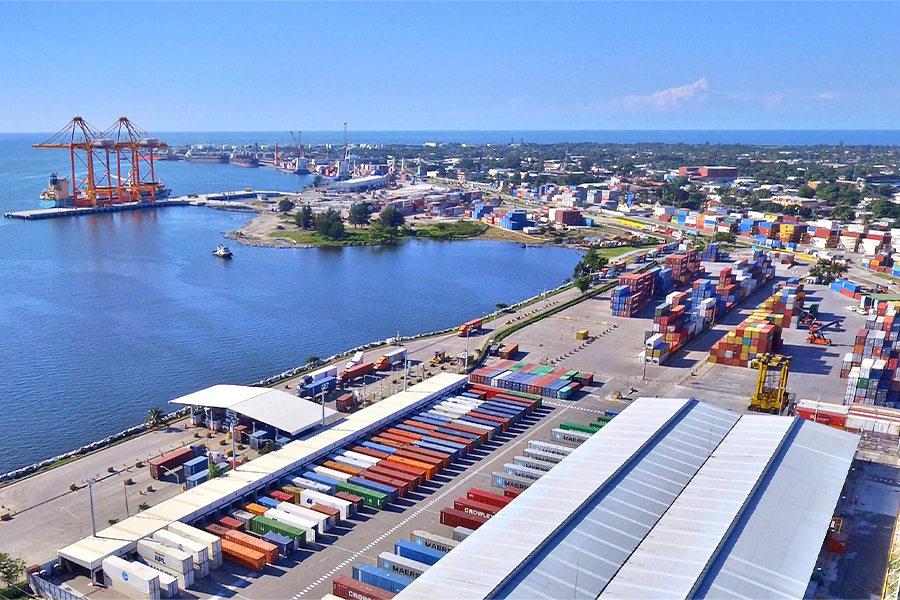
Operadora Portuaria Centroamericana (OPC), the Honduran subsidiary of International Container Terminal Services, Inc., has signed a sister port agreement with the Port of Big Creek in Belize to strengthen relations and promote interconnectivity between the two Central American ports. The partnership benefits both ports and their respective areas of influence.

Since commencing operations in 2013, OPC has been continuously investing in Puerto Cortés – improving infrastructure, acquiring new equipment, and rolling out state-of-the-art port technology – with the aim of transforming the region’s trade and reducing the cost of goods for the end consumer. These investments, along with the modernization of Puerto Cortés, are expected to pay off as the agreement with the Port of Big Creek is seen to increase the flow of cargo through the terminal.

“We are helping to transform the region through innovation, technology and the application of processes, as well as best international practices. This gives us tangible advantages among the terminals in the isthmus and positions us as the better option for cargo and transportation, unloading of containers and general cargo in the region,” said Juan Corujo, OPC Director-General.

He added: “The possibilities of diversification in services, reprocessing and storage at competitive costs benefit all the actors in the logistics chain and position Central America as one of the most important logistics poles. The agreement with the sister terminal of Puerto Big Creek in Belize is a clear example of the benefits offered by the investment and modernization of Puerto Cortés.”

The Port of Big Creek, through a cabotage barge service by the Big Creek Group, is set to benefit from Puerto Cortés’ global connections with OPC handling more than 23 weekly services. The agreement also gives the Port of Big Creek the advantage of having a free zone in OPC’s yards for its import and export cargo in transit, which will boost Belize’s foreign trade.

Operated by the Big Creek Group, the Port of Big Creek is in the Stann Creek district south of Belize. The port is mainly used for the export of banana, sugar, citrus, shrimp, and oil, and is accessible by land, air, and sea. Its location and ability to handle large ships make it a strategic alternative for interconnection with Puerto Cortés.

Every parcel should be your brand ambassador

Remember when receiving a parcel was an event? For your birthday, perhaps, or for Christmas, a complete surprise, or a purchase you had saved up for and keenly anticipated, writes Jo Bradley, Business Development Manager for packaging solutions at Quadient.

Now, of course, parcels are a daily occurrence, and our attitude towards packaging is somewhat different – more enlightened. With the same- or next-day, ‘free’ delivery, our orders are smaller and smaller but it seems that the boxes are bigger and bigger. Actually finding the lipstick or the printer cartridge in a mountain of void-fill is a challenge – is there anything in this box at all? And what are we supposed to do with all this packaging and void-fill?

Surveys show that up to half of consumers rate grossly oversized packages among the things they really don’t like about Internet shopping. And if you don’t believe surveys, just look on social media. ‘Unboxing’ is a ‘thing’ on Instagram and the like. Someone has estimated there are at least 74 million unboxing videos across the social media channels. Many of these, of course, are entirely positive, but what social media really feeds on is the epic fail, and gross mismatches between box and product rate highly.

What do we do with all these cardboard boxes? We break them down, squash them up and cram them into our recycling bins, if we can. But with the bins only emptied every two or three weeks, it is unsurprising that a large cardboard manufacturer claims that 22% of consumers say there isn’t enough room in their bins to dispose of all their boxes. 44% of consumers hoard cardboard boxes – for future arts and crafts projects or storage needs, or for no obvious reason at all – “135 million are believed to be sitting in sheds, garages and wardrobes in the UK”. With the boom in e-commerce over the least 18 months, it’s hardly surprising that cardboard is being called ‘beige gold’.

But it isn’t just the outsize boxes themselves that annoy consumers; it’s all the void-fill, such as air bags, bubble wrap, and horrid polystyrene beads. At least with card we know it’s recyclable.

And although, as consumers, we are seduced by the idea of ‘free delivery’, we know that all this excess material must have a cost. While we may not be up to speed on the intricacies of Dimensional or Volumetric Weight as applied to shipping rates or realise that the average shipped box contains 60% air, we intrinsically know that shipping fresh air around the country has a significant financial, as well as a high environmental, cost. Consumers are increasingly aware, even anxious, about the negative impact of wasteful shipping practices on air quality and bigger than necessary boxes mean more vehicles on the road, more congestion, more particulates and more CO2.

In one survey, 77% of consumers said they believe that the packaging a brand uses reflects its environmental values – and by implication, its other values as well. Loading consumers with excessive and unnecessary volumes of packaging isn’t just annoying – it’s seen as lazy, irresponsible and uncaring – not a good brand look for the merchant or their carrier.

For ecommerce businesses with high order volumes, this is an issue that needs to be solved. But how? They can’t have packers manually cutting boxes down to size – far too slow and messy, and the result may be a box that fails in delivery, let alone if it’s re-used for a return, as many are. There are limits to the number of different-sized preforms a packing station can cope with. And, particularly if there are multiple items in one box, packers, who may be inexperienced, or casual staff, have to guess which size is just big enough to accommodate a jumble of different shapes.

However, there is a solution that will greatly improve packing line productivity and maximise transport utilisation, while minimising the monetary and environmental cost of materials and giving the consumer a consistent, positive brand experience.

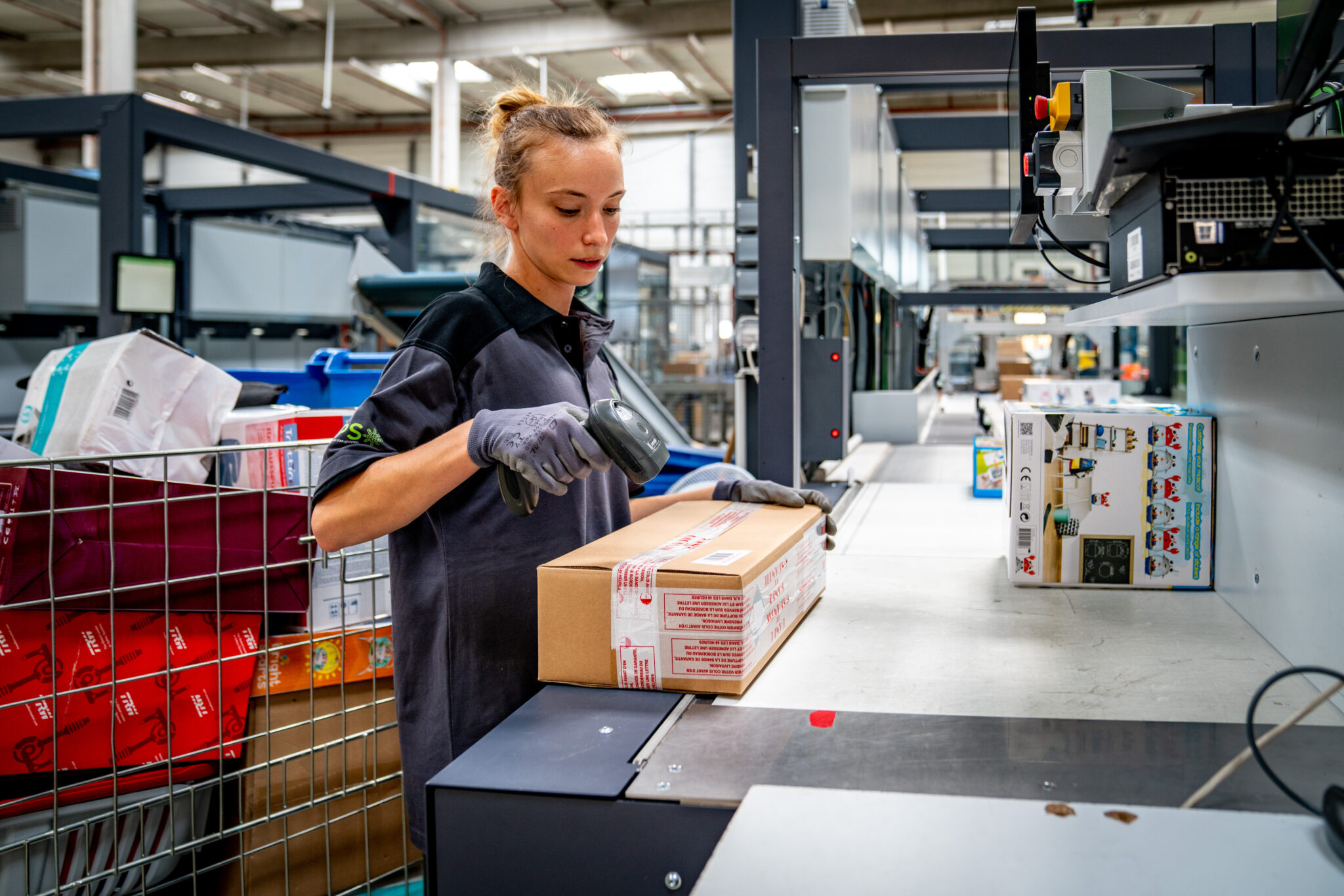
The CVP Everest and CVP Impack automated packaging solutions from Quadient create ‘right-size’ boxes in seconds by scanning and measuring the goods – single or multi-item orders – cutting and erecting the box, sealing, weighing, and labelling, all in one seamless process.
With the CVP Impack, one or two operators can pack up to 500 parcels an hour; with the CVP Everest, two operators can pack 1,100 an hour. Typically, this replaces between 8 and 20 manual packing stations. On average, right-sizing packages cuts parcel volumes by 50% – significantly reducing freight charges – and saves up to 30% on material costs.

Will this delight your customers? Well, if the ‘free’ and almost instant delivery model that is so valued by consumers is to be sustainable, these sorts of savings in cost and in labour are essential. But, more significantly, opening the box is the only ‘In Real Life’ touch point you have with your consumer, and as we have seen, wasteful and careless packaging can strongly alienate them from your brand – which, in an age of endless social media comment, means all their friends as well. With right-sized packaging every parcel serves as a brand ambassador.

Semiconductor Supply Chain shortage must be tackled

As the ongoing computer chip shortage continues to hamper UK industries,* Jennifer Bisceglie, CEO and founder of Interos, comments below on how the UK government and commercial organisations require transparency throughout the supply chain to elevate operational resiliency and help alleviate the current semiconductor disruption.

“Over the past several months, supply chains, including the semiconductor – or ‘chip’ – supply chain saw massive disruption. However, the frequency and severity of these semiconductor supply chain shocks can no longer be considered entirely unpredictable. After all, the semiconductor supply chain is extremely complex, globally interconnected, and the production of a single computer chip often requires more than 1,000 steps passing through international borders over 70 times. The supply of semiconductors to satisfy the demand of Apple, AMD and Intel consumers is only a sliver in the huge threat the shortage represents – failure to address the risk and develop alternative sources of supply impacts future integral national capabilities such as utilities, aerospace and defence, and the development of 5G.

“To prevent these impacts occurring, we recommend that the UK government and commercial organisations require transparency throughout their multi-tiered supply chain and elevate operational resilience as a core business and mission priority. Maintaining domestic – or friendly nation – manufacturing capabilities is an essential part of ensuring the semiconductor industry has a highly resilient, geographically diversified supply chain. This allows the many industry sectors that rely upon semi-conductors to continue providing their products or services in the face of adverse market or supply chain shocks. The impact of the semiconductor shortage is far reaching, and it is vital that the UK government and private companies tackle the issue head on.

“Clearly there are already attempts to approach this on a policy level, with the government’s increasing interest in activities like the proposed sale of Arm, or the concerns over the Newport Wafer Fab. But policy is only one avenue for handling the issue. Technology now makes it possible to have a living and continuously monitored global map of supplier networks, and an assessment of a broad range of risks, from natural disasters, like COVID, to malicious attacks like Kaseya, or concentration risk. The availability of these technology-based solutions raises the acceptable standard of supply chain visibility, and organisations and governments need to advance to meet the occasion – shifting how they think about risk from protection and reaction to detection and pre-emption.”

Subscribe

Get notified about New Episodes of our Podcast, New Magazine Issues and stay updated with our Weekly Newsletter.