Auckland Airport expands cargo facility

GEODIS, a leading global transport and logistics operator, has announced a strategic move to a new facility at Auckland Airport, following strong and sustained growth in the New Zealand market. The 5700 sqm facility – with its prime location, advanced enterprise-grade systems, and extensive storage space – will offer GEODIS’ expanding client base the capacity needed to ensure seamless end-to-end supply chain support across both local and cross-border markets.

The unprecedented surge in consumer demand brought about by the pandemic, has heightened the need for resilient supply chain strategies, particularly within the healthcare industry, with pharmaceutical companies forced to reinforce their logistical requirements. Keeping these needs in mind, GEODIS’ new site will feature specially designed temperature-controlled areas to facilitate the optimal storage of pharmaceutical products at +15-25 degrees as well as +4 degrees Celsius.

The growing demand will also be addressed by the site’s high productivity storage solution, which consists of two-metre wide aisle racking that affords 5,000 pallet locations. There is a tier one Warehouse Management System (WMS) that offers automated operating systems to support the thriving e-commerce fulfillment business. The purpose-built facility is located at one of Auckland’s most prominent industrial hubs at Auckland Airport with connections to the main arterial routes used for distribution. It will also house GEODIS’ international container freight station (CFS), contract logistics and last mile distribution set-up to enable full-service supply chain management under one roof.

“Significantly, this new facility is in harmony with our commitment to being a strong growth partner to our customers. As GEODIS continues to expand, we will also continue to enhance our infrastructure and processes to align our evolution with our customers’ development ambitions,” said Stuart Asplet, Sub-Regional Managing Director, Pacific & Regional Director Sea Freight, Asia Pacific. “The supply chain industry has certainly been disrupted by the pandemic, yet GEODIS’ passion to stay ahead of the curve has continuously pushed us to deliver industry-leading solutions that add value to our customers’ business goals. Our core belief to make a tangible impact on our clients’ goals, has allowed us to remain one of the fastest-growing logistics operators globally”.

The move further emphasises GEODIS’ focus on the APAC market and follows a series of investments and advancements made in the region over the past few months. The consolidation of the company’s operations from multiple sites to a single site will also boost efficiencies. The logistics provider has signed a long-term lease for the Auckland facility, encouraged by a healthy growth trajectory in the market.

“We’re confident that the facility at Auckland Airport will be a gamechanger for our customers. Features like the increased capacity, temperature control rooms, state-of-the-art technology, and advanced security measures ensure more precise and cost-efficient warehousing,” said Hugh Mackay, Managing Director, New Zealand. “This new site reflects the scale of things to come for our operations in New Zealand. Our laser sharp focus on providing a robust set of solutions and unmatched service to our customers holds the key to strengthening our presence in a competitive marketplace.”

The move will take place in October 2021 and is slated to amplify GEODIS’ offerings to more businesses including key verticals such as pharmaceuticals, retail, and fast-moving consumer goods (FMCG).

First data logger meets IEC standard

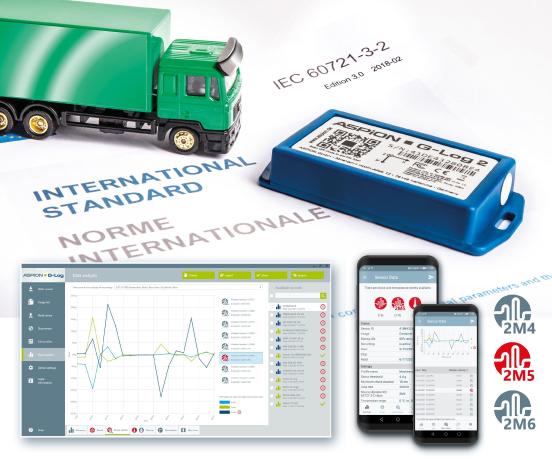
The G-Log 2 data logger from Germany-based Aspion GmbH is the first shock recorder on the market to implement the continuous shock/vibration test of the European transport standard EN IEC 60721-3-2:2018 with its 2M4/2M5/2M6 classes during transportation.

This standard specifies the common environmental influences to which products may be exposed during transport in their ready-for-shipment form.

“Reliably detecting transport damage, verifying it simply and transparently according to recognised and agreed on rules in order to minimise risks and avert costs – this is no longer a pipe dream for supply chain managers and quality managers,” says Aspion Managing Director Martina Woehr. “With the implementation of transport standards in a low-cost and easy-to-use data logger, the proof of transport damage in multimodal transport becomes, for the first time, as simple and transparent as monitoring the cold chain.”

The use of an international standard improves understanding among all parties involved in transport and eliminates misunderstandings. Specialist knowledge is no longer necessary. The procedure is simple: the manufacturer classifies or tests their product according to the standard/class for integrity under normal transport conditions, usually carried out during packaging tests in testing facilities.

The data logger now monitors the transport for environmental conditions of the applied standard and directly indicates deviations in the data analysis. The result is either: the standard was complied with or it wasn’t. In the latter case, the recorded data enable experts to carry out an in-depth analysis of the exact sequence of impacting shocks or vibrations. They know that not only the amount of acceleration per axis is relevant, but also the duration of the shock or vibration.

The Aspion G-Log 2 data logger is the only device in its price class to document the course of a shock or vibration per axis in millisecond increments. This is made possible by an intelligent algorithm that ensures that the very first shock, as well as the other eight highest shocks and vibrations in the entire transport process, is available for analysis in this level of detail. All further shocks or vibrations are reliably logged by the data logger with date and time in a ring memory with their respective height and direction on all three axes.

The German specialist hopes that the use of the shock recorders will lead to more conscious handling of goods by all those involved in their transport. “Our Aspion G-Log 2 creates evidence through the transparency of the stored data, which significantly simplifies claims processing – for shippers, transporters and, last but not least, insurers,” says Woehr, adding: “With this innovation, we not only simplify the evidence in the event of a claim but also give our customers a clear competitive advantage.”

DPD UK announces acquisition of CitySprint

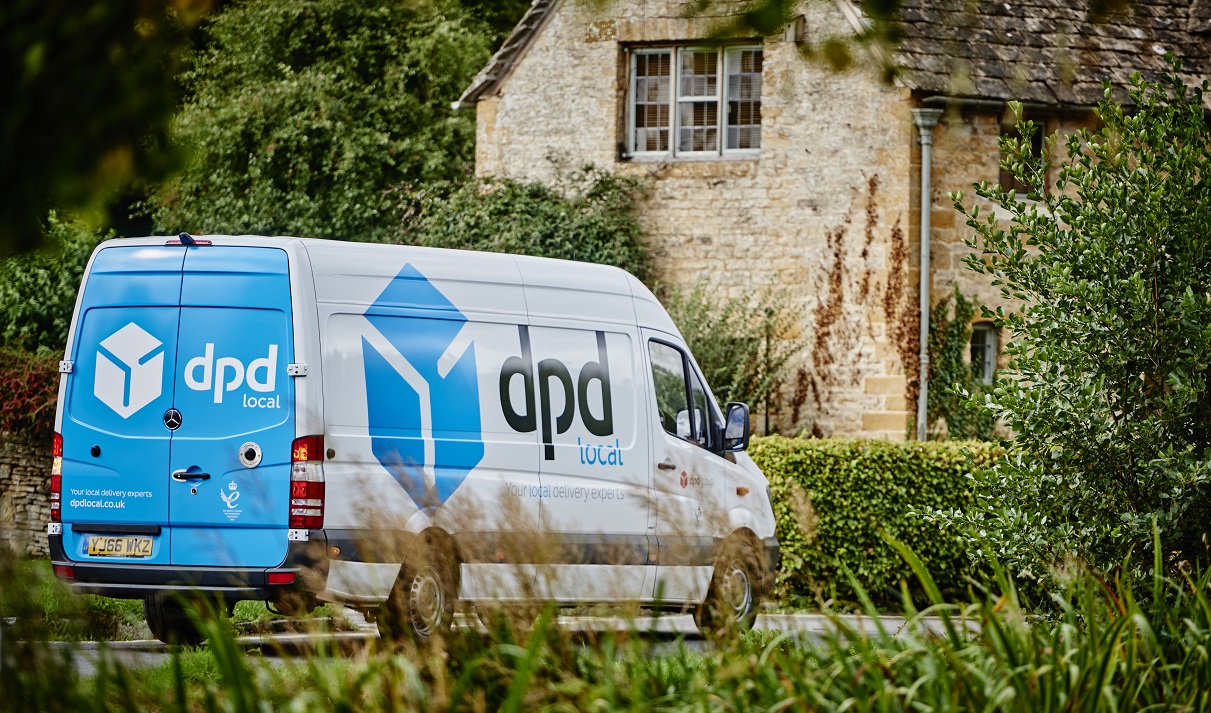
DPD UK, part of DPDgroup, one of Europe’s largest parcel delivery networks and CitySprint, a UK same day delivery company, today announce that CitySprint will become part of DPDgroup, subject to regulatory clearance.

This follows a period of growth for CitySprint, which has seen continued demand for its services as businesses require more urgent and time critical same day deliveries. Once completed, DPD UK’s customers will be able to access CitySprint’s same day and specialist delivery services in the UK, while CitySprint will be able to offer its customers access to DPD UK’s domestic next day and international expertise.

The existing CitySprint leadership team will remain in place. Elaine Kerr, CEO of DPD UK, commented:

“Same day delivery is one of the fastest growing segments of the logistics market and so we are delighted to announce the intention to offer this new and exciting service to our customer offering. Even before the pandemic, demand for both next day and same day deliveries was soaring, and this trend has only escalated, something which we see continuing. DPD UK is already a market-leader, and once this acquisition completes, our position in the market will be strengthened further.”

Gary West, CEO of CitySprint, commented:

“We are pleased to be joining DPDgroup and excited about the new opportunities for growth this will bring. Our two businesses are experts in their respective fields, with very complementary offers. This move is testament to both the continued strong demand for same day delivery and our successful growth strategy. We look forward to working with DPDgroup to explore new opportunities for our same day expertise and services.”

CitySprint supports businesses across the UK with a range of delivery solutions, including same day, bespoke logistics design and specialist services for key sectors such as retail and healthcare. Its unique national same day delivery network comprises 30+ service centres across the UK with geographical reach to over 88% of the mainland population within 60 minutes.

This transaction is subject to approval by the Competition and Markets Authority and is expected to complete later this year. No further financials will be disclosed at this juncture.

Ferrari simplifies logistics for Paddock Transport

When Cameron Paddock of Paddock Transport and David Shea, the president of TopLift Ferrari (TLF),  first met at the 2019 Breakbulk Americas exhibition in Texas, they quickly found a common interest.

Both had travelled close to 2,400km to look for new business opportunities at the show. Shea went to Houston to show off the line of new heavy-duty lift trucks that he and his team had recently developed for the North American market, in partnership with Italy’s CVS Ferrari. Paddock was representing his family’s international trucking and logistics firm, looking to expand its presence in the southern states. Coincidentally, he was also thinking of a heavy-lift problem presented by one of his larger customers.

Paddock thought the big, white FH25 lift truck on display at Shea’s booth might be a good fit for his fleet. He and Shea agreed that they would follow up after the show – when both went home to Canada, to the town of Stoney Creek, Ontario. Paddock Transport’s main terminal, it turns out, was less than 5km from TopLift Ferrari’s head office and service shop.

Flexibility to balance storage capacity

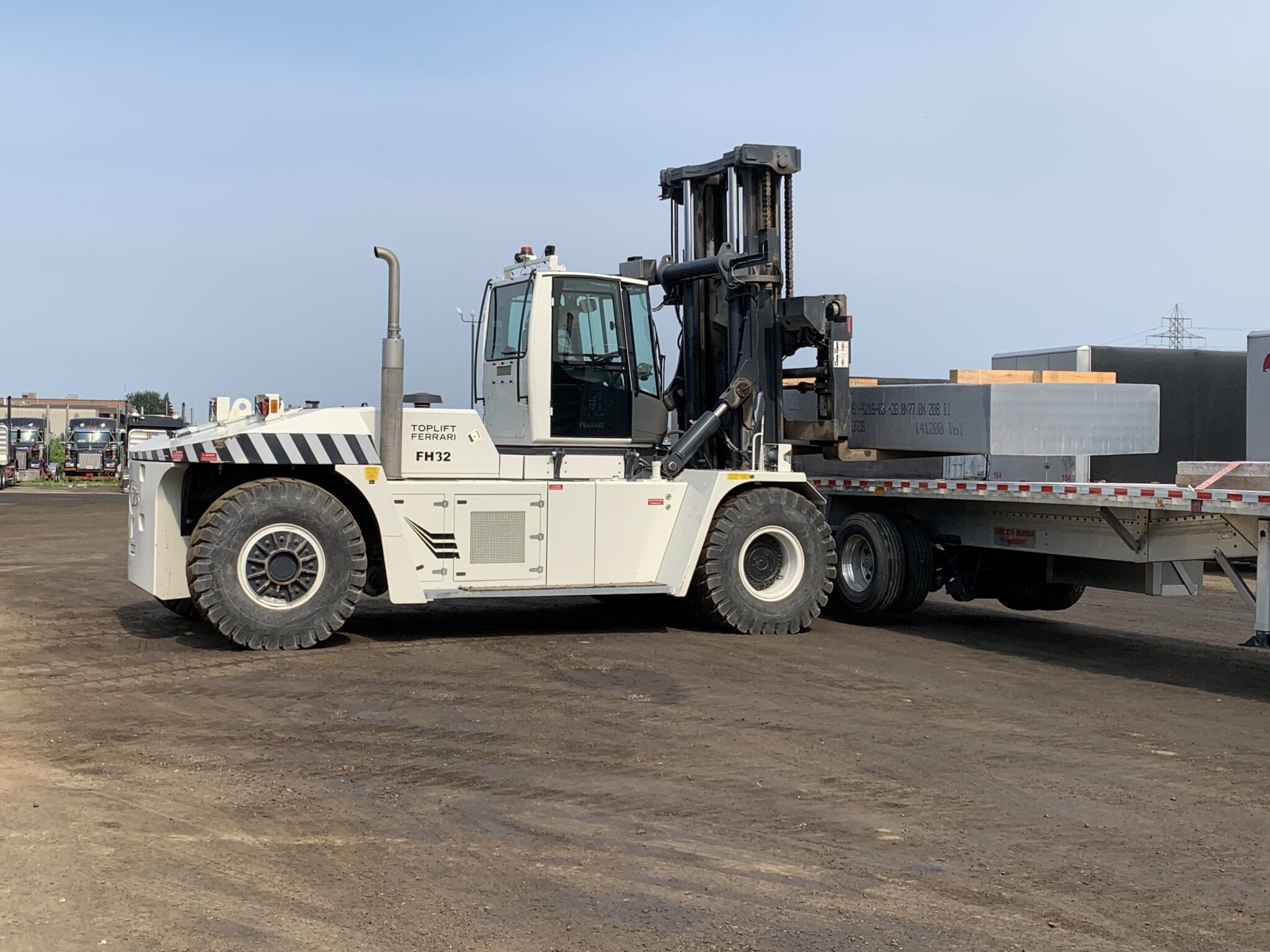
Back in Canada, TLF had just received a Ferrari into inventory, and Shea delivered it to Paddock Transport on demonstration. With its 32-tonne lift capacity, the FH32 turned out to be the solution Paddock needed to help its customer.

Located on a main highway between Toronto, Ontario and Buffalo, NY, the Paddock terminal is in the heart of Canada’s steel country. The trucking firm specialises in “goods needing extra care and attention,” including oversize steel coils on delivery from local mills to manufacturers in the US. The Paddock terminal is a major logistics hub in the region, with 13,500 sq m of covered warehouse space surrounded by 6ha of outdoor storage.

As Cameron Paddock explains: “One of our challenges is balancing our storage. Our lift capacity sometimes forces us to store heavier materials indoors, even though the customer doesn’t need indoor conditions.” The warehouse is equipped with overhead cranes handling up to 36 tonnes – strong enough to unload and store steel coils as heavy as 34 tonnes. One of the nearby steelmakers had been stockpiling inventory and looked to Paddock to take on extra stock. However, Paddock’s largest lift truck was limited to a 16-tonne capacity.

Although Paddock’s outdoor storage could easily accommodate the big coils, the facility had no way to offload and move the material without the indoor cranes.

“The FH32 is an important upgrade for us,” says Cameron Paddock. “It gives us the flexibility to use our outdoor and indoor capacity as needed. It’s able to lift 27-tonne coils right off the truck, move around in the yard and store it anywhere we want it.”

“Effortless” handling of oversize loads

The new Ferrari truck brings more than just muscle to the Paddock warehouse. Its agility and control are simplifying and expediting operations throughout the terminal.

“Before we had the TopLift Ferrari FH32, we could spend 15 minutes with two guys rigging the cranes for these lifts. Now, this fork truck can do the same job in about 30 seconds. As soon as the “32” arrived, we put a coil prong on it, and we were able to quickly bring in that large inventory of our customer’s oversize coils. The Ferrari made light work of it. Instead of using the indoor crane to move the coils, we just drove up, picked it up and moved wherever we needed to in order to maximise our facility. And it’s as easy as picking up a 1 tonne pallet off the back of a tridem trailer. Effortless!”

Heavy, over-dimension loads are at the core of Paddock’s business. The ability to transload efficiently is a key competitive advantage, handling goods and equipment for aerospace, automotive, construction, and military sectors as well as the steel industry.

Transloading for efficient logistics

“We are on the crossroads between the high load limits allowed in Ontario, Quebec, and Michigan, connecting to roads with reduced weight limits. We regularly bring in one trailer from Michigan or Quebec, and then we split it onto two trailers to cross into New York and points south. Going the other way, we can receive two trailer loads from the US and transfer them to a single B-train or a multi-axle for delivery in Ontario or Quebec.”

Paddock’s focus on large, specialised loads is reflected in the firm’s fleet of more than 350-plus company-owned trucks and trailers including floats, step-decks, double-drops, and custom units running on up to 13 axles. The firm’s logistics team pulls it altogether, matching equipment to the required loads and routes. Transloading to take advantage of high limits can mean significant savings for customers. Now, with the new Ferrari lift truck, the terminal operations that pull it together are simpler and more efficient than ever.

“What drew us to the Ferraris at the show is that they are simple where they need to be. They are not overly complex. They use larger cylinders in their steering, have great visibility and a well laid-out cab – not a lot of crazy gadgets for the operator to learn.”

David Shea says that simplicity and control were the primary goals when TLF was specifying these machines: “We paid special attention to having the machines run cool; even in Canada, machines running in summer can have issues with overheating. We added extra cooling, hydraulic filtration, and transmission cooling. Cool, clean hydraulic oil is the secret to the long life of the machine.

“Our Cummins engines and off-the-shelf components keep the machines simple to own and maintain, too. We built with Clark and ZF transmissions, Kestler drive axles, Bosch Rexroth hydraulics; all the best you can buy. Our philosophy is, get the best components and put them together in a way that they’re easy to service: you’ve got a good machine.

“And we were very conscientious with visibility. This is a large machine, but the cab is positioned in such a way that you can clearly see past the mast and you can see all four corners without relying on mirrors or cameras. That not only helps the operator manoeuvre loads, it’s a critical safety factor for a machine this big.”

Cameron Paddock agrees and notes that his operators appreciate the visibility in the FH32. “We have a 5.5-tonne machine that has a quarter of the visibility of this one. It’s a big deal. It’s not like bumping up to the rubrail of a truck with a 2-2-tonne forklift. The 32 weighs over 18 tonnes itself – you could knock over a whole row of trailers if you’re not careful! Visibility and responsive controls are a big part of its safety. It has the visibility and good steering. You put on the brake and the thing stops!”

In good hands

The FH32 has performed well enough that Paddock has since added another Ferrari unit, a TFC36-48, to its fleet. David Shea recalls: “We had it in inventory when Paddock sent us a different forklift for repair work. We loaned the TFC36-48 to them to fill in till the work was done. After a couple days, they called up to ask if it was for sale!”

“We’re in good hands with the TopLift team,” says Cameron Paddock. “They are very well known around southern Ontario, just down the street is definitely an asset. But we’re very confident in the Ferrari machines on their own merit. In our transport business, we have used virtually every brand of forklift out there. We get to see them in both new and used condition. We see where they’re tired and where their weak spots are.

“Just looking at them, you know the Ferraris are well designed and well built. The two Ferrari machines we have now are handling 50 trucks a day, plus. Were we to expand our operation or open another facility, we would definitely be looking at another Ferrari from TopLift.”

Green Cubes appoints industry veteran as COO

Green Cubes Technology, a leader in producing Lithium-ion (Li-ion) power systems that facilitate the transition from lead acid batteries and Internal Combustion Engine (ICE) power to green Li-ion battery power, has appointed Ken Johnson as Chief Operating Officer (COO). Johnson reports to Keith Washington, President and CEO of Green Cubes, supporting all business units and operations.

Johnson provides leadership to supply chain, operations, and manufacturing roles to build processes for continued growth for Green Cubes within telecom, materials handling, and industrial automation markets. Johnson will manage Green Cube’s production facilities in Malaysia, Slovakia, Kokomo (Indiana), and Dunlap (Tennessee).

“Ken has led both domestic and international operations and supply chains through new product introduction, lean transformations, inventory reductions and overall working capital improvement,” said Washington. “I am confident his experience and focused vision will help Green Cubes successfully execute its continued growth within strategic markets and geographic locations.”

Johnson has a history of success in energy storage and power electronics technology as an operations leader with a demonstrated track record of success in these markets, spending over 25 years in global manufacturing and supply chain with companies such as IBM, Danaher, Eaton and Active Power.  The range of products manufactured under Johnson’s supervision includes personal computers, motors, DC power systems and single-phase/three-phase complex Uninterruptable Power System (UPS).    Johnson graduated with a Bachelor of Science and Master of Engineering degree from Texas A&M in Industrial Engineering.

SPICT starts bulk coffee operations

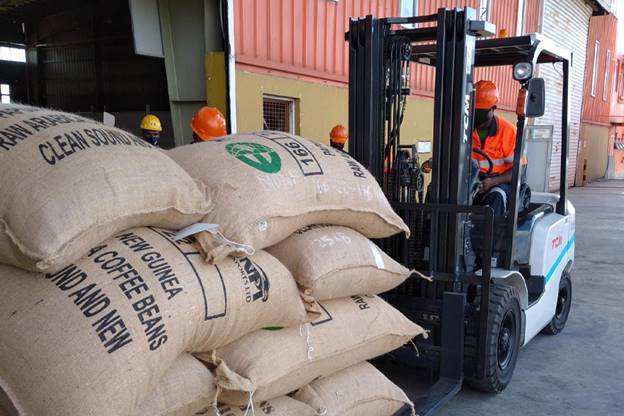
South Pacific International Container Terminal (SPICT) in Lae, Papua New Guinea recently handled its first delivery of coffee bags following the recent opening of its coffee bulking facility.

SPICT took delivery of 320 bags of green coffee beans from Monpi Coffee Exports Ltd, one of the country’s major coffee producers and the first to avail of SPICT’s newest service offering. The shipment was bound for export to Melbourne, Australia.

“We thank Monpi Coffee Exports for trusting SPICT to handle their valuable commodity,” said Robert Maxwell, SPICT chief executive officer. “After almost a year of securing the necessary permits from state regulators and consultation with coffee experts across the country, we are now ready to provide the highest level of service to PNG’s coffee industry.”

SPICT’s coffee bulking facility offers a 2,000 sq m fully equipped warehouse manned by a specialised team dedicated to coffee handling and storage operations. The warehouse is compliant with all the requirements set by Coffee Industry Corporation (CIC), which regulates the coffee industry. SPICT assures customers of readily available containers from all shipping lines, as well as zero risk of missed sailings for shipments approved by the CIC and other concerned agencies.

“Opening the coffee bulking facility is one of our major accomplishments for this year,” added Maxwell. “Having a young and capable team, along with ICTSI’s cargo-handling expertise, we look forward to helping PNG’s coffee industry grow by helping exporters capitalise on opportunities from the increasing global demand for coffee.”

Coffee production is one of PNG’s major industries and provides income to more than three million Papua New Guineans. Majority of the country’s coffee production is centred on Arabica and Robusta, and around 99.9% of PNG’s coffee is exported as green beans. The country’s coffee trade is well positioned to benefit from new market opportunities.

SPICT enjoys exceptional connectivity with the Morobe and the Highlands region, which accounts for more than 90% of the country’s coffee production. A key trade facilitator and the largest container handling facility in PNG, SPICT continues to set the standard for port operations in the country and looks to establish itself as the premiere gateway for PNG’s coffee trade.

Cleaner, compliant forklift engines

Toyota Material Handling has announced that its top selling Tonero range of counterbalanced forklift trucks is now offered with newly-developed Stage V compliant diesel and LPG engines.

Toyota’s own in-house design team has been working on the development of the ultra-clean and highly fuel-efficient diesel (1ZS) and LPG (4Y-ECS) engines for almost five years, and the engines are not only designed by Toyota – the company builds them too.

Toyota’s Sales Training and Product Development Manager, Sam Gray, comments: “Toyota is one of the very few forklift manufacturers with the engineering expertise and market commitment to design and produce its own range of industrial engines. Whereas many others choose to outsource the key aspect of engine development, Toyota is proud to develop and build lift truck engines in-house.”

The engines, combined with other engineering advances incorporated within the design of the Toyota Tonero Stage V range, deliver a host of environmental benefits. For example, thanks in part to the integration of a diesel particulate filter (DPF) within the diesel engine and the introduction of a three-way catalytic exhaust system for the LPG trucks, carbon monoxide, hydrocarbon, particulate matter and nitrogen oxide emissions have all been dramatically reduced.

In fact, emissions from both the diesel- and LPG-fuelled Tonero Stage V forklift ranges are now so minimal that they are notably lower than the levels set out by the European Commission in its Stage V emissions standards for non-road mobile machinery (NRMM). The new range is also exceptionally fuel efficient – which, of course, is environmentally beneficial and also leads to a significant reduction in forklift running costs. The cost savings are particularly impressive when calculated over a truck’s lifetime.

When it comes to productivity, the Toyota Tonero Stage V range has been designed to ensure that users benefit from maximum truck uptime. For instance, the trucks require minimal maintenance, while service intervals have been increased, and when maintenance work does have to be carried out, the Tonero’s new, lean design enables engineers to access vital components quickly and easily – which means that servicing is completed efficiently and truck downtime is minimised.

Uptime is further enhanced by the diesel particulate filter’s automatic regeneration feature which means that DPF service intervals are long, up to 6,000 hours of operation. Meanwhile, the three-way catalytic exhaust system used on the LPG-engine Tonero Stage V is completely maintenance free.

Like all Toyota models, the new Tonero range delivers outstanding driveability. Low noise and vibrations help keep the truck operator comfortable throughout his or her shift, while the introduction of a new simple and intuitive dashboard display along with ergonomically positioned controls combine to give an added boost to operator efficiency and truck productivity.

The new Stage V engine is one of the keys to the exceptional levels of performance offered by Toyota’s recently updated and enhanced Tonero HST family of hydrostatic IC engine counterbalance forklift trucks.

The powerful hydrostatic LPG and diesel engines provide smooth, controllable yet rapid acceleration and allow the trucks to switch direction of travel from forward to reverse quickly and fluently – making the Toyota Tonero HST range ideally suited to busy operations that involve a lot of shunting work and where large volumes of goods have to be loaded and unloaded speedily, efficiently and safely.

Toyota’s Sam Gray added: “The new Tonero and Tonero HST models include many new features and improvements that meet customers’ requirements in terms of quality, driveability and safety. We strive to continue developing increasingly efficient IC-engine counterbalanced lift trucks with lower emission levels that minimise the total cost of ownership.”

Gigantic total weight transported

On behalf of BayernOil, Schmidbauer transported two huge reactors from Kelheim to Neustadt a. d. Donau in just four stages. Despite adverse weather conditions, hundreds followed how the specialist for heavy loads mastered the complex task.

The task was: 336 tires and up to 880 tons total weight each – never before has a greater weight been transported on the road in Germany. No wonder that the entire route was lined with onlookers – and even competitors curiously accompanied each of the trips. 660 tons and 600 tons respectively are the weight of the two new reactors that Schmidbauer transported from the port of Kelheim to Neustadt a. d. Donau. In the oil refinery of BayernOil Raffineriegesellschaft mbH, the reactors, each with a volume of 400 m³, will now enable the throughput of heavy gas oils to be increased to 300 tons/hour as part of the mild hydrocracker plant. They are needed to produce sulphur-free diesel fuel.

Even the lift at the beginning and end of the project was an impressive feat: there are currently only 51 machines of the corresponding design in the world that can manage it: Schmidbauer had used a Tadano CC 8800-1 crawler crane for the lifting work, which mastered the transhipment and handling in the port of Kelheim as well as the assembly of the reactors in the refinery. In between, there were only a few days for the assembly and disassembly of the crane and its transport, a real challenge for the whole team. The huge reactors were then moved by two self-propelled modular transporters (SPMTs), each with 2 x 22 axles and 176 tires. Only such special transporters can carry such immense axle loads. The maximum dimensions of the individual columns were 37 meters long, 8.2 meters high and 6.6 meters wide.

“Such huge dimensions can quickly become a problem, because neither the roads in Germany nor the rest of the infrastructure are designed for these dimensions,” explains Stefan Schmidbauer, Managing Director of the Schmidbauer Group and project manager for the transport. “Especially bridge crossings, but also railway crossings are special problems that we have to pay special attention to.”

Reaching the goal in just four stages

Only four stages were planned for the route in order to keep traffic restrictions as low as possible. It was not only the fast execution and the short preparation time of only six months that posed a real challenge: The route, although only 30 km long, led in part through very narrow villages and over several bridges, and there were also considerable inclines to overcome.

Each stage had its own challenges in store: The start in Kelheim was accompanied by thunderstorm-like downpours, but fortunately this only led to minor time delays. The Weltenburger Berg on the second stage, with its steep incline of up to 8 degrees, was considered to be one of the most difficult obstacles, which could have caused considerable problems with traction if the bad weather conditions had continued to threaten. But the weather cooperated and the transport over the mountain went almost smoothly.

Then, on the third leg to Bad Gögging, an additional structure with 22 hydraulic presses to secure the statics had to be used when crossing a bridge to ensure safe passage. On the final stretch to Neustadt a. d. Donau, there was also time pressure: For the crossing of a railroad crossing at 3 a.m., only a minimal time window of 4 hours was available to cover the railroad crossing with gravel and roadway plates, to successfully drive over it and to release it again for Deutsche Bahn.

The entire project required extensive feasibility studies in advance, geotechnical reports, and engineering services for stability, as well as structural analysis for the necessary structure overpasses and road analyses including soil compression. Countless traffic signs, street lighting, telephone lines, curves, inclines, construction sites, bridges, side slopes, intersections and traffic circles had to be considered. In addition, various temporary roads were built to avoid critical route points such as railroad crossings and bridge crossings. “The contract was not awarded until December 2020. Implementing all these steps by the time of transport at the beginning of June was a real challenge, but one that we were happy to accept,” adds Stefan Schmidbauer.

Of course, every single section was a real spectacle for the spectators. That is why each transport was manned by eight people, driving personnel, project escorts as well as security. Their task was, among other things, to keep the numerous onlookers from getting too close to the vehicles and the heavy load at any time, thus ensuring the safety of the transport, as well as to accompany the SPMTs around the clock and ensure that everything went smoothly.

At the destination, the CC 8800-1 was ready again to be used for lifting the reactors, and a CC 2800-1 as a tracking crane. With a lifting capacity of 1,600 tons and a total of 900 tons of ballast, it carried out what was probably Germany’s heaviest single lift at 700 tons with a radius of 26 meters. “The fact that we managed to do all this and complete the high-performance transport so smoothly and quickly thrills the whole team. We are very proud and hope to set an even bigger record soon. A big thank you to everyone who helped with this extraordinary project!” says a delighted Stefan Schmidbauer.

Etihad Cargo and CargoAi agree global partnership

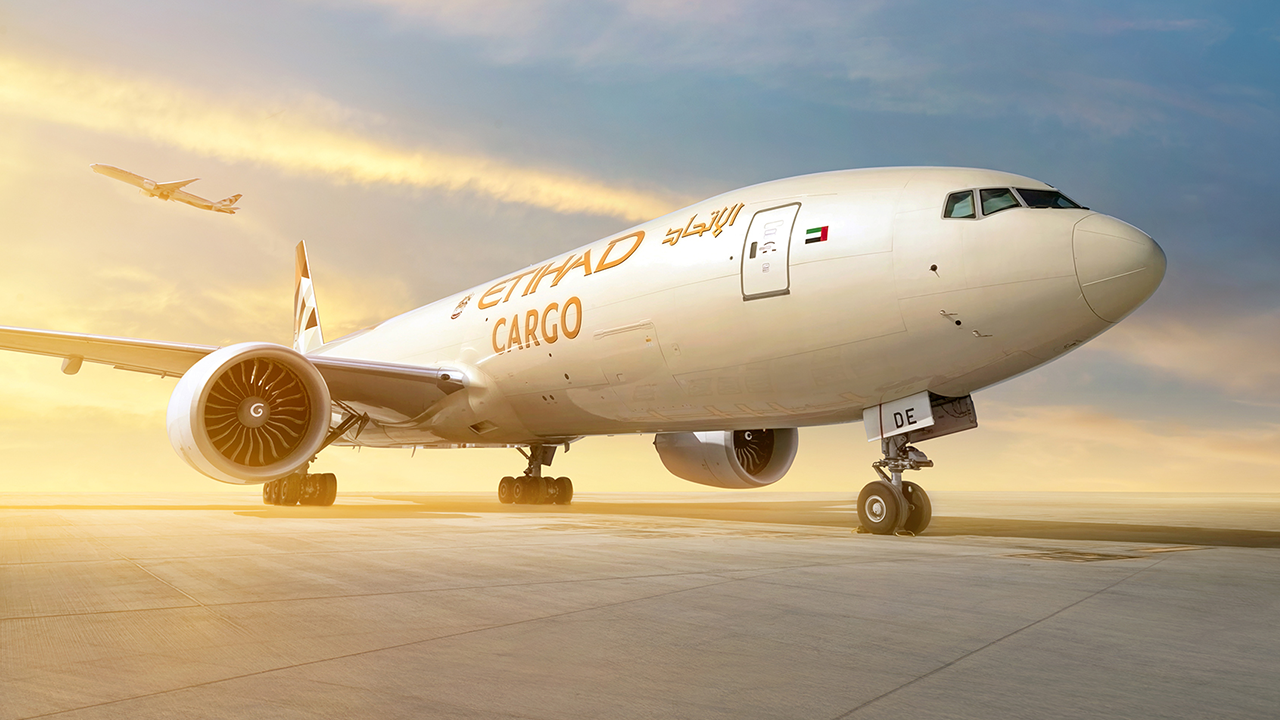
Etihad Cargo, the cargo and logistics arm of Abu Dhabi’s Etihad Aviation Group, and CargoAi, the SaaS application which provides air cargo digital solutions, have partnered to elevate the carrier’s API accessibility for freight forwarders as part of its digitalisation strategy.

During the past few years, Etihad Cargo has accelerated its development of technology advancements which have provided simplified customer experiences through a number of partnerships. This has culminated in the launch of its brand new digital platform, etihadcargo.com. Its latest collaboration with CargoAi will further enhance this through the provision of brand-new API accessibility for freight forwarders the world over.

“Digitalisation has been at the core of Etihad Cargo’s strategy over the last three to five years, and continues to be a focus in driving digitalisation and streamlining processes across the air freight world,” explained Martin Drew, Senior Vice President Sales & Cargo, Etihad Aviation Group. “Our partnership with CargoAi supports this vision, and provides an additional tool which delivers a rapid and fluid digital booking services platform.”

Matthieu Petot, CEO of CargoAi, noted: “Etihad Cargo is a cutting-edge, highly innovative carrier in the field of digital air freight. We are fortunate to have the chance to be the first provider to use their latest modern APIs. As cargo capacities worldwide are still restricted, e-marketing the Etihad Cargo offer on our platform is clearly a major opportunity for our freight forwarder clients.”

With CargoAi’s expertise in the areas of air freight and tech, integration is taking place at a record pace. By the beginning of August 2021, all aspects of the company’s offer of capacity – including rates, schedules, quotations and bookings – will be available via the platform. The unique Business Intelligence solution will for its part provide access to live data with staggering simplicity.

Customers herald Nulogy’s sustainability benefits

Nulogy, a leading provider of agile supply chain solutions, has been praised by a growing number of global contract packers and manufacturers for the sustainability benefits its software is delivering.

Nulogy’s platform enables contract suppliers and leading consumer goods companies to increase their speed to market and gain much greater visibility across their global supply chain. With automated workflows and AI-driven supply chain insights, the software is ensuring users maximise efficiencies in packaging and distribution operations to deliver better service with far less waste.

Through streamlining their operations users are seeing greater efficiencies and reduced waste, enabling both themselves and their FMCG clients to meet their sustainability targets.

In the UK, Marsden Packaging, based in Blackburn, UK, specialises in primary and secondary packaging services for the food and pharmaceutical sectors and has been using Nulogy’s software to power its operations in the UK for over five years.

“At Marsden Packaging we are constantly seeking ways of achieving greater efficiency as this reduces the amount of waste we produce and makes us more sustainable,” said Michael Briggs, MD at Marsden Packaging. “Nulogy’s software has undoubtedly helped us on this journey by improving our workflows thereby making us a more efficient production unit and helping to deliver greater sustainability for clients.”

GreenSeed, a contract packer based near Chicago, Illinois, who provides external manufacturing for large and mid-sized companies by bringing premium foods to market safely, efficiently, and with less waste, is another business benefiting from Nulogy.

“As a mission-driven company, GreenSeed collaborates with like-minded partners such as Nulogy to ensure food companies have long-term success with social, environmental, and economic sustainability,” said David Gray, CEO of GreenSeed. “By working with Nulogy, we help our customers meet their goals of minimal environmental impact and greener product offerings.”

SGL Co-Packing, a leading provider of high quality and ultra-flexible contract packing and contract manufacturing services in the UK, has seen Nulogy drive improved waste recording, batch traceability as well as providing safeguards against the incorrect processing of orders.

Nulogy has helped us as a business on multiple fronts and sustainability is an increasingly important part of this advantage,” said Gavin Withers, Director at SGL’s parent company Keswick Enterprises Group.

“From providing live access and updates during production, to ensuring easy identification and isolation of stock or the ability to check that all components are available for each bill of materials; our waste is minimised, and efficiencies maximised.”

Rootree, a Canadian brand packaging fulfilment company agrees, and is leveraging the Nulogy platform to bring innovative brand products to market more sustainably.

“Our goal is to help innovative brands bring healthier, more sustainable products to market with quality and speed,” said Phillippe St-Cyr, CEO and president, Rootree. “Partnering with Nulogy has helped us do so with greater efficiency and less waste.”

Josephine Coombe (pictured), Managing Director, Europe, Nulogy, concluded: “At Nulogy, we are committed to helping businesses reduce their impact through the efficient and effective use of technology.

“We are delighted that our platform is already generating value for so many contract packers and manufacturers, and we will continue to innovate our software to ensure our customers continue achieving their sustainability goals.”

Subscribe

Get notified about New Episodes of our Podcast, New Magazine Issues and stay updated with our Weekly Newsletter.