Cool solution for cold store facility

McKeown Fine Foods needed to maximise storage density and ensure fast, reliable throughput at its new cold store facility in Northern Ireland. Toyota’s advanced Radioshuttle solution stepped up to the mark.

McKeown Fine Foods is a fast expanding family run food-processing business supplying breaded chicken and other meat products to wholesale, retail and food service organisations across the UK and Ireland.

Established on the family farm in the late 1980s, the company has grown rapidly over the years, taking on a number of cold stores on both sides of the Irish border. With the recent upgrading of its cold store facilities in Rasharkin, Ballymena in Northern Ireland, the business was faced with a decision on how best to rack-out the new building to maximise storage density and ensure smooth, reliable throughput to the production lines.

The new three-chamber cold store, with two rooms operating at temperatures of -20°C and a third at 1°C, has a capacity to hold some 4,400 pallets – quite a step up from the existing manually operated 300-pallet facility on site.

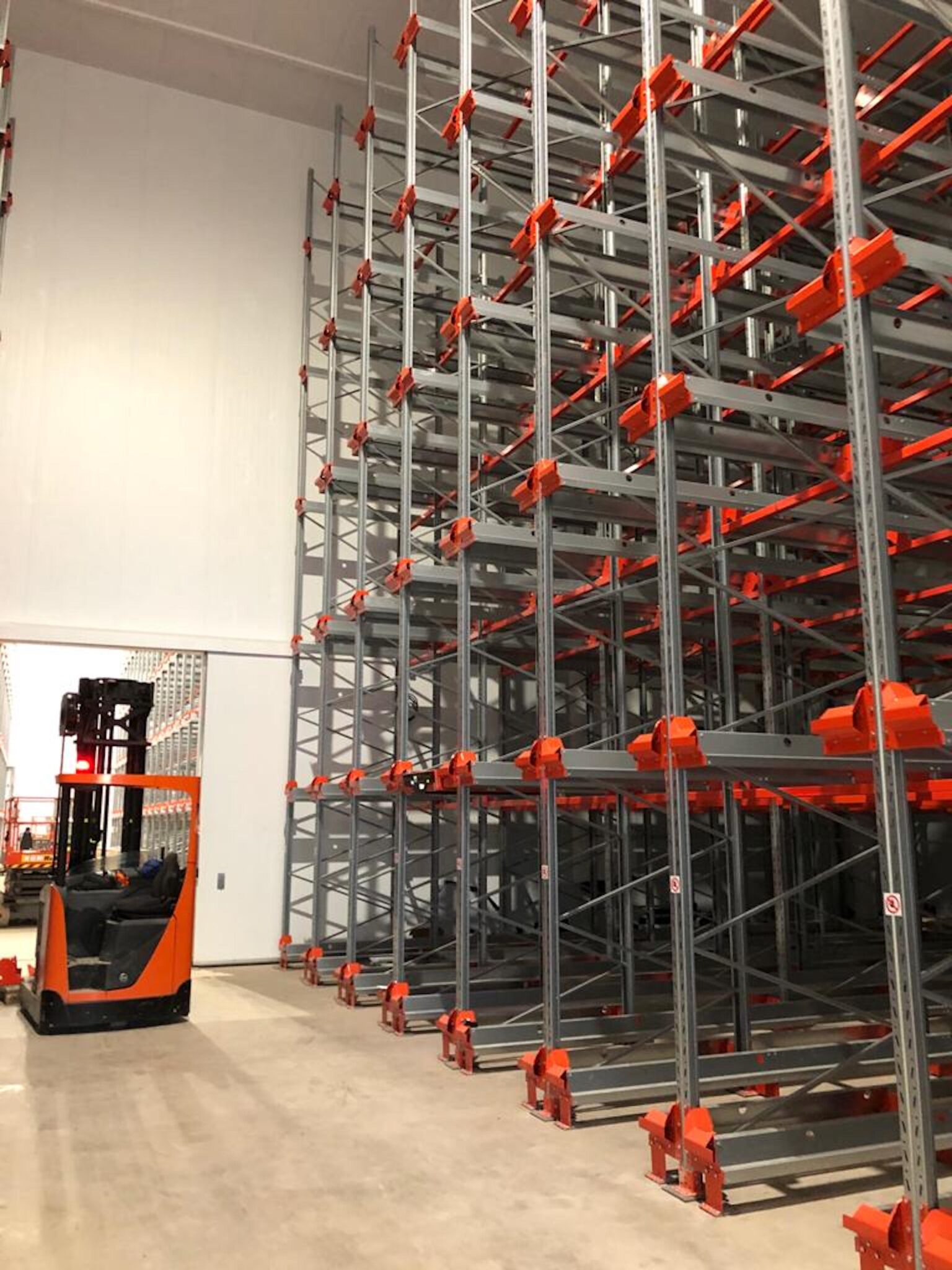
After considering conventional mobile racking, supported by reach trucks, McKeown Fine Foods took the decision to boost performance by investing in Toyota’s state-of-the-art, high-density automated storage solution, BT Radioshuttle.

The Radioshuttle system is designed to automatically store and retrieve pallet loads of product at rates of up to 60 per hour, combining fast and efficient transport of goods with space utilisation of up to 85% of available storage space. The system uses radio-controlled shuttles that are automatically guided along channels within the racking and powered by lithium ion batteries for reliable long-shift operations.

Maximising storage density using Radioshuttle offered significant advantages in cutting the cost-per-pallet stored and in reducing the potential for forklift truck collisions with racking.

Damian McKeown, Managing Director and owner of McKeown Fine Foods, explains: “Our product was stored in several cold stores across Ireland, and we had a small cold store in Rasharkin with drive-in racking which held 300 pallets. I imagined that once the three-chamber store was completed we would have to employ three or four more people, but that wasn’t the case at all. With the Radioshuttle system, one chamber can take in seven lorry loads of pallets a day, easily, with the same number of people that worked in our old cold store. The system is extremely fast and reliable.

“One shuttle can do so much work, it’s quite amazing. Within the time the forklift goes to pick up another pallet from the lorry, the shuttle is back waiting, every time. The forklift drivers just can’t keep up with the shuttle, it’s really efficient.”

McKeown Fine Foods has two shuttles at present, with a third on order, giving the business the flexibility and scalability to increase throughput in step with demand. The process of storing and retrieving pallet loads is simple. The forklift operator lifts a shuttle into the required channel, places a pallet load onto the shuttle and then presses a remote control, sending the shuttle with its load off into the racking. Retrieving a load is just as easy.

Giving an indication as to the scale of the operation at Rasharkin, Damian McKeown says: “We are taking in about nine lorry loads a day into the freezer, which is around 230 pallets per day, and over a week up on 50,000kg of chicken leaves the cold store to feed our production lines. With the Toyota Radioshuttle system it’s all extremely simple.

“The shuttles themselves are very straightforward – they do exactly what you want them to do. They give so little trouble. The lithium ion batteries on the shuttles allow for 10 hours of operation on one charge, and being lithium ion they can be topped-up whenever the opportunity arises.”

For Damian McKeown, the price was not the main issue. “The big thing for me was that it was Toyota,” he says. “My concern with other companies was with service reliability – if a shuttle breaks down Toyota has an extensive service support network. Also, Toyota is on its sixth generation of Radioshuttle, whereas others are only on their third or fourth generation. The company we almost went with, before we found Toyota, was only on their second, and that concerned me. So for me, Toyota was a very safe option… and they’re in GB, which is a very big point for me.”

The professional support from Toyota’s Chris Adamson also played an important part in securing the order. Damian McKeown says: “Chris was outstanding. He stepped in and provided a quote in record time, just a few days, and ensured that the whole process went smoothly.”
Geodis adds returns management to eLogistics services

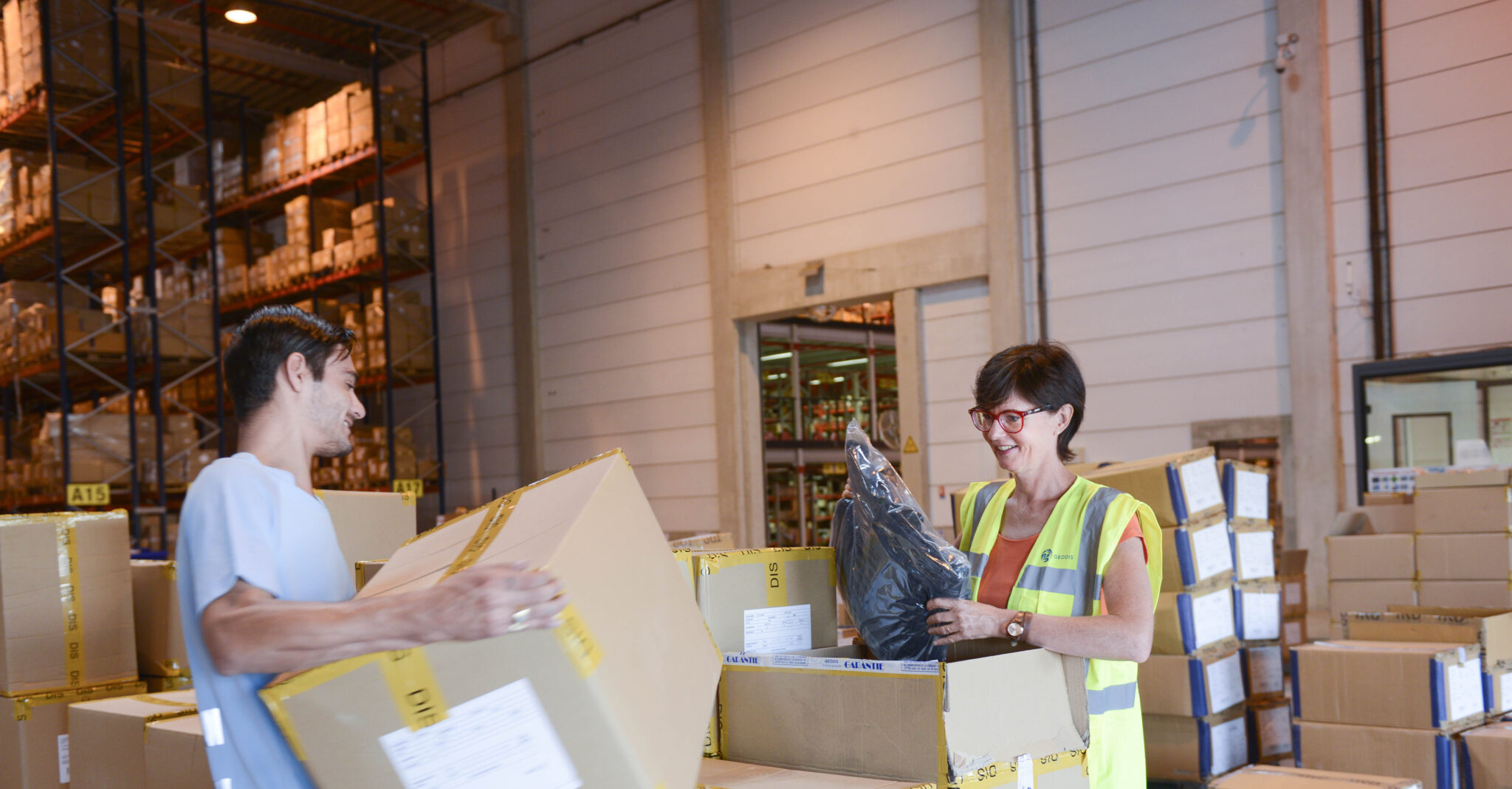
As part of a dedicated range of e-Commerce services, Geodis now offers a complete product returns management service. Thanks to Geodis, retailers and e-merchants will be able to benefit from an end-to-end technological and logistical solution covering the entire value chain, from order orchestration to product returns management, available throughout Europe.

In response to the growing popularity of online shopping and a substantial increase in product returns, Geodis has developed an integrated range of reverse logistics services that combine the power of digital technology with its international transport network and its expertise in logistics (managing 8.7 million sq m of warehousing space worldwide). This turnkey Geodis solution is designed to relieve retailers and e-retailers of the operational management of product returns. It includes the declaration of consumer returns, product collection and identification, and delivery of the items back into stock.

For the digital aspects of this solution, Geodis has selected the innovative French start-up ShopRunBack, which operates in over 100 countries. It will provide retailers and e-merchants with its white-label returns management platform, which can be accessed from all merchant sites. Using this platform, the consumer selects the product to be returned and the reason for the return and chooses the method of pick-up.

The package can be collected at the consumer’s home or left at a drop-off point. Geodis services are responsible for collecting products and transporting them to the warehouse, as well as the entire process of control, sorting, repackaging for dispatch and where appropriate recycling, according to the principles of the circular economy. All these logistics operations are prescribed in accordance with the return policy defined beforehand. Both retailers and consumers can track the progress of the return request and the status of the refund in real time.

For merchants connected to such e-Commerce platforms as Shopify, Woocommerce, Wizishop or Prestashop, among others, the digital platform can be integrated instantly.

Ashwani Nath, Vice President e-Commerce at Geodis, said: “Following the success of the range of Geodis eLogistics solutions dedicated to the customer experience from order management through to delivery, we wanted to work on the after-sales experience, which is a crucial element in customer satisfaction. We are now offering an integrated end-to-end technological and eLogistics solution that has no equivalent on the market.”

Eddy Richauvet, CEO of ShopRunBack said: “It is an honour for us to have been selected by Geodis to support them in returns management as part of their global e-Commerce strategy. This decision recognizes ShopRunBack’s expertise in reverse logistics and demonstrates the maturity of our technology, which our merchants have been using for over 7 years.”


Logistics – it’s a people thing

Worker quality and numbers is fast becoming one of the trickiest aspects of finding and properly utilising people in the DC, says Smitha Raphael, Chief Product & Delivery Officer for WMS technology innovator SnapFulfil.

Amazon has raised the bar in the race for workers by increasing its average starting wage in the US to $18 per hour (potentially rising to $22.50) – plus it also plans to hire more than 125,000 warehouse and transportation workers in the US alone for 350 new logistics facilities opened this year and to help the rollout of one-day delivery for Amazon Prime loyalty club members.

Retailers generally are scrambling to hire hourly workers in this stretched-to-breaking-point labour market and have even been offering benefits and joining bonuses to attract them, with Walmart also planning to hire 20,000 workers at its supply chain division ahead of the manic Q4 season.

The UK & Europe is already following suit, but baby boomers, which have traditionally made up most of the DC workforce, are rapidly approaching retirement age and younger generations are less willing and available to replace these roles in the warehousing industry.

Raphael explains: “The current global labour issue has also highlighted the stark differences between manually operated DCs and those that have integrated automated process solutions and have been able to keep up with rapidly growing e-commerce and quick delivery demands.

“At SnapFulfil we are working with customers to help them meet this labour crisis head on – by way of real time data and warehouse planning – to optimise both space and resource, in order that business as usual can be maintained in these exceptional circumstances.”

When labour is at a premium and self-isolation is a reality, coupled with a rapid change in orders, then having the very latest data to boost the effectiveness of the available workforce, their picking and packing performance, plus available space – underpinned by highly efficient receiving and putaway activity – is vital.

What’s more, it allows for remedial measures to be quickly and inexpensively enacted, because highly configurable WMS software like SnapFulfil means every aspect of the e-commerce fulfilment process can be automated, streamlined and made intuitive for floor staff and management.

Raphael adds: “SnapFulfil customers typically benefit from efficiency and productivity improvements of up to 30%, which basically translates into the ability to do more for less with the same resources – something we are all craving during these hugely uncertain times.”

Food supplier modernises DC operations

Honeywell has announced that one of the largest suppliers of fresh and frozen produce and fruit in the US Midwest has deployed the company’s mobile computers, tablets and software to help its mobile workers pick, pack and ship perishables.

The Castellini Company, one of the oldest produce companies in the country, has deployed Honeywell’s CK65 and CT40 mobile computers, its VM1 vehicle-mounted computers and RT10 tablets. These portable devices are all based on Honeywell’s Mobility Edge platform, which is designed to extend asset life, accelerate deployment and simplify management of mobility solutions.

Castellini will use Honeywell’s Operational Intelligence Professional software, a centralised cloud-based platform that enables it to keep track of its new devices, manage their operational status and reduce unplanned downtime to give customers an even more trusted, reliable service. Honeywell will provide on-demand support to the Castellini Company, serving as a single point of contact for ongoing mobility device management and help desk support.

“To keep up with customer demand and a rapidly-changing environment, we were looking to use the latest technology to keep our mobile workers productive,” said Brian Kocher, president and CEO of the Castellini Group of Companies, which transports perishables to some of the largest retail grocery chains, food service distributors and home delivery services in the United States. “The combination of our warehouse system technology paired with Honeywell’s mobile computers allow us to operate at a productivity level we’ve never seen before in our history.”

The rise in e-commerce continues to set faster and more complex delivery standards, putting strains on warehouses and distribution centres to meet customer demands. Mobile computers are critical tools used by operations and mobile workers to allow for faster, smarter and more effective work. With these devices, workers can access to operational data through barcode scanning, complete picking and packing operations through voice-guided solutions and communicate with other workers to ensure tasks are complete.

“From the store back into the food supply chain, customer experience expectations coupled with new food preferences have made food supply chain efficiency more important than ever before,” said Kevin Dehoff, president of Honeywell’s Productivity Solutions and Services business. “Honeywell’s mobile computers and software provide distributors like the Castellini Company tools to connect with each other and view real-time enterprise information to work faster, smarter and more efficiently.”

The Castellini Company’s distribution centres provide next-day delivery and distribution centre replenishment. Its 1,400 truckloads deliver over 4,000 tonnes of perishables and more than 300,000 meals per week.

Honeywell’s Mobility Edge platform is a unified hardware and software architecture with an integrated software toolset and the only one that guarantees support through Android 12. Mobility Edge enables IT departments to reuse their investment in solution development and software certification across multiple computer form factors.

Honeywell’s mobile computers, voice technology automated material handling solutions and software solutions are designed to help customers answer supply chain challenges and meet the exponential growth of ecommerce and rising consumer expectations.

Mobile technological expo tours Europe

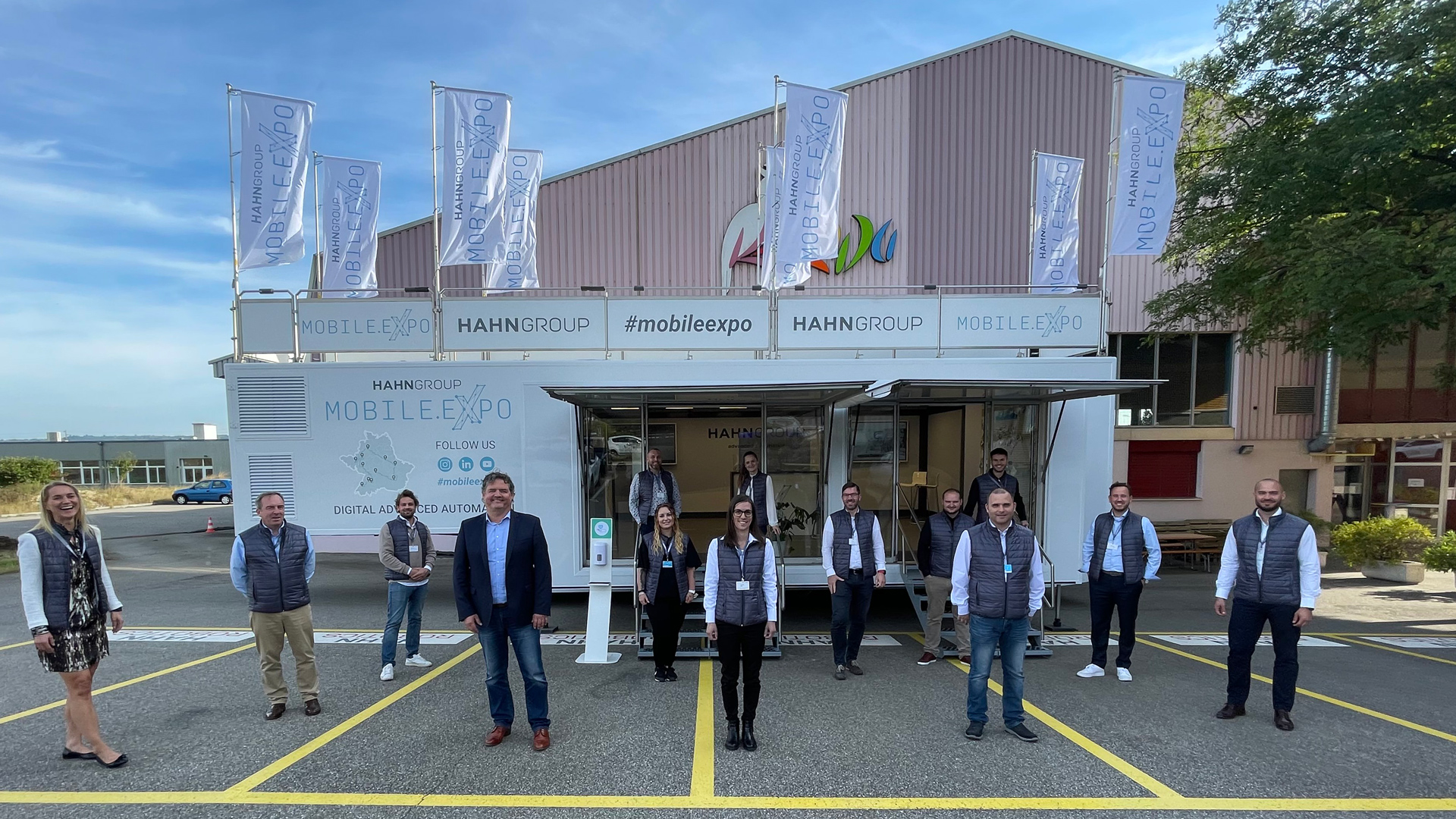
The HAHN Group MOBILE.EXPO is picking up speed and presenting its technologies and products with its innovative exhibition and trade fair concept at 13 locations in Europe

The HAHN Group started its MOBILE.EXPO in Europe on 20th September. At 13 locations in five countries, including a stop at the FAKUMA trade fair, the new exhibition and trade fair concept brings the technologies, products and contacts of the company network to regional customers and partners.

The HAHN Group shows digital and service-oriented concepts on 60 sq m of exhibition space in the specially converted exhibition truck. With the help of a wide range of information, a place for exchange, networking and brainstorming is created. At the accompanying exhibition, the current state-of-the-art in the field of automation and robot technologies can be experienced up close on a further 80 sq m. The agenda is designed for each truck stop location-specifically and thus sets sustainable impulses for transformation and knowledge transfer within the respective region.

On 20th September, the HAHN Group MOBILE.EXPO exhibition truck made its first stop at the site of the HAHN Robotics Network in Bettlach, Switzerland.

Managing director Björn Culmone and his deputy Andrea Hert are happy about the successful start of the event series at their location. After all, it is a great opportunity to draw additional attention to their site and to invite regional customers and partners to meet again. The organisation of events of this scale is a result of the successful cooperation within the HAHN Group. This company network demonstrates its strengths particularly in projects or larger orders through the exchange of technologies and competencies as well as development, construction and service from a single source.

The highlights of the MOBILE.EXPO in Bettlach include the numerous exhibits from the various subsidiaries of the HAHN Group, which are touring as a permanent exhibition with the trade fair truck. The individual locations also exhibit their own products and technologies. In Bettlach, for example, one was able to admire a training cell from DAHL Automation and the Flexibowl, for which HAHN Robotics is the exclusive distributor in Switzerland.

A special thanks goes to the sponsors OnRobot and Kistler, who also accompanied the event in Bettlach. Overall the HAHN Group MOBILE.EXPO offered an opportunity to enjoy an extraordinary event in Switzerland with customers and partners as well as the employees’ families and friends.

Interested participants can register for MOBILE.EXPO on the HAHN Group website.

In addition to the information materials that can be experienced on site at MOBILE.EXPO, the HAHN Group offers featured content on the subject of digital advanced automation on its website. Through a video case study for the Healthcare industry, you will learn how today’s production will be further optimised through the application of intelligent and digital automation technologies. With its network, the HAHN Group is able to offer complex large-scale projects from a single source and to distribute capacities in times of high incoming orders.

CLICK HERE to watch a presentation of the digital product portfolio.

Optimising logistics operations

BG Log UK is a specialist in supporting Lean Manufacturing projects, with a particular specialism in the organisational aspects of factories.

Managing the logistics processes taking place within a company is very complex. BG Log UK was formed in 2020 to provide a credible and cost-effective option for Automotive, Aerospace and Warehouse Fulfilment businesses who required a reliable supplier to provide a sustainable product in a timely manner.

Supply chain management requires a clear vision to take into account several intertwined factors. With a highly experienced team in terms of Lean Management and CI implementation techniques, and the capability to work hand in hand with a customer’s Lean engineers and facilitators, BG Log says it can design a solution and build it in the UK, using a robust 28mm range of steel materials that provides structural support and satisfies QHSE (quality, health, safety, environmental) requirements.

BG Log says its concept is based on the design, implementation and construction of complete and fully operational solutions. It selects and provides the best materials for a project, and offers all the advice needed to best produce the solution, as well as constant support with a keen focus on safety.

Its BG SMARTUBE product range includes:

Dunnage racks: created to form bespoke transport solutions for multiple parts that can be easily transported to the point of use or between stations. The bag creates a protective environment for the part and can also be lined with micro fibre material to stop damage and retain the quality finish of the surface. Access can be gained from either side or closed off. Compartments can be numbered for ease of identification.

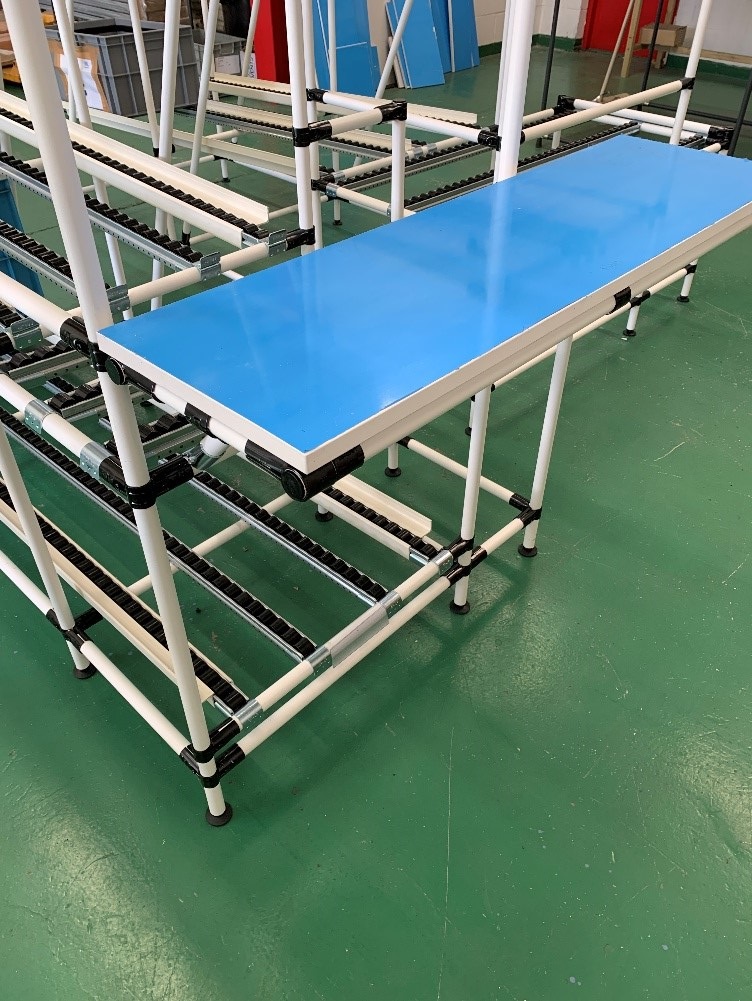
Gravity Feed conveyors: these work by creating an incline within the flow racks to prompt movement of carriages or parts within the rack. Gravity feeds the part from A to B using rollers or surfaces created to suit the individual requirement. The Operator can feed each part and leave to run to point of use and also have return lanes to form a closed loop for production.

Flow racks: these assist the cell to move products from point A to B by using feed lanes and take off lanes for each operator. The rack helps reduce or remove the several of the wastes in terms of transport and over/under production by creating Kanban positions. Kanban solutions help the Lean transformation of the production line by using a pull system and therefore flow racks are built to host only the right number of parts required for the process. Flow racks can be mobile or static and can be designed to the exacting and unique needs of each customer.

Workstations and trolleys: can be tailored according to the need by adding multiple accessories such shadow boards, drawers, screen arms and tooling rails. BG Log can provide a wide range of surfaces according to either budget or specific needs such as ESD or duty rubberised work tops. Stations can be mobile or static.

5S Solutions: Sort, Straighten, Shine, Standardize, Sustain. BG Log’s systems help promote 5S in terms of shadow boards, cleaning stations and trolleys and information cubes to help report KPIs and SQCDP metrics. It provides screen printed boards with your company branding and design projects tailored specifically for your facility.

Customised Projects: BG Log has undertaken several special projects that it says have been extremely well received, and says it is willing to discuss customer requirements and provide advice and expertise in best practice.

How to avoid common warehouse hazards

Some warehouse hazards are more obvious than others. The lesser-known hazards are often the most dangerous, especially when they go unreported. Warehouses are complex workplaces full of different moving parts and a high volume of staff where even the most minor accidents can cause damaged stock or equipment.

With the increasing popularity of online shopping, warehouses are seeing an increased demand for work. This means companies are hiring underqualified staff to make up numbers. Therefore, warehouse health and safety is more important than ever. This post will cover some of the most common warehouse hazards, along with shocking figures to show how dangerous these hazards are and ways accidents can be avoided.

Slips and Trips

Studies found that 37% of all reported workplace injuries resulted from a slip, trip, or fall in one year. Also, falls caused a staggering 28% of all fatalities in the workplace. These hazards are not always easy to spot, some of the culprits being puddles and sawdust. Falls do not have to be from a height to be dangerous; ground-level falls are especially hazardous when carrying something heavy.

Falls From Height

In the construction industry, falls from height were responsible for 47% of fatalities recorded in one year. Wherever there is a significant drop between floors, a guard railing and clear warning signage are essential.

Companies should always give staff properly accredited training in how to work safely at a height. This includes ladder safety, as unstable ladders can be dangerous. Warehouses should always use high-quality ladders, and the area around the ladders kept clean and clear.

Fires

Fires can destroy a whole warehouse, but luckily fires are also one of the most manageable hazards. Warehouses should always have marked exits, routine fire drills and practice alarms, fire extinguishers and fire doors. Fires spread fast in warehouses due to various flammable goods and packaging often stored there.

Always keep an eye out for worn and exposed wires and old extension cords, as well as extension cords being overused. Warehouses that hold flammable fluids and gasses need to be extra careful; staff must report any leaks. Also, avoid running electrical wires under carpets.

Lack of Training and Education

Warehouses have been known to skip proper training to save money and time; this creates all kinds of hazards and should never be done. Lack of training and education can result in injuries, compensation payouts, lawsuits, and fines.

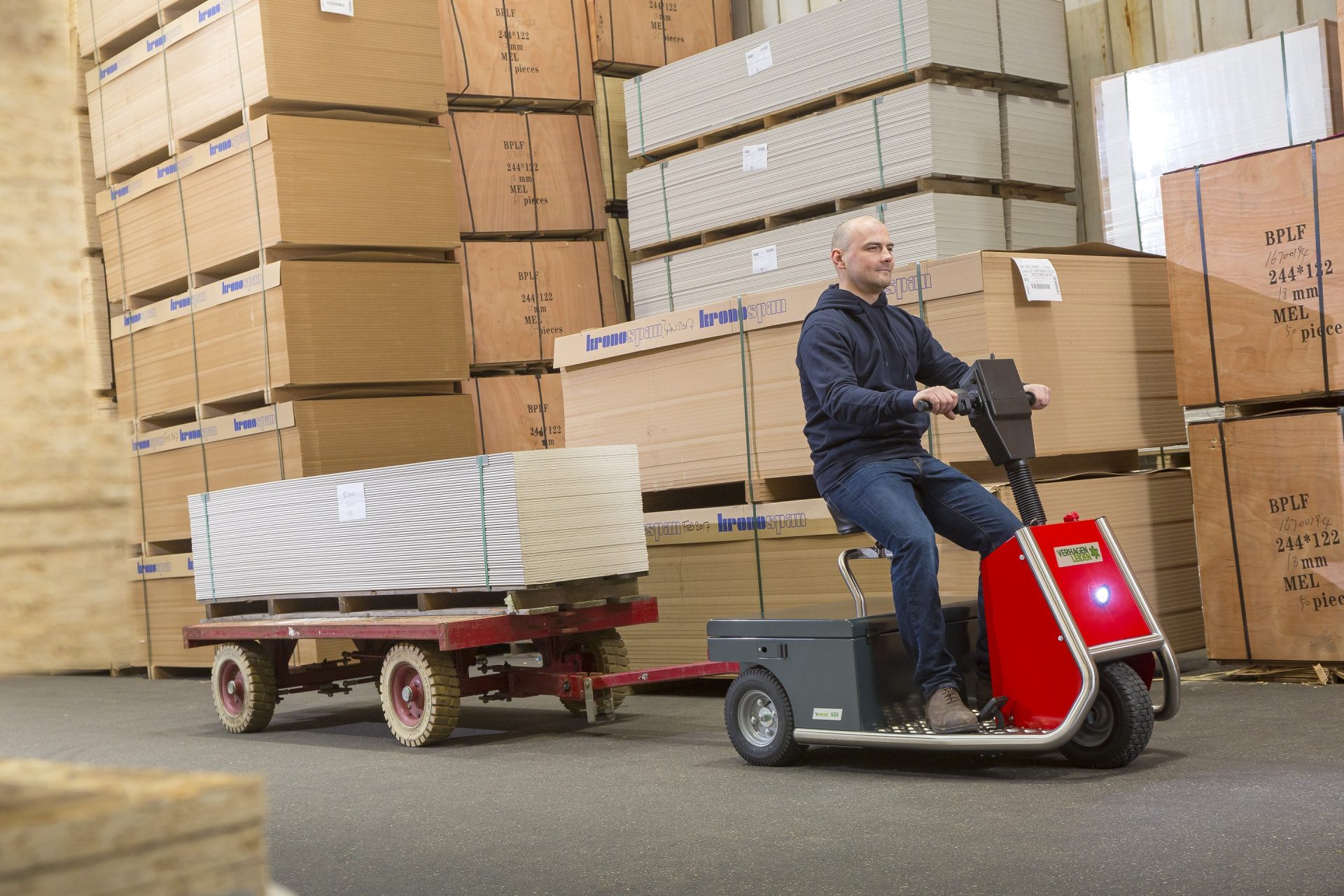
Unlike forklifts, electric tow tugs can be used without official training or acquiring a license. This is because they are safe and easy to use, so switching your machinery to tow tugs means training is no longer an issue.

Bodily Strain & Fatigue

Most warehouse injuries are due to sudden accidents. Still, strain and fatigue can build up and eventually lead to severe injuries. Fatigue causes risk since it can lead to staff failing to use equipment properly on not concentrating at work.

All warehouse staff should be trained in proper lifting techniques, and investing in equipment that reduces physical strain is crucial. Electric tow tugs are a great investment thanks to being small in size. They are easy to operate, meaning staff will not become fatigued by using them.

Forklifts

Statistics show that, shockingly, forklifts are the most dangerous form of workplace transport in the country, and they are still used in many warehouses across the country. 25% of workplace injuries directly result from forklift truck accidents, meaning 1,300 employees are hospitalised each year with serious injuries.

The leading cause of many forklift-related injuries can be linked to a lack of employee training. Industar believes that, for a safer option, tow tugs are easier to use, so no license is required. They hold loads closer to the ground, meaning visibility is better, and stock is less likely to be dropped. They are also easier to store, meaning they don’t get in the way.

Hazard Reporting

Inform all staff of the importance of reporting hazards. Maybe tell them to read this post to realise just how dangerous warehouse hazards can be. Reporting hazards early can avoid injury. Ultimately, warehouse safety relies on policies, training, and safety equipment.

All workplaces should have a risk assessment, but it is essential due to the added risk in warehouses. https://www.hse.gov.uk/simple-health-safety/risk/warehouse.pdf

Check out this guide to creating a warehouse risk assessment. It is vital to identify all hazards your premise currently has and put measures in place to avoid injury. The guide covers many different safety topics, such as lifting and handling, transport, working at a height, and avoiding fires.

Tugs For Warehouses

Industar stocks a wide range of tow tugs, guaranteed to make transporting goods in your warehouse safer and easier. Not only this, but it also has a variety of industrial vacuum cleaners to keep your warehouse clean and hazard-free.

New functions for Linde Logistic Trains

With new trailers and a cloud-based tugger train guidance system, Linde Material Handling (MH) is making horizontal packaged goods transportation even more attractive. Innovative functions for C-frame and Bridge-Frames ensure greater safety and flexibility.

The tugger train guidance system determines the optimal route for drivers, reduces error rates and employee training time, and responds to order-related changes with adjustments in real time. Thus, even complex tasks become manageable and can be reliably carried out.

Horizontal goods transportation by means of tugger trains is particularly advantageous where large quantities of different parts and components have to be delivered over long distances to the right place at the right time. This is the case in the automotive industry, as one example, where each vehicle consists of many thousands of components that are assembled piece by piece until the finished car finally rolls off the production line.

“Here, bundled material transport using tugger trains makes more economic and ecological sense than individual transports and furthermore, they are in line with the Lean philosophy,” explains Mal Rexhepi, Product Manager Automation & Load Train Solutions. Further advantages of production supply enabled by tugger trains include the reduction of in-house traffic volume and the associated lower accident potential combined with plannable processes.

New frame features

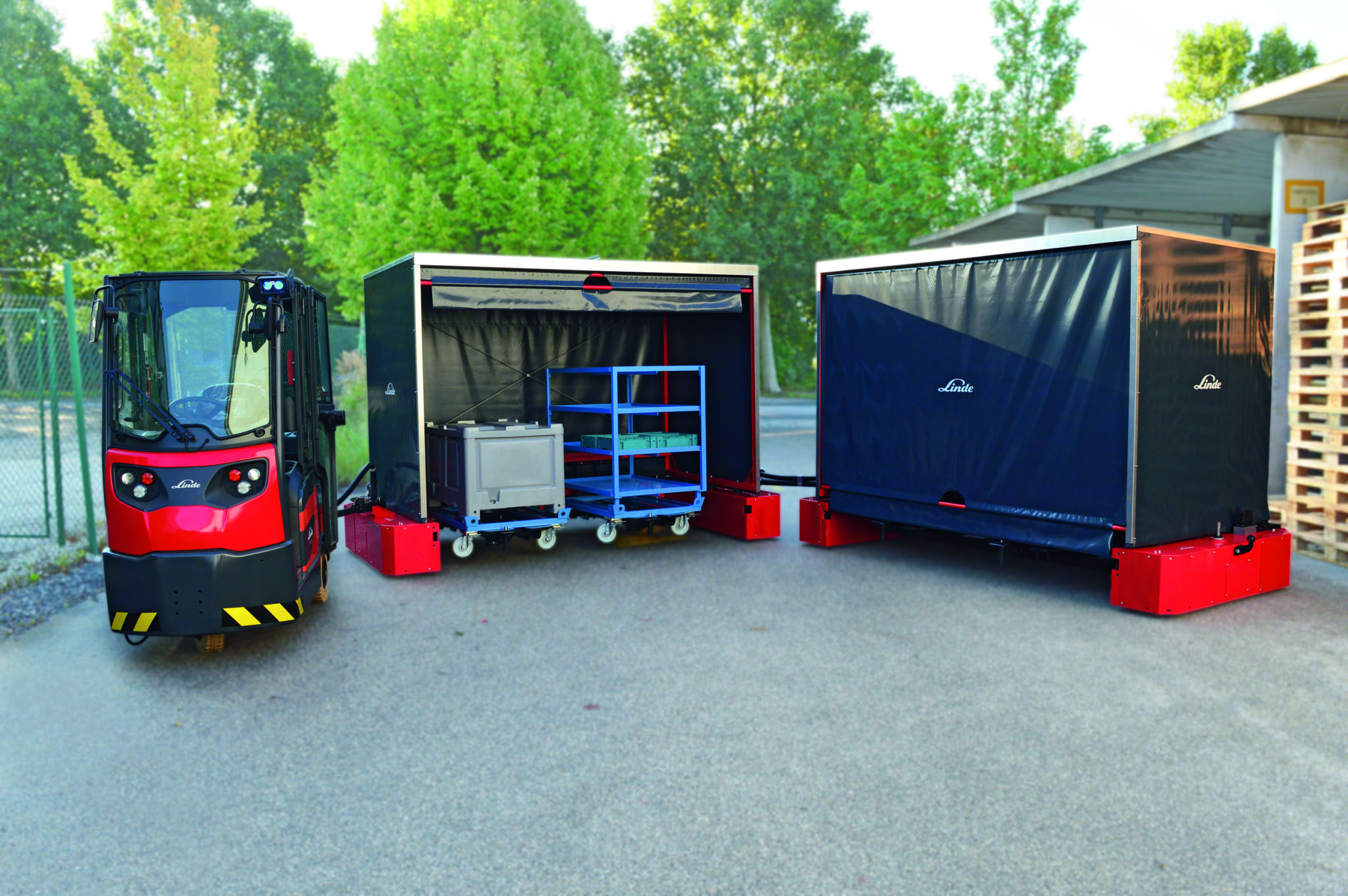
From September 2021, Linde MH will be launching new trailer models for the Linde Logistic Train – including the LT-C with C-frame, the LT-B with Bridge-Frame and the LT-BM with Bridge-Frame and movable middle support. The improved frame functions ensure even greater safety and flexibility.

One new feature is the innovative and patented lifting profile mechanism for the Bridge-Frames. It not only enables the transport of a wide variety of rolling racks and trolleys, but also, with the appropriate design, the lifting of pallets without load carriers if these have been placed in the trailer with a pallet truck, for example. For this purpose, the lifting profiles are initially concealed in the trailer frame at the beginning of the loading process so that the operator can push in the trolleys unhindered.

The optional middle support, which can be moved freely against the direction of travel, allows the use of several different container sizes in the same trailer without significantly increasing the train length.

The highlight of the C-frames is the fork stabilisation control. The patented solution prevents the forks from sagging even under the highest possible loads and thus ensures safe transport of the load. The ergonomic ejection mechanism is another helpful feature: When the driver releases the lock using the foot switch, the load is pushed away from the back of the forks, making it easier to pull the load carriers out of the trailer.

All Linde MH frame models are fitted with a mechanical load locking mechanism as standard: As soon as a container is placed in the frame, the lock closes automatically. When the driver gets into the train, the frames are automatically lifted, upon leaving the driver’s platform, the load is lowered. When the tugger train is moving, the lowering of the frames is technically impossible. Conversely, it is impossible for the operator to set the tugger train in motion with the frames lowered.

For outdoor use, the frames can – beside many other options – be equipped with a weather guard to protect the load. The mechanical all-wheel steering ensures the high directional stability of the tugger trains: No matter how many trailers are used, the entire train remains on track. Thanks to a standardised interface, the trailers are even prepared for semi- or fully automated operations. Trolleys have also recently been included in the scope of delivery. They are available in various designs and can be further equipped, for example with modular rack superstructures.

Guidance system

The changeover from individual to bundled material transportation brings with it many advantages – as well as greater complexity with regard to logistical planning for warehouse employees. “It is necessary to organise routes and load carrier changes as efficiently as possible in order to avoid time losses and errors. To accomplish this, the entire cycle from upstream production to final assembly must be carefully planned and coordinated,” explains Oldrik Wagner, Product Manager Software Solutions. “With our tugger train guidance system, we can now provide step-by-step support to operators in carrying out their tasks.”

The tugger train control system receives all relevant information on material transports from the ERP or WMS system without any media discontinuity. From this, it generates individual driving orders and displays them on a large touch screen in the cockpit. Order by order, the drivers are directed to the respective assembly workstations along the predetermined, optimal route.

This process is preceded by the configuration of the tugger trains, trailers, stops, routes and reports by means of multilingual software. Via the dashboard, warehouse managers have an overview of the entire application and can trigger key figures and reports to further optimise its use.

25% of electric Toyota FLTs are Lithium-ion

Nearly a quarter of all Toyota electric-powered forklift trucks ordered for delivery in the UK now feature Lithium-ion battery technology.

“While lead acid remains by far the dominant battery type within the electric-powered forklift market, sales of Lithium-ion forklifts have been on a sustained upward curve for some time,” says Gary Ison, Sales Training & Product Development Manager at Toyota  Material Handling UK.

“Lead acid batteries have been a highly capable forklift power solution for years, and it is estimated that in the region of 90% of all electric forklifts in operation throughout the world are still running on these battery types. But Lithium-ion battery technology is now seen as the next evolution in forklift efficiency.”

Lithium-ion’s share of the electric forklift market is widely expected to proliferate significantly over the next five years with a report recently undertaken by India-based analyst, Research Dive, forecasting that the global Lithium-ion forklift battery market will be worth close to US$1,348.5m by 2026.

Gary Ison says: “Over the last decade or so, electric-powered forklifts have become an increasingly popular choice for businesses across all industry sectors who find themselves under growing social and legislative pressure to operate in as environmentally sensitive way as they can.

“Traditionally, electric lift trucks have relied on lead-acid battery technology but the Lithium-Ion solution has now become well established as a viable alternative. Today, in the right applications, Lithium-ion is revolutionising the way some companies operate their intralogistics processes.”

Growth in the Lithium-ion powered forklift market is being driven by a number of factors, not the least of which are the energy efficiency benefits and savings on fleet running costs that Lithium-ion offers.

But of equal significance are the advances in both battery and charger technology that have alleviated the health and safety issues that, for a while, were linked with Lithium-ion  batteries following a number of high profile fires at industrial buildings reportedly started by malfunctioning Lithium-ion batteries.

“There is no doubt that, some of the problems experienced by the early adopters of Lithium-ion battery technology made people cautious, but the science has moved on and it is easy to understand why more and more electric truck users are interested in Lithium-ion,” says Gary Ison.

He continues: “Lithium-ion batteries have the ability to be recharged in as little as one hour – which increases a truck’s overall availability. One hour’s charging will give in the region of 4 to 5 hours of operating time. Also, as these batteries allow for opportunity charging, trucks can be recharged anywhere by the operator during breaks in a shift or other periods of downtime. As a result, there is no need to swap batteries – so dedicated charging rooms and spare batteries aren’t necessary.”

Lithium-ion’s quick and easy opportunity charging functionality means that Lithium-ion battery fleets are most beneficial at sites where trucks are working at high intensity over multiple shifts or extended periods.

“Lithium-ion’s suitability as a power source for lift trucks is not driven by the number of forklifts in operation at a site but by the intensity of their schedule. A company that runs one reach truck 24 hours-a-day will benefit from switching to Lithium-ion batteries while a facility with a dozen machines that are used for light duties from 9-to-5 would commercially probably still be better served by trucks powered by lead acid batteries,” explains Gary Ison.

Infrastructural considerations

“But,” he cautions, “at any multi-shift operation with a high number of trucks working it is essential to manage and schedule operator break periods and consider the scenario where several trucks are ‘plugged in’ for recharging at the same time.

“This is because during the shorter ‘opportunity’ recharging process a Lithium-ion  battery can draw down up to four times the power from the National Grid than that which is needed to charge a traditional lead-acid battery over 8 – 12 hours.

Gary Ison continues: “If charging schedules are not properly managed and too many Lithium-ion  batteries are on charge at the same time there is risk that a building’s power supply could be overloaded.

“At Toyota we advise customers considering switching to Lithium-ion to speak to their utilities provider to flag up any potential power supply issues from the outset. But good charging discipline will deliver the consistent power levels required to allow the trucks to work around the clock – even within the most demanding environments.

“At Toyota we employ bespoke simulation software that enables us to consider all aspects of a client’s operation from the outset and model the optimum choice of battery and battery charging regime for any facility. From there we can advise on power requirements and help customers considering switching to Lithium-ion batteries to look at the bigger picture when assessing Lithium-ion batteries’ suitability for an application

“So, if you are considering switching to Lithium-ion, make sure your MHE supplier really understands your business and undertakes a thorough survey of your handling operation as well as – most importantly – the infrastructure of your site.

“With Lithium-ion offering so many benefits it is easy to forget that, for some users, the traditional lead acid battery will still represent the best option. Our pride in the Toyota brand means that we will always provide the right power solution for every electric truck application. It doesn’t matter if it’s Lithium-ion or lead acid – as long as it’s right for the customer.”

Reach trucks are Lithium-ion ready

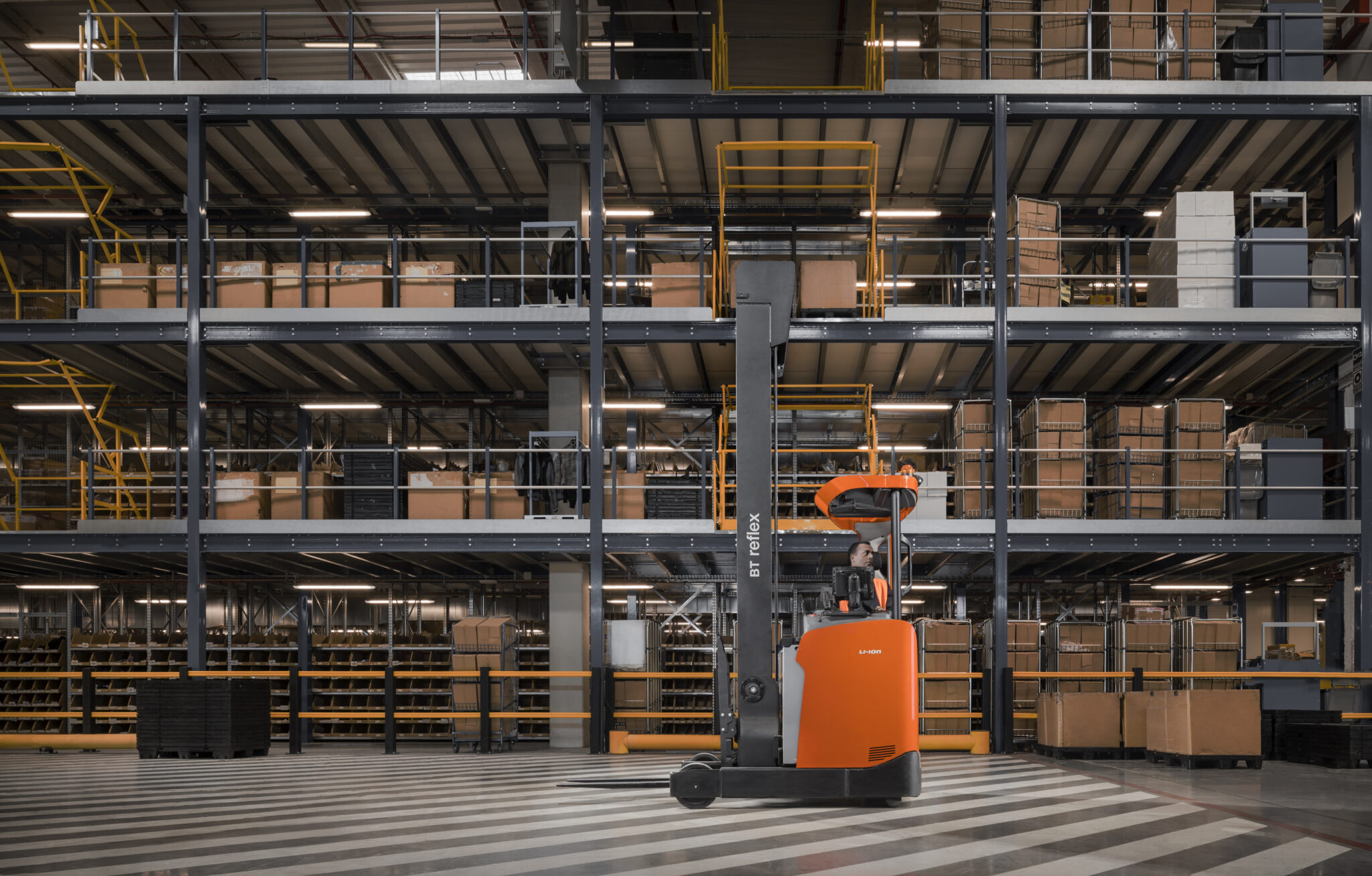
The first three models in Toyota’s recently-launched BT Reflex family of reach trucks – the high-performance R-series, the E-series (which features Toyota’s iconic and unique tilting cab) and the flexible O-series for inside and outside use – are  all Lithium-ion ready.

The new trucks come with a choice of three intelligent energy packages to suit every customer’s application requirements: a 300 amp/hour battery for lighter duties; a 420 amp/hour battery for medium intensity work; and a 630 amp/hour solution for high intensity workhorses. All three packages are based on Toyota’s own modular Lithium-ion battery system and deliver a high degree of operational flexibility.

Drivers shortage fix “will please no one”

Delivery expert ParcelHero is warning that the Government’s decision to allow just 5,000 foreign drivers into the UK is a compromise that has infuriated Brexiteers while doing nothing to plug the shortfall of 100,000 drivers.

The Government’s faint-hearted decision to grant just 5,000 temporary UK visas to foreign lorry drivers will do more harm than good, warns ParcelHero.

The delivery company’s Head of Consumer Research, David Jinks M.I.L.T., says: “The decision to take the plunge and beg for EU-based drivers to return to Britain, but then cap their number at 5,000, will please absolutely no one. 5,000 drivers are less than the paltry number of poultry workers (5,500) the Government has also invited back because it couldn’t see a Christmas turkey shortage coming. Brexiteer ministers are foaming at the mouth at the news any EU drivers will be returning, while retailers and logistics bosses are howling that the move is far too little, far too late.

“Other panic measures revealed over the weekend, such as using Ministry of Defence examiners to increase HGV testing capacity, will also do little to fix the immediate problem. And the plan to send a million letters to former drivers who hold an HGV licence, begging them to get back in the cab, is frankly astonishing.

“The driver shortage has now led to a fuel crisis. The Government’s suspension of the competition law, to allow fuel companies to target specific petrol stations, is another sticking plaster that won’t stop the bleeding. Tanker drivers are the elite airline pilots of road haulage; these skilled drivers are trained and tested continually. You cannot let a newly-qualified lorry driver take over the wheel of a petrol tanker, especially after the Government recently dumbed down the HGV driver’s test.

“After most ‘non-skilled’ EU citizens returned to their home countries in the wake of the Brexit vote, we warned the Government of a shortfall of up to 100,000 drivers. Those warnings fell on deaf ears. The UK’s entire logistics network is consequently on the verge of a major crisis. The Government may think it has stuck its finger in the dyke in the nick of time and stopped the flood of shortages. In fact, the UK’s supply-chain is now riddled with holes, and unless the Government makes the package to EU drivers vastly more attractive, Christmas shortages are now a certainty.

“We agree the driver crisis is not entirely a problem created by Brexit. There is a shortage across Europe, but Brexit has doubled the impact of the problem for the UK. Furthermore, the driver shortage is just the tip of the iceberg in terms of the impact of Brexit on the UK’s freight infrastructure.”

ParcelHero’s in-depth analysis of the ongoing UK-EU trade problems and, in particular, the powder keg Northern Ireland Protocol agreement, can be seen by clicking here.

Subscribe

Get notified about New Episodes of our Podcast, New Magazine Issues and stay updated with our Weekly Newsletter.