Making warehouses more productive and fairer

Distribution and fulfilment operations are under increasing pressure to perform – but labour availability is tighter than ever. How can businesses boost capacity and still deliver a fairer outcome for staff? Dave Morris, Director at UK labour management software company, Vitesse, explains.

“For a nation that for decades has worried about unacceptable rates of unemployment, the idea that large areas of industry and commerce are experiencing serious labour shortages is something of a surprise. But it is all too true, and nowhere more so than across the logistics and distribution sector. There are shortages across the nation and across the board, from drivers to Customs clerks, and especially in warehouse operations.

“Data from the Office for National Statistics showed that in July vacancies in the logistics sector were 338% higher than the pre-Covid norm.

“The pandemic hasn’t helped. Upwards of 14,000 EU goods drivers have returned home [from the UK], but this is tiny in comparison with the number of EU nationals leaving warehouse operations (for which accurate numbers are difficult to determine). Many staff have suffered from Covid or its long-term effects, are self-isolating, or have been caught in the dreaded ‘pingdemic’.

“However, the staffing challenge in the logistics sector has much deeper roots than Covid, and has been building for a long time. Pre-pandemic the nation was already estimated to be short of experienced operations staff, while many EU nationals were finding their home economies more attractive. In Poland, for example, the unemployment rate was as close to zero as you can get in an advanced economy, with earnings approaching those of Western Europe.

“Demographically, the number of young people coming in to the workforce has been falling for some time. The rise of home delivery, and the gig economy, have had an effect – why would you spend your nights picking items, or packing boxes on a distribution centre’s graveyard shift, when the overall skills shortage in the UK means there are much more appealing options? “

The demands of ecommerce

“Against this, the demand for warehouse staff has been increasing exponentially. The whole e-commerce boom, which has been accelerated by Covid but was already well in train, has turbocharged both the amount of warehousing space needed and more critically the amount of activity within warehouses – as moving goods in and out by the pallet-load has been replaced by picking, packing and returning individual items.

“Adding to the challenges of finding available warehouse staff, demand for goods in many sectors has become increasingly ‘spiky’. Peaks are no longer simply associated with the predictable Christmas or Easter periods, but are now far more frequent and exaggerated, triggered by unexpected events, such as a random remark on Twitter. Social media and e-commerce make it much harder for brands to manage demand, creating a headache for those planning warehouse and fulfilment operations.

“Automation may be part of the answer, but it brings its own problems – how to recognise the elements of automation that will really be transformative, and how safely to integrate automation with a sometimes-inexperienced manual workforce? Also, some automated solutions can be difficult to scale rapidly, often leading to either over-specification to cope with volumes that may never materialize, or developing complex hybrid solutions on-the-hoof, which can be difficult to manage.

“There are real impediments to employment: warehouses and distribution centres are often situated out near the motorway, served poorly, if at all, by public transport and especially not at night – which is when many warehouses are at their most active. Although labour shortages are pushing hourly rates well above the minimum wage, it’s often not enough for a young person to run and insure a set of wheels, and there may be other social and domestic reasons why potential employees cannot take up these opportunities.

“A further challenge is the widely held perception that warehouse jobs are dull, repetitive, physically demanding, poorly paid, and with limited prospects – none of these need be true, but they are commonly held concerns. In a recent survey by a supplier of order-picking robots, only 8% of current warehouse staff envisaged seeing the job through to retirement; the reasons most cited being the physical nature of the job, always being short-staffed, and the relentless pressure to work faster.

“Many businesses do not operate to profit margins that will sustain paying an extra £1-2 per hour to make their warehouse roles more appealing. Also, if they are located in a cluster with other businesses, that can afford the premium, then this makes an already difficult situation even harder, as the best staff will migrate to the businesses paying the best rates. To compete in this environment, increased remuneration needs to be targeted at the best performing staff, and to be funded from savings made through improved productivity. Unfortunately, very few businesses have the information required to implement a performance-related-pay scheme that is fair, based on work content rather than output, achievable, auditable, self-funding and maths-based. “

Intelligent labour management

“A more encouraging finding, though, is that 32% of those not in the industry said they would consider it if these issues were resolved. To address these issues, and the wider problem of recruitment and retention, warehouse operators should consider investing in sophisticated labour management systems (LMS), such as Vitesse.

“By properly managing and allocating labour resources against well-understood tasks and workflows, the business can reduce non-productive physical activities, ensure that staffing levels are appropriate to the tasks and throughputs required, and replace the constant demand to work faster by agreed and achievable targets and fair performance-related pay – all of which will improve staff retention and, when word gets out, recruitment. In addition, enhanced productivity will improve warehouse throughput capability, reducing the need to find extra labour, especially at peak times.

“Vitesse is a cloud-based LMS specifically created for demanding logistics operations by people who actually know their sheds, trucks and boxes. Critically, the premise of the system’s design is a recognition that the simplistic time and motion approach that may have worked in traditional warehousing is hopelessly inadequate for today’s busy fulfilment centres. These operations are more like factories than stores, requiring an intelligent understanding of the steps and costs associated with complex manual tasks.

“Simply put, managers can no longer just divide throughput by hours and hope that all tasks have roughly the same labour content. A ‘pick’ in a distribution centre may have 30 or more time-study elements. Some of these may be unnecessary, or perhaps could be reordered or relocated to be more efficient. Vitesse can be used to refine these tasks and take waste out of the process.

“Vitesse captures travel flows and operating procedures and uses industrial engineering techniques and enhanced statistical applications to create a mathematical model of the warehouse. The data that Vitesse acquires can be fed into Value Stream Mapping and this can be used to identify which elements of a task or process are adding value or, alternatively, unnecessary cost. In turn this can drive process and workflow efficiencies.

“As the demands on the modern warehouse are changing almost hour by hour, it’s increasingly important to understand how best to deploy human resources to maximise productivity and minimise cost. Vitesse is a vital tool that generates actionable insights, and cost savings, in real time.

“On average Vitesse customers have reduced labour costs by 10%.

“Perhaps of even greater significance, this system provides the basis for performance evaluation and remuneration that is fair. What’s more, it can be seen and accepted to be fair, and can be applied to whole teams without generating controversy. This approach makes for happier employees who can see that extra effort is being properly rewarded, who are more committed to the job and less likely to go elsewhere. Reliable labour data can also reveal areas where further training or support may be desirable, and can be used to engage the labour force in process improvement – especially, as they can see and understand how this will translate into earnings.

“More informed labour management means that jobs can be scheduled with the certainty that adequate time and labour is being allowed, greatly reducing the damage and errors that arise from rushed work, and helping to reduce the risk of missing despatch deadlines. “

Better investment decisions

“More strategically, the analysis that Vitesse provides can reveal the most appropriate and cost-effective areas in which to introduce automation, and contribute to better investment decisions. A move to ‘goods to person’ automation, for example, can be a significant investment and so it is important to have a robust understanding of where this will save time and labour – and where it won’t.

“Vitesse is designed to integrate easily with most commonly used Time & Attendance, WMS and ERP systems, with set-up, test and ‘soft launch’ typically achieved in a matter of 6-8 weeks. Staff can gain usable knowledge of the system in a day, and be fully competent in a week or less. That means that a business committing to Vitesse mid-Q3 could be reaping the benefits well before the Christmas peak.

“Labour shortages in this sector are not a temporary phenomenon. Making the most of increasingly scarce and valuable human resources has already become a critical issue for most businesses in the logistics sector. Those that manage their labour force fairly and intelligently will be better positioned to attract and retain staff – helping the business win or maintain competitive advantage. “

First shipment expected on ‘Brexit-busting’ route

The Port of Poole, in Dorset, is anticipating its first delivery via a new direct shipping route from Tangier in Morocco. The route has been established by maritime and transport specialist, United Seaways.

A shipment of 100 freights of organic seasonal fruit and vegetables is shortly scheduled northbound. The route will now run once per week and largely comprise the transportation of dry and refrigerated freight.

The link cuts overall journey times on goods to and from the UK to fewer than three days, compared to more than six days via road. It will be used to encourage British importers to source fresh produce and other products directly from Africa, and export companies looking to enhance their southbound trade to Morocco and the surrounding region. Trade relations between the UK and Morocco have a long-standing history of over 800 years, and it is anticipated the link will further strengthen ties between the countries.

The route has been in planning for over two years and will help bypass post-Brexit traffic congestion and import procedures on goods arriving via Europe. It will also significantly reduce emissions compared to current logistic chains by road.

In addition, the fallout from the current pandemic has caused global supply chain bottlenecks, shortages and disruption to the shipping industry, with sharp increases to ocean-going freight rates.

Alongside its strategic logistics partners, United Seaways will be able to offer the new direct line with the most competitive rates, significant emissions reduction, full logistics services including road haulage, door to door services, custom clearance services and warehousing services as demanded by exporters and importers.

To offer this service and to overcome the present global supply chain disruption, current and future HGV driver shortages with the most competitive rates, United Seaways will shift from a RoRo service (unaccompanied cargo only) to RoPax service (accompanied cargo).

Captain Brian Murphy, Marine and Port Director at Poole Harbour Commissioners, said: “The Port of Poole has been working closely with United Seaways to get this ‘Brexit Buster’ service up and running. The service will provide a greener and more time efficient option for importers and exporters from both kingdoms and we look forward to receiving the first shipment from Tangiers shortly.”

United Seaways has also announced the appointment of Amine Laghidi as Board Member in charge of strategy, public affairs, maritime and foreign trade.  Laghidi’s career has led him to four continents where he held leading positions in the maritime, international logistics, finance, industry, infrastructures and energy private and public sectors.

These include senior roles at AP Moller Maersk Group and Colas/Bouygues Group, and agent representation of key multinationals in Morocco and Africa such as Jacobs Engineering’ JV with OCP Group/JESA and key global players in the agriculture and food sector.

He is currently a representative of the African and the Moroccan Business Associations including being President of the ASMEX-Rabat (Moroccan Exporters Association).

Strategic partnership brings spatial intelligence to logistics

SLAMcore, a leader in spatial intelligence software for robots and other autonomous machines, has formed a strategic partnership with SYNAOS, a specialist in smart intralogistics software solutions for logistics and factories. Together the two companies are announcing SYNA.OS VIEW, a low-cost, real-time, spatial intelligence system for manually-guided intralogistics vehicles (e.g., forklifts and warehouse vehicles). SYNA.OS VIEW addresses the growing demand for real-time location and tracking in busy logistics environments.

Efficiency is key in manufacturing and logistics and understanding the real-time location and operation of all assets allows better planning and more efficient operations.  One significant challenge today is how manually-guided vehicles, such as forklifts, can be cost-effectively tracked and integrated with autonomous vehicles in logistics and manufacturing environments. Adding Visual SLAM to manually-controlled vehicles allows this to happen in dynamic real-world environments.

SYNA.OS VIEW is a single unit that can be added to existing forklifts, vehicles, and machines to provide accurate real-time locations.  The unit uses low-cost stereo cameras and an IMU sensor running on a small, embedded computer and can be simply retrofitted to most vehicles.

SLAMcore’s spatial intelligence software delivers robust and precise localisation ensuring the position of each vehicle is known at all times. Integrated via an SDK with SYNAOS’ onboard software, real-time location is constantly communicated with the SYNA.OS LOGISTICS control system through a standardised interface (VDA 5050).

Until now, the position of manually-guided vehicles like forklifts could only be determined if the vehicles were fitted with expensive UWB positioning or LiDAR systems, often costing up to €15,000. The cost of the SYNA.OS VIEW camera-based system is significantly lower, offers a wider range of potential applications, and can be easily installed on all kinds of vehicles.

“This collaboration shows the power and flexibility of our vision-based SLAM systems,” said Owen Nicholson, CEO of SLAMcore. “Developed to provide low-cost, high-performance spatial intelligence for robots and autonomous machines, our software delivers accurate, robust Visual SLAM location and mapping to entirely new markets. SYNAOS offers the perfect platform for this type of solution, with expertise in intralogistics and leading customers in manufacturing and logistics markets.”

SLAMcore is one of the leading providers of localisation, mapping and perception software that converts sensor data into spatial intelligence in real time,” says Dr. Timo Bänziger, Technical Entrepreneur SYNAOS. “We are the first to apply this vision technology to track logistics vehicles and implement real industrial applications applying the benefits of cutting-edge computer vision to manufacturing and logistics.”


Logistics sector shows strong worker retention rate

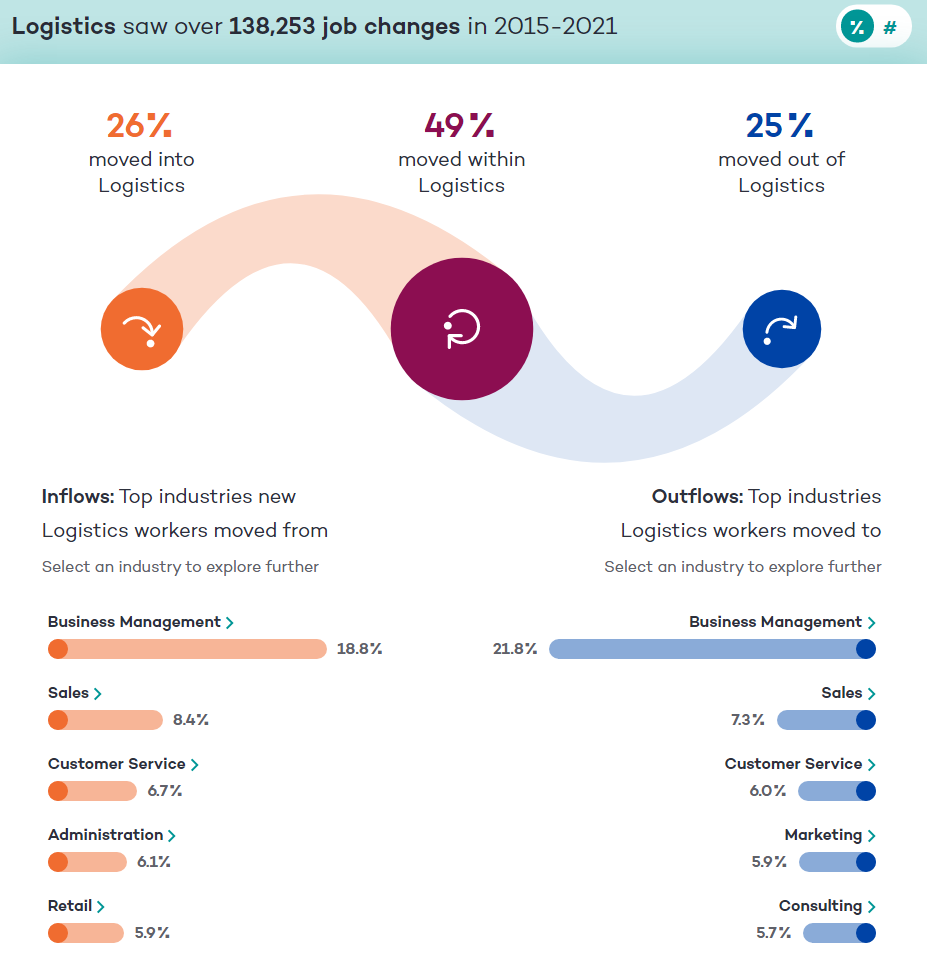
New research from Totaljobs reveals that over 2 million UK workers are planning on changing jobs before Christmas. In fact, 6% of the UK workforce are already on their notice period, whilst a further 26% actively job hunting as the labour market kicks into gear and workers plan their next career move.

Totaljobs has analysed more than 4.2 million job changes from 2015 onwards, and surveyed nearly 4,500 jobseekers from the Totaljobs database alongside 2,000 UK workers via Opinium, to provide the UK’s most comprehensive overview of career change trends. The survey reveals retention rates for specific sectors, with Logistics seeing a strong proportion of people staying within the sector (49%). Logistics workers spend on average 10.1 years in the industry and 7.2 years with the same employer, which is just below the averages across all industries.

The research shows not only an increase in people starting new jobs in the months ahead, but an expected rise in industry-hopping, with 75% of jobseekers from the Totaljobs database reporting they are more likely to consider working in a different industry following Covid-19. For those that already switched industry during the last year, less than one in five (18%) plan to move back to their previous industry.

Retention and loyalty vary significantly by industry

Totaljobs’ analysis of 4.2 million job changes from 2015 onwards shows that 52% of job moves involve switching to a different industry altogether, while 48% remain in the same industry. Some sectors report higher retention rates than others, with Totaljobs’ career changes analysis revealing people in HR are more likely to stay within the sector when securing a new job (64%), followed by Design (62%) and IT (62%). Looking at the total number of job moves within each industry, the following sectors saw the highest proportion of people leaving: The Military (47%), Advertising (42%), Public Sector, Farming and agriculture and Charity (all 41%).

How loyal someone is to their employer also varies significantly between industries, with Public Sector and Policing staff staying with the same employer for an average of 8.9 years, followed by Arts and Entertainment employees (8.8 years on average). At the other end of the scale, Marketing and PR employers see staff stay with the company for the shortest amount of time, at 5.5 and 5.6 years respectively.

Cross-industry career switching set to increase

Looking ahead, a quarter of workers (25%) plan to change jobs in the next two years, with an estimated 3.5 million planning on changing industry. When looking at specific industries, 49% of those working in construction are actively looking for jobs or are on their notice period, along with 41% of those in administration and 38% in IT.

When considering the motivations for future career moves, the majority (57%) of jobseekers cited work-life balance as the key reason, above a higher salary (52%) and learning new skills (38%). The impact of the pandemic on work priorities can also be seen in that over three quarters of people (76%) say work-life balance is now more important to them.

Career changes in the Covid era

Candidate research showed a third (34%) of people who started work in a different industry during the Covid era cited were driven to switch industries out of necessity – reflecting the impact of the pandemic on business operations, consumer demand levels, and employment opportunities across the UK. For others, the desire to do something different (24%) was the main motivator, followed by better work-life balance (24%), not enjoying their role (21%), as well as to earn a higher salary, learning new skills, or due to a lack of available roles in their previous industry (all 19%).

Jon Wilson, CEO of Totaljobs, said: “Our research shows that for many people, the career ladder isn’t so linear anymore; career shifts and job changes are commonplace. With Covid-19 changing our day-to-day working lives, people are increasingly searching for work-life balance, flexibility or simply for a job they can get more satisfaction out of, and they’ll look to other industries to find it.

“With a record number of job vacancies this summer, many industries who had to hit pause on their hiring in the height of the pandemic are now experiencing labour shortages, and these are likely to continue in the coming months. Businesses with an urgent hiring need should make sure they’re getting the basics right when attracting talent. Job adverts that include essential pieces of information like a clear job title, location, salary and ways of working are more likely to win applications.

“Equally, employers must be clear about what their business is bringing to the table beyond the remit of a role, whether that’s remote working, wellbeing programmes or training initiatives. Consider how you can attract the three quarters of people considering a career change, and pitch the unique benefits of your industry – especially if you can offer candidates something their previous sector couldn’t.”

For employers wanting to learn more about trends in career changes over time, the industries people are moving between, as well as retention rates across sectors, see Totaljobs’ free interactive Career Change Tracker here.


CMA CGM Group orders two Boeing 777s

Shipping and logistics company CMA CGM Group is purchasing two new Boeing 777 Freighters to grow the Group’s air freight division operations.

CMA CGM Group launched its dedicated air freight division, CMA CGM AIR CARGO, in February 2021, commencing commercial operations in March with its first flight between Liege and Chicago, followed by flights to New York, Atlanta, and Dubai. CMA CGM AIR CARGO represents a major new component of the CMA CGM Group in both operational and commercial terms. It is also a new milestone in the Group’s strategic development into logistics.

The Boeing 777 will provide CMA CGM AIR CARGO the flexibility to operate the airplane across its growing air freight network while helping to deliver on its sustainability objectives as the CMA CGM Group pursues its commitment to offer its customers a complete range of transportation and logistics solutions.

The 777 Freighter is the world’s largest, longest range, and most capable twin-engine freighter. With a range of 9,200km, the 777 Freighter can carry a maximum payload of 102 tonnes, allowing CMA CGM AIR CARGO to make fewer stops and reduce landing fees on long-haul routes.

The 777 Freighter is Boeing’s top-selling freighter of all time. Customers from around the world have ordered 272 777 Freighters since the programme began in 2005. A market leader in air cargo aircraft, Boeing provides more than 90% of the worldwide dedicated freighter capacity, including new production and converted aircraft.


Easier pharmaceutical packaging with optimised supply chain

Pharmaceutical manufacturers face numerous challenges ranging from decreasing batch sizes and increasing item diversity to massive time and cost pressure. These challenges also make the procurement of packaging materials more complex. Packaging specialist Faller Packaging supports its customers in making these processes faster, more efficient and at the same time more sustainable with the help of digitalisation and networking. Users benefit from better forecasts, simpler quality assurance and less work thanks to automated processes.

Increasing customisation and more and more therapy and dosage forms are causing the variety of pharmaceutical industry products and variants to rise rapidly. The demand for medicines and healthcare products is growing, while manufacturers must also bring their new developments to market much faster if they are to gain an advantage over the competition. The digitalisation of the supply chain offers manufacturers great potential, enabling them to meet these challenges.

Production and logistics processes can be made faster, more efficient, more reliable and more sustainable. In concrete terms, this means that users can plan better and more precisely and make quality assurance along the supply chain easier. Automated processes also reduce the analogue effort.

Faller Packaging has a vast wealth of experience in this field. The specialist company for pharmaceutical secondary packaging has tackled the issue of digital supply chain solutions for the industry in depth – and has established a broad product and service portfolio to that end. The company has now published a new white paper to show how the digital transformation of the supply chain works in practice.

In the white paper, readers will learn which technologies and concepts can help to digitally connect all the elements of the supply chain, namely material, product, people and information flows. This results in better understanding and coordination of processes, faster use of information and more efficient scheduling. The result is significant improvements that enable manufacturers to save time and costs in equal measure.

CLICK HERE TO DOWNLOAD THE FREE WHITE PAPER

Geodis implements highest-throughput AutoStore

Global leading transport and logistics provider Geodis has formed a partnership with Bastian Solutions to implement an AutoStore system into a new fulfilment site for a leading clothing retailer. The US$48 material handling equipment deal will deliver the highest throughput documented of an AutoStore system globally to support the retailer’s omnichannel capabilities, including e-commerce and its more than 1,000 stores across the United States.

AutoStore is a pioneering goods-to-person automated storage and retrieval system that is the market leader in storage density. AutoStore Bins are stacked vertically in a grid and retrieved by robots that travel on the top layer of the system, allowing the grid to be placed around columns and on mezzanines and multiple levels. This design allows bins of products to be stacked on top of each other in a condensed grid-style system, increasing storage capacity up to four times in the same footprint and performance up to 10 times without added workers.

Geodis’ strategic partnership with Bastian Solutions and AutoStore will provide us even greater efficiencies and added capacity as we continue to navigate ongoing industry challenges on behalf of our clients, such as swiftly changing consumer buying patterns and labour shortages,” said Rob Thyen, Senior Vice President of Engineering and Facilities at Geodis in Americas. “By investing in technology such as the AutoStore system, we can ensure we are supporting our clients’ future growth and exceeding their expectations.”

Geodis is estimated to move up to 270,000 order lines per day in service of both retail store and direct-to-consumer channels, making this the AutoStore system with the highest throughput in the world. Geodis will use the AutoStore system to facilitate fulfilment for its customer’s retail and e-commerce channels to deliver a truly omnichannel solution.

Geodis will also utilise the AutoStore technology to expedite e-commerce returns, which continues to be an industry priority due to recent increases in online purchases. In addition to featuring the innovative AutoStore storage and fulfilment technology, the 400,000 sq ft (c.37,000 sq m) facility will include robotic piece picking with five robotic arms, automated packing and carton closing, and more. Construction for the site is expected to begin in January 2022 and wrap in November 2022.

“It has been a pleasure working with the Geodis team,” said Marvin Logan, Vice President of Solution Delivery at Bastian Solutions. “We pride ourselves on providing our clients with the necessary advantage to remain competitive – especially as the retail and e-commerce markets continue to change drastically. With this system, Geodis will be well-equipped to meet demand, thanks to the advanced automation in this new omnichannel facility.”

Bastian Solutions is one of the leading partners in AutoStore installations. This project marks the second AutoStore system that Bastian Solutions has implemented on behalf of Geodis. Construction is currently underway for an AutoStore system at a highly automated fulfilment site on behalf of a top pet product retailer, which is expected to be completed in November 2021.

“It is an exciting time for retailers, especially given the substantial increase in e-commerce orders that we have seen over the past 18 months,” said Paul Roy, North American General Manager for AutoStore. “We’ve always aimed to provide an autonomous robotic solution that empowers our customers to fully leverage their warehouse operations to ensure an efficient, reliable and sustainable supply chain. Now, in partnership with Geodis and Bastian Solutions, we’re proud to continue empowering retailers with a system that delivers the highest throughput globally.”

Virtual conference to promote investment in Jamaica

The Jamaica Promotions Corporation (JAMPRO) will be staging Explore: Do Business Jamaica Virtual Investment Conference (DBJVIC) from November 17th–18th, 2021 to introduce local and international investors to business opportunities in the island’s growing industries.

The event will showcase emerging projects and new developments in Agribusiness, Outsourcing, Manufacturing, Energy, Tourism, and the Creative Industries through over 30 panels, interviews and discussions with government and business leaders. The investment conference aims to foster business and stakeholder relationships and will shed light on Jamaica’s COVID-19 economic recovery efforts.

The conference will be staged concurrently via two platforms; one is a virtual interactive business event portal that will facilitate a real-time engagement experience and B2B meetings, the second is a live stream event via social media that will accommodate and drive increased awareness of Jamaica’s economic progress. This format will help JAMPRO to engage attendees including current and potential investors, JAMPRO clients, private and public sector stakeholders, and diplomatic missions.

JAMPRO anticipates extensive global participation based on the planned international promotions which will ensure the leveraging of the virtual B2B meeting platform by potential investors.

New opportunity to do business

Speaking about the event, Jamaica’s Minister of Industry, Investment, and Commerce, The Honourable Audley Shaw, CD, MP., noted that the virtual investment conference has presented a new opportunity for the government to amplify the promotion of Jamaica’s business opportunities: “This virtual conference will allow us to reach and directly engage investors across the globe who are interested in doing business with Jamaica but need further market intelligence and guidance on the potential that is available in the island’s sectors. From our perspective, it is the right time to host this global event, as persons are seeking new ventures as the world slowly returns to normality.”

Diane Edwards, President of JAMPRO, echoed the Minister’s statements, and expressed confidence in the conference’s ability to deliver results for Jamaica and attendees. She said: “The format of the conference is powerful, because it presents an excellent opportunity for global business leaders to get valuable insight on Jamaican investment opportunities, engage their colleagues in various industries, and explore bankable projects, all in the location of their choice.

“We believe that this event will lead to the development of lucrative partnerships and financial opportunities for local and international investors.”

Interested persons are invited to register for the event at explore.dobusinessjamaica.com.

Explore: Do Business Jamaica Virtual Investment Conference is a two-day event that will highlight investment and other business opportunities in Jamaica. The event, hosted by Jamaica’s investment and export promotion agency, JAMPRO, will provide a platform for attendees to learn more about Jamaican investment opportunities, see lucrative projects, and build business relationships.

Explore: Do Business Jamaica Virtual Investment Conference is sponsored by the Foundations for Competitiveness and Growth Project (FCGP), National Commercial Bank (NCB), Mystique Integrated, and M-One Productions.

The Jamaica Promotions Corporation (JAMPRO)’s mission is to drive economic development through growth in investment and export. JAMPRO is an Agency of the Ministry of Industry, Investment, and Commerce.

CLICK HERE FOR MORE INFORMATION

Asda accelerates multi-channel offering with Blue Yonder

Leading British retailer Asda will leverage world-class Blue Yonder capabilities to optimise its end-to-end operations and deliver ambitious business transformation.

The UK retail market is one of the most dynamic markets in the world, where consumers demand great products and an excellent customer experience, through any channel at any time. That is why Asda, one of Britain’s leading retailers with a unique position in the market, has selected to digitally transform its end-to-end supply chain and retail operations with Blue Yonder.

Asda will implement several SaaS-based capabilities within Blue Yonder’s Luminate Planning, Luminate Commerce and Luminate Logistics, as well as Luminate Control Tower, all running on the Luminate Platform.

Asda consists of supercentres, superstores, and smaller supermarkets. The retailer also runs petrol filling stations and Asda Living stores, which offer its popular George clothing and home merchandise lines. The company employs more than 140,000 colleagues serving more than 18 million customers who shop in its stores and online weekly.

With the company needing to transition from its legacy solutions as a result of moving to a UK-based ownership, Asda was looking for end-to-end retail solutions that would cover commercial, supply chain, logistics, and retail operations. This includes artificial intelligence- (AI) powered forecasting, end-to-end supply chain visibility, omni-channel fulfilment, and workforce management capabilities.

With Blue Yonder, Asda will be able to:

  • Use machine learning (ML) at scale to provide a demand projection with calculated business impact and risk that enables better inventory management, waste reduction and an improved understanding of demand drivers and customer behaviours.
  • Leverage ML to optimise pricing strategies reducing excess stock and avoiding waste.
  • Deliver efficiency and value across the entire omni-channel retail business with a connected platform.
  • Horizon scan thanks to visibility into forecasting, fulfilment and transportation, leveraging Blue Yonder’s automation while keeping a high level of control.
  • Gain inbound visibility for both domestic and import orders ensuring products are available to meet consumer demand at the right place, at the right time.
  • Provide Asda colleagues in stores and in distribution centres with a robust workforce management capability.

“We are embarking on a large-scale, exciting business transformation project to build our Future, in which we want to work with the very best retail technology providers in the market with proven experience and world-class capabilities,” said Carl Dawson, chief information officer, Asda. “We are looking forward to implementing this project with our strategic partner Blue Yonder, as we continue to build a fast, effective and agile business.”

“We are looking forward to supporting Asda with our innovative capabilities and experience,” said Johan Reventberg, president, EMEA, Blue Yonder. “We have built a strong relationship with Asda over the years, and we have consistently demonstrated how our advanced capabilities can help them fulfil their potential and drive value, early and often. Not only are our solutions a fit for Asda’s long-term goals, so is our culture and our values. We are honoured to embark on this exciting journey with Asda and look forward to bringing value to both Asda, their partners and their customers.”


WEMO founders cede management to HAHN Group

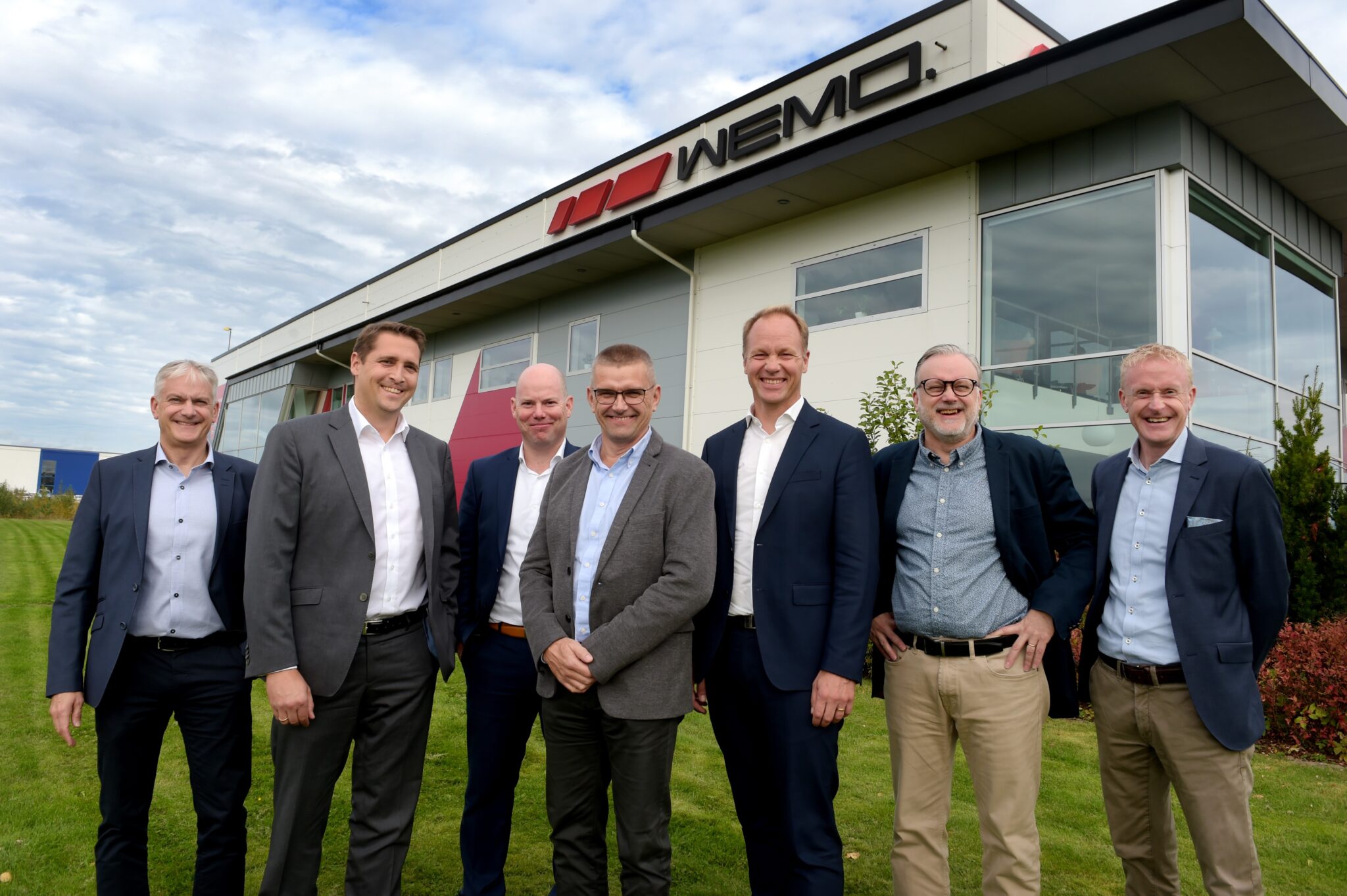
The founders of WEMO Automation – Sven, Olof and Bengt Ståhl – are handing over the management of the company to Johannes Kjellgren (CEO) and Håkan Larsson (COO). As part of this, WEMO will move to the Robotics Division within the HAHN Group in order to offer its customers an even broader portfolio of solutions and products with mobile and collaborative robotics. This complements the focus on the plastics market with technological competencies.

After more than 30 years of building, developing and managing WEMO Automation, the Ståhl brothers are handing over the management of the company to new hands. Already in 2015, the HAHN Group took over the majority of the company’s shares, and finally all of them. Now also the leadership will be handed over to Johannes Kjellgren, who took over management of the company in October 2021.

Johannes Kjellgren has many years of experience in customer-centric sales and general management. With his deep knowledge of international markets, he will continue to expand the sales network and customer service for WEMO in order to be even closer to the customers.

At his side, Håkan Larsson will be responsible for operational management as COO, starting in Spring 2022. As a proven expert in technical development and the plastics industry and with his many years of experience, he stands for the continuity with regard to the reliability and technological excellence of the WEMO products.

“It is not easy to successfully shape a succession situation in which the founders have built and managed their company with so much dedication and passion. Therefore we are very happy that in Johannes and Håkan we have found two very experienced entrepreneurs who can not only preserve what has been achieved, but also want to add new things at the same time,” says Philipp Unterhalt, CEO of the HAHN Group.

“Our thanks go to Sven, Olof and Bengt. For the trusting cooperation of the last few years, the friendly interaction and also for the fact that they continue to support us in an advisory capacity – also beyond WEMO within the HAHN Group.”

The previous CEO, Sven Ståhl, adds: “With the takeover by the HAHN Group, we were able to set the course for a stable and secure future for WEMO as early as 2015. With Johannes and Håkan, the HAHN Group remains true to its culture of continuing to run the business with highly professional and very value-based people.“

“I am looking forward to the new task of further positioning the team and the potential of WEMO in the plastics market and also inspiring existing and new customers with further automation and robotics solutions from the HAHN Group”, comments Johannes Kjellgren.

“I have spent most of my career in the plastics industry and got to know WEMO as a very professional and innovative company,” adds Håkan Larsson, new COO of WEMO. “Therefore I am delighted to further develop the technology according to our customers’ requirements and needs.”

As part of the succession, WEMO Automation will strengthen the Robotics division within the HAHN Group in the future. This bundles the know-how in the areas of linear, collaborative and mobile robotics and makes it even easier for customers to access. In addition, own sales and partner networks complement each other very well in order to further increase customer proximity. Through the HAHN Group network, WEMO is also to be developed even more strongly as a regional hub in Scandinavia in the future.

Pictured (left to right): Bengt Ståhl, Founder of WEMO Automation; Philipp Unterhalt, CEO of HAHN Group; Martin Schmitz, Division Director Robotics in HAHN Group; Håkan Larsson, New Vice President of WEMO Automation; Johannes Kjellgren, New CEO of WEMO Automation; Olof Ståhl, Founder of WEMO Automation; Sven Ståhl, Founder of WEMO Automation

Subscribe

Get notified about New Episodes of our Podcast, New Magazine Issues and stay updated with our Weekly Newsletter.