OCI ranked “third-fastest-growing company” in Europe

OCI, ranked as the third-fastest-growing company in Europe, has developed a powerful new way for organisations to overcome their supply chain challenges: commercial process outsourcing (CPO). The third-placed ranking is according to the Financial Times Europe’s 1000 fastest-growing companies report researched by Statista.

Listed as the fastest-growing UK business, OCI achieved revenues of €568.3m in 2020. The company attributes its CAGR of 409.59% to its ability to adapt quickly and resourcefully to the turbulent times the world has found itself in.

Optimisation of the supply chain is one of the most important business challenges today. Brexit and Covid19 have exacerbated the issue, which is fast becoming more acute due to the Russian invasion of Ukraine. OCI specialises in solving these challenges for large corporates and governments and its CPO service has underpinned its rapid growth.

“We are solving problems for the world’s biggest market,” explained Oliver Chapman (pictured), CEO and founder of OCI. “Everything people have, their clothes, furniture, cars, and the food they eat was subject to a supply chain.

“Looking ahead, OCI will continue to focus its efforts on digital supply chains, as the global trade and value of data will dramatically surpass that of tangible goods by 2025.”

OCI empowers its clients, and notably their buyers and suppliers, to collectively overcome their supply chain issues with solutions including; contract negotiations and flexible funding. Its unique approach harnesses bespoke technology and business intelligence practices to automate procurement and sales processes.

Its know-how entails a broad range of internal expertise, encompassing trade experts, financiers and years of practical experience in dealing with intractable supply chain issues.

OSCA brings visibility to jeans supply chain

When it comes to jeans, the name MUSTANG immediately comes to mind in the fashion industry. To bring transparency and structure into the supply chain, the company has been relying on the SCM software OSCA since 2021. In doing this, the Schwaebisch Hall-based company was able to achieve end-to-end visibility in the supply chain.

When the name “MUSTANG” is mentioned in the fashion industry, insiders like to tell this story: MUSTANG was founded in 1932 in Kuenzelsau by Luise Hermann as “L. Hermann Kleiderfabrik” as a reaction to the stagnating timber trade business of her husband Heinrich Hermann. The company initially manufactured workwear. When a certain Albert Sefranek married the founders’ daughter, Erika Hermann, in 1945, it was him who had the idea to manufacture jeans instead.

The story is legendary: In a bar frequented by many American soldiers in 1948 in Frankfurt’s Bahnhofsviertel, Sefranek traded six bottles of Hohenlohe schnapps for six of the modern pants from the US. Albert´s mother-in-law, the original founder, initially refused to sew the “tight American pants”. But the very first order swayed her fast: “300 jeans, please!” The mother-in-law agreed, and the business took off.

The only constant in life is change – this motto also reflects the company’s further history. In 1989, for example, the company obtained the license for JOOP! jeans, ending in 2003 with the sale of the JOOP! brand. At the end of the 90s, the jeans market was in crisis as overall demand was declining. MUSTANG closed the production facility in Kuenzelsau, where 15% of the total volume was still manufactured at that time. The restructuring measures continued until the early 2000s.

Today, the company produces abroad. Suppliers in Tunisia and Turkey manufacture about half of the volume, the rest comes from the Far East – Pakistan, India and China. Between 25 and 30 suppliers work for the company, which has been based in Schwaebisch Hall since 2020. Around 95% of the goods are transported by large container ships; only in exceptional cases do jeans start their journey to Europe by plane. MUSTANG works with five different logistics carriers. The pants specialist consolidates all imported goods in a warehouse of fashion logistics company Meyer & Meyer in Wittenberge (Brandenburg). Around six million MUSTANG units pass through the facility every year.

All sales channels are fulfilled from Wittenberge. The retail sector with 90 stores, 45 outlets and online sales accounts for about 50% of the total volume. The production setup with up to 30 suppliers and an agency in Hong Kong works – but has become increasingly complex in times of volatile supply chains. Whether short notice volume changes or unplanned delays: Until August 2021, such data had to be entered manually into the ERP system for the total of 2,500 shipments per year. There were tracking lists in Excel for purchase orders and forwarders received change notifications by e-mail.

“It was a huge manual effort and we suffered from information silos. The system was also error-prone,” reports Signe Oepen (pictured). She has been COO of the company since 2020 and leads the operations team with 35 employees. In the 21st century, ordering processes are becoming faster and production more complex. Therefore, at the end of 2020, MUSTANG started looking for modern software to get more visibility into the supply chain and speed up processes.

Within a short period of time and after a selection process, MUSTANG chose Setlog’s cloud-based software OSCA. “With OSCA, we get more transparency into our supply chain and can track purchase orders digitally. This is an important pillar for our growth strategy,” announced MUSTANG CEO Andreas Baur in January 2021. According to COO Oepen, the crucial factor for the decision to use OSCA was its simple implementation process, which enables rapid and comprehensive handling of all supply chain processes.

Simple implementation? What might apply to normal times turns out to be quite the challenge in times of a global pandemic. After all, working short-time does not necessarily support shorter processes. “But thanks to frequent catch-ups and feedback loops between MUSTANG and Setlog, which entailed a meeting every two weeks, Setlog implemented the software very professionally,” reports Oepen. Today, dozens of employees access OSCA.

The fashion company uses OSCA SCM for scheduling, production reports, transportation, warehousing and reporting. What that means is that MUSTANG reports its purchase orders from the ERP system via OSCA to the suppliers or the agency in Hong Kong. The SCM software serves as centralised communication tool – from order confirmation and delivery planning to the booking of shipments.

In addition to costs, the employees can also monitor volumes, lead times, transport times and delivery dates. Suppliers and agencies enter transport notifications and tracking data into the system. Dashboards allow users to view the respective status of orders and shipments. “We have become much faster with OSCA and can easily enter all changes into the software,” says Oepen.

If delivery dates change, all partners in the supply chain are informed simultaneously and in real time. “Now it’s not a problem if an employee is on vacation. In the past, we sometimes had to sift through a lot of emails to find relevant information,” says the operations lead. She also points out one special feature: Information on packing lists is transmitted to the logistics centre in Wittenberge via an interface once shipments are finalised. This allows the logistics specialists to plan labour even before the goods arrive.

In addition to the topic of digitisation, MUSTANG is also committed to sustainability. When it comes to environmental protection, OSCA also helps significantly in further bringing transparency into the value chain. MUSTANG can enter so-called sustainability features for purchase orders into the software. For example: “Sustainable cotton” is marked in a field when an order is placed. The agency or suppliers can then see that this specification has been linked to the order.

Even through the waves of the pandemic, it was still smooth sailing for MUSTANG – thanks to the operations team and OSCA. Because container ships did not leave ports or were delayed due to lockdowns in production countries, goods were in danger of arriving too late. MUSTANG changed transport modes a few times – from sea to air – to gain more speed. Before the pandemic, MUSTANG airfreighted only 5% of their parts, during the Covid-19 pandemic they involuntarily shipped 20 percent by air. “These very last-minute re-bookings are more controllable thanks to OSCA,” Oepen says.

Whether it’s disruptions in global transportation, pandemics, environmental disasters, or political crises: “Without a modern IT landscape, including not only SCM solutions but also ERP systems, production planning, customs brokerage solutions, data warehouses and payment systems, consumer goods manufacturers are ill-prepared for the challenges of the future,” says Ralf Duester, member of Setlog’s board of directors. According to him, the most important trends include the

increasing complexity in procurement and distribution, the shift from push to pull markets, an acceleration of ordering process, and the growing need for additional services and all-in-one solutions. “MUSTANG has impressively shown how – thanks to a dedicated IT team, a strong IT infrastructure and collaborative supply chain partners – a fashion company made it through a difficult period and has positioned itself well for the future,” Duester said.

 

Russian judges excluded from IFOY jury

In light of the actions taking place in eastern Europe, the IFOY organisation is showing unity with Ukraine by excluding Russia from participation in the IFOY AWARD.

Representatives of Russia on the jury and advisory board will be relieved of their duties until further notice, which means that Anton Mizunov (editor-in-chief of Skladskoj Komplex) and Vladimir Antonov (Editor-in-Chief of Sklad i Technika), both active and well-respected journalists within the IFOY community, have been suspended from the advisory team.

The IFOY organisation issued the following statement:

Russian jurors will no longer be able to vote on winners or participate in IFOY AWARD events. This will initially affect the IFOY TEST DAYS with the TEST CAMP INTRALOGISTICS from March 21 – 23, 2022 in Dortmund, as well as the award ceremony on June 30, 2022, in Munich. Visitors and exhibitors from Russia will also be excluded from attending.

We will decide on the exclusion of Russian manufacturers from the IFOY AWARD 2023 in good time before the application phase begins in August 2022.

This decision has not been easy for us, yet we consider it to be of no alternative to send a signal against this unprecedented war of aggression against Ukraine. We explicitly emphasise at this point that this step does not change the respect for the jurors, media, applicants, and visitors who have represented Russia in the IFOY AWARD committees. We have highly appreciated their competence and cooperation in the IFOY network. We personally ask them for their understanding and hope that we will meet again soon in peace.

The IFOY (International Intralogistics and Forklift Truck of the Year) AWARD is the largest independent, international intralogistics competition. The jury now includes twenty-five judges from 19 countries on all continents.

Sparck produces 100-millionth fit-to-size box

Sparck Technologies, the new name for Packaging by Quadient, has hit a major milestone with 100 million boxes produced on its revolutionary fit-to-size packaging machines worldwide. As Sparck’s advanced CVP Everest and CVP Impack packaging systems make each cardboard box to the exact size required for every particular order, the company calculates that some 34,250,000 sq m of cardboard has been saved through the use of its technology, equating to the preservation of 46,000 trees.

In addition to the material savings and ecological benefits, the effect of the total volume reduction resulting from fit-to-size packaging across 100 million packages is estimated to have removed 31,700 lorry loads from the roads, contributing to reductions in the carbon footprint of Sparck Technologies’ customers worldwide.

Jo Bradley, Business Development Manager, Sparck Technologies, says: “Hitting this key milestone of one hundred million boxes really brings home the growing pace of adoption of right-size packaging technology and the important role it is playing in making ecommerce more sustainable.

“Our calculations relating to the significant total savings in resources and transport that have been achieved, gives some idea of the collective, positive impact individual companies can make by using available technology to right-size their packaging. Given that the collective gains are clearly so significant, imagine what could be achieved through industry wide adoption.”

With the capability to tailor-make up to 1,100 packages per hour, for multiple or single items, the CVP Everest and CVP Impack Packaging Systems offer automated solutions for e-commerce operations challenged by increasing order volumes, labour shortages and rising shipping costs. With installations in more than 13 countries, the CVP Automated Packaging Solutions effortlessly create, fill, fold and label each parcel in one seamless process – reducing package volumes by up to 50%, cutting cardboard usage by 30% and eliminating the need for void fill.

Putin’s War’ already significantly impacting international trade

ParcelHero says ‘Putin’s War’ is already having an impact on costs, supply chains and international trade that goes far beyond the borders of Ukraine and Russia.

The international delivery expert ParcelHero says freight transport services to Ukraine are at a virtual stop, and many services to Russia have been suspended. It warns the costs of the conflict will impact on UK companies, even if they have no business in Eastern Europe.

ParcelHero’s Head of Consumer Research, David Jinks M.I.L.T., says: ‘”Putin’s War” as it is being called in Europe, will certainly harm both Russia and the Ukraine economically, but its impact is also already being felt by UK businesses.

“The invasion has had an immediate economic impact on Russia, which doubled its interest rate to 20% on Monday after the rouble sank by as much as 30%, before settling back down to 20%. However, UK international businesses, both large and small, are also counting the cost.

“Most international parcel operators suspended services to the Ukraine from 24 February and major couriers such as UPS, FedEx and TNT have also suspended international services to Russia. Most couriers are now returning items already in transit to the sender where possible.

“Logistics companies such as DHL and DSV have all asked their Ukrainian employees to stay at home with their families and follow instructions from local authorities.

“Ukraine is an important air corridor for European air traffic and re-routings will lead to a – hopefully short-term – loss in capacity.

“Shipments of goods by sea are also being impacted. There are no services into Ukraine’s key port, Odessa, and Ukraine says two foreign-owned commercial ships have been shelled there by Russian forces. Surface shipments are being re-routed via Romania, Lebanon and Greece.

“The container line Ocean Network Express (ONE) has now suspended container bookings to and from Russia, hours after Maersk said it was considering doing the same.

Most major Europe-Asia rail freight services (some 95%) don’t pass through Ukraine. Direct freight trains are entering Ukraine through its border with Poland, but these are largely war supplies.

“It’s not just physical goods sales to Russia that are being impacted. British, EU and US companies operating electronic services in Russia are seeing payments to them frozen after these countries removed selected Russian banks from the Swift messaging network and froze the assets of Russia’s central bank. Bank cards issued by VTB Group, Sovcombank, Novikombank, Promsvyazbank, and Otkritie are no longer working for Russian customers trying to pay for things such as Netflix subscriptions, or access pay services from Apple and Google.

“E-commerce has also been impacted. Etsy is waiving all fees owed by Ukrainian sellers, a sum of approximately $4 million, and eBay.com has announced it has suspended its Global Shipping Program service into Ukraine and Russia.

“Looking beyond the immediate logistical problems for deliveries, it is likely UK businesses will see an increase in costs because of a rise in diesel and petrol prices. Even though the UK is nowhere near as dependent on Russia for oil and gas as the EU, increased demand is pushing up prices everywhere. For example, diesel is now at 154.72p per litre, says the RAC.

“Food retailers are likely to see an increase in prices. The Russia-Ukraine plains were once called “the breadbasket of Europe”. The area exports about a quarter of the world’s wheat and half of its sunflower products, such as seeds and oil. In addition, Ukraine sells a lot of corn globally. Some analysts are predicting a doubling of global wheat prices.

“Ukraine has a very large heavy-industry base and is one of the largest refiners of metallurgical products in Eastern Europe. It’s also well-known for its production of high-tech goods and transport products, such as aircraft.

“There are five industries where the share of Russian exports to the EU is significant: textiles, pharmaceuticals, electrical equipment, machinery and transport equipment. Supply chains and costs could be impacted in all these sectors.

“UK car manufacturers such as Jaguar-Land Rover have halted all deliveries to Russia, while Mini has had to suspend production for five days because of the “ongoing parts supply situation, now including the conflict in Ukraine”.

“How much could all this cost UK businesses? It’s too early to tell but, during the far smaller Ukraine conflict of 2014, a report by the Vienna Institute of International Economic Studies said Germany lost around £2.51bn (€3bn), followed by Italy, which lost around £1.17bn (€1.4bn). France, Great Britain and Poland each lost around £0.67bn (€0.8bn). The current conflict is on a far larger scale and the economic sanctions imposed on Russia are far more severe, so expect these numbers to be the tip of the iceberg.”

In common with all other UK international courier service providers, ParcelHero has currently suspended booking services to Ukraine. You can find out the latest information on all international mailings on its international courier services page and by entering your destination into its live quote comparison tool.


Fagan & Whalley acquires Welsh logistics company

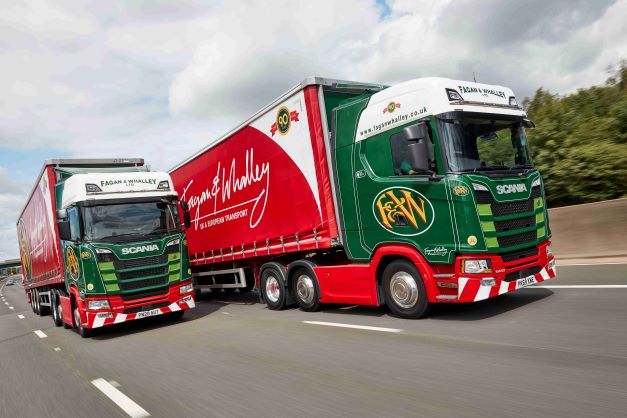
Long-established UK logistics company Fagan & Whalley Ltd., headquartered in Lancashire, has expanded its operations with the acquisition of Newport, South Wales-based logistics company, Alan R Jones & Sons Ltd.

With a fleet of 170 vehicles and five operational sites across the UK, including a 200,000 sq ft warehousing and distribution depot recently launched in Blackburn, Fagan & Whalley’s already substantial offering is boosted by the additional 39 commercial vehicles, 40,000 sq ft of warehousing space, and strategically located distribution depot gained in the acquisition of Alan R Jones & Sons.

Fagan & Whalley is a people-first operation, and valuing the team comes as a core element of the company’s philosophy. With no initial plans to make any changes to services currently being offered by both companies, the priority in the earliest stages is being placed on ensuring teams across both organisations continue to receive the support they need to continue working effectively.

“Following a period of continued growth and development, we saw this as a valuable opportunity to strengthen our geographical position and embark on the next step in our plans for expansion,” says Fagan & Whalley Business Strategy Director, Sam Fagan.

“We’re extremely proud to be welcoming the Alan R Jones team on board and to be acquiring the brand as part of the Fagan & Whalley family. It’s a match that’s not only strategic, but one that makes sense. Alan R Jones & Sons is a business that, having been built up from an initially small operation just like ours was, holds similar core values and celebrates an excellent reputation in Wales and across the South West.

“It will be beneficial to have additional strategic locations functioning in our network, and we’re looking forward to working with the impressive, stable, and diverse customer base that the Alan R Jones team has worked hard to develop over their 50 years in business.

“This move to develop our network and operations comes as a vital part of our wider business plans to orchestrate continual growth and expand into new locations, particularly in the South. It has provided an opportunity for us to increase our customer base and streamline our operations to ultimately become more efficient in our work. There’s substantial potential for further scale and growth, and we’re really looking forward to what promises to be a bright future for Fagan & Whalley and Alan R Jones & Sons Ltd.”

Ray Clegg, former Managing Director of Alan R Jones & Sons, commented: “It had become an obvious strategic move for the business to look at new opportunities, and when we had a discussion with the team at Fagan & Whalley, it was immediately clear that they put their people at the core of what they do, with a reputation that’s second to none, and I am truly delighted that Alan R Jones & Sons will now move forward into the future with new leadership and new opportunities to cement its status as a service-driven, people-led, award-winning organisation.”

HAI and Anta launch latest warehouse automation project

HAI ROBOTICS is working with sportswear giant Anta on a third automated warehouse following the success of two earlier projects. The subscription of the latest project from Anta, together with dozens of projects ongoing in the footwear and apparel market, marks HAI ROBOTICS an established supplier in the sector.

HAI ROBOTICS, a global pioneer in Autonomous Case-handling Robotic (ACR) system for warehouse logistics, and Anta, the world’s top three sportswear brand, will launch in south China a new project, as the autonomous robot maker’s cutting-edge autonomous totes-to-person solution will help Anta accommodate surging orders.

The new project, to be launched in April in Anta’s brand-new warehouse in Foshan, Guangdong Province, will be the third joint-project between the two companies, marking HAI ROBOTICS’ continued success in warehouse automation, in footwear and apparel sector in particular.

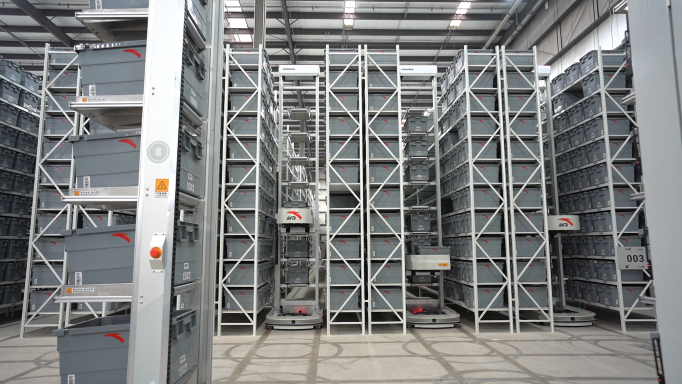
Using HAI ROBOTICS’ ACR system, the 9m-high warehouse would reach a much higher storage density to offer up to 30,240 locations, with daily throughput expected to reach 128,000 units.

As an official sponsor of the Beijing Winter Olympics and Paralympics, Anta has seen surging deals, putting warehouse logistics under mounting pressure.

“Anta sees HAI ROBOTICS as an important long-term partner, as we have shared ambition in smart warehousing,” Chen Jiancong, General Manager of logistics of Anta Group, said at the group’s logistics partnership conference, held in its headquarters in Jinjiang, southeast China’s Fujian Province.

Richie Chen, founder and CEO of HAI ROBOTICS, said his company names Anta as one of the top-10 most important global clients, who are entitled to more tailored service. “Together we will keep innovating to address more challenging scenarios for the footwear and apparel warehousing sector and bring more added value to our customers,” Chen said.

HAI ROBOTICS, named a global AI unicorn by Hurun Research Institute in the 2021 ranking, has dozens of ongoing projects for top footwear and apparel brands.

The company was awarded the best strategic supplier by Anta, at Tuesday’s conference, to recognise the efficiency the ACR system has helped to achieve in the supply chain.

Continued success

HAI ROBOTICS’ ACR system was first deployed in Anta’s warehouse in southwestern China’s Chengdu, Sichuan Province, in April 2021.

With 25 customised HAIPICK robots doing case picking and retrieving from shelves to continuously feed goods-to-person picking stations, storage density of the 5.7m-high warehouse increased significantly to offer up to 27,600 locations. It can handle up to 80,000 units in outbound orders per day.

The warehouse, which was previously stretched tight to handle its tens of thousands of SKUs at low picking accuracy, is now feeding the needs from 1,200 brick-and-mortal stores with a weekly outbound volume of 60,000 pieces.

The tremendous efficiency improvement prompted Anta into a second warehouse automation project with HAI ROBOTICS only three months later.

A larger robot fleet was stationed in its 3,500 sqm warehouse in Jinjiang. With the redesign of 11-layer shelves inside the 5.7m-high warehouse, the project provides around 20,000 storage locations. The warehouse reached a daily outbound capacity of 200,000 pieces with the use of HAIPORT-powered Workstation, an automatic loading and unloading machine.


Setting SMART goals has never been more important

Mark Perera, CEO and Founder of leading SaaS supplier collaboration tech platform Vizibl, talks about the need for companies to put in place SMART goals, outlining what they are and how they can be achieved with the end goal of improving supplier collaboration.

In the new hybrid working environment with reduced commuting and fewer in-person meetings and events, it is easy to get to the end of the day and wonder what you have accomplished.

In 2022, individuals and organisations are still coming to terms with working with – and as part of – a dispersed workforce. The reduced visibility can make it tough for all parties to understand productivity, workloads, goals, and boundaries.

More effectively leveraging the ecosystem

This is also the case when working with partners and suppliers. Many of us struggle to set and stick to goals in both our personal and professional lives, and the same can be said throughout the lifecycle of a relationship with another organisation. Goal-setting is not always that well-embedded into our make-up. It is something we consider when we start a new job or at the start of a new year, but while declaring your intentions is an essential first step, it’s often difficult to turn these goals into concrete action.

Frequently, this is because we set too many goals, or goals that are vague, too ambitious, or impossible to prove progress against.

The need for SMART goals

SMART goals ensure that you avoid these common barriers by clarifying the vision and the ideas, focusing the team’s efforts, and allowing you to deploy resources productively.

Working with numerous organisations with large supplier ecosystems has given us extensive insight into the value of setting these SMART goals with suppliers; they ensure that initiatives and projects are given initial focus at the outset and that they stay on track. This alignment enables Supplier Relationship Management and Supplier Collaboration efforts to flourish.

Adopting this technique means setting goals that are:

  • Specific (keep it simple but significant, stay away from ambiguities)
  • Measurable (easily quantifiable)
  • Achievable (agreed with those involved so that they can be attainable)
  • Relevant (reasonable, realistic, and results-based)
  • Time bound (time-based, time-limited, timely, and time-sensitive)

This not only keeps things simple, the clarity helps navigate any difficulties that arise over the course of reaching these goals.

Putting theory into practice

In theory, this all sounds straightforward, but how do you convert the theory into practice?

When getting started, it’s important to take time to think about the broad picture. Answer the basic existential question: ‘what do I want with this supplier or from a supplier relationship in general?’ and ‘what are good business outcomes for the supplier and for the organisation?’

This will help to visualise the general direction the partnership should take.

The answer to this question might be: ‘I want to drive innovation and collaboration with my suppliers to improve quality and new services’, ‘I want to enhance the relationship with the supplier to help both businesses grow in a mutually satisfactory way’, or ‘I want to be a champion in setting up great relationships with suppliers that drive trust and bring real value to both parties’ It is really important from the outset that you understand what you want to achieve.

Making sure goals aren’t open-ended

With the vision established, you can start answering ‘when do I want that to happen?’ Set a timeline for achieving this in order to give both parties an overall idea of how much time they need to invest in the initiative.

Next, look at breaking the overall vision down into some clear, actionable steps. For example, if the vision states: ‘We want to drive innovation and collaboration with suppliers’. One goal might then be to create a positive, accessible environment that enables suppliers to easily propose innovation ideas. Another goal might be to ensure you are able to capture and track all innovation ideas with your suppliers – and then, subsequently from this – ensure you have an innovation review process that can help you analyse these and determine which ideas are worth investing in.

This will allow you to capture and benchmark how many ideas are being presented. From there, you can create quantifiable and time-bound sub-goals to increase innovative ideas and also track the outcomes of ideas that are being invested in.

The next step is to get specific. Define actions, timelines, deadlines, and measurable KPIs and agree these with your supplier. The more specific you are, the better and easier it is to track and measure. In my view, almost any vision can be translated into clear, specific, time-bound, and actionable steps.

Recheck your goals at regular intervals

Finally, always recheck your goals. Of course, one way to do this is to assess your goals based on the SMART definition. Another way to check is to go through each goal and try to answer the fundamental questions: ‘why, what, who, how, when?’ Whether or not you can answer every single one of these, you’re on the right track. Why? Because you’ve identified existing gaps, and therefore know what amendments are needed to confidently apply the ‘SMART’ logic to each goal.

In conclusion, get to the ‘why, what, how, when and who’, but don’t over-complicate it. As we ease our way out of the pandemic, the world looks very different from two years ago. Against this backdrop of uncertainty, it is more important than ever to start shaping up your goals with suppliers and ensure there is total transparency from all parties around expectations. This will help to significantly reduce the risk of any nasty surprises at the end of the year.


How TMS has evolved and what it can do for you

How have transportation management systems (TMS) evolved, and how can you get the most out of a TMS without negatively impacting your established business processes or customers? This article, supplied by FreightPOP, has the answers.

The growing list of supply chain concerns is forcing shippers to make significant changes to their operations. The list of challenges we still face in this industry include:

  • Severe supply chain bottlenecks
  • Shipping delays
  • Labour/Driver shortages
  • Increased customer expectations
  • Capacity and equipment issues

Whether you’re looking to shift from a manual process to a more integrated and automated solution, or you are thinking of upgrading your shipping software, here’s what you need to know.

What Does A Modern TMS System Do?

In the early iterations of transportation management applications, we saw basic functionality such as rate management, carrier communications, and load consolidation. Over the past two decades, enhancements have included functions such as multimodal routing, cross-docking or pooling, and payment integration.

Today, robust solutions provide an end-to-end process to automate and integrate every aspect of your operation.

If you used a TMS system in the early days, you probably remember staring at green type on your computer screen and the high cost of implementation and ongoing computing power.

That’s all changed.

Cloud-Based TMS Solutions

As TMS solutions moved to the cloud, costs dropped significantly while computing resources grew exponentially. It used to be that only companies spending upwards of $100 million or more on freight used a TMS. But cloud-based TMS solutions allow even the smallest organizations to benefit from the advanced features without the hefty price tag.

SAAS TRANSPORTATION MANAGEMENT: The ubiquity of high-speed internet allowed for Software as a Service (SaaS) offerings, eliminating the capital investment needed for expensive mainframes and outsourcing the responsibility for software upgrades and hardware maintenance. This made TMS systems much more affordable as a subscription service with small monthly fees.

SHIPPING AUTOMATIONS: Modern TMS solutions now also allow you to automate much of the tedious, routine work to eliminate manual data entry and human errors. By utilizing APIs and web connectivity, you no longer need to call or check for rates and availability or be concerned about accurately tracking transactions. It all happens automatically to minimize workloads and optimise rates.

What You Need To Know About TMS Solutions

Not all TMS solutions on the market are equal, however, so if you’re shopping around, there are some things you need to consider.

For example, not all systems are customizable to your work processes. And the last result you want when trying to optimize is to have a TMS dictating or changing how you do business. Preferably, you need a system that integrates with third-party solutions you may already use such as ERP, WMS, order systems, and even any custom internal apps you may use.

The best TMS solutions should also excel at these critical functions:

  • Shopping for Rates
  • Real-time Tracking
  • Carrier Invoice Auditing
  • Carrier and Shipping Analysis

With the right TMS system, you can leverage your shipping data to improve your resource efficiency, vendor evaluations, and visibility on inbound and outbound products.

In 2022, You Need A Robust TMS

Overcoming today’s challenges — and whatever comes our way tomorrow — is essential to remain competitive and manage costs. A modern TMS solution can help you streamline and optimize your process holistically, so you can focus more on your core business and worry less about logistics.

For more information to help you learn how to deal with carrier capacity, what integrations to use to manage and scale freight, and much more CLICK HERE to access FreightPOP’s Ultimate Supply Chain Visibility Guide.


Subscribe

Get notified about New Episodes of our Podcast, New Magazine Issues and stay updated with our Weekly Newsletter.