Amazon chooses Flexi fleet for Dubai DC

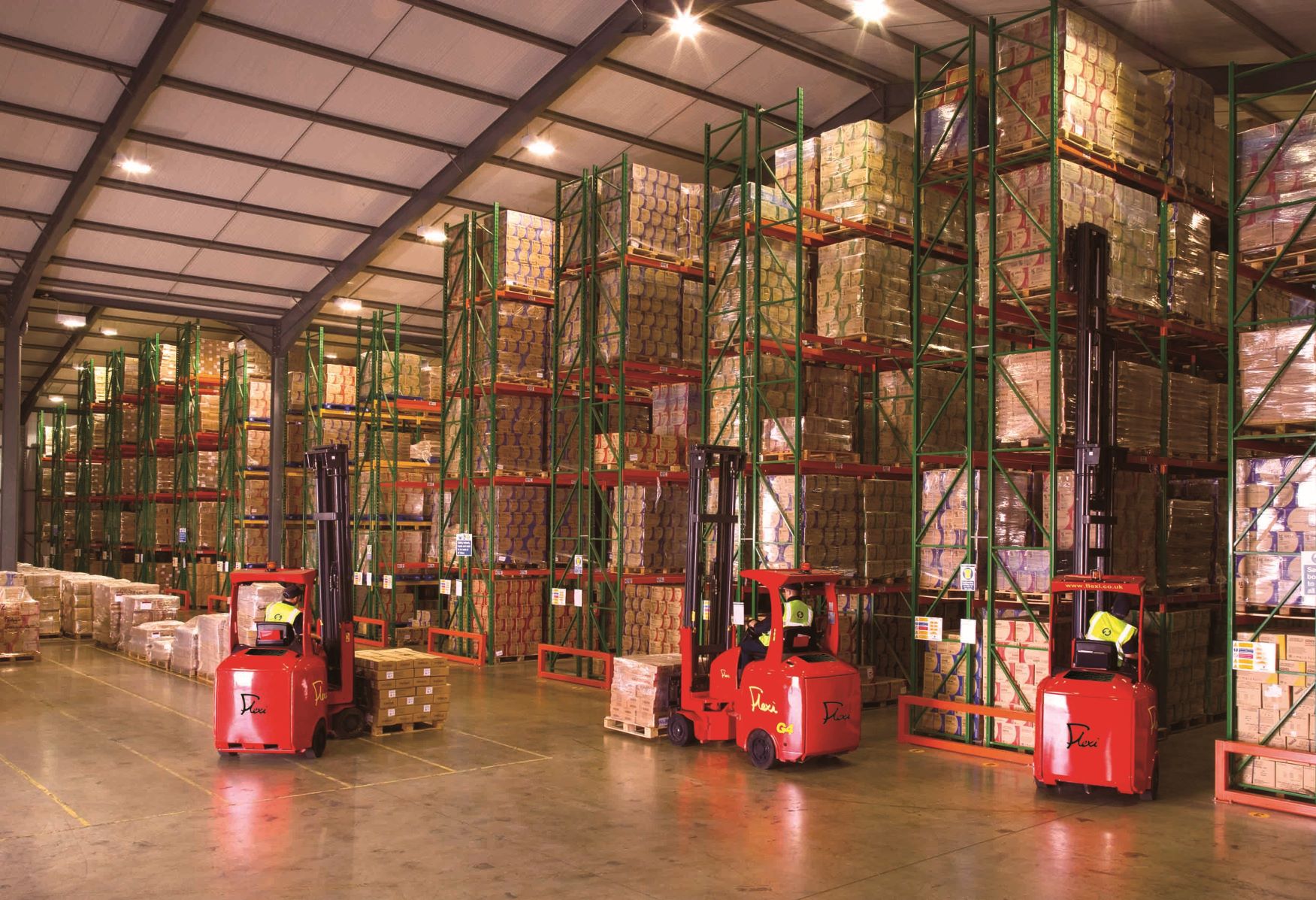
Amazon has ordered a fleet of six Flexi Truck articulated forklift trucks for its DXB3 fulfilment centre in Dubai Logistics City, UAE.

The e-commerce site launched in the UAE in May 2019 and, spread over 32,700 sq m and stocked with more than four million products, the DXB3 site is Amazon’s largest fulfilment centre facility in the country with in excess of 650  staff employed there.

Amazon’s new Flexi Trucks feature digital electric motor technology that allows independent twin front-wheel drive, hydraulic functions and the truck’s unique power-steering motor to be controlled digitally – ensuring the most productive, energy-efficient and safe driving performance throughout the working day.

The control systems at the heart of the Flexis deliver higher productivity combined with significantly reduced operating and maintenance costs, while the trucks’ VNA functionality and ability to work both inside and outside the building, make it the ideal choice for Amazon’s UAE operation.

Operational efficiency at the Dubai facility is further enhanced thanks to an integrated lead-acid battery charging solution that dramatically reduces Amazon’s overall energy consumption.

Featuring ‘call-forward’ alert technology to identify the most appropriate fully charged battery when a change is due, the charge system allows Amazon to operate with only two batteries per truck on a three shift usage pattern to minimise materials handling fleet running costs.

Flexi Trucks are built at hubs in the UK and Taiwan by Narrow Aisle Ltd. International sales account for some 40% of Narrow Aisle’s business and a global network of partners provides a full range of after sales support services to Flexi Truck users in some 63 countries worldwide.

Narrow Aisle Ltd’s managing director, John Maguire, commented: “The Flexi Truck’s iconic articulated design is ideally suited to the modern fulfilment centre operation. Flexi Trucks save space, increase productivity and allow safe access to any stacking aisle at all times.

“The Flexi’s ability to work in very narrow aisles means 30% more pallet and shelving locations can be designed into storage systems compared with traditional wide aisle operations while comparison tests have highlighted that Flexis are 25% more productive during a typical shift.

“To achieve optimum online order fulfilment performance it is important to deploy the most suitable materials handling equipment and the Flexi Truck articulated forklift-based intralogistics solution delivers hugely improved productivity and increased safety for warehouse staff as they carry out a range of customer order picking duties at lower levels and at the same time Flexis can stack and replenish in complete safety at height within warehouse aisles.”

Toyota launches purpose-designed Li-ion PPT

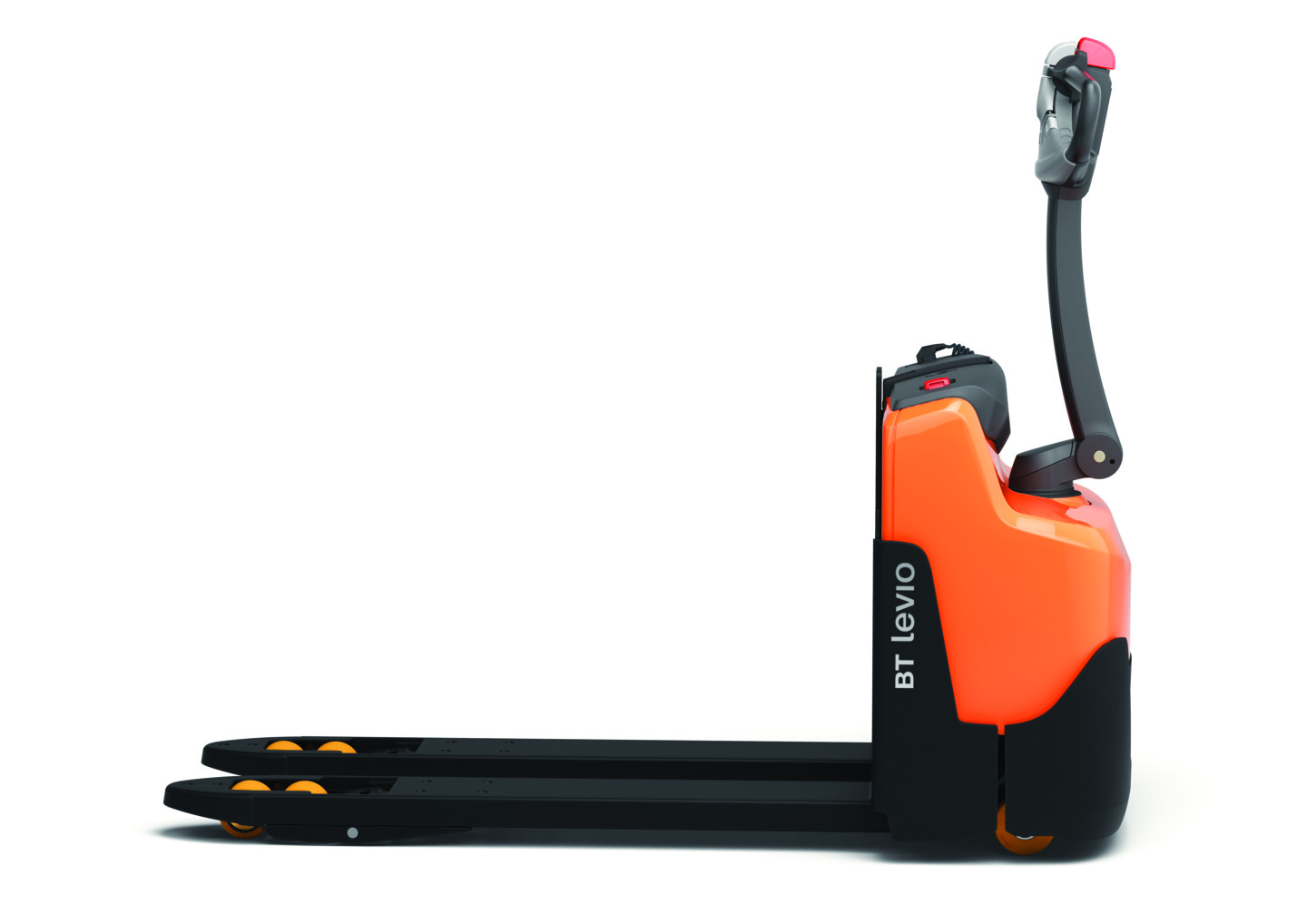
Toyota has introduced to the UK what it describes as the materials handling industry’s first-ever purpose-designed lithium-ion powered pallet truck (PPT) – the 1600kg capacity Toyota BT Levio LWI160.

Thanks to its unique modular, compact lithium-ion battery solution, it has opened the possibility to re-think design standards of material handling equipment. The result: a truck with optimised component position, smaller dimensions, light weight, and low energy consumption. Toyota says that unlike standard powered pallet truck designs, the battery compartment has been removed. Because of this the truck is lighter and, with no lifting or lowering of a battery compartment, it is much more energy efficient, leading to maximum uptime and reduced CO2 emissions.

Losing the battery compartment also means that the LWI160 is smaller than traditional lead-acid battery-powered PPT models: it is just 419mm long and 726mm wide and weighs only 269kg – almost 50% less than the lead-acid version.

The dramatic reductions in the truck’s dimensions and weight mean that a low steering force is required, which makes the new model easy to manoeuvre and, therefore, ideal for use within lorries and mezzanine floors or at sites where space is at a premium, such as retail stores.

The new LWI160 offers outstanding slope performance –  when operating on inclines is required, and the truck’s compact measurements mean that the operator has an unrestricted view of the fork tips and the pallet load, which reduces the risk of accidental damage to goods.

For optimum operational flexibility, lithium-ion batteries can be fully charged anywhere there is a power socket, utilising the on-board charger, which in just over an hour can be fully recharged. And where a larger battery is preferred, external chargers are available, but again can be recharged in just over an hour.

Like all models in the Toyota warehouse equipment range, the Levio LWI160 is fitted with Toyota’s I_Site telematics technology. I_Site provides valuable data to ensure productivity and safety are optimised while forklift fleet running costs are kept to a minimum.

Toyota Material Handling UK’s Keith Smith, commented: “Our modular approach to lithium-ion batteries has opened the door for a fresh new approach to the design of materials handling equipment. The LWI160 boasts advances in technology and design, whilst remaining true to what our customers expect from Toyota. A strong, durable, quality product.”

The LWI160 has won prestigious Red Dot and iF awards for its ground-breaking design.

E2open acquires Logistyx Technologies for $185m

E2open Parent Holdings, Inc., a leading network-based provider of a cloud-based, mission-critical, end-to-end supply chain management platform, has acquired Logistyx Technologies, a leader in global parcel and e-commerce shipping and fulfilment technology.

With the combination, E2open enhances its global footprint for multi-carrier e-commerce shipment management, offering companies a complete range of shipping capabilities needed to scale and respond to growing market needs.

“We are excited to welcome Logistyx Technologies’ team, clients, and capabilities to E2open,” said Michael Farlekas, chief executive officer at E2open. “The demand for e-commerce shipping capabilities continues to grow as companies look for more flexible and cost-effective ways to deliver products to consumers. This combination makes E2open the most comprehensive and integrated shipping solution provider, which covers all shipping modes including ocean, air, road, rail, and parcel, and is powered by a global network of carriers and logistics service providers.

“Logistyx is complementary to E2open’s existing platform, enabling E2open’s world-class clients to orchestrate their supply chains from demand to fulfilment, to supply.”

“The Logistyx team is thrilled to combine with E2open to enable more companies to ship smarter and benefit from the largest supply chain platform and network available,” said Geoffrey Finlay, chief executive officer at Logistyx. “We provide our customers, which include top retailers, manufacturers and logistics providers, the automation, visibility and flexibility needed to simplify global fulfilment and compete in an omnichannel world – all within a one-stop, connected platform.”

The Logistyx combination with E2open accelerates subscription revenue growth and unlocks strategic benefits for clients, including:

  • Increased reach as a global leader in transportation management for parcel shipping: Logistyx’s global parcel system augments E2open’s direct-to-consumer e-commerce offerings, creating a complete global footprint for multi-carrier parcel management.
  • Enhanced global parcel carrier network: The combination adds a carrier library of over 550 global carrier integrations including UPS, FedEx, DHL and USPS, to E2open’s leading network. The solution manages the carrier certification process to keep clients in compliance, while making it easier to compare and review spot rate options, which is critical in a capacity-constrained environment.
  • Expanded client base: E2open’s client base will be enhanced by Logistyx’s strong global enterprise clients, which include many of the world’s leading retailers, manufacturers, and carriers.
  • Augmented product offerings: Logistyx’s clients will benefit from a combined portfolio that will not only expand shipping modes beyond parcel, but also enhance upstream capabilities to better orchestrate manufacturing, distribution, channel and trade operations.

E2open acquired Logistyx Technologies for a total purchase price of $185m, a transaction which was unanimously approved by E2open’s Board of Directors.

Autonomously picking robot relies on cutting-edge solution

Due to the industry standard 4.0, digitalisation, automation and networking of systems and facilities are becoming the predominant topics in production and thus also in logistics. Industry 4.0 pursues the increasing optimisation of processes and workflows in favour of productivity and flexibility and thus the saving of time and costs. Robotic systems have become the driving force for automating processes.

Through the Internet of Things (IoT), robots are becoming increasingly sensitive, autonomous, mobile and easier to operate. More and more they are becoming an everyday helper in factories and warehouses. Intelligent imaging techniques are playing an increasingly important role in this.

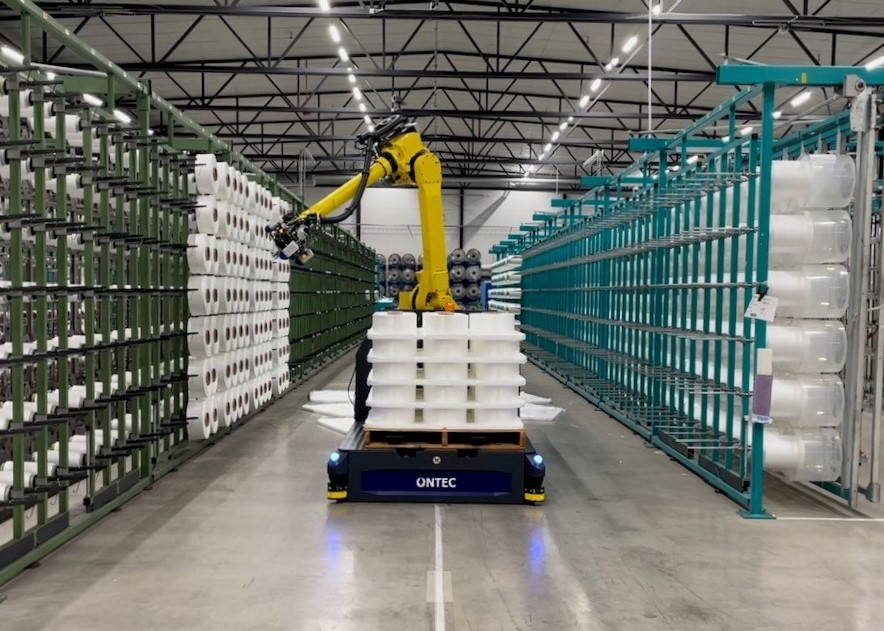
To meet the growing demands in scaling and changing production environments towards fully automated and intelligently networked production, the company ONTEC Automation GmbH from Naila in Bavaria has developed an autonomously driving robotic assistance system. The “Smart Robot Assistant” uses the synergies of mobility and automation: it consists of a powerful and efficient intralogistics platform, a flexible robot arm and a robust 3D stereo camera system from the Ensenso N series by IDS Imaging Development Systems GmbH.

#The solution is versatile and takes over monotonous, weighty set-up and placement tasks, for example. The autonomous transport system is suitable for floor-level lifting of Euro pallets up to container or industrial format as well as mesh pallets in various sizes with a maximum load of up to 1,200kg. For a customer in the textile industry, the AGV (Automated Guided Vehicle) is used for the automated loading of coil creels.

For this purpose, it picks up pallets with yarn spools, transports them to the designated creel and loads it for further processing. Using a specially developed gripper system, up to 1,000 yarn packages per 8-hour shift are picked up and pushed onto a mandrel of the creel. The sizing scheme and the position of the coils are captured by an Ensenso 3D camera (N45 series) installed on the gripper arm.

Pallets loaded with industrial yarn spools are picked up from the floor of a predefined storage place and transported to the creel location. There, the gripper positions itself vertically above the pallet. An image trigger is sent to the Ensenso 3D camera from the N45 series, triggered by the in-house software ONTEC SPSComm. It networks with the vehicle’s PLC and can thus read out and pass on data.

In the application, SPSComm controls the communication between the software parts of the vehicle, gripper and camera. This way, the camera knows when the vehicle and the grabber are in position to take a picture. This takes an image and passes on a point cloud to a software solution from ONTEC based on the standard HALCON software, which reports the coordinates of the coils on the pallet to the robot.

The robot can then accurately pick up the coils and process them further. As soon as the gripper has cleared a layer of the yarn spools, the Ensenso camera takes a picture of the packaging material lying between the yarn spools and provides point clouds of this as well. These point clouds are processed similarly to provide the robot with the information with which a needle gripper removes the intermediate layers.

“This approach means that the number of layers and finishing patterns of the pallets do not have to be defined in advance and even incomplete pallets can be processed without any problems,” explains Tim Böckel, software developer at ONTEC. “The gripper does not have to be converted for the use of the needle gripper. For this application, it has a normal gripping component for the coils and a needle gripping component for the intermediate layers.”

For this task, the mobile use for 3D acquisition of moving and static objects on the robot arm, the Ensenso 3D camera is suitable due to its compact design. The Ensenso N 45’s 3D stereo electronics are completely decoupled from the housing, allowing the use of a lightweight plastic composite as the housing material. The low weight facilitates the use on robot arms such as the Smart Robotic Assistant.

The camera can also cope with demanding environmental conditions. “Challenges with this application can be found primarily in the different lighting conditions that are evident in different rooms of the hall and at different times of the day,”

Tim Böckel describes the situation. Even in difficult lighting conditions, the integrated projector projects a high-contrast texture onto the object to be imaged by means of a pattern mask with a random dot pattern, thus supplementing the structures on featureless homogenous surfaces. This means that the integrated camera meets the requirements exactly.

“By pre-configuring within NxView, the task was solved well.” This sample programme with source code demonstrates the main functions of the NxLib library, which can be used to open one or more stereo and colour cameras whose image and depth data are visualised. Parameters such as exposure time, binning, AOI and depth measuring range can – as in this case – be adjusted live for the matching method used.

The matching process empowers the Ensenso 3D camera to recognise a very high number of pixels, including their position change, by means of the auxiliary structures projected onto the surface and to create complete, homogeneous depth information of the scene from this. This in turn ensures the necessary precision with which the Smart Robot Assistant proceeds. Other selection criteria for the camera were, among others, the standard vision interface Gigabit Ethernet and the global shutter 1.3 MP sensor.

“The camera only takes one image pair of the entire pallet in favour of a faster throughput time, but it has to provide the coordinates from a relatively large distance with an accuracy in the millimetre range to enable the robot arm to grip precisely,” explains Matthias Hofmann, IT specialist for application development at ONTEC.

“We therefore need the high resolution of the camera to be able to safely record the edges of the coils with the 3D camera.” The localisation of the edges is important in order to be able to pass on as accurate as possible the position from the centre of the spool to the gripper. Furthermore, the camera is specially designed for use in harsh environmental conditions. It has a screwable GPIO connector for trigger and flash and is IP65/67 protected against dirt, dust, splash water or cleaning agents.

The Ensenso SDK enables hand-eye calibration of the camera to the robot arm, allowing easy translation or displacement of coordinates using the robot pose. In addition, by using the internal camera settings, a “FileCam” of the current situation is recorded at each pass, i.e. at each image trigger.

This makes it possible to easily adjust any edge cases later on, in this application for example unexpected lighting conditions, obstacles in the image or also an unexpected positioning of the coils in the image. The Ensenso SDK also allows the internal camera LOG files to be stored and archived for possible evaluation.

ONTEC also uses these “FileCams” to automatically check test cases and thus ensure the correct functioning of all arrangements when making adjustments to the vision software. In addition, various vehicles can be coordinated and logistical bottlenecks minimised on the basis of the control system specially developed by ONTEC.

Different assistants can be navigated and act simultaneously in a very confined space. By using the industrial interface tool ONTEC SPSComm, even standard industrial robots can be safely integrated into the overall application and data can be exchanged between the different systems.

Further development of the system is planned, among other things, in terms of navigation of the autonomous vehicle. “With regard to vehicle navigation for our AGV, the use of IDS cameras is very interesting. We are currently evaluating the use of the new Ensenso S series to enable the vehicle to react even more flexibly to obstacles, for example, classify them and possibly even drive around them,” says Tim Böckel, software developer at ONTEC, outlining the next development step.

ONTEC’s own interface configuration already enables the system to be integrated into a wide variety of Industry 4.0 applications, while the modular structure of the autonomously moving robot solution leaves room for adaptation to a wide variety of tasks. In this way, it not only serves to increase efficiency and flexibility in production and logistics, but in many places also literally contributes to relieving the workload of employees.

ONTEC Automation GmbH is a system provider for integrated and innovative automation systems, plants and special machines for industrial production. The business units consist of Technical Textile Solutions, Automation Solutions, Smart Robotic Solutions and Electric Switchboard Solutions.

The company’s expertise with 25 years of experience is reflected in innovative, customer-oriented solutions along the entire value chain and includes robotics, industrial image processing, software development, electrical engineering and mechanics.

 

Samsara reports record results for Q4/2022

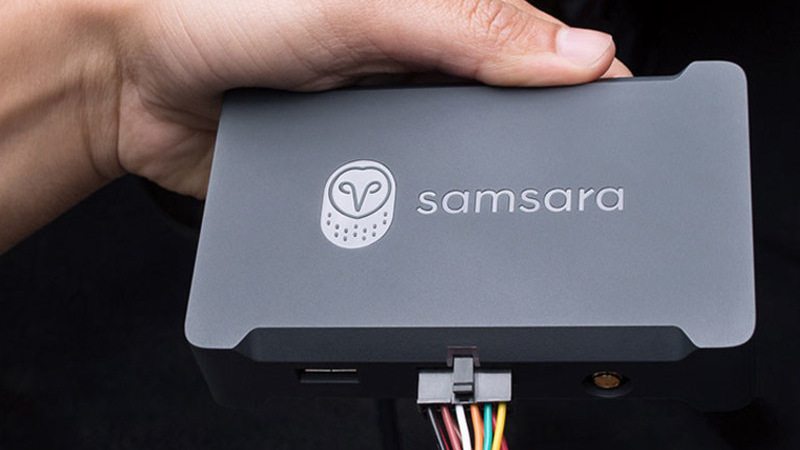
Samsara Inc., the pioneer of the Connected Operations Cloud, reported record financial results for the fourth quarter and fiscal year ended 29th January, 2022.

“We achieved significant milestones in the fourth quarter, including becoming a publicly listed company. We ended the year with over half a billion in ARR, while growing 64% year-over-year, which capped off a very successful year for the company,” said Sanjit Biswas, co-founder and CEO of Samsara. “To match our customer demand, we grew headcount nearly 30% in fiscal 2022 and ended the year with over 1,600 Samsarians globally. As the world of physical operations continues to digitise, Samsara is well-positioned to capitalise on this tremendous market opportunity.”

Samsara is the pioneer of the Connected Operations Cloud, which allows businesses that depend on physical operations to harness IoT (Internet of Things) data to develop actionable business insights and improve their operations. Samsara operates in North America and Europe and serves tens of thousands of customers across a wide range of industries including transportation, wholesale and retail trade, construction, field services, logistics, utilities and energy, government, healthcare and education, manufacturing, and food and beverage.

The company says its mission is to increase the safety, efficiency, and sustainability of the operations that power the global economy.

Samsara released a shareholder letter accessible from the Samsara investor relations website at investors.samsara.com.

Multi-client shuttle system put into operation at Harsewinkel

Arvato Supply Chain Solutions is expanding Harsewinkel, Germany into its leading healthcare location in Europe. To this end, a new multi-client-capable shuttle warehouse with picking system has now been put into operation at the North Rhine-Westphalia site, which in the future will enable the products of a total of 25 customers from the pharmaceutical and medical technology industry to be shipped even more efficiently and quickly to hospitals, pharmacies, doctors, laboratories, patients and wholesalers. At the same time, Arvato is using the new shuttle solution to drive forward the automation strategy for its global sites.

“The healthcare market is currently being shaped by the trend toward more and more direct deliveries from pharmaceutical and medical technology manufacturers to their customers. This makes automation useful in healthcare logistics as well,” says Dr. Thorsten Winkelmann, Managing Director Healthcare at Arvato Supply Chain Solutions.

“It allows us to respond more flexibly and efficiently to changing market needs, ensure optimal patient care and grow together with our customers.”

The appropriate automation solution was determined after a detailed analysis of inventory and delivery volumes and the structure of the products. For this purpose, Arvato has its own Logistics Engineering department, whose experts have clustered different automation technologies independently of manufacturers according to application standards as in a modular system. From this, the modules for each project are then put together individually on the basis of the respective requirements.

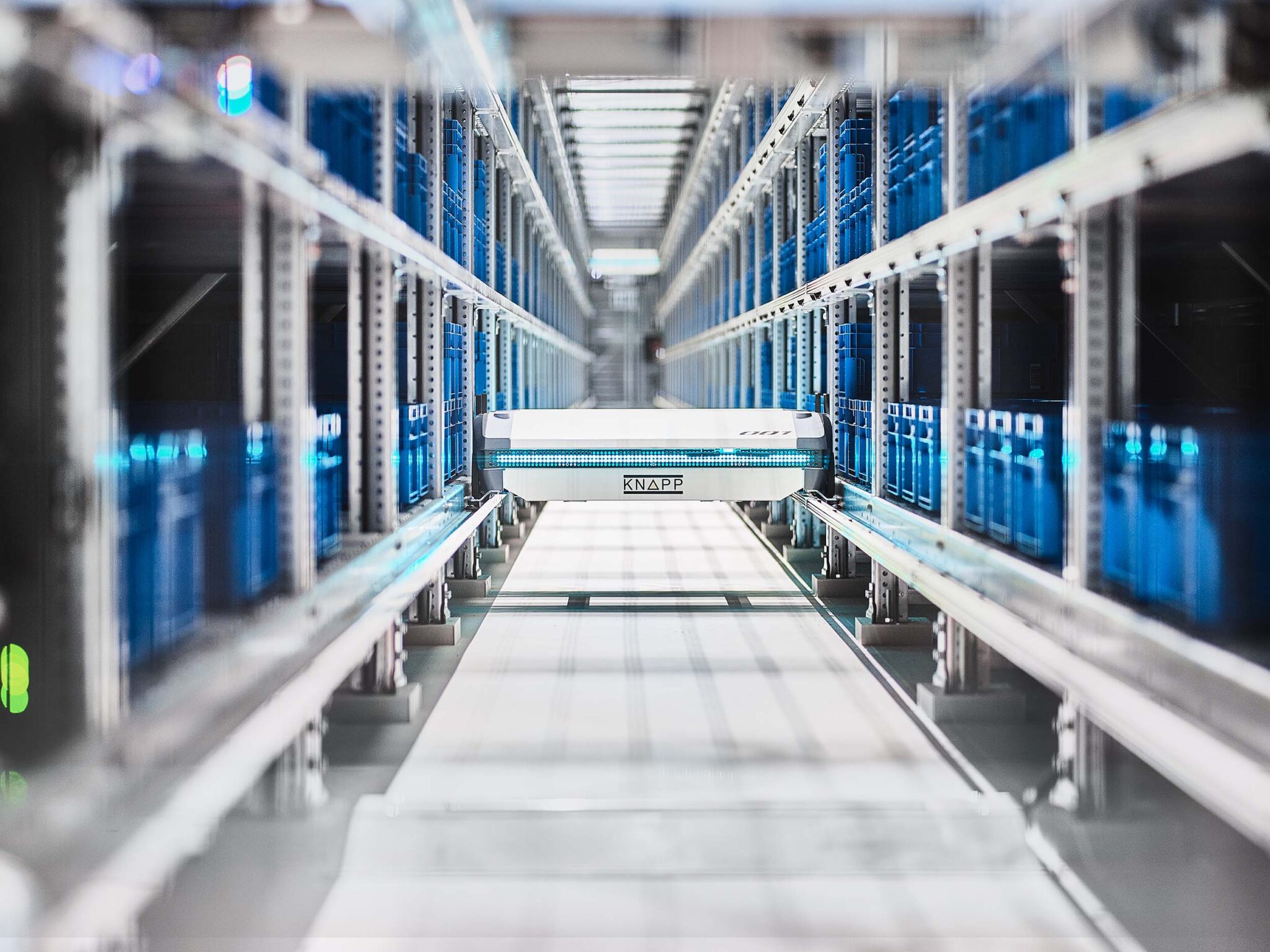
“In addition, since the space conditions in Harsewinkel were predefined and could not be expanded at will, we opted for a state-of-the-art shuttle system with stacked bins from our service provider KNAPP,” explains Fabian Generotzky, Vice President Operations Healthcare at Arvato in Harsewinkel.

With the increased storage density in the shuttle in this way, around 4,300 sq m of additional storage space have been gained, which is now available for growth with existing and new customers.

For the implementation, the Healthcare division was able to draw on the experience and expertise of other successful automations by Arvato Supply Chain Solutions. Generotzky adds: “The implementation in an existing facility during ongoing operations was nevertheless one of the most complex projects in the history of Arvato Healthcare.”

A challenge that was mastered with great commitment from everyone involved. The shuttle warehouse, which extends over three floors in Harsewinkel, has a total capacity of 55,000 storage locations for 44,000 totes and 11,000 shipping cartons. 84 shuttles move in the system in five aisles and can switch between the individual levels via six elevators.

For efficient order processing, pharmaceutical and medical products are conveyed directly to six picking stations using the goods-to-person principle. Additional work areas for order picking and goods issue are connected to the system via high-performance conveyor and sorter technology. During packing, semi- and fully-automatic carton erecting machines support the dispatch processes.

“The output per aisle is 400 to 650 movements per hour,” says Generotzky. “With each movement, the robotic vehicle both stores and retrieves goods – so there are no empty runs. This improves throughput by up to 10%, so it’s ideal for processing high volumes and boosts efficiency throughout the value-added process of warehouse logistics.”

The customer structure at the site also spoke in favour of using a shuttle. “In Harsewinkel in particular, we look after very different clients, so it is not possible to foresee a pronounced ABC distribution of products,” adds Generotzky. “With the shuttle, you quickly have direct access to the products and, compared to other automation solutions, you don’t need any lead time to get the items out of the system.”

With the new shuttle system in Harsewinkel, Arvato Supply Chain Solutions is well equipped for further growth. Generotzky concludes: “We have built generously and planned for capacity expansions in order to be able to react quickly to the increasing demand on the market, but also from existing customers.”


New Smart Pallet Mover promises performance boost

It is not the performance of modern production machines but their material supply that promises the greatest potential for further productivity increases in industrial companies today. With the new Smart Pallet Mover (SPM), Interroll has launched an awarded solution that can be adapted as a flexible and modular pallet management system to meet a wide range of application requirements in industrial manufacturing.

The customer and user benefits of the Smart Pallet Mover are impressive: Those who use it can now finally automate work processes in front of the machine production to avoid manual activities in safety-critical areas and manage the pallet work flow by buffering, sorting, sequencing and carrying at the right time to deliver significant improvement of the machine down time optimising the return on investment (ROI) of the machine production cells.

This not only eliminates costly production interruptions for material supply to machines, but also the risk of accidents during operation. In this way, productivity increases of up to 30% are possible compared to manual operation.

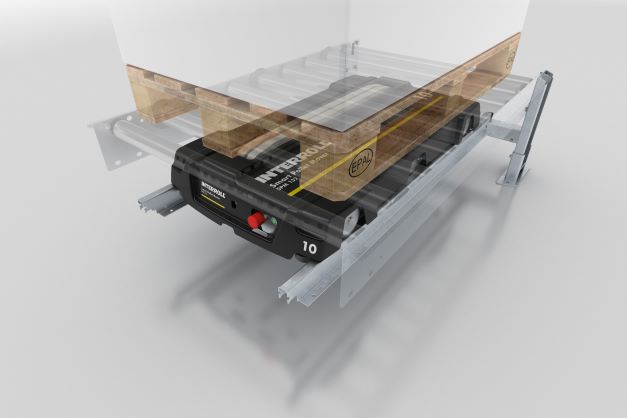
The Smart Pallet Mover is a pallet management solution for automating pallet transport in the vicinity of manufacturing machines and for production-related picking and sequencing processes, which can also be used in Industry 4.0 environments. The SPM is designed to transport, sort and buffer boxes or pallets weighing up to 1,000kg.

It represents a mobile and autonomously acting material flow system that can be used, for example, as a cost-efficient supplement or substitute for forklifts or automated guided vehicles (AGVs).

The Smart Pallet Mover solution consists of various modules. The centre of the solution is a mobile unit (SM1000 Mover) that runs underneath non-driven conveyor sections and moves pallets lying on them. A transfer car (SM2000 Transfer Car) which moves on a rail can transport pallets between parallel conveyor sections.

“With this platform solution, which is unparalleled on the world market, we are tapping into the great productivity potential offered by production-related pallet management automation for our customers and users,” explains Jens Strüwing, Executive Vice President Products & Technology at Interroll. “A user-friendly 3D online tool, the SPM Layout Configurator & Pallet Flow Simulator, makes it possible to configure a system quickly and easily as well as simulate planned operation on the computer.”

The flexibility of this innovative solution, the use of proven technologies and a very short payback period ensure that users can significantly strengthen their competitiveness. As with all Interroll products, the Smart Pallet Mover is extremely easy to install, operate and maintain. The modular plug-and-play solution can therefore be put into operation without lengthy interruptions to production, even during modernisation projects.

Networking capabilities based on global data standards such as REST API and JSON ensure maximum compatibility and ease of use. The conveyor modules can be reconfigured very easily if required, and height-adjustable supports allow the system to be installed even on uneven floors.

Before the official market launch, the new solution had already won two internationally renowned awards. For example, the Smart Pallet Mover won the Red Dot Award, Product Design 2021, for its exceptional design quality and degree of innovation. At the same time, the solution was chosen by the independent experts of the International Intralogistics and Forklift Truck of the Year Award (IFOY AWARD) in March 2021 as a finalist of this globally renowned intralogistics award.

With this new offering, Interroll is taking into account the fact that production managers are increasingly focusing on material handling, as shown, for example, by the survey “Production Logistics in Medium-Sized Businesses,” which Interroll published last year: The average degree of automation of internal material transport at the companies surveyed was only 53%. Almost every tenth company (9%) had a degree of automation of less than 25%.

CLICK HERE to view a video of the new solution.

Complex omnichannel business optimised by WMS

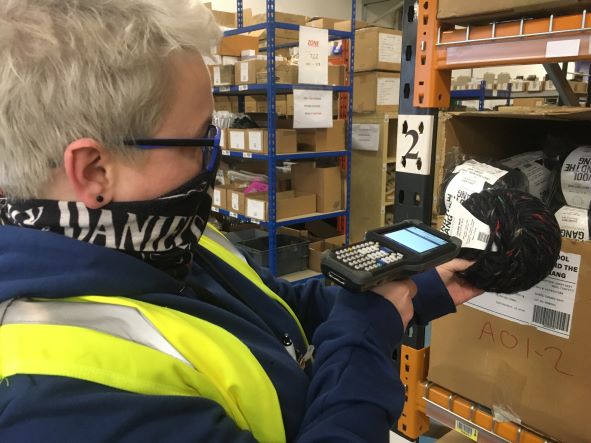
UK market leader in hand knitting yarns, The DMC Group, has implemented a cloud-based warehouse management system, SnapFulfil, into its UK operation as part of a five-year contract with the WMS innovator.

As the premier destination for needle crafting, The DMC Group distributes all Sirdar, Rowan, Wool and the Gang, plus Tilsatec products, and has moved to optimise inventory and distribution efficiencies at its 180,000 sq.ft DC in Wakefield.

The DMC Group chose SnapFulfil WMS for its superior flexibility, functionality and configurability, plus its ability to interface seamlessly with the company’s existing ERP, shipping and carrier/parcel systems.

SnapFulfil was also the preferred solution because it optimises the process complexities of multi-chamber, multi-brand, cross-zone picking at the Wakefield site. This streamlining and automation of existing workflows will increase service and  efficiency levels to its B2B, B2C, domestic and international export channels, as well as optimisation of inter-company channel servicing to DMC’s other distribution sites in the US and France.

The DMC Group Logistics Director, Duncan Aspden, said: “Having previously worked with large tier 1 providers, I understood that The DMC Group needed a more cost effective and responsive system, which would still deliver all the technological capability required. SnapFulfil’s dynamic rules-based engine will enable us to self-configure as required, for greater control and self-sufficiency.

“I also like the speed-to-value of the SnapFulfil solution, because it has quickly enabled us to deliver efficiency improvements across a number of our operational activities. SnapFulfil is a refreshingly different company to work with – agile, lean and more fluid.”

SnapFulfil CEO, Tony Dobson, added: “With a tight logistics plan in place, DMC’s go live was due just before the last Black Friday period and they were initially quite nervous. However, we worked very closely with them on some bespoke system modifications and functionality to de-risk the process.  As a result, they achieved excellent peak volumes and a winning start, which can comfortably scale up as required to continue apace.”


UK businesses cautioned about breaking Russia trade sanctions

On Wednesday (2nd March 2022), 1,400 traders – 82% of whom reported that they traded with Russia – attended a free webinar organised by the Institute of Export & International Trade (IOE&IT) on “How to comply with trade sanctions against Russia”.

IOE&IT trade specialist Ray Burgin set out eight practical steps that companies could take to make sure that they were trading compliantly: Know your product; Know your product’s destination; know your customer; know your supplier; revisit your licences; revisit your contracts; run an internal compliance programme; and communicate with your agents.

The webinar also heard from the Department for International Trade’s Director for Exports, Paul McComb, who outlined the Government’s thinking and told them how to make use of the Export Support Service to access the latest information and advice. There was insight into the possible effects on UK trade with Russia from Rebecca Harding, CEO of Coriolis Technologies, and author of the book The Weaponization of Trade. She drew attention to the effect that sanctions imposed after Russia’s illegal annexation of Crimea had on the UK’s services trade with Russia, which plummeted as a result.

The IOE&IT’s director general, Marco Forgione said: “Of course in time of war, trade takes second place to our concern for the human suffering.

“It is heartening that so many British businesses took the time to learn more about how to comply with these sanctions. They want to make sure that they are not inadvertently breaking the law.”

He explained: “There are many examples of how companies could be caught out. Dual use goods are not always obvious; there are around 3,000 tariff codes to which dual use has been allocated, from temperature control systems to fuel pump covers, so it is really important that exporters really know their products and understand where they fit.

“And it’s not just the goods it can be the packaging which is a problematic. A cider manufacturer recently had problems with their exports because the vats they were using to transport the cider could be re-used to transport banned goods.

“Just as important is that exporters understand who the end user of their product is going to be. In complex supply chains that entity may be at some removed from the customer, so exporters need to be sure that they are not dealing with someone acting on behalf of a sanctioned recipient. For instance, selling to a distributor the UK business needs to be certain that their goods are not being forward sold into Russia.

“Another area of concern is the inadvertent export of Intellectual Property over the internet. Most companies would understand that sending a copy of complex designs to Russia would be an export but how many would know that even discussing them over a Zoom call could also be breaking sanctions?

“Ultimately we want to help exporters do the right thing. The IOE&IT is committed to continuing to hold dissemination events like today’s, our helpdesk is available for members who have complex queries and we can provide consultancy services to business to help them stay compliant.”


Rockwell to showcase virtual warehouse at MODEX

Rockwell Automation, Inc., the world’s largest company dedicated to industrial automation and digital transformation, is doubling down on its commitment to the warehouse and fulfilment industry by exhibiting for the first time at MODEX 2022, in Atlanta, on March 28th-31st. The company will demonstrate its proven solutions designed to help customers’ operations be more intelligent, connected, and productive.

“Emulate3D is excited to be exhibiting together with its parent company, Rockwell Automation, for the first time at MODEX, to demonstrate Rockwell’s game-changing automation and digital twin supply chain solutions in-person,” said Linda Freeman, manager, regional industry, Rockwell Automation. “We look forward to joining nearly 20 of our OEM, system integrator, and technology partners in Atlanta to showcase Rockwell’s technologies in booths throughout the show floor and provide attendees with an unforgettable, interactive experience.”

MODEX attendees can stop by Rockwell’s booth (B6611) to experience the newest and most innovative technology in the industry. Some of the technologies that will be on display that attendees can interact with and experience first-hand include:

Emulate3D Simulation Station: See how MODEX veteran, Emulate3D, Rockwell’s digital design software, can reduce time to market, improve start up reliability and enable scenario planning. The ease of use is clear as 3D warehouse drawings are modified in real time in the booth.

MagneMover LITE Intelligent Conveyor Demo: A smart, frictionless transport system designed to move loads quickly and efficiently. See it deliver flexible routing and high-speed sorting in a small, low-maintenance footprint. Includes an AR workforce demo.

Armor PowerFlex Drives (pictured): The next generation of space-saving motor control will debut at MODEX. This modular solution features built in safety, is ideal for a wide range of environments and size requirements, and provides real-time data to the enterprise.

Interactive Virtual Warehouse: Attendees can dive into this interactive experience and explore videos and demos of the latest warehouse and logistics solutions like independent cart technology, digital facility design, unified robotic control, and more.

In addition to its own booth, the latest Rockwell solutions will be on display across MODEX in nearly 20 of its PartnerNetwork member booths. For example, Rockwell’s Technology Partner, Comau is showcasing an independent cart technology, Rockwell-controlled robot demo in its booth (B9632). Additionally, FlexLink Systems, Inc., a gold level OEM partner, will feature a full pharma sort system simulation based on Rockwell’s MagneMover LITE in its booth (B1007).

“I’m excited about the possibilities that a major, well-known, well-established company like Rockwell can bring to this space,” commented Tandreia Bellamy, founder of TB Supply Chain Consulting and former global logistics executive. “From building a digital twin to do real, what-if scenarios, to independent cart technology that truly pulls products through a warehouse, they’re really looking at it from end-to-end.”

Rockwell says those who experience its game-changing solutions first-hand at MODEX will learn how their warehouse and logistics operations can become more connected and efficient.

Subscribe

Get notified about New Episodes of our Podcast, New Magazine Issues and stay updated with our Weekly Newsletter.