FedEx Express extends reach of e-commerce proposition

FedEx Express has now made its international, day-definite e-commerce service available to customers in 24 European countries with connections to 47 markets worldwide.

After a successful 10-market launch in 2021 (UK, Germany, France, Italy, Spain, Poland, Austria, Sweden, Belgium and the Netherlands), FedEx International Connect Plus (FICP), is now available in an additional 14 countries: Czech Republic, Denmark, Estonia, Finland, Greece, Hungary, Ireland, Latvia, Lithuania, Luxembourg, Norway, Romania, Slovenia and Switzerland.

Now connecting almost 99% of the world’s GDP, services such as FICP enable e-commerce sellers to grow their business in Europe and abroad. Those businesses will be able to ship their products to online shoppers in Europe in 1-3 days, North America in 3-4 days, Asia-Pacific and the rest of the world in 3-5 days at attractive rates, improving their competitiveness in the market.

Wouter Roels, Senior Vice President Marketing International, FedEx Express Europe, said: “Worldwide e-commerce sales are expected to exceed $5tr in 2022 and grow to over $7tr in 2025, creating many opportunities for European businesses. With the latest extension of FICP to growth markets in eastern and northern Europe, FedEx Express is supporting businesses on their growth journeys by connecting them to more customers in global and intra-European markets.”

”The launch of FedEx International Connect Plus in Ireland is an exciting development for e-commerce businesses who want to reach global online shoppers with speed and efficiency,” said Brian DeCair, Vice President Operations Ireland and UK North, FedEx Express. ‘’Cross-border e-commerce is growing faster than domestic e-commerce and businesses are increasingly seeking more diversified, cost-effective solutions in order to meet consumers’ evolving needs and this new cross-border service, balancing speed with attractive prices, delivers just that.”

Through the COVID-19 pandemic, the retail landscape has transformed with growth in both domestic and cross border e-commerce sales. Consumer research in 40 countries worldwide shows that, in 2020, 37% of e-commerce shoppers bought more cross border due to the pandemic. Furthermore, 28% agreed or strongly agreed that, in the future, they will buy more online from retailers based abroad.

Asked about several elements of the delivery process, consumers indicated satisfaction levels for delivery speed were lowest. In addition, 71% of consumers would pick an online retailer that offers flexible delivery options over one that doesn’t.

The service comes with the reliability of FedEx’s international, day-definite delivery, coupled with FedEx’s customs clearance expertise and tracking capabilities. E-commerce sellers can also send out notifications and shoppers have the flexibility to change the day and location of deliveries via FedEx Delivery Manager, providing them with visibility, more control and convenience over their online orders.

Chiltern makes significant savings with Michelin tyres

Chiltern Distribution claims to have found the ‘sweet spot’ for truck tyre performance thanks to Michelin’s fuel-saving Energy tyre ranges, which it specified as original equipment across 19 new trucks which have entered service during the last year.

The net result of its move to low rolling resistance tyres has been all new vehicles consistently returning more than 10mpg at 44-tonnes, and some even exceeding 11mpg at maximum weight.

The company optimised every part of the vehicles’ specification prior to placing the orders, split between Volvo and Scania. This included selecting 315/70 R22.5 Michelin X Line Energy Z2 and D2 tyres for the Volvo FH 460 with I-Save tractor units, and Michelin X Multi Energy Z and D fitments for the Scania S 500 tractor units – boosting fuel efficiency and lowering each truck’s VECTO score.

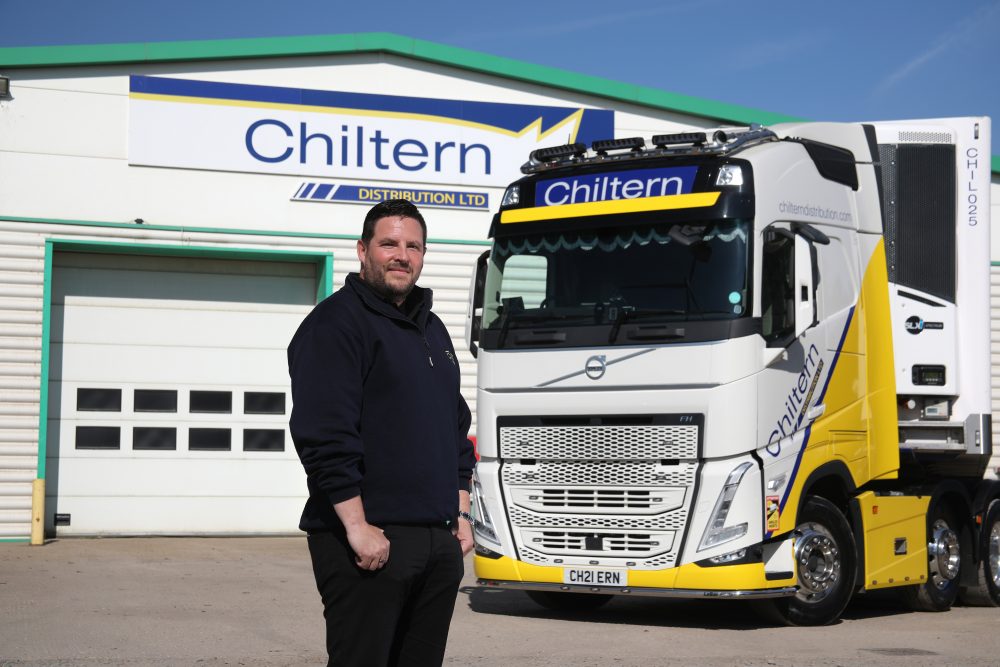
Brian Sagaseta (pictured), Managing Director of Chiltern Distribution, says: “Michelin has always been our go-to product, driven by serviceability, longevity and reliability. More recently, by selecting the latest generations of fuel-saving tyres, we’re also getting great efficiency and miles per gallon.

“It’s critical to match the right tyre with the right truck; because if you don’t, then you’re never going to unlock a vehicle’s maximum fuel potential. As our own data has proven, our tyre choice is saving us money and lowering our CO2 emissions. It’s a win-win situation.”

Michelin X Line Energy Z2 and D2 tyres are both A-rated for fuel efficiency – making them the most fuel-efficient Michelin truck tyres on the market, and perfect for long-distance transport at sustained high average speeds. Key to their ability to reduce fuel bills is the high percentage of silica used in the tread rubber, enabling Michelin to push the limits of rolling resistance without compromising on tyre longevity.

Michelin X Multi Energy tyres are B-rated for fuel efficiency, and have been designed to save fuel and reduce environmental impact in predominantly regional operations. As part of the wider X Multi range, they qualify for Michelin’s free accidental tyre damage guarantee, giving the reassurance that the customer’s investment is protected in the event of accidental damage before each tyre is 50% worn.

Sagaseta adds: “Both Michelin fuel-saving ranges are delivering for us on all counts – and that’s increasingly important given the rising cost of diesel and our focus on sustainability and reducing carbon emissions.”

Comparing the new X Line Energy-shod Volvos with the older models they replaced, which ran on standard regional tyres, Sagaseta has identified a difference in fuel performance of around 1.85mpg. For a single vehicle averaging 140,000km per year, that’s a saving of around 7,000 to 7,200 litres of fuel.

The Peterborough-based business runs a 54-strong fleet of trucks, operating with temperature-controlled trailers within the food and pharmaceutical sectors.

Expansion food for thought from WMS improvements

Specialist temperature controlled 3PL provider, Moran Logistics, has seen its production output ramp up eight-fold since switching to the technologically advanced, cloud-based SnapFulfil WMS.

Moran’s 100,000 sq ft Castle Donington HQ in Derbyshire, UK is central to its nine-site multi-drop and trunking network and required a WMS solution that could maximise operational proficiency and traceability in what is a health & safety and security-driven sector.

This is where SnapFulfil stepped up to the plate and was considered the best option due to its 3PL expertise and renowned agility and functionality.

With one of Moran’s key customers being a leading short shelf life product manufacturer, supplying the majority share of branded and own label FMCG goods to the major supermarket chains, the solution also needed to be flexible and configurable and able to factor in the likes of retailer-specific EDI, as well as picking in rotation, re-pack solutions and reverse logistics.

A large replica database is also facilitating much greater efficiency in terms of picking performance and reporting, while historic productivity data has proved vital in managing ongoing labour and resource shortages.

What’s more, the rapid implementation process of just three weeks was aided by specific modifications around labels and printers, workflows and processes, while a bespoke JavaScript converts data with minimal import work for the client. Immediately stock from previous warehouses utilised by the key customer moved seamlessly into Moran Logistics, via RF guns, to begin tracking the likes of expiry dates, shelf life, putaways and targeted ordering.

Moran Logistics MD, Mark Burrell, says: “The SnapFulfil team did a fantastic and proactive job, especially because of the rush we put on this and the short notice on go live.  We relied heavily on their knowledge and experience to make it all come together.

“SnapFulfil WMS is highly configurable and able to handle and automate the many parameters and anomalies of our fast-moving environment, such as varied SKU and product dating, no split pallets and dynamic pick slots to replace out-of-date items with fresh product, which removes risk.

“The system is constantly evolving, so we’re learning more about SnapFulfil’s functionality every day, and that in turn makes us more efficient and able to bring extra benefits to the best quality and market leading service we offer.”

SnapFulfil’s capacity to scale with Moran Logistics and be extremely flexible to meet all of the ongoing and future demands of the business, lends itself to a quick succession of multiple site facility rollouts. The 60,000 sq ft Leeds DC is primed to go live, with Heywood in Manchester (70,000 sq ft) to follow – and up to three new locations in the next few years, all powered by SnapFulfil WMS.

Moran Logistics will also be taking advantage of the multiple billing functionality for 3PLs and bespoke enhanced portal visibility, plus further integration of WMS and TMS software, so that haulier activity and loading is also automated via SnapFulfil.

End-to-end services deliver resilience in beleaguered market

With supply chain disruption remaining a consistent problem for shippers around the world, GEODIS has introduced a fully integrated and customised logistics service designed to withstand the unpredictability of today’s global trade environment. Flexibility is key to achieving consistent reliability and GEODIS is pulling its various resources and experience together in its end-to-end services offering.

At its core, GEODIS End-to-End Services has simplicity – to move customers goods from origin to destination with control and complete visibility. Through real-time data intelligence comes the ability to monitor milestones, anticipate delays and manage exceptions at an early stage, maintaining proactive control throughout the shipment’s journey along the supply chain.

“Throughout the recent months when disruption resulting from pandemic lockdowns, variable spikes in demand, transport capacity shortages, congestion at ports and other hubs and geopolitical upheaval, GEODIS developed alternatives to ensure that the delivery of customers’ goods was maintained,” says Eric Martin-Neuville, Executive Vice President, Freight Forwarding. “This flexibility and innovative philosophy are now engrained in the service offered by GEODIS End-to-End Services. Devising contingencies, solving potential blockages caused by disruption and optimising our customer’s business logistically, are at the heart of GEODIS End-to-End Services.”

The service combines the existing functionality of Origin Services, Carrier Contract Management, Destination Services, Visibility, Customs Clearance Services, and the critical over-sight of the Control Tower. What is new is the co-ordination of these functions via a digital ecosystem connecting customers’ logistics data with real-time information on the status of shipments. This enables the mining of insights to reinforce and support flexible decision-making at critical junctures and guide their implementation by each GEODIS operational function. A team of dedicated experts analyses the data and provides recommendations to optimise the supply chain whatever the external disruptive circumstances.

Joseph Fordney is Senior Vice President of Global Business Development of GEODIS’ Freight Forwarding activity: “We serve as a strategic partner to our customers to turn their supply chains from a cost centre into a strategic asset,” he says. “GEODIS End-to-End Services will achieve this by creating resilience while striving to continuously optimise, helping our customers proactively overcome the challenges they are increasingly facing, and to grow their businesses.”


STILL products score double success

In voting for “Product of the Year”, readers of German trade publication materialfluss have twice opted for products or logistics concepts from the Hamburg-based intralogistics expert STILL.

It was the third time that materialfluss called on its readers to vote for the Product of the Year. The search was on for products and projects that either have a special technical feature, whose market success in 2021 speaks in favour of an award or whose product has a special influence on the industry. Entries were accepted in a total of 14 categories.

STILL GmbH came out on top in the ‘Warehousing and Order Picking Technology’ category as well as ‘Logistics, Logistics Real Estate and Transport’ category, and is one of the top three in these categories, all of which are deemed winners according to the competition’s statutes.

The STILL OPX iGo neo

In the warehouse and order-picking technology category, STILL entered the OPX iGo neo autonomous order picker (pictured) with its new intelligent assistance systems such as Easy Protect, which virtually guarantees efficiency and safety.

The STILL OPX iGo neo follows its operator every step of the way and, in autonomous mode, adapts its travel path, speed and stopping positions to the task at hand and its environment. It also brakes automatically at cross aisles and reacts situationally to obstacles and people.

The OPX iGo neo is the first order picker to be equipped with a comprehensive pedestrian protection system (PPE) with safety laser scanners.

Reorganisation at Siemens

A manufacturer-independent intralogistics concept developed by STILL Intralogistics Consulting for Siemens is the second nomination with which the Hamburg-based company took part in the materialfluss reader survey in the logistics, warehouse real estate and transport category and was awarded a prize.

With this concept, the picking performance at Siemens WKC (Chemnitz plant for combination technology) was increased by 150%. To achieve this, an intralogistics area that could not be expanded was modified in the course of the project to accommodate the goods previously stored in another warehouse as well as the picking activities. The challenge was to increase the pallet capacity by 40%, the capacity for small load carriers by 240% and, at the same time, the picking performance by 110%, while maintaining the same floor space.

Another goal of the reorganisation was to install a logistics system on the existing floor space that was tailored to the customers’ needs and at the same time more efficient. To ensure efficient use of space, the STILL experts opted for a high-bay pallet warehouse combined with an AutoStore system.

After joint planning by STILL Consulting and Siemens WKC, the STILL and Dematic sales teams took over. STILL supplied the platform and racking system, while Dematic focused on installing the AutoStore system and the conveyor technology.

The two awards were presented virtually to Frank Müller, Senior Vice President Sales & Service Steering STILL EMEA, on 16th March. “I am delighted to receive these awards. After all, they are awarded by a particularly critical jury – namely the readers of the trade magazine materialfluss,” Müller emphasised in the run-up to the award ceremony.

“I am particularly pleased, however, that the continuing high level of innovation of our STILL employees has been recognised in this way. The readers’ vote shows us very clearly that we are on the right track with our development work and our independent consultancy services. I would like to sincerely thank the readers of materialfluss for this confirmation.”


Asset Alliance Group funds trackways for ground protection specialist

Asset Alliance Group has financed 2,000 portable aluminium trackway panels worth more than £2m for Davis Trackhire, after first securing a deal to supply two new Scania drawbar outfits.

The ground protection specialist based in Newmains, Scotland, first approached Asset Alliance Group about extending its 10-strong truck fleet with three new vehicles and agreed a five-year full-service finance hire agreement.

When the team realised Asset Alliance Group also provides competitive and flexible finance for all capital expenditure, they asked them to fund new investment in their stock of aluminium trackway panels which are used to create access over soft ground in various industries including events, film and television and construction.

Co-owner at Davis Trackhire, Blake Davis, says: “We had been aware of Asset Alliance Group because of their reputation in trucks and trailers, but we didn’t know they could also help fund new track for us. They’ve been able to provide excellent rates for the trucks and the panels, and the team have been so easy to work with. The whole process has been seamless.”

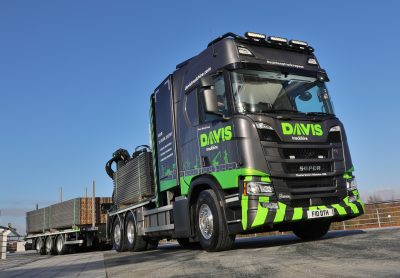
Each new Scania is mounted with a 3.5m flatbed body built by PMH Coachbuilders, together with a Palfinger crane and subframe to enable loading and unloading in any location. It operates with an SDC tri-axle flatbed trailer with the full combination purpose-designed to transport 3m-long aluminium trackway panels nationwide.

The trucks feature a striking livery applied by CubeWraps using 3M IJ180mC film for a metallic paint-like effect and finished with overlaid reflective logos for 24/7 visibility.

Each vehicle will operate Monday to Friday and will likely cover 500-600km per week. With driver comfort in mind, a crew welfare pod has been mounted behind each cab featuring a toilet, shower, bunk beds, fridge, microwave and coffee machine.

Founded in 2010, Davis Trackhire is a UK-wide company owned and operated by Blake Davis and his brother Travis. It has one depot in Newmains and another in Retford, which together hold stock of 10,000 heavy duty trackway panels.

Integration key to harnessing technology gains

Stefan Spendrup, Vice-President of Sales Northern and Western Europe at SOTI, discusses whether poor integration could be ruining the benefits of mobile technology within your organisation.

Around the world, mobile and Internet connected technologies have become even more integral to the way we live and do business than before the pandemic. For enterprises, this has presented both a challenge and an opportunity.

The challenge is to meet these changing customer expectations and adapt to an increasingly volatile socio-economic climate with the right technologies and the right customer experiences, at the same time as preparing for the future. Change and disruption also brings opportunity for those who can see mobility as an enabler, rather than an obstacle. In a recent SOTI Global Survey of enterprise leaders, more than two-thirds (67%) said the mobile technology their organisation had invested in had provided a positive return on investment (ROI).

But many organisations are finding themselves having to quickly adapt to the rise in mobile technology, and poor integration is destroying any benefits they might see. While more than half (57%) of enterprises have invested in mobile technology or mobile security in the last year, the ‘A Defining Year: State of Mobility 2021 Report’ found that 56% of enterprise leaders admit their technology is either only partially integrated or not at all which is holding their businesses back.

2021 has been a year of rapid change. A mobility revolution has driven business growth and become a necessity to business continuity in the face of lockdowns and social distancing. The GSMA predicts that mobile operators will invest $900 billion USD between 2020 and 2025 worldwide in upgrading their services to meet ballooning demand for mobile connections and technology.

SOTI’s global research sought to understand the impact of mobile technology over the last year as well as how organisations can position themselves at the forefront of the post-pandemic mobile revolution. 1,400 business leaders were interviewed from enterprises in eight countries across three continents, including the UK.

Thriving or Surviving?

The research discovered that more than three quarters (79%) of enterprise leaders agree their organisation’s C-Suite realises the importance of mobile tech much more now than before the start of the COVID-19 pandemic, indicating that it’s climbed up the boardroom agenda. This is an important initial step, as it’s impossible to initiate change without buy-in from the top.

Yet it hasn’t all been smooth sailing. More than half (56%) said that their organisation’s portfolio of mobile devices has grown but managing the increased number of devices is proving difficult, indicating these businesses might not have the right device management technology in place – or they have nothing at all.

In fact, many existing tools don’t adequately help organisations troubleshoot device issues or help to manage the devices. This leads to increased downtime, a loss in productivity and likely a loss in revenue as well.

Meanwhile, 45% say that their organisation is not using mobile technology to help it adjust well to the challenges of the post-pandemic marketplace. The challenge for these companies is to fully integrate mobile technology into their core workflows to capitalise on the technology’s potential to provide flexibility and intelligence across the whole enterprise.

The scope of this challenge is revealed in the answers given about aspirations and goals for the near future. More than two-thirds (68%) agree that their company needs better business intelligence to navigate future unforeseen issues. Two-thirds (67%) also think they need better tools to diagnose issues before they become a problem. Almost half (43%) would like to improve their ability to monitor data analytics.

Life Beyond the Pandemic

The pandemic, lockdown and subsequent changes in consumer behaviour have accelerated the digital transformation of business by up to six years. Businesses are now faced with the prospect of a post-pandemic marketplace that is more fluid, more digital, more dynamic and marked by a rise in consumer demands. Supply chain issues and staff shortages are causing the UK’s economic growth to slow, and there are no immediate signs that these problems are coming to an end. Now more than ever, we need the efficiency provided by properly integrated mobile technology.

The mobility revolution has scaled rapidly across all areas of businesses as they train for, adapt to, roll out and manage enterprise mobility. To prevent growing pains and ensure maximum uptime and productivity, as well as the best user experience, enterprises need to integrate and manage multiple form factors, operating systems and legacy systems.

This is echoed in the findings, with enterprise leaders saying their companies need the following, post-pandemic:

  • Better data analytics, troubleshooting and issue resolution — 69%
  • Better business intelligence to help navigate future unforeseen issues — 68%
  • Better tools to diagnose issues before they become a problem — 67%
  • Improved security and user authentication across all mobile devices — 67%
  • Ways to better manage their expanded portfolio of mobile devices — 56%

Looking to the Future

In the immediate future, it looks like the recent pace of change for mobile technology will continue. Over the next 12 months, more than two-thirds (71%) of organisations are considering increasing their expenditure in mobile devices, systems and/or security, while more than half (56%) of organisations are considering increasing their expenditure on technology for better device and system integration and/or replacing legacy systems.

However, there are still significant efficiency and cost gains to be made by better integrating these technologies into workflows, employee practices and the customer experience. It’s vital that every organisation and every technology leader takes an urgent look at their mobile and internet connected technologies, to ensure they are not burning through any of the gains they could be making through poor integration.

In the transport and logistics industry, for example, recent SOTI research found that 46% of T&L companies with a mobile-first strategy say it has enabled them to gain visibility into critical aspects of their supply chain. However, those that have failed to invest in technology have struggled and 37% of T&L companies with outdated tech said they were prevented from sufficiently upscaling during the pandemic.

It’s important that any investment is considered and properly prepared for, rather than being a knee-jerk reaction. When decision-makers are in a rush to bring in new technology, they often fail to integrate the old and the new effectively. Every organisation will have legacy systems in place and the instinct should not be to simply discard or disown them in favour of something shiny and new.

At a time when enterprises are threatened with delays and disruptions, investment into resilience and innovation is vital, but having the care and consideration to integrate old and new mobility technology will become the key to business success.

Fronius offers smart network solution for battery chargers

Digital networking is taking great leaps forward in intralogistics, including in the operation of electric forklift trucks. In Charge & Connect, Fronius Perfect Charging offers a software solution that networks the charging infrastructure and enables industrially secure data transfer in real time. Users benefit from greater transparency and control of the entire charging infrastructure, giving them the power to boost the efficiency of their intralogistics.

Monitoring and managing the processes involved in charging traction batteries poses a challenge for many forklift truck operators. They often lack an overview of truck availability and current power consumption, particularly in the case of large fleets. Charge & Connect is the intelligent solution from Fronius: networking Selectiva battery chargers makes it possible to log and analyse all the relevant charging data and visualise it in a clearly arranged dashboard. The result? A range of options for users to boost intralogistics performance and reduce costs.

Cross-location, central overview

Charge & Connect displays information such as the state of charge of the connected batteries, energy consumption and the battery charger status. The user benefits from a central overview across several locations and can see where charging processes can be improved. Extensive analysis functions make it possible to find and rectify operating and application errors.

Real-time status monitoring

This software solution from Fronius Perfect Charging also helps operators to reduce downtime among their forklift truck fleets. For instance, if the charging infrastructure develops an error or fault, Charge & Connect will automatically send a push notification to the contact saved in the system. A detailed description of the error including step-by-step instructions on how to rectify it mean problems can be addressed before they result in expensive downtime or lifecycle costs.

Sustainable cost optimisation

The system also collates statistics that can be opened and viewed at any time, providing added benefits. Data from the networked charging infrastructure is analysed in the system and presented in an informative way. The statistics can be used to see whether the ideal number of traction batteries is being used, whether potential savings could be made, etc. The long-term view showing battery charger performance also helps to ascertain whether and when expensive load peaks occur. This data can be used to introduce optimisation steps and reduce energy costs.


TEST CAMP INTRALOGISTICS concludes successfully

Fifty-one innovations, 950 participants over six days, daily highlight tours and a top-class congress programme with panel discussions – the IFOY TEST DAYS and the TEST CAMP INTRALOGISTICS came to a successful end on Wednesday evening in Dortmund.

Fourteen products and solutions from 12 companies nominated for an International Intralogistics and Forklift Truck of the Year Award (IFOY AWARD) underwent six days of multi-level testing. Among them were new developments from Cargotec Engineering, Jungheinrich, Locus Robotics, Magment, NAiSE, Noyes Technologies, robominds, SICK, SSI SCHÄFER, STILL, stow robotics and SYNAOS.

These and numerous other companies took the opportunity to present their total of 51 innovations to potential customers at the TEST CAMP INTRALOGISTICS from March 21 to 23. The B2B visitors – most of them in management positions in logistics, industry and trade – travelled to the Ruhr metropolis for hands-on testing as well as intensive networking discussions without the hustle and bustle of the trade fair in the more than 10,000 square metre hall of IFOY partner Messe Dortmund. From forklift trucks and warehouse technology equipment to AGVs (Automated Guided Vehicles), software, specials and robotic solutions, numerous devices and solutions were available in the test arena.

The talks revolved primarily around the topics of innovation and sustainability. The IFOY organisation also made sustainability a principle and took a number of measures to effectively conserve resources. The focus was on reusability and recycling, the use of regenerative energies and, above all, the fundamental renunciation of equipment that was not absolutely necessary. The declared aim was to launch a new, sustainable event format in logistics.

The congress programme celebrated its premiere this year with prominent panel discussions on the trend topics of innovation management, Intralogistics 4.0 and VDA 5050. The keynote on the opening day was given by the internationally renowned logistics researcher Prof. Dr. Dr. h.c. Michael ten Hompel (Fraunhofer IML) on the topic of “How innovations change logistics”.

From March 18 to 23, the nominees in the 10th round of the competition were critically analysed by an official tester, a team of researchers and the international IFOY jury. On Tuesday, representatives of the total of 12 manufacturers received the “Best in Intralogistics” certificates from the hands of Steffen Bersch, the new Chairman of the Board of the VDMA Materials Handling and Intralogistics Association.

The IFOY audit for the nominees again consisted of three parts again this year. First, all the trucks underwent the IFOY test conducted by Dutch intralogistics expert Theo Egberts. In this process, the finalists in each category are not compared with each other, but with the relevant equipment in the competition. The industrial trucks underwent standardised driving and functional tests, including the IFOY test protocol comprising more than 80 criteria, which takes into account factors such as sustainability, cost-effectiveness, safety and ergonomics of the nominees.

In the second part of the audit, researchers conducted the IFOY Innovation Check. Scientists from the Dortmund Fraunhofer Institute for Material Flow and Logistics (IML), the Chair of Technical Logistics at the University of Dresden, the Chair of Materials Handling Material Flow Logistics at the Technical University of Munich and the Stuttgart Fraunhofer Institute for Manufacturing Engineering and Automation IPA assessed the nominees in terms of market relevance, customer benefits, type of design and degree of innovation. The audit was concluded by the assessment of the 25 jurors and their approved advisors. The jury members – trade journalists from all continents, with the UK represented by Logistics Business News Editor Peter MacLeod –  were handed all the results of the IFOY test as well as the IFOY Innovation Check for the voting.

The TEST CAMP INTRALOGISTICS also included a revival of the AGV Mesh-Up initiated by the VDMA Materials Handling and Intralogistics Association and its member companies. Following the world premiere of the first live test of the VDA 5050 communication interface in the previous year, the 2022 test scenario was relaunched and once again gave B2B visitors the opportunity to observe the functions of Automated Guided Vehicles (AGVs) for themselves and to exchange ideas with developers and scientists. This year, not only some new manufacturers participated in the AGV Mesh-Up, but also extended functionalities of the communication interface were presented. Participants in the AGV Mesh-Up were the companies DS AUTOMOTION, ek robotics, Fraunhofer IML, incubed IT, Omron Electronics, SAFELOG, Siemens and SYNAOS.

Neither the participants of the TEST CAMP INTRALOGISTICS nor the nominees will be told who has won an IFOY AWARD during the IFOY TEST DAYS. They will have to wait until the IFOY AWARD Night on June 30, 2022, which will take place this year in Munich.


Hines sells “mission-critical” Royal Mail warehouse

Global real estate firm Hines has announced the sale of the Royal Mail sorting warehouse in Edinburgh. The industrial building was acquired in 2019 by a fund sponsored by Hines and has been sold to ICG Real Estate for an undisclosed price.

The 215,745 sq ft mission-critical facility is located in Edinburgh’s Sighthill Industrial Estate adjacent to Hermiston Gait Retail Park. Approximately 700 staff are based at the facility with over 900,000 letters and 45,000 parcels handled there daily.

“Logistics remains a hugely important sector for Hines in the UK and Royal Mail’s sorting warehouse is a great example that we are not afraid to consider tactical sales while looking to redeploy capital into more accretive opportunities,” said Greg Cooper, Managing Director at Hines.

Chad Brown, Managing Director at ICG Real Estate commented: “We’re pleased to have acquired this well located and highly mission-critical asset. The investment underlines our ongoing belief in the logistics market’s robust occupational tailwinds with the firm eager to deploy further capital in the sector across Europe.”

ICG was advised by Knight Frank and Marchmont Investment Management.


Subscribe

Get notified about New Episodes of our Podcast, New Magazine Issues and stay updated with our Weekly Newsletter.