Flowlity secures funding to aid European expansion

Flowlity, an innovative AI-based supply chain planning and forecasting solution, has secured over £4m in funding, led by Fortino Capital, to expand throughout Europe.

The funding will be used to accelerate its development with the aim to becoming an industry leader by providing innovate ways of reducing waste across the entire supply chain – enabling companies to save money and reduce their carbon footprint.

Armed with its innovative AI-based tool, Flowlity is already working with several companies in the manufacturing and retail sectors, such as Saint-Gobain, Miba, and Bosch. For La Redoute, the software has already led to an inventory reduction of 40% and at e-commerce retailer Camif, stock shortages have reduced by 10%.

In today’s world, traditional JIT (Just-in-time) models are not robust enough to handle increasingly frequent supply chain disruptions. COVID has demonstrated the importance of supply chain planning to manufacturers and the general public around the world, but it has also highlighted a host of problems, including raw materials shortages and increasing lead times. Around $2tr are lost every year as a result of overstocking or shortages, all caused by the use of obsolete forecasting models.

Intending to provide an effective response to the challenges, Flowlity has come to the fold with a new planning and stock optimisation methodology called ‘Resilient Planning’. The solution allows supply chain planners to capture market volatility and react to disruptions in an agile and effective way.

Jean-Baptiste Clouard, CEO at Flowlity, said: “Thanks to support from Fortino Capital, OSS Ventures and 42Cap, we will be able to work with more European companies in their planning challenges to help them to reduce scrap and waste and to reduce their carbon footprint.”

Filip Van Innis, Investment Director at Fortino Capital, said: “We believe Flowlity has a clear strategic focus and an experienced team to accelerate the transformation and digitalisation of supply chain optimisation models across Europe and thereby facilitate a more robust economy.”

Alexander Meyer, Partner at 42Cap, a Munich-based seed investor, said: “We are delighted to continue to support Flowlity in their European expansion. Since they first launched, we have believed in the power of their platform and their growth potential.”

2021 was a good year for Flowlity, – as well as featuring among the winners at the 23rd edition of the iLab Innovation Competition, it also expanded internationally by signing the first cross-Atlantic contract and doubling its client portfolio.

Building on 100%+ growth, Flowlity is continuing its rise in 2022 and is welcoming Peter Schram, former Senior Director Analyst at Gartner, and Edouard Fourcade, former Managing Director EMEA at Anaplan, to the board. To achieve the business objectives, it hopes to expand its current team of 30 employees to around 50 by the end of the year.


Alaska Air Cargo selects iCargo software

IBS Software, a worldwide leader of SaaS solutions to the travel industry, has signed a long-term agreement with Alaska Air Cargo to transform and modernise its air cargo IT ecosystem. IBS Software will implement its full suite cargo management solution across the air cargo business of Alaska Airlines.

iCargo will digitally transform Alaska Air Cargo’s sales & inventory, cargo terminal operations, air mail handling and revenue accounting, and mobile applications. Additionally, iCargo will enable the airline to have an end-to-end view of its air cargo value chain activities and provide important operational insights across the entire network.

The enhanced messaging and communication capabilities of iCargo will also ensure that Alaska Air Cargo can connect seamlessly with customers and partners in near real-time for better collaboration, resulting in faster decisions and better business outcomes.

“Selecting IBS Software’s iCargo was a strategic decision, and part of our digital transformation programme,” said Adam Drouhard, managing director, Alaska Air Cargo “This fully integrated solution will allow us to re-imagine and deliver a truly digital air cargo ecosystem of solutions to our employees, while creating a seamless business experience for our customers.”

“IBS Software is proud to partner with Alaska Air Cargo and be part of its digital cargo transformation. We welcome Alaska Air Cargo to the growing iCargo family of airlines and ground handlers and believe it’s the start of a great journey for both of our companies,” said Sam Shukla, Vice President of The Americas Region at IBS Software.

Berkshire Grey forms UK partnership with Tessiant

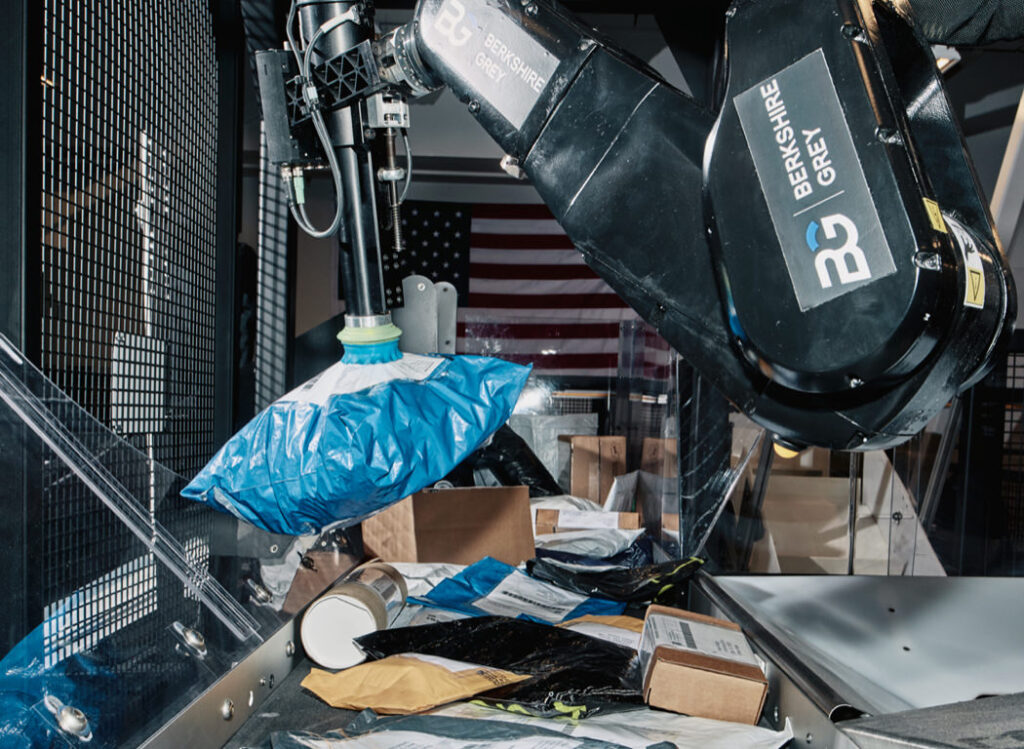
Berkshire Grey Inc., a leader in AI-enabled robotic solutions that automate supply chain processes, and Tessiant, a leading change and transformation consultancy, have announced their partnership to help transform supply chain operations through intelligent robotic automation of eCommerce fulfilment, store replenishment, package handling and logistics. Together, the two companies will give UK retailers access to the most advanced AI-enabled robotic solutions designed to meet consumer expectations for on-demand order fulfilment.

“Berkshire Grey’s portfolio of Intelligent Enterprise Robotic (IER) solutions is what many UK retailers are searching for during this confluence of challenges including the eCommerce boom, labour shortages and rising consumer expectations,” said Anna Barsby, Managing Partner at Tessiant. “We are excited to partner with Berkshire Grey to help our clients overcome these issues and improve supply chain operations with AI-enabled robotics.”

Labour shortages are pervasive throughout Europe, with the number of job vacancies in the UK alone rising to a new record of 1.3 million in January 2022. This is further compounded by ever-increasing consumer demands for instantaneous order fulfilment and lingering COVID issues. Supply chain leaders are under more pressure than ever to find new solutions that increase efficiency and order processing throughput in eCommerce fulfilment, store replenishment and package handling.

With the launch of this partnership, UK companies will now have access to Berkshire Grey’s extensive robotic solutions and services including design, installation, testing and commissioning, and continued support leveraging cloud-based AI solutions for predictive maintenance, management of system operations, analytics and integration.

“We look forward to working side-by-side with Tessiant to advise the top retailers and eCommerce providers in the UK on how to leverage AI-enabled robotic solutions that can help them transform their supply chain,” said Neil Berry, Senior Vice President and General Manager for EMEA at Berkshire Grey. “Berkshire Grey and Tessiant both believe robotics are essential to help retailers stay competitive amid the growing market challenges, and we’re happy to partner with them to bring unique solutions to their network of clients.”

With this partnership, Tessiant will join Berkshire Grey’s Partner Alliance (BGPA) programme as a Consulting Partner. The BGPA programme includes a select group of strategic partners that provide customers across the retail, eCommerce, 3PL, grocery, and package handling industries with scalable robotic solutions developed to improve fulfilment throughput while driving down operational costs. The BGPA programme consists of market-leading consultants, integrators, technology providers and material handling leaders dedicated to providing value-added, AI-enabled robotic solutions to customers.

Siemens collaborates to produce smart AGVs

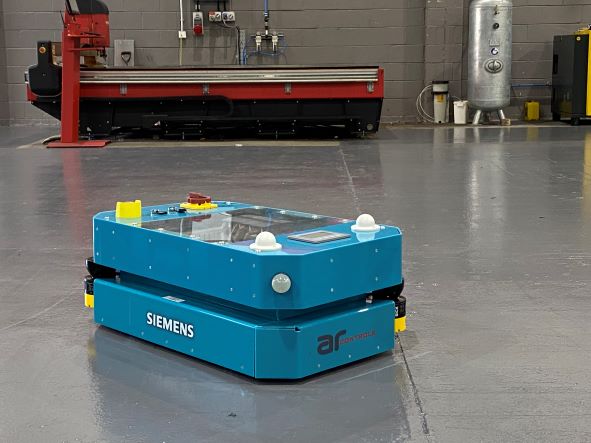
Siemens has partnered with UK-based Parmley Graham and AR Controls to produce smart automated guided vehicles (AGVs) to meet the growing demand across industries.

At the heart of the innovation is the Siemens AGV kit, which includes SIMOVE, a standardised system platform for AGV applications and solutions to suit any customer across industries, and the SIMATIC MICRO-DRIVE, a versatile, seamless, and safety-related servo drive system that covers a wide range of applications in the protective extra-low voltage range (24-48V DC). Servo drives are used extensively when building AGVs. These compatible controllers from the SIMATIC portfolios optimally complement the motion control functionalities of this future-proof solution.

The design, build and manufacture of the AGVs are a result of collaboration with Gateshead-based Parmley Graham, leaders in industrial automation, and Sunderland-based AR Controls, experts in integration and robotics. Parmley Graham is working collaboratively to support the project through the provision of hardware specifications, organising of kit-formed bills of material, and sourcing of other third-party products for the AGVs. AR Controls is using its wealth of experience to design and build this new range of AGV.

The collaboration comes at a time when the demand for AGVs is increasing. The pandemic put many industries into disarray, especially the logistics industry that struggled to get essentials to consumers during lockdowns and border closings. Manufacturers across industries had to rethink and look towards efficient processes in warehousing, moving goods internally within the factory, and deal with labour shortages from both the pandemic and Brexit.

AGVs bring a wealth of benefits including improved warehousing efficiency and streamlined logistics management, lower labour costs, faster delivery, and reduced risk of workplace injury. They can also be integrated to achieve digitalisation and Smart Factory goals.

The alliance aims to target the exponential growth in the global AGV market, which is expected to almost double to $3.72bn by 2028.

The partnership builds on its success providing hundreds of AGV kits to a major auto manufacturer, which has a production plant in the North.

Commenting on the partnership Brian Holliday, Managing Director, Siemens Digital Industries, said: “The UK supply chain market is growing exponentially, and most manufacturers are now investing in technologies to boost their own logistics. AGVs are a crucial part of this investment.

“Partners like Parmley Graham that have a legacy in automation were well equipped with the right technologies and experience to deliver AGVs to the automotive manufacturer. It is also a testimony that given an opportunity, innovation can help generate new income streams for businesses in these testing times.”

Nick Wilson, Managing Director, Parmley Graham, said: “We work in partnership with organisations across a wide spectrum of industries. This collaboration helped produce the AGVs for a burgeoning need to meet efficiencies in warehousing, intralogistics, and logistics across many industries.

“Our experienced engineering team regularly delivers innovative solutions, training, and support that is tailored to the diverse needs of our varied customer base. We take our initiatives seriously and have appointed a project manager to oversee the production of the AGVs. We will be able to deliver bespoke solutions for AGVs to a range of customers in the pharmaceutical, food and drink and logistic industries”

Andy Ramsey, Company Founder and Managing Director, AR Controls, said: “We have a portfolio of automotive manufacturers for who we provide services like sensing, position control, visual inspection, machine safety, audio-indent, robotics, drives and programmable logic control so partnering with Siemens and Parmley Graham to produce AGVs is a very exciting project for us. We look forward to a fruitful outcome of this alliance.

Everysens joins Rail Freight Group

Everysens has become a new member of Rail Freight Group (RFG), the representative body for rail freight in the UK. Members include rail freight operators, logistics companies, ports, equipment suppliers, property developers and support services, as well as retailers, construction companies and other customers.

RFGs’ aim is to increase the volume of goods moved by rail. It works to promote rail freight in a variety of environments, highlight the benefits of using rail freight and to communicate the sector’s successes.

Youness Lemrabet, CEO of Everysens, says: “We at Everysens are delighted to be joining RFG. We are aware of the key role that rail freight has to play in creating an emission-free supply chain, and are therefore happy to join an association that shares our long-term view.”

Sabrina Meksaoui, Chief Revenue Officer at Everysens, stresses: “Trains emit up to nine times less CO2 and particulate matter emissions than road transport. Knowing this, we are excited to be collaborating with RFG, who are making sure that railway and Government policy supports the rail freight sector.”

In addition, as a new member of this group, Everysens will be presenting its concrete client results during the RFG meeting sponsored by Knorr Bremse. This event will take place on Thursday March 10th at the offices of Digital Catapult in London.


TEST CAMP INTRALOGISTICS: Sustainability as a principle

TEST CAMP INTRALOGISTICS is breaking new ground in the event business. When the testing event, which takes place from March 21 to 23 as part of the TEST DAYS of the IFOY AWARD at Messe Dortmund, opens its doors for the third time, it is no longer just about hands-on testing of the best intralogistics innovations. A highlight of TEST CAMP INTRALOGISTICS is likely to be a panel debate entitled Intralogistics 4.0, featuring top-drawer industry experts and moderated by Logistics Business’s News Editor Peter MacLeod.

The organiser has made sustainability a principle and taken a series of measures to effectively conserve resources. The focus is on reusability and recycling, the use of regenerative energies and, above all, the fundamental renunciation of equipment that is not absolutely necessary. The aim is to launch a new, sustainable event format in logistics.

“Everyone knows that the material battles of the past no longer fit the times,” emphasises Anita Würmser, Chairwoman of the IFOY AWARD jury, adding: “We don’t want to continue building for the bin, but create awareness that things can be done differently. That’s why we are consistently moving in the direction of environmental sustainability and want to add a new, sustainable format to the event landscape.

“The focus of TEST CAMP INTRALOGISTICS is on innovation, not decoration. I am convinced that with our focus on innovation and sustainability we are preaching to the logistics industry. Both visitors and the exhibiting companies and service providers will benefit from our measures: they will improve their own environmental balance sheet and that of their companies.”

In the area of reusability and recycling, the organiser relies, among other things, on a modular reusable booth concept. Individual booth construction is not permitted and only technically necessary equipment is located on the test areas. Only reusable aluminium trusses are used for the standardised company boxes. The modular booth system and its entire equipment, including LED lighting, company branding and rental furniture, is standardised and can be used as often as desired.

Sturdy grids are used to demarcate the driving areas, and reusable Chep pallets and containers are available for test drives. The event carpet is completely granulated after use and then reused as a secondary raw material. Trusses are also used on the main area in the congress area, and the trailer stage of the IFOY AWARD was planned on a trailer from the manufacturer Fliegl.

The organisation of event logistics from a single source ensures short distances and efficient transport, minimum water consumption and maximum conservation of resources. The central control of the material logistics for the assembly of the test areas and boxes shortens the assembly in the 10,000 sq m hall, which is fully booked, to one and a half days, and the dismantling is completed in only four hours.

The catering is also centrally organised. Exhibitors and guests use the hall restaurant for catering. Individual catering in the booth and disposable crockery are prohibited.

A big plus is the accessibility of the location. The official event hotel Mercure on the exhibition grounds is within walking distance of the hall, as is the Westfalenhallen underground station. The hotel also participates in the Planet 21 sustainability programme. Furthermore, 100 percent of the energy for the TEST CAMP comes from green electricity.

The choice of the 2021 venue already paid off in terms of the IFOY organisation’s environmental goals. As early as 2006, the Westfalenhallen was certified as an environmentally friendly eco-profit company. They have also supported the sustainability code “fairpflichtet” of the German event industry since 2014.

Four exhibition halls, including Hall 3 used by the TEST CAMP, are equipped with a photovoltaic system. Eurosolar awarded the Westfallenhallen the “European Solar Award” in 2005 in the category “owner or operator of photovoltaic systems”.

In recent years, the Westfalenhallen group of companies has implemented numerous individual measures to use energy sparingly. These include: the installation of block-type thermal power stations, the installation and use of heat recovery systems, a roof renewal with thermal insulation as well as the conversion of the ventilation control in all halls to carbon dioxide sensor technology.

The TEST CAMP INTRALOGISTICS takes place as part of the IFOY TEST DAYS of the International Intralogistics and Forklift Truck of the Year (IFOY) AWARD. It enables intralogistics decision-makers to experience innovations live and test them themselves. In addition to the 14 products and solutions of the IFOY finalists, a limited number of third-party exhibitors with innovations will be admitted for the first time. The exhibitors cover the entire spectrum of material handling – from forklifts to autonomous mobile robots (AMR) and software to holistic automation projects for high-performance warehouses.

New this year is a conference programme with panel discussions on the trend topics of innovation management, Intralogistics 4.0 and VDA 5050. A new edition of the live test of the VDA 5050 communication interface as part of the VDMA AGV Mesh-Up is also in preparation.

For the key note on the opening day, the organisers are able to welcome the internationally renowned logistics researcher Prof. Dr. Dr. h.c. Michael ten Hompel (Fraunhofer IML). National and international experts have agreed to take part in the daily panel discussions:

Panel Discussion on March 21: Without bankruptcies, bad luck and breakdowns: How companies successfully introduce intralogistics innovations. Participants: André Kranke

(Dachser), Prof. Dr. Thorsten Schmidt (TU Dresden, IFOY Innovation Check), Marco Prüglmeier (Noyes Technologies) and Dr. Jana Jost (Fraunhofer IML, moderator).

Panel Discussion on March 22: Intralogistics 4.0. Participants: Steffen Bersch (SSI Schäfer/VDMA), Jos de Vuyst (stow Group/FEM), Thomas Vortkamp (DB Schenker) Wolfgang Hillinger (DS Automotion) and Peter MacLeod (Logistics Business News Editor, IFOY juror, moderator).

VDMA Panel Discussion on March 23: VDA 5050 – status quo and future of the communication interface. Participants: Dr. Wolfgang Hackenberg (SYNAOS), Mathias Behounek, (SAFELOG), Alexander Balandin (Robert Bosch), Dr. Christian Reinema (Volkswagen Commercial Vehicles), Jan Drömer (ek robotics/VDMA, moderator).

 

FourKites unveils net zero initiative

Real-time supply chain visibility platform FourKites has announced a new Net Zero initiative to help the world’s leading companies achieve their organisational goals to reduce supply chain emissions. As part of this announcement, FourKites unveiled Sustainability Hub, a suite of analytics tools to provide better visibility into resource consumption and waste generation; a new Sustainability Advisory Board; and ongoing original research around sustainability.

Sustainability Hub is the latest phase of FourKites’ ongoing focus to help companies scale sustainability efforts through technology and collaboration. The platform will include new tools and capabilities that enable customers to:

  • Input their sustainability goals and more accurately track saved emissions
  • Benchmark progress against industry averages based on organisational goals and anonymised industry data
  • Drill down into additional load-level details to better pinpoint opportunities for optimisation
  • Track progress via a single summary dashboard
  • Use analytics and scenario modelling to surface new insights for emissions reductions

Sustainability Hub builds on the company’s industry-first Sustainability Dashboards, a free solution that allows companies to identify specific areas within their supply chains that are contributing high levels of greenhouse gas emissions so that they can develop more effective sustainability strategies.

The announcement coincides with FourKites’ 2022 Global Supply Chain Sustainability Summit that is bringing together more than 4,000 supply chain executives and sustainability thought leaders from organisations including Sony, AB InBev, DHL, Future Planet, Volvo Group and others, to discuss how to drive positive environmental impact through supply chain transformation.

According to Gartner*, “We cannot scale the sustainability agenda without technology. CSCOs expect the focus on digitalisation to increase. Seventy-two percent stated that enterprises will continue to digitise and integrate new technologies, meaning supply chains will have to continuously adapt.”

To that end, FourKites has continued to drive innovation in the industry and facilitate discussion among key stakeholders across the industry in order to help companies meet their long-term sustainability goals.

“We started using FourKites years ago because we knew it was important to have visibility in transit,” said Paul Avampato, Head of International Logistics for Laundry and Home Care at Henkel. “Now we’re using that data to drive efficiencies in our supply chain and help achieve our sustainability goals.”

Sustainability Hub is the latest component of FourKites’ multi-faceted strategy to help customers achieve their sustainability goals. Other programmes and solutions include:

  • Dynamic Yard, a new category of software that connects traditional, siloed yard management software with FourKites’ real-time supply chain data and predictive ETAs to provide insight into driver detention patterns, labour efficiency and more to reduce dwell and inform carbon reduction strategies. In the last quarter of 2021, customers who used Dynamic Yard emitted 20% fewer carbon emissions than non-Dynamic Yard users through reductions in truck idle times.
  • FourKites Sustainability Center of Excellence, a thought leadership council dedicated to promoting sustainability throughout the end-to-end supply chain via actionable, data-driven strategies.

“Sustainability is a core tenet of our philosophy at FourKites, and we are hyper-focused on enabling our Fortune 1000 customers to embed sustainability throughout every level of their supply chain,” said FourKites Founder and CEO Mathew Elenjickal. “I am incredibly proud of our team for driving the sustainability agenda for the industry and helping our customers make a meaningful impact on the environment.”

* Gartner, “CSCO Response to Environmental Sustainability Trends for Supply Chain in 2022,” Sarah Watt, Laura Rainier, Heather Wheatley, Simon Bailey, Andrew Stevens, Kristin Moyer. Published 24 January 2022.

GenieGrips adds Stik-It Pads to its range

GenieGrips Pty Ltd, the Melbourne, Australia-based maker of high quality, durable, forklift safety products, has added GenieGrips Stik-It Pads to its range of products.

GenieGrips Stik-It Pads are a slim, patterned anti-slip pad that protects products and minimises the risk of slipping loads. They are a self-adhesive solution to protecting product reducing risk of injury or damage. Sitting within the footprint of the forklift tyne, their low profile allows them into the smallest of openings.

GenieGrips Stik-It Pads are extremely easy to fit, with high performance acrylic adhesive tape to secure them to the forks. GenieGrips Stik-It Pads are available in one size and can be trimmed or joined together to accommodate different lengths and widths to fit most forktynes.

“Team is going well. It’s a good product. I would not have had to buy more until next year, but we had extra requirements not planned for,” said Simon Richards, IT/Traceability, West Gate Tunnel Project. “Even though they have 14t on them, all day long, they last a long time. Damage reduction means savings of thousands of dollars.”

GenieGrips Pty Ltd will be exhibiting at MODEX in Atlanta, Georgia, US Booth B8247 28th-31st March. This will provide the perfect opportunity for new and existing customers to see the range of innovative GenieGrips products.


Linde adds robotic trucks to automation portfolio

Autonomous transport vehicles open up great opportunities for even more efficient in-house logistics; with its Linde C-MATIC mobile robots, Linde Material Handling is expanding its extensive portfolio of automated solutions with three compact, agile and flexibly deployable logistics helpers for horizontal goods movements in warehouses and production.

Industrial robots that autonomously lift and move loads and navigate using QR codes have been in use for over a decade. But it is only now that many companies are discovering the benefits of these compact vehicles for their in-house material flow.

“Strong online commerce, on-going staff shortages, increasing goods movement in warehouses and production, and growing safety requirements to prevent personal injury and property damage have businesses looking for smart solutions to these challenges. Here the growing range of automated and autonomous systems comes in very handy for many companies,” says Philipp Stephan, Product Manager Automation & Intralogistics Solutions.

The new, compact and highly manoeuvrable Linde C-MATIC transport robots can handle maximum loads of 600, 1,000 and 1,500 kilograms even faster and with more agility. The “platforms on wheels”, which are around one meter long and just under one meter wide, can both turn on the spot and rotate the picked-up load. This means they require little space for driving or turning manoeuvres and are suitable for cramped warehouse layouts.

“The vehicles can be used in an extremely wide range of applications: They transport automotive components to modern production lines, they move building materials, spare parts, paper or clothing on pallets or in wire mesh crates through the warehouse, or bring ‘goods to people’, thus following a picking concept practiced primarily in online retailing,” says product expert Stephan, describing the situation.

Load pickup via table or pallet

The autonomous platform vehicles can pick up loads in two different ways: First, via a transport table that they can drive underneath, on which the goods, a pallet or a wire mesh crate are placed. Positioned underneath the table centre, a QR code ensures that the transported goods are not only picked up centrally and aligned correctly but can also be clearly identified. This means that the goods and their path through the facility can be tracked. Secondly, the transport robot can pick up the pallet directly or via a permanently mounted adapter plate from a transfer station or roller conveyor.

Goods handling is fully automatic: The Linde C-MATIC moves to a defined transfer point and places the surface of the load handling device centrally underneath the transport table or under the pallet positioned in a transfer rack. The cart then lifts the load and brings it to the designated staging area at a speed of up to 7.2km/h.

Navigation through the surrounding area is also accomplished via QR codes placed in a grid pattern on the floor and read by the QR camera installed on the vehicle. The transport robots receive information about the destination located at a short to medium distance from the warehouse management system, e.g. the “Linde Warehouse Navigator”. The vehicle’s software determines the optimal route through the building for each individual transport job.

A laser scanner ensures the reliable detection of moving or stationary obstacles. Thanks to real-time information processing, the Linde C-MATIC adapts its speed to the respective situation and remains stationary until people and vehicles have left the monitored zone. The vehicle automatically avoids fixed obstacles. It also issues visual and acoustic warning signals. Separate emergency stop switches on all four sides allow manual intervention. The mechanical shock absorbers fitted all around protect the vehicle from collision damage.

Wide variety of applications

The most common application is line transport between two points. But the transport robots can also interact with other autonomous or automated vehicles such as narrow-aisle trucks, reach trucks or pallet stackers by setting down or picking up goods at defined transfer points.

Charging of the lithium-ion battery is software-controlled: If the charge falls below a defined level or if there is currently no driving job to be carried out, the C-MATIC moves to the self-charging station and waits there for the next job.


Cooperative Logistics Network now offering e-learning

The Cooperative Logistics Network – an international alliance of more than 320 hand-picked freight forwarders – has launched its Online Logistics Academy. To this end, the E-Learning Platform has been inaugurated with two courses specialised in international logistics and freight forwarding and a SOC Masterclass focused on Shipper Owned Containers.

The programmes will allow members to learn and execute complicated supply chain processes, enhance their knowledge of logistics tools, and prepare themselves to effectively deal with the present challenges in the industry.

In order to offer the best quality education, The Cooperative has established a partnership with The Canadian International Freight Forwarders Association- an organisation with over six decades of experience in education. Additionally, The Coop has also cooperated with Container xChange – a neutral platform connecting hundreds of logistics companies – that provides a broad range of online educational course materials to help freight forwarders get a better knowledge of container leasing.

“The future of the freight forwarding sector is constantly evolving. In this age of digitisation, it is crucial for small and mid-sized logistics companies to work towards upskilling and expanding their knowledge base. By offering these specially formulated courses, The Cooperative gives its members an additional service for them to be more competitive, enhance their productivity and boost their earning potential,” states Antonio Torres, President and Founder of The Cooperative Logistics Network.

The courses are both meant for professionals working in the field of transportation and logistics who want to broaden their industry knowledge and sharpen their skills and newcomers who want the perfect start to their journey in this industry.

The Cooperative agents will get to attend two levels of freight forwarding courses provided by CIFFA and designed by the Schulich Executive Education Centre (SEEC). The first course, International Transportation and Trade, is meant for those agents who want to master the foundations of global freight forwarding, risk management, quotations, and freight costs. The second course, Essentials of Freight Forwarding, will train members on basic topics such as packaging, documentation, cargo insurance or cargo security.

These training programmes can be completed at the students’ suitable pace. within three months CIFFA will provide with interactive classes, audio, video lessons, and a downloadable e-book.

In addition to these courses, The Cooperative Logistics Network offers the SOC Container Masterclass offered by xChange which is an all-inclusive training regarding the handling of Shipper Owned Containers. The Cooperative members who register for one of the above-mentioned logistics courses by CIFFA will get free access to this Masterclass.


Subscribe

Get notified about New Episodes of our Podcast, New Magazine Issues and stay updated with our Weekly Newsletter.