Descartes helps Blue Sky grow e-Commerce

Descartes Systems Group, a leader in uniting logistics-intensive businesses in commerce, has announced that New Mexico-based grocery and convenience item distributor Blue Sky Distribution is managing rapid e-Commerce growth and extreme peaks in order volumes using the Descartes OzLink Mobile Warehouse solution.

Fully integrated with NetSuite ERP, the Descartes solution helped Blue Sky to scale fulfilment while leveraging granular operational data to optimise returns management, sales forecasting and warehouse staff retention initiatives.

“We pride ourselves on providing customers with quality products and premium services – delivering goods on time and maintaining high fill rates to satisfy customer expectations,” said Robert Poole, CEO and President, Blue Sky Distribution. “As our e-Commerce business began to skyrocket, especially during intense seasonal spikes in demand, the Descartes solution allowed us to manage the growing volume and ensure a positive customer experience.

“Using Descartes OzLink, we replaced manual picking with mobile, barcode-enabled fulfilment workflows that increased efficiency, boosted performance and ensured the right items, in the right quantity, leave our warehouse in a timely manner. We also now have deep operational visibility into critical picking, receiving, and returns data – such as category and vendor fill rates, and insights into how many orders each employee picked – to improve inventory control, forecast more accurately, and enable us to offer incentive-based remuneration to warehouse staff to bolster retention.”

Descartes OzLink Mobile Warehouse helps distribution-intensive companies streamline and scale the order fulfilment process to drive growth and manage peak season volumes while minimising warehouse costs. With efficient and accurate order picking, companies reap the rewards of increased productivity and an elevated customer experience.

“We’re pleased to help Blue Sky effectively scale its fulfilment operations for its rapidly expanding ecommerce business,” said Troy Graham, Vice President, Ecommerce at Descartes. “Our growing suite of e-Commerce solutions facilitates logistics excellence from sale to delivery, helping distributors and retailers grow e-Commerce revenue and profitably scale their warehouse and shipping operations.”


GRYN launches global carbon footprint calculator

Calculating the carbon footprint of supply chains is for instance in the EU a legal requirement from 2023. The problem: manufacturers, suppliers, freight forwarders and other service providers involved have no or insufficient insight into the associated data. GRYN provides transparency here with its open platform based on artificial intelligence. GRYN is launching a network that allows all players in the logistics market to analyse the CO2 emissions for which they are responsible.

GRYN offers a one-stop solution that is open to all sides. In the network, manufacturers and shippers, shipping companies, airlines, parcel service providers and other partners can link their parameters via interfaces (APIs). With its AI platform, GRYN generates high-quality supply chain and sustainability data from this and provides reportings. This way, suppliers and carriers finally gain insight into the data and automated data management. Thanks to global benchmarks and suggestions for improvement, companies can systematically reduce their CO2 emissions.

The EU regulation, which will be in place from 2023, applies to companies with 250 or more employees and thus to 55,000 companies. The regulations and the GRYN solution come up against a highly fragmented and inefficient €350bn market with structural deficits; especially technologically:

The top five haulers in the EU (road) represent less than 5% of the market

  • 50% of trucks drive half-empty (EU)
  • 33% of truck journeys take place empty (EU)
  • 400,000 companies registered in the EU own only ten or fewer trucks

GRYN founder and CEO Oliver Ritzmann (pictured) has been active in the logistics sector for a long time. Sustainability is close to his heart. Within the competition, he sees GRYN in pole position. On the start in the European market, he says: “We connect manufacturers and suppliers with forwarders and service providers in a unique technology. We see strong market opportunities in this, especially since the growth potential is enormous. Our goal is to become the world’s largest network for sustainable logistics.

“Something has to happen! After all, worldwide freight transport accounts for 8% of global CO2 emissions, and including logistics locations, the figure is as high as 11%. At the same time, transport demand is set to triple, which would double emissions by 2050. To ensure that this does not happen, GRYN offers its platform. With our automatic reports, the data and suggestions for improvement, forwarders and carriers become more efficient. Suppliers can thus digitally map the entire value chain. This not only reduces their CO2 emissions, but also makes them more competitive.”

GRYN is now launching its platform – and thus tackling the “proof of concept”. This PoC- phase is supported by two leading global companies. The goal is to welcome more than 6,000 members to gryn.ai by the end of the year. Large logistics companies that want to directly share emissions with all customers via gryn.ai to automate reporting are already on board for the launch of the platform.

Through GRYN Community data, GRYN will use artificial intelligence to anonymously aggregate GRYN Members in the next phase to achieve consolidation effects through network optimisation. Through mode switching, for example from road to rail, or load optimisation, CO2 can be saved to a considerable extent.

In addition, GRYN ZERO will be launched in late summer of this year to give all transport service providers and shippers the opportunity to offer CO2-neutral transports through offsetting. Here, too, GRYN is building on an innovative certificate chain and a carbon pricing standard in logistics.

Young Logistics Professionals Award winners announced

FIATA (the International Federation of Freight Forwarders Associations) and TT Club, the international freight transport insurer, have revealed this year’s regional winners of the Young Logistics Professionals (YLP) Award 2022.

The 2022 regional winners are:

Region Africa and Middle East: Ruvimbo Gukwe, SFAAZ, Zimbabwe – Dissertation: Growth by COVID

Region Americas: Karina Daniela Perez Perez, CIFFA, Canada – Dissertation: Resilient Solutions: The Future of Freight Forwarding and Logistics

Region Asia-Pacific: Avishkar Srivastava, FFFAI, India – Dissertation: Sustainability through efficiency Decarbonising trade lanes through sustainable logistics

Region Europe: Maximilian Druschler, DSLV, Germany – Dissertation: Logistics’ crucial role in the battle against the UN Global Issues

FIATA Director General, Dr Stéphane Graber, shared his congratulations to the four regional winners: “The YLP Award is of outmost importance for FIATA. It aims at developing the youth’s interest in the industry but also the soft skills that are crucial in the daily work of our demanding sector. I would like to extend my warmest congratulations to all the YLP Award 2022 candidates and most particularly to the four regional winners for their impressive dissertations. They have managed to put into words complex processes of the global supply chain while taking into account diverse parameters. The future of logistics is in the youth’s hands, and I could not be more proud.”

“All four regions were represented by a variety of impressive entries and the judges were struck by the high incidence of projects requiring close consideration of environmental factors and prioritising sustainability,” says Mike Yarwood, Managing Director Loss Prevention, TT Club and Chair of the Panel of Judges. “Multimodal solutions were to the fore and in addition to medical supplies, cargoes featured included insecticides, rail tracks, military ordinance, drilling rods and a satellite. We never tire of reading about the innovative approaches to logistical challenges employed by our young professionals. TT Club as ever is both proud and encouraged by the high levels of competence portrayed throughout the sector and is committed to maintaining its longlasting support for the awards.”

Both FIATA and TT Club are thrilled to continue recognising the inspirational and dynamic minds of the young logistics professionals’ community. As we slowly move away from the pandemic, FIATA and TT Club are looking forward to returning to the physical competition format. This year and if the conditions allow, the four regional winners will present their dissertations at the FIATA World Congress in Busan, South Korea, during a dedicated session with the final judging and announcement of the YLP Global Winner 2022. This will be a wonderful opportunity for the regional winners to fully immerse themselves in the freight forwarding community and meet their counterparts in Korea’s marine capital city.

First Hydrogen agrees UK fleet trials

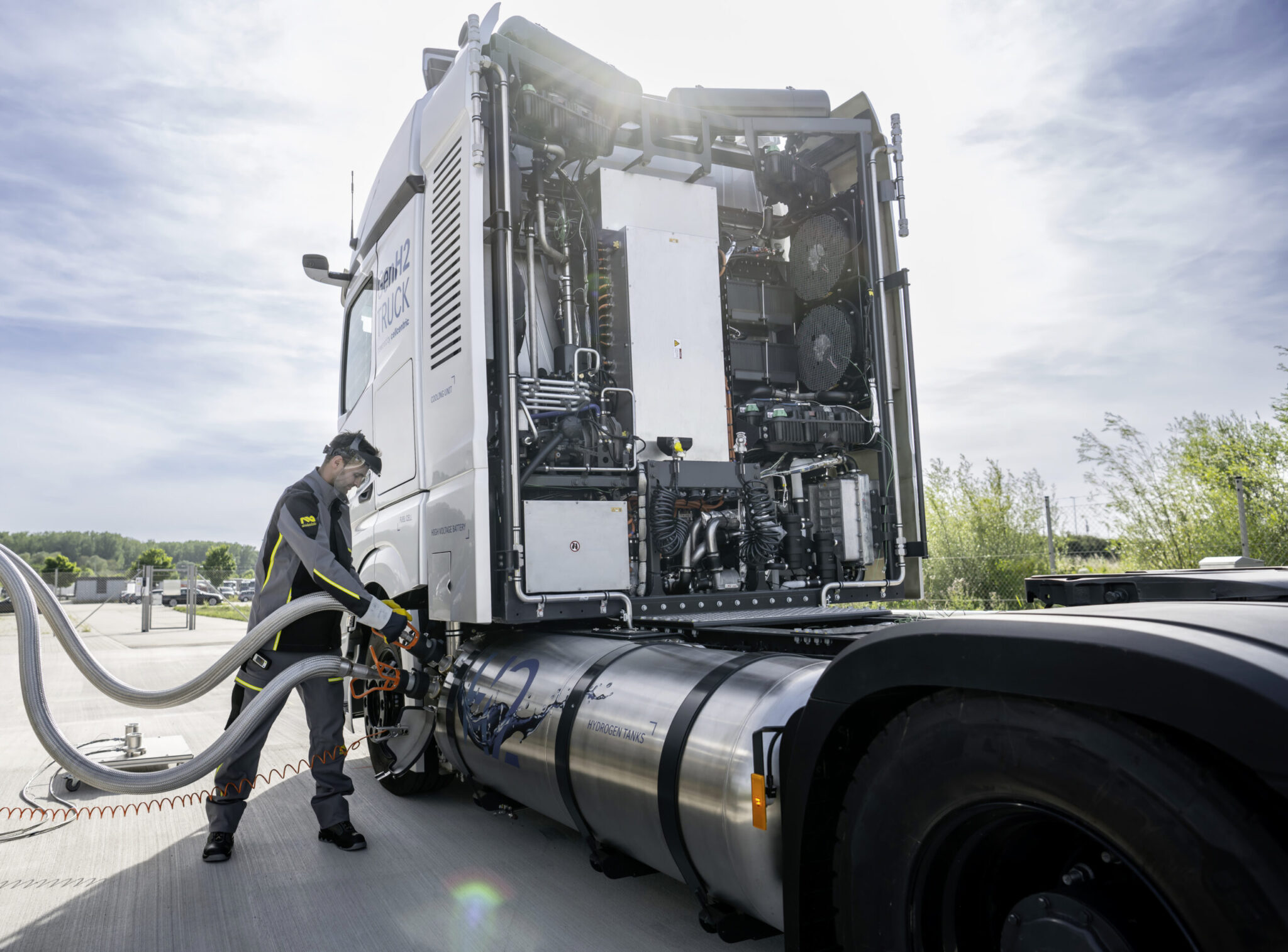
First Hydrogen, the developer of zero emissions vehicles and green hydrogen production, is collaborating with the AHFC (the UK Aggregated Hydrogen Freight Consortium). The announcement coincides with confirmation that First Hydrogen’s two demonstrator hydrogen-powered light commercial vehicles (LCV) are on schedule for testing and on-road commissioning starting in late July 2022  in the UK.

The commissioning integrates First Hydrogen’s two MAN eTGE vehicles with the First Hydrogen FCE1 fuel cell propulsion system. The vehicles are expected to be delivered in Q4 this year ready for potential customer real-world usage trials in early 2023.

Managed by Element Energy, the AHFC is a partnership between leading hydrogen industry and mobility companies, including Air Products, Anglo American, Hyundai, Toyota and BOC. The consortium works together with large UK fleet operators to accelerate the commercial roll out of fuel cell vans and trucks and hydrogen refuelling infrastructure.

So far, 10 fleet operators have expressed interest in trialling First Hydrogen’s vehicles in their real-world operations, to experience the range and operational flexibility benefits hydrogen offers. These fleets comprise major operators from industries, including telecoms, express delivery, national utilities and national infrastructure companies; a national UK supermarket chain; a national vehicle breakdown and recovery association; an ambulance fleet; and a national fleet leasing group. The fleet trials will operate across multiple UK locations from West London, Birmingham and Sheffield, to Tees Valley and Aberdeen.

First Hydrogen and Element Energy expect to release more details on the AHFC van programme later this year.

Steve Gill, CEO of First Hydrogen Automotive, says: “Our proposal has received quite a response. We are excited to work with Element Energy and to bring our technology directly to fleet companies, demonstrating the benefits of fuel cell powered light commercial vehicles. It is a great opportunity for us to generate customer interest in our vehicles and gain first-hand customer and driver feedback to contribute to our bespoke vehicle development programme.”

William Darby, Principal Consultant, Element Energy, stated: “After hearing about the First Hydrogen van product, we knew this would spark a lot of interest from our van operator group. We are looking forward to working with First Hydrogen to ensure the trial meets the needs of each operator, whilst also providing First Hydrogen with the information and support it needs to continue developing the product.”


Hörmann equips Panattoni shed at Borehamwood

Panattoni, Europe’s largest developer of logistics property, has completed the second stage of its development at Borehamwood.

Phase 2 of Panattoni Park Borehamwood 159 is 159,000 sq ft, being situated inside the M25 and just 2 miles from the nearest junction.  Borehamwood 159 is also located outside the low emission zone and the London Lorry Control Scheme.

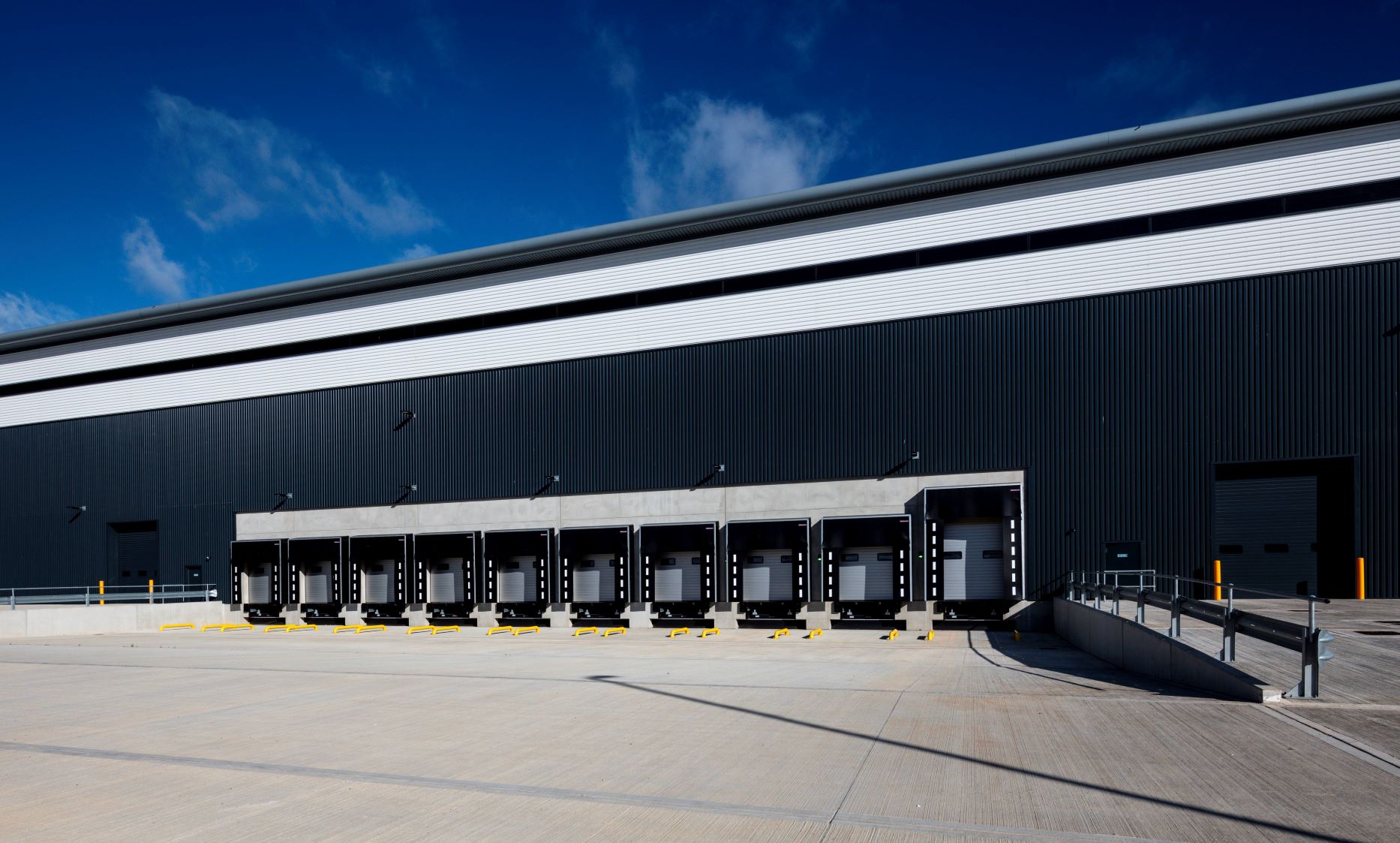
Rated BREEAM ‘Very Good’, the built-to-suit logistics space features 15m clear internal height compared to the typical 10m internal height allocation in London and 43 HGV parking spaces. Hörmann UK supplied full loading bays with safety and operational equipment including dock buffers, dock lights and traffic lights, plus sectional level access doors and fire exit doorsets.

The installation consists of a total of 20 loading bays and six level access bays, with the loading bays comprising Hörmann SPU F42 sectional doors with HTL-2 dock levellers, featuring a one metre telescopic lip which provides an optimal range loading platform. This enables precise bridging for a variety of vehicle types and, says Hörmann, a guarantee of fast, efficient, and most importantly safe loading and unloading.

Eighteen ‘single bay’ and 2 DSS-G ‘double/euro bay’ dock shelters have been installed to provide protection from the elements for both operatives and goods, helping to reduce heat loss during loading and unloading operations.

Other elements of the Hörmann UK loading system include reinforced Dock Bumpers, which are constructed from recycled tyre rubber with 15mm-thick steel faceplates. The buffers are designed to minimise any potential damage to the bay in the event of a vehicle making direct contact with the building. Traffic lights and dock lights complete the loading bays offering the highest standards in safety and operational efficiency during the docking and loading processes.

With the Panattoni site achieving an impressive EPC A rating, each loading and level access bay has been fitted with a robust Hörmann sectional door featuring double glazed vision panels, providing excellent thermal insulation with an impressive overall U-value of between 1.1 and 1.3 Wm2.K.  Stucco textured profiles deliver a durable and resilient finish to withstand the external elements, while rubber draught seals to the edges of the leveller’s help support the minimisation of heat loss during loading and unloading operations.

The provision of 11 STU steel fire exit doorsets, installed through the warehouse and offices, completes an impressive range of products supplied by Hörmann UK, all chosen for their quality construction and the impressive service offered by the company.


Used pallet demand soars as supply chains cut costs

The used wooden pallet industry is reporting a large uplift in enquiries from supply chain users, as the prices of inputs including raw materials and transport have increased.

According to members of the National Association of Pallet Distributors (NAPD), demand has risen to “unparalleled levels” – up to 70% higher and from further afield than usual – as businesses seek to reduce costs of manufacturing, packaging, and delivery of goods.

Saleh Hijazi, press officer for NAPD, said: “The used wooden pallet business is experiencing heavy growth in demand from existing and new customers. This is being driven by a shortage of pallets and pallet timber in Western Europe, particularly in the Benelux region, diverting reused pallets and pushing prices up here in the UK. This has been further compounded by severe inflation in energy, transport, and other input costs.

“Reuse is helping to ease these issues – and is a central part of the circular economy, too. Wooden pallets are one of the most sustainable parts of a supply chain already, and repair and reuse of these has an increasingly important part to play in helping businesses fulfil their environmental obligations.

“While this challenging period continues, we are advising our customers that forward planning is more important than ever and we are working closely with them to fulfil the increases in orders.”


Toposens launches ultrasonic collision avoidance sensor

The Munich-based high-tech startup Toposens has launched its first commercial Toposens 3D collision avoidance system for mobile robots based on the proprietary Toposens 3D ultrasonic echolocation technology. This represents a key milestone for the company following more than seven years of R&D and product commercialisation.

Addressing the unmet need for higher safety of mobile robots in industrial settings, the Toposens 3D Ultrasonic Echolocation Sensor Echo One and Toposens Processing Unit with sophisticated filters for 3D collision avoidance is now available, having been run through rigorous commercial testing in real-life industrial scenarios with reputable mobile robotic companies. This kind of “co-developing” of a high-tech product together with leading tech firms ensures highest levels of performance for the commencing serial deployment.

Detecting the Undetectable

With the autonomous vehicle industry booming and mobile robots, such as automated forklifts, AMRs and AGVs, experiencing exponential growth levels, the safety of humans and machines is kept at the forefront of manufacturing efforts. The market has come to realise that 3D collision avoidance is a necessity, since the obligatory 2D safety LiDARs can only deliver two-dimensional data output not matching highest safety needs.

Due to their physical properties, other 3D Sensor systems, such as LiDAR or camera have limitations in their perception capabilities when for example the optical conditions in their environment are unfavourable or objects like forklift forks are close to the floor. As a result, they struggle to detect objects well enough, making them an unreliable and insufficient collision avoidance solution. In fact, the leading cause of industrial accidents in 2022 has been identified as blocked vision, and the associated costs are forecast to amount to over $2.5bn by 2025 in over 50,000 factories being equipped with mobile robots. Also, the traditional one-dimensional ultrasonic sensor does not deliver the needed data for reliable 3D collision avoidance, as it can only measure simple distance data (= time-of-flight), compared to the 3D point cloud the Toposens 3D Collision Avoidance System is able to generate.

Re-defining robotic safety

Trying to find a way to compensate these shortcomings and provide the market with a best-in-class 3D collision avoidance, Toposens has over the past few years been working towards a commercial version of its 3D Ultrasonic Echolocation Sensor to serve the need for a reliable mobile robot 3D collision avoidance.

Based on the principle of echolocation as seen in bats, Toposens Echo One compensates the drawbacks of optical sensors through sound-based triangulation in combination with sophisticated noise-filtering software. This in turn delivers robust 3D data output in real-time for each obstacle detected within the fully adjustable warn- and stop zones. What’s more, the zones can both be set to dynamically follow a mobile robot taking a left- or right turn and adjust to the speed of the vehicle.

The sensor sends the obtained data (echo reflections perceived by three microphones) in a 3D point cloud format to the Toposens Processing Unit which is equipped with an easy-to-configure advanced 3D collision avoidance software.

From there, depending on which 3D zone violations are detected, the Toposens Processing Unit triggers either a “slow down” or “stop” command to the mobile robot’s CPU. When no zone violations are detected, the mobile robot drives on.

Bat vision versus bad vision

“Being able to detect multiple difficult-to-detect obstacles reliably and in real-time, regardless of environmental conditions, enables us to provide next-level robotic safety for our customers,” says Tobias Bahnemann, CEO and Co-Founder of Toposens. “Our technology addresses the shortcomings of optical sensors, such as LiDARs, which can fail to detect floor-based objects like forklift forks on the floor, in unfavourable lighting conditions or transparent or mirrored object surfaces. Receiving data output in 3D, meaning in x, y, and z coordinates, guarantees the most reliable level of 3D collision avoidance.

“Ahead of production, we have been co-developing and testing our Toposens Echo One in pilot projects and actual real-life set-ups with renowned companies for almost two years. This has put us in a position, from which we can now offer our customers a state-of-the-art, next-level robotic safety system. With 3D collision avoidance capabilities missing in existing sensor solutions, the economic setback of damaged goods, or even expensive production stops as a consequence of undetected obstacles, can considerably limit the ROI of any mobile robot system. This highlights the necessity for mobile robots to “see” their environment using a different kind of vision technology – we call it “BAT VISION” and are delighted to now be moving on to serial production.”

 

AXA IM Alts acquires Spanish last-mile logistics asset

AXA IM Alts, a global leader in alternative investments with €188bn of assets under management, has completed, on behalf of clients, the acquisition of a sizeable and newly developed last-mile logistics asset in Barcelona, Spain. The investment opportunity was sourced from Acciona, a global leader in providing regenerative solutions for a decarbonized economy, who acted as developer for the project and pre-let the facility to a leading global e-commerce operator on a long-term lease.

The c.58, 000 sq m asset comprises a bespoke last-mile logistics operating centre spread across 13,350 sq m of high-quality warehouse space alongside 44,540 sq m of parking, with capacity to accommodate more than 600 delivery vans. The asset will have a very strong covenant from day one, while its innovative design improves current best-practice distribution systems, supporting long-term value.

Located in central Barcelona, the second most populated city in Spain, the asset will benefit from a strategic logistics location with good transport connections due to its proximity to the main highways and ports. Additionally, the asset borders one of the main residential districts in the city centre, creating a genuine last-mile logistics network and supporting the growing demand for rapid e-commerce delivery time frames.

Due to the scarcity of vacant development land of meaningful size in the area, this acquisition presents a significant opportunity to increase AXA IM Alts’ exposure to high-quality last-mile logistics in Spain. This acquisition adds to the business’ portfolio of 158 European logistics assets located across key distribution hubs in 11 countries, and brings its European logistics assets under management to over €5bn, spread across c.5.5m sq m of high-quality primarily big box or last-mile urban logistics space.

Blackacre completes Ipswich logistics deal

JMW Solicitors’ Real Estate team has advised Blackacre on a £13m deal with Lay & Wheeler that will see the development of a new 114,000 sq ft unit at Port One Logistics Park in Ipswich, UK.

The wine merchant has agreed a £13.85m senior development loan with Cain International to forward-fund the delivery of Unit 6.

Lay & Wheeler was founded in 1854 and remains one of Britain’s longest-standing fine wine merchants – it is a market-leading name globally and has won a multitude of awards.

Port One is a strategic development located close to Ipswich and Felixstowe Port, benefiting from direct access to Junction 52 of the A14, a major arterial route. Its proximity to Felixstowe makes it the most centrally located customs site within the Freeport East Zone. The Zone includes both Felixstowe and Harwich, making them, combined, the UK’s largest container port.

Simon Maddox, Real Estate Partner at JMW Solicitors, said: “We’re pleased to have been able to support Blackacre on this latest deal at Port One – it will no doubt prove an ideal location for Lay & Wheeler’s new warehouse and head office as the business continues to grow.

“There remains a significant shortage of industrial and logistics stock entering the market – with a record-breaking volume of space under offer at the end of Q1 2022, demand will remain high for high-quality, well-located schemes like Port One.”

Development work for Unit 6 is now underway on site and is expected to reach PC by November 2023.

JMW Solicitors is one of the UK’s leading full service law firms, with offices in Manchester, Liverpool and London.


ELOKON introduces smart products at IMHX

Since the last IMHX and during the pandemic, ELOKON’s engineers have been busy developing new additions to its range of assistance and fleet management systems, and the team is looking forward to showing how these can improve safety and efficiency in the warehouse on Stand 5E55.

Exhibits will include the ELOfleet cloud-based fleet management system, which works with mixed fleets and offers benefits such as optimised fleet size for reduced operational costs, significantly fewer truck-on-truck accidents and enhanced protection of the workforce. Central document and battery management systems are new functionalities which are included in the latest variant of ELOfleet.

ELOKON will also be introducing ELOcate – a UWB radio-based Real-Time-Location-System (RTLS), which can track and locate all movements of people, forklifts and AGVs within the warehouse. Should any irregular or risky scenarios occur, ELOcate is able to automatically trigger an alarm. “This system brings a higher level of transparency to intralogistics, and enables warehouse route planning to be optimised, work processes to be made safer and accidents prevented,” said Gavin Tull, ELOKON’s UK Sales Manager.

The driver assistance system ELOshield features new functions such as data analysis. The increased use of automated equipment alongside forklift trucks in busy warehouses and production facilities also prompted the introduction of a new AGV module for ELOshield. Small AGVs can easily be overlooked by larger pieces of equipment and this module is designed to protect them from damage from other materials handling vehicles when they are operating in close proximity.

Tull concludes: “Due to the ongoing automation in warehousing and in manufacturing, there is an ever increasing level of interaction between humans and operated as well as autonomous equipment. Our smart systems are the ideal solutions for enhancing occupational safety whilst maintaining high levels of productivity.”


Subscribe

Get notified about New Episodes of our Podcast, New Magazine Issues and stay updated with our Weekly Newsletter.