UK cold store electricity costs double in year

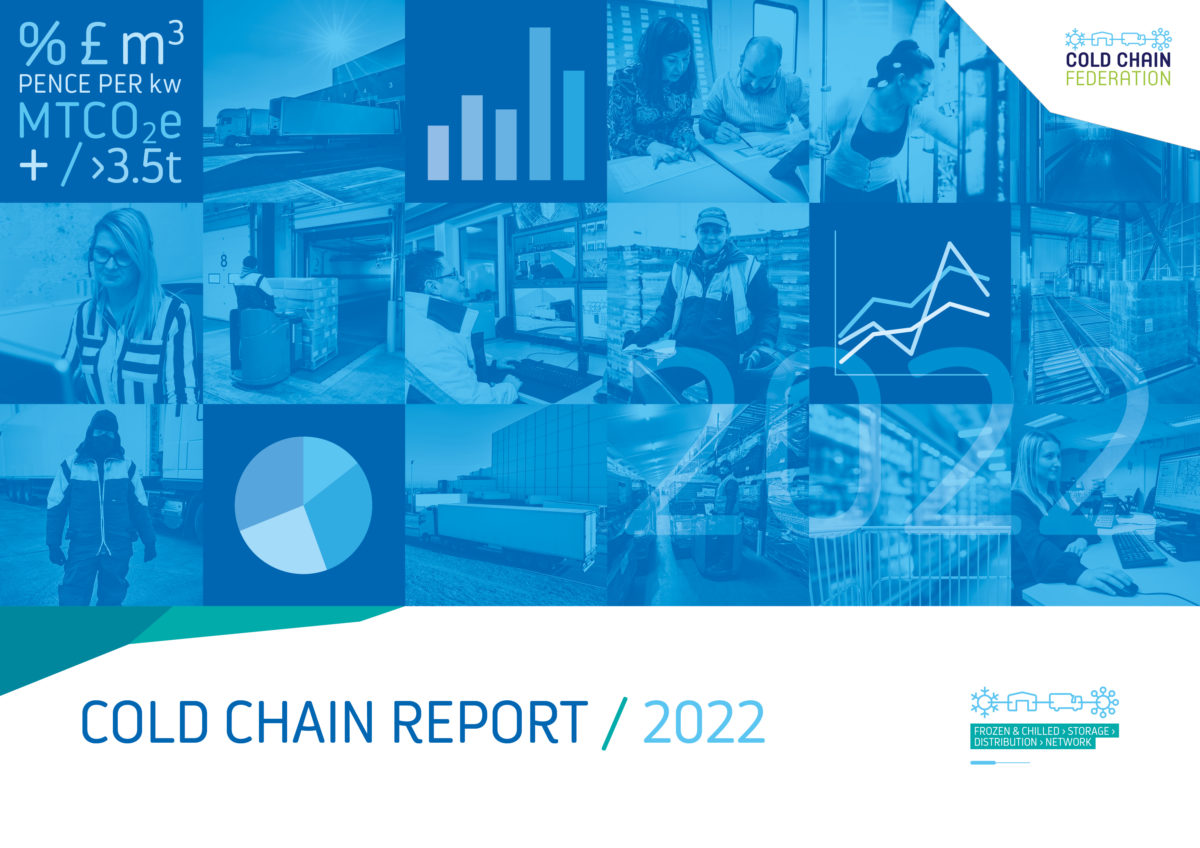
Electricity spend for the UK’s cold storage facilities has more than tripled between 2021 and 2022, says a new report published by the Cold Chain Federation which reveals the UK cold chain industry’s vital statistics for the first time.

The new analysis in The Cold Chain Report 2022 shows that the cold storage sector’s electricity costs have grown from £560.6m in 2021 to an estimated £1.1bn for 2022. The report also shows that volume of UK cold storage capacity has now topped 40m cu m, increasing 10% since 2021.

Cold Chain Federation Policy Director Tom Southall said: “With energy prices rocketing, the cost of refrigerating cold storage facilities has soared too despite the great progress our industry has made over the past decade in improving energy efficiency and investing in renewables. Cold chain businesses continue to focus on the buying and contract options for fuel, electric and other supplies, and on making sure contracts with customers are sharing the increases in the best and most realistic way possible.”

The Cold Chain Report 2022 brings together new research with existing datasets to present the industry’s key facts and figures, including both cold storage and temperature-controlled distribution.

Southall added: “The cold chain is in the midst of a major transition and access to up-to-date, comprehensive data is crucial to understanding exactly what is changing and how, and in turn to assessing the impacts and making informed decisions for the future. Over the past three years our industry has earned new appreciation and built new relationships among politicians and policy makers, and the new Cold Chain Report will also provide data to support our work to influence decisions and ensure the cold chain industry’s voice is heard.

“The Cold Chain Report 2022 is the first ever report bringing together quantitative information on cold storage and temperature-controlled vehicles, and it marks a real milestone in the Cold Chain Federation’s commitment to research, gather and analyse data that serves and informs our industry. It has also enabled us to identify gaps in useful data and we will work with our members to create these datasets for subsequent iterations of the report.”

Key findings of The Cold Chain Report 2022 include:

  • The East Midlands has the highest number of cold chain facilities (175), followed by South East England (152) and then Yorkshire and Humber (146).
  • The average size of UK cold store is now 95,693 cu m.
  • The total volume of cold storage in the UK has now topped 40m cu m.
  • There are 25 sites in the UK with volume greater than 300,000 cu m.
  • Electricity cost in cold storage has more than tripled from £560.6m in 2021 to an estimated £1637.1m in 2022.
  • More than half of cold stores are more than 20 years old.
  • Diesel cost at full duty rates has risen from £122,280,000 in June 2021 to £322,173,878 in June 2022.

CLICK HERE to read the full report.
Invar website walks businesses through digitalisation

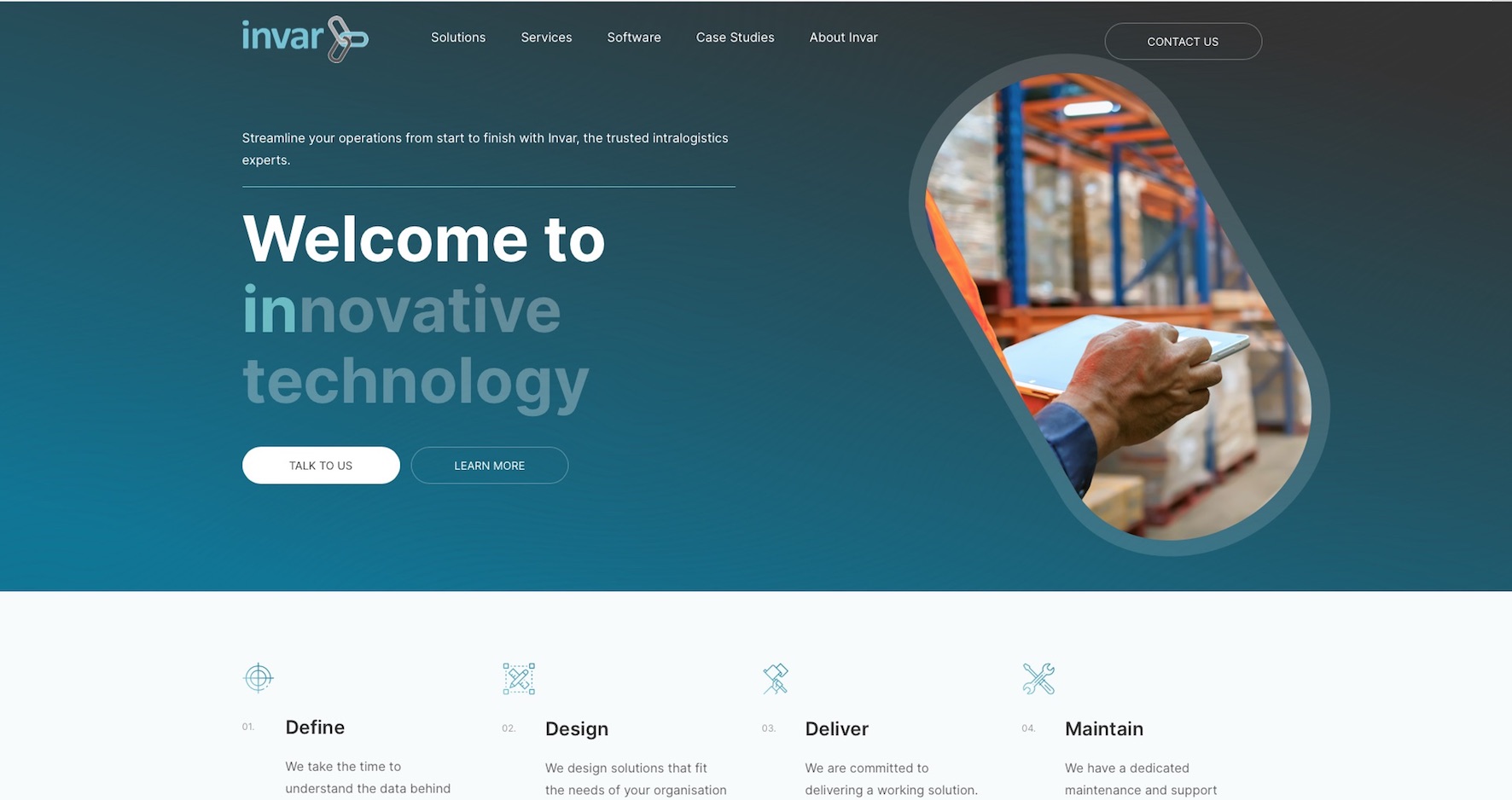
Invar Group, a leading independent software developer and integrator of advanced warehouse automation, has launched a new website to help guide businesses through the complexities associated with warehouse upgrades and digitalisation projects, highlighting potential areas where advanced technologies can transform operational performance within the fulfilment or distribution centre.

The new format brings together valuable independent insights and technical information on the latest innovative technologies available to the market. As an independent integrator of warehouse technologies Invar Group is well positioned to offer an unbiased approach to finding the optimum solution.

Craig Whitehouse, Managing Director of Invar Group, says: “We are witnessing a technological revolution in the warehouse – AI and robotics is transforming operational performance, particularly around dense storage, order assembly and packing. Our new website aims to help businesses explore the full range of technologies and options available to them – without fear of being limited to choices from a single manufacturer. And our ability to provide clients with the software, integration and controls elements of a project, all in-house and from within the UK, puts us in a strong position to bring together best of breed technologies in a seamless solution.”

Invar Group, headquartered in Cranfield UK, is focused on delivering complete turnkey warehouse automation solutions using advanced technologies such as industrial robotics, AMR goods-to-person solutions, pick-to-light technology, sortation systems, as well as conventional warehouse automation. The Group comprises: Invar Systems, a developer of warehouse control and management systems; Invar Integration, a front runner in solutions design, hardware integration and project management; and Invar Controls, specialists in the design, implementation and maintenance of PLC software and hardware.

Invar Group has supplied systems to many of the world’s leading brands, such as: SuperDry, Games Workshop, Bentley, Coca Cola, and Nike. Examples of case studies on the new website include work carried out by Invar Group for major international brands SuperDry and Pets at Home – with further case studies in the pipeline.

Trent Gateway logistics units snapped up

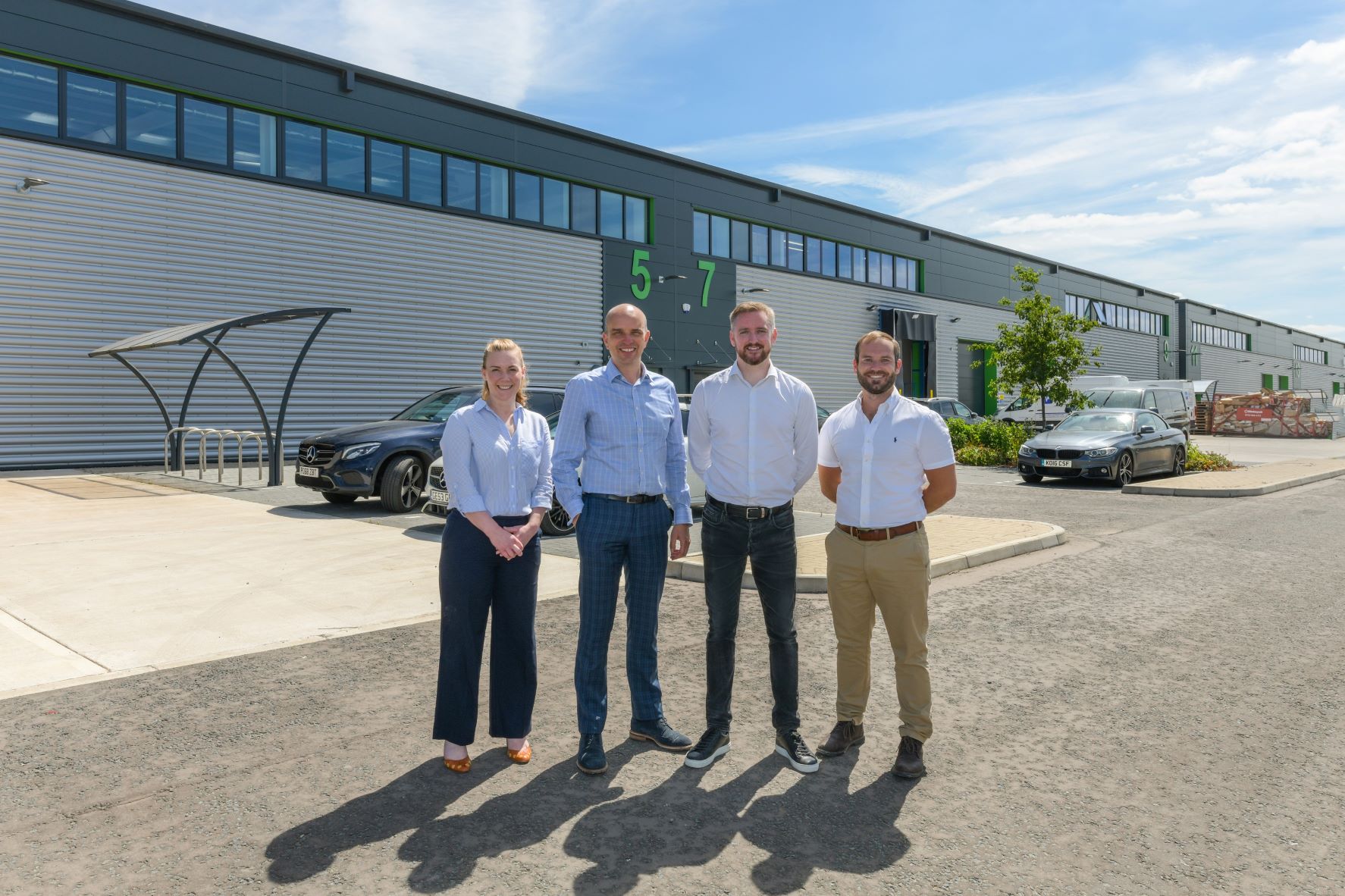
Demand for logistics real estate in the UK’s East Midlands region is showing no signs of slowing, according to the leasing agents of Trent Gateway which is now fully let.

Due to the especially high demand for industrial properties, particularly those that possess green credentials, the property’s landlord Northwood Urban Logistics has seen five units let in five months.

The final deals, brokered by JLL and FHP, have included MMC Materials UK Ltd which manufactures sustainable and compositable packaging and has taken 10,488 sq ft, and Upperton Pharma Solutions (Upperton), a UK-based specialist contract development and manufacturing organisation. Confident in the location, Upperton is investing circa. £15m in the design and bespoke build of its new 50,000 sq ft facility on the estate.

MMC Materials UK and Upperton join a range of other established businesses based on the 18-unit industrial site, including BW Flexible Systems, RSK Group and SRL Traffic Systems Ltd.

Northwood’s success is reflective of the high demand for space in the region. JLL’s own research has revealed that prime headline rents have risen by an average of 25.5% across the Midlands. The multi-let and mid box industrial market Spring 2022 report revealed that, in the East Midlands specifically, there remains eight months’ supply of space available, but is seeing comparatively little new speculative development. Regional demand for small units is particularly strong in the 3,000 to 5,000 sq ft and 10,000 to 20,000 sq ft range, with local and regional occupiers driving the majority of demand.

Trent Gateway’s sought-after green credentials include the likes of electric vehicle charging points; low air permeability design; warehouse skylights making up 15% of roof surface area increasing natural lighting; high performance insulated cladding and roof materials; and secure cycle parking all provided as standard.

Iain Taylor, Director at Northwood Urban Logistics said: ‘’We are very pleased to welcome our latest occupiers to the scheme. Trent Gateway has been proven to accommodate a wide range of occupiers who have been able to adapt the units for a variety of uses.”

Gemma Constantinou, industrial director at JLL East Midlands, said: “Trent Gateway has benefited from having high-quality units in a market that is increasingly calling for more space. Crucially, though, this market also understands that the need to make greener choices, in the push towards Net Zero, is only intensifying.

“The speed in which the entirety of Trent Gateway has been snapped up should be a clear, green light for developers to invest further in the East Midlands. We expect take-up to remain at a consistently high level for the next few years while the battle for availability continues at such a pace.”

Mark Tomlinson, Director at FHP, commented: “We are delighted to have delivered fully occupancy and such a strong tenant line-up at Trent Gateway, which was delivered to service a pent-up demand from occupiers who have been hampered by an undersupply of industrial property in the region. The East Midlands still has one of the lowest vacancy rates in the country, so we were not surprised to have brought forward such strong demand for the scheme.”

Located within Beeston Business Park and just one mile outside of the town centre, Trent Gateway is a 40-acre hub providing a mix of industrial and office space, all overlooking the Attenborough Nature Reserve.


Nord expands LogiDrive system

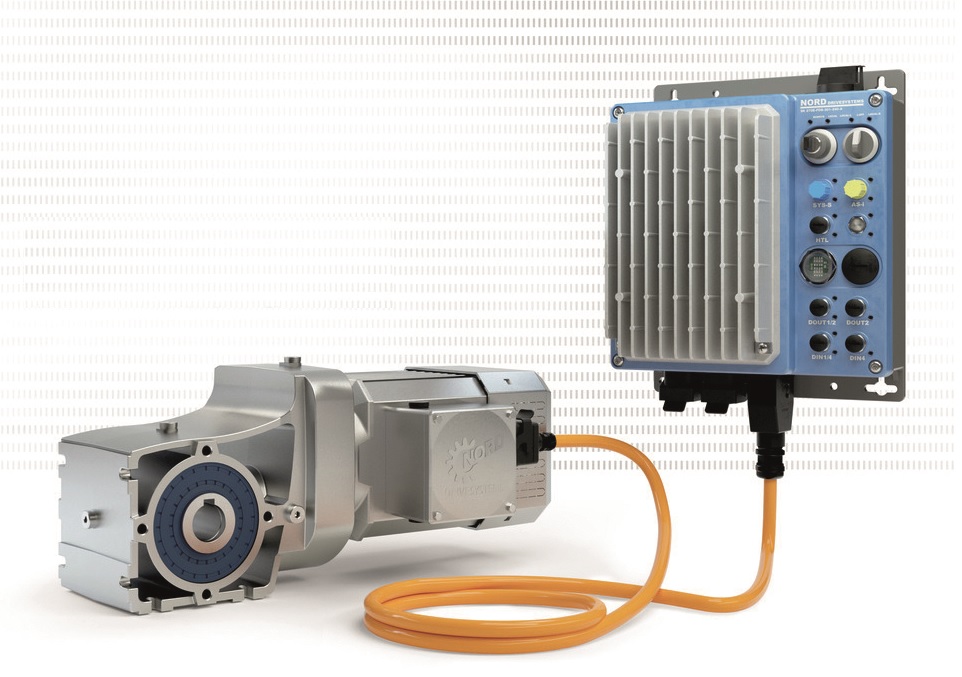
Nord Drivesystems has expanded its successful LogiDrive concept with new markets and products to give additional applications access to the benefits of standardised, industry-optimised geared motor versions. With the new LogiDrive product family, the North German company offers a wide portfolio of perfectly matched drive solutions, which meet many different requirements and purposes – be it energy efficiency, version reduction, cost-effectiveness or flexibility.

LogiDrive is an energy-efficient, service-friendly and standardised modular system. Depending on the industry and objective, different Nord products are combined into one drive solution, which is 100% tailored to the respective industry standards and application requirements. The new extended LogiDrive solution space is intended for conveyor applications in the fields of post & parcel, airport and warehouse, and comprises one advanced version with IE5+ synchronous motor technology and a basic version with IE3 asynchronous motors.

While the LogiDrive advanced drives address issues such as energy efficiency, version reduction and Total Cost of Ownership (TCO), the basic LogiDrive’s main focus is on cost efficiency.

Nord says all LogiDrive systems are efficient and extremely easy to maintain and install thanks to plug-and-play technology. The entire system has a modular design, so that all components of the drive technology can be individually serviced. This minimises maintenance and repair costs. All connections are made using simple plug connections while integrated maintenance switches and manual control switches ensure a high level of user-friendliness.

Nord also supplies the cables. Potential sources of error are thus eliminated, and commissioning is facilitated. The compact design saves space and is light in weight thanks to the aluminium housing. Thanks to the design of the motors used and the operation on the frequency inverter, the same motor variant can be universally used worldwide.

The new LogiDrive solution space comprises the following geared motor versions:

LogiDrive for post & parcel and airport

  • Advanced: IE5+ synchronous motor and two-stage helical bevel gear unit or DuoDrive plus NORDAC LINK frequency inverter installed close to the motor.
  • Basic: IE3 asynchronous motor, two-stage helical bevel gear unit and NORDAC FLEX frequency inverter

LogiDrive for warehouse

  • Advanced: IE5+ synchronous motor (ventilated or unventilated), two-stage helical bevel gear unit and NORDAC ON+ frequency inverter with integrated multi-protocol Ethernet interface
  • Basic: Fixed motor-inverter combinations consisting of IE3 asynchronous motor (87 Hz) and NORDAC ON frequency inverter with integrated multi-protocol Ethernet interface plus worm gear unit

The whole concept is designed for optimum performance, highest efficiency and best possible user-friendliness. Utilising the high overload capacity of the motors and the system’s wide adjustment range, all solutions are individually tailored to each customer and specifically designed for the system’s individual load range.

Labour-saving technology on display at IMHX

With the high cost of human labour prompting more and more logistics companies to seek ways of working that rely less on people, interest in automation is greater than ever at this year’s IMHX, says Event Director, Rob Fisher.

The shrinking labour pool is certainly hitting the logistics sector hard with HGV drivers, warehouse order pickers and forklift operators all in short supply.

Indeed, it was at a recent event organised by the Institute for Government, that the chief executive of Food and Drink Federation announced that the UK food supply chain is around half a million workers short. This represents some 12.5% of the total workforce required.

Meanwhile, a recent survey conducted by the trade association, Logistics UK, noted 13% of respondents report severe warehouse staff shortages, with a substantial decline in the availability of forklift drivers cited as a major problem.

The worker shortage is forcing many warehouse operators to offer higher wages, and in some cases a signing on fee, in an attempt to attract the personnel needed. In November 2020, a leading online job search-engine reported the average forklift driver’s salary was advertised as £21,972, while warehouse staff positions typically paid £19,995 per annum. By November 2021, the remuneration for both forklift drivers and order pickers were up 8% year-on-year.

UKWA – the United Kingdom Warehousing Association – has warned that many logistics service providers will be unable to absorb these increases and will have little option but to pass these on to their customers.

Although it’s natural to assume that the most effective way to be competitive is on price, warehouse robot technology company, Autostore, believes that by offering additional benefits that add greater value for customers, logistics service companies can widen the conversation.

Autostore goes on to explain that by employing data-rich analytics to repurpose the space within the store, warehouse operators can deploy automation to streamline their operating processes without compromising efficiency.

Autostore is among a host of pioneering, industry-leading providers of automation solutions – including Swisslog, Gebhardt, Daifuku and Knapp – who will be demonstrating their latest innovations at IMHX 2022.

For example, IMHX exhibitor Swisslog’s automated warehousing technologies range from traditional high-bay warehouses to innovative robot-based materials handling solutions that provide quality, flexibility and efficiency and every application is customised to deliver the lowest cost per pick.

Meanwhile Gebhardt – who celebrate their 70th anniversary in 2022 – will show examples of the kind of customised and innovative intralogistics solutions that they have been supplying to customers throughout the world for more than seven decades.

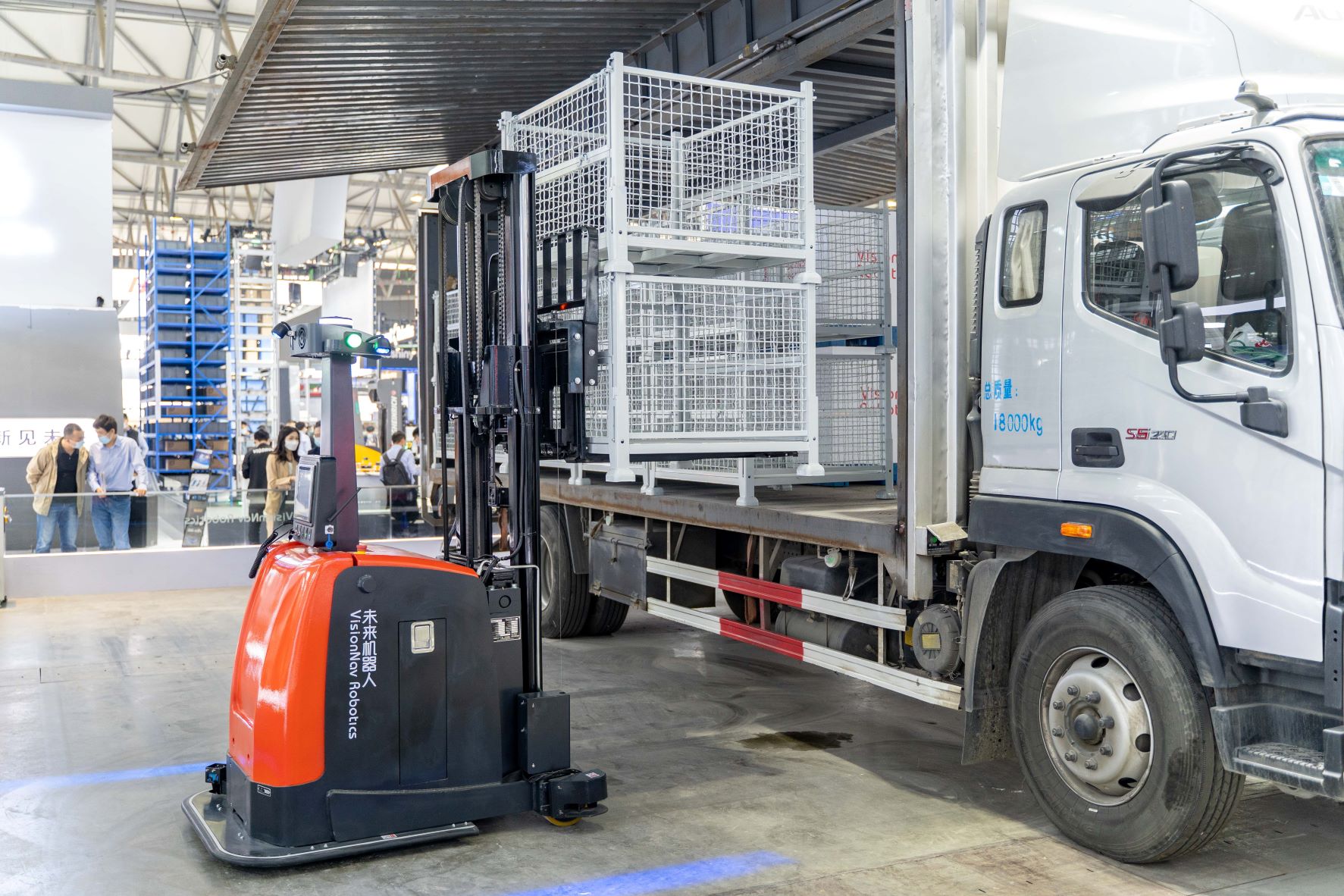
The automated storage, transport, sorting and picking systems supplied by Daifuku include flexible automated guided vehicle (AGV) transport technology as well as rail-guided sorting transfer vehicle (STR) systems, while Knapp’s smart solutions and automated storage systems support the logistics processes of leading companies’ worldwide.

The current lack of warehouse operatives coupled with the increasing cost of labour is prompting more and more logistics companies to seek ways of operating that rely less on people and it is clear that automating those warehousing functions that follow a predictable pattern makes a lot of sense.

And, with much of today’s sophisticated artificial intelligence, robotics and automated handling technology within financial reach of SMEs as well as the biggest players, it’s easy to understand why the way warehouses operate is changing.

IMHX 2022 will provide an essential platform for logistics professionals to discover the very latest technological advances and gain insights that will enable them to ensure that their own operations are capable of meeting today’s increasingly complex global supply chain challenges in the most cost-efficient way.

IMHX 2022 takes place from 6th-8th September at the NEC, Birmingham.

Fiege to manage logistics for Beam Suntory

Fiege has become the new logistics partner of Beam Suntory Deutschland GmbH with effect from 1st July 2022. The logistics company, based in Greven in Westphalia, will take charge of warehouse logistics, value-added services, and transportation within Germany, but also to Austria as well as parts of France for Beam Suntory, a world leader in premium spirits.

The global beverage manufacturer Beam Suntory enjoys international esteem for its diverse portfolio of high-class bourbons, Japanese whiskies, single malt scotches, gins and cognac that includes such world-renowned brands as Jim Beam, Maker’s Mark, Courvoisier, Yamazaki, Laphroaig and Bowmore.

“We have chosen Fiege as our logistics partner because we are convinced that we are a great fit on more than one level,” says Sebastian Schmitt, Senior Director International Sales & Operation Planning at Beam Suntory. “Fiege has years of experience in warehouse and distribution logistics for spirits to show for. Moreover, Fiege – just like Beam Suntory – greatly values sustainability. Here too, we wish to take crucial steps and pursue our goals together in the future.”

Fiege processes the logistical operations for Beam Suntory on an area of roughly 10,000 sq m at its logistics centre in Bocholt, Münsterland which specialises in the handling of spirits.

Hannes Streeck, Managing Director at Fiege for Fast Moving Consumer Goods, explains: “Our location in Bocholt is ideal not only because it is conveniently situated in the centre of Europe – and therefore perfectly for Beam Suntory – but also because it is here that we operate one of Europe’s largest excise warehouses.

“We are extremely pleased to have won over Beam Suntory as a customer from the premium spirits segment of world renown. We very much look forward to the path ahead of us that we will be sharing.”


Exporta launches new technologies

Exporta has installed two new pieces of technology at its Kinross manufacturing facility in the UK, which it says will be of huge benefit to its customer base.

Digital Printing Machine

Exporta says product branding is key to its customers – this could be five Euro Containers with a logo on the side or thousands of pallets with a logo and sequential numbering. Exporta has long been offering this service, but has installed a new digital printing machine in-house, meaning it can provide product printing quicker and to a higher standard.

Head of technology and product development, John Wilkin, has been involved with this project from the start and is delighted to see his plans come to fruition: “We know how important branding can be, so to make it easier for customers to get this from Exporta has been an important goal. This investment is something that will immediately add value to our offering.”

The new machine, installed at the end of June 2022, is up and running and ready to go. It’s designed to work on any plastic product with a large enough surface area to print on, meaning it will work with the majority of products in the Exporta range.

The benefit of branding goods include brand exposure, identification, and the prevention of lost or stolen goods. Sending out goods within branded containers or pallets provides a strong opportunity for additional advertising and brand exposure. Details such as a phone number and a web address can also be added. This also helps to ensure goods aren’t lost or stolen as they are clearly marked. In terms of identification, printing can be used to add things like sequential numbering or colour coding to products to aid in picking and general warehouse operations.

Pallet Load Testing

How often have you been on the cusp of purchasing a new pallet for your system, but you’ve been unsure how the pallet will perform with your standard goods load? This no longer needs to be a concern, as Exporta has installed a load testing machine to test your load on a potential pallet.

Exporta claims that this is a unique offering to the UK market and something that has taken months of planning. The system allows Exporta to measure the performance of a pallet on racking and on a forklift. The width of the racking can be tailored to match the racking the pallet will be used on. Exporta can test both racking pallets as well as testing nestable pallets for their dynamic load and it can then provide an approved report on the results to give you confidence when you’re purchasing a pallet for your warehouse or shipping system.

Exporta measures the deflection of the pallet with your load over a 24-hour period, and then measures the time it takes to return to its original form once the load has been removed. It can then ensure that the pallet meets the regulation deflection tolerance as required by ISO8611.


Imperial Logistics celebrates 50 years at Fürth

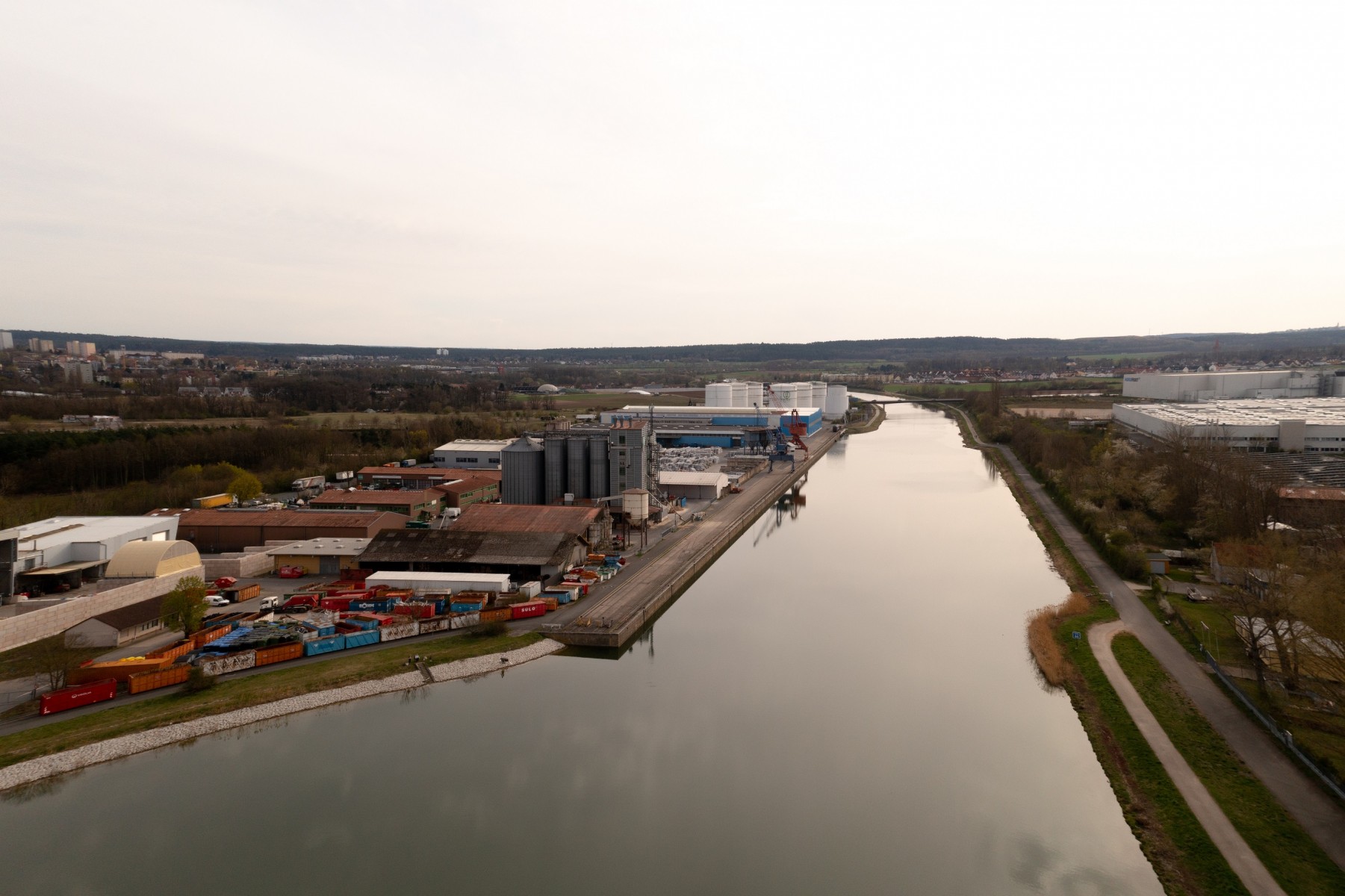
Imperial Logistics, owned by DP World, has marked 50 years of logistics services and transport operations at the port of Fürth in Germany. The port is a handling centre for construction materials and agricultural goods for well-known companies in the region. Imperial is set to continue its role that started with the arrival of the first goods via the Main-Danube canal, north-west of Fürth, 50 years ago, on 15 July 1972.

The port of Fürth is mainly a handling centre for construction materials and agricultural goods such as granite, sheet metal, timber and fertilisers.

Mohammed Akoojee, Group Chief Operating Officer, Logistics at DP World and Group CEO at Imperial, said: “I would like to congratulate the Imperial team at the port of Fürth on this significant milestone anniversary. The port and our business location have been a reliable partner for 50 years when it comes to handling bulk commodities and steel products on inland waterway vessels, railway wagons and trucks.”

Rashid Abdulla, CEO of DP World Europe, said: “With 50 years of experience in the logistics industry in Europe, it’s clear that Imperial Logistics not only has the skills but also the tenure and track record of being a supply chain leader. As a key part of the DP World Logistics business, Imperial provides comprehensive infrastructure that helps us to create the supply chain solutions that make it faster, cheaper and easier for businesses to get their products to their customers. I congratulate the business and all my colleagues on reaching 50 years at Fürth, and look forward to the next 50 together.”

The business site in Fürth is part of the industrial business, in which Imperial, an integrated provider of logistics and market access services, has combined its services for sectors such as the steel and construction industries as well as engineering and plant construction.

Imperial handled some 160,000 tonnes of different bulk commodities at the port of Fürth last year. Inland waterway services accounted for about 46,000 tonnes of this figure, trucks for more than 95,500 tonnes and the warehouse building, which measures 8,000 sq m, handled more than 18,000 tonnes.

White paper: is hydrogen the future for cargo?

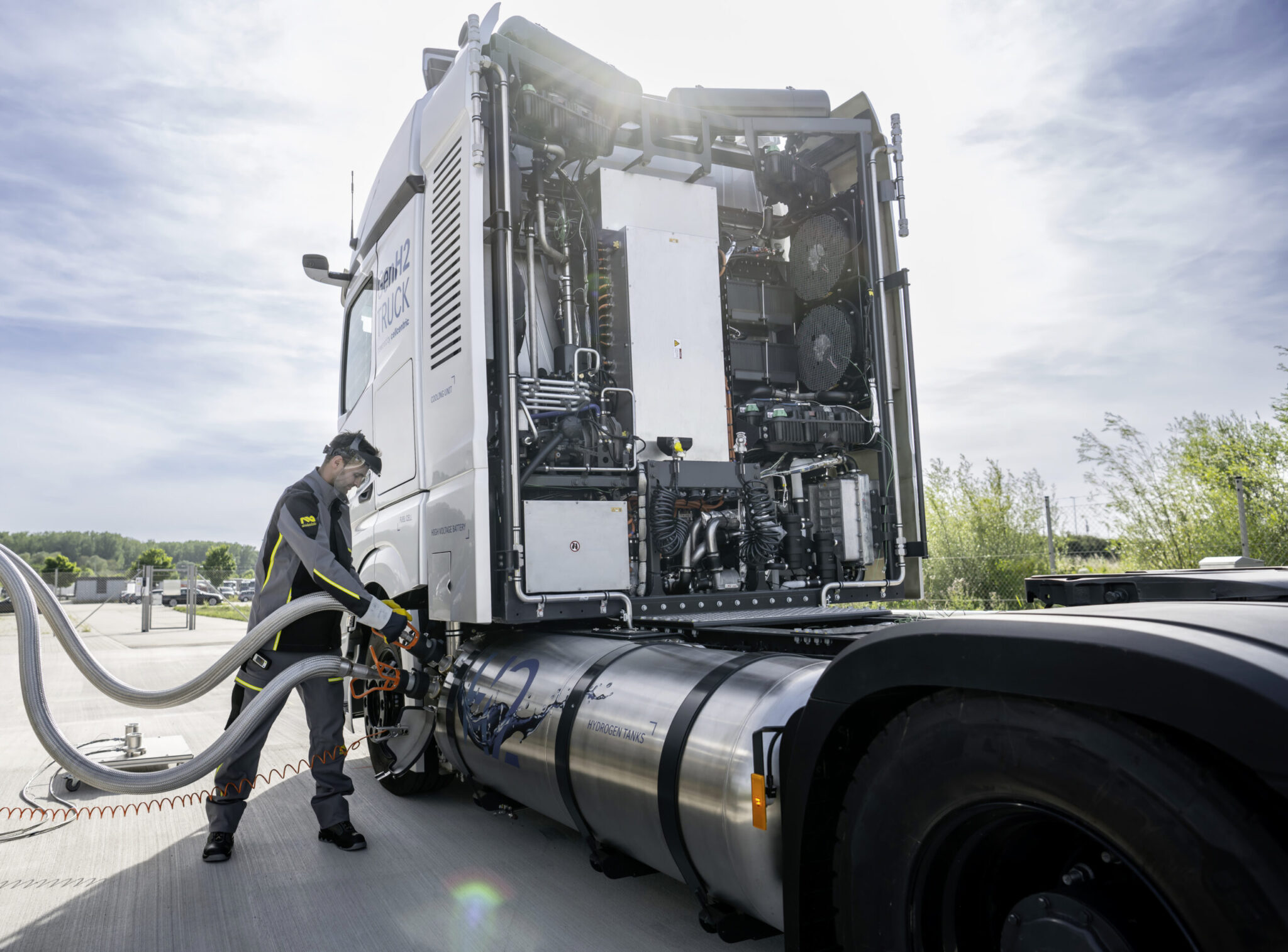
The H2Accelerate collaboration has published a new whitepaper in support of the use of hydrogen in long-haul trucking, based on focus group discussions with truck end-users and logistics providers. The paper sets out the conclusions of a series of focus groups with companies such as Amazon, Nestle Waters, DB Schenker, and Kuehne-Nagel, who have the potential to drive significant market demand for hydrogen trucks and the growth of the sector.

In the paper, the H2Accelerate collaboration sets out the needs and expectations of trucking end users and logistics providers as these organisations look to decarbonise their operations. They also outline how hydrogen can enable end users to achieve their decarbonisation targets while maintaining operations, especially amidst mounting regulatory pressure.

The whitepaper follows two others published last year setting out the need for hydrogen trucking and expectations for the growth of the fuel cell truck market. The group also published a policy position paper stating the requirements from the Alternative Fuel Infrastructure Regulation in February 2022. Further whitepapers are expected this year to inform end users, policymakers, and regulators of the benefits of hydrogen trucking and policy needs to enable the roll-out of trucks and infrastructure.

Understanding customer requirements for fuel cell trucks

The H2Accelerate collaboration has been formed by truck manufacturers Daimler Truck, IVECO, and Volvo Group, and hydrogen infrastructure providers Linde, OMV, Shell, and TotalEnergies. The central objective of the collaboration is to enable a commercially viable, pan-European hydrogen trucking system in the post-2030 period. As fleet operators and drivers are a crucial component of a successful rollout of hydrogen trucking, their needs and expectations ought to be well-understood and met as the system is being deployed. This will be achieved through consistent communication between hardware suppliers (such as those within the H2Accelerate collaboration) and end user groups.

“The findings of this study confirm what we have been hearing from industry partners and customers for the past year or so: the heavy-duty transportation sector is on board with using hydrogen to effectively replace fossil fuels,” said David Burns, VP Clean Energy Development at Linde, a H2Accelerate member. “We know that the technology is there – we have delivered over 200 fuelling stations around the world and successfully fuelled more than 1.5 million vehicles. Together with the H2Accelerate members, we are now working on scaling up the technology and building a robust infrastructure to enable the heavy-duty transport sector to operate with zero emissions, reliably and at a competitive cost.”

The whitepaper found that the organisations, which have public-facing decarbonisation targets, understand that hydrogen freight will be a required complement to battery vehicles in order to achieve full decarbonisation of their operations. This is particularly true not only for long-haul applications, where

the advantage of fast refuelling over battery electric alternatives was stressed, but also for transport in grid-constrained areas or in applications where vehicles are double shifted.

With regards to the cost and operation of the vehicles, end users were willing to accept that in the early stages of roll out, vehicles are likely to be more expensive and infrastructure more limited that the incumbent diesel trucking system. Several end users stated that while they would be happy to pay more in the short term to trial a small number of fuel cell trucks, their business model requires that in the long term, scale improvements and supportive policy allow hydrogen trucks to achieve parity with diesel. Similarly, it is expected that in the long term, network design, station availability, and vehicle maintenance develop to allow end users to achieve similar operational convenience and flexibility to diesel.

CLICK HERE to download the full whitepaper.


Nissan renews partnership with Port Of Tyne

The Port of Tyne has extended its commercial partnership with Nissan to facilitate the import and export of new vehicles for a further five years.

As one of the port’s largest customers and of economic importance to the region, this agreement marks the dawn of a new era for both parties as the move to net zero transportation accelerates.

The Port of Tyne handles 600,000 vehicles per year, making it the country’s second largest car handling port.

Nissan first began producing cars in Sunderland in 1986. Since 1994, the Port of Tyne has played an integral part in transporting Sunderland-built models to over 130 worldwide markets.

The new deal follows Nissan’s EV36Zero announcement last year. Nissan EV36Zero will supercharge Nissan’s drive to carbon neutrality and establish a new 360° solution for zero-emission motoring. The transformational project is comprised of three interconnected initiatives, electric vehicles, renewable energy and battery production with Nissan’s battery partner Envision AESC.

This development is closely aligned with the Port of Tyne’s sustainability vision to be net zero by 2030 and all-electric by 2040.

“The Port of Tyne has been an integral part of our supply chain for many years. As it continues to grow as a clean energy and green distribution hub it will continue to play a vital role in Nissan’s vision for a carbon neutral future,” says Michael Simpson, Vice President of Supply Chain Management, Nissan.

“We are incredibly proud to be supporting one of the UK’s biggest car manufacturer and having the opportunity to make a major contribution to the adoption of electric vehicles globally,” commented Matt Beeton, CEO at the Port of Tyne. “This agreement demonstrates Nissan’s long-term commitment to the port and its importance to the wider region.”


Subscribe

Get notified about New Episodes of our Podcast, New Magazine Issues and stay updated with our Weekly Newsletter.