Load carriers for the beverage industry

In addition to hygiene and safety, durability and economy also play a significant role in producing, filling and packaging of beverages. Craemer Group, a world leader in plastic logistics solutions, has developed a new generation of sturdy, hygienic, non-slip beverage pallets. Also interesting for the beverage industry are pallet boxes from Craemer.

When it comes to hygiene and safety, processes in the beverage industry are subject to stringent requirements and legal regulations. Plastic pallets make a decisive contribution. Craemer Group, an experienced partner in beverage logistics, is a pioneer in plastics processing: Back in 1967, Craemer developed the world’s first one-piece injection-moulded plastic pallet. Sturdy, hygienic, durable, safe, hard-wearing, versatile, maintenance-free – these are the main characteristics of today’s load carriers that are made of high-quality, food-safe and recyclable polyethylene (PE).

In the brewing and beverage industry or in the beverage wholesale trade, the following applies: When producing, filling, packaging, transporting and storing sensitive raw materials and goods, hygienic and absolutely reliable handling must be ensured. For safe (production-) technical and (intra-) logistical processes, Craemer provides load carriers made of robust plastic that are characterised by high functionality, load-bearing capacity, process reliability, cost-effectiveness and sustainability.

The innovative industry solutions are pool-compatible and can be used universally along the entire logistics chain. They guarantee safe beverage handling in automated systems, when using forklift trucks, in high racks or when storing, for example, containers with concentrates in a refrigerated environment.

Versatile in use

Whether light or heavy beverage packages, Craemer develops customised solutions for storing and transporting barrels and containers, cardboard boxes and plastic crates containing bottles or six-packs of cans. The CR plastic pallet, for example, is one of Craemer’s successful load carriers used in the beverage industry around the world. Perfect for heavy loads and all types of containers: the Euro L1 in the size of the Euro wooden pallet (load-bearing capacity in high racks 1250kg) and L3, the multi-use pallet (2000kg) with evenly closed runners, optionally available with Palgrip anti-slip plates (L3) for even better material flow. The TC Palgrip is easy to clean with completely closed top deck and smooth lower deck.

Thanks to the Palgrip anti-slip coating on the top deck, which is a standard feature, all these heavy-duty pallet models hold the load safely even in damp conditions or inclined positions. Controllable via the conventional stacker cranes, palletisers and depalletisers, they run maintenance-free and smoothly on all standard hoists and conveyors, and are suitable for roller conveyors, chain conveyors and automated high-rack warehouses.

Another novelty in the Craemer portfolio is the large-volume CB3 High pallet box. With a height of 1140mm, it provides extra protection during transport and storage in the beverage industry.

Heavy-duty pallets

Whether milk, mineral water, lemonade, juice or alcohol – each type of beverage places its own demands on the packaging and on handling the various processes. Craemer pallets permit a wide range of applications. With its external dimensions (l x w x h: 1200 x 800 x 150mm), the Euro L1 corresponds exactly to the wooden Euro pallet. Unlike wood, the one-piece PE injection-moulded pallet is extremely robust and durable – without any signs of wear or chipping. The pallet is provided with five reinforcement profiles, permitting a load-bearing capacity of 7500kg in static condition and 1250kg during transport or in high racks.

Craemer’s new L3 plastic pallet, a further development of the C3-5 pallet, is also particularly hard-wearing and durable. It is the ideal all-purpose pallet for the brewing and beverage industry. Whether for transporting and storing packages with PET or glass bottles, aluminium or steel cans, composite beverage cartons or HDPE bottles in beverage crates, foil or cardboard containers, it is suitable for all purposes. The L3 boasts a high load-bearing capacity (7500kg static load, 2000kg dynamic load, up to 2000kg in high racks) and slip resistance.

Other features: In industrial size with dimensions of 1200x1000x160mm (L x W x H), it is equipped with three welded runners, 5mm outer rims and five corrosion-protected reinforcement profiles.

Craemer says its completely closed plastic pallets of the TC series with full-surface Palgrip anti-slip deck also perfectly meet the requirements of the beverage industry. The coated top deck and smooth lower deck of the TC Palgrip are characterised by excellent cleaning properties, while the cavity- and rib-free design of the sturdy and durable hygiene pallet reliably protects against contamination or water ingress.

The load-bearing capacity in the rack can optionally be increased to up to 2000kg with the help of integrated, corrosion-protected metal reinforcement profiles. Chamfered edges on both sides of the non-welded runners allow for optimal transport with ground conveyors. The dimensionally stable TC Palgrip is available in Euro size of 1200 x 800mm with three runners (TC1) and in industrial size of 1200 x 1000mm with three (TC3) or five runners (TC3-5). The height of the TC pallets is 160mm.

All reusable pallets from Craemer have the same properties: Thanks to their high quality, they retain their shape even with intensive use and increasing number of trips – thus making them durable, sustainable and economical. In addition, the robust load carriers can withstand temperatures of -30 to +40°C, with short-term heat resistance of up to 90°C. For seamless tracking and tracing, Craemer pallets are optionally available with RFID transponders. Dedicated fields for prints provide space for individually stamped logos, lettering or numbering.

Pallet box in industrial size

The large-volume CB3 High is a versatile, pallet box for the beverage industry. With a height of 1140mm, a capacity of approx. 1000 litres and a weight of 46 or 49kg, it is suitable for particularly large quantities – with extra safety. The sturdy ribbed lower deck provides additional strength to the container floor, integrated stacking cams secure the hold. The hard-wearing, sturdily constructed CB3 High is available in industrial size with closed walls and three longitudinal runners or nine feet. Additional ribs above the entry openings provide increased impact protection against forklift tines, while the seamless construction and smooth interior walls ensure easy emptying, cleaning and drying.

The pallet box is optionally available with one open 1” and one open 2” drain port. If necessary, markings facilitate the later drilling of the standard closed holes with integrated thread. Custom-fit lids are available as additional accessories.


XPO road-rail freight solution for Wavin

XPO Logistics has introduced an innovative road-rail freight solution to reduce emissions for Wavin, one of the world’s top manufacturers of plastic pipe systems for residential and non-residential use. XPO has partnered with Wavin since 2018, managing the transport of products from plants in Wiltshire and South Yorkshire to destinations throughout the UK.

XPO successfully trialled the road-rail combination in June and implemented the full solution in September through a rail service agreement with Malcolm Logistics. XPO transports Wavin products by road from a production site in Chippenham, Wiltshire, to Daventry International Rail Freight Terminal (DIRFT), near Crick, where they are transported by rail to Grangemouth Rail Terminal in Scotland. From there, the XPO fleet and drivers are deployed to complete the final deliveries.

It is envisaged that the service will be used five days per week, with up to six multimodal rail containers transported daily. The road-rail combination will significantly lower annual C02 emissions by an estimated 58% and reduce NOx by18.8 tonnes yearly, with the full benefits realised once all the rail freight containers are in place. The solution is managed by XPO’s technology platform, which integrates all of the company’s transport services for Wavin, including dedicated truckload, less-than-truckload and a bespoke parcel delivery service.

Andrew Crosby, global director – indirect procurement, Wavin, said: “XPO’s road-rail solution is another example of our partner’s proactive approach to innovation. Our collaboration with XPO is delivering measurable improvements in on-time performance and cost reduction, and now we are further reducing the emissions of our operations on pace with our sustainability goals.”

Dan Myers, managing director – UK and Ireland, XPO Logistics, said: “Both Wavin and XPO understand the importance of taking responsibility to drive innovation and step changes in environmental performance. With our latest initiative, we are achieving these two critical goals together. As partners, we will continue to deliver for Wavin’s customers and the environment.”

85% in transport and logistics consider leaving

New research by Cool Company has found that, during the last 12 months, 85% of those in the transport and logistics industry have considered or are still considering leaving contracting.

Following the proposal of the repeal of the Off-payroll legislation and the subsequent government U-turn, the digital payroll solution for contractors Cool Company, wanted to find out how the uncertainty was impacting contractors. Of the respondents, who have been contracting for an average of just over five years, 49% were concerned that there will be further reforms in the future, causing more uncertainty, while 50% raised concerns about the potential cost implications of an IR35 repeal or further reforms.

While potential legislation changes are troubling, there are other issues that are of greater priority for contractors in the current economic climate.

Contractors in the older age bracket (55-64) voiced worries about, material shortages (31%), labour and material costs (27%), health and safety (27%), and late payments (27%). While younger contractors (25-34)  shared concerns about late payments (19%), poor cash flow (26%), and finding new clients (24%). 19% of the younger contractors were also worried about finding ways to work around IR35 legislation and any potential changes to the legislation.

Worryingly, these combined strains have meant that during the last 12 months, 76% of contractors have considered or are still considering leaving contracting – including 85% of those in the transport and logistics industry, and half (50%) of all 55–64-year-olds. Which could leave an enormous skill shortage in a range of industries.

Cool Company’s Head of Business, Kris Simpson, comments: “According to our research, right now, UK contractors are working an average of 58% of their contracts within IR35 and more than half (54%) say their client charge rate has increased in the last quarter. Although the initial implementation of the Off-payroll legislation was not without its pain points, it is no longer the primary concern for contractors as it stands. It now seems the uncertainty surrounding future changes to IR35 and worries such as cash flow, finding new clients, and general economic concerns have become the greatest priority for many.

“Although the proposal to repeal the Off-payroll legislation came with the best of intentions for the economy, it – and any future revisions – can only cause further disruption to the industry. There are better ways to support businesses and their workers through this difficult economic period than once again changing the rules they have to work with.”

Prologis launches social value white paper

Prologis UK and Tritax, two of the biggest names in logistics property development, have joined forces to publish a report designed to inspire other businesses in the construction and logistics sectors to take a more proactive approach to delivering social value.

The report, entitled ‘Building for Social Good’ shares the experiences of both companies in their efforts to deliver a positive impact to people and communities in the areas where they own and develop logistics properties. Importantly, the report also explains how each has successfully managed their social impact through the use of data, which has enabled accurate and meaningful measurement. This in turn has helped to engender the support needed to prioritise social value delivery in the future.

Both Prologis UK and Tritax have used a social value measurement tool, called the National TOMs (Themes, Outcomes, Measures) Framework. Mapped to the UN’s Sustainable Development Goals (SDGs), this Framework enables businesses to quantify the social and local economic value of their activities by attributing a monetary value equivalent to them. This in turn enables businesses to measure and manage social value.

The National TOMs Framework centres on five themes – jobs, growth, social, environment and innovation – and outcomes include wide-ranging activities such as giving up staff time for community training initiatives, creating jobs and improving the local environment.

In addition to providing guidance on its implementation, the report includes several case studies to illustrate how the Framework is being applied by Prologis and Tritax. For example, during the construction of a state-of-the-art Logistics Operations Centre for Jaguar Land Rover in Solihull, West Midlands, Prologis explains how more than £12m of social and local economic value has been committed by the project partners. Similarly, Tritax explains how a brownfield redevelopment project at Littlebrook, Dartford, is generating more than £13m in social and local economic value, including the creation of 1,300 jobs.

Simon Cox, head of sustainability, Prologis UK, said: “Once you understand the power of social value initiatives to boost jobs, create lasting economic value, attract investment and enhance employer brands, it becomes hard to argue against. Which businesses wouldn’t want to invest in social value creation, in the same way they might consider investing to improve their products or services?”

Alan Somerville, ESG Director, Tritax, commented on the company’s project at Littlebrook, saying: “Creating social and local economic value is about creating a positive legacy for the future that enhances the world in which we live and work. Our scheme at Littlebrook has enhanced biodiversity in the local area at the same time as creating valuable training and employment opportunities.”

CLICK HERE to download the report

RAJA shares growth strategy with suppliers 

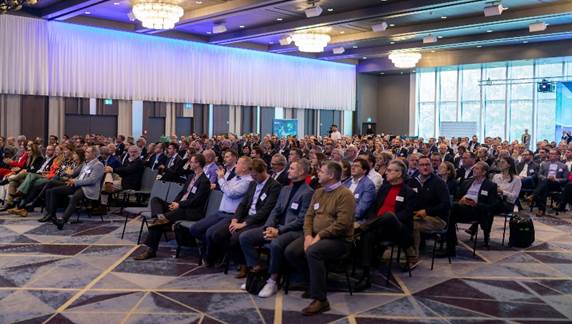
RAJA Group, a European leader in the distribution of packaging, office supplies and industrial equipment, brought together its 300 most important suppliers on October 14th in Frankfurt as part of the RAJA Group Suppliers’ Day 2022.

Led by Ulrick Parfum, Director of Purchasing and Product Offering (Packaging, Equipment, Janitorials, EPP), and Michael Behling, Head of Category, Commerce Platform & Data Management, as well as Alain Josse and Vincent Terradot, Managing Directors RAJA Office and RAJA Packaging & Equipment, the event allowed for RAJA Group to involve its main supplier partners in its ambitious development projects.

Driven by strong organic growth and a strategy of acquisitions to better meet market needs, the RAJA Group has become a key player in the field of business supplies and equipment. An independent company benefiting from the long-term vision of its President Danièle Kapel-Marcovici, a multi-specialist and multi-channel distributor with strong values and convictions, RAJA today serves more than two million companies across Europe, of all sizes and in all sectors of activity.

Despite the difficult economic climate, the Group remains as optimistic and determined as ever: “Being a supplier to the RAJA Group means having maximum exposure for your products and multiplying opportunities to sell. It is also an opportunity to create value and share the fruits of strong growth throughout Europe.  Finally, and above all, it also means ensuring the satisfaction of our customers every day,” say Josse and Terradot.

The Suppliers’ Day 2022 also allowed RAJA Group to clarify its expectations of its suppliers: “Our growth plans necessarily go hand in hand with the selection of the best manufacturers. Our aim is to build long-lasting partnerships with our strategic suppliers, based on common values: consistent product quality, excellent service, innovation, commitment to environmental responsibility and of course competitiveness,” Parfum and Behling explain.


Avocado distributor opens Dartford facility

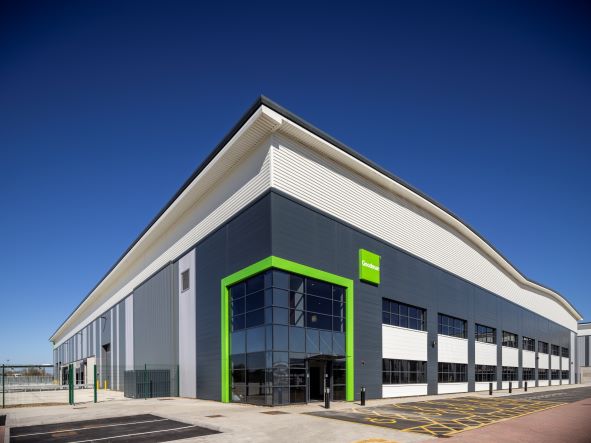
Mission Produce, a global leader in avocado marketing and distribution, is set to open its first UK facility at Goodman’s Crossways Commercial Park in Dartford, Kent.

Covering 101,659 sq ft, the highly-sustainable building will be used as Mission’s state-of-the-art ripening, packing, and forward distribution centre which is expected to help streamline import logistics and reduce transit times to UK customers.

Founded in 1983 and headquartered in California, Mission specialises in sourcing, producing and distributing fresh Hass avocados. It has an established network of 12 ripening and distribution centres globally, with avocado packing facilities in key locations including California, Mexico and Peru, and additional sourcing capabilities in South Africa. Mission leverages its global presence to serve retail, wholesale, and food service customers in more than 25 countries.

Paul Frowde, Managing Director at Mission Produce UK, said: “The opening of this distribution facility is a milestone that represents a significant opportunity for our business as we expand into the UK market.

“Goodman’s Crossways Commercial Park location was the ideal choice, blending a strategic location with a high-quality facility designed to streamline our operations. Its sustainable features and use of renewable energy are also expected to promote energy, cost and maintenance savings as we strive to maximise efficiency.”

Crossways Commercial Park’s strategic location, places 11.7 million consumers within a 60-minute drivetime. Its prime position, adjacent to Junction 1a of the M25, offers fast access to London and the national motorway network.

Developed to a BREEAM ‘Excellent’ specification, the facility promotes energy efficiency aligning with Mission’s strong Environmental, Social and Governance (ESG) credentials. It features a 490kWp rooftop array of solar photovoltaic (PV) panels, solar thermal hot water, rainwater harvesting and charging infrastructure for electric vehicles.

With the facility expected to open in early 2023, Mission is currently undertaking a highly specialised fit-out, including the installation of a 3,000 sq ft mezzanine and a variety of cutting-edge features. Grading visibility technology to reduce handling and minimise fruit damage, advanced testing machinery to determine stages of ripeness with precision, and specialised heating and cooling systems are just some of the systems being implemented to help Mission optimise its operations and provide customers with year-round supply of the world’s finest avocados.

The Crossways Commercial Park location will also be Mission’s first facility to feature “Mission Control” technology in dedicated ripening rooms. Using a specialised atmosphere control process, this innovative system can create the optimal environment for ripening, which in turn helps enhance product quality, extend product shelf life and reduce waste.

George Glennie, development director at Goodman, said: “Crossways Commercial Park is our most sustainable UK development, with cutting-edge technology and investment in on-site renewables.

“Combined with a prime M25 location, Crossways Commercial Park offers fast access to large consumer markets, maximising logistical efficiencies and supporting Mission in its next phase of growth.”

The news follows Goodman’s leasing of Crossways 138 – another unit in Crossways Commercial Park – to premium ingredients supplier, Albion Fine Foods, leaving just one 240,884 sq ft unit remaining.

STILL cooperates with Hydrogentle on hydrogen

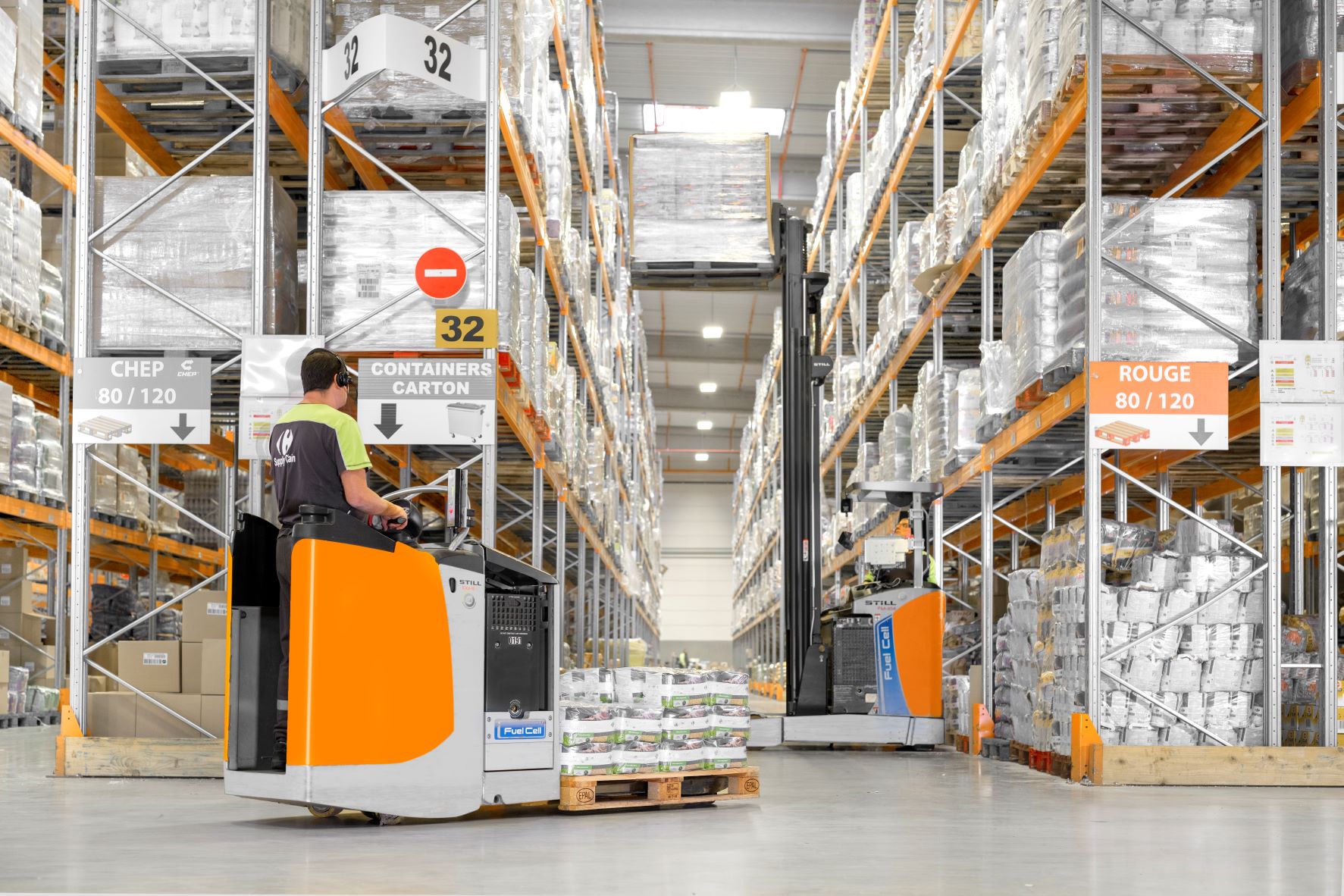
STILL has been a pioneer in the field of alternative energies for years and is continuing to drive forward the use of hydrogen in intralogistics. From next year on the Hamburg-based intralogistics provider will not only be producing fuel cell systems at the company’s own plant, but has also entered into a cooperation regarding hydrogen infrastructure in order to offer customers everything from a single source.

STILL will launch its own 24V fuel cell system for warehouse trucks next year. This will be produced at the main plant in Hamburg. With this, STILL will be the first original equipment manufacturer on the European market to produce fuel cell systems – so-called battery replacement modules – at its own production facilities.

“Fuel cell technology is certainly STILL’s most innovative mainstay at the moment,” explains Frank Müller, Senior Vice President STILL Brand Management. “Particularly in view of the current crises, we believe that this technology has a great chance to succeed.

In order to advise and support its customers comprehensively in matters of fuel cell technology as well, STILL has entered into a partnership with Hydrogentle GmbH, a Hamburg-based engineering firm that plans special plant construction, prepares feasibility analyses and advises customers on the subject of hydrogen infrastructure.

“With the support of the hydrogen specialist Hydrogentle, we can, in the interest of our customers, offer a holistic approach to the topic of fuel cells,” Müller continues. Holistic means that the customer only needs one point of contact with STILL: to provide high-quality industrial trucks that are ‘fuel cell-ready’, the fuel cell, the service and the entire hydrogen infrastructure – all from a single source.

Hydrogentle GmbH, based in the Port of Hamburg, develops and implements projects and concepts in the field of green hydrogen and provides support to customers. Like STILL, Hydrogentle takes a holistic approach: consulting, evaluation and individual site assessment as well as planning, project management and implementation. At the customer’s request, Hydrogentle provides support right up to the handover of a turnkey hydrogen infrastructure for the refuelling of industrial trucks and other vehicles.

“Hydrogen and all that it entails is complicated,” says Axel Poblotzki, Managing Director of Hydrogentle GmbH. “We simplify the topic and make hydrogen- based solutions tangible at every scale.”

The one-face-to-the-customer approach takes on a special meaning in the context of hydrogen. The value chain from the production to the refuelling of hydrogen is long and complex. Different suppliers and trades have to be coordinated with each other like Swiss clockwork. This is where Hydrogentle comes in and develops everyday solutions for customers. The focus is on the technical, legal and economic feasibility of projects and concepts.

“The cooperation between our two companies will significantly simplify the consultation, the installation of infrastructure and the operation of fuel cell-powered forklift trucks for our customers,” says Müller. “We are very pleased that we were able to win Hydrogentle as a partner.”


Supply chain diversification due to COVID raising questions

Procurement professionals who diversified their supply chains due to the pandemic are now struggling with the realities of managing hundreds of individual relationships, ensuring goods are ethically manufactured, and reaching their sustainability targets.

According to a report by the ONS, 1 in 20 UK businesses diversified their procurement supply chains at the start of the COVID-19 pandemic in an effort to keep disruptions to a minimum.

Now, search data, collated by Banner, shows that procurement professionals are left with a lot of questions about the realities of diversification, particularly when it comes to managing relationships, measuring their environmental impact, and ensuring that products were ethically manufactured.

Jason Thomas from Banner says: “It made sense during the pandemic for businesses to diversify their supply chains.  The more individual suppliers they could manage, the less likely they would be to suffer major disruption.  But the reality of maintaining many different relationships is becoming apparent, and it’s making things like sustainability and ethics much harder to keep track of.

“The problem is supply chains are still unstable, so we aren’t suggesting anyone goes back to having one supplier for each product or service. There is a middle way though. Supply chain partners are a sensible alternative that is the best of both worlds in terms of ease of management and supply chain robustness, sustainability and ethics.”

Searches including the term “sustainable procurement” show professionals are not only searching how to achieve it, but also what it even is.  They are also commonly searching for “ethical sourcing practices” and “how to ensure ethical procurement”.  But the most common UK searches including the term “supply chain” are “will supply chains get better”, “when will supply chain issues be resolved” and even “supply chain management for dummies”.

similar news

Operational resilience through supply chain and business process mapping


Ensuring the safety of damaged electric vehicles

Over recent years, the electric vehicle (EV) market has grown significantly, as we drive for sustainable solutions to support our green future. However, if EVs become damaged, safe storage and monitoring by workshops and recovery vehicles is key to prevent further risk. Tommy Carnebo, risk management specialist, Dafo Vehicle Fire Protection, discusses the risks of damaged EVs and how these can be mitigated to maximise safety.

By 2030, it’s estimated that, globally, there will be over 300 million EVs on the road (up from 16.5 million at the end of 2021). This comes as governments worldwide continue to push sustainability agendas to reduce carbon emissions. Predominately powered by lithium-ion (li-ion) batteries, EVs also present a new kind of fire risk – thermal runaway:

  1. If a battery overheats, overcharges or is subject to physical damage or overvoltage, it can cause an internal malfunction.
  2. That can lead to smoke emissions, alongside rapid temperature increases throughout the battery cells.
  3. If not controlled almost instantly, this can lead to fire, toxic emissions (eg hydrogen fluoride, carbon monoxide, carbon dioxide and cyanide) and potentially large explosions.

Thermal runaway is extremely difficult to extinguish using traditional fire suppression systems once it’s initiated. And, as EV numbers on roads continue to increase, as does the risk of thermal runaway.

For mechanic workshops, recovery vehicles, commercial vehicle handlers, first and second responders, or any other business responsible for the storage and handling of electric vehicles after road collisions, the risk of thermal runaway is particularly pertinent.

Thermal runaway is also a risk for lithium iron phosphate batteries, as they burn in the same way as li-ion batteries. However, as these batteries often contain less energy than li-ion batteries, the risk is potentially lower.

The need for a new approach

As thermal runaway can develop rapidly, for example overnight when damaged EVs are stored in a closed unit, it’s essential to have an effective fire detection system in place to maximise safety and prevent further damage to the EV, any surrounding valuable assets and the environment.

Traditional fire detection systems will often only detect thermal runaway as it advances and temperatures have begun to rise. At this stage, temperature rises can be irreversible and toxic gas emissions can cause serious health risks. Instead, damaged EVs need a unique fire detection system, which will identify thermal runaway in its earliest stage, identifying changes in the carbon monoxide levels, before temperatures increase.

As EV accidents can happen on the road, meaning damaged vehicles often need to be towed for periods of time before storage, a portable detection solution is key. This also enables the system to be applied and reused for different vehicles, giving cost savings for workshops.

By using sensors to immediately detect smoke emissions from the vehicle’s high risk areas, these detection systems can alert those nearby to the risk and can also be connected to a site’s fire alarm system, alerting first responders.

This also reduces necessary EV quarantine and downtime after a vehicle collision and makes the overall work environment safer.

DHL Express deploys Pixis AI for demand generation

Global logistics powerhouse DHL Express deployed Pixis’ codeless AI technology to boost demand generation and observed a 35% increase in clickthrough rates within the first month. The logistics leader, which leverages multiple channels for customer acquisitions, has been making strides in harnessing AI, as the scale of its campaigns grow globally.

Pixis’ codeless AI infrastructure enabled DHL Express to continuously monitor campaigns and scale growth by exploiting market trends at the right time, contextually targeting the right audiences through real-time AI-led insights, and serving them with the relevant creative recommendations at the right time. When campaigns were underpinned by AI insights the brand was able to four times as cost efficient as its prior approach. DHL Express also observed an uptick in the quality of leads generated by tapping into previously unexplored high-intent audience groups.

Sanup Pillai, Global Head of Digital Marketing & Martech at DHL Express, said: “We found Pixis to be a non-biased infrastructure with powerful cross-platform capabilities. We were able to easily integrate Pixis into our marketing channels, CRM, and attribution platforms to begin deriving insights and initiate appropriate actions. We were able to quickly reach the right audience at the right time, and at scale – allowing us to free up resources to concentrate on strategy and other key value-addition efforts.”

Pixis believes that easy AI deployment and intuitive user flows are essential factors in democratising AI for marketers. Having solved those problems through their novel plugin deployment method, the company also focuses on educating and guiding users to steer the AI on their own.

Sanup added: “When it comes to adopting any new technology, integration and active usage are the usual hurdles to overcome. With Pixis, we had none of those teething troubles. We were able to deploy the codeless AI within minutes through a plugin and the AI was activated.”

For DHL Express, bridging the strategy-execution gap entailed shifting away from manual campaign monitoring and optimisation, adjusting and fine-tuning budgets, and recalibrating the outcome of campaigns across channels. Pixis’ codeless AI infrastructure enabled DHL to effortlessly scale campaigns without increasing marketing spend through AI-led predictive analysis and real-time recommendations.

Introducing Pixis’ codeless AI to their tech stack has enabled DHL Express to reduce manual dependencies across their demand-generation efforts. Moreover, given that the Pixis AI is self-learning and highly adaptable, DHL plans to apply it more broadly. In his concluding note, Sanup said: “We are pleased with the results and we look forward to leveraging AI for more global campaigns.”

“DHL maintains its position as a global leader in the logistics domain by adopting and fusing advanced technologies in its business approach,” expressed Neel Pandya (pictured), CEO – EMEA & APAC at Pixis. “DHL’s growth and tangible outcome is a testament of how AI can positively impact businesses as a whole. It’s been immensely rewarding to witness DHL’s journey with the Pixis AI infrastructure.”

Subscribe

Get notified about New Episodes of our Podcast, New Magazine Issues and stay updated with our Weekly Newsletter.