Pallet Live Storage Fills Grocery Shelves

An innovative Pallet Live Storage installation can play a key role in supporting grocery retailers as they strive for market leading growth, according to Edward Hutchison, Managing Director of BITO Storage Systems.

Providing up to 50% more storage capacity than traditional racking on the same footprint, a Pallet Live Storage (PLS) system can contribute significantly to accommodating sufficient stock to meet growing demand from a grocery retailer’s customers.

Supporting a retailer’s need to maintain customer service in tandem with achieving sales growth is one of the biggest challenges placed on a distribution centres (DC), particularly when it comes to handling the sheer volumes involved and fast turnaround required by everyday bulk stock lines, such as soft drinks.

Pressure intensifies when these lines experience peaks, such as during a hot summer – particularly in large cities or on the coast. If one store runs out of a line of soft drinks on a very hot day, there’s a good chance that others in the region will experience a similar issue. All will want more but storage limitations mean there’s a chance that not every store will get the amount they require, which will have a knock-on negative impact on the grocery retailer’s level of customer service.

The best way to ensure such situations are avoided is to maximise the amount of storage that can fit within the constraints of a DC to provide efficient order fulfilment for retail stores. The traditional storage format in grocery DCs is standard pallet racking offering ground floor and first level picking with multiple levels of bays above. It is not unusual in particularly crowded DCs to find bulk stock items that are continually fed to stores being located on the DC floor. These configurations allow a DC to carry out case picking and give it the opportunity to take a pallet and ship it directly to a store. For smaller stores with a lower turnover, they might ship a half pallet.

However, for those grocery DCs that need greater flexibility to meet a variety of demands from customers within a limited space, PLS offers an ideal solution. It provides a dense storage and order picking system that contributes to innovative, efficient and agile grocery logistics operations. On a relatively small footprint, pallets can be located ‘in the air’ on several levels of inclined roller lanes, with delivery lanes for pallet loads of bulk stock lines – such as soft drinks – on the ground floor. This provides dense storage and rapid access to orders.

There are many innovative design variations that can be added to suit specific needs. For example, instead of using pallet racking uprights, the pallet live flow lanes could be constructed above a mezzanine structure, which could itself accommodate a number of bulk delivery lanes between each column on the ground floor for easy and rapid access. Introducing a such a solid structure for the ground lane gives added protection against the powerful and heavy lift trucks used in a DC.

Reach trucks can be used to place pallets delivered from Goods In on the upper levels of the PLS. Entering the rear of the lane, the pallets move down the roller lanes to provide a continuous feed of product for the pick face on the aisle at the front of the lane. Systems can accommodate traditional pallets, Euro-pallets handled short-sided and half pallets handled long-sided.

The flexibility in such a design allows products that need to be sent immediately to stores to be picked directly from the flow lane and transported to Goods Out. If the ground floor delivery lanes are getting close to empty, then stock stored in the lanes above can be brought down and pushed through to the other side of the lane for order pickers to continue their pick. The space efficiency such a system delivers makes the investment well worth it, giving a DC the capacity to stock items in sufficient quantities to avoid running out – even during peaks.

In addition to being an efficient storage method, PLS operates on the FIFO (First In First Out) principle, ensuring the product rotation that is important for grocery store replenishment: pickers always get the first product sorted by the ‘best before’ date. Furthermore with this solution, when bulk products a hit peak, a DC will have the ability to react on customer demands quickly, delivering straightaway irrespective of the amount ordered by a store manager. Any demand in any store can be fulfilled at any time – and that is the goal of any logistics operation.

A further benefit is that the PLS can accommodate seasonal items on the flow lanes in the upper levels, allowing the grocery DC to take advantage of quiet time to get those products out to stores early. When seeking a supplier to provide a PLS system, it makes sense to find a long-established company and has proven itself over the years as being a very trustworthy partner for grocery retail operations. With solutions that are priced competitively and an experienced team of experts to create and deliver projects on time, the company should be able to work closely with the client to develop customised solutions and work around existing operations.

On-time, Cost per Delivery KPIs for Logistics Providers

FarEye released the full findings of its Eye on Last-mile Delivery Report today, conducted with Researchscape International, which explores retailers’ and logistics providers’ last-mile delivery priorities and opportunities over the next five years.

Logistics providers’ priorities for performance improvement differs by company size

FarEye’s research findings for logistics providers reveals that for providers over $100 million in revenue, on-time delivery (74%) and cost per delivery (62%) are their top two priority KPIs to improve. For providers under $100 million in revenue, their top two priorities are cost of delivery (73%) and customer satisfaction (64%). As logistics providers grow, complexity and scale increase, where on-time deliveries become more challenging to execute with precision.

“Unlike retail, last-mile delivery is the backbone of logistics providers’ operations and their goals will be focused on delivery performance and cost efficiencies, above all. While their priority improvement metrics don’t differ heavily from retailers’ priority improvement areas, the difference lies in the size of the logistics provider. With size comes complexity, but also efficiency, where the cost per delivery goes down, but the difficulty in managing and tracking orders goes up,” said Stephane Gagne, vice president, product, FarEye.

Retailers and logistics providers must work together to achieve superior deliveries

How retailers and logistics providers work together to achieve the pinnacle delivery experience – one that simultaneously reduces cost to deliver while increasing customer satisfaction will be crucial. Outsourced delivery networks have become a way for retailers to increase speed to deliver (64%) and reduce cost (37%) of last-mile delivery, however, it comes with the sacrifice of less control of the consumer experience.

FarEye’s initial report findings denote that 84% of retailers that have outsourced their delivery networks want more control of their delivery networks. Specifically, 33% of retailers are challenged by logistics providers’ inability to provide reliable information and they rank carrier performance as the top factor that inhibits delivery speed.

Logistics providers’ last-mile delivery growth priorities

Over the next year, 77% of logistics providers expect their budgets for last-mile delivery technology to grow. Eighty-two percent of logistics providers claim they will likely change or buy a new last-mile delivery solution in the next 1-2 years. Forty percent of logistics providers expect to buy a last-mile delivery platform in the next five years, vs. building their own in-house (40%). Similar to retailers, logistics providers are also evaluating electric vehicles (80%), autonomous vehicles (44%) and drones (38%) to make their fleets more sustainable and efficient, over the next five years.

Research Methodology

The FarEye Eye on Last-mile Delivery research was released in two parts, in January and February 2023. FarEye analysed responses from 300 leaders across retail and logistics with responsibility for logistics and retail operations in the U.S. (32%), EMEA (36%) and APAC (32%) regions.

FarEye’s Delivery Management platform turns deliveries into a competitive advantage. Retail, e-commerce and third-party logistics companies use FarEye’s unique combination of orchestration, real-time visibility, and branded customer experiences to simplify complex last-mile delivery logistics. The FarEye platform allows businesses to increase consumer loyalty and satisfaction, reduce costs and improve operational efficiencies. FarEye has 150+ customers across 30 countries and five offices globally. FarEye, First Choice for Last Mile.

Cathay Pacific Cargo Rebrands

Cathay has announced the launch of Cathay Cargo, a rebrand of its cargo business, and a change of name from Cathay Pacific Cargo. The change aligns with the airline’s overarching brand redesign, and reinforces the existing strong brand association and perceptions held by its customers. Cathay Cargo aligns with the same purpose, vision and values of our master brand Cathay and all of its subsidiary brands, including Cathay Pacific, the passenger airline, and Cathay, the everyday lifestyle offering.

Cathay Cargo is united behind Cathay’s vision to become one of the world’s greatest service brands, and plays an integral role in helping to fulfil that aspiration through its world-class air cargo network, which transports products that facilitate trade across the entire Cathay network and beyond. Shipping directly to more than 70 destinations worldwide, Cathay Cargo is committed to advancing the development of all destination countries served by Cathay’s more than 200 aircraft.

Group Chief Executive Officer Ronald Lam said: “Cathay’s cargo business has played a vital role in the success of the Cathay Group since 1946, when we carried our first shipment between China and Australia. Our cargo services operate out of our home base of Hong Kong, which is also the world’s busiest international air cargo hub.

“This is an opportune moment to align our cargo business with the master brand as we continue our cargo investments in Hong Kong and the Greater Bay Area for a promising future. This rebrand reflects our Cargo business’ commitment to the same ‘Move Beyond’ ambition as the Group, while building on a strength that the Cathay brand has long been known for – offering leading-edge services to our customers.”

Reflecting this commitment to invest, Cathay Cargo has recently introduced a number of exciting refreshed solutions, including Cathay Priority and Cathay Pharma. Cathay Mail is scheduled for a refresh in March. These services cater to the respective burgeoning demands by customers for effective temperature-sensitive solutions, and efficient and reliable delivery solutions with new digital technology that better meets the requirements for shipment visibility, reliability and speed.

Director Cargo Tom Owen said: “Cathay Cargo continues to innovate new solutions, services and technology for customers as we build towards being one of the world’s greatest service brands. Continued investment in technology and logistics will solidify our position as a leading player in the industry.”

Cathay Cargo has invested in technology in recent years. This includes Ultra Track, a multi-dimensional track-and-trace service that gives customers near-real-time information on the airport-to-airport leg of the shipment journey using low-energy Bluetooth data-loggers; and, Click & Ship, an intuitive online booking service available 24/7 with instant processing and confirmation.

As part of its rebranding campaign, Cathay Cargo’s website has been revamped to reflect the brand ethos, and enable users to easily access popular features such as booking, track and trace, and flight availability, whilst also providing a clear showcase of recent campaign offers and featured solutions. The rebrand will connect Cathay Cargo to the master Cathay brand – a premium travel lifestyle brand offering a range of products and services that create more value for customers and partners. Cathay Cargo will have more exciting initiatives in the coming months as the company works toward a complete rebrand.

Rise of Direct-to-Consumer in Europe

Nearly six out of ten European organisations (59%) across ecommerce, manufacturing, retail, transport and logistics supply chain, and wholesale say their investment in the Direct-to-Consumer (DTC) delivery model has increased since early 2020, with a total of 18% saying it has increased significantly. By increasing their investment, organisations believe they can improve profit margins, reduce cost, and service customers more effectively.

That’s according to a European Direct-to-Consumer research report by Deposco, a leading provider of omnichannel supply chain fulfilment solutions, polling decision-makers across the UK, Benelux and the Nordics, which points to a dynamic, fast-growing DTC sector.

However, organisations are also facing a range of barriers related to people and technology when it comes to achieving the DTC success they are seeking. These include, in the former category, lack of skilled staff, highlighted by 17% of the survey sample and culture of the company (16%), and in the latter, physical infrastructure (19%) and difficulties identifying the right infrastructure for DTC (16%).

Sustainability and Customer Experience are the key growth drivers of DTC in Europe

The latest technology is key in helping businesses protect themselves from failing to fulfil customer expectations when operating DTC. The survey reveals that many organisations are considering complete categories of products and even their whole range through DTC. Organisations must ensure that they are investing in people and technology and making sure that that their systems and processes are working at optimum efficiency levels. Putting money behind order management and fulfilment will be a key part of that.

42% of the survey sample highlighted investing more in order management and fulfilment technology as a key way of protecting themselves from failing to fulfil customer expectations when operating DTC while 29% referenced creating real-time visibility across all inventory locations.

Deposco’s complimentary report, The Rise of Direct-to-Consumer in Europe: How businesses can break through the barriers and make a success of DTC channels, is now available.

Electric Trucks Market Booming, says Volvo

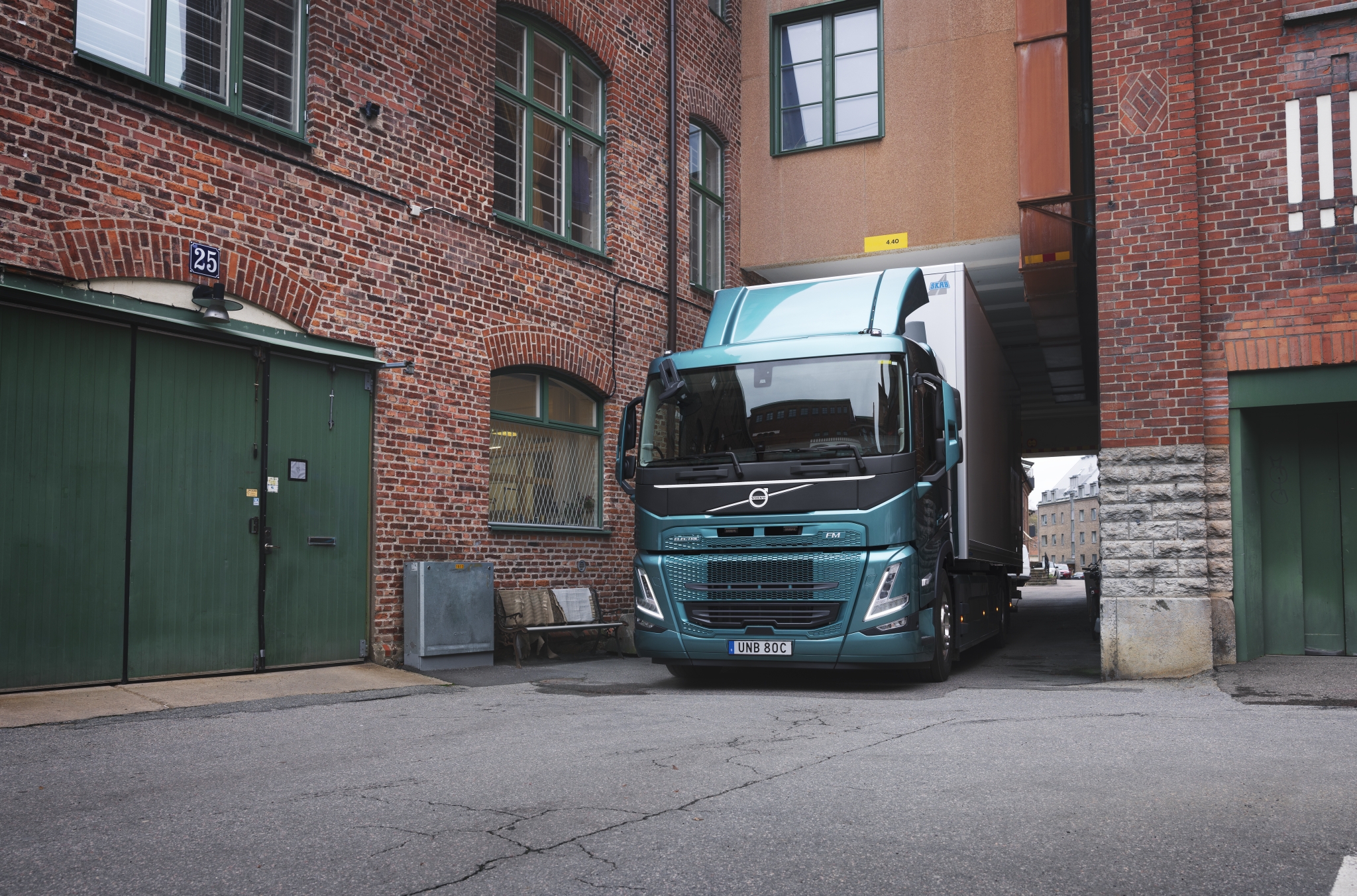
Volvo Trucks has now sold more than 4,300 electric trucks globally in more than 38 countries, while in Europe it is leading the way with a 32 per cent share of the market for heavy electric CVs/lorries. In 2022, Europe’s heavy electric CV market grew by 200 per cent to 1,041 units, with Volvo setting the pace.

Roger Alm, President of Volvo Trucks, says: “We are determined to lead the electric truck transformation and our market leading position in 2022, not only in Europe, but also in North America, is proof that we are doing just that. Although the market for electric trucks is still small compared to the traditional diesel variants, the trend is clear: many of our customers are now starting their own shift to electric. We intend to be the catalyst for this transition and aim for 50 per cent of our global sales of new trucks to be electric in 2030.”

Since Volvo Trucks started production of fully electric CVs in 2019, the company has sold more than 4,300 electric trucks/lorries in more than 38 countries around the world. Volvo currently offers the industry’s broadest product line-up of electric models in series production, catering to a very wide variety of operational domains both in and between cities.

“We now have a product portfolio that can cover most types of transportation for all kinds of customers,” adds Alm. “Looking at the goods flow patterns in Europe, it’s clearly possible to electrify nearly half of all those transport operations with our line-up of electric lorries. We see it as our mission to support our customers in making that happen.”

The 10 largest markets for electric lorries, based on number of registrations ≥16 tonnes, in Europe are:

1. Germany – 198
2. Sweden – 169
3. Norway – 150
4. France – 118
5. Switzerland – 103
6. UK – 101
7. Netherlands – 89
8. Spain – 79
9. Denmark – 48
10. Belgium – 17

The Volvo market share and overall growth data referenced for heavy electric CVs/lorries in Europe includes content supplied by IHS Markit.

Oceaneering Wins AMR Contract

Oceaneering International, Inc. (NYSE:OII) announces that its Oceaneering Mobile Robotics (OMR) business has been awarded contracts by a leading international manufacturer for the delivery of 85 MaxMover™ CB D 2000 autonomous counterbalance forklifts to three of their manufacturing facilities. The forklift systems are scheduled for staggered delivery between early 2023 and early 2024. The scope of the contracts includes installation, on-site systems-integration services and training, as well as 24/7 hotline support and remote software services.

The MaxMover™ vehicle is a robotic forklift capable of lifting 2,000 kilograms (4,400 pounds) and moving autonomously in support of manufacturing and assembly processes and warehouse material movements. This forklift was designed to retain the desired capabilities of conventional forklifts, including differential drives to allow pivot turning and comparable maximum speeds, while leveraging autonomous capabilities to create operating efficiencies. Importantly, the MaxMover™ software platform is designed to easily integrate with new and existing facility environments, while accommodating future upgrades to further enhance operating capabilities. In addition, its high-performance battery design and quiet operating features enhance employee safety and help create healthier work surroundings.

Roderick A. Larson, Oceaneering’s President and Chief Executive Officer, stated, “We have seen tremendous interest in this product since its launch in 2022. These meaningful contract awards for our innovative MaxMover™ product are recognition of OMR’s best-in-class intralogistics solutions and performance and confirm Oceaneering’s ability to leverage its core robotics expertise into new markets. We appreciate the confidence that this customer has shown in our autonomous mobile forklift system and look forward to further expanding this strategic relationship.”

Oceaneering’s OMR business designs, manufactures, implements and maintains innovative turnkey logistic solutions based on autonomous mobile robot technology. Its mobile robot systems consist of one or more robots, advanced supervisory software, and supporting infrastructure. These robots can be operated in mixed fleets. Integration management ensures that these turnkey logistic systems are optimized to suit customer needs and seamlessly interface with other customer processes, while OMR’s high-performance battery solution helps to lower customers’ operational carbon footprint. For over 30 years, OMR has been a trusted partner for the automotive, healthcare, manufacturing and logistics industries.

Oceaneering is a global technology company delivering engineered services and products and robotic solutions to the offshore energy, defence, aerospace, manufacturing, and entertainments industries.

Locus Robotics Premiere Vector at LogiMAT

Locus Robotics is presenting a European premiere at LogiMAT 2023. In Stuttgart, visitors will have the opportunity to experience the Locus Vector in action for the first time at Locus stand 6A71 in hall 6.

Locus Vector, the autonomous mobile robot (AMR) has a payload of up to 272 kg, can move autonomously in any direction (omnidirectional) and is therefore particularly suitable for picking items with higher weights and those that require special handling. It can be configured with a wide variety of shelf and container attachments, so that Locus Vector can be used not only in intralogistics but also in production environments.

On the 100 m² stand, visitors can also get an impression of our proven Locus Origin robots in live demonstrations. Locus Bots work together with humans, eliminating the need for pushing picking trolleys and long walking distances, thereby enabling a simpler, faster, and safer picking process in the warehouse.

Bots and AMRs

Locus Robotics is a leader in revolutionary, enterprise-level, warehouse automation solution, incorporating powerful and intelligent AMRs that operate collaboratively with human workers to dramatically improve product movement and productivity 2–3x. Named to the Inc. 500 two years in a row, and winning over 17 industry and technology awards, the Locus solution dramatically increases order fulfilment productivity, lowers operational costs, and improves workplace quality, safety, and ergonomics for workers.

With over 100+ of the world’s top brands and deployed at 250+ sites around the world, Locus Robotics enables retailers, 3PLs and specialty warehouses to efficiently meet and exceed the increasingly complex and demanding requirements of today’s fulfilment environments. Locus is headquartered in Wilmington, MA (USA) and Amsterdam.

Unparalleled Selection of Products at Show

LogiMAT 2023 trade show will see a vast collection of products and services from more than 1,500 exhibitors from around the world, supplemented by a diverse program focused on key trends and solutions in intralogistics, offering international industry professionals a complete overview of the latest systems for efficient, future-proof warehousing processes and flexibility in challenging times.

LogiMAT 2023, the International Trade Show for Intralogistics Solutions and Process Management, opens its doors at the Messe Stuttgart convention centre in just a few weeks. This year’s theme of “Hands-On Innovation: Connecting Smart Networks!” brings together the global intralogistics community in ten packed exhibit halls and the open space between Halls 8 and 10 in an event running April 25–27, 2023. More than 1,500 exhibitors from Europe, North and South America, Asia, and Africa will present their current portfolios of products, systems, and solutions for efficient intralogistics processes to an international industry audience across 125,000 square meters of the fully booked exhibition centre—7% more exhibit space than last year. “Every trusting business relationship begins with a personal conversation,” notes Exhibition Director Michael Ruchty of event organizer EUROEXPO Messe- und Kongress-GmbH in Munich, explaining the event’s theme. “LogiMAT is back in April 2023 with another excellent opportunity to network, forge important strategic alliances, and have face-to-face meetings with key national and international players from a wide range of industry sectors.”

As the largest logistics trade show in the world, LogiMAT has established a durable brand as a leading information and communication platform and a place where the intralogistics industry comes to do business. Exhibitors from around the globe active in Central Europe know LogiMAT as the number-one forum for showcasing their new ideas and innovations. Digital transformation, automation, flexibility, sustainability, and the efficient use of resources: These are the defining themes shaping intralogistics today—not just among system developers and equipment manufacturers but also from the perspective of businesses in the industrial, commercial, and service sectors. The demand for intralogistics investments mirrors these trends. “Intralogistics experts operating in a volatile environment prepare for the future by embracing resilient, flexible, efficient solutions,” acknowledges Markus Schlotter, Managing Director for Central Europe at Exotec GmbH (Hall 5, Booth 5D71). “The demand for smart, scalable solutions is growing. The orders are pouring in, and the industry as a whole is busy.”

Growth from Asia, Africa, and South America

Investments are flowing into state-of-the-art industrial trucks, process automation, IT upgrades, and sustainability concepts with the aim of achieving more flexible system designs and automation solutions in a volatile market. The latest product and system innovations that exhibitors from around the world are bringing to LogiMAT 2023 highlight the industry’s adaptability in the face of tremendous global economic challenges—a validation of the innovative power of the industry and its potential for further optimization.

The percentage of exhibitors coming to this year’s LogiMAT from outside Germany has risen to nearly a third, reflecting the event’s increasingly international profile amid the current global economic climate. This trend is especially pronounced among the 200 first-time exhibitors, nearly 70 percent of which are based outside of Germany. “We have 25 first-time exhibitors from Asia alone, including 20 from China. Overseas companies now account for 25 percent of our exhibitors,” Ruchty confirms. “We’re also pleased to see a few more exhibitors from Africa and South America. These latest figures really underscore the growing international importance of LogiMAT for companies beyond Europe. The successful LogiMAT offshoots in China and Thailand are also critical in supporting this trend.”

LogiMAT is upholding its reputation as an event that is “easy on the feet” by once again grouping exhibitors by product category within the ten exhibit halls, with an improved layout this year. The largest exhibitor contingent is systems integrators and machinery and equipment manufacturers, who will present their latest products and solutions for moving goods efficiently in Halls 1 (including the Gallery), 3, 5, and 7. The products, systems, and solutions on display there meet the demands of today’s marketplace. “As prices rise, material flow and logistics professionals are also focusing their attention more closely on energy efficiency,” Ruchty observes. “Exhibitors across all ten halls are showing how sustainability and the efficient use of resources can be successfully reconciled through sound investments in state-of-the-art products and solutions—either by modernizing and optimizing existing systems or by acquiring new technology.”

Holistic view of sustainability and resource efficiency

The logistics and intralogistics industry is often at the vanguard when it comes to solutions to reduce energy consumption and use resources more efficiently. This includes being a “trailblazer of the circular economy” in the words of Dr. Johannes Fottner, Full Professor for Logistics Engineering at the Technical University of Munich, in the title of his presentation as part of the accompanying program at LogiMAT 2023. The industry took a holistic view of sustainability and resource efficiency even before the current shortage of skilled workers emerged or new local and international regulations on the designation of industrial and logistics sites took effect. The spectrum of solutions ranges from recycling, retrofitting, circular systems and energy conservation to optimizing personnel and space utilization. Examples include compact warehouse and picking solutions with an energy recovery system, sleep mode when order volumes are low, and lightweight construction for reduced energy consumption. The use of supercapacitor technology improves the energy efficiency of shuttle robots, and nearly all manufacturers now offer energy recovery systems and high-frequency charging technology in their industrial trucks. New lower-consumption identification solutions and the integration of sensor technology and AI-supported industrial image processing increase visibility and deliver more efficient processes with less resources required. Manufacturers at LogiMAT 2023 will also present the latest developments in the integration of alternative powertrains such as lithium-ion and hydrogen/fuel-cell technology.

The exhibitors at LogiMAT 2023 are coming to the Messe Stuttgart convention centre to unveil a wide array of innovations offering different approaches to meet the market’s need for more high-tech automation and flexibility through sustainability and efficiency. Several equipment manufacturers and suppliers are presenting new compact storage systems, warehouse robots, and robot-assisted picking and peripheral equipment for established systems. Others are putting automation, flexibility, and digital transformation front and centre, exhibiting new sorter solutions and electric floor conveyors, modular drive and automation technology, mobile handling and transport systems, and modular, customizable material carrier systems designed to support the deployment of re-use/recycling systems.

Cloud-based apps and AI-powered tech

Hall 7 brings together systems integrators, industrial machinery and equipment manufacturers, and exhibitors with peripheral products and innovations from the fields of handling, cranes, fire safety and security, loading technology, and gates. Visitors can learn all about the latest crane sets, turnkey systems, transfer cars and floor lifts, lifting and handling systems for a wide variety of loads, and drive systems for unidirectional, bidirectional or omnidirectional manoeuvrability.

In Halls 9 and 10 on the opposite southern axis of the convention centre grounds and the open space between Halls 10 and 8, industrial truck manufacturers from around the world are presenting their latest innovations and forward-looking concept studies. Nearly all the world’s leading manufacturers are coming to Stuttgart once again this year. The innovations on display range from the latest forklifts, order picking vehicles, and automated guided vehicles (AGVs) with the latest features such as innovative alternatives to the steering wheel. You can also experience the latest developments in driver assistance and fleet management systems, “green performance” and alternative drive technologies, and battery and energy management. Exhibitors have announced plans to unveil never-before-exhibited reach trucks, electric counterbalance and multi-directional forklifts, vertical order pickers, narrow aisle trucks, low-lift pallet trucks, and much more.

Information technology enables the data analytics and control needed to modernize and automate warehouse processes. Suppliers of software solutions for intralogistics, the second-largest contingent of exhibitors at LogiMAT 2023, are presenting a wide range of innovations in warehouse and transportation management systems in Hall 8. Visitors can also marvel at powerful new material flow computers, analytics modules for business and performance data, an EDI portal solution for exchanging documents without an ERP system, new cloud-based apps, and AI-powered tech for real-time imaging analysis.

10,500 square meters of floorspace for AGVs and robots

LogiMAT 2023 is also breaking new ground in the area of AGVs and robotics. “This segment is developing so rapidly that we expanded its exhibition area to meet the demand,” explains Exhibition Director Ruchty. “We moved this segment to Hall 6, where we’ll have a total of 10,500 square meters available for the mobile materials handling equipment and robots, more than double last year’s space.” The products on display will include the latest stationary and mobile picking robots and cobots with AI-powered imaging and the first fully autonomous AGVs for both indoor and outdoor applications.

The East Entrance will also once again host the exhibit area for innovative start-ups sponsored by the German Ministry for Economic Affairs and Climate Action. LogiMAT 2023 also comes alive with an extensive and engaging accompanying program of presentations by experts from the business and academic communities, informative exhibitor presentations, live events on cargo securement and the Tracking & Tracing Theatre presented by AIM-D. “All in all, LogiMAT 2023 offers a breadth of products and information on current trends and solutions not available to industry professionals anywhere else,” concludes Exhibition Director Ruchty. “We look forward to once again showcasing the international intralogistics industry in Stuttgart in late April, and we hope all exhibitors and visitors will enjoy stimulating and informative conversations.”

Mosca Showcases TechCenter at LogiMAT

The main focus of Mosca’s appearance at this year’s LogiMAT from 25 to 27 April is on digitalisation and innovative service solutions. Stand 4D21 in Hall 4 is where the company will be using a tilt testing tool to offer insight into its newly opened TechCenter, in which customers can put their transport security systems to the test. Trade show visitors can also see live demonstrations of the new SoniXs TR-Connect, Mosca’s strapping machine designed for Industry 4.0.

“Mosca is much more than a machine manufacturer. We serve as professional partners for our customers’ sustainability and digitalisation projects,” explains Johannes Wieder, Sales Manager Logistics at Mosca. “And this is precisely what we want to demonstrate with our exhibit at LogiMAT.”

Mosca will not only be presenting its own machines at the trade show this year. Live demonstrations using a tilt testing tool will enable visitors to see quality checks on strapped products first-hand. Although the special machine is not part of the Mosca portfolio, it has been integrated into the company’s new TechCenter. This high-tech test lab in Waldbrunn enables customers to subject their cargo units and transport security systems to various stress tests and optimise them for sustainability as well as resource efficiency.

Wieder explains: “Many companies don’t notice that their transport security isn’t capable of withstanding high loads until the worst-case scenario occurs. This is why we developed the Mosca TechCenter as a service solution. Our customers can check a wide variety of load units and influencing factors to make adjustments to their packaging before the worst case occurs. Our display at LogiMAT gives customers initial insight into how the Mosca TechCenter operates.”

Strapped product pallets are placed in the tilt testing tool at the Mosca stand and tested for transport security. The machine tips the pallets to a predefined angle to test the stability of the bundled load when it is tilted. “Customers can run a full range of tests in our TechCenter: from acceleration and vibration to impact and crushing force testing,” Johannes Wieder explains. “The Mosca TechCenter is fully equipped to ensure customers can conduct tests that are most relevant to their transport processes.”

SoniXs TR-Connect introduced as Mosca’s new Industry 4.0 machine

Along with the introduction of the Mosca TechCenter, the market launch of the new SoniXs TR-Connect will also take place at LogiMAT. The basic principle of this high-tech machine is well established: Mosca is combining two previous models, the SoniXs TR-6 Base and TR-6 Pro, into the TR-Connect. Mosca innovation manager Andreas Ding explains the changes: “The new TR-Connect gives our customers more flexibility when it comes to further developing and networking their packaging lines. In the past, users who opted for a SoniXs TR-6 Base but later needed the functions of the Pro version had to replace the entire machine. The new TR-Connect can be easily adapted at any time and comes with all the functions that users need for Industry 4.0 applications.”

Key features include an integrated WebHMI that enables users to view all performance-related machine data, like availability and quality, at any time. The interface also makes commissioning and operating the SoniXs TR-Connect much easier because the machine can be remotely monitored at all times. An optional OPC/UA interface enables even greater flexibility. Thanks to compliance with the communication standard, the TR-Connect can be easily connected to a wide variety of interfaces to share information. Other options include the Mosca Digital Package, which makes it possible to use a tablet computer for easier machine adjustments.

New Direct Load Location in Austria

Hellmann Worldwide Logistics opened its first Austrian Direct Load branch in Kufstein this February. The globally active logistics service provider has already had a successful presence in the Austrian market for 15 years with five branches and a focus on air and sea freight products. In the future, full and partial truckloads will also be dispatched from Kufstein throughout Europe and Austria. Kufstein will thus become part of the existing Direct Load network, which is already represented in eight European countries with more than 40 locations.

As part of its global growth strategy, Hellmann has invested heavily in its Direct Load network in recent years – for example in France, the Netherlands, the Benelux countries, the Czech Republic and Poland. Due to Austria’s central location, the expansion of the network in the Alpine country is of strategic importance. With the opening of the branch in Kufstein, which is a hub for overland transports in Austria due to its favorable geographical location, the logistics provider is opening another notable market in the heart of Europe. At the same time, Hellmann is creating an additional gateway to Southeastern Europe and Italy, which will also significantly strengthen the existing connections to and from Eastern Europe.

“The branch in Kufstein is of strategic importance to us in two respects: on the one hand, by opening up this inner-European hub, we are strengthening our road network and our connections between northern and southern Europe in particular. At the same time, by expanding our product portfolio to include direct load services, we are also further strengthening Hellmann’s competitive position in Austria – a market in which we intend to continue growing sustainably in the future,” says Jens Wollesen, Chief Operating Officer, Hellmann Worldwide Logistics.

Since its foundation over 150 years ago, Hellmann Worldwide Logistics has developed into one of the largest international logistics providers in the world. With more than 12,300 employees, the company is active in 60 countries and generated sales of around EUR 4 billion in 2021.The range of services includes classic forwarding services by truck, rail, air and sea freight, as well as a comprehensive range of CEP services, contract logistics, industry and IT solutions.

Subscribe

Get notified about New Episodes of our Podcast, New Magazine Issues and stay updated with our Weekly Newsletter.