eBook: Data Driven Logistics

Logistics Business magazine, together with the Information Factory, have produced a 7 page digital magazine on data in transport logistics. Editor Peter MacLeod talks to iFactory CEO Robert Jordan to understand how transport businesses can drive up profitability by adopting a data-driven approach. Learn how to transform data into insights and decision-making power.

Read the free eBook here.

A framework for being data driven

“Information about the package is as important as the package itself,” said Fred Smith, founder and chairman of FedEx. And it’s easy to see why. Data is generated at every stage of the logistics process. When integrated, organised and managed properly data tells you how your business is performing. More importantly, data can be used to predict future outcomes. And ultimately what you need to do to get to where you need to be. The iFactory call this being data driven.

The great thing about your data is that you don’t need to invest huge amounts of time and money in order to start out on your data driven journey. Cost effective business intelligence tools will quickly show how you’re doing against your company and department KPIs.

Predictive analytics and data science systems offer more advanced functionality such as demand forecasting, dynamic pricing and route planning. And, for those with more complex requirements, data can be used to power decision support systems that support strategic and operational work at all levels of the organisation.

The imperative faced by companies operating in today’s supply chains is to use their data to integrate with other players upstream and downstream. If they can’t they are increasingly redundant. And likely to be less efficient and more costly than those that can.

The Information Factory have developed a simple framework to help companies harness the power of their data; Strategy, Delivery, People & Culture and Technology. The recommendations in the framework have all been road tested in live situations and come from clients who’ve already embarked on their data driven journey.

And, if you’re attending Transport Logistic in Munich between May 9 – 12, you have an open invitation to visit the iFactory on stand A3 605.

Next-Generation Vision Provider

With eCommerce booming, vision provider Cognex is helping to accelerate warehouse automation with a range of standard, easy-to-use logistics solutions.

The global increase in eCommerce triggered by the Covid-19 pandemic saw functions within warehouses stretched to breaking point as businesses struggled to fulfil record volumes of goods. Furthermore, consumer demands for greater levels of availability, affordability, speed and sustainability drove companies to seek ways to increase throughput without sacrificing accuracy.

There are two fundamental ways a warehouse can process throughput higher than it was originally designed to do – either invest in additional infrastructural capacity or find ways to maximise its existing assets. The latter is normally the most cost-effective option but is often limited by factors such as available space. However, the simplest ways to increase the rate at which boxes, parcels, packets and cartons are conveyed – placing the items closer together on the conveyor, or increasing the speed of the belt, or both – means existing scanning technologies may struggle to accurately read items at speeds with which they were not designed to cope.

Next-Generation Scanning Technology

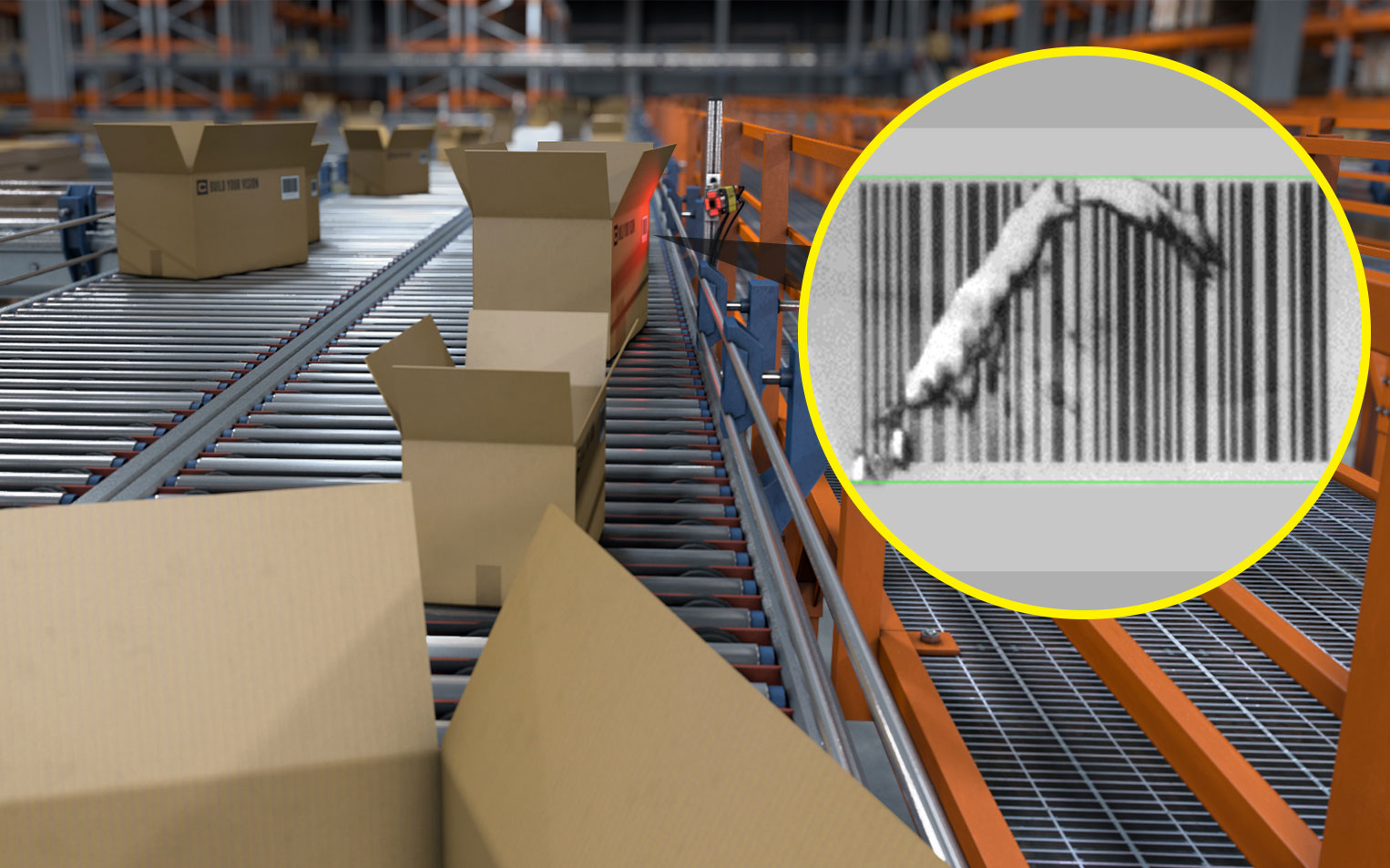
Whilst the capabilities of scanning technology are constantly evolving, poorly printed, torn, or otherwise damaged labels and barcodes can prove to be a barrier. A solution to reducing and eliminating misreads lies with next-generation machine vision hardware and lighting which performs better and decodes better with every new release. The latest cameras are capable of cycling at much faster rates and therefore offer multiple shots of a single barcode as it progresses through its field of view, allowing the software multiple opportunities to understand the data it is asked to process. “That multiple shot enables us to look at more symbologies and angles at a higher resolution,” says Piers Quarry, Strategic Manager, Project Solutions Team at machine vision provider Cognex. “We are seeing increasingly better performance on shiny materials, odd angles, slightly crinkled labels, which previously may have been misread.”

To overcome the challenge of items placed closely together on a conveyor, the latest iteration of vision scanning technology features the steepest-ever camera angles. Combined with (3D vision) technology for precise barcode assignment, the barcodes of two packages in close proximity can be very accurately assigned not just to the correct package, reducing misreads while increasing throughput, but also to the right face on that package, giving extra data that adds intelligence to the system. “We’re striving to get camera angles as steep as possible to look down between items and achieve that higher throughput,” says Quarry.

Simple Solutions

Ultimately, these high-throughput facilities have the most to gain by incremental increases in performance of scanning technologies. But many much smaller businesses with a logistics function within their operations can also benefit greatly from some of the simpler scanning technologies currently on the market.

Even the simplest hands-free barcode scanning solutions, many of which are ‘plug-and-play’, feature high levels of functionality. Offering next-generation lighting, a variety of fields-of-view, and benefits such as a high-speed steerable mirror (HSSM) to move the field of view with the operator, they can be tailored to suit businesses of every shape and size. Previously, pallet scanning, aggregation, and large area scanning functions required expensive, high-resolution PC-vision, or two or more smart cameras to successfully read the high volume and variation of barcodes. Now, an HSSM attached to Cognex’s DataMan 470 fixed-mount barcode reader can provide a high-performance, cost-effective solution for large field of view applications.

“These simple hands-free solutions are opening people’s eyes to what they can do with barcode reading,” says Quarry.

The warehouse of the future will rely on the integration and optimisation of multiple logistics functions all incrementally improving as they collect and analyse data along every step of the way, from goods-in to dispatch. Vision scanning will play a significant part in the outright effectiveness of the facility, for any one bottleneck in the system has implications for the overall efficiency of the entire operation.

“Vision in logistics is a most exciting area for us,” says Quarry. “Cognex is a visionary company which, in logistics, has previously been heavily concentrated on barcode readers. But actually, its pedigree is about using vision for multiple applications across multiple industries. That makes us very excited about being able to deploy more of that into the logistics industry to optimise this cutting-edge sector.”

Whatever the size or shape or location the warehouse of the future will be, one thing is certain – vision technology will be key to accelerating warehouse automation.

Sealed Air Announces New Corporate Brand SEE

Sealed Air Corporation has announced it has officially changed its corporate brand to SEE®, taking the next step in reinventing the company. Sealed Air has evolved its corporate and iconic brands to SEE, showcasing a market-driven, customer-first, solutions company. SEE partners with customers to deliver packaging solutions integrating Automation, Digital and Sustainability, creating significant value for their businesses.

SEE’s growth and earnings performance has significantly increased over the last five years built on the SEE Operating Model and executed by the SEE Operating Engine and SEE Operational Excellence.

Commenting on SEE’s corporate rebrand, Ted Doheny, President and CEO said:
“We are relentlessly reinventing SEE from product driven to a world-class, market-led company powered by automation, digital and sustainable packaging solutions.”
“SEE is making the future of packaging real and we expect this to enhance our valuation.”

SEE supplies packaging for more than 30 billion products globally each year. SEE’s new corporate brand represents the power of its brands and solutions that include equipment, services and materials. The company has grown and evolved beyond what it once was, and the new corporate brand and logo are a direct reflection of that transformation. SEE is continuously redefining what packaging does and can do by integrating automation, digital and sustainability into solutions that exceed the needs of its customers.

Automation: SEE enables customers to unlock productivity and savings by designing, manufacturing, sourcing and delivering automated packaging solutions with paybacks shorter than 3 years. The company is on a path to more than double its automation portfolio by 2027.

Digital: SEE’s digital printing and online value-added services empower brand owners to improve business performance and operational efficiency. The company expects over 80% of its sales to be transacted digitally by 2027. SEE’s solutions reach consumers through engaging and cost-effective digital designs and content.

Sustainability: SEE continuously brings customers new, innovative materials and applications that reduce waste, extend shelf-life, increase protection, enable circularity and reduce carbon impacts of products and packaging. Nearly 20% of its materials portfolio comes from recycled or renewable sources. SEE’s Net Positive Circular Ecosystem makes sustainability affordable for customers by lowering their total cost through automation, digital and innovative packaging solutions.

SEE’s new logo is a visual representation of the next stage in reinventing the company. The three crescents that make up the circle represent automation, digital and packaging with the full circle representing SEE’s purposeful commitment to sustainability and circularity in everything we do.

“We are excited to become SEE,” said Ted Doheny, SEE’s President & CEO. “We are solving our customers’ critical packaging challenges to make our world better than we find it.”

From the History of Sealed Air to the Future of SEE

SEE (under its former trade name “Sealed Air”) began in 1960 after an idea for insulated bubble wallpaper morphed into the iconic BUBBLE WRAP® packaging brand. In 1998 the company acquired Cryovac, establishing new leadership in food packaging. The company has grown into a global organization that provides essential packaging solutions to a vast array of industries including food, fluids & liquids and e-commerce. Over the past five years, the company has made strategic acquisitions that accelerated the reinvention of the company, including the acquisition of APS (automated packaging systems), Foxpak (digital printing capabilities) and Liquibox (fluids & liquids packaging and dispensing). SEE has approximately 17,300 employees across the world and serves customers in 120 countries and territories.

Fit-out Project Equips Giant Maersk Warehouse

Glencar, a leading UK construction company that was recently ranked amongst Europe’s fastest growing businesses, has today announced that it has been appointed by Maersk, the Danish shipping and logistics company to undertake comprehensive fit-out works at Mammoth 602, a 602,000 sq.ft warehouse development situated at GLP’s G-Park Doncaster, South Yorkshire development that it has recently occupied.

The £12M project will comprise of the fit out of the existing office areas to category A standard, warehouse high level services and minor external works alterations. Warehouse area fit-out includes lighting, sprinklers including works associated, frost protection, fire alarm and small power.

Works started at the beginning of February are expected to be complete at end of the September 2023. G-Park Doncaster is situated in the logistics capital of the North, just 6 miles from the centre of Doncaster, providing easy access to all parts of the UK and mainland Europe via its central position, along with a vast skilled workforce.

Commenting on the appointment Tom Kersley, Glencar Commercial Director said: “Mammoth 602 is an incredible development and the largest such fit-out project Glencar have been awarded to date since establishing our new special projects division so we are suitably delighted. The specialist knowledge and expertise we have built our name on within the Industrial & Logistics lends itself perfectly to support the needs of a growing number of occupiers requiring specialist fit-out and enabling works. We look forward to expanding our offering in the face of increasing demand. We also look forward to working with the team at Maersk and delivering to their exacting needs”.

The unit which totals 602,000 sq ft was built by leading logistics developer GLP and is the largest and most sustainable logistics building in the North of England.

Mammoth 602 is a strong example of GLP’s commitment to sustainability across its developments. It is GLP’s third building to be net zero carbon for construction, in line with the UKGBC framework, and is part of the Planet Mark accreditation scheme which helps to further reduce the carbon footprint for the occupier.

The development benefits from best-in-class specification that is built for logistics, including two 50m service yards, 20m clear internal height, 60 dock levellers, 16 large dock levellers, 24 level access and 4 van level access doors with visibility from the M18. There is also 28,762 SQ FT of office space within the building, 217 HGV parking spaces, and 372 car park spaces.

Glencar Construction was established in 2015 with the aim of providing high quality, agile and efficient construction services, primarily to the industrial, logistics, distribution manufacturing, life science and pharmaceutical sectors. Glencar’s co-founders are industry experts, and they are supported by a dedicated team who have gained a wealth of specialist experience over many years in the sector.

Subscribe

Get notified about New Episodes of our Podcast, New Magazine Issues and stay updated with our Weekly Newsletter.