
20 Years of OPM Automation

The revolution in food retail logistics began in Parkstein in 2003. Today, the OPM system is the world’s most successful fully automated logistics and order picking system for cases. It all started with a cake lifter.

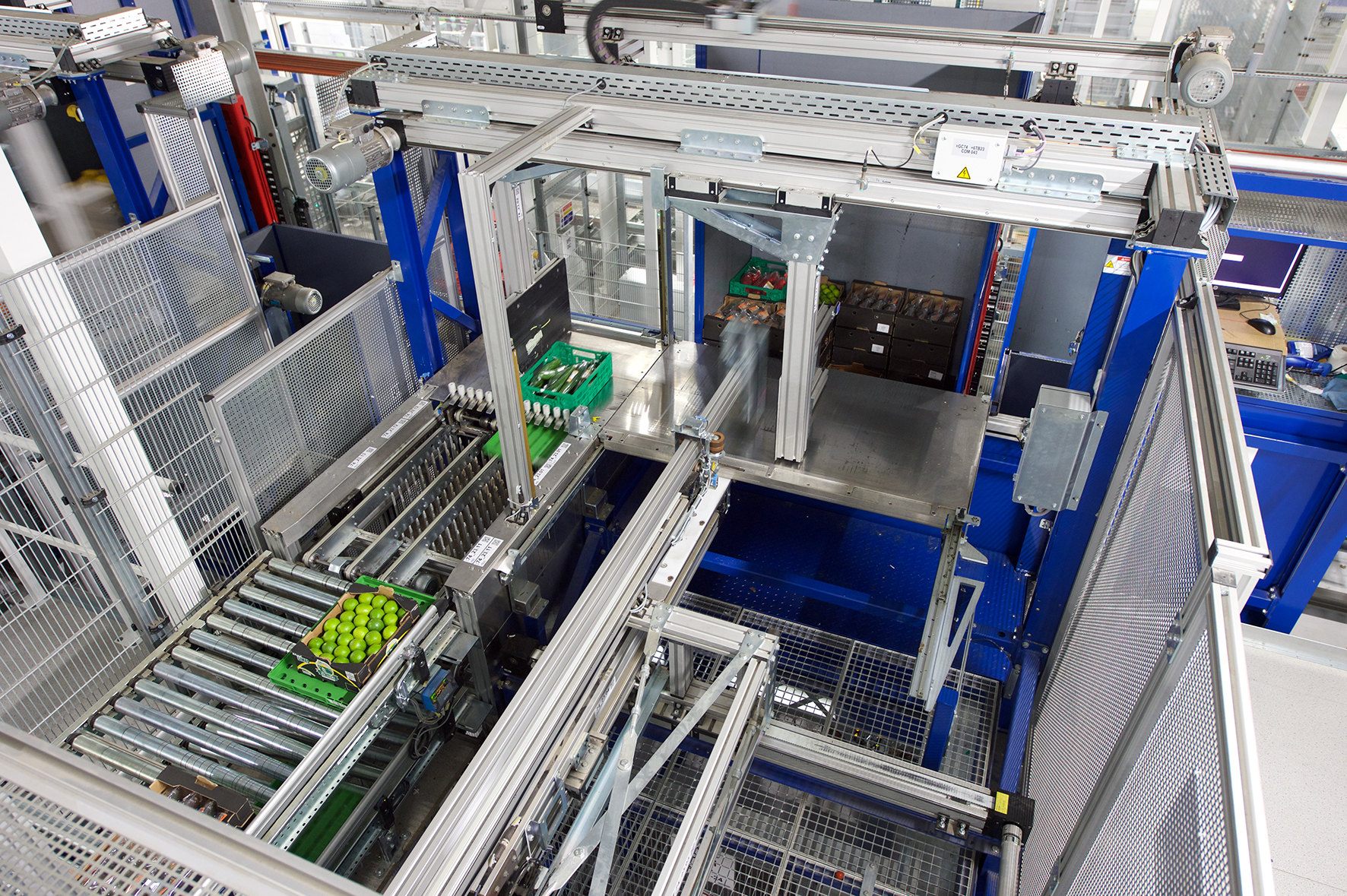
The story of WITRON’s Order Picking Machinery system (OPM) begins at Walter Winkler’s coffee table in Parkstein. The breakthrough came with a cake and a cake server from the WITRON founder. The COM – the heart of the OPM system was born. Just as a cake lifter glides under the piece of cake, the COM moves under the items to be picked and uses them to load pallets and roll containers for the food retailers’ stores fully automatically, product-gently, store-friendly, and without errors. “We have a factory for the production of store pallets,” says Frédéric Pinier-Rafer from E.LECLERC Socara proudly. The OPM system celebrates its 20th anniversary in 2023. Almost 100 OPM systems are in operation today, supplying more than 35,000 stores and 100 million consumers in North America, Europe, and Australia every day.

Helmut Prieschenk, CEO of WITRON, and Karl Högen, CEO of WITRON North America, agree that the OPM was a revolution for the food retail industry. “That was Walter Winkler’s masterpiece,” says Prieschenk. Högen remembers: “Back then, I was working in sales at the Logistikhof. When the solution was first presented to the company, I thought: What a brilliant idea. This is going to be great!”

Today, Prieschenk and Högen are primarily focused on the business development in the various WITRON sales regions and look back to the first projects. “The pilot customer and the impetus for the development of the OPM system came via the food retailer KROGER from the US.” But the Europeans quickly followed. The first OPM logistics centres in Europe were built for MERCADONA in Spain and EDEKA in Germany.

The initial situation is hardly any different to today. “For many retailers, issues such as lack of personnel and high staff fluctuation were already a major challenge in their conventional warehouses back then”, says Högen. “Not surprising,” according to Prieschenk. “Millions of tons of food were moved by human hands. Employees had to bend down, lift, and carry heavy loads. That is already challenging and no fun in the dry food sector – and even less so in the fresh and frozen food environment.”

The workplaces in the distribution centres became more attractive thanks to the OPM system. “The new machines were proudly presented to the relatives at the family’s day,” Högen remembers the first system that was implemented in Phoenix, Arizona. Customers needed 60 percent less staff in the warehouse and, thanks to the automated production of load carriers, transport costs were reduced by more than 10 percent, and the time required to put items away in the stores was also reduced by double-digits. “The pallet is built store-friendly – individually according to the layout of the respective store. It only needs to be handled once in the store. It can directly be used to replenish the shelves or is sent to the back room,” explains Högen. In addition, there is less food waste due to damaged goods during transportation or unpacking. Thanks to new packaging technologies in the OPM system, the store managers and their staff members also have to dispose of less wrapping. “The OPM solution is integrated end-to-end into the customer’s processes – economically, ecologically, and socially,” he adds.

“The decisive factor is not to have an idea for an innovation,” emphasizes Prieschenk, “but to successfully implement this idea in practical use. That is exactly WITRON’s strength. We get systems up and running! Regardless of the size and complexity of the task.” With OPM, it is now possible to pick more than 95 percent of the product scope of a full-range retailer (dry, fresh, and frozen) fully automatically and store-friendly in aisle sequence onto pallets or roll containers, largely without the need for personnel.

EDEKA was one of the first customers to use the OPM system. Thomas Kerkenhoff who was responsible for logistics at EDEKA Rhein-Ruhr-Stiftung back then, has a concrete opinion on this. “There is no competitor solution on the market that can handle more than 10,000 different items fully automatically as efficiently as the WITRON system.” The manager is sure: “In order to operate a facility successfully and economically in the long-term, you need a particularly good team both at your logistics partner and on site that is constantly working on the enhancement of the mechanical components and the software. But this only works if you also have a partner who has already implemented a large number of systems in the industry worldwide, and thus has extensive experience, expertise, and references. If I invest money, then the system must be able to map my business model also in 25 years’ time – but at the same time it must also be able to flexibly adapt to new basic conditions and business processes. That is what I expect as a customer.” And this is what the OPM system is able to achieve – now in its fifth generation.

“Our systems grow with the customer. The challenge in a project is that we receive figures at the beginning of the project design phase that can change again during the implementation phase. And when markets change, the situation is often completely different.” For example, we had to quickly integrate efficient e-commerce processes for customers in the logistics centres that were originally designed purely for store delivery. The number of items changes, the volume varies, the order lines adapt, and more distribution channels are added. “We always have the goal in mind, primarily a high level of customer service, see logistics from the end customer’s perspective in the store or at home, and analyse developments”, explains Prieschenk, who has the advantage that WITRON supplies markets worldwide with its solutions, knows the processes in food retail down to the last detail, and recognizes developments on other continents faster than others.

High availability thanks to solid mechanics

The success of the OPM system is also based on the system’s design. “Mechanics has always been simple and thus solid, hardly prone to errors, and easy to maintain. The result is high system availability, 24/7. The software, the stacking algorithm takes care of the complexity”, emphasizes Helmut Prieschenk. Word spread quickly in the industry. Matt Swindells from Coles and his team travelled from Australia to the USA and Europe, saw various systems and his comment was: “This is like Tetris on steroids.” He then ordered the OPM system for his company’s sites in Brisbane and Sydney. More than 2,000 see freight containers made their way to down under. The WITRON staff travelled ahead by plane.

However, WITRON is not only responsible for the technology, but also ensures a permanently high availability of the system with well-trained personnel. “This has opened up a completely new business model for us. More than 4,000 staff members are currently working for us in the areas of service, maintenance, and system operation on site at our customers’ distribution centres”, says Prieschenk. For WITRON, service means that the customers can concentrate on their core business thanks to our technicians. WITRON’s successful OnSite team model was born at SPAR in Wels in 1998. The highly dynamic processes in an automated logistics centre demanded new answers from WITRON at that time. Back then, six technicians took care of the system. In the meantime, the facility has grown many times over in terms of footprint and throughput – and with it the service team. Today, there are 120 staff members working in multiple shifts ensuring smooth processes with regard to mechanics and IT – automation creates attractive workplaces. “It is not the number of employees in an on-site team that is decisive, but rather their extensive skills, their great commitment, as well as the scope of tasks, for which the WITRON experts take responsibility”, explains Prieschenk.

Current challenge: Intelligent networks

And WITRON is not running out of work. Customers want to build new facilities, but also realize brownfield projects with the OPM system. The OPM system works economically and highly efficiently in the dry, fresh, and frozen food sector – regardless of whether it is a new or existing building. But there are new tasks for the developers at WITRON. The story of the OPM system continues to be told, they say in Parkstein. The requirements for intra-logistics have changed and the OPM system has mastered the market changes – from pure store supply to omni-channel centres.

“We have solved the issue of automated piece and case picking, optimized flow-through logistics centres, implemented ugly items into the automated process, and are now continuing to think one step further – beyond consolidation”, promises Högen. Intelligent networks are the actual challenge. Now, not only the logistics centres, but the entire supply chains of the customers are to become efficient.” Our goal is to integrate all horizontal and vertical players of an omni-channel network: suppliers, logistics centre, transportation. This also includes the different distribution channels: store, home delivery, click & collect, drives. It is therefore important to create an efficient end-to-end retail platform, where silos are avoided, where all hubs permanently communicate with and optimize each other,” concludes Prieschenk, looking into the future. “WITRON’s success is a combination of our corporate culture, technical expertise, and domain knowledge, the two managers agree. Walter Winkler would say: We simply know our way around.”

Intelligent Sorting for Tunisian Post

In Africa, e-commerce revenues are expected to exceed $46 billion in 2025, up from $28 billion in 2021, and 500 million online shoppers in 2025, up from 350 million in 2022, according to the latest study by consulting firm TechCabal Insights. Launched in 2016 by the Universal Postal Union (UPU), the Ecom@Africa project aims to develop intra-African and international e-commerce through the postal network in each of the five major African regions. The objective is to facilitate and accelerate the e-commerce activities of artisans, microenterprises, and small and medium-sized enterprises in this geographical area, enabling them to access local and international markets.

There are many challenges to overcome for the signatory African countries, from implementing a virtual e-commerce platform to designing a parcel receiving and sending logistics platform, as well as establishing a local distribution network and harmonizing practices. Among the first countries to experiment with this initiative, Tunisia aims to become the e-commerce hub for the North African region, according to an ambitious IT and logistics project roadmap. In this context, the Tunisian Post, a member of the UPU since 1878, has selected ISITEC International’s intelligent incoming and outgoing parcel sorting solution to equip its international e-commerce logistics platform, Ecom@Africa, through a tender process. Located on the outskirts of Tunis-Carthage Airport, it will be operational in January 2024.

Automating, ensuring reliability, and accelerating parcel sorting

Facing the decline of traditional postal services, the Tunisian Post aspires to seize the opportunities offered by the unprecedented growth of e-commerce, positioning itself as a key player in the management and optimization of associated services and logistics flows. It is currently establishing a state-of-the-art international logistics platform, Ecom@Africa, to optimize the processing of incoming and outgoing e-commerce parcels, as part of the UPU’s regional pilot program for the development of trade exchanges in Africa. To handle a growing volume of parcels, driven by e-commerce growth, the Tunisian Post aims to implement an automated sorting solution in 2022 to enhance operational efficiency, reliability, and agility, while reducing labor costs and human error.

This new equipment must address various challenges: automating, ensuring reliability, and optimizing the parcel sorting process to reduce processing and, consequently, delivery times; easily handling peak periods such as year-end holidays and Ramadan; providing seamless parcel traceability at every stage, ensuring transparency and customer satisfaction; and guaranteeing flexibility in sorting parcels of all sizes and shapes.

Sami Inoubli, PMO of the Ecom@Africa program at the Tunisian Post, summarizes: “The installation of an automated parcel sorting machine aims primarily to improve efficiency, reduce costs, increase sorting accuracy, and better manage capacity to cope with the exponential growth in parcel volume associated with the rise of e-commerce.”

As Inoubli, PMO of the Ecom@Africa program, reveals: “In our tender, we focused on identifying the key competencies required to find a company capable of providing us with a truly tailor-made solution that can be easily integrated into our IT systems, technical expertise, and maintenance and support services.” Ten criteria were defined: the capability to design and manufacture customized solutions that meet specific parcel sorting requirements (postal IT, size, shape, and volume of parcels), engineering capacity ensuring equipment quality, reliability, and durability, deployment of advanced automation technologies (computer vision, barcodes), and control software, integration with the existing postal information system, responsive maintenance and support, employee training, compliance with applicable standards and regulations, references, and a track record.

As an expert in optimizing postal and logistics flows worldwide, the French company ISITEC International stood out and won the tender from the Tunisian Post in December 2021. Inoubli adds, “In the context of our public procurement tender, the choice of ISITEC International was based on the total cost of ownership (TCO) of their intelligent parcel sorting solution. It is important, in our view, to evaluate a solution based on its total cost of ownership over its entire lifespan, from purchase and operation costs to maintenance and upgrades.”

Moreover, numerous strengths of ISITEC International’s proposal confirmed the Tunisian Post’s choice: performance, customization and scalability of the equipment, easy integration with existing IT and logistics systems, availability of technical support and after-sales service. The collaboration started in January 2022.

Inoubli said, “Our project requires close communication and careful planning with ISITEC International’s team to ensure that our equipment meets our needs and operates optimally.” Among the highlights of the collaboration with ISITEC International are the functional analysis stage, where the teams from ISITEC International and the Tunisian Post worked together to design and customize the parcel sorting machine according to specific needs, technical adaptations imposed by the facility’s area, options for customized sorting, and integration with existing systems. The installation, commissioning, and real-world testing of the ISITEC International solution were completed in September 2023.

Once the Ecom@Africa Hub becomes operational in 2024, ISITEC International’s intelligent sorting solution is expected to provide the Tunisian Post with greater operational efficiency through swift and precise sorting, ensuring high-quality service. The automation of parcel sorting is also expected to reduce labor costs, minimize sorting errors, and consequently reduce costs related to returns and re-shipments. ISITEC International’s solution will also significantly contribute to rigorous traceability. The equipment allows for precise tracking of parcel locations at every stage of processing within the Ecom@Africa e-commerce logistics platform.

In the coming months, the Tunisian Post will undertake a key step in its Ecom@Africa roadmap, the design and implementation of an Integrated Logistics Centre, which will cover all logistics aspects of national e-commerce, including inventory management, order preparation, and returns management. Once again, storage, automated sorting, and order preparation systems will be necessary.

Inoubli concludes: “Based on the quality of the relationship established, from contract signing to provisional acceptance, and including functional analysis, we have a partnership with ISITEC International rather than a customer-supplier relationship. In this partnership, we aspire to work together to optimize parcel sorting efficiency and achieve our goals. This necessarily involves close communication, faultless technical support, and regular equipment updates by ISITEC International.” The collaboration between the Tunisian Post and ISITEC International will span seven years, with two years of warranty period and five years under the maintenance contract.

Sustainability Strategy with Climate Tech

Nippon Express Europe GmbH (NX Europe), a group company of the global Japanese logistics service provider Nippon Express Holdings, is set to realize the achievement of its sustainability goals in collaboration with the Climate Tech start-up, Cozero, based in Berlin.

In NX Group’s pursuit of reducing its CO₂ emissions by 50 percent by 2030 as compared to 2013 (Scope1,2), the parent company, Nippon Express Holdings Inc., submitted a letter of commitment to obtain Science Based Targets (SBT) certification in May 2023.

The collaboration between NX Europe and Cozero stemmed from Cozero’s comprehensive, transparent, and agile end-to-end solution that holistically considers both logistical and non-logistical emissions, which supports the forecasting and planning of decarbonization efforts.

Within a few weeks, Cozero’s Climate Action Platform was implemented at 30 European locations of the company for reporting Scope-1, Scope-2, and Scope-3 emissions. As a result, NX Europe is now able to implement customized local reduction strategies in alignment with SBT.

Climate Tech

Olaf Zimmlinghaus, Executive Director – General Affairs and Finance EMEA at NX Europe, stated, “Achieving our sustainability goals to combat climate change holds a special place within the NX Group. Our well-defined sustainability goals are not only deeply embedded in our operations but also subject to continuous monitoring of success. The data-driven solution provided by Cozero enables us to implement sustainability transformation into our corporate planning.”

Helen Tacke, Co-founder and CEO of Cozero GmbH, commented, “The NX Group is an exceptional example of the integration of financial and sustainability performances. Recognizing that corporate strategy and sustainability must walk hand in hand is pivotal for transformative success. We are proud to be able to contribute with data insights and measures through our software solution to support this synergy. “

Freight Forwarders Focus on Environment

November will be seen in the British International Freight Association’s (BIFA) history as an auspicious month with the first meeting of its new Sustainable Logistics Policy Group, managed by Mike Jones, policy advisor for sustainability and environment.

For many years BIFA has been monitoring the legislation, tracking any new regulations, and delivering advice to its corporate members on various environmental issues such as plastic packaging and the problems surrounding its disposal, as well as the development of different fuel types and their respective merits and de-merits.

Environmental and sustainability issues are not new and, over time, the environmental agenda within freight and logistics has developed. Whilst the focus is often about carbon emissions, there are other wide-ranging generic issues.

With all of the above in mind, BIFA felt the need to establish a policy group to help identify and report to the Association and its Members on environmental-related issues which may in the future have an impact upon their businesses, or in fact are already doing so.

At the meeting, attendees discussed how the policy group could work to provide guidance to the association in order to deliver meaningful support on environmental and sustainability issues as they impact the UK and the international freight services industry. Future meetings will discuss how to agree and set the association’s policy on all matters concerning environmental matters.

The date of the meeting also marked ‘Use Less Stuff Day’, which seemed like an appropriate time for the first meeting of a policy group established to help BIFA assist all of its members, whatever their size, meet the ever-increasing challenges associated with environmental and sustainability issues within freight and logistics.

Sustainability expert and consultant to BIFA Kelly Hobson of Shape Tomorrow gave a presentation about the wider business case and requirements of any supply chain, whilst Lucinda Maxwell, founders’ associate, from Pledge delivered an interesting overview about calculating freight emissions and sustainability regulations.

At the meeting, Director General, Steve Parker emphasised the significance of this new policy group and urged members that were present to encourage other members to engage with the group and attend future meetings.

He said: “All BIFA members are at different stages of their journey in regards to the development of policy that addresses environmental and sustainability issues within the supply chains that they manage. By participating in this policy group, members will be able to help shape best practice guidance; and influence how BIFA can represent members’ interests on this subject in our interaction with Government and other stakeholders that are developing legislation on the matter.”

Fulfilment Capacity Doubled with Peoplevox WMS

Descartes Systems Group, a leader in uniting logistics-intensive businesses in commerce, announced that U.K.-based ecommerce brand AYBL, an online retailer of activewear, has transformed its warehouse and fulfilment capabilities by replacing paper-based picking and manual fulfilment practices with Descartes Peoplevox warehouse management system (WMS). Using the solution to improving picking efficiency and accuracy, AYBL has doubled its fulfilment capacity with existing staff and can seamlessly scale to fulfil over 70,000 orders a day during peak season.

“To become a leader in ecommerce within the U.K. you have to deliver on customer promises and build loyalty, which means you have to be able to rely on your warehouse and fulfilment capability: every order shipped on time, accurately, with visibility into the process, easy returns, all on demand and fast.,” said Paul Maynard, Head of Operations, AYBL. “With Descartes Peoplevox, we instantly improved picking accuracy and efficiency and we no longer needed to keep our warehouse layout in SKU order, which had previously prevented us from making the best use of available storage capacity. Additionally, the system scaled easily as we moved multiple times to larger warehouse facilities and, today, allows us to flex to 100+ people during peak periods and train new staff within hours, which beforehand would never have been possible.”

Part of Descartes’ ecommerce solution suite, Descartes Peoplevox WMS helps direct-to-consumer brands and ecommerce retailers drive significant efficiencies across order fulfilment processes to provide a remarkable customer experience. The solution helps ensure that retailers can ship on time, ship the right items, not oversell existing inventory, and have transparency into warehouse operations. Order information is automatically available to be executed via mobile-driven multi-order pick-and-pack strategies and then fed into Descartes and third-party parcel shipment systems. The solution is pre-integrated with major ecommerce platforms, such as Shopify Plus, Brightpearl by Sage, Netsuite and others, to accelerate implementation and time to value.

“We’re pleased to help AYBL scale its fulfilment operations to meet growing consumer demand for its products and maintain its customer commitment – even at the height of peak season,” said Johannes Panzer, Head of Industry Solutions for Ecommerce at Descartes. “Our ecommerce WMS Peoplevox is designed for ambitious ecommerce brands. It empowers them to grow efficiently and reduce fulfilment costs to achieve more profitable person-to-goods fulfilment operations.”

Custom Solutions for Mobile Collaborative Robotics

The 2023 SPS trade fair in Nuremberg represented an important opportunity for Bonfiglioli to showcase its experience and expertise for industrial automation. Its innovative, cutting edge offer included mechatronic solutions specifically designed for packaging, intralogistics, robotics and IoT applications.

A corner of the booth was dedicated to Bonfiglioli’s technologies for cartesian, delta and articulated robots, the latter solution consisting of a custom designed, precision planetary gearbox and servomotor developed for ABB.

Remaining in the field of mobile robotics applications, the spotlight was on BlueRoll: the high-performance, wheel-mounted gearmotor platform for AGVs and AMRs, featuring an ultra-compact and energy-efficient design for a long operating cycle. The modular drive system is available in three configurations, Basic, Advanced and Compact, with a customisable single gearbox load ranging from 360 to 1020 kg and a maximum speed of 2m/s. In response to evolving market demands, Bonfiglioli is currently developing integrated solutions with the aim of providing customers with a complete AGV movement package, including complete drive and transmission control systems. This approach allows Bonfiglioli to deliver ready-to-assemble, turnkey solutions, thereby minimizing the need to purchase interface devices from the AGV/AMRs manufacturers.

The Group is also expanding its product folio by focusing on enhancing payload capacity, catering to the rigorous specifications demanded by robotic sector. The capacity to offer a diversified array of products ranging from standard precision gears and gearboxes to specially designed motors for axis movements and completely customised ones, as well as integrated solutions for AGV/AMRs drive controls, places Bonfiglioli among the leading players in this sector. The codesign with customers grant significant value in terms of performance optimisation, cost saving and accelerated time to market.

Solution-oriented approach to packaging and intralogistics

Flow pack packaging processes require automatic machines that are able to keep pace with high production rates, for which Bonfiglioli offers a wide range of compact, modular, dynamic, high-precision drive and control solutions for horizontal and vertical forming, filling and sealing machines. These include the package presented during SPS, which features a TQ in-line high precision planetary gearbox combined with a BMD permanent magnet synchronous servomotor and a highly versatile AxiaVert smart inverter. Alongside this process, we are also able to extend maximum handling speed to the finished products palletization, thanks to a solution incorporating our BMD synchronous servomotor, Series A right-angle gear unit and ANG Series servo inverter.

During the fair, we also presented two intralogistics solutions: the first solution, designed for use with post & parcel and airport baggage handling systems, consists of a compact, right-angle Series A gear unit, available in a wide range of torque ratings, the IE4-certified BSR synchronous reluctance motor – an ecological and high-performance product (thanks to the absence of magnets), and a DGM MPM decentralized inverter, featuring sensor-less vector operation for optimal dynamic control. The second solution, designed for use with roller conveyors, combines the EVOX CP helical in-line smooth surface gearbox that can be fitted on any machine thanks to its compatibility with market standards, the MXN asynchronous low-voltage e-motor (IE3) developed to be modular, reliable, energy efficient and compliant with international certification requirements, and a DGM MPM sensor-less inverter.

Visitors had the chance to get an up-close look at the two successful applications, which have been designed in partnership with Modula S.p.a. and I.DE S.r.l., for whom Bonfiglioli has developed complete, customised technical solutions.

Subscribe

Get notified about New Episodes of our Podcast, New Magazine Issues and stay updated with our Weekly Newsletter.