Cold Chain Operations’ Safety Elevated

Igloo Thermo Logistics, a temperature-controlled logistics company in the UK, has partnered with AddSecure to optimise its transport operations. With a fleet of 130 temperature-controlled vehicles that cover up to 90,000 miles per week, Igloo required a comprehensive telematics and temperature monitoring solution, as well as a vehicle camera safety system.

After evaluating multiple providers, Igloo selected AddSecure as the only supplier to offer telematics, remote temperature monitoring, and vehicle camera systems from one user-friendly platform. Each vehicle is equipped with live vehicle tracking and an EN12830 certified Transcan data logger. The transport team can monitor the fleet in real-time and proactively address any issues that may arise. Additionally, customers can access a full audit trail of each journey, complete with easy-to-interpret temperature graphs, and end-of-journey printouts for compliance with cold chain distribution regulations.

Igloo has also installed an integrated dual-camera dashcam system (forward-facing and driver-facing) in all its vehicles to reduce accident rates and lower insurance premiums. The cameras act as a deterrent for dangerous driving behaviours and provide evidence to support First Notification of Loss to Igloo’s insurance provider, expediting the claims process.

“Since implementing AddSecure‘s connected fleet management and temperature monitoring solutions we have experienced a significant reduction in accident rates and insurance premiums. The improvements in safety, efficiency, compliance, and sustainability of our overall transport operations have given us a competitive edge in the industry,” explained Kuljinder Gossal, Operations and Group Fleet Manager at Igloo.

Reduction in accident rates

Igloo is committed to continued improvement and are currently working with AddSecure to upgrade its vehicle tracking units for enhanced driving behaviour monitoring, allowing for improved driver feedback and training. Additionally, the company is also looking to upgrade its camera systems to a multi-camera setup, including rear and side cameras and an in-cab monitor, for safer city driving and slow speed manoeuvrings.

Paul Lawrence, Managing Director at AddSecure UK commented, “The AddSecure solution has once again proven to be a valuable investment for Igloo Thermo-Logistics, allowing the company to provide safe, efficient, and eco-friendly nationwide next-day delivery of temperature-sensitive goods.”

Investment Pays Off, Calmest Peak for 3PL

Specialist 3PL fulfilment provider Europa Warehouse has reported a 45 per cent increase in total orders picked in December 2023* across its 3PL sites.

Despite this increase, its facilities in Birmingham, Corby, and Dartford – which offer over one million sq. ft combined of dedicated warehouse and logistics space – operated without the usual stress and pressure associated with “peak”.

Notwithstanding continued economic challenges, there was a rise in consumer spending across the period which, supported by figures from Retail Economics, accounted for £202bn worth of global sales online and a 3.7 per cent increase in the UK.

While sales during the 2023 peak season in the UK might be less pronounced in comparison to previous years, the increase in order volumes still puts a huge pressure on 3PL services. Due to Europa’s £70m investment in its logistics operations over recent years, including £11m in shared user automation this peak period was the most efficient of any recent years’ peaks.

Dionne Redpath (pictured), Chief Operating Officer (COO) and Head of Warehouse at Europa Worldwide Group said: “Shopping habits are ever evolving, but we have invested heavily to alleviate the strain on our e-commerce, retail and wholesale customers. As well as investing in new equipment and processes and having restructured in recent months we’ve augmented our approach with customer and consumer experience at heart. Our focus has been to enable customers to meet or exceed their sales targets, allowing them to maximise revenues whilst ensuring exceptionally high levels of quality and satisfaction.”

To make it easier for customers to scale up and achieve seamless fulfilment, Europa Warehouse identified the importance of implementing strategies to drive innovation in order fulfilment.

“We appreciate that our customers need to cost-effectively scale up and down at pace, while delivering an efficient service for their customers. Our overarching objective is to deliver a peak which doesn’t feel like peak at all. During seasonal peaks, e-commerce and retail brands face upsetting their own status quo: with the significant upturn in sales activity creating volatility and complexity resulting in what can be an inefficient, often-chaotic order fulfilment process. It’s the time of year businesses are more likely to experience costly mispicks, delays to dispatch and higher than normal return rates.”

Europa Warehouse is the 3PL division of Europa Worldwide Group, and one of only a few operators in the UK offering a shared-user automated picking system. Designed for products that are able to be stored in totes, which Europa refer to as ‘toteable’, the system is ideal for clients who operate with a large SKU range and a complex, volatile order profile, often requiring operations to dramatically scale up and down within a short period of time.

Redpath explains: “With robust quality control processes to prevent picking errors, thus reducing cost, a shared-user system can be quickly scaled up or down to meet fluctuating demand. In turn, this allows for accurate financial modelling because of the high level of predictability. For peak planning, this is crucial to ensure a seamless supply chain from start to finish whilst not blowing budgets.”

Calmest Peak for 3PL

In 2023, Europa’s portfolio of warehouses picked 78.8 million units through its automated and manual fulfilment operations – regularly scaling up to 280,000 individual picks in a 24 hour period. Shared-user automation contributed towards this, allowing for regular scaling from 40 to 100,000 picks from one day to the next. The ability to scale in this way within automation is what makes it such a cost-effective solution. The ability to scale in a similar way in a manual environment is far more complex, requiring significantly more labour at a time of year when labour is at a premium. In the automated environment, those headaches simply don’t exist.

The combination of Europa’s most recent investment in its systems and automated fulfilment technology and processes allows e-commerce brands to optimise resources, simplify operational models and capitalise on the sales and growth opportunities afforded by the peak season.

Holistic Robotic Automation

Arvato is increasing the targeted use of robots in its logistics centres. After the successful implementation of several robot-assisted palletizing and depalletizing applications at various locations, the supply chain and e-commerce service provider now has decided to use the robot item pick solution “justPick” from the Polish robot specialist Nomagic as the next step in its holistic automation strategy.

At its location in Dortmund, Germany, Arvato operates a 30,000 square meter distribution center for several fashion clients. As part of the “Autostore Port Picking” (ASPP) pilot project, Nomagic’s “justPick” robot will be used to pick individual item orders from the fully automated Autostore warehouse. It is planned that after the successful piloting, other robots will follow and pick at the Autostore system in Dortmund. Arvato currently operates ten Autostore systems worldwide and therefore sees great potential for further scaling of the robot solution. Further applications at shuttle storage workstations and for pocket sorter loading are also being planned.

“The autonomous robot system enables us to respond more flexibly and with shorter throughput times to our customers’ requirements by continuously processing customer orders – especially during late and night shifts,” says Axel Mayer, President Lifestyle Fashion & Sports at Arvato. At the Dortmund site, Arvato is taking a further step on the way to a fully automated order fulfillment process with the automatic provision of goods by the Autostore system and automatic picking by the robot. “Nomagic was the only supplier that was able to map both the pick process for order fulfillment and the returns replenishment process without changing the existing infrastructure,” explains Christoph Echelmeyer, Vice President Operations and Head of the site. With the “justPick” robot, not only are customers’ orders fulfilled, but the Autostore system is also replenished.

As far as possible, Arvato does not design all automation solutions, whether robotics, goods 2-person, AGVs or packaging solutions, as a stand-alone solution, but always in the context of its own “Warehouse Automation Toolbox (WAT)”. “We attach great importance to solutions with a high degree of modularity and flexibility. This approach is also driven by our high level of diversification and positioning in a wide variety of business areas such as high-tech, healthcare and consumer products with their large number of different articles. From our point of view, Nomagic’s “justPick” solution makes a special contribution to these points,” explains Markus Billmann, Senior Expert Process Automation and Future Warehouse Team at Arvato. Nomagic was able to convince Arvato with a large number of systems that have already been implemented, which are very close to the use case of the pilot project and the subsequent projects.

The “justPick” robot is equipped with a gripper tool changer, which enables the independent change of different suction and gripping tools during the container change at the carousel port of the Autostore system. On the one hand, this increases the possible throughput of the system, as downtime or idle times are effectively minimized, and on the other hand, it increases the number of tangible items on the hardware side, which has a positive effect on the future-proofing and scaling of the system in terms of third-party usability. Markus Billmann: “This flexibility is enormously important to us in the dynamic environment in which we operate as a 3PL service provider.”

LogiMAT ’24 Has Your Back

Exhibitors from nearly every sector of the industry are coming to LogiMAT 2024 to present their latest products and solutions for ergonomically optimized intralogistics processes, healthy workplaces, and injury prevention. The spectrum ranges from modular workstation designs and systems to hoists not yet exhibited anywhere in the world, software-driven language-based picking processes with smart glasses, and new accessories and assistance systems for forklift operators. An Expert Forum taking place during LogiMAT presents tools and solutions for the ergonomic design of workstations and processes.

The intralogistics industry has not been spared the ravaging effects of demographic change and labor shortages. Some 100,000 logistics-related jobs in Germany alone remain unfilled. This makes ergonomics a topic of growing importance for businesses. Higher-quality workstations, improvements in how physical activities are performed, smart workstations designed with the help of digital technology, human-robot collaboration, and devices to ease the physical strain on workers: These are just some of the tools that can make workflows more efficient and the field of intralogistics more attractive. To cite just one example, a study published in late 2023 on the introduction of wearable exoskeletons found that they could reduce muscle strain in workers with the most strenuous jobs by up to 30 percent. Accuracy rose 27 percent, and speed was up 10 percent. Workplace safety improved while illness-related absences fell. “Ergonomics is an important element of intralogistics. Ergonomic workstations ensure the future of intralogistics and make it easier for the industry to compete for talent,” explains Exhibition Director Michael Ruchty from event organizer EUROEXPO Messe- und Kongress-GmbH in Munich. “LogiMAT, in its role as a barometer for intralogistics industry trends, is the primary platform for presenting the latest developments in this sphere. That’s why we’ve embraced this topic as one of the three areas of focus at this year’s event, as captured in our theme ‘SHAPING CHANGE TOGETHER: Sustainability – AI – Ergonomics.’”

Veronika Kretschmer, Senior Scientist for Assistance Systems and Human-Technology Interaction at the Fraunhofer Institute for Material Flow and Logistics IML, highlights possible solutions for ergonomically realigning workstations and workflows in her Expert Forum in the East Entrance Atrium, taking place on the second day of LogiMAT 2024. The forum’s content is aligned with Fraunhofer IML’s “Social Networked Industry”—a vision for the workplace of tomorrow in which people and new technologies work together collaboratively in an atmosphere of safety and trust. The tools introduced to support this vision range from exoskeletons and pick-by systems providing cognitive support for pickers to AI-based analytics of movement data for the optimization of intralogistics processes.

Human-machine collaborative workstation

Exhibitors from every sector of the intralogistics industry are also coming to LogiMAT in Stuttgart, March 19–21, to showcase their latest innovations for reducing physical strain and ergonomically optimizing how workstations are designed and equipped. Systems integrators and industrial machinery and equipment manufacturers in Halls 1, 3, 5, and 7 will exhibit new products for the ergonomically optimized design of picking and sorting stations, such as those used in AutoStore systems. The theme greets visitors as soon as they arrive through the East Entrance with the design for a manual picking and packing workstation, presented in the live demonstration of an assembly line innovation that includes custom packing tables and a centralized robotics system that supplies material and removes empty containers.

Exhibitors in Halls 4 and 5 are presenting various new workstation systems for modern assembly, logistics, and warehouse operations. Optimized ergonomics, flexibility, functionality, and a customized modular concept are the hallmarks here. This makes it possible to easily adapt individual components such as shelves, holders, packing tables, and worktables to different body sizes and processes, and to implement upgrades and extensions or integrate new digital technologies at any time. The result is ergonomically efficient systems for logistics jobs with long-term viability. New automated packaging solutions offer customized packing processes that optimize the use of resources and reduce the number of tasks that still need to be performed manually.

The world’s first fully mobile manipulator

Hall 7 will give visitors the opportunity to test new products never yet exhibited anywhere in the world, innovative wire rope hoist and workstation crane systems, and new modular lifting devices for ergonomic, easy, effortless handling. The modular concept lets workers configure their mobile or stationary industrial lifting equipment to match their individual needs. The assistance systems for simplified manual load handling on display in Hall 7 will also include innovative new suction grippers for cardboard packaging and bags. Visitors should also keep an eye open for the world’s first fully mobile manipulator for handling cartons, crates, packages, and containers.

For the manufacturers of industrial trucks and attachments in Halls 9 and 10, ergonomics is focused primarily on providing a comfortable workstation for forklift operators and easy-to-use, multifunctional attachments. Visitors to LogiMAT can look forward to experiencing innovations in equipment and assistance systems. One example is the first-in-Europe live demo of a combination package for forklifts with both location- and event-related features designed to automatically identify and avoid any dangers to people, vehicles, or loads—for enhanced safety and a more comfortable ride. New concepts for improved human-machine interaction and machine learning in the use of autonomous devices will also be presented. A new eurobin tug on display in Hall 9 is an ergonomic lifting and transport solution that gives workers a powered boost in moving eurobins weighing up to 300 kg in an optimal, upright working position, significantly reducing physical strain.

Vision picking for the digital warehouse

Many of the software developers in Hall 8 are showcasing new features and applications in their systems that reflect the role IT solutions can play in the ergonomic planning and design of facility layouts and workflows. A vision picking solution featuring smart glasses illustrates how the integration of cutting-edge technology in ergonomically optimized workflows can support digital warehouse logistics.

Next door in Hall 6, visitors can experience the latest innovations for collaborative workflows in the human-machine interface with automated guided vehicle systems and all the latest robotic solutions: cobots, stationary industrial robots, mobile picking robots, and autonomous mobile robot transport systems. The focus here is on sensor-based safety and ergonomic workstation design at transfer points and the periphery of the line, for example. Sensor technology and convenient identification solutions are also a defining feature in the new products and solutions presented by the specialists for automatic identification and data capture (AIDC), concentrated this year in Hall 2. Smart labels whose data can be read and modified by stationary and mobile readers, and cloud apps with automated interfaces and features for direct printing: These are just a couple examples of how AIDC solutions cut down on walking distances and make life easier for warehouse workers.

“Ergonomics in intralogistics helps maintain worker health and prevent injuries and excess physical strain, ensuring the continuity and efficiency of intralogistics processes,” Ruchty concludes. “Exhibitors at LogiMAT 2024 are presenting a wide range of state-of-the-art solutions for ergonomically optimized workstations. Integrating this cutting-edge technology improves working conditions in the intralogistics industry, and this can enhance the image of logistics-related careers.”

Major Innovations from Itoh Denki

Itoh Denki, a leading international specialist in motorised drive roller (MDR) based material handling technologies, is set for a busy first quarter of 2024, with major innovations to be displayed at two major international trade shows in March.

The company will be exhibiting at both SITL (stand J086) – short for ‘Salon International du Transport et de la Logistique’ – and LogiMAT, the leading international trade show for intralogistics solutions and process management (stand 1K25). Both shows will welcome visitors from 19th to 21st March in Paris and Stuttgart respectively.

At each event, Itoh Denki will be showcasing major innovations which will bring new opportunities for efficiency and flexibility across a broad range of applications.

Among the new products on display will be M-RAT, a highly innovative new diverter and sorter module, developed in response to burgeoning demands from customers globally for systems which can cope with heavier products, especially in manufacturing or on assembly lines. Drawing on a similar acclaimed 24V DC powered design which form the heart of the company’s F-RAT compact 90° diverter and sorter module for the precise transferring of smaller loads, M-RAT will be able to handle individual loads of up to 250kg. This will provide greater flexibility for specifiers and designers needing to move heavier loads who have previously had to rely on heavily motorised or pneumatically powered systems which bring very specific challenges around commissioning, maintenance and safety.

Also on show will be a prototype of FNR, a new MDR-powered conveyor module which transfers loads via an innovative patented bed comprising plastic wheels. Offering a ready alternative to traditional belt conveyors and belt on roller conveyors when handling small items, FNR is a highly cost-efficient solution boasting supreme safety, near-silent operation and very low maintenance. A versatile solution for many applications, it notably offers a practical and cost-efficient solution for singulation of items for order preparation. The prototype on display will demonstrate how FNR can be used in a singulation application, conveying and separating small individual packets of sweets.

Tatsuya Akashi, President of Itoh Denki Europe, explained: “We have exhibited regularly at both SITL and LogiMAT in recent years, and every year, both events have proved highly valuable in reinforcing existing contacts and forging new partnerships. We’ll have knowledgeable colleagues from our expert European team on hand throughout both events to discuss customers’ application requirements and demonstrate our technical capabilities. We look forward to welcoming decision-makers and specifiers from across Europe and further afield to our stands.”

Temperature-controlled Rail Transport between Europe and Asia

The Swiss InterRail Group successfully carried out its first reefer container transports between Asia and Europe last year. This year, the transport company has added temperature-controlled rail transport to its regular range of services.

InterRail uses diesel-powered 45-foot pallet wide reefer containers on the route between Europe and Asia, which can cool or heat independently of the infrastructure on different modes of transport. The performance and internal temperature of the containers are monitored around the clock. Customers receive at least one detailed report per day with all relevant information about their goods.

The refrigerated containers each hold up to 33 euro-pallets, the use of which allows for good air circulation within the container. Temperature-controlled rail transport offers a number of advantages over other modes of transport: it reaches its destination faster than by sea, is cheaper than air freight, and no transshipment of goods is necessary along the route.

Successful deployment

In late summer last year, InterRail transported 13.5 tonnes of high-quality Swiss chocolate from the Basel region to Shanghai. The reefer was operated at a set point of 12°C and proved its worth even under extreme outside temperatures of up to 42°C. Another example of its successful use is the transport of miso ramen soups from Shanghai to Hamburg. The reefer container successfully protected the goods from the cold at a set point of 10 °C and a lowest outside temperature of -27 °C.

“Especially given the current situation in the Red Sea, our new product is an interesting option for certain sensitive/perishable goods that won’t stand the additional transit time caused by the alternative sea route via the Cape of Good Hope. In addition to the Europe – China route, we can also offer this service to and from Central Asia as well as within Europe,” says Stefaniea Klermund, Business Development Manager at InterRail Holding AG.

Autonomous Robotic Piece-Picking System

RightHand Robotics, a provider of data-driven, autonomous robotic picking solutions for order fulfillment, announces the launch of its next-generation solution, the RightPick™ 4 system. The groundbreaking piece-picking system revolutionizes the level of autonomy and reliability of robotic order fulfillment in modern warehouse operations and distribution centers.

The RightPick 4 system showcases enhanced AI-based software algorithms, an upgraded sensor suite, and newly designed hardware that enables a larger picking range of item SKUs, advanced item handling capacity, and increased system autonomy. With improved picking and grasping techniques, the RightPick 4 system maximizes reliability and enables faster integration through novel approaches in both software and hardware.

“Retailers continue to have challenges with growing demand for faster and more accurate order fulfillment, in part due to ongoing labor challenges. With the launch of the RightPick 4 system, we have created a new piece-picking solution that delivers increased autonomy, reliability, and serviceability,” said Brendon Bielat, VP of Product & Marketing. “We have trained our system by leveraging more than a petabyte of operational data, gathered for over eight years from picking tens of millions of items around the globe. This massive amount of data has helped us create a smarter, more robust solution for real-world fulfillment challenges.”

The RightPick 4 system is reducing the need for human intervention by deploying advanced gripping strategies to pick and place more items, even those it has never seen before. With improved smart grasp and suction seal quality detection, RightHand Robotics can enable autonomous piece-picking for market verticals such as general merchandise, office supplies, apparel, pharmaceutical products, cosmetics, and 3PLs. Powered by RightPick™ AI, the RightPick 4 system is continuously learning and improving on the overall range of items that can be picked successfully.

“We are thrilled to unveil RightPick 4, a product realized through collaboration with customers and partners. We have hardened our product with a focus on reliability and autonomy so that our customers can increase their operational capacity without being hindered by labor volatility,” said Brian Owen, President & CEO. “The total market potential for the RightPick 4 system is staggering, especially in global, post-pandemic logistics. It’s no longer just early adopters approaching our technology. The general awareness of robotic piece-picking has increased, and omnichannel retailers are realizing it’s a necessity. The RightPick 4 system is a competitive advantage with a quick time-to-value for stakeholders within the supply chain.”

Gaining Marginal Advantages in Logistics

Few industries understand the importance of efficiency as profoundly as supply chain and logistics operators. In fact, the entire business model hinges on eking out incremental enhancements that collectively yield substantial benefits, say BluQube.

Numerous strategies in the logistics sector, such as reverse logistics, process automation, inventory management, and technological innovations, are widely acknowledged and documented.

Yet, for all the focus on operational effectiveness and efficiency, non-core back-office functions like accounting systems often receive less attention. Here a more ‘make-do’ approach can prevail which runs counter to the DNA of organisations that rightly have inefficient practices in their crosshairs.

Logistics companies’ accounting function today extends beyond the mere handling of invoices and billing. Just as sophisticated logistics software provides managers with comprehensive insights into the supply chain, modern accounting software offers a holistic view of operational data. This can be invaluable in equipping organisations with the necessary insights to react promptly and identify efficiencies that can help mitigate ongoing challenges.

Unleashing Resources

Just as the finance department never operates in a silo, financial software needs to be able to work with the necessary programmes and processes to be truly effective. Interoperable software streamlines information exchange with third-party providers, eliminating the need for manual integration and significantly saving time. Inputting information once automatically replicates it across all organisational systems, reducing data discrepancies and time-consuming tasks. This efficiency proves vital for overcoming challenges posed by disparate systems, contributing to the overall health of logistics organisations in times of shortages and heightened competition.

Automation and Employee Satisfaction

Interoperable systems, like any form of automation, liberates employees from monotonous or formulaic tasks, fostering job satisfaction and fulfilment. This liberated time allows organisations to reallocate resources to more strategic areas, enhancing overall productivity.

Empowering Data-Driven Decisions

Effective interaction with data from various business areas transforms financial software into a powerful performance insight and decision support mechanism. It aids in identifying production roadblocks and extracting broader business information for flash reports, saving considerable time compared to manual data collation and report writing. Organisations embracing this approach gain valuable insights that inform their strategy, giving them a competitive edge over those with siloed systems.

Futureproofing Amid Uncertainty

In a world of geopolitical and economic uncertainties, where demand fluctuates rapidly, crafting the ideal supply chain can be daunting. However, system interoperability plays a pivotal role in supporting organisations’ agility and flexibility. It facilitates seamless integration of new automation solutions into existing networks, enabling data sharing without the complexities of merging disparate systems or dismantling existing infrastructure.

As interoperability gains traction in the realm of logistics software and automation solutions, organisations gain the freedom to curate their warehouse or logistics infrastructure from a diverse range of specialised providers, ensuring that each component meets its unique requirements. This approach contrasts with generic solutions that often fall short in functionality and performance.

This enhanced level of customisation and choice fosters a more resilient and adaptable supply chain, allowing organisations to respond promptly to demand shifts, seamlessly integrate new technologies, and optimise operations across the entire supply chain. System interoperability empowers businesses to navigate the complexities of modern logistics with agility and resilience.

Marginal Advantages

While interoperability may not be a groundbreaking software function, its growing significance in addressing challenges and enhancing efficiency is undeniable. It eradicates data silos, liberates staff, improves visibility, and transforms performance insight into a robust decision-support mechanism. Professionals seeking system upgrades should prioritise interoperability and future requirements, recognising that even small changes can yield significant impacts in the quest for logistics efficiency.

Automated Storage System for Cable Drums

Lödige Industries, a global supplier of logistics systems, has recently completed the installation of an automated storage and retrieval system at The Hongkong Electric Co., Ltd. (HK Electric)’s Electric Tower in Ap Lei Chau, Hong Kong Island. The system incorporates an elevating transfer vehicle (ETV) to efficiently handle heavy cable drums and transformers. This innovative solution not only maximises warehouse space utilisation and enhances safety, but it also improves material handling efficiency and streamlines inventory management processes. With the ability to control, retrieve, and monitor cable drum storage, the system provides a solid foundation for future expansion and evolution of the company.

Lighting up homes and businesses of Hong Kong since 1890, HK Electric has a long record of providing a safe and highly reliable electricity supply at a reasonable price to customers on Hong Kong and Lamma islands. Remarkably, the electricity supply rating of HK Electric has been maintained at higher than 99.999% since 1997, a record that excels many top cities in the world. This outstanding accomplishment places the company among the world’s leading performers in this regard. To consistently deliver such stable and dependable services, the implementation of modern storage systems that align with the ever-evolving demands of the industry is imperative.

As the available storage area of 800 m² is not extendable, a multi-storey solution was required to meet the growing demand. At the same time, the cable drums, weighing in at 5.3 tons each are susceptible to damage if stored incorrectly. Retrieval and stock tracking posed an additional challenge. The new fully automated 4-level system serviced by an ETV enables the customer to store significantly more stock on the same footprint in a safe and damage-free manner. Up to 293 storage positions can now be managed in the warehouse.

The customised system is comprised of high-quality hardware components such as powered decks and conveyors, as well as intelligent control software. With the introduction of automated processes, physically difficult manual labour for transporting and storing drums is significantly reduced. In conjunction, these provide HK Electric with real-time visibility and control over inventory, while improving work routines for staff.

Alan So, Head of Commercial Services at HK Electric, comments: “Health and Safety is always among HK Electric’s top priorities. We have been promoting automation and innovation as tools to improve productivity and safety in our business activities. Our cable drum inventory management has become more efficient thanks to our cooperation with Lödige Industries. The new automated ETV system helps optimise storage density and safety”, he continues. “Lödige Industries provided support at every step, from planning, permits, construction, testing to training. The system now gives us control over drum storage, retrieval, and visibility, optimizing our storage space. It also provides a foundation to build upon for future growth and changing needs.”

Joman Chong, General Manager of the BPS Global Group that was involved in the project, also confirms: “By working hand-in-hand with Lödige, we presented HK Electric with an all-encompassing solution that revolutionizes their approach to inventory management and storage optimization. We eagerly anticipate further strengthening our collaboration with Lödige as we jointly develop our businesses.”

Lödige Industries is a leading global supplier of logistics systems, with a focus on moving heavy goods. “The energy sector is a new industry in which we have now been able to demonstrate our expertise in solving complex material handling requirements for the first time”, says Nicholas Tripptree, Managing Director for Asia-Pacific, for Lödige Industries. “The project for HK Electric has shown that our in-depth and wide-ranging knowledge of transporting heavy goods is transferable to the challenges in other industries so that we can successfully design and implement projects with similar requirements for customers in a variety of sectors,” he adds.

Intralogistics Software Partnership

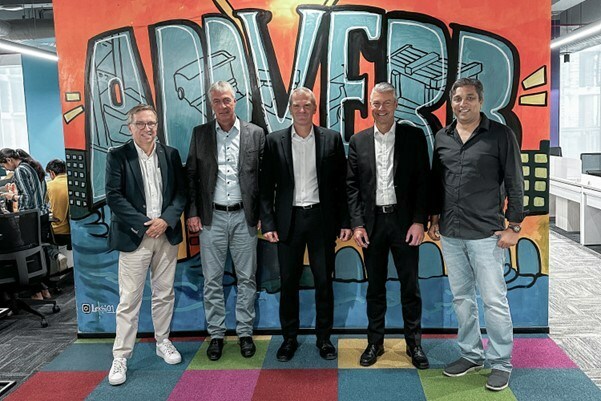
Kardex has agreed a strategic partnership with Addverb in the area of intralogistics software. Addverb is a robotics and warehouse automation company based in India. The cooperation combines Kardex’s expertise in the area of compact storage systems with Addverb’s outstanding warehouse management technology. Addverb’s highly innovative warehouse management system is based on a modern microservices architecture and fully operable in the cloud.

The partnership between Kardex and Addverb enables an integrated and efficient solution package with the latest technologies in the area of warehouse management and automation. The overall package of Addverb software and Kardex storage systems offers seamlessly integrated and optimized storage processes for companies of all sizes in all industries.

Addverb’s warehouse management solution is based on a microservices architecture that makes it seamlessly scalable and extremely flexible. In addition to which it features a user-friendly interface that eases the implementation and administration. With its algorithms optimizing the handling of resources and materials, the Addverb system ensures optimized workflows and greater productivity. The cloud-based architecture meanwhile guarantees global access and real-time data for optimal decision-making with the highest possible security standards.

The partnership between Kardex and Addverb is an important step forward in the advancement and innovation of warehouse management technologies. Both companies are convinced that their joint effort will contribute to boosting the efficiency and agility of companies worldwide.

“Thanks to the partnership with Addverb, we are able to offer our clients one of the most advanced warehouse management solutions for highly efficient storage. The combination of our technologies will set new standards in the integration of logistics systems” emphasizes Dr. Volker Jungbluth, Head of Corporate Technology at Kardex.

The strategic partnership enables extensive synergies between the two companies. “Together with Kardex, we will be able to offer our clients first-class solutions that will revolutionize their warehousing processes and make them more competitive”, says Pieter Feenstra, CEO Addverb EMEA.

Subscribe

Get notified about New Episodes of our Podcast, New Magazine Issues and stay updated with our Weekly Newsletter.