Electric Semi-trailers and Trucks in Chile

The first fully electric sets of semi-trailers and trucks are in operation in Chile for transporting cargo in the Americas. The historic milestone is the result of a partnership formed by Randon, the largest semi-trailers manufacturer in Latin America, and the Chilean mining company SQM. The company completes the delivery of units from the exclusive Hybrid R line, equipped with pioneering e-Sys auxiliary traction technology, from Suspensys, for application in the transport of the ore extraction process in Chile.

Among the new features of the operation is the development of an electric Tank semi-trailer model for transporting lithium brine, in a customized configuration for the complexity of the production process in which it is applied. The other model, which is also already in operation, is a dump truck for the transport of ore, which has achieved significant results in reducing fuel consumption and component wear when combined with a truck with a combustion engine.

The partnership also has the mediation of the distributor Epysa, Randon’s representative in the Chilean market, and the carrier Nazar, which will carry out the operation of the all-electric sets in the mining area. SQM, one of the world’s leading lithium producers which has the lowest carbon footprint on the market, has acquired the sets of electrical equipment in accordance with its Sustainability Plan, where it commits to be carbon neutral in all its business lines by 2040 – in the specific case of lithium by 2030.

The use of Randon‘s semi-trailers equipped with e-Sys technology allows the Chilean company to have some of the first 100% electric cargo transport sets in the world, since the company has high-tonnage electric trucks in the fleet of its operations. With the use of the Hybrid R models, the estimate is a significant reduction in operating costs for the customer.

“Another delivery that confirms the potential for global transformation that this sustainable technology can offer to logistics and transportation. We believe that cooperation and the construction of disruptive solutions are the way forward for the evolution of electromobility. We are proud to be at the forefront of this trajectory, together with strategic partners to execute this challenge”, celebrates Randoncorp’s CEO, Sérgio L. Carvalho.

With an innovative and sustainable concept, the Hybrid R line has the exclusive e-Sys electric auxiliary traction system, which acts on the recovery of energy generated during descent and braking movements, for complementary application as an extra force in the traction of the set. This movement can generate up to 207 hp of additional power to contribute to traction on climbs and overtaking. The complete solution was pioneered by Randoncorp through a partnership between Randon, Suspensys and Randon Technological Center.

Port Congestion Review

Beacon, a supply chain visibility and collaboration platform, has released its 2023 Port Congestion Review. While average global vessel anchor and berth times hovered at a combined 1.5 days throughout the year, Asia outperformed while North American ports struggled. In a sign of further recovery for global supply chains, container dwell times at port improved between January and December at 71% of analysed ports with Colombo leading the way with average dwell times of 1.8 days in 2023.

North American ports struggle with congestion, and SE Asia is amongst the best performing regions in 2023

Overall, Asia is performing very well when it comes to port congestion (the combination of vessel anchor and berth times) – with all regions except the Indian Subcontinent (1.7 days) tracking below global averages over the course of 2023.

SE Asia outperformed China for much of the year with congestion times averaging 1.2 days in comparison to China’s 1.3, helping to solidify its position as an alternative manufacturing hub.

China’s performance was hindered by persistent congestion at the port of Ningbo-Zhoushan, one of the busiest in the world, where congestion times averaged more than 9 days, although improvement was seen with congestion dropping below 6 days in November and December.

Transpacific hubs on the West Coast of North America continue to struggle with congestion, with combined anchor and berth times averaging 3 days in 2023. Central and South American (1.3 days) and European(1.4 days) ports outperformed the global average of 1.5 days, while the Middle East and North Africa saw congestion relief beginning in August through to the end of Q4.

Colombo, Melbourne and Charleston among the best ports for container dwell time in 2023

Analysing the time it takes for containers to depart the port after being unloaded, Beacon has ranked the best and worst performing ports for container dwell time in 2023. Of note, the ports of Algeciras (Spain), Qingdao (China), Laem Chabang (Thailand) and Liverpool (UK) all registered container dwell time improvements of more than 49% between January and December.

Although port congestion may be out of cargo owners’ control, how they respond to it isn’t. Beacon Live Boards makes it easier than ever to share updates with partners, act with speed, manage risks and generate the insights needed to improve supply chain performance. Ultimately allowing customers to optimise their supply chains in the most effective way possible.

Fraser Robinson, CEO of Beacon, commented: “It is great to look back at the data we have collected over 2023 and interesting to see some trends beginning to emerge. Supply chain disruptions, as we are experiencing at the moment in the Red Sea, can incur heavy financial costs and while supply chain management isn’t a golden ticket to completely eliminate risk, investing in the right tools, like Beacon, is one of the strongest ways to minimise the impact.”

Demand for Logistics Space over Next 5 Years

The UK could need more than 112 million sq ft of new industrial and logistics floorspace, the area of more than 1,700 football pitches, over the next five years, according to the latest calculations from global property adviser Knight Frank based on current capacity utilisation rates.

The additional demand is linked to the UK’s growing population and our increasing dependence on distribution and manufacturing hubs, though the long-term trend in manufacturing toward high-value sectors, as well as increased automation in the manufacturing and distribution sectors, could ease pressure on the UK’s industrial and logistics stock.

Population growth and urbanisation:

Oxford economics forecasts the number of dwellings in the UK to rise by 958,640 over the next five years. London is expected to see the strongest growth (6.7% vs current stock), followed by the South East region. According to Knight Frank’s latest Future Gazing report, this growth will result in a high volume of additional delivery addresses that need to be serviced by logistics facilities.

Growing urban populations will also place greater pressure on industrial and logistics land in UK towns and cities. By 2033, 85.6% of the UK population is expected to be urban, compared to 84.5% today and 82.1% ten years ago. The UK’s ongoing shift toward city living will generate increased demand for urban industrial and logistics space in the coming years.

The changing nature of retail:

The way we work, shop and spend our leisure time are further increasing and changing the nature of UK industrial and logistics demand. Technology and digitalisation, as well as many consumers’ preference for online shopping and faster delivery times, will see online retail penetration rates increase from 26.6% to 29.1% by 2028. Growth in online retail sales and the associated demand for business-to-consumer deliveries is a major contributor to demand for distribution and fulfilment hubs. Knight Frank anticipates that an additional 37 million sq ft of logistics space is required just to service the growth of e-commerce over the next five years.

Physical and omnichannel retailers are also increasingly reliant on industrial and logistics properties to fulfil click-and-collect orders and returns. Physical retail, which requires approximately 1/3 of the warehouse space as e-commerce, is expected to drive 4.7 million sq ft of new requirements over the next five years as total retail sales volumes rise.

Manufacturing and services:

Manufacturing output, which has risen 11.5% in the past ten years and is projected to increase by an additional 4.3% by 2028, will drive demand for an additional 33.8 million sq ft of logistics space based on current capacity utilisation rates. A push to near-shoring and re-shoring of supply chains, partly in response to successive geopolitical and macroeconomic shocks over the past decade, also has the potential to spur manufacturing output. However, the shift toward high-value manufacturing sectors such as computer, electronic and optical products, will raise capacity utilisation rates, meaning additional requirements – calculated by reference to current utilisation rates – may not be as high.

The service sector, which accounts for 16% of occupied industrial floorspace, has become an increasingly prominent category of logistics occupier in urban industrial markets, with demand from catering, cleaning, vehicle maintenance and media production companies unable to be satisfied by the limited stock of well-located, cost-effective city-centre commercial premises. The service sector, which already dominates the UK economy and accounted for 81% of all UK commercial output in 2022, is forecast to see strong growth over the next five years. Output is expected to rise nationwide by 6.7% by 2028, requiring 36.5 million sq ft of new industrial and logistics space.

Current undersupply:

With the growth of the remaining segments of the industrial and logistics occupational market closely tied to the growth of the retail, service and manufacturing sectors, this portion of the market is likely to see similar rates of growth in the coming years. All of these factors combine to increase the projected amount of industrial and logistics floorspace required per dwelling in the UK, from 109 sq ft currently to 111 sq ft per dwelling by 2028.

However, surging demand for logistics space has coupled with constrained supply of new space over the past ten years, increasing rents and straining the availability of existing stock. Since 2013, occupied industrial floorspace has risen by 17%, precipitating a drop in vacancy rates from 9.2% to 5.2% over the same period. Market rents have risen 63% on average across the UK over that timeframe, while prime rents (units over 50,000 sq ft) have almost doubled (+93%).

Charles Binks, Head of Logistics & Industrial Agency at Knight Frank, commented: “It is clear that the projected growth of the UK’s population will necessitate the delivery of new industrial and logistics space, particularly when one considers the near record-low vacancy rates and level of availability of existing stock. However, assessing the forecast rate of population growth alone fails to account for the impact of our shifting lifestyles, consumption habits and economic activity on demand for industrial and logistics floorspace across the UK, which when taken together demonstrate the growing dependence of each household on well-located manufacturing, distribution and service hubs.”

Claire Williams, Head of UK and European Industrial Research at Knight Frank, added: “Where we live, how much we earn, how we shop, what we spend our money on and how we spend our leisure time are all driving changes in our requirements of the industrial and logistics sector. By exploring the changing nature of demand from the perspective of the household, our analysis aims to bring into focus the diverse nature of demand and better understand how requirements in terms of the uses, locations and facilities may change going forward.”

Drive Systems at LogiMAT

At the LogiMAT trade show in Stuttgart the drive specialist Nord will present its reliable and energy-efficient drive systems units for the industry.

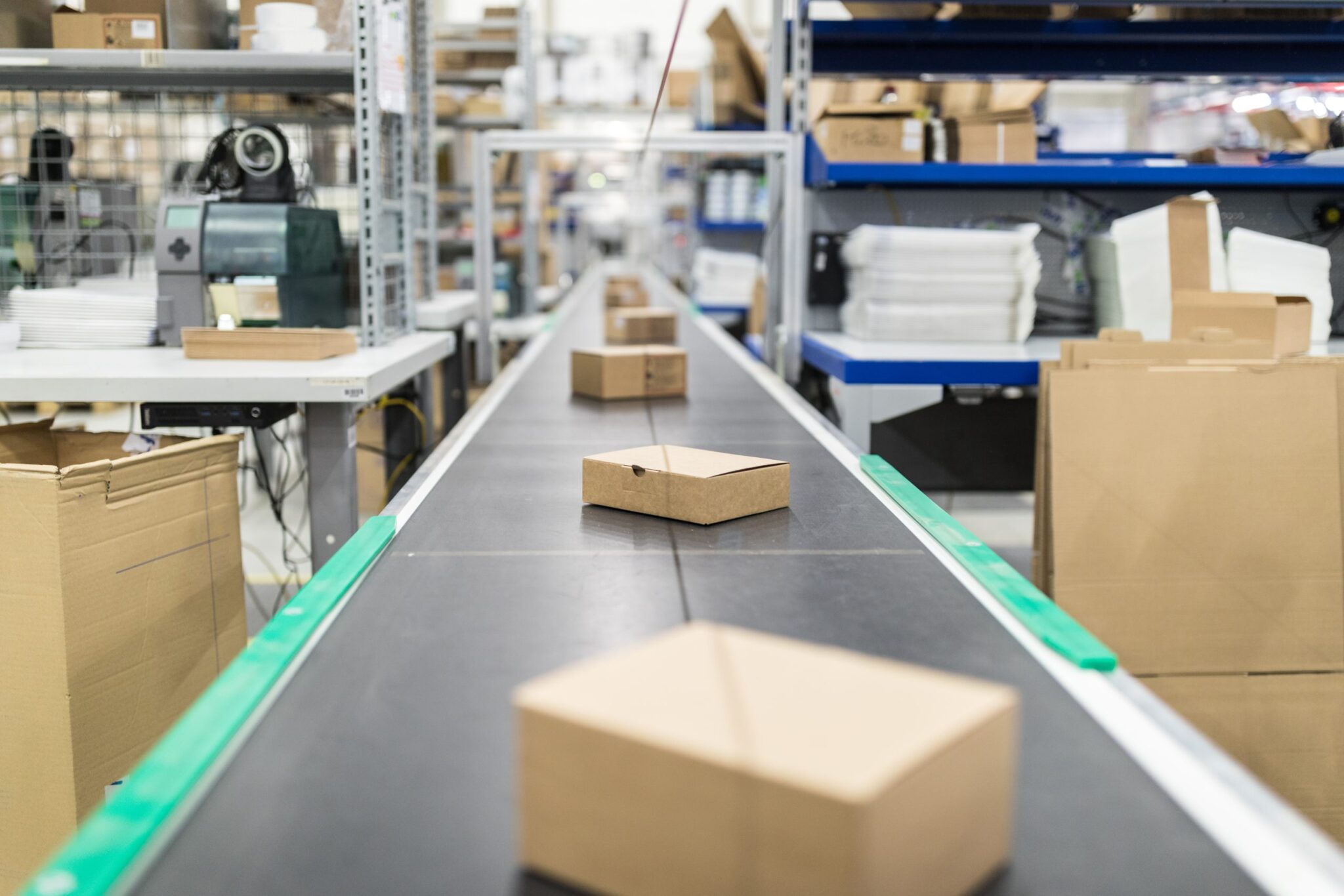
In intralogistics, parcels of different weights must be transported continuously – often over relatively long distances. Special requirements are placed on performance, reliability and energy efficiency of the drive technology used. For this purpose, NORD DRIVESYSTEMS designed suitable drive solutions – and will present them from 19 to 21st March 2024 at LogiMAT in Stuttgart.

NORD DRIVESYSTEMS has developed the DuoDrive gear unit/motor combination specifically for intralogistics. A highly efficient IE5+ synchronous motor from NORD is integrated into a helical gear unit, achieving an extremely high efficiency. DuoDrive achieves a constant torque over a wide speed range and thus allows for a significant reduction of drive variants in a system. This results in minimised administrative costs and streamlined service processes.

Compact, maintenance-friendly, pluggable

In addition, the decentralised NORDAC ON frequency inverters have been optimised for the requirements of horizontal conveyor technology. With their compact design, easy maintenance and full pluggability, they are especially suited for large intralogistics systems with various drive units. In the NORDAC ON+ version, they are specially designed for the combination with the IE5+ motor.

NORD does not only support its customers with suitable and resource-saving drive components, but also with competent services. The NORD ECO service, for example, helps to find the most efficient drive solution for a specific application. Here, the energy consumption behaviour of a system is checked with the aid of a measuring device. The data evaluation reveals the fields in which the system may work inefficiently, and NORD provides recommendations for efficiency-optimised drive solutions.

Drive Systems

At LogiMAT, NORD will also present its sustainability programme. The drive specialist commits itself to act in an ecologically, economically and socially responsible manner – providing security for those customers who are also amenable to the Supply Chain Act.

NORD DRIVESYSTEMS will present its drive solutions for intralogistics from 19 to 21st March 2024 at LogiMAT in Stuttgart. You will find the company at Stand 3C41 in Hall 3.

New Docket Grab Hanging Sign

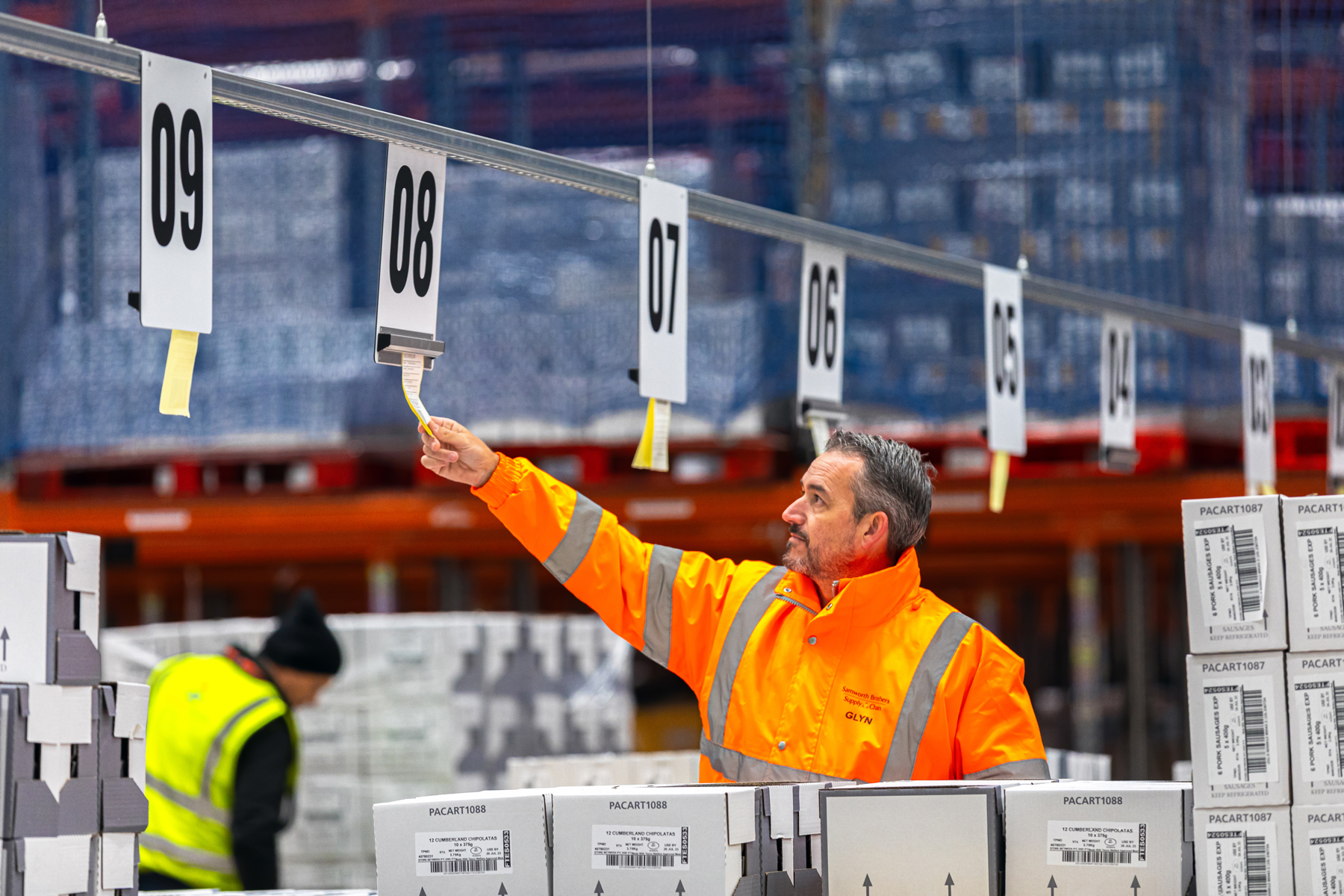
When the Samworth Brothers company was looking for a new hanging sign for its chilled distribution site in Leicester they chose to partner with inotec which specialises in supplying bespoke warehouse labelling and line marking solutions. The result is an innovative ‘docket grab’ hanging sign that uses ball bearings to grip dockets. These signs, which can be either single or double-sided, are now being used in the pick by line area of Samworth’s Oak Meadow facility.

The Samworth Brothers site in Oak Meadow Leicester has a storage capacity of over 10,000 pallets across chill, deep chill and frozen. Around 580 people work on the site with orders being picked by 160 warehouse operatives.

Glyn Maude is General Manager, Samworth Brothers Supply Chain, he explains why the new sign was needed, “As our business has grown rapidly over the last few years we needed to change how we picked orders in this warehouse. Originally the whole area was racked, but it was decided to take part of the racking down to create a pedestrian only picking area surrounded by barriers.

“This meant we could present the products to the pickers in that area instead of getting them to pick out of the racking. The lanes of pallets run towards the racking area and the stock comes into the picking area from underneath the racking, deposited by forklift truck.

“I knew that I would need hanging signs for the new area but couldn’t see anything suitable on the market. I’d seen other companies using drainpipes cut into segments with a slit to hold a label and I’d thought that there has to be a better way of doing this so I approached Steve Towler at inotec. I already knew Steve as he’d helped me with line marking and signs for our marshalling lanes here in Leicester and done a great job. Once I’d given him the size of sign and what it needed to do, he went away and came up with the docket grab concept. A couple of mock-ups later, we had our ‘docket grab’ hanging sign.

“One of the qualities I like about inotec is that they help me plan out and design what I need. They also give me an honest and accurate quotation regarding the cost; I get a lot of good advice from them. The idea of using ballbearings to grip the pallet labels was all inotec’s.
“In the pedestrian only zone the picker collects the pallet of stock using a hand pallet truck and walks down the picking line of pallets. He then scans the pallet label that is held in the hanging sign above a pallet, this details a retailer’s order. The label tells them how many cases to put on that particular pallet for that order. This allows us to control what stock is going where.

“We know when a pallet is fully picked as we’ve set the height of the hanging sign and the length of the label to indicate the full height of an order. When the pallet is full the picker can clearly see there is no room for more stock on that pallet. This means we have uniformity for all the pallets we’re picking. Prior to this we were sending pallets out that were all different heights – not many were too high but some were too low, now they all come out at a standard height.

“Our new way of working has helped us reduce the amount of pallets we’re sending out to retailers. It also ensures we fill the trucks up as much as we can so that we don’t put additional vehicles on the road. This reduces our distribution costs benefitting both us and our customers. A further advantage of the hanging signs is that the pallet labels are now up in the air and out of the way – before they were stuck on the pallet and could fall off, get stuck to something else or just generally go missing! The new sign system prevents this happening.

“Our pick accuracy is already really high at 99.98 per cent but we still have a margin for error that we want to eliminate. Although we’ve only been operating this pick by line system for a short time I am expecting to see an improvement in picking accuracy. The signage work that inotec has done here for us is great. We work really well together as our two companies have a lot in common in terms of work ethic and the way we view things. It’s a fantastic business, I’d give them ten out of ten every time.”

Wellness Company Partners with Fulfilment Hub

Cambridge Nutraceuticals has joined forces with leading Bristol fulfilment company Huboo to help meet the growing consumer demand for its wide array of health and wellness supplements.

Founded over 10 years ago, Cambridge Nutraceuticals’ mission is to help people live longer, healthier lives through scientifically proven health supplements. The wellness brand has enjoyed rapid growth over the past decade – particularly post-Covid when consumer demand for health-boosting products skyrocketed.

As the bulk of its business is direct-to-consumer sales via its website, Cambridge Nutraceuticals has partnered with Huboo to support all of its fulfilment needs – a journey which has led to over 40% growth and helped Cambridge Nutraceuticals on its path to become one of the UK’s most trusted wellness brands.

Based in Bristol, Huboo provides multi-channel fulfilment and storage services for more than 1,500 businesses across the UK, Europe and the US. It is the pioneer of the ‘hub-based’ warehousing model – a unique human-centric system focused on ‘hubs’ – essentially micro-warehouses – that are run by small teams who participate in all aspects of the fulfilment process to make it more streamlined and efficient.

Huboo has supported Cambridge Nutraceuticals by facilitating quick and accurate product deliveries for its fast-growing customer base. And with over 85% of its customers ordering on a monthly subscription basis, partnering with Huboo has meant the business has been able to seamlessly manage regular, repeat orders – ensuring deliveries are punctual and tie in with when a previous order is due to run out.

Matt Keys, CEO at Cambridge Nutraceuticals, said: “With Huboo’s technology and logistics infrastructure on our side, we’ve been able to consistently focus our attention towards scaling the business – in the UK initially, but now increasingly overseas too.

“Huboo helps us ensure our subscribers’ deliveries arrive on time, minimising the build-up of a surplus. We also benefit from batch management, stock controls, real-time insights, inventory planning and quality assurance measures so that our supplements don’t exceed best before dates. Huboo is also able to provide letterbox friendly packaging, so customers don’t miss a delivery and have to take a trip to the post office.”

As a result of Huboo’s fulfilment support, Cambridge Nutraceuticals has been able to dedicate more focus to forging ahead with its growth plans, branching into new territories, and adding to an existing presence in the Middle East, Australia and Sri Lanka. It is also looking to further expand its innovative, patented version of lycopene, a natural food compound known to lower the risk of heart disease – called LactoLycopene – across multiple product ranges, to further bolster its growth prospects.

Paul Dodd, co-founder and CIO at Huboo added: “At Huboo, adapting to our customers’ growing fulfilment needs is crucial in helping them evolve as a business. Cambridge Nutraceuticals offers both subscription-based models, as well as traditional eCommerce sales – so having a fulfilment partner that can effectively manage both these order streams, without any glitches, is paramount. It’s been such a brilliant experience supporting Cambridge Nutraceuticals on their growth journey – we’ve strived to ensure their fulfilment needs are handled seamlessly by harnessing cutting-edge technology, and a passionate team, to enable a productive fulfilment process.”

Large-scale Hydrogen HGV Deployment

Novuna Vehicle Solutions, one of the UK’s largest fleet leasing providers and a leading advocate for zero-emission vehicles, today announces it has been awarded funding of over £2.1 million as part of the Tees Valley Hydrogen Vehicle Ecosystem (HYVE) Consortium, which will showcase the first large-scale deployment of fuel cell electric HGVs in the UK.

The £7 million project, part of the Tees Valley Hydrogen Transport Hub, is being funded by the Department for Transport and delivered in partnership by Innovate UK. The programme will unlock at least £15 million of private investment. Led by project coordinator ERM, the consortium will support the rollout and maintenance of fleets of fuel cell HGVs in the Tees Valley commencing later this year, supported by the construction of a strategically located hydrogen refuelling station by Exolum at their Riverside Terminal.

The publicly accessible refuelling station, near to Middlesbrough town centre and at the intersection of the A19 and A66, will be capable of dispensing up to 1.5 tonnes of hydrogen per day.

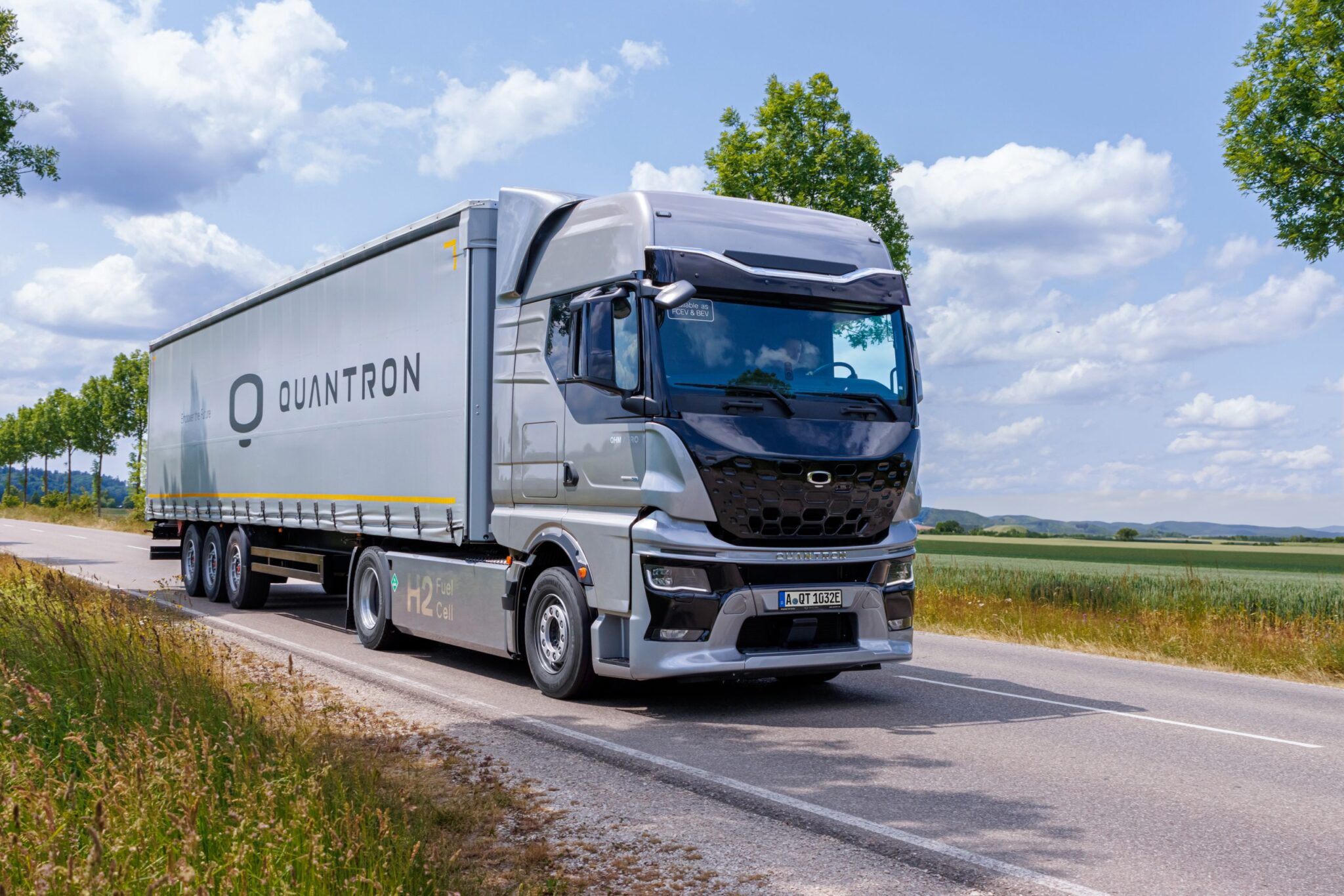
As the selected HGV leasing partner within the consortium, Novuna Vehicle Solutions will work alongside German manufacturer Quantron AG, to build, fund and manage the in-life maintenance of more than 20 fuel cell electric HGVs ranging from 4.2 to 27 tonnes deployed in the project.

These vehicles, which will be used by some of the region’s largest vehicle operators within the logistics, infrastructure, utilities and home delivery sectors, will replace diesel vehicles, reducing local air pollution and carbon emissions. Data monitoring and performance evaluation will be provided by the School of Computer Engineering and Digital Technologies at Teesside University, who have extensive experience in the fuel cell field.

Jon Lawes, Managing Director of Novuna Vehicle Solutions, said:

“This project is crucial to removing barriers and addressing the needs of operators at every stage of the ecosystem, in turn realising the commercial viability of hydrogen, at scale, and transforming the heavy transport sector which has been left behind in the road to net zero fleets. With our experience and unique capability to build, fund and manage the in-life maintenance across all vehicle types, including HGVs, we’re looking forward to collaborating with other selected participants to create a cleaner transport sector and ultimately unlock the vast potential of fuel cell hydrogen vehicles.

“Being firmly at the forefront in addressing the challenges of decarbonising heavy-duty vehicles complements our broader zero emissions strategy which is already comprehensively supporting fleets transition to Electric Vehicles.”

Novuna Vehicle Solutions, which manages over 140,000 vehicles across the UK and Europe ranging from cars and vans to HGVs and specialised assets, is also currently in discussion to support separate trials of Hydrogen vehicles for Network Rail.

Andreas Haller, CEO and Founder of Quantron AG, added:

“We are proud to be a part of this initiative. Bringing our innovative QUANTRON INSIDE technology to the UK marks a significant step forward in our global strategy and we are delighted to do this in collaboration with our partner Novuna. We are building hydrogen vehicles that reflect our commitment to sustainability to set a new environmentally friendly standard for long-haul transportation.”

Taiwan Election Unlikely to Impact Chip Supply Chain

In a closely contested election held on 13th January 2024, Lai Ching-te of the Democratic Progressive Party (DPP) secured the presidency of Taiwan with 40.1 per cent of the votes, defeating his rivals from the Kuomintang (KMT) and the Taiwan People’s Party (TPP). This is a historic achievement as it marks the first instance in Taiwan’s political history whereby a party has won three consecutive presidential elections.

However, Lai Ching-te’s victory was less substantial than his predecessor Tsai Ing-wen’s landslide win in the previous election. The DPP has lost its majority in Taiwan’s Legislative, securing only 51 seats out of the 113 seats – 57 seats are needed for a majority. As such, there may be opposition and delays when the DPP attempts to pass legislation, particularly regarding semiconductor manufacturing.

This can be seen as the DPP advocates for an independent Taiwan and has pursued stronger relations with the US and Japan, fostering collaborations in chip production and research. The strategy aims to reduce geopolitical risks for Taiwan’s premier chipmaker, the Taiwan Semiconductor Manufacturing Company (TSMC). Meanwhile, the KMT party aims for a more conciliatory approach towards China, with this stance raising concerns regarding increased pressure on Taiwanese chipmakers.

Ritesh Kumar, director, procurement and supply chain intelligence at The Smart Cube, comments on how the outcome of the Taiwan election is set to impact the global semiconductor supply chain:

“Over the past decade, Taiwan has become an indispensable part of the global semiconductor industry. The island is responsible for 60 per cent of the world’s semiconductor output, encompassing crucial applications in smartphones, fighter jets, quantum computing and artificial intelligence (AI).

“The result of the recent Taiwanese presidential election is not likely to immediately alter the global chip supply. After winning the election, Lai Ching-te declared his readiness to soften his stance on Taiwan independence and restart conversations with China, which may diminish the potential hostile reactions from China in the short term.

“What’s more, the DPP is expected to strengthen the domestic semiconductor industry in Taiwan, while also decoupling Taiwan’s tech sector from China by establishing additional chip foundries in other major countries. This would secure a more reliable chip supply for global tech giants. Doing this would continue the party’s policies from its previous terms in power, which saw the TSMC invest substantially in advanced foundries in the US, Japan and Germany – a reflection of Taiwan’s close relationship with the West.

“However, the DPP may encounter objection and delays from the opposition KMT and TPP parties when it comes to passing legislation against China, as well as measures related to chip investments in the West. While this is likely to keep the global chip supply chain stable in the short to medium term, a delay in passing legislation may lead to a slowdown in the growth of both the domestic and global semiconductor markets.

“Nevertheless, until the new president takes office in May 2024, global semiconductor companies and other tech businesses are likely to monitor and assess the situation.”

Long-Term Plastic Waste Reduced

American Airlines Cargo announces today that it reduced long-term plastic waste by more than 150,000 lbs, the equivalent of 8.6 million water bottles, in 2023. This is a result of a continued relationship with BioNatur Plastics™, launched by M&G Packaging, which manufactures a growing line of biodegradable plastic products for use in air cargo operations.

The carrier began transitioning to BioNatur Plastics products at major U.S. hubs in early 2022, reducing long-term plastic waste by the equivalent of 6.4 million water bottles in the first year. In 2023, American expanded its use of the biodegradable products beyond U.S. hubs to include regional domestic stations, such as Detroit Metropolitan Airport (DTW), Honolulu International Airport (HNL) and Minneapolis-Saint Paul International Airport (MSP), as well as internationally to Carrasco International Airport (MVD) and Santiago International Airport (SCL) in Latin America.

American plans to continue replacing traditional plastic used for stretch wrap and pallet covers with the BioNatur Plastics line, which is manufactured with a 1% load of an organic, food-safe proprietary additive that allows anaerobic bacteria to digest the plastic in a landfill. Outside of a landfill, the plastic has an indefinite shelf life and performs exactly like traditional plastic products.

“Sustainability is of paramount importance for us at American, and we are so pleased that our transition to BioNatur Plastics is one way we can implement real change in our cargo operations,” says Greg Schwendinger, President of American Airlines Cargo. “We look forward to continuing our partnership with BioNatur Plastics as we unite in working toward a greener future.”

Charles Rick, President of BioNatur Plastics adds, “American is a leader in sustainability and we are proud to work with the cargo team to make the switch to our biodegradable and recyclable plastics. We look forward to even greater impact together in 2024.”

Regular plastic can take up to 1,000 years to biodegrade in a landfill. BioNatur biodegradable plastics will biodegrade under landfill conditions in only 8 to 12 years. The end products are fully recyclable in normal waste collection streams, and with added strength, the plastics can be used in thinner amounts – thus minimizing the quantity of plastic use overall.

Increase Visibility and Automation Across Ecommerce

Linnworks, an inventory management system (IMS), order management system (OMS) and warehouse management system (WMS) solutions provider and recently announced Connected CommerceOps platform, is pleased to announce its partnership with Virtualstock, Europe’s largest dropshipping and curated marketplace SaaS (software-as-a-service) platform. As a result of this integration, Virtualstock users can automate their connection to key suppliers in their ecosystem to synchronise inventory and order routing details.

Linnworks connects thousands of small, medium sized retailers with over 100 selling channels including global marketplaces, D2C platforms and emerging selling channels. Virtualstock is one of those key channels, offering product placement into the top 10 UK Retailers including John Lewis, Sainsbury’s Argos, Robert Dyas, B&Q, Currys, Screwfix, Ryman and Toolstation. By pairing these two organisations both the marketplace entity (retailer) and the seller (supplier) can enjoy full transparency and visibility with fully automated transfer of critical data upstream and downstream.

The Virtualstock platform is cloud-based and provides a frictionless connection into the retailers ensuring visibility across their supply chain – including stock availability, order status and delivery status. With Linnworks alongside, this visibility extends into the supplier network improving the ability to connect, sell and fulfil orders seamlessly for all parties. Key deliverables for the supplier community include; de-risking operations by automating connectivity; saving time and money through real-time centralised visibility, and ensuring compliance with channel Service Level Agreements (SLAs).

The integration between Virtualstock and Linnworks means that order and stock data will now flow seamlessly back and forth without the need for any manual interaction.

Other key functions of the partnership include:

• Inventory Updates – Linnworks can automatically send changes in stock levels to the channel
• Order Download – Channel orders can be automatically downloaded into Linnworks’ platform, allowing retailers to reserve available stock and avoid overselling
• Inventory Mapping – Existing and new channel listings can be linked to Linnworks inventory items for stock level and price updates
• Location Mapping – Orders can be downloaded and inventory updates sent from specific locations
• Order Despatch – Orders on the channel can be marked as shipped and provided with the tracking number and shipping service name via Linnworks.

Chris Timmer, Linnworks commented, “Automating a connection to market leading retailers is no longer a luxury, it is a must. Therefore, the partnership with Virtualstock couldn’t have come at a better time. In order to achieve smoother retail experiences for all, Linnworks and Virtualstock can now work together in order to meet ever-evolving customer demands. With this partnership, we are demonstrating our commitment to helping businesses conquer the complexities of multichannel selling and achieve new levels of productivity and profitability.”

Ed Bradley (pictured), Virtualstock concluded, “We are very excited to announce our partnership with Linnworks. Connecting thousands of vendors to the Virtualstock platform, not only enhances the control and visibility of consumer orders but offers choice to our retail clients and routes to market for brands and suppliers. With Linnworks’ extensive reach across a multitude of sales channels, it was the obvious choice to create the most powerful supply-and-demand network in the market.”

Subscribe

Get notified about New Episodes of our Podcast, New Magazine Issues and stay updated with our Weekly Newsletter.