Bespoke Loading Platform

Doncaster based Hörmann Transdek have recently completed the installation of a bespoke loading platform for leading drinks distributor HillsProspect LWC. Having been initially contacted regarding one of their standard loading bay products, Hörmann Transdek worked with the company to design and develop a unique solution to their very specific loading requirements.

HillsProspect LWC operate a fleet of forty vehicles from their Romford distribution facility, ranging from 7.5 to 18 tonne in size, which in the main are loaded using a number of standard dock levellers. Alongside these were two level access bays which were proving not to be as efficient and were causing concerns about operator safety. After initial consultations and design proposals, Hörmann Transdek worked closely with HillsProspect LWC to provide a tailored solution to speed loading operations and improve operator safety.

The resulting loading facility features a raised 56m2 platform which has been constructed within the warehouse, it incorporates anti-slip flooring, safety barriers, steps, and a perimeter handrail to ensure operator safety. Two Hörmann mini docks have also been fitted with a simple, manually operated lip to bridge the gap between the loading platform and the vehicle. Delivered, constructed and ready for use within four days, the loading platform provides a simple, but effective solution for loading and unloading vehicles.

Commenting on the installation, Nigel Metcalf Depot Manager at HillsProspect LWC, “From initial contact with Hörmann Transdek right through to the completion of the project, they have been quick to respond and excellent to work with.”

Loading Platform

The loading platform was installed in a matter of days and had an immediate effect on our loading/unloading capabilities, saving us both time and money. It has taken us from 4 fully operational bays up to 6, enabling us to speed up our operation and helped ensure that we got through the busy Christmas and New Year period without a hitch”.

Founded in 1997, Yorkshire based Hörmann Transdek are experts in the manufacture of specialist loading bay equipment. Dedicated to providing innovative and cost-effective solutions to the logistics and retail sectors, Transdek offer a range of products that provide reduced installation times and help speed loading/unloading operations. Products include surface-mounted, rapid-install double deck lifts designed to load high-capacity double deck trailers, V2G (vehicle to ground) lifts for loading vehicles on level-access sites, dock levellers, scissor lifts and mezzanine goods lifts.

Read more

New Website for Trailer and Loading Bay Expert


Tailored Drive System Solutions

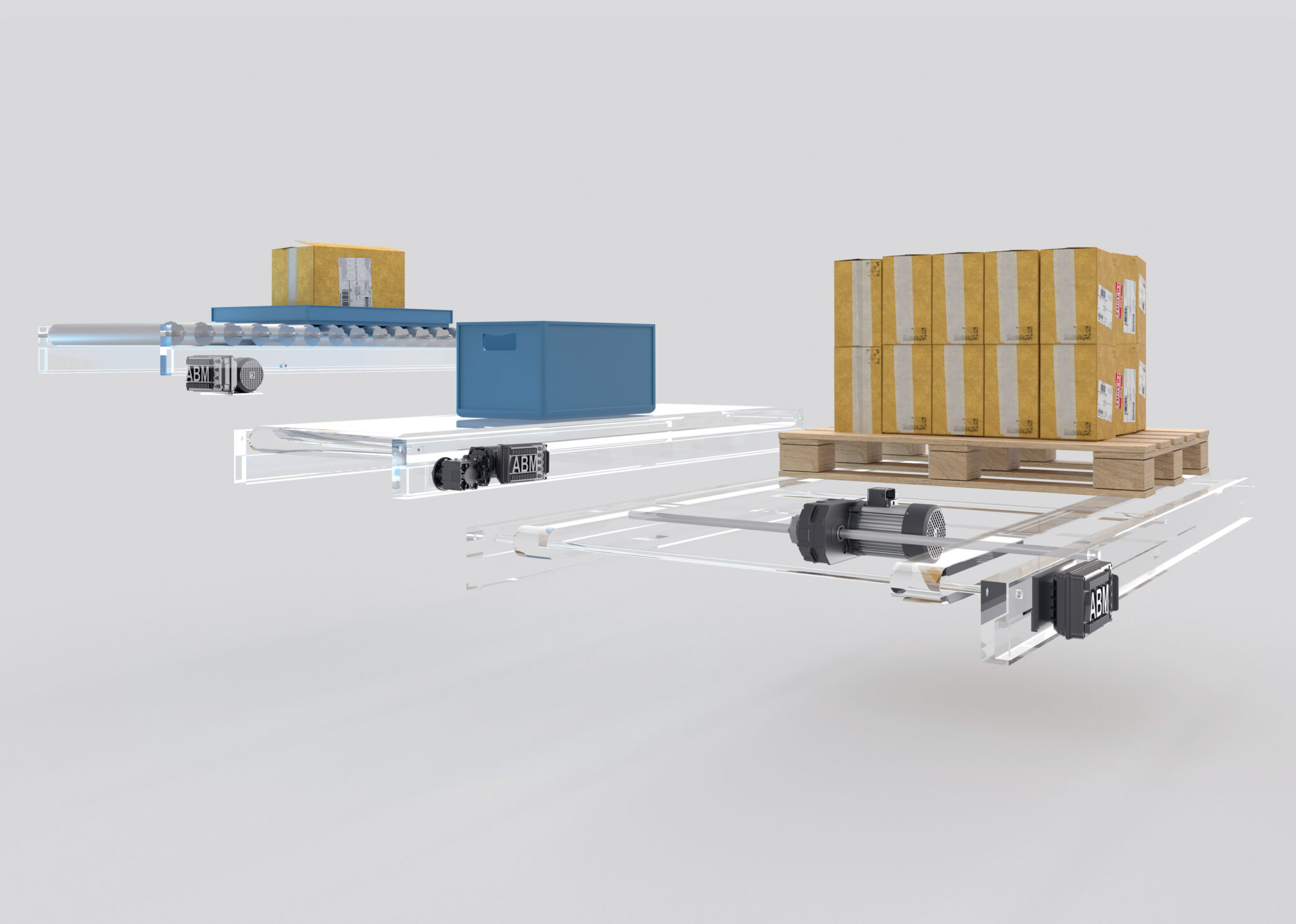
ABM will present complete drive solutions for a wide range of intralogistics applications at the upcoming LogiMAT in Stuttgart (19–21 March) in Hall 3 at Booth 3B15. The system supplier tailors the drive solutions in close cooperation with the customer to his unique application and requirements – while maintaining a strong focus on ensuring sustainability and efficiency of the proposed drive package.

As a full-service provider, ABM develops and manufactures drive systems for stationary and mobile applications in all areas of intralogistics. In electric buses or trucks they are used, for example, for auxiliary units such as hydraulic pumps, air compressors and cooling fans. They are also installed in pallet trucks, forklift trucks and automated guided vehicles (AGVs) as well as in container and pallet conveyors, cranes and industrial doors. The system solutions consist of motors, gearboxes, brakes and inverters – selectively for mains or battery power supply.

Drive Components for Traction, Lifting and Steering

ABM offers all drive solutions for driving, lifting and steering of forklift trucks as a single source. The motors, gearboxes and inverters comply with strict environmental requirements, are safe and are extremely responsive for precise movements even at low speeds. One of the available drive options are the two stage bevel gearbox units of the series TDB. These drive units come with plug-and-play capability for easy integration and are both powerful and energy-efficient. They offer high power densities at optimum efficiencies. The compact series is available with manual or individual steering as well as with integrated electric steering drive.

The drive specialist will present the TDH series electric-steering hub-wheel drive units with inverters for AGVs, pallet jacks, cleaning machines, industrial trucks or track-bound vehicles. These units are compact, robust and capable of handling high static and dynamic wheel loads. For the motor control specific sensors that record speed, rotor position and temperature are included.

Driven with High Energy Efficiency

The wide product range includes induction motors as well as the sustainable and high-efficiency Sinochron motors. Because Sinochron motors already meet the requirements of premium energy efficiency class IE5, users do not have to worry about compliance with legal regulations. The synchronous motor has a compact design and can easily be integrated into systems. With the unique feature sensorless control, the inverter calculates the rotor speed and the instantaneous rotor angle from electrical feedback. With this data, the currents for torque generation can be fed precisely to the motor. The motor can be optimally controlled over a wide speed range with a high starting torque – without the need for expensive sensors.

The comprehensive product range also contains helical gearboxes with torques from 30 to 2000 Nm, parallel shaft gearboxes with 50 to 2300 Nm and angular gearboxes with 60 to 450 Nm. They can be supplied with flanges, solid shafts or hollow shafts. Also available are brakes and sensors.

Via an intelligent modular system, the provider can adapt the various gearbox configurations to the respective application and rapidly deliver a drive solution with high cost efficiency with regard to functionality and efficiency. ABM also offers industry-tailored concepts. For special applications, ABM can also develop completely new system solutions as partners in close cooperation with customers.

Integrated Drive System for Accumulation Roller Conveyors

One innovation example is the highly integrated drive system for accumulation roller conveyors. During development focus was placed on compactness, maximum efficiency and cost. Efficient and dynamic motors are installed as direct drives for small loads. For higher loads – such as in pallet conveyors – the drives can be combined with angular, helical or parallel shaft gearboxes. Added to that is an inverter series designed especially for intralogistics applications. This series is available in three sizes with power outputs of up to 2.2 kW and a high overload capacity of 250 per cent. With the series, ABM covers all common applications in container and pallet conveyor systems. And because most drives in intralogistics only operate at part load, the Sinochron motor with sensorless control are the perfect match.

Externally Excited Motor

An externally excited motor for e-mobility, which is still under development at ABM, is also sustainable and efficient. At its booth, ABM will offer an early look at the innovation, which is completely free of rare earth magnets. The good field weakening behaviour mirrors the torque/speed requirements for traction drives, because they can be controlled more efficient and variable. ABM supplies drive solutions for intralogistics as a single source. The customer receives a tailored, installation-optimized, highly energy-efficient solution for the given application. With this, ABM continues to pursue its goal of delivering high-quality, reliable drive solutions and as a partner supporting its customers with engineering and manufacturing expertise.

Read more here:

Drive Specialist ABM Greiffenberger to Display at LogiMAT


Sexify Logistics

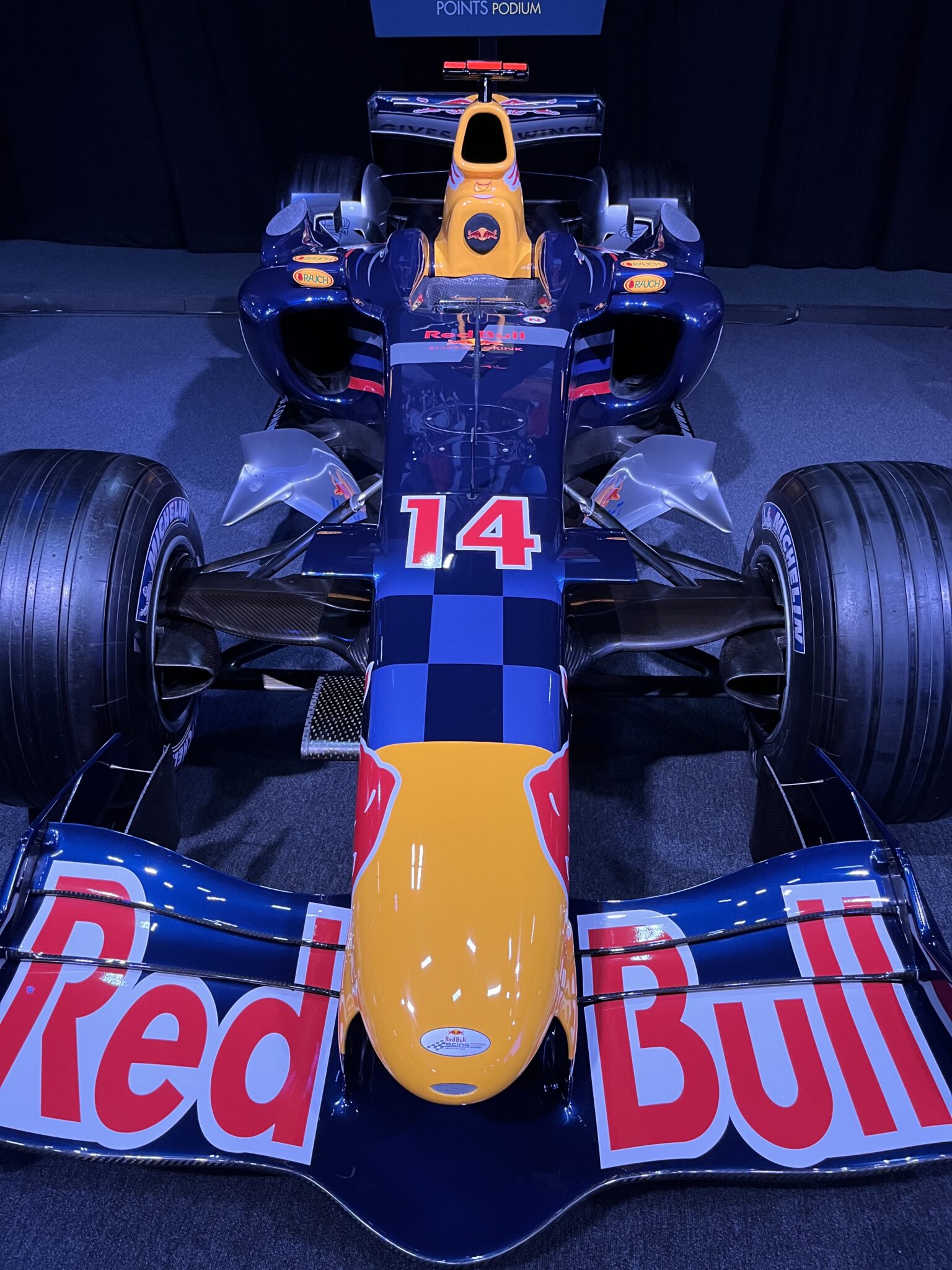
Red Bull’s Formula One HQ in Milton Keynes is an appropriate and impressive backdrop to learn why data is fuel in logistics. David Priestman attended Dexory’s Supply Chain Fast Track conference.

High performance in logistics can be maintained by extracting insights from data and taking practical steps. “Data itself has no value,” states Rob Smedley, former Ferrari, Jordan and Williams F1 race engineer, “insight is everything. Complexity requires having a data strategy.” Warehouses may be less glamorous than race tracks, but they are also hubs of innovation.

Polycrisis logistics

When multiple supply chain disruptive events happen concurrently how can they be tackled? “Resilience planning is key,” says Mike Fahy, CEO of Neovia, a contract logistics provider operating in 20 countries and with 80 hub facilities and 8000 employees. The 3PL specialises in service parts logistics for automotive, industrial and tech customers, formerly being Caterpillar Logistics Services.

Fahy advises logisticians to tackle ‘polycrises’ by multi-sourcing, embracing technology and strong cybersecurity. “We’re not back to just-in-time yet, after the pandemic. We’re still at just-in-case for supply. Warehouse space is relaxing a bit, depending on the location.” Neovia use Dexory to create a ‘digital twin’ of each warehouse, providing visualization and interpretation of inventory stock. For example, the Dexory View dashboard enables pick face analysis of volumes.

Neovia use other tech, like Protex AI’s warehouse CCTV system, which reduced safety incidents by 80%. “New tech creates disruption,” Fahy emphasises, “being part of change is key.” He also praised Athingz – an autonomous supply chain service utilising machine learning to aid sales inventory optimisation, planning and execution. Real-time analytics with a virtual control tower helps forecasting freight lanes, both inbound and outbound. Extended reality, or VR, is used by Neovia for training, using tech from Elm Park Labs. Apple’s Vision Pro is tipped by Fahy to become a handy tool.

Supply chain design, of the number and location of distribution centres, leads to a tech-based materials handling approach. Simulation can be used prior to construction to study the average flow, slow days and peak operations. “Maximising cubic optimisation is key,” according to Fahy, and robotics is paramount. His company are piloting self-driven HGV lorries, remote driving of warehouse reach trucks and remote monitoring of assets.

Visibility gap

Only 6% of supply chain managers claim to have full global visibility. Gaps can lead to out-of-stock or over-stocking issues. The distribution centre is where some visibility is lost, due to damage, loss, theft or errors that occur. The visibility gap is an intelligence gap. An estimated 6500 hours per year can be spent on stock checks for a typical DC, say Dexory. Starting accuracy for their customers is 91-95%, with 24 minutes on average taken to resolve discrepancies. Dexory’s solution claims to increase accuracy to over 99%, which is better than warehouse drones can achieve.
GE Appliances are one of many manufacturers using temporary, overflow warehouses. “That can make it harder to maintain accuracy,” Harry Chase, GE Senior Director for Central Materials, says. “The quality and timeliness of data is crucial.” Dexory can be used for better slotting and stock consolidation, by freeing-up space and identifying bottlenecks.

Machine help?

Generative AI may create new strategies in logistics, for example in transport routing. Chris Coote of Dexory says AI is less intuitive than a human but provides fast answers and concepts. “Embrace limitless possibilities to build a smarter, safer ecosystem in the DC,” he exhorts.

Wincanton, a 99 year-old British third party logistics operator with 21000 staff, are in the process of being acquired by CEVA Logistics, part of the giant French shipping line CMA CGM. Paul Durkin, Chief Customer and Innovation Officer, has a practical view of robotics and automation. Companies should invest in tech, he argues, because labour costs are rising, automation costs are falling and there is a demand for short lead times in logistics. “There’s no longer a long payback time for this equipment,” he says, looking for a 20% return of capital deployed.

The downsides to such investment are the interest on capital expenditure, competing demands for investment and the proliferation of software and hardware, which makes it difficult to be certain what to purchase. “Retail customers spend on their ‘front of house’ (shops and stores). We’re ‘back of house’,” adds Durkin. Wincanton has re-organised itself to lean towards IT and technology, seeing 3PL as a service. Owning the IP of software in-house is important for the company. “We can’t rely on being an asset-based business, with just trucks and sheds,” he adds. Automation can solve customer problems. “Commercialize it. Value creation leads to long-term success.”

Industrial collaboration is a good thing, according to Durkin, who was speaking on the day the CEVA deal was being finalised. “There’s room for it. Warehouses haven’t evolved that much. We all need to accelerate our journey and get slicker. Wincanton need 30 upgrade projects a year, but only have the bandwidth for half that.“

Generation logistics

Getting the organization’s design right is key. “Size isn’t everything. Start small with automation and robotics, get used to it, be prepared to fail,” he advises. Wincanton work with smaller, nimble suppliers, including Dexory. “Now we have proof-of-concept on-site we can invest further. There are no guarantees, but we have created headroom.”

Automation and robotics can inspire colleagues and attract young people into the sector. It can lead to upskilling of existing staff. ‘Generation logistics’ is a slogan aimed to elevate the industry, make it sexier. New entrants to the market, like Hived and everstox, backed with venture capital by investors including Maersk, are on a fast track, fuelled by data to innovate and increase competition in logistics. Our industry is en vogue. Make hay and rejoice.

Read more:

Dexory Announces new Investors

 

Kardex Introduces FulfillX at MODEX

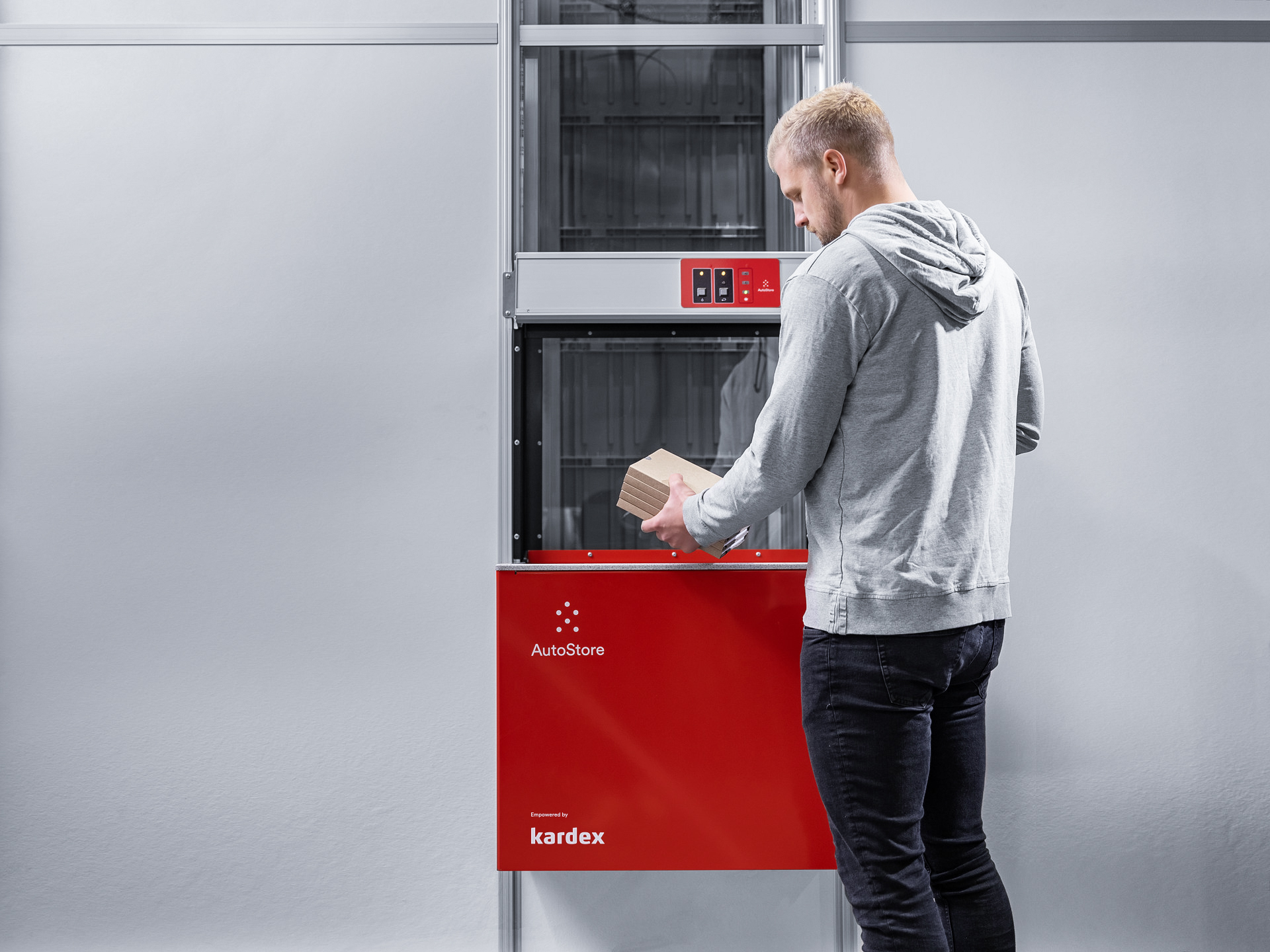
Kardex, a world leading manufacturer of automated storage and retrieval systems (ASRS), is presenting Kardex FulfillX – an innovative warehouse execution system designed specifically for AutoStore empowered by Kardex systems – at MODEX 2024. Kardex FulfillX takes the unexpected surprises out of go-live and allows new AutoStore systems to ramp-up faster and meet or exceed business cases in as little as 6 months. Showcasing its latest developments in automation software, MODEX visitors will experience a new way to maximize automation and robotics potential in Atlanta, March 11 – 14, in booth B6410.

In addition to new developments in warehouse software, visitors will also be able to experience live demonstrations of Kardex’s Intuitive Pick Assistant that projects relevant picking information directly onto the surface of the access opening for both Kardex Remstar and AutoStore ports. This user-friendly picking display responds to movements and enables ergonomic, fast, and error-free picking.

Through the use of digital tools, visitors will experience Kardex’s entire portfolio of solutions, including vertical lift modules, vertical carousel modules, vertical buffer modules and AutoStore systems, come to life using augmented reality. Comprehensive software packages as well as service and modernization concepts complete the portfolio. Furthermore, Kardex is a global AutoStore partner. The powerful and space-saving solution for fast and efficient processing of small parts orders fits ideally into the existing solution portfolio of Kardex AG.

Cube storage

Commenting on the capabilities of FulFillX, AutoStore Partner Sales Manager, Matt Savoie says, “Kardex’s innovative FulfillX warehouse execution system is a great fit for AutoStore, enabling our market-leading warehouse automation systems to do more and exceeding our customers’ expectations of what is possible with cube storage. Being able to ramp up systems faster without any surprises provides reassurance and the confidence companies need to meet and exceed their business goals.”

President of Kardex Solutions Autostore, Mitch Hayes, adds, “MODEX 2024 is the ideal opportunity to present FulFillX to a wide audience and showcase its possibilities. As a global AutoStore partner, we have developed a warehouse execution system that can provide remarkable results in just 6 months and is the fastest order fulfilment system per square foot on the market. We are looking forward to meeting with visitors to the expo and demonstrating how FulFillX, our Intuitive Pick Assistant, and AutoStore can help to transform their warehouse operations.”

Read more

SVT and Kardex Partner for Pick and Pack


Toyota MHE and Gideon Strategic Agreement

Today there is an increasing market demand for simple autonomous solutions with self-navigating vehicles and an easy user-interface. In response to this demand Toyota Material Handling Europe has announced a cooperation agreement with Gideon, a Zagreb-based technology company offering state-of-the-art software solutions for localisation and control of Autonomous Mobile Robots – AMRs.

By combining Gideon technology with its own vehicles, Toyota Material Handling will be able to provide automation for a wide range of logistics applications and significantly shorten project implementation times. Specific application areas where Gideon have already developed offerings are collaborative case picking for retail order fulfilment, as well as truck unloading and loading, using a complete software stack developed specifically for these processes.

Gideon CEO Josip Ćesić claims: ”Toyota’s expertise in material handling equipment and market coverage, combined with Gideon’s software suite, and our focus on specific applications, provides value proposition for end-users that is unparalleled.”

Patric Hed, SVP Logistics Solutions at Toyota Material Handling Europe added: “Gideon have developed an impressive software stack and vision modules, combining flexible, intelligent autonomous behaviour with specific logistics application focus and user-friendliness that will add value to our customers over the coming years.”

Strategic Agreement

Toyota plans to be able to present new application solutions to the market during 2024, starting with order fulfilment solutions for retail distribution. The company is confident that adding this technology and expertise to its know-how in material handling equipment combined with its market coverage will deliver an even more attractive offer to those customers striving to automate their logistics processes.

Read More:

Gideon launches autonomous loading forklift


Distribution Operations Transformed with Warehouse Management

Manhattan Associates Inc. (NASDAQ: MANH) today announced that Gémo, a leading French footwear and clothing retailer, has chosen Manhattan Active® Warehouse Management (WM) to support its digital transformation journey in response to increased consumer demand for omnichannel and sustainable shopping. The decision will see Manhattan’s leading warehouse management solution deployed in Gémo’s three logistics centres.

Jean-Louis Borde, logistics director of Gémo, commented: “In the retail sector in particular, you need to be able to react to consumer trends fast. In order to support the long-term growth of our business, we recognised the need to make our warehouse operations more agile and responsive to the omnichannel approach adopted by many of our customers.”

“With Manhattan, we have made a long-term investment to support our vision of the future. Being a cloud-native solution, Manhattan Active WM receives updates every 90 days, transparently and without any interruption, meaning we always have access to the latest innovations,” Borde continued. “Trends such as clothing rental and the circular economy are booming in France, and we are confident that with Manhattan Active WM, we have a solution that will enable us to continuously adapt our logistics operations to meet the changing demands of our customers.”

Distribution Operations Transformed

Sébastien Lefébure, vice president, Continental Europe, at Manhattan Associates, added: “We have been supporting the ERAM Group, which is made up of nine affordable fashion brands, including Gémo, in its logistical and omnichannel transformation since 2013. With Manhattan Active WM, Gémo has a solution with the agility and flexibility of cloud-native, microservices IT architecture, capable of meeting the challenges of tomorrow’s customer expectations.”

Read more:

The Last WMS You’ll Ever Need to Buy, Promises Manhattan


EnerSys® to Premier Charger Innovations at LogiMAT

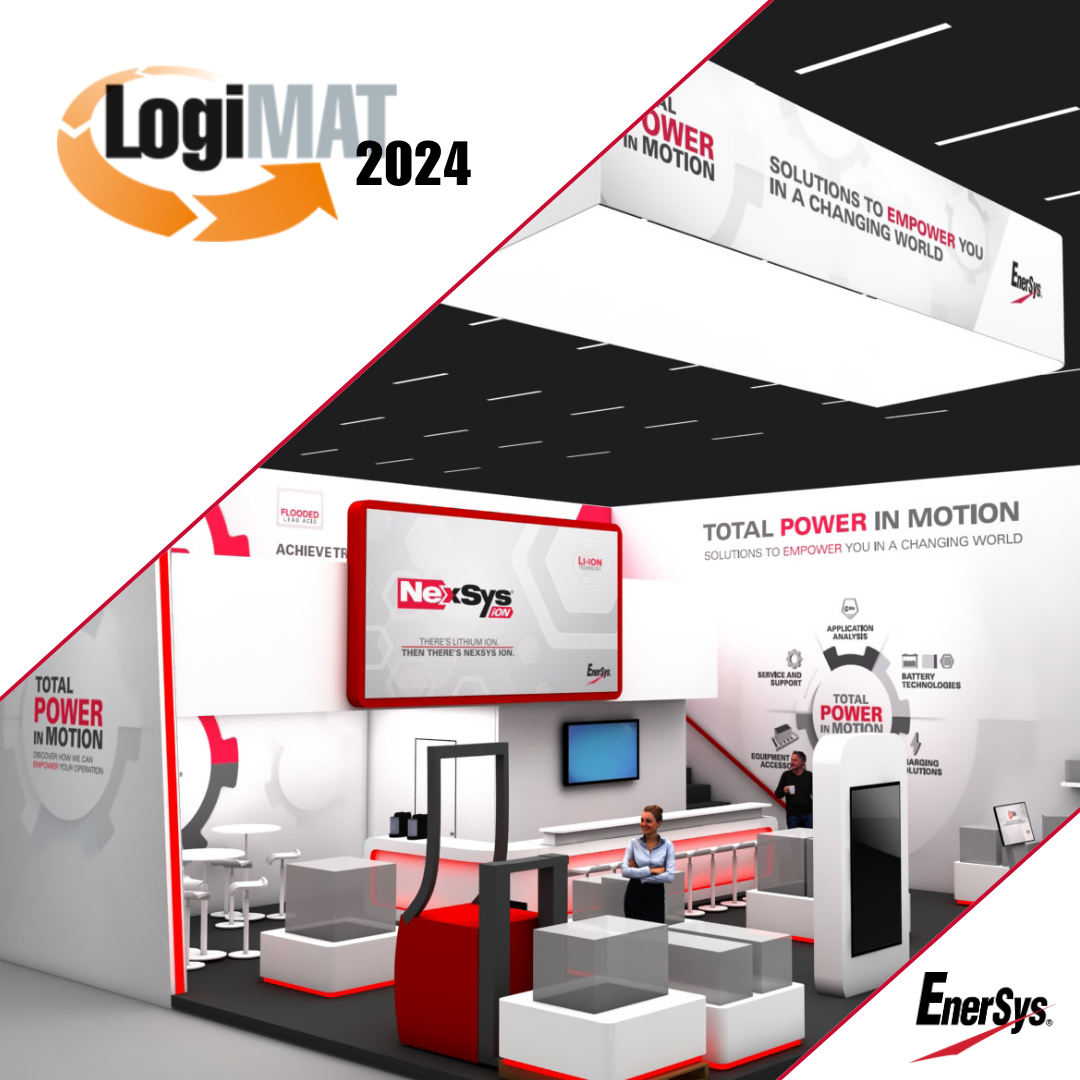
EnerSys®, a global leader in stored energy solutions for industrial applications, will premier its latest NexSys® charging innovations at LogiMAT 2024. The NexSys® AIR wireless charger and the NexSys®+ Outdoor charger. In addition, the company will preview its brand new Accelerated Throughput Package (ATP) for NexSys® TPPL Batteries.

Engineered for a wide range of Automated Guided Vehicles (AGVs), the new NexSys® AIR wireless charger offers a space-saving design to provide integration flexibility while eliminating mechanical charging connections and related maintenance. It also provides advanced safety features that help protect workers and equipment – giving facility operators and AGV Original Equipment Manufacturers (OEMs) an integrated, safe charging solution to optimize both efficiency and equipment autonomy.

Designed to withstand the elements, the new NexSys®+ Outdoor charger provides the advanced performance and features of the NexSys®+ charger, protected by an IP54 rated enclosure for protection against dust, water, and seasonal temperatures. The NexSys®+ Outdoor charger is ideal for use at airports, building material and rental yards, farms, cargo terminals, ports and other working environments exposed to the weather.

Both the NexSys® AIR wireless charger and NexSys®+ Outdoor charger are compatible with all EnerSys® battery technologies, including traditional flooded lead-acid, Thin Plate Pure Lead (TPPL) and lithium-ion (Li-ion).

Wireless charger

“As material handling applications continue to migrate towards automation and electrification, EnerSys® is committed to offering customers advanced charging systems, like the NexSys® AIR wireless charger and the NexSys®+ Outdoor charger to complement our proven battery technologies – including our advanced NexSys® line of maintenance-free batteries” said Harold Vanasse, Senior Director of Marketing, Motive Power Global at EnerSys®. “Our goal is to ensure fleet managers and OEMs have the broadest possible selection of motive power technologies to support their operations – including those that are automated or outdoors.”

For applications requiring extra energy, EnerSys® will also showcase an optional Accelerated Throughput Package (ATP) for NexSys® TPPL batteries. This new upgrade improves thermal
management with specially designed cooling capabilities that allows equipment to run longer and reach higher in both Class 1 and Class 2 applications. NexSys® TPPL ATP batteries along with the next generation chargers will be showcased at LogiMAT 2024 in EnerSys® booth 10B09 from March 19-21, 2024, at the Stuttgart Trade Fair Center in Stuttgart, Germany.

Read more:

EnerSys Launches Wireless AGV Charger


Unrivaled Performance of Li-Ion AGV Batteries

Finding ways to deliver more while keeping costs low is a driving force in the logistics industry, and many providers are turning to technology to find better solutions, according to Johnson Matthey Battery Systems.

Advances in Lithium Ion (Li-ion) batteries have seen them leapfrog traditional lead-acid batteries, providing safer, better value power for autonomous options like Automated Guided Vehicles (AGVs) and Autonomous Mobile Robots (AMRs). This article looks at how lead-acid and Li-ion batteries compare from a technical perspective, as well as how they stack up when it comes to safety and cost.

Energy density

Li-ion batteries are known for their energy density. Crucial for a logistics environment where space and weight are at a premium, Li-ion batteries now comfortably offer 160-190 Wh/kg, even under 100% Depth of Discharge (DoD). That’s five times more energy dense as lead-acid options (30-50 Wh/kg). High energy density options, such as NCA and NCM cells, can even reach a staggering 270+ Wh/kg — enough to power an electric bike for roughly 80-120 km on a single charge.

Number of cycles

Li-ion batteries also outperform lead-acid options when it comes to lifespan by a factor of four. Lead-acid batteries typically only last 500 cycles, fewer if you’re running the battery all the way down; Li-ion phosphate batteries can pass the 2,000 cycle mark and perform especially well under demanding deep discharge conditions.

Charging times & requirements

With a maximum current limit of 0.3C, lead-acid batteries take longer to charge and require dedicated charging areas with hydrogen monitoring. Li-ion batteries, however, can take a higher charging current of 1C or more, enabling them to recharge much quicker — a clear advantage in an industry that wants to limit downtime.

The perceived risk

Despite outperforming lead-acid batteries from a technical perspective, some prospective buyers still have concerns around the fire risk. Challenges such as overheating, overcharging, or mechanical damage to Li-ion cells can potentially trigger thermal runaway, posing a fire risk. To minimize this risk, high-quality Li-ion batteries incorporate a Battery Management System (BMS). These systems monitor crucial parameters like temperature, current, and voltage, quickly deactivating the battery in the event of a breach. In comparison, lead-acid batteries lack BMS and rely solely on the charger for protection.

Li-ion batteries have continued to develop, and the inclusion of iron phosphate to create LFP batteries is a big step forward when it comes to safety. Using iron phosphate as the cathode material makes the battery more stable, gives a longer cycle life and increases the tolerance to high temperatures and abuse, significantly reducing the fire risk and increasing battery safety.

Upfront costs

There’s a perception that Li-ion batteries are expensive, and higher upfront costs are often the biggest factor that puts people off using them. While there is a higher initial investment, to truly calculate the cost of a battery you need to factor in its lifespan, reliability, uptime, and maintenance requirements.

Lifespan

The total cost of ownership over a battery’s lifespan makes Li-ion the smarter financial choice. Li-ion batteries don’t need to be replaced as frequently as older lead-acid batteries. Their ability to cope with deep discharge cycles, even up to 100% in the case of LFP variants, significantly extends their operational life.

Data-Driven replacement

In heavy usage environments, the last thing you want is to suddenly find yourself without power. Being able to integrate BMS into Li-ion batteries allows you to make timely, cost-efficient decisions about how long a battery will last and when to replace it. Ultimately, Automated Guided Vehicles are all about boosting productivity and profitability, and one of the biggest drains on productivity is downtime.

Li-ion batteries can handle a higher charging current of 1C or more, allowing them to charge at a much faster rate compared to other battery types. Quicker charging reduces the downtime of the AGV; vehicles spend less time in the warehouse or factory waiting for batteries to recharge and more time out on the road.

Maintenance

Lastly, one of the costs people often overlook when comparing lead-acid and Li-ion batteries is the ongoing maintenance. Keeping lead-acid batteries performing at their best requires frequent maintenance, such as cleaning to control corrosion and ensuring terminals are tightly connected. Li-ion batteries, however, are maintenance free.

When it comes to the next generation of AGV-powered logistics, Lithium-Ion (Li-ion) batteries outshine lead-acid options on every front. Their energy density, higher number of cycles, and the ability to add Battery Management Systems make them the clear winner when it comes to technology and safety. And they’re also the smarter choice budget wise: safer batteries that last longer, recharge quicker, and don’t require ongoing maintenance make Li-ion batteries a cost-efficient, reliable solution for future-focused logistics operations. To get the full safety and reliability benefits of Li-ion batteries, make sure you’re partnering with a reputable supplier who can source high-quality batteries based on your needs and timelines.

Read more:

Lithium-Ion Batteries Power Automation

Liquid Lens Technology to Small Code Reader

SICK has added Liquid Lens technology to the Lector 61X, its smallest image-based code reader, to deliver rapid and infinitely-variable focal adjustment and a significantly-extended depth of field. The SICK Lector611 with Liquid Lens packs outstanding read performance and operational versatility into an ultracompact device.

The SICK Lector611 image-based code reader reliably reads 1D, 2D and stacked codes even when they are low contrast, contaminated or of poor quality. It also excels with Direct Part Marking (DPM) and very small codes, including where they are practically invisible to the human eye or at very close range.

As well as code-reading duties in fast-moving production and logistics, is therefore ideal for reading direct marks on electronics or automotive components, for example. It also reliably reads slowly-degrading codes, for example on totes in hard-working materials handling environments.

Darren Pratt, SICK UK’s Product Manager for Identification explains: “The liquid lens used in the Lector 611 is infinitely variable. When combined with the automatic parameter switching function available in all Lectors, this enables the Lector 611 to switch automatically between different focal points on the fly.

“Focal distances switch automatically in milliseconds, resulting in an incredible depth of field over the full operating range of 50mm and 300mm. This is ideal e.g. for detecting packages of different heights on a conveyor or adapting to rapid batch changes in production logistics.”

Rapid Set-Up

Measuring just 30 mm x 40 mm x 50 mm and featuring snap-in mounting and flexible cable connectors, the SICK Lector 61X is installed with ease in the tightest of machine spaces. Configure the Lector 611 automatically via a quick set-up wizard in the free-of-charge SOPAS configuration software or directly via the on-sensor push-button auto-tune feature. Whichever method is preferred, optical and code settings are quickly optimised and the unit is ready to read in seconds. With intelligence onboard, the SICK Lector 611 can be set up to distinguish between several codes, or to read multiple codes simultaneously on a package or component.

Despite its tiny size, the SICK Lector 611 is a camera jam-packed with versatile functions. Its design incorporates magnifying optics so it can read microcodes with a minimum bar width down to 0.02 mm for 1D codes and a cell size as small as 0.04 mm for 2D codes. Combining eight LEDs and two lighting colours, the Lector 611 has a highly-flexible lighting capability to optimise the code identification, regardless of the surface or colour. Further optical accessories such as a polarising filter can be attached with no additional tools.

Data Analysis

As with all the cameras in SICK’s Lector family, the Lector 611 can help operators track the quality of the codes it reads. Good reads and no-reads are recorded and statistical analysis of read performance is provided alongside live images so operators can inspect code quality.

The SICK Lector 611 has an integrated time-of-flight laser to aid rapid set-up, while the built-in orientation sensor ensures optimal positioning, as well as rapid detection should the camera move out of alignment e.g. by being knocked.

The SICK Lector 611 with Liquid Lens features a flush screen, so it is ideal for environments with dust and liquid contaminants with a rating up to IP65. The onboard algorithms can pre-filter data before communicating to the control system. It is compatible with all common communication protocols, including TCP/IP, EtherNet/IP, PROFINET, serial and CAN.

Other cameras in SICK’s Lector family, the Lector 62X, the Lector 63X and the Lector 85X, extend the camera-based reading capability across many industries and applications. For example, the Lector 63X is ideal for hand-presentation applications in retail logistics, and the Lector 85X, the biggest in the family, is used for rapid throughput applications reading multiple packages on wide conveyors, e.g. in Courier, Express and Parcel hubs.

Read more here:

Rugged Mobile All-Rounder Offers Unique RFID Reading Capability


Omni-fleet AMR Debuts at LogiMAT

Stepping into the spotlight at LogiMAT 2024, ForwardX Robotics, a Chinese case picking solution provider, invites visitors to witness the unveiling of the Next-Gen AMRs, a testament to ForwardX’s relentless pursuit of groundbreaking technology and industry innovation. Visitors will also have the opportunity to experience the upgraded omni fleets in action for the first time in Europe at stand 1GA31 in Hall 1.

From Asia to EU

Front and centre will be the Apex 1400-L Autonomous Forklift, claimed by the manufacturers to be the most advanced and safest forklift ever, covering 360° three-dimensional obstacle avoidance and omnidirectional recognition. Compliant with ISO3691-4 safety standards and CE-MD certified, the Apex Autonomous Forklift offers ‘absolute safety’ for intralogistics operations, reinforcing accountability and worry-free fulfillment.

Joining the lineup are the Flex, Max and Lynx series, featuring the Flex 60-S’s EU premiere, the global debut of the Flex 600-ST, and the introduction of the Max 1500-L Slim and Lynx O1500 to the EU market and partners. This unveiling represents not just a product launch but a symphony of advancements and commitments, delivering omni fleets for your complete material handling suites.

Presenting the range of AMRs

ForwardX takes pride in possessing a wide range of AMR products. This extensive range, featuring solutions like case picking, piece picking, pallet movement, and multi-floor fulfillment, reflects ForwardX‘s commitment to addressing the varying needs of different industries, from small-scale logistics operations to large-scale manufacturing processes, including 3PL, eCommerce, retail, healthcare, grocery, home furnishing, automotive and advanced manufacturing and more.

Immerse yourself in live demonstrations and immersive training sessions on the stand of ForwardX, allowing you to delve into the practical applications, functionalities, and efficiency of our AMR solutions. The company are happy to walk visitors through the endless possibilities with intralogistics. The sessions are now open for booking.

Committed to enhancing human potential and operational efficiency on the global scale, ForwardX envisions a future where intelligent robots and deep learning algorithms play a pivotal role in intralogistics around the globe. Adhering to the highest safety standards, ForwardX continues to set benchmarks in the AMR industry.

Read Similar Stories:

Space-Saving Conveyor Innovation Set to Debut at LogiMAT


Subscribe

Get notified about New Episodes of our Podcast, New Magazine Issues and stay updated with our Weekly Newsletter.