The Big Red Line in Last Mile Logistics

Confident planning and execution based on data-driven decision-making are transforming last-mile logistics. Paul Hamblin speaks to Aptean, a major player in the sector.

Last-mile matters. Always has, always will. It’s one of the unwritten laws of logistics.

That’s because the last mile is generally seen as the most expensive link in the supply chain. With the rise of e-commerce, it has evolved into a fiercely contested battleground, where retailers, wholesalers, manufacturers and logistics providers vie for competitive edge through customer service excellence.

Meanwhile, every modern logistics operation runs on the clock. A single misstep on timings can cause efficiency levels to plummet, with the inevitable negative effect on bottom line.

Logistics is cash

“Logistics is cash,” says Luke Robinson, International Sales Director for Aptean. “In today’s highly complex, high-speed world, the two factors which separate success from failure, are logistics and cash. Nail both, and you’re not just surviving, you’re leading.”

Robinson is International Sales Director for Aptean, a $700 million USD software powerhouse backed by venture capital and private equity, headquartered in Alpharetta, Georgia. In May 2020, Aptean acquired Paragon, a leading name in the fast-growing Routing and Scheduling (R&S) sector. Two years later, it expanded further with the addition of carrier management specialist 3T to its portfolio.

Robinson is crisply confident about Aptean’s digital solutions and their power to transform logistics capabilities for his customers.

“Let’s say you’re a company making deliveries of washing machines,” he ventures. “Every time an extra route is added, you’re not just thinking of logistics, you’re considering a vehicle, its maintenance, fuel, a competent driver you can trust. In short, a whole new layer of costs. Our job is to make that addition as cost-efficient as possible with our Paragon software, and we do it by optimising routes and schedules through evidence-backed, data-driven methods.”

Robinson adds that the benefits are not just about operational efficiency, they also transform customer service. Expectations have changed, he notes, and service levels have to upgrade to match them.

“Let’s go on with that washing machine,” he illustrates. “Until a few years ago, the supplier told the customer when it was arriving according to that supplier’s own schedule, no questions asked. Now, the customer expects it in a two-hour window next Tuesday, the old machine taken away, the replacement plumbed in, the installers wearing plastic shoe covers… And it’s not just in the retail consumer world. The industrial environment is equally demanding. An assembler of steel chimney flues wants to know when the shipment is arriving at his factory – and wants to track the shipment’s journey by the hour.”

His customers, the says, have two key questions. “Can you save us cash, and can you keep our customers happy?”

To detail how Paragon works, he introduces his analogy of the ‘Big Red Line’.

“We support customers on both sides of this line. To the left we describe as ‘ahead of time’ planning, achieved via R&S and covering many sectors. In addition to transport and logistics – tins of beans, washing machines – we also support many service industries. Anything that requires movement sits on the left-hand side of this red line.”

“Each organisation has grown to carry out these functions differently. Maybe a long-term employee at a company using manual systems has it all in their head, knowing which driver prefers which run, which route works better in reverse, or being the only person who knows the right security codes at a customer’s yard.”

Every trip has its own constraints and quirks; all have the potential to be improved.

“In that vacuum of manual planning, we step in. We take all of these tasks, whatever they may be, and optimise the routes to make them as time and distance-efficient as possible, while accounting for every constraint. Maybe the delivery is for a school and must happen within a narrow time window. Or maybe aggregate X and aggregate Y can’t be grouped in the same load. All constraints go into the melting pot, and our algorithmic solutions push out the best and most efficient routes to meet those needs.”

The wins are varied. “It could mean that all of a customer’s routes can now be managed with 32 vehicles instead of 40. It could mean a lower fuel bill. Or it could be that planning, which once took a staff member a full day, can now be achieved confidently in 20 mins.

This brings us to the other side of the red line – the execution of the last-mile plan on the day. Here, the key word is visibility. All relevant parties are kept informed of shipment status via alerts and updates.

Paragon from Aptean’s ePOD (electronic Proof of Delivery) provides vital paperless visibility after the event itself. The goods have successfully been delivered, the address is correct, the installation has been carried out successfully, and the end customer has signed to show their satisfaction.

“This is about more than simple delivery of goods,” says Robinson. “It’s about what we call ePOF, or electronic proof of fulfilment,” he explains. “For instance, servicing schedules can be demonstrated to have been completed and therefore invoiced more promptly than was the case.”

The crucial breakthrough, he says, is that the end recipient is now fully engaged and included in the process, and that means far fewer inbound calls to costly customer service centres. Luke Robinson points out that this is one of the many ‘hidden’ costs of last-mile logistics, each inbound call having a cost attached to it in terms of staff time and administration.

Paragon customers are diverse – some treat transport costs as a vital daily metric; others see it as a distant cost centre. Some are replacing legacy systems; others still operate entirely manually. In fact, Robinson says, half of Paragon’s new business comes from companies still using manual processes.

“So if you’re in a business nervous about still being manual in a rapidly digitising world, think again” he says, “You’d be amazed at the gargantuan retail businesses in the UK and Europe that are still doing it all on a piece of paper,” he confides.

Paragon Benefits

Why Paragon?

“The benefits for the left-hand side of the red line can become apparent very quickly,” says Robinson. “If you have 100 vehicles, and we can optimise to save you 15 of them, that’s a seven-figure saving per year. Data-driven evidence from your existing routes, driving times, baseline mileages, carbon emissions, can reveal very quickly and clearly what improvements can be made.”

He believes Paragon outpaces the competition thanks to its depth and breadth of capability.

“With over 30 years of experience and implementation, Paragon exists at a place in the market where no constraint is a problem,” he says. “Our standard product compatibility is very high. That’s where we live in terms of our offering to the market. And when it comes to reliability? “Security is paramount. Our 99.9% uptime scores are ours to maintain, not something we hand off to the customer.”

AI Agents Keep Customers Happy

DHL Group is accelerating its enterprise-wide AI strategy through a new partnership between its contract logistics division, DHL Supply Chain, and the AI startup HappyRobot. The collaboration marks a significant step in deploying agentic AI to streamline operational communication and enhance both customer experience and employee engagement.

DHL Supply Chain has already successfully utilized HappyRobot’s AI agents across several regions and use cases, including appointment scheduling, driver follow-up calls, and high-priority warehouse coordination. These agents autonomously handle phone and email interactions, enabling faster, more consistent, and scalable communication.

Strategic AI deployment

“As part of our structured and strategic approach to AI, DHL Supply Chain has been systematically identifying and validating operational use cases for generative and agentic AI technologies for over 18 months. Building on our extensive operational experience with data analytics, robotic process automation, and self-learning software tools, we are now integrating AI agents to drive greater process efficiency for customers while making operational roles more engaging and rewarding for employees by automating repetitive and time-consuming tasks such as manual data entry, routine scheduling, and standardized communications”, Sally Miller, CIO DHL Supply Chain, explained.

Current deployments already in use across DHL Supply Chain target hundreds of thousands of emails and millions of voice minutes annually. AI agents are supporting key workflows such as appointment scheduling, transport status calls, and high-priority warehouse coordination – helping teams manage operational communication at scale and with greater consistency.

AI agents as a new operating model

These implementations have already shown measurable impact – significantly reducing manual effort, increasing responsiveness, and enabling teams to focus on more strategic tasks and exception handling. By automating high-volume communication workflows, AI agents like those from HappyRobot are helping DHL deliver faster, more customer-centric services, while improving the work experience for employees and contributing to long-term workforce retention.

At DHL Supply Chain, our people are at the heart of everything we do,

AI agents help us relieve our teams from repetitive, time-consuming tasks and give them space to focus on meaningful, high-value work. In today’s tight labour markets, where qualified talent is increasingly scarce, these technologies allow us to maintain – and even improve – responsiveness, customer centricity, and service consistency, while making roles more attractive and sustainable. That’s not just operational progress – it’s also a win for our people.

said Lindsay Bridges, EVP Human Resources at DHL Supply Chain.

HappyRobot’s platform enables fully autonomous AI agents to interact via phone, email, and messaging, while integrating seamlessly with DHL’s internal systems. And DHL Group continues to expand its AI strategy across all divisions. Beyond current pilots, further use cases are tested.

At HappyRobot, we envision AI workers coordinating global supply chain operations – not just moving data, but actively managing workflows… Too often, people are stuck maintaining systems and inboxes, with little time to solve exceptions or improve processes. DHL recognized early on the potential of AI agents as a new operating layer – one that brings speed, visibility, and consistency to logistics. We’re proud to collaborate with such forward-thinking partners to scale this vision globally.

said Pablo Palafox, CEO of HappyRobot.

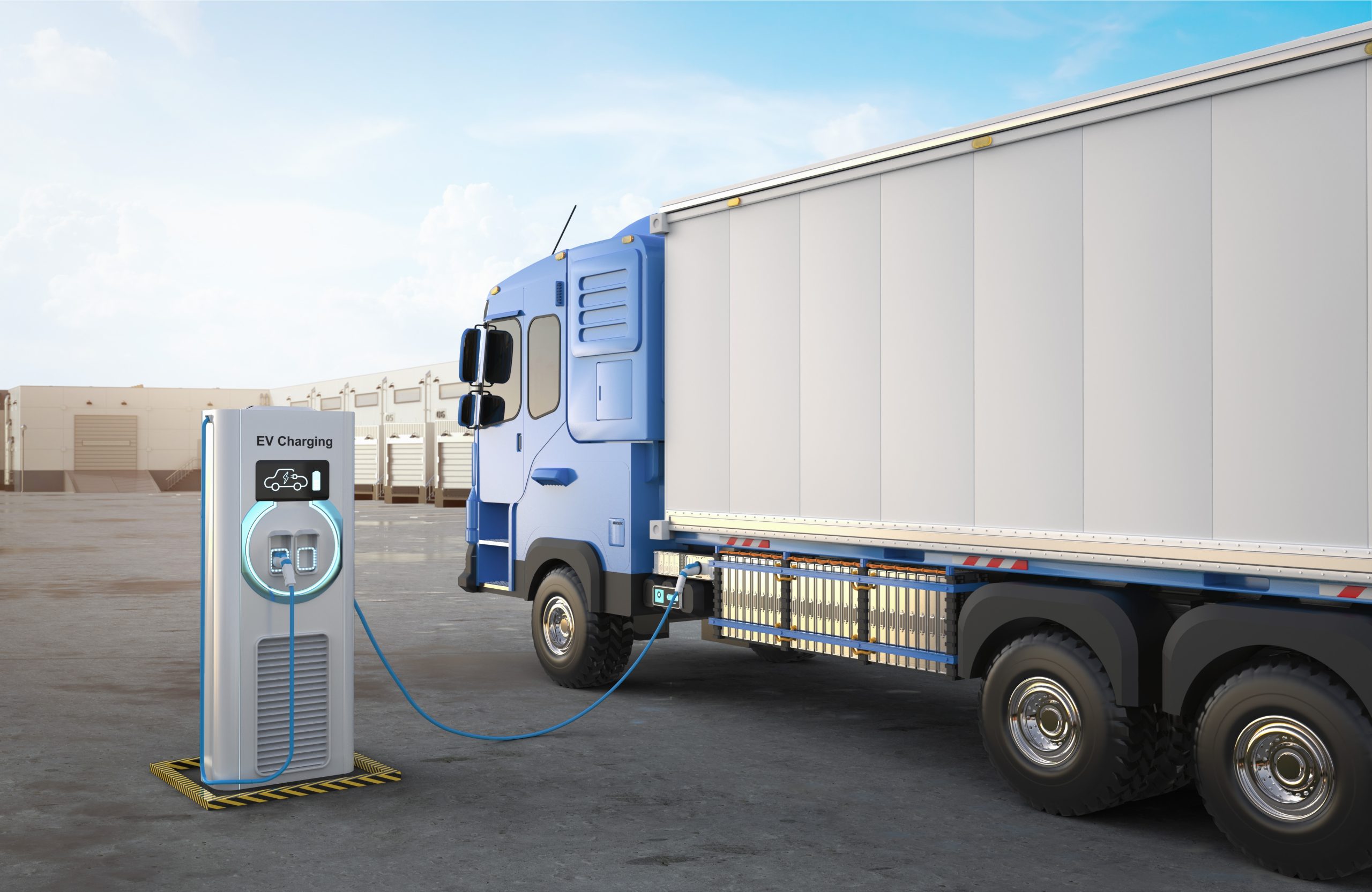
Should Fleets Plan Electrification Around Power?

For logistics operators, electric vehicles offer an essential pathway to operational savings and climate and sustainability goals, but power bottlenecks continue to put the brakes on electrification. Jamie Aspin, business development manager at Eclipse Power Networks, explains how fleet managers can keep their electric fleet deliverables on track.

There’s a huge environmental imperative for moving fleets electric – In 2023, road vehicles were responsible for more than a quarter (26%) of all UK emissions, and one third of that came from buses, HGVs and vans.

Businesses have their own commercial and strategic drivers for electrification, too. Whether meeting environmental and sustainability goals, or under pressure to reduce emissions for customers’ Scope 3 accounting, haulage and logistics operators can gain a strategic advantage through early adoption of electric vehicles. In so doing, they also have the potential to unlock lower fleet operating costs, improved vehicle performance, and simplified maintenance schedules.

But despite the immense promise of electric HGV fleets, operators face significant barriers to uptake. Questions over upfront costs and residual values deter investment, while opaque total cost of ownership data can leave investments hard to justify. At the same time, a lack of depot and opportunity charging infrastructure present foundational problems to fleet operators looking to electrify.

The power imperative


Unlike the typical car or van fleet, electric HGVs require significant infrastructure upgrades. With a battery capacity up to ten times that of a van, operators looking to turn an eHGV around overnight need DC chargers, capable of providing up to a few hundred kilowatts to each vehicle. For a fleet of eight eHGVs, that could mean a maximum power demand of several megawatts (MW) without charge management to reduce the peak value.

Even this won’t be enough for certain applications, particularly where turnaround times are very short, or where a fleet is working to maximise the use of haulage assets – for example running the same vehicle with multiple drivers over a 24-hour period. Here, depots will be likely to require Megawatt Scale Charging (MCS) facilities, with individual chargers rated up to 3.75MW – enough to turn an eHGV around as quickly as it can be reloaded.

While there’s funding available for depot charge points through the Depot Charging Scheme, DC charger – and especially MCS – power demands are clearly far beyond the likely capacity of the typical bus or logistics depot’s connection to the power grid. Most facilities were built long before electric vehicles were a reality, with power connections specified to handle typical light industrial loads: heat, light, or refrigeration. As such, they’ll need very significant grid connection and infrastructure upgrades before they can support multiple DC or MCS chargers.

And that’s where the real problem comes. Despite reforms to the market, securing a multiple megawatt connection – as needed to charge a small fleet of eHGVs – usually takes several years, delaying organisations’ electrification plans, and in turn imperilling the UK’s net zero targets.

These grid obstacles often seem like a hard barrier, especially when you factor in cost. For example, I know of a business with a four-megawatt (technically, four megavolt-amperes (MVA)) grid connection, that needs a total of 12MVA to power eHGV chargers. It was quoted £15 million by its distribution network operator (DNO) for the necessary 8MVA upgrade, and given a connection date six years into the future.

Faced with long waits and such huge investments, fleet operators are often forced to abandon or stagger their electrification plans. It’s highly restrictive and can leave them juggling more complex fleet management, as any potential schedule for electric vehicle upgrades is dictated by when the depot will finally get more power.

A winning strategy


Despite these very real challenges, HGV operators can find creative ways to remove the roadblocks and accelerate their journey to an electric fleet. One excellent workaround for long upgrade queues is to leverage the full capacity of the existing connection. By installing battery energy storage systems (BESS), fleet operators can stockpile energy from the grid when the depot is quiet, and deploy battery and grid power together to charge electric vehicles when they return. Ideally, adding renewable generation to the mix reduces the reliance on grid power, and lowers both energy costs and emissions.

Where there isn’t the readiness to invest in power infrastructure – or the depot space for BESSs or renewables – operators could consider partnership with energy developers. This is particularly beneficial in areas with significant renewable or redevelopment potential, where generators and demand customers can link up via a private electricity microgrid. This provides generators with a direct customer, and the customer with an enhanced supply for its depot, with both parties saving vast distribution use-of-system charges over the project’s lifetime.

While a small microgrid project could leverage existing grid connections, partnering with a generator could also improve the timescale for a much larger connection or upgrade offer. Under Ofgem’s TMO4+ reforms, connections are prioritised for generation projects that are both ‘ready and needed’. In practice, this means that certain generation projects are likely to receive connection dates far ahead of anything a lone demand customer could obtain.

Less of a long haul


However, planning and delivering creative grid connection and microgrid projects takes deep expertise, and flexibility not available from DNOs. That’s why working with independent distribution network operators (IDNOs) and connection providers (ICPs) is an essential component of unblocking electrification.

IDNOs enable fleet operators to tap into the expertise and innovation they need to solve depot power challenges, and accelerate the route to fleet electrification. We can propose and accept a wider range of technical solutions than DNOs, allowing novel approaches that may save time, money, or space – for example through a more compact substation in the depot.

There’s a further, often significant cost benefit. As IDNOs ‘adopt’ the distribution assets, taking them into ownership after they have been commissioned and energised, they will make a capital contribution to the project, lowering the up-front costs. IDNOs can also support fleet electrification plans through phased power upgrades, an ideal way to gain capacity to match your own electrification schedule, and avoid paying for huge connections that aren’t yet being fully used.

Not all IDNOs are equal, however, and few have the expertise to deliver advanced infrastructure projects such as microgrids and private networks. Choosing the right partner is essential to getting the best electrification outcome; balancing time and cost against the undoubted benefits of moving to an electric fleet.

Service Beyond Project Completion

When requirements change materials handling suppliers should stand by customers, supporting them with experience and technical know-how. Through extensions, modernisations and customised adjustments, an ‘After-Project’ team can ensure that systems continue to operate reliably in the long term. This allows users to run them economically for decades.

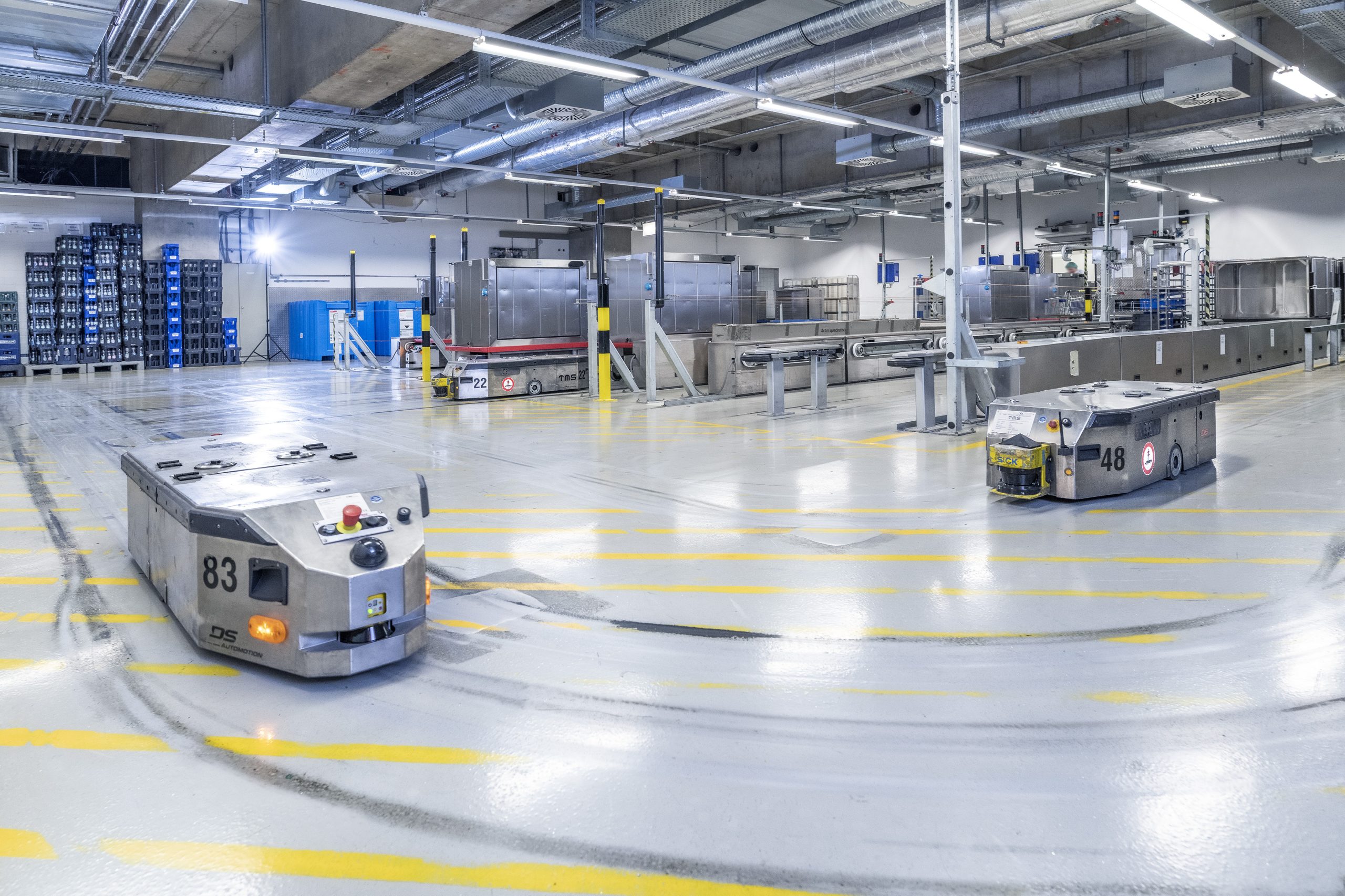
The transport solutions from DS AUTOMOTION, a supplier of mobile robotics, are designed for decades of use. To ensure that systems in production, logistics or data centres continue to operate reliably over the years, competent technical support is essential – and this is precisely what the After-Project team at DS AUTOMOTION provides.

“Our mission is to keep systems fit for the future – whether through expansion, modernisation or conversion of our automated guided vehicles and systems,” explains Martin Dollhäubl, Head of After Sales Service. The range of tasks extends from simple software updates to system extensions and complete modernisations during ongoing operations. “For us, ‘impossible’ does not exist. We always look for a solution. What matters is that the customer feels they are not alone – we take care of the task,” he assures.

Solutions for new requirements


Typical triggers for the involvement of the After-Project team are changes in production. “If a customer, for example, wants to manufacture a new product, we check whether the existing system is suitable. If not, we adapt the fleet accordingly in engineering,” Dollhäubl explains. Modified workflows with additional stations or new travel paths are also part of the team’s daily work. It is not only about technology, but also about planning reliability: “The customer must be able to rely on getting exactly what they need – without unpleasant surprises.”

This is particularly important in hospitals, where vehicles perform repetitive tasks such as transporting medicines, meals, sterile goods or waste. “Our work is often like open-heart surgery. We reconfigure systems while they are running – without anyone noticing,” says Dollhäubl (pictured, below). Six experienced employees ensure smooth operations and know the systems in detail. “We have complete documentation for every system. That makes our employees’ work much easier – whether it’s maintenance, expansion or modernisation,” he adds.

Proactive dialogue


In addition to handling enquiries, the After-Project team also takes a proactive approach to customers. Regular on-site visits help identify needs early and strengthen relationships. “Many customers appreciate that we actively seek dialogue and show how important their system is to us. This helps us strengthen our customers’ trust in the long term and maintain close contact,” says Dollhäubl. For users, this means maximum operational reliability, continuous modernisation and a partner who remains available even after decades – many DS AUTOMOTION systems have been in continuous operation for over 25 years. “It’s about giving our customers confidence. They should know that their system is in good hands – and that we will always find a solution,” he concludes.

Subscribe

Get notified about New Episodes of our Podcast, New Magazine Issues and stay updated with our Weekly Newsletter.