The Chilled Hub

Ground-breaking is an everyday phrase that is usually meant metaphorically. But it was literally the case when David Priestman witnessed the commencement of a new distribution centre at Daventry’s international rail freight terminal logistics park in Northamptonshire in January.

Farmer-owned dairy cooperative Arla Foods and XPO Logistics have extended their strategic partnership by creating a future-ready, resilient chilled foods operation – through a 285,000 sq.ft. new UK national or central distribution centre (CDC) that will handle all Arla’s British chilled palletised products.

Currently under development at Prologis’s vast intermodal DIRFT complex, which is adjacent to the M1 and M6 motorways plus the west coast railway mainline, the new facility will bring Arla’s chilled dairy products (cheese, butter, yoghurts), into a single, centralised location. “It’s the most established warehouse location in the UK,” Phil Oakley, SVP, Prologis UK, told me. DHL, Tesco, GXO, Bleckmann and Sainsbury’s have DCs here already. This new development aims to strengthen Arla’s supply chain resilience, reduce road freight miles and support more efficient distribution across Britain.

Fran Ball, SVP UK Supply Chain for Arla Foods UK, commented:

Consolidating our chilled pallet operations into a single, advanced facility in Northamptonshire is a strategic leap forward for Arla. By partnering with XPO Logistics and Prologis, we are improving the resilience of a critical part of our supply chain and making meaningful progress on reducing waste and road miles.

Cold Pallets

XPO Logistics is project managing the delivery of the CDC and will operate the site from late 2027, when it becomes operational, thus making this a fast construction and quick implementation. As part of a continued, long-term partnership, XPO is supporting Arla beyond day-to-day operations, bringing expertise in transformation, automation and scalable operating design. The new CDC will create around 400 new jobs.

Investment in automation, via systems integrator Dematic, will create skilled warehousing roles, including automation operations, maintenance, quality, inventory control, safety and management. Appropriate training and upskilling for advanced automation will be provided by XPO as part of the recruitment and onboarding process. The CDC will have 40000 pallet locations and 850 pick faces in the picking tunnels. It will make extensive use of Movu’s ‘Atlas’ 4D pallet shuttle. “Each shuttle is an individual unit, so it is scalable,” says Dan Myers, Senior Vice President, Dedicated Supply Chain – Europe, XPO Logistics. “We can add shuttles at peak periods.”

Human Leagues

One of the challenges with cold stores is maximising space utilisation. “Chill as little as possible,” Myers advises. “Arla stands for quality; their products are loved and trusted by households. This future-ready CDC is designed to handle projected growth and will play a key role in ensuring that Arla continues to deliver great products whilst improving the resilience, sustainability, and efficiency of its supply chain. Working together, we’re driving positive strategic change which will support Arla’s business to continue to prosper today and tomorrow.”

I asked Myers about the challenges of recruitment. “You can hire people, of course,” he replied. “Growing 10% a year means we’re people-based, so the challenge is recruiting enough staff. Our values are important.” As well as training and a vocational approach XPO offer a benefits package.

Pride in the Facility

The new CDC is being constructed to meet BREEAM outstanding accreditation and an EPC A* rating. At 22.5m high and with 48 dock doors, the CDC will have a PV solar array to bolster its power supply. “This will generate a surplus of electricity, and the logistics park has ample energy as well,” Oakley told me. “Partnerships and developments like this play an important role in creating long term economic value, helping to attract investment and underpin jobs across the region,” he added. “At DIRFT, we’ve built a community with the capacity and skills to support high-performing logistics operations like this one.” It’s the company’s second largest logistics park in the world and features walking routes, sports facilities and green spaces.

Most DIRFT warehouse occupiers make use of the rail connectivity, which is a distinct advantage of this location. XPO will utilise the west coast mainline to move products to and from Scotland, where Arla has another major hub (for UHT and lactose-free milk). “Rail freight is optional here,” Oakley stated. “The capacity is there and will increase once HS2 (high-speed rail) is complete,” which is between three and seven years away. “More places to offload rail containers are needed, however.” For every rail service used 70-80 lorries are taken off the roads, so it should be a win-win.

I asked Oakley if Prologis have finally run out of space at DIRFT. “We have 1.8 million sq.ft. left to develop, making a total of 8 million sq.ft. on the park,” he informed me. “This is the third phase. Land is prepared and has planning consent.” Some new ‘on-spec’ warehousing will be ready this summer. Get it while you can.


Reading’s New Logistics Hub Nears Completion

A major new logistics development in Reading, UK is approaching completion, set to transform the town’s supply-chain landscape. The hub, part of the Reading International Business Park, comprises four high-specification warehouses covering 8.5 acres, designed to meet rising demand for modern logistics space in one of the UK’s tightest industrial markets.

Situated at Reading International Logistics Park, near Junction 11 of the M4 motorway, the site offers strategic access for regional distribution and last-mile delivery. The scheme is being delivered by Graftongate in a joint venture with JP Morgan Asset Management, with Magrock appointed as principal contractor for the design and construction of the units.

Construction has progressed steadily, and the hub is expected to provide modern facilities for third-party logistics operators, retail distribution centres, and other supply-chain users. Local authorities have highlighted the project as a key development to support business growth and strengthen supply-chain resilience in the South East.

Beyond boosting operational capacity, the development is expected to generate jobs in warehousing, transport, and related services. Planning records indicate the scheme progressed smoothly, aligning with the council’s strategy to enhance regional logistics infrastructure. Once operational, the hub will reinforce Reading’s role as a vital node in the UK’s supply-chain network, bringing lasting economic and community benefits.

Chancellor Rachel Reeves Meets Midlands Haulage Leaders

Chancellor Rachel Reeves met haulage and logistics leaders in the Midlands last week – aiming to map out “routes to growth” for a sector at the heart of the UK economy. The roundtable took place at LTS Global Solutions, Coleshill – bringing together senior industry figures and Treasury representatives. Key focus: tackling cost pressures – fuel, labour, and investment hurdles. Sector stakes: millions of jobs and critical supply chains nationwide. Industry voice: Logistics UK warns fuel duty hikes could stifle growth – urges targeted government support.

The meeting covered investment, efficiency, and future growth. Official details are limited – but the talks form part of Reeves’ wider outreach on regional economic strategy. Industry priorities include cost certainty, regulatory clarity, and greener logistics solutions.

The session is part of a bigger government push – Chancellor Reeves emphasizes no region locked out of investment. This was reinforced at the Regional Investment Summit in Birmingham. In the West Midlands, a £2.4bn transport boost aims to expand trams, improve infrastructure, and unlock private investment. Multi-billion-pound local transport packages target better connectivity, economic growth, and new jobs.

Industry reaction is cautious but positive. Haulage firms welcome the dialogue but stress that challenges remain. Fuel costs, post-Brexit adjustments, and global competition continue to pressure the sector. Businesses are calling for strategic support – infrastructure, tax incentives, and investment in green technologies.

Looking ahead, Reeves’ Plan for Change focuses on boosting private and public investment across UK regions. Businesses will watch closely – will these high-level discussions translate into real action? Midlands logistics hubs could be a key test of the government’s regional growth strategy.

Building Supply Chain Resilience

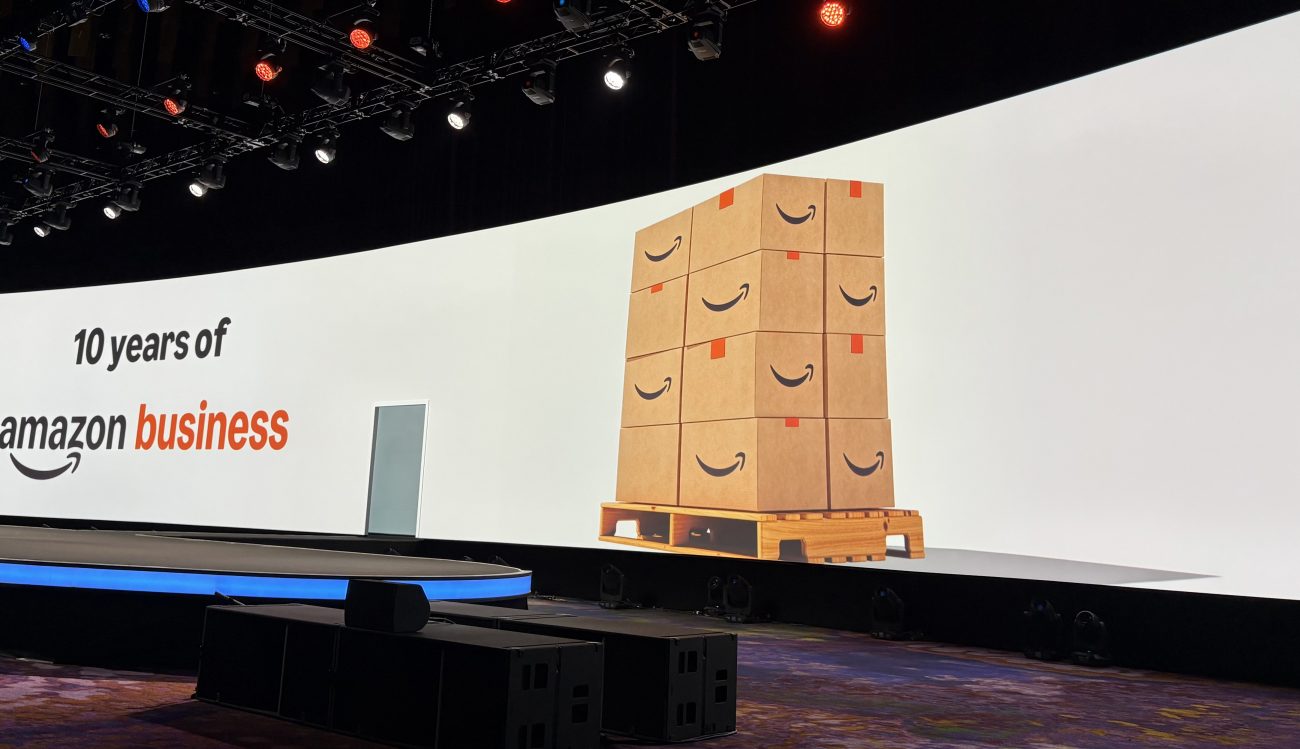
Pro-risk; fail fast; do more with less – all mottos of behemoth Amazon. But what does that mean for one of the world’s largest supply chain organisations? David Priestman attended the Amazon Business Reshape conference in Seattle.

Global upheavals in recent times, which are too numerous and obvious as to not need reminding you of, have caused logisticians to urgently re-wire and re-think strategies. The IMF’s ‘world uncertainty index’ is at its peak. How do supply chains gain more resilience and thus reduce inherent risk? Answers have included nearshoring, increasing stock levels and utilising technology platforms to boost flexibility.

These are four supply chain priorities:

  • Strengthening Resilience – requires using real-time analytics to have true visibility
  • Technological Transformation – being brought about by automation and more integration
  • Retain Talent – improve the worker experience and raising their productivity
  • Net Zero – goals are essential for both sustainability and affordability. Sourcing local and diverse suppliers is therefore green and responsible

Everything, Everywhere all at once

We know what IQ and EQ are. Shelley Salomon, VP of Amazon Business, speaks of the ‘Adaptability Quotient’ – AQ. “We’re in the age of adaptation,” she told me. “Generative AI is automating processes, including guided buying.” Amazon Business offers corporate accounts for procurement of anything and everything.

Amazon has access to millions of sellers, with multiple supplier options and JIT delivery goals. The organization aims to build-in ‘supplier redundancy’ to reduce the risk from having a single source for items. The product lines available on its platforms run to the hundreds of millions. Amazon is able to consolidate personal and business purchases for delivery to major customers, such as a University.

Customers are beautifully, wonderfully dissatisfied…they want something better…we invent on their behalf.

Jeff Bezos, Amazon Founder and Executive Chairman.

Amazon’s business sprawls from the ultimate B2C platform, Amazon Business (B2B), MGM and Prime (entertainment), Twitch, AWS (web services), Alexa, Ring (doorbells), Audible, Amazon Fresh, Whole Foods and Zappos. The robotics division keeps the company at the forefront of warehouse automation technology.

Agile, Nimble, Automated

But how should enormous supply chains such as Amazon’s meet its stated priorities? Four ambitions were outlined at Reshape:

  • Predict supply chain challenges before commencing manufacture by using AI analytics
  • Implement same day delivery capability
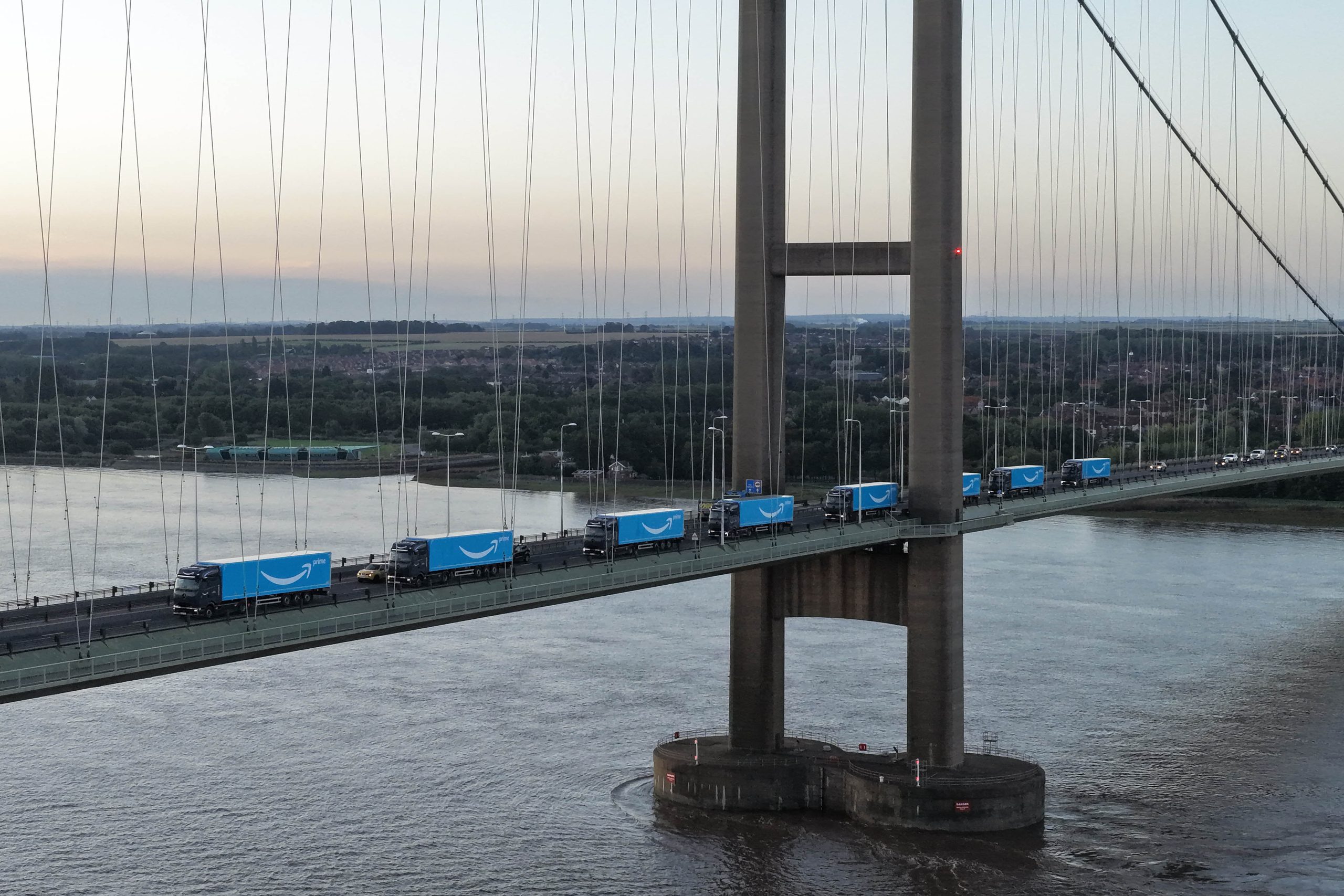
  • Dedicated Amazon Business truck fleet
  • Multi-product pallet delivery to customers

Be agile. What is the speed of your supply chain’s response to maintaining inventory levels? Start by understanding the current conditions. How durable are they? How competitive are your suppliers, in terms of quality and quantity?

Be nimble. AI can help sift through data more quickly and to dive deeper. It can also end the drudgery of human admin tasks.

Get automated, efficiency is key. AI is a real-time asset in risk management, fraud detection and for spotting anomalies. Take paper-based data and use AI to analyse it. Supplier vetting can be done by AI.

Phrase the Prompts

Luddites look away now, for the message is to embrace new technology. Interrogate the AI agent and use your curiosity. Find the truth and then do something about it when faced with supply chain challenges.
A supply chain can be a strategic advantage for a business if you have a strong team of logisticians, negotiate well and build alliances and partnerships. Agile sourcing makes for supply chain security. Sermon over.

Cycling for Change: Ian’s Ride for Transaid

Join Ian Wright, Peter MacLeod, and Caroline Barber in our latest episode as they discuss the incredible impact of TransAid’s work in Africa. Ian’s upcoming cycling challenge from Kilimanjaro to the coast aims to raise vital funds for TransAid, a charity that leverages transport solutions to save lives and improve road safety across the continent.

TransAid’s innovative programs, such as providing bicycle ambulances and improving driver training, have dramatically reduced child mortality and enhanced healthcare access. These initiatives are made possible through the generous support of industry partners and individual donors. By supporting Ian’s ride, you contribute directly to these life-changing efforts.

You can make a difference by donating to Ian’s JustGiving page. Your contribution will help fund essential programs that deliver healthcare and safety to remote communities. Visit Ian’s JustGiving page to support his ride and be part of this transformative journey.

Listen to the full episode to learn more about how you can get involved and support TransAid’s mission. Together, we can drive positive change and create a safer, healthier future for communities in need.

Redefining the Last Mile with OOH Network

Brits collectively send and receive millions of parcels daily. But while parcel volumes continue to grow, consumer behaviour around how those parcels are delivered and collected is shifting rapidly, with new research revealing that 115 million retail parcels were sent via lockers in the UK between June 2024 and 2025.

Courier and provider of out-of-home delivery service, InPost, has recently expanded its network by partnering with big retailers like ASOS, while Evri is now available at over has over 10,000 lockers and ParcelShops. It’s clear there is a demand for mass adoption and a need to embed these options as a standard.

Demand is being driven by converging pressures – rising expectations for quality services and accelerated by the need for ultimate convenience.

Operational risks

To understand why people are opting for out-of-home over doorstep deliveries, we must explore the key issues faced in recent years. Recent research conducted by Citizens Advice highlights consumer issues like rising security concerns and failed deliveries. Around a quarter of Brits are either receiving them late, not in the safe place they requested, or being left without them altogether.

Meanwhile, couriers face multiple challenges in the last mile. Soaring operating costs can prove to be the most expensive part of the supply chain, and operational inefficiencies coupled with time pressures and increased volume can inevitably lead to unhappy customers and damaged reputations. Additionally, where speed was once the primary requirement, modern lifestyle and working habits mean that being at home for delivery is far less predictable, resulting in a need for efficiency and flexibility.

OOH as network infrastructure

Out-of-home delivery is no longer a ‘backup option’, but a strategic lever for improving customer experience and efficiency. It’s the convenient option that gives consumers a sense of control. In fact, over a quarter of shoppers are making purchase decisions based on the availability of OOH options. Many prefer those with 24/7 access and are willing to travel up to 1km to pick up their package. As e-commerce continues to grow in popularity and consumers face issues with the last mile, it’s a strategic imperative to ease cost pressures and operational efficiencies by offering a solution that consolidates delivery and reduces issues such as ‘porch piracy’. This inevitably leads to happier customers, and a better reputation, which attracts new business.

Operationalising OOH at Scale

According to Bryony Joyce, Operations Manager at Mailboxes Etc., there are three practical steps couriers can take to embed OOH effectively:

  1. Redesign routes around density, not dispersion. Consolidate drop points to increase stop density, reduce vehicle emissions, and reduce time spent on repeated visits.
  2. Integrate lockers into first-time delivery plans. Don’t think of it as a solution that absorbs failed deliveries. Embed lockers and ParcelShops into primary routing to improve predictability, reduce redelivery costs, and strengthen service reliability.
  3. Use data to drive network expansion. Research demand for lockers by postcode, commuter flows, and retail footfall. Smarter positioning will drive higher adoption and better ROI. The last mile is no longer defined by the doorstep. For couriers, out-of-home networks represent not just an addition to their service, but a structural shift in how delivery capacity is built, scaled, and optimised. Those who embed it into core network strategy – rather than treating it as an accessory – will define the next phase of parcel logistics.

Materials Handling Showcase at LogiMAT

At LogiMAT Stuttgart, Irish manufacturer Combilift will showcase its latest material handling solutions designed to help companies move, store, and manage loads more safely, efficiently, and sustainably. – all while optimising valuable warehouse space.

Visitors can explore a comprehensive overview of Combilift’s wide range of innovative handling solutions. With a strong focus on greener technologies, 98% of Combilift’s R&D investment is dedicated to energy-efficient and electric equipment, now making up over 70% of production.

Combilift’s CEO and Co-Founder Martin McVicar explains: “Sustainability is at our core – we’re highly focused on making our vehicles more environmentally friendly and helping our customers maximise their warehouse efficiency.”

Warehousing range

A key highlight of the stand will be the live demo area, where visitors can see Combilift’s warehousing range in action. The Aisle Master articulated forklift range is engineered to operate safely in aisles as narrow as 1,6m and with lift heights of up to 15m. Their exceptional versatility allows them to work on any floor surface, indoors or outdoors, eliminating the need for separate reach and counterbalance machines.

Also on display will be Combilift’s electric pedestrian range, offering compact, highly manoeuvrable solutions that enhance operator safety and efficiency in confined spaces.

The pedestrian range includes Combilift’s unique, patented multi-position tiller arm. This enables the operator to stand at the side of the unit rather than at the rear (as is the case with other walk behind brands), giving excellent visibility of even the bulkiest loads and their surroundings. This position also eliminates any possibility of crush risk when working in confined areas and prevents product damage.

Multidirectional forklifts for handling long loads

Another focal point will be Combilift’s multidirectional forklift range: the C-Series and Combi-CB, which allows long and bulky loads to be handled with ease in confined spaces, both indoors and outdoors.
A particular emphasis will be on the Red Dot and UKWHA Archies award-winning Combi-CB70E : the most compact 7t capacity counterbalance forklift in the market.

This multidirectional model combines zero-emission operation with the ability to handle long and bulky loads safely, demonstrating how electrification can deliver high performance while supporting sustainability goals.

McVicar said: “Almost every model in our extensive range of products is now available with electric power. The ever-increasing lift capacities will answer the demand for more powerful products, which at the same time help companies to achieve their aims for more sustainable operations.”

Beyond Manufacturing: Optimising Space and Software

Combilift will also showcase Combi-Connect, its smart cloud-based telematics system, which provides real-time insights into truck performance, utilisation, and operator behaviour—helping customers improve safety, reduce downtime, and optimise fleet management.

In addition, Combilift experts will be available to discuss how businesses can increase storage capacity and enhance workflow efficiency using Combilift’s versatile material handling solutions. Combilift’s dedicated in-house team of design engineers and layout consultants also offers a free, no-obligation warehouse and yard optimisation service. This service illustrates how warehouse space can be configured around the capabilities of Combilift’s products — in some cases doubling available storage capacity.

With nearly three decades of expertise and over 100,000 machines in operation worldwide, Combilift continues to drive lifting Innovation, helping businesses make their material handling operations safer and more efficient while optimising their existing facilities.

Advancing Right-Sized Packaging Automation

Advanced, sustainable and integrated packaging for modern intralogistics will be on display at CMC Packaging Automation’s stands at LogiMAT 2026, and at MODEX Atlanta. The events will mark another important milestone as the company anticipates the unveiling of the new CMC Super Vertical Box (CMC SV-Box) and an innovative showcase for a fully integrated Pick2Pack process.

The new CMC SV-Box represents a significant evolution in automated packaging. Designed specifically for e-commerce and omnichannel fulfillment, the CMC SV-Box is the first and only fully automated, box-last, right-sized vertical packer. Unlike traditional box-first systems that rely on predefined carton sizes and WMS data to estimate box dimensions, the CMC SV-Box builds each box only after the actual products are measured in real time.

Using high-resolution cameras and advanced cubic-read technology, the system captures the true dimensions of each order directly from the physical items.

With an output of up to 500 perfectly right-sized boxes per hour and an ultra-compact footprint of just 10 m²/ 110 sq. ft. – compared to the more than 100 m²/ 1000 sq. ft. typically required by conventional right-sized packaging machines – the CMC SV-Box redefines compact automation, fitting seamlessly into brownfield environments and space-constrained facilities.

Conceived as an entry-level automation solution for SMEs yet fully scalable for complex intralogistics systems, it embodies CMC’s commitment to performance, flexibility, and customer-centric packaging while delivering a typical ROI of under two years. Through a cut-to-size process from an innovative single-wall corrugated reel, the solution reduces corrugated consumption and packaging waste by up to ~60% improving transport efficiency and supporting compliance with the EU Packaging and Packaging Waste Regulation (PPWR) and other emerging global sustainability standards.

At LogiMAT in March and MODEX in April, the company will also showcase a fully integrated Pick2Pack process, demonstrating how e-fulfilment centres can achieve higher efficiency, accuracy, and scalability through end-to-end automation. Pick2Pack has become a critical capability for modern e-commerce and omni-channel fulfilment operations, enabling orders to move seamlessly from storage to right-sized packaging with minimal or zero manual handling. By eliminating intermediate handling steps, Pick2Pack processes reduce labour dependency, increase throughput, improve order accuracy, and support faster order cycle times, key requirements in today’s high-volume, high-variability fulfilment environments.

This approach also aligns with the growing industry trend toward dark factories, where highly automated systems operate with minimal human intervention. Dark warehouses not only address labour availability challenges but also enable 24/7 operations, consistent performance, and improved workplace safety.
The core of CMC’s Pick2Pack showcase is the CMC Genesys with Vary-Tote solution. This technology enables seamless integration with any AS/RS, supporting true one-touch and zero-touch processes from picking to right-sized packaging. Orders can be automatically inducted, consolidated, and packed with minimal/zero manual input, ensuring optimal box sizing, no void fill and lower shipping costs.

Tania Torcolacci, Head of Global Strategic Partnerships commented: “This unique showcase will be supported by leading industry technology partners. True automation is no longer about individual technologies performing well in isolation, it’s about how seamlessly they work together to create a continuous pick-to-pack flow”.

Francesco Ponti, CEO at CMC Packaging Automation says: “Through its presence at these events, CMC Packaging Solutions reinforces its role as a technology partner for companies seeking to transform packaging from a manual cost center into a strategic, automated, and sustainable component of their logistics operations.”

Sorting Transfer Robots at LogiMAT

Daifuku has confirmed that LogiMAT 2026 will be the first European outing of its new Sorting Transfer Robot series, the SOTR-S, SOTR-L and SOTR-M. While the SOTR-M system will be in full demo mode at the Stuttgart event, its sister solutions, the SOTR-S and SOTR-L will also be on stand (1J67, Hall 1). While the SOTR-M manages totes and the SOTR-L handles pallets, the SOTR-S handles piece items, bringing total flexibility to a warehouse.

Designed, manufactured, and tested in Japan, the new trio of Sorting Transfer Robots are now being introduced across the UK and Europe. Setting new standards in productivity, scalability and automation simplicity, the latest robot system from Daifuku is aimed primarily at businesses in the e-commerce, retail and parcel sector facing complex sortation challenges.

The SOTR-S is of particular interest to the European and UK automation markets, given its remarkable speed and flexibility. Travelling at up to 180m per minute – it is capable of handling 10,000 lines per hour, driving new levels of capacity and productivity. The system’s two-tier structure also ensures smooth traffic flow and unfettered efficiency. Thanks to its narrow aisle structure (enabled by tilting trays), the SOTR-S is under half the footprint of more conventional sorting systems. Compared to conventional sorting systems, the SOTR-S is rapid to install and simple to expand as required with the addition of vehicles or chutes.

Commenting on the new SOTR-S, Russell Hutchinson, manager of business development at Daifuku’s Europe branch, said:

“In the face of rising order volumes and the increasing complexity of product types, traditional sorting methods often struggle with accuracy and efficiency. Manual processes lead to higher costs and slower throughput, creating significant warehousing and distribution challenges for businesses. Our new SOTR-S offers a solution designed to overcome these hurdles.”

Daifuku’s advanced technology ensures precise sorting of diverse items, enhances operational efficiency and adapts effortlessly to growing demands. By automating and optimising business’ sorting operations, the SOTR-S reduces labour costs and boosts productivity, delivering a rapid return on investment.

From Chaos to Clarity in Parcel Logistics

Parcels and parcel bags that pile up at transition points on belt conveyors are not inevitable. From March 24 to 26th, Flexco Europe, a specialist in mechanical conveyor belt connection systems, will be presenting its segmented transition plates and belt edge protection at LogiMAT. Other exhibits include transfer plates for roller conveyors. Flexco Europe will be demonstrating how the individual solutions are used and complement each other to achieve maximum effectiveness in Hall 1, Booth A25, using a demonstration model.

With a low coefficient of friction, the company provides reliable transfer points where items can easily slide from belt to belt or to the transfer hopper to transport packages and cartons safely. Conveyed material frequently accumulates at transfer points and falls to the ground, especially at airports. This can damage the contents of packages. With segmented transfer plates the material can glide smoothly from belt to belt. Flexco Europe offers two transfer plate variants, suitable for belts with widths of up to 1,524 millimeters and gaps of 100–250 or 75–150 millimeters. The bright yellow colour of the segments helps maintenance personnel monitor them and replace them quickly if necessary.

Roller conveyor transfer plates (RCTPs), which can be installed in belt-driven, shaft-driven, chain-driven and motorized roller conveyors, ensure that envelopes, polybags, and small parcels do not get lost between the rollers – a common problem in conveyor systems. The RCTP covers the gap between two rollers. With this solution, conveyors are not only more productive, but also safer. Employees no longer have to reach between the rollers to pull out products, reducing the risk of injury. The transfer plates are suitable for large quantities of packaged products that can differ greatly, ranging from soft and flexible to dense and compact.

Open edges along conveyor lines also allow conveyed goods to fall and slide under the conveyor belt. Product loss and damage to goods, belts, and, in the worst case, the system itself, can result in unplanned and costly downtime. To prevent this from happening, Flexco has developed the Belt Edge Protector (BEP). Made from recycled and wear-resistant UHMW, it covers the conveyor belt edge and prevents packages from getting stuck underneath. The simple and quick installation in individually adjustable lengths makes the BEP even more indispensable.

These three components in combination (STP, RCTP, and BEP) offer the solution for any logistics system to make maintenance work and downtime plannable, keep maintenance costs low, and maintain high safety standards.

Subscribe

Get notified about New Episodes of our Podcast, New Magazine Issues and stay updated with our Weekly Newsletter.