In the highly competitive U.S. fashion market, logistics accuracy plays a critical role in protecting margins and meeting strict retail compliance requirements. Perry Ellis International, one of North America’s leading fashion groups, has strengthened its B2B outbound operations by deploying an automated post‑picking validation system based on RAIN RFID tunnels at its distribution centre in the Atlanta area.
The project targets one of the most sensitive points in fashion logistics: final order validation after picking and just before shipment to wholesale customers and retail networks. While picking operations were already supported by pick‑to‑light systems, final verification still relied heavily on manual checks, making it difficult to detect discrepancies before shipments left the facility.
In the U.S. fashion industry, these discrepancies carry a direct financial impact. Chargebacks caused by missing or excess items are among the most common penalties imposed by retailers, often reaching up to 20% of the invoice value and resulting in losses that can amount to tens of thousands of dollars per shipment.
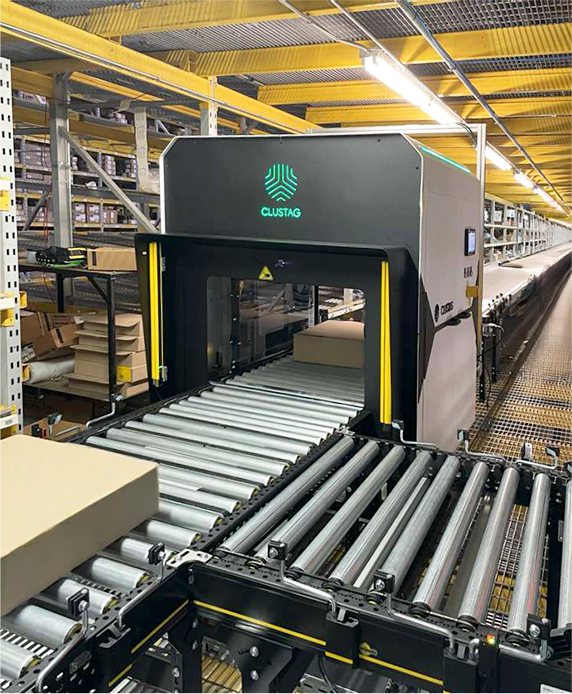
To eliminate this risk, Perry Ellis implemented high-density RFID tunnels fully integrated into its existing conveyor lines. The solution automatically validates the contents of each open box after picking, comparing in real time the items detected by RFID with the expected order data.
The system combines Clustag MOT Station RFID tunnels, capable of processing up to 1,000 boxes per hour and reading up to 600 items per box, with Cognex barcode readers for box identification. Interroll automated rejection lines that divert non compliant shipments without interrupting operational flow.
The entire process is orchestrated by Zentup, Clustag’s middleware platform, fully integrated with Perry Ellis’ Manhattan WMS, ensuring real time EPC level validation and allowing only compliant orders to proceed to shipping. The entire process is orchestrated by Zentup, Clustag’s middleware platform, fully integrated with Perry Ellis’ Manhattan WMS, ensuring real‑time EPC‑level validation and allowing only compliant orders to proceed to shipping.
One of the challenges was deploying the RFID solution in a live production environment under tight timelines and complex installation conditions, including work on mezzanines over 12 meters high. Despite these constraints, the RAIN system was implemented without interrupting daily operations or reducing throughput.
The results were immediate. Since go‑live, Perry Ellis has achieved a 17% reduction in discrepancies detected after the RFID tunnels, along with a significant decrease in non‑compliant shipments reaching B2B customers. This has translated into substantial savings in chargeback penalties and improved product availability at stores, ensuring the correct sizes, colours, and styles arrive at the point of sale.
“This project shows how RFID technology can transform fashion intralogistics from day one,” says Jorge Robledillo, Director of Clustag North America. “Strong collaboration between teams was essential to delivering measurable results in a highly demanding operational environment.”
According to Tom Seow, VP of Distribution Engineering at Perry Ellis, “the RFID tunnel solutions, integrated with Zentup, allow us to detect errors before they reach the store and give us a clear competitive advantage. We will continue investing in these systems for future projects.”
With this deployment, Perry Ellis reinforces its intralogistics digitalization strategy and demonstrates how automated post‑picking validation with RFID tunnels has become a key tool for reducing financial risk, improving operational efficiency, and meeting the high standards of U.S. retail operations.
This success story will be featured by Clustag at MODEX 2026, where the company will exhibit from April 13 to 16 in Atlanta (Booth B17332). The event will serve as a platform to discuss with U.S. customers and partners how RAIN RFID solutions can be successfully integrated into highly automated intralogistics environments and how these projects are setting a new benchmark for B2B fashion distribution in North America.
Autonomous navigation and fleet management supplier BlueBotics has launched ‘SmartPass’, a new efficiency-driving innovation within its ANT software suite.
Available for ‘ANT driven’ AGVs and AMRs, SmartPass is a robust, safe, and highly configurable technology that meets the core efficiency goal of obstacle avoidance without the drawbacks of traditional AMRs. SmartPass suits all types of automated vehicles and industrial sites.
No matter how clean a site, and how well trained its staff, the paths of mobile robots sometimes become blocked… AGVs typically manage this situation by sending an alarm to an operator, while AMRs take any route possible, without limitation. The first can lead to transport delays, the second to traffic deadlocks. SmartPass effectively bridges the gap between the two.
SmartPass enables automated vehicles to follow virtual paths most of the time — for efficient, robust, and repeatable operation — while performing pragmatic obstacle avoidance maneuvers when blockages are detected.
“Rather than layering basic traffic management over obstacle avoidance functionality — which AMR producers have attempted with limited results — SmartPass does the opposite,” Tomatis explained. “It adds smart, configurable obstacle avoidance to ANT navigation’s default ‘virtual path follower’ mode. This ensures the powerful traffic management features of our ANT server fleet manager are also applied to SmartPass maneuvers.”
Three key SmartPass benefits
ANT’s SmartPass function offers three key benefits that together are unique in the mobile robot industry:
Efficiency-focused movement • Vehicles using SmartPass take the shortest route around an obstacle — within pre-configured limits — before returning immediately to their virtual path. • SmartPass-enabled vehicles also move faster than traditional AMRs. Travelling at optimal speeds and with optimal acceleration, they follow virtual paths and respect clear traffic rules most of the time, switching to slower, more reactive speeds only when needed. • Vehicle actions like moving forks and communicating with equipment take place during SmartPass maneuvers, saving time versus the more common sequential approach. • SmartPass maneuvers are blocked near pick/drop points to guarantee precision.
Minimizes deadlocks • By managing the movements of vehicles within the ANT server’s existing traffic management framework, SmartPass guarantees that vehicles only avoid obstacles when there is no risk of blocking another robot, minimizing the chance of deadlocks. • Vehicles only move around objects and never around other vehicles, a further cause of deadlocks.
Fully configurable • SmartPass can be configured to suit every user’s site and operational needs. Customers can define, for example, the maximum distance a vehicle is allowed to travel from its virtual path; the areas (and even individual routes) of a site where SmartPass cannot be used; and vehicle-specific parameters such as the exact distance to stop before an obstacle.
“SmartPass doesn’t allow robots to roam freely, and it is built from the ground up on ANT server’s powerful traffic management, virtually eliminating the chance of deadlocks,” Tomatis added. “We are confident this safe, prudent approach best meets the needs of industrial customers looking to deploy AGVs and AMRs in what are often high-traffic locations.”
SmartPass is available now for vehicle makers, system integrators, and end users deploying ‘ANT driven’ AGVs/AMRs managed by BlueBotics’ ANT server fleet manager.
Scott Saunders (pictured, below), Technical Manager at Watco UK, shares his expert advice on preventative maintenance, floor care, warehouse floor paint and operational best practice to help logistics and distribution centres maintain a strong footing throughout 2026 and beyond.
What advice would you give to facilities managers who want to take a more proactive approach to maintenance and repairs this year?
“The key is to not wait for minor issues to become major problems. Seasonal changes, particularly the colder, wetter weather in winter, often leads to damage and hazards. Scheduled inspections and checklists for floors, steps and drainage points can prevent costly accidents and disruption.
“Using the right materials from the outset also makes a huge difference. Durable industrial floor coatings, e.g. Watco’s ‘Epoxy Gloss Coat’ help protect high-traffic areas, while anti slip coatings such as our ‘Safety Coat’ can be applied to the floor around entrances, ramps and wash-down zones to reduce slip risk from surface water. For small areas of surface damage, fast-setting repair solutions allow teams to carry out repairs quickly and get areas back into use with minimal downtime.”
How should warehouse layouts be reviewed to improve safety and flow efficiency? Is zoning essential?
“Warehouse layouts should be reviewed regularly, especially when operations change or new equipment is introduced. Many sites evolve organically over time, which can create pressure points where pedestrians, forklifts and automated vehicles meet. These areas not only slow operations down but also increase the risk of collision accidents.
Factory background with concrete floor, night scene.
“I do believe that zoning is essential for safe, smooth-running facilities today. Introducing clear pedestrian paths, and categorising facility areas based on usage e.g. parking bays and storage areas helps to ensure clear boundaries and safer behaviour.
“We offer both paint and tapes for teams to identify whether they want to line mark a boundary on the floor, or paint the whole section in a designated colour for illustrating zones. Watco’s ‘Epoxicote High Build’ and ‘Safety Tapes’ are ideal for defining zones quickly and clearly as they can be applied with minimal operational disruption. Observing how people and vehicles actually move through the warehouse is also important; layouts should reflect real-world use, not just plans on paper.”
How can health & safety costs in warehousing be monitored and evaluated?
“Many operators focus on direct costs such as PPE or training, but the indirect costs can be far greater. Lost time, damaged goods, insurance claims and reputational impact all add up quickly. Tracking near-misses, minor injuries and urgent repair requests provides valuable insight into underlying issues and helps prioritise investment.
“For example, repeated floor repairs in the same location often indicate that a more permanent solution is needed. Logging defects, repairs and associated downtime allows operators to identify trends, justify preventative spend and, over time, reduce both maintenance demands and overall health and safety costs.”
How do you recommend FMs get on top of flooring inspections and repairs?
“The most effective way to get on top of flooring inspections and repairs is to build them into everyday routines. Assigning responsibility for inspections e.g. a checklist that is tackled by a rota, ensures issues are spotted consistently, not just when problems become obvious.
“Inspections should focus on high-traffic routes, loading bays and areas exposed to moisture or chemicals, with findings logged so recurring issues can be tracked and prioritised. Smaller areas of surface damage such as hairline cracks, loose edges or shallow holes should be addressed quickly, before they develop into larger, more disruptive repairs.
“Planning for frequent, small-scale repairs also makes a difference. Using fast-curing repair materials allows work to be carried out in live environments with minimal disruption, which removes one of the main barriers to acting early.”
Warehouse floor paint
We talk a lot about warehouse automation, but many distribution centres are still untidy and cluttered. How can that be avoided?
“Automation doesn’t remove the need for good housekeeping – in fact, it makes it even more critical. Automated systems rely on clear routes, smooth floor conditions, and well-defined zones. Cluttered floors, damaged markings or poorly stored pallets can quickly undermine the benefits of automation.
“Avoiding this comes down to culture and clarity. Visual management, such as clear line markings and signage reinforces expectations. Temporary overflow should not become permanent, and regular audits help maintain standards. When staff understand the ‘why’ behind keeping areas clear, compliance improves and automated systems can deliver maximum value.”
How much downtime is typically involved in line marking, re-painting, matting, and taping work in warehouses?
“Downtime is often the biggest concern, but modern materials and methods have reduced disruption dramatically. Many line marking paints and floor coatings are fast-curing and can withstand traffic within two hours. Work can also be phased or carried out in quieter shifts to minimise operational impact.
“Similarly, high-quality matting and surface treatments can be installed quickly, providing immediate safety and efficiency benefits. The short-term inconvenience is minor compared to the long-term gains: reduced accidents, fewer urgent repairs, and a more productive warehouse.”
Amentum, a global leader in advanced engineering and innovative technology solutions, GXO Logistics, Inc., the world’s largest pure-play contract logistics provider, Accenture, a leading global solutions and services company, and A.P.Moller – Maersk, the world’s largest integrated supply chain provider, have today announced a new alliance, Torus Defence Supply Chain, to help strengthen the future of the UK defence sector.
Torus will provide resilient, agile and integrated defence supply chain solutions, helping the UK defence sector adapt to the evolving threat landscape and build the agile capacity required to enhance sovereign capability.
Designed to help address the UK Government policy shift to readiness, visibility and data exploitation, Torus draws on alliance members’ proven capabilities and mission-critical expertise in military domain, procurement and supply chain. The alliance is underpinned by a shared commitment of collaboration, compliance and continuous improvement to solve complex challenges in the UK defence market.
• Amentum will provide overall integration and programme management based on more than 60 years of support to UK defence operations, procurement, logistics support, programme/project delivery and transformation. Its global expertise, built over decades of defence, aerospace and national security experience in the USA and UK, ensures interoperability with allied sustainment systems and proven global buying power. Last September, Amentum announced plans to add another 3,000 people to its current UK workforce of more than 6,000 over the next four years.
• GXO will develop and operate innovative logistics solutions, leveraging its more than two decades of experience partnering with leading aerospace and defence organisations. With A&D operations spanning more than 30 global sites, GXO recently bolstered its UK defence capabilities through the acquisition of Wincanton, a longstanding trusted partner to the UK defence and industrial sector. GXO currently employs more than 60,000 team members across 450 sites in the UK and is a Gold Award level member of the UK’s Defence Employer recognition scheme for its work with the Armed Forces.
• Accenture will lead digital reinvention with a core role to deliver digital enablement and integrated decision support capability. Accenture’s deep experience of defence logistics information systems and digital transformation will enable real-time, single-version-of-the-truth visibility and smarter, data and AI-powered decision making that balance readiness, cost and resilience.
• Maersk will provide global integrated movement solutions utilising its extensive network across multiple modes to enable global reach ensuring compliance with stringent security standards for defence and government cargo whilst ensuring the scale of its owned assets provide agility and resilience to allow defence to plan and react to a changing need.
Loren Jones, Amentum Senior Vice President, said: “Our combined global reach and military domain experience, specifically Amentum’s proven success in deployed logistics and integrating complex systems for the U.S. Government, perfectly aligns with the UK Defence sector’s requirement for future operational resilience and it’s imperative to move beyond systems optimised for just-in-time to ones of assured readiness and global reach.”
Gavin Williams, Managing Director, GXO UK & Ireland, said: “The defence sector is tasked with responding to dynamic global challenges which has created substantial demands on its supply chains. GXO’s proven capability in the global defence sector optimises efficiency and builds resilience in complex supply chains, providing leading defence organisations with the assurance they will have the adaptive capacity required to deliver with confidence.”
Mark Smith, EMEA Defence Lead at Accenture, said: “This alliance brings together unmatched expertise in logistics systems and data-driven digital transformation – enabling scalable, interoperable solutions that enhance mission readiness. Accenture’s deep defence logistics knowledge and cutting-edge digital capabilities, refined through working with over 20 NATO countries, can help ensure operational continuity and resilience in complex global environments.”
Beyond focusing on supporting UK sovereign mission readiness, the alliance is committed to investing in UK infrastructure, contributing to economic growth and fostering digital skills in local communities.
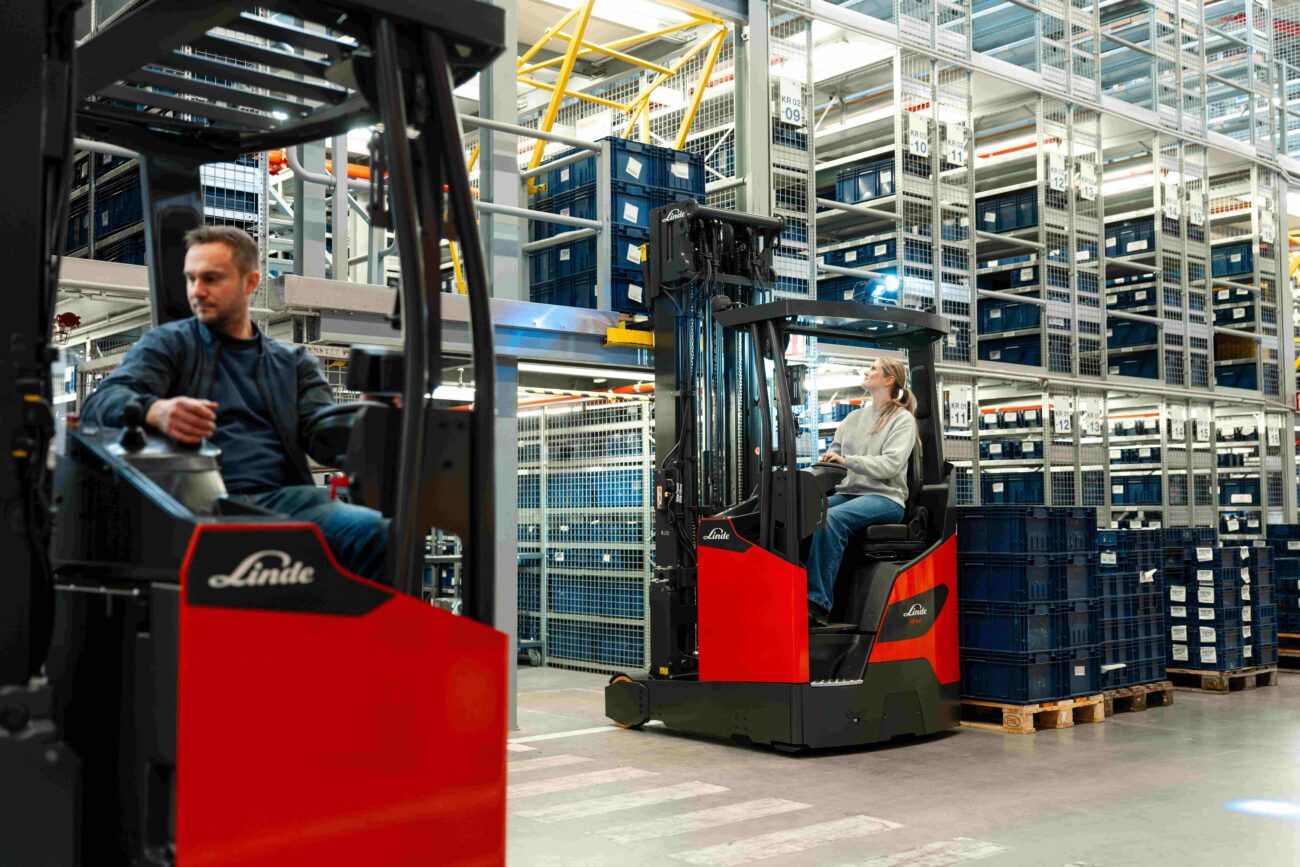
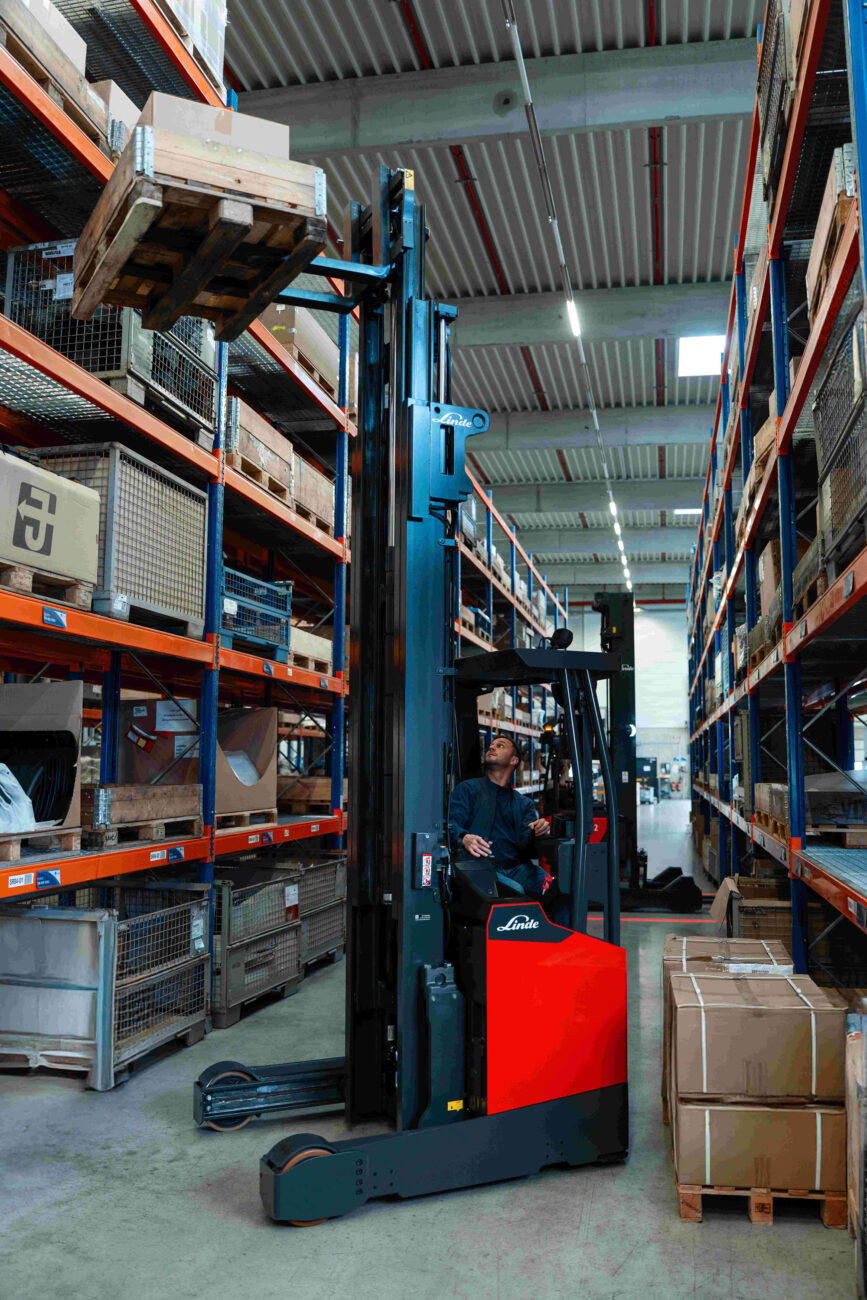
A new series of trucks from Linde Material Handling (MH) will be unveiled at LogiMAT 2026 in Stuttgart. The Linde Ri14 to Ri18 models are engineered for standard applications with low- to medium-intensity use. Offering a combination of affordability, focused performance, ergonomic benefits, and extensive safety features, these reach trucks are ideally suited for use in distribution centers and retail environments, as well as in the food, automotive and chemical industries. Their compact design with an integrated lithium-ion battery makes them ideal for operation in narrow aisles.
Optional upgrades, including ‘PowerDrive’ and ‘PowerLift’, are available to enhance travel and lift speeds, resulting in improved customer throughput. Furthermore, the vehicles are equipped with a variety of safety features. These include, among others, the standard all-wheel braking system and a shoulder guard protection. The driver’s workstation offers extensive comfort with complete decoupling from the chassis, excellent all-round visibility, additional space and versatile adjustability. Digital interfaces allow the reach trucks to be seamlessly integrated into operational IT systems, and the modular design facilitates the creation of customized solutions.
“The new reach trucks, which have a load capacity ranging from 1.4 to 1.8 tons, augment Linde MH’s existing portfolio. They are intended for the growing number of companies seeking compact, agile vehicles for single- and two-shift operations. Such trucks should be economical to purchase, high-quality, powerful, safe and comfortable for operators,” explains Alexander Schmidt, Senior Product Manager at Linde MH. “The Linde Ri reach trucks combine all these attributes, making them an excellent option for replenishment operations within the warehouse – that is, for transporting goods throughout the warehouse and performing storage and retrieval operations in block or rack systems.”
Optimized for typical warehouse applications
With a total length of 1,215 millimeters (l2 dimension), a turning radius of 2,709 millimeters (AST), and lifting heights of up to 11 meters, Linde Ri reach trucks optimize storage capacity utilization. They can be equipped with the optional PowerDrive and PowerLift functions to increase performance in goods handling. These options increase travel speed by 18 percent and lifting speed by 16 percent setting new performance benchmarks for this class of standard trucks. Two mast series ensure high residual load capacities. Mast functions are controlled ergonomically and with millimeter precision via the Linde Load Control system. Drivers can quickly and easily control the direction of travel and speed with the Linde dual pedal control. A lithium-ion spare battery is available for multi-shift operation to ensure continuous vehicle availability.
Comprehensive safety package
The comprehensive safety package focuses on protecting the driver, goods and infrastructure. An important competitive advantage is the standard hydraulic load wheel brakes, which provide short braking distances regardless of the load’s weight or the mast’s position, giving the driver maximum control over the vehicle. Another standard feature is the Linde Curve Assist. This system automatically adjusts the driving speed around curves based on the steering angle, thus increasing the vehicle’s stability. The elevated seat position improves the driver’s visibility of the load and surroundings. Optional features such as a reinforced glass roof, shoulder guard protection, and innovative assistance systems like the Linde Safety Guard, which warns of potential collisions, and the Rack Protection Sensor, which prevents collision damage to racks, provide additional protection.
Ergonomic benefits prevent fatigue
The driver’s workstation is fully decoupled from the chassis, effectively absorbing shocks and vibrations, which helps prevent premature fatigue. Together with the suspension-mounted driver’s seat, the workstation effectively absorbs shocks and vibrations experienced by the driver. Components such as the steering wheel, seat, and optional height-adjustable pedal plate can be adjusted individually to suit the driver and ensure a relaxed working posture. The low, wide entry with a non-slip surface makes it easier for operators to safely and frequently enter and exit the truck during daily warehouse operations. Numerous compartments provide ample storage space.
Reliable service
The robust design of the reach trucks, along with maintenance-free components such as the induction-hardened mast guide rails, ensure high availability and durability while reducing operating costs. All service-relevant components are easily accessible, which shortens maintenance times. Thanks to modern electronic architecture, software updates and new vehicle functions can be installed remotely over the air. The standard 14.3 kWh integrated lithium-ion battery is particularly energy-efficient and can be replaced with a more powerful 21.4 kWh battery if performance requirements increase.
Tensions around the Strait of Hormuz are forcing supply chain leaders to ask a question most would rather not face: if this corridor closes, how would we actually respond?
Jonathan Barrett (pictured, below), CEO, Kallikor, provided this comment:
“The challenge is that these plans often rely on assumed responses rather than tested outcomes. In practice, it can be difficult for organisations to see how different decisions – rerouting shipments, adjusting sourcing, reallocating inventory or changing service commitments – will actually behave across the entire supply chain once disruption begins.
“We’ve seen this before through the Suez Canal obstruction in 2021 and the Red Sea shipping disruption in 2023–2024, when pressure in one part of the global trading system forced companies to make rapid operational choices with limited visibility into the wider consequences.
“Many companies we work with have an answer on paper for how they would respond to disruptions like these. The ones with most confidence in that answer have already tested it — running scenarios to see how those decisions will actually behave across the supply chain before disruption forces the choice.
“The organisations navigating disruption best are rarely the ones reacting fastest. They are the ones that have already explored the scenarios and understand how their supply chain will behave before disruption forces the decision.”
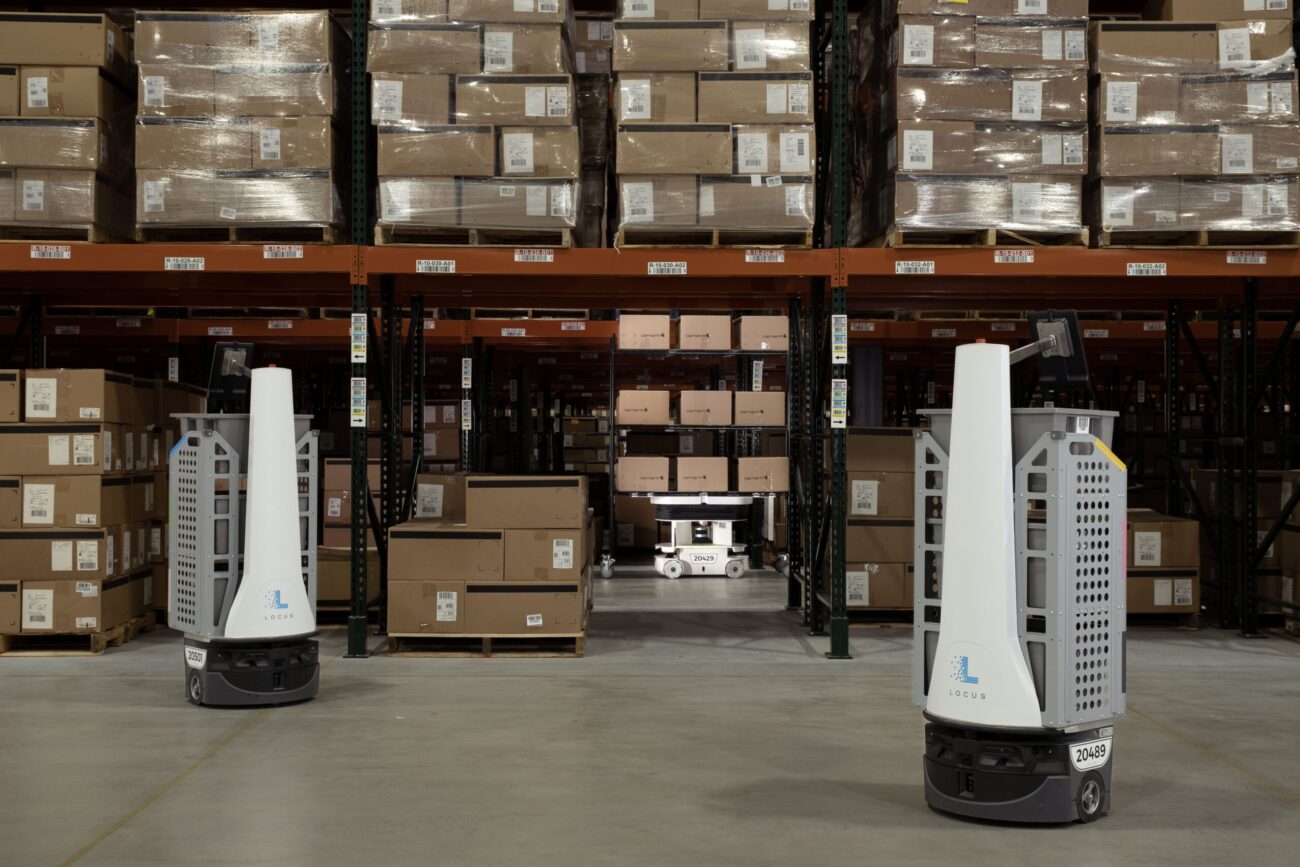
The hype around humanoids in logistics needs to take a reality check when it meets the warehouse floor, writes Denis Niezgoda (pictured, below), CCO of Locus Robotics.
At the International Robot Exhibition in Tokyo humanoids stole the show once again. Machines that walk, grip, and gesture like us have an undeniable magnetism, part science fiction promise, part genuine engineering marvel. Yet behind the spectacle, logistics leaders are asking whether these machines deliver demonstrable ROI, or if the industry is chasing a compelling idea that cannot yet scale.
Investment banks are certainly bullish. Morgan Stanley forecasts a global humanoid robot market worth $5 trillion by 2050, with deployment rates eventually reaching one machine for every ten humans. Those forecasts may well prove directionally right over decades. But logistics buyers don’t invest on 2050 narratives, they invest based on what can be deployed, integrated, and scaled in the next 12–24 months.
Innovation is only real when scaled
I’ve had countless conversations with CEOs in this industry who express frustration about being trapped in endless pilots and struggling to achieve meaningful traction. The pattern is familiar; exciting technology, impressive demonstrations, but no clear path to the kind of measurable, referenceable customer value that drives genuine adoption. What’s changed in warehouse automation is that customers are no longer rewarding novelty, they’re rewarding repeatable, referenceable outcomes delivered fast, in brownfield sites, under real volatility.
While there has become a hyperfocus on humanoids, most of the attention is driven by the fact that they generate a big reaction. We live in a world where reaction doesn’t equate to return on investment. Tim Tetzlaff, Global Head of Digital Transformation at DHL, captured this dynamic perfectly when he said: “Innovation is only real when scaled. Otherwise, it’s just a nice idea.” Too many robotics companies have compelling ideas but struggle to scale effectively, missing the chance to create meaningful customer impact. In practice, the winners in this cycle are the firms that scale through software-defined flexibility, not the ones chasing the most cinematic demo.
There’s a real risk that funding will dry up as ambitions collide with reality. Training robots through thousands of hours of simulation can produce impressive physical capabilities, but it grants them little genuine understanding of how the real world actually works. Warehouses are messy, stochastic environments: congestion, mixed Stock Keeping Units (SKUs), shifting priorities, human variability, and peak swings that don’t show up in lab conditions. Physical AI only becomes meaningful when systems learn from millions of real tasks in production. Purpose-built fleets do that every day, they don’t just learn how to move, they learn how the operation actually behaves. Purpose-built warehouse robots accumulate vast operational experience in the environments they are designed to serve. They know the warehouse floor because they have worked it.
The Gap Between Demo and Deployment
This gap between demonstration and deployment is the crux of the matter. Promotional videos may show humanoids performing acrobatic feats, but none can yet walk into an unfamiliar warehouse and reliably execute the complex, repetitive tasks that drive logistics operations. The most advanced humanoid models on the market today are still positioned as research platforms rather than production ready solutions. Production environments don’t just need a capable robot, they need an orchestration layer that can integrate with Warehouse Management Systems (WMS), Enterprise Resource Planning (ERP), and Manufacturing Execution Systems (MES), balance priorities in real time, and keep performance stable through peak periods.
As such, I expect 2026 to bring a wave of consolidation across the robotics sector, as companies locked into humanoid development face mounting pressure to demonstrate tangible commercial value. We’ll see the hype start to fade as customers and investors demand real world results, creating an environment where only the purpose built will survive.
The Opportunity in Front of Us
Here’s the reality that often gets lost in the humanoid excitement, we estimate that less than ten percent of warehouses globally have sufficient levels of automation today. The opportunity isn’t to build robots that look like humans. It’s to build the right solutions for the right tasks. That’s also why flexible automation is winning: operators want capability they can deploy in weeks, scale up or down, and reconfigure when volumes or product mix shift. In a world of uncertainty, adaptability is the real throughput advantage.
At Locus Robotics, we’ve moved beyond Person-to-Goods automation to define an entirely new category: Robots-to-Goods. Robots can now autonomously pick, move, and replenish inventory, performing tasks that previously required multiple human touches. But the hardware is only one piece of the puzzle. The real breakthrough comes from integrating Agentic AI with Physical AI to create systems that sense, decide, and act as one. The value isn’t one heroic robot, it’s a software-defined operation that keeps improving because it learns from the work. Warehouses become cohesive ecosystems rather than disconnected islands of automation.
The Financial Times suggests Japan, with its shrinking population and cultural openness to robotics, could become one of the first major democracies to experiment with widescale humanoid adoption. Perhaps. But for logistics leaders making investment decisions today, the question is not whether humanoid robots are impressive, they unquestionably are, but whether they can deliver the demonstrable, referenceable ROI that operations demand. Purpose built robotics already can and already do.
Peter MacLeod spoke with Tatsuya Akashi, President of Itoh Denki Europe, to hear how his company meets the high demand placed on conveyors and rollers by the modern warehouse.
The intralogistics sector has faced its share of challenges in recent years, 2025 being no exception. Tatsuya Akashi, President of Itoh Denki Europe, described it as, “a quite tough year for the industry. We had very sluggish market investment because in France there was a problem with the government budget, and Germany was not doing so well due to energy issues. Overall, it was a tough year.”
Even the UK, he noted, had seen economic efficiency fall, with major Japanese companies relocating their European headquarters to the continent rather than remaining in England. Yet amidst the difficulties, Eastern Europe, particularly Poland, Czechia, and Hungary, had experienced a manufacturing boom. “Poland and some of the Eastern Europe has boomed a lot, kind of becoming the centre of manufacturing of Europe,” he told me. Akashi highlighted that, despite these challenges, Itoh Denki Europe had experienced growth.
“Luckily, we gained back quite a lot of large projects, and we did above 10%… all the other surrounding companies said ‘You’re so lucky that you have 10% growth!’ Industry was pretty bad.”
A major focus for the company is helping customers increase their profitability. Akashi explained: “First of all, increase the value for money for our products. There are a lot of very cheap Chinese brands of motor rollers coming in. But when we look at durability, and also how we are increasing our speed or torque or other specifications, we are selling a much higher quality product at the same price.” He added that the company’s modules, such as the Multi Angle Ball Sorter, had become a driving force in Europe. “Instead of spending huge money on a cross-belt sorter or slidechute sorter, they can make a very simple sorter based on our MABS module… the cost is around half or one-third of having a huge cross-belt sorter,” he said. Maintenance is simple and quick, often just five minutes of downtime, which delivers clear benefits to both integrators and end users.
Competing with Cheap Imports
Local presence and service are equally important in competing with cheaper imports. “In the case of MDR or a slave roller, the cost itself is just around €10 euro. If you buy from China, maybe it’s €7, but then if you have a shortage and have to bring it by air shipment, it costs €50. So with something very cheap and heavy, you shouldn’t do it in China. You should do it somewhere close to Europe,” Akashi explained. Quick delivery, he said, ensures that downtime is eliminated and operations remain smooth. One example he gave was a leading global e-tailer (yes, THAT one!) where a cheaper solution would have caused nearly two days of conveyor stoppage, equating to potential losses of around €2 million. “If they were using ours, they could come back on in 10 minutes,” he said.
Artificial intelligence is also being integrated into Itoh Denki’s operations. “When we design some control software nowadays, we partly use AI… when we want to do preventive maintenance or control the box moving style… we could use AI to better control our programme and make the programme faster,” Akashi said. While AI is currently an enhancer of automation, he sees substantial future potential as more end users shift from manual work to automated solutions.
Carbon Reduction
Sustainability is another priority. Akashi stressed the company’s strength in enabling carbon reduction, not only through more energy-efficient products but by optimising operations. “If they use our motorised roller, because we do the run-on-demand, it means… only three blocks are moving out of 100. Thanks to this run-on-demand technology, you can save up to 60% electricity… using Itoh Denki product, which is the enabler of the final carbon footprint. Here we are very strong pride in our company,” he said.
Akashi (pictured, below) also discussed the heritage of Japanese engineering. “One thing I can say is in the B2B area, especially if it is… common motor, there’s a lot of okay-level cheap Chinese motors. But we are making a dedicated motor for this industry, which is high torque but low speed… Japan is absolutely number one,” he said.
Looking ahead, the company continues to focus on innovation and customer engagement. Its Amsterdam technology centre allows northern European clients to test products with their own totes. Customisation is fast, with minor adjustments taking just two weeks. Akashi also highlighted new developments to be showcased at LogiMAT, including the flexible noise-arrest roller, which can carry smaller products and reduce maintenance demands.
Reflecting on success, Akashi summarised the company’s philosophy:
“We smile when our good technology is adopted and contributes to society as it means the end user is satisfied, and our OEM partners, but also that we can make our business grow and a certain level of high profitability can be kept up.”
Manhattan Associates Inc. has announced that Rainforest Distribution Corp., a full-service food and beverage distributor, has selected Manhattan Active® Supply Chain Planning (SCP) to unify its supply chain functions, transform its end-to-end planning processes, drive higher service levels, and support continued growth. This will result in greater agility enabled by unified planning, enhanced forecasting accuracy powered by AI-driven insights, and seamless alignment between planning and execution systems.
Rainforest Distribution chose Manhattan Active Supply Chain Planning to modernise its demand planning, forecasting, and replenishment processes, all on a single unified, cloud-native platform. By moving away from fragmented legacy tools to a single planning solution, Rainforest will gain real-time visibility and continuously balance service levels, cost, and capacity across its network, while responding faster to changing customer demand.
“As our business continues to scale, the complexity of our supply chain has increased exponentially,” said Alexander Ridings, CEO, Rainforest Distribution.
“We needed a modern planning solution that could keep pace with that growth, give our teams a single, trusted view of demand and inventory, and help us serve customers with greater reliability. Manhattan Active Supply Chain Planning gives us the unified, intelligent platform we were looking for to align our planners, our operations, and our strategic growth ambitions.”
“Rainforest Distribution operates in an environment where agility, accuracy, and responsiveness are critical,” said Stewart Gantt, executive vice president of Global Services, Manhattan Associates. “We are excited to partner with them on this transformation to help them unlock new levels of efficiency and build a more resilient, data-driven supply chain.”
Manhattan Active Supply Chain Planning aligns planning and execution around a shared strategy, helping organisations eliminate systemic and operational silos and drive coordinated, enterprise-wide decision-making. Built on Manhattan’s cloud-native, microservices-based Manhattan Active® Platform, the solution is engineered to adapt in real time to shifts in demand, labour, orders, and capacity, aligning planning functions with execution across distribution and transportation operations.
With its intelligent classification system breeze-PAVE, breeze innovations GmbH is aims to fundamentally transform pallet inspection. The system evaluates pallets fully automatically, quickly, and objectively.
Pallets form the backbone of logistics, enabling the transport of goods worldwide in countless processes. Over the course of their life cycle, they often travel hundreds of thousands of kilometers and carry heavy loads — wear and tear is therefore unavoidable. The consequences of damaged pallets can vary greatly depending on the severity of the damage: protruding parts, the possible collapse of loads, or impaired machine capability and transport safety due to severely damaged pallets are risks that can cause major disruptions to logistics processes, complete operational shutdowns, or transport damage. Damage to goods may also lead customers to refuse acceptance. Logistics companies naturally want to avoid financial losses, such as potential penalties, scrap, or costly repairs, wherever possible.
For this reason, empty pallets are repeatedly inspected during pallet exchange — however, this is usually done manually, explains Dr. Michael Kleinkes, one of the founders and Managing Director of breeze innovations GmbH based in Haltern am See: “These inspections are physically demanding and often subjective, which frequently leads to discussions during the handover of inspected and classified empty pallets.”
Kleinkes and his partner wanted to fundamentally change this situation. “Our goal was to develop a classification system that allows the condition of pallets to be assessed fully automatically, fast, reliably, reproducibly, and above all objectively, with minimal effort,” says Kleinkes. With breeze-PAVE, such a solution is now available to the pallet market.
Hybrid Sensor Technology Creates Digital Twins
The innovative system makes it possible to capture key pallet characteristics including the condition of each individual pallet component, color, brightness, and 3D dimensions, thus enabling the best possible assessment of pallet quality. The reliable classification of both colour and brightness is extremely important: many pooling companies mark their own pallet inventory with a dedicated colour to distinguish them more easily from rental pallets operated by competitors. Brightness detection plays a key role in the classification of exchange pallets. When checking component dimensions — deck boards, stringer boards, cross boards, and blocks — breeze-PAVE detects whether these elements comply with the specified geometric dimensions and required positions. If they do not, the corresponding areas are marked, and the pallet’s quality rating is downgraded.
Breeze relies on a multi-sensor system for data acquisition, explains Kleinkes: “Pallets are scanned by breeze-PAVE in motion from all directions: top, bottom, sides, front, and rear using multiple laser sensors, while brightness is checked simultaneously. This combination allows us to achieve complete 360-degree scanning of the real objects, providing a solid basis for assessing the condition of the new and used pallets being inspected.” The system also reliably detects chemical residues and contamination such as oil, paint, or adhering cardboard.
From the captured information, a digital twin is created, which breeze-PAVE then analyzes in detail using software. In this step, deviations from predefined quality characteristics are automatically detected, the pallet is classified, and clearly classified into quality grades A, B, C, or ‘defective.’ The evaluation profiles can be flexibly adapted to the user’s specifications and cover both common load carrier standards such as EPAL, as well as individual, customer-specific requirements.
“In addition, the software enables users to achieve customer-specific pallet classification using configurable parameter sets that are independent of common standards,” explains Kleinkes. “This has the advantage that individual profiles can be created for any customer and selected at the push of a button in the software. This makes it possible to meet customer requirements in the best possible way.”
Over 1,000 Pallets per Hour
Compared to manual pallet inspection, breeze-PAVE offers a range of advantages. The most important feature of the system is the objectivity of the automated process, which significantly increases process reliability. Another major advantage is the system’s exceptional accuracy and speed: during operation, it captures several million 3D measurement points per pallet without impacting cycle time, evaluates them in less than one second, and detects not only obvious damage but even the smallest deviations.
This impressive performance currently enables a throughput of well over 1,000 pallets per hour per system. These pallets can be inspected during normal operation — on the fly, without stopping the load carriers. Especially in high-throughput processes, this results in enormous savings in time and labour.
“Based on the evaluation time, we could theoretically inspect up to 4,000 pallets per hour per system — but this rate cannot be realized with current conveyor technology. The precision and speed of breeze-PAVE are absolutely unattainable for the human eye,” emphasizes Kleinkes.
Another strength of breeze-PAVE is its ease of integration into existing conveyor and sorting systems. It requires only 1.5 meters of installation space above the conveyor technology and a gap of around 25 centimeters in the conveyor line. Alternatively, breeze also offers a complete solution with its own conveyor technology. If required, the system control can also be integrated into existing control cabinets.
Optimized Digital Load Carrier Management
According to Kleinkes, full integration into digital load carrier management systems represents an important milestone toward the digitalization of logistics processes: “For every pallet inspected, breeze-PAVE generates an online report that can be evaluated according to various criteria, such as shipments, quality grades, or locations. If desired, the captured data is transmitted directly to the cloud and made available to the user in real time. This enables transparent, cross-site monitoring of pallet quality and, for example, long-term observation of the quality of a specific customer’s pallets over months. For modern logistics processes, this technology is a central building block and a decisive step toward digitalized load carrier management.”
Moreover, breeze-PAVE is not limited to wooden pallets but can inspect all types of load carriers, such as plastic pallets, mesh boxes, loaded containers or packaged goods. Information such as dimensions, volume, overhangs, or deformations of such objects is precisely captured and digitally evaluated by the system. “In this development, we initially focused on wooden pallets, but based on our many years of experience in automation, we are able to use it as a flexible platform for individual customer solutions and adapt it to the respective requirements,” says Kleinkes.
According to him, the system’s capabilities go far beyond merely classifying empty or loaded load carriers: “With breeze-PAVE, we can digitize virtually anything—from reusable drinking cups to large objects — and are able to detect any kind of geometric shape or positional deviation in virtually any object. At present, however, we are focusing on pallets and are already working on additional solutions in this area, such as automated material monitoring in the repair process. This allows the costs incurred per repaired batch to be automatically tracked and invoiced.”
Economically Attractive Solution
The system developed by breeze innovations has a high technological standard and is based on established sensor and software technologies. According to Kleinkes, the purchase costs of the classification system are amortized within a short time: “Saved staff costs, high availability even during staff shortages, illness, or vacation, reduced misclassifications and avoided returns, as well as the reliable detection of counterfeit pallets — which are increasingly causing problems in logistics — make breeze-PAVE an economically attractive solution. Companies that inspect or sort large quantities of pallets every day benefit enormously from this innovation.”
For employees, day-to-day operations remain almost unchanged: pallets continue to be fed, removed, or routed to repair as usual, depending on the classification result. What is new, however, is that breeze-PAVE fully automates the previously manual inspection of pallet quality and provides an objective classification evaluation in less than one second. For every delivery process, a digital quality report is available via a web server and can be displayed on any device with a web browser. Warehouse staff and truck drivers thus receive an immediate, transparent overview of the load composition and the condition of the pallets at a glance. With the objective results of breeze-PAVE in the form of transparent reports, discussions about pallet quality at the loading dock are now a thing of the past.
Subscribe
Get notified about New Episodes of our Podcast, New Magazine Issues and stay updated with our Weekly Newsletter.