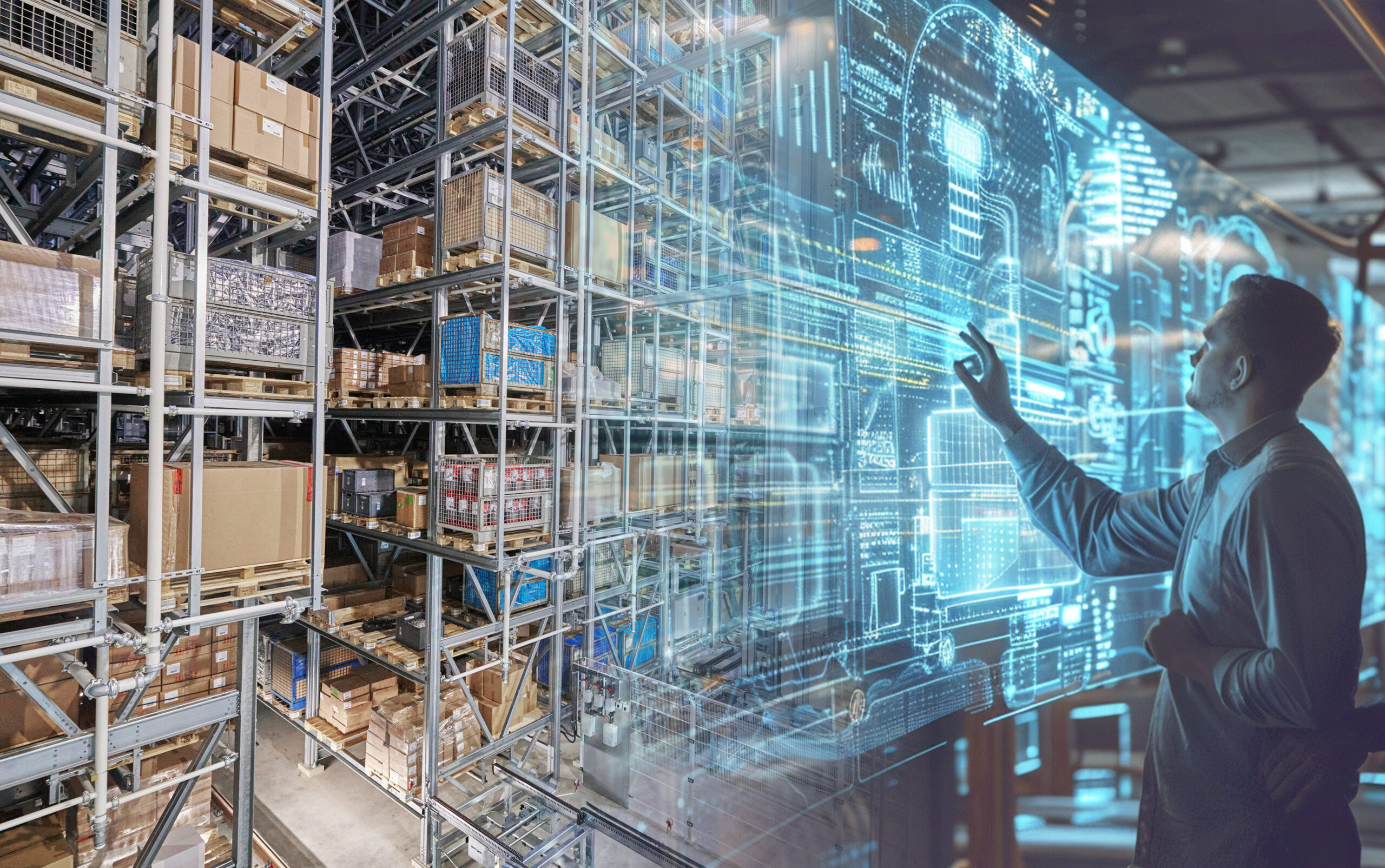
AI-Driven Warehouse Automation at LogiMAT

Atomix, a provider of AI-driven warehouse automation solutions, will return to LogiMAT 2026 in Stuttgart (Hall 3, Booth 3F50) to showcase its core technologies and growing European footprint.

At the heart of Atomix’s solution is its ‘1+4’ technology platform. The ‘1’ refers to Atomixer, an AI-native orchestration software platform that enables real-time coordination of heterogeneous robotic fleets while integrating seamlessly with existing WMS/WCS systems.

The ‘4’ represents Atomix’s four families of self-developed robotics, including 4-way pallet shuttles, pallet AMRs, and tote Storage Transfer Robots and Tote AMRs, designed for high-density storage, flexible handling, and efficient picking. These technologies are modularly combined into three subsystem solutions — ‘Storage Mix’, ‘Handling Mix’, and ‘Picking Mix’ — allowing system integrators to configure scalable automation systems tailored to specific warehouse needs.

A key differentiator of Atomix is its ability to orchestrate heterogeneous robotic fleets within the same environment. Powered by advanced AI algorithms such as MAPF and decentralized deadlock avoidance, Atomixer enables seamless collaboration between different robot types and third-party equipment, optimizing warehouse operations in real time.

Demo Centre

Globally, Atomix works through a partner-based delivery model, providing core technologies and products while local system integrators deliver project implementation and lifecycle services. With over 500 projects across 20+ countries, Atomix has built long-term partnerships with companies including Coca-Cola, Nestlé, Toyota, Yum China, Lotte, ITW, and Lenovo, achieving a 71% customer renewal rate.

In Europe, Atomix continues to expand through local integrator partnerships. The company has recently opened a Demo & Experience Centre in Belgium to support partners and customers across the region. Recent projects delivered in Romania and Greece demonstrate the flexibility of Atomix solutions across industries such as manufacturing and cold-chain logistics.

Visitors to LogiMAT 2026 are invited to meet the Atomix team to explore AI-powered automation solutions and discuss partnership opportunities. If you would like a free visitor ticket you can register here.

PODCAST: Shuttle Based Technology Insights

Are you ready to see the future of warehouse automation? In this episode of Logistics Business Conversations, Editor, Peter MacLeod and Sam Moffett, managing director of Moffett Automation, share how cutting-edge shuttle technology and intelligent software are revolutionizing logistics. Discover how fully free-roaming, multi-directional shuttles can scale effortlessly, reduce energy consumption by up to 50%, and make dark warehouses a real possibility in just 18-24 months. This episode reveals the secrets behind creating highly flexible, resilient, and sustainable logistics operations that can double capacity within existing spaces – all while slashing costs and minimizing downtime.

You’ll learn about the crucial role AI and advanced traffic management systems play in increasing efficiency and preventing costly operational disruptions. Sam explains how customized solutions-ranging from handling whiskey barrels to cold storage-are tailored to meet unique industry needs, and how the software backbone ensures maximum throughput and real-time data analytics. Plus, get brilliant insights into integrating legacy systems, attracting top engineering talent, and the strategic foresight shaping the next generation of warehouses.

If you’re a logistics leader, warehouse manager, or tech innovator, this episode is essential. It’s packed with concrete examples of successful automation projects, practical tips on scalability and energy savings, and a compelling glimpse into how disruptive technologies will define the warehouse of tomorrow. Don’t miss the opportunity to learn how to future-proof your supply chain with smarter, more adaptable automation solutions.

Whether you’re building new facilities or upgrading existing ones, understanding these innovations can give you a competitive edge. Tune in to stay ahead of industry trends and find out how the most advanced automation is making warehouses more efficient, sustainable, and ready for the future.

Software Migration for Automated Warehouse

Following the successful software migration of an automated high-bay pallet warehouse and manual warehouses, Klinkhammer Intralogistics has been awarded the contract to connect an additional warehouse location of Otto Lehmann GmbH to its Warehouse Management System (WMS). This involves connecting a manual pallet block storage facility in Geiselhöring as an additional location in a separate instance to the ‘KlinkWARE’ WMS for an external service provider.

Otto Lehmann GmbH, with around 400 employees, is a leading manufacturer of roofing products and drainage technology – from snow guard systems and roof module holders to gutter hooks. The product range comprises around 3,000 product variants. Around 10,000 tonnes of steel and around 3,000 tonnes of non-ferrous metals, primarily copper and zinc, are processed each year.

The company plans to set up an external storage facility in Geiselhöring. This warehouse will be managed using KlinkWARE WMS, but will be operated completely separately from the main warehouse in Neutraubling. The plan is to use independent software and system configuration on a separate server, which will exchange data with the main system via a shared host interface. The focus is on processing goods receipts and full picks for around 50 fast-moving items. In addition to goods receipt and dispatch of pallets – including tour approvals and packing station allocation – the new warehouse will also use the software to map stock transfers, stock corrections and inventory.

Due to the high degree of standardisation of the KlinkWARE software, the entire project will take only around eight weeks and includes testing, commissioning, training, system support and the user documentation. The warehouse will be set up as a separate address in the main system to ensure a systemic separation of the company’s own warehouse from the warehouse of the external service provider. At the same time, there will be a connection to the central WMS via the ERP system, which generates withdrawal notes.

Back in spring 2025, a four-aisle automatic high-bay warehouse with storage and retrieval cranes and picking stations, a manual long goods warehouse and a block storage facility at the Neutraubling site were converted to KlinkWARE. The reason for the migration was outdated servers and operating systems, which posed an increased security risk. In addition, the maintainability of the existing software was limited, making it necessary to adapt it to the current development environment.

By creating a new set of specifications, a comprehensive process optimisation was also carried out. This made it possible to eliminate functions that were no longer needed and, at the same time, to incorporate frequently missing requirements into the new solution. By connecting the external warehouse, Otto Lehmann is creating greater transparency through standardised systems and is consistently continuing the modernisation of its logistics IT.

Yard Management for Smaller Logistics Facilities

INFORM software has announced the launch of ‘YMSlite’, an entry-level yard, dock, and gate management solution for small to mid-sized warehouses, distribution centres, carrier and container yards, 3PLs, and manufacturing sites with yard operations. The easy-to-use software gives operators a straightforward way to organize and monitor yard operations in real time.

In many smaller facilities, yard operations remain one of the least digitized areas in the supply chain. Trucks wait at the gate, dock doors are occupied longer than necessary, and teams rely on phone calls, radios, and manual lists to keep track of trailers and containers. This leads to unnecessary dwell times, higher detention and demurrage costs, and a constant risk of miscommunication between warehouse staff, transport partners, and gate personnel.

“In Europe, a lot of everyday yard operations still run on clipboards, spreadsheets, and local knowledge,” says Gary Van Tassel, Director of Sales for Terminal & Distribution Center Logistics at INFORM. “At the same time, customers feel growing pressure from rising transportation costs, driver shortages, and increasing service expectations. YMSlite gives small and mid-sized facilities a practical way to gain control over their yards. With real-time visibility, better dock planning, and fewer surprises at the gate. Without the overhead of a big system implementation.”

Yard, dock, and gate in one platform

As a standalone system, YMSlite combines yard, dock, and gate operations in a single web-based application. Operations teams can configure their yard layout – including parking spots, docks, and bulk areas – and track trailers, containers, and chassis in real time. A live yard overview shows where each unit is located and for how long it has been there, allowing teams to reduce search times and act early when dwell times become critical.

Within the application, users can assign equipment to doors, block and unblock locations, and move trailers between parking slots and docks. Gate staff benefit from a clear overview of expected arrivals and departures and can mark check-in and check-out directly in the system, linking each truck to the relevant unit and yard location. A compact KPI view provides insights into yard occupancy, dock utilization, gate activity, and dwell times to support data-driven decisions.

Built for smaller facilities – fast start, low risk

YMSlite is tailored for small and mid-sized warehouses, distribution centres, carrier and container yards, 3PLs, and manufacturing sites that need professional yard management without the complexity of enterprise systems. The user interface is intentionally simple and immediately understandable for operational teams on the ground – so users can get started without extensive training. Setup is equally straightforward: new sites can be configured within 30 minutes, enabling teams to work with the software quickly and productively. Fully cloud-based, YMSlite can be implemented directly without dedicated IT projects or in-depth IT know-how.

YMSlite is offered with a transparent subscription model, with a flat monthly rate and no hidden fees or long-term commitments. A free trial of 15 days allows interested companies to test the solution with their own data and processes before making a decision.

“Over the past decades, INFORM has built a strong portfolio for complex logistics operations all over the world,” says Karsten Schumacher, Product Manager YMSlite, Terminal & Distribution Center Logistics at INFORM.

“With YMSlite, we are deliberately extending this portfolio to smaller logistics facilities. Many of these sites face the same visibility and efficiency challenges as large operations but have lacked a solution that fits their scale and resources. YMSlite closes exactly this gap and allows us to support customers from small businesses through to global enterprises with the right level of functionality in each case.”

Developed with and for smaller logistics facilities

During customer pilots of YMSlite, companies were able to replace paper-based yard lists and manual gate logs with a shared digital view of all trailers, docks, and appointments. Participants reported faster access to information, fewer misunderstandings between staff, and more predictable yard flows, particularly during peak periods.

“YMSlite has been a clear step up from working in Excel. The interface is clean, the system is easy to understand, and we were up and running in about five minutes. Cloud access means we can reach the same up-to-date information from anywhere and don’t have to worry about different file versions. If you’re looking for a straightforward, more structured alternative to spreadsheets, I’d recommend giving YMSlite a try,” says a Warehouse Manager for a leading regional 3PL and YMSlite Beta User.

Ongoing feedback from beta users continues to shape the product’s evolution. Upcoming enhancements in analytics and reporting will expand the system’s capabilities without compromising its intuitive, user-friendly design.

Order Picking with Intelligent Robotics

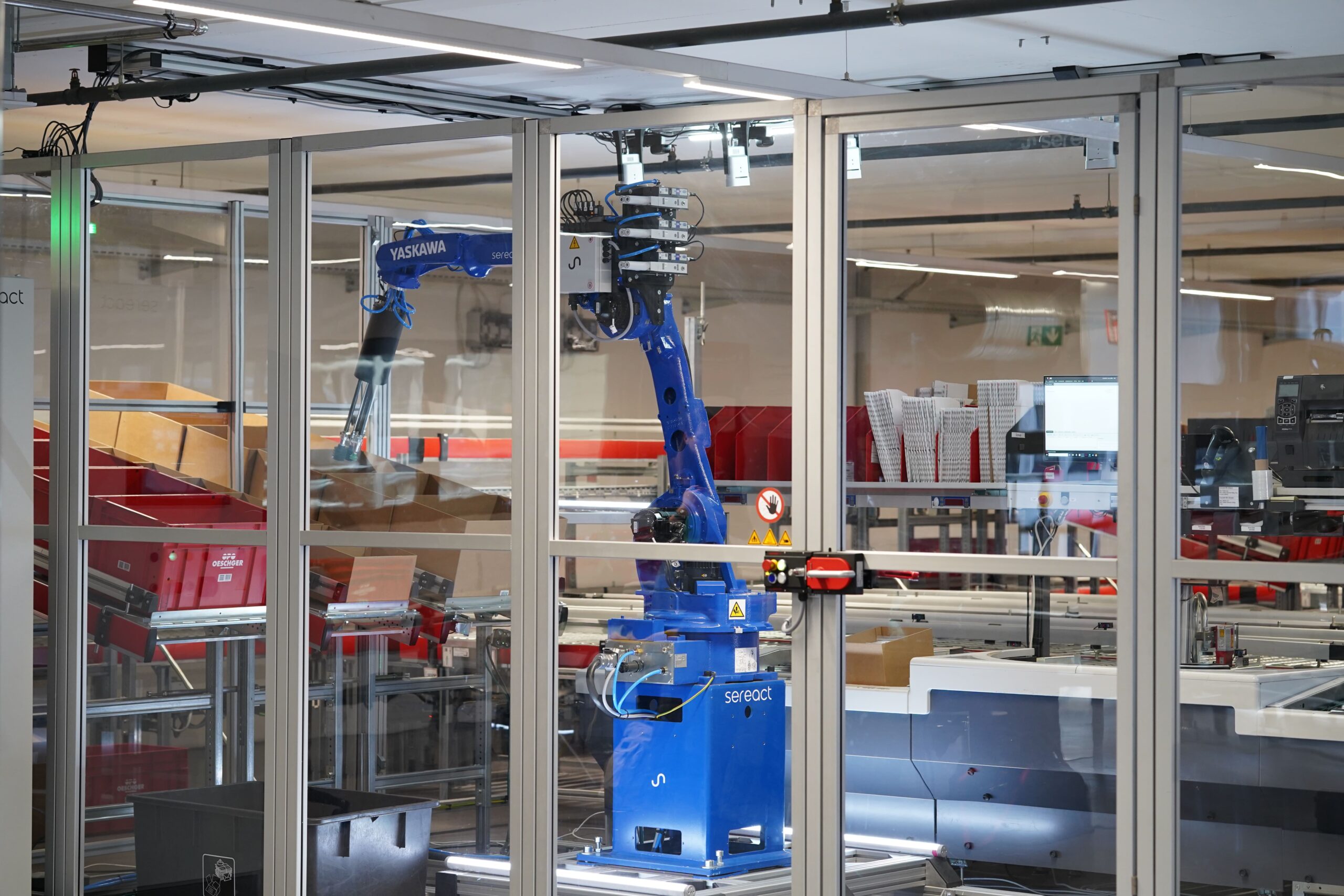
A tightly scheduled picking process, an automated shuttle warehouse, and in the middle of it all, a manual step that slows everything down. OPO Oeschger was looking for a solution that would fit into existing structures without changing them. Sereact impressed with a robot-based solution that uses artificial intelligence and works immediately. The robotics integrate seamlessly into existing processes and ensure a noticeable increase in efficiency.

OPO Oeschger is a Swiss family-owned company headquartered in Kloten, founded in 1926 and now employing around 300 people. With a range of more than 70,000 items, OPO Oeschger is one of the leading suppliers of fittings and components for carpenters, wood, glass, and metal construction, as well as for schools and resellers. In addition to furniture and kitchen fittings, the range also includes door and building fittings, machines, and tools. In its logistics, OPO Oeschger consistently relies on highly automated processes to deliver not only quickly but also reliably. Order picking is also being specifically developed with new technologies to meet increasing demands.

When standard solutions don’t help

Many processes in logistics at OPO Oeschger are already automated. Nevertheless, the goal was to identify new potential. There was a particular need for action in the area of order picking. Although an automated small parts warehouse was in place, items were still being picked manually. Since the warehouse building offers only limited space and the processes are precisely coordinated with the conveyor technology, the new solution had to be implementable without major interventions.

Adjustments to the conveyor technology or upstream control processes were out of the question. The solution had to integrate seamlessly into an existing workplace without imposing new processes. This is precisely where other providers who offered only standardized systems failed. OPO Oeschger, on the other hand, was specifically looking for a solution that would fit into the existing system and could realistically replicate the behavior of a human picker.

The robot picks what fits

Sereact impressed OPO Oeschger with its willingness to consistently adapt to the existing framework conditions. “The Sereact team came to our site, took a close look at our processes, and very quickly understood how they work,” explains Daniel Schütz, Operations Manager Logistics at OPO Oeschger.

“While other providers proposed standard solutions, we were able to implement individual requirements together with Sereact.”

The picking robot was integrated into an existing picking workstation. Instead of adapting the environment, the robot was designed to perform the tasks of a human employee as realistically as possible: it picks up target cartons and places them in two target locations. If requested to pick up a destination container, the robot first removes the anti-slip mat from the container. The robot then removes items from a source container and places them in the prepared destination carton or container. These are then sent on to the conveyor system for further processing.

A prerequisite for commissioning was a targeted adaptation of the interface in the warehouse management system, which was implemented without any problems in cooperation with TGW Logistics. This meant that only orders suitable for automated picking could be forwarded to the robot. The selection of suitable items is carried out directly by OPO in the item master. The actual picking and placement logic — i.e., the decision on how to place and stack items in the box—is entirely controlled by Sereact’s AI-supported control system. No product training was necessary. The AI solution takes care of product recognition, selection, and picking independently. The precision of the solution is particularly evident with items for which the cardboard packaging has been calculated exactly. Targeted preselection is crucial for the stability of the process.

An employee who doesn’t need a break

With the use of the picking robot, OPO Oeschger has taken an important step toward future-oriented logistics processes. The robot reliably performs standardized picking tasks that were previously covered by manual labour, thus creating a noticeable reduction in the daily workload. It works stably and reliably, especially with items that meet clearly defined criteria. Technically, the robot would be capable of significantly higher performance. At OPO, however, the speed was deliberately throttled in order not to overload the existing structural structure. In its current configuration, its performance is roughly equivalent to that of half a full-time employee. This deliberate limitation is part of a strategic approach.

OPO is using the project to learn specifically how AI-based robotics can be integrated into existing processes and what conditions need to be created for later scaling. At the same time, the expertise of the employees remains central: they now focus more on complex picking processes that involve handling flexible or sensitive products, for example. The combination of robot-assisted automation and human experience increases overall efficiency and process quality. Items that are not suitable for the robot are specifically excluded in the warehouse management system. For OPO Oeschger, the use of this technology was not a measure to reduce staff. Rather, the focus is on gaining knowledge. The aim is to further develop the system in a targeted manner and make it scalable.

What works today will continue to grow tomorrow

The experience gained from the project forms the basis for future automation projects at OPO Oeschger. The company is already working with Sereact and TGW Logistics to further develop the interface logic. The aim is to control even more precisely which items the robot can handle in the future, even for more complex orders with mixed items. In the medium term, the picking robot will interact intelligently with manual workstations and automate where it makes economic and procedural sense.

“We deliberately viewed the project as an investment in know-how,” explains Schütz. “We also wanted to learn at an early stage how picking robots can be meaningfully integrated into our processes, with a view to today’s operations and future logistics strategies.”

The aim is also to increase the utilization of the existing robot. The use of additional units is also planned for the future. Based on the knowledge gained, a scalable solution is to be developed that fits seamlessly into future infrastructures and consistently exploits the potential for automation. With the knowledge gained, OPO Oeschger and Sereact are working together to further optimize logistics processes in order to reap the full benefits of automation in the long term.

Pallet Pooler helps Flowers for Mothers Day

A fresh flowers business is blooming in time for Mother’s Day thanks to a supply chain partnership which helps it cope with a 100 per cent increase in demand. Global agribusiness Flamingo has its busiest time of the year in the first quarter of every year, with Valentine’s Day quickly followed by Mother’s Day.

It works with one of Europe’s leading pallet poolers, IPP, to ensure its blooms make it to the supermarket shelves in good time for key events in its peak season, while also reaching key efficiency and sustainability targets.

During this time, it will see the number of pallets transported by IPP increase by 100 per cent – a vital partnership for the business, which has seen a five per cent increase in overall demand for its products year-on-year.

Flamingo supplies hundreds of millions of stems of flowers, plants and produce to UK and European supermarkets and florists. It works with partner growers in 19 countries, with a goal of products reaching the shelves within 96 hours of being farmed.

It relies on IPP to keep its supply chain moving with a reliable supply of pallets, enabling it to move products efficiently from its sites to its retail customers.

Vanuza Machado, UK inbound logistics co-ordinator, said:

We’ve been working with IPP for more than 10 years, building a strong and collaborative partnership over that time. Key events like Mother’s Day bring a significant uplift in volume, so flexibility and responsiveness are crucial. IPP supports us by ensuring pallet supply keeps pace with increased demand, helping us manage peak volumes smoothly and maintain service levels during our busiest periods. This long-standing partnership is built on reliability, open communication and a shared focus on continuous improvement. As our business grows across the UK and Europe, having trusted partners who understand our operations is more important than ever.

Sustainability is a priority for Flamingo as it continues to grow, with its focus on reducing its carbon footprint through renewable energy investment, greater use of sea freight, improved water stewardship, lower chemical usage, biodiversity projects and stronger waste and recycling programmes.

IPP aims to bring innovation and added value to the partnership beyond simply providing pallets, as its use of Internet of Things technology and its advanced forecasting and planning capabilities helps optimise product flows during peak periods, reducing waste and unnecessary miles.

IPP commercial director Demi Crabbe said: “For more than a decade, our partnership with Flamingo has demonstrated the value of reliability and innovation during peak periods. We have a truly collaborative approach to resolving any challenges, which we achieve through open communication. Improving efficiencies and reducing environmental impact is at the forefront of both our agendas. By combining our robust pooling network with our circular approach, we help customers reduce waste, cut carbon and deliver products on time, every time. This Mother’s Day, we’re committed to ensuring Flamingo can meet demand seamlessly and continue delighting consumers across the UK.”

Terminal Operator Updates Port Equipment

International terminal operator CoreX Ports & Terminals / Yilport Holding, Inc. has received 5 reach stackers, 5 empty container handlers and 9 forklifts to increase its container handling efficiency at terminals in Ghana, El Salvador, and Portugal. The trucks were ordered in batches throughout 2025 and are now in service.

CoreX Ports & Terminals / Yilport Holding operates 22 Marine and 5 inland terminals in 12 countries and relies on a fleet of container handling equipment to meet strict customer deadlines in a wide range of demanding environments. To keep up with demand, Yilport decided to replace older equipment at four of its terminals with 19 of the latest Konecranes lift trucks to ensure continued safe and efficient operations and maximum uptime.

“We appreciate Konecranes’ continued participation in our equipment purchase tenders and their responsiveness to our operational requirements. The addition of these reach stackers, empty container handlers, and forklifts further strengthens our equipment fleet across multiple regions, supporting higher productivity, operational resilience, and service reliability. As we continue to expand our global terminal network, investments in modern equipment remain a key driver in delivering efficient and competitive port services to our customers worldwide,” says Erhan Çiloğlu, Deputy CEO & CMO, Yilport Holding.

This delivery reflects Yilport’s confidence in Konecranes. We’re proud to have delivered the right solution with our Turkish distribution partner Portunus playing a key role to make this happen, supported by our unmatched global after-sales service through our distribution partner network

says John Elisson, Regional Director MEA, Lift Trucks, Konecranes.

The 5 reach stackers, 5 empty container handlers, and 9 forklifts meet a wide range of capacities and handling requirements at four terminals. For deeper insights, ‘TRUCONNECT Remote Monitoring’ will collect usage data and send it via secure mobile connection to the Konecranes customer portal, where Yilport can follow one truck, a group of trucks or its entire lift truck fleet around the world. With up-to-date information about truck performance, the port operator can analyze and optimize its operations.

Charging Challenges Stalling Fleet Electrification

A commercial vehicle rental specialist has launched a new whitepaper looking at why charging infrastructure is holding back electric vehicle adoption across the light commercial vehicle (LCV) sector.

The ‘Charging Ahead’ whitepaper, based on data from Dawsongroup’s EV Readiness Survey of fleet operators across the UK, uncovers a disconnect between perceived readiness and actual implementation.
While 53% of respondents believe their premises are suitable for EV charging infrastructure, only 27% have actually installed chargers on site. Meanwhile, 47% remain either unsure of their suitability or consider their premises unsuitable altogether.

In the report driving range is identified as the most important factor in EV selection for fleet managers (42%). For micro fleets running between one and ten vehicles, a single van falling short on range can throw an entire day’s operations into disarray.

“For smaller fleets, every vehicle is a workhorse. If one can’t deliver the expected range, it disrupts the entire operation,” said Sarah Gray (pictured, below), Head of ZEV Strategy and Development at Dawsongroup vans. Charging speed is also highlighted as a day-to-day challenge. Unlike private EVs, commercial vans run to tight schedules where slow charging translates directly into lost productivity. The whitepaper maintains that faster charging infrastructure is key to keeping vehicles on the road, with drivers able to top up during breaks rather than waiting for a full charge.

The findings show that 59% of drivers take their vehicles home overnight, which can create challenges around charging consistency and cost control.

“When vehicles are dispersed overnight, businesses lose control over charging consistency and cost management. It becomes harder to monitor energy usage and ensure vehicles are ready for the next day,” says Gray.

Despite 41% of fleets parking vehicles at their business premises overnight, on-site charging adoption remains surprisingly low. The whitepaper suggests that many businesses underestimate what installation involves.

“Many businesses underestimate the complexity of installation,” says Simon Ridley, Managing Director at Dawsongroup vans. “From assessing electrical capacity to managing costs and planning for future scalability. It’s not just about buying chargers; it’s about integrating them into the business model.”

The whitepaper recommends a practical, phased approach, starting with temporary or mobile charging solutions, carrying out site assessments to understand power availability, and building an infrastructure that can grow with the fleet.

The experts at Dawsongroup vans encourage businesses to combine real world vehicle trials and telematics to test EV performance against actual route demands, rather than just relying on manufacturer figures.

Next-Generation Snow-Class Reefer Fleet

One of the world’s largest operators of specialized reefer vessels, Cool Carriers, is set to operate seven new ‘Type Reefer Carriers’ from Kitanihon Shipbuilding in Japan, and took delivery of the first vessel, ‘Snow Flower’, on 4th March. Each vessel is designed to safely carry 5,000 high-cube pallets of perishable fruit, along with up to 168 reefer containers, at a service speed of 18 knots. Two vessels have capacities of over 630,000 cubic feet, while five have capacities of 660,000 cubic feet.

All vessels will share the same specifications and form a new series, with deliveries scheduled from March 2026 through to 2028. The names draw inspiration from the company’s original and highly regarded Snow-class vessels.

The vessels will feature modern hull and propulsion designs, including energy-efficient engines engineered to meet stringent IMO and EU environmental regulations through to 2030 and beyond.

This order forms part of Cool Carriers’ ongoing fleet renewal strategy, ensuring continued competitiveness in the specialized reefer segment. Following this order, the company will have a total of 7 vessels on order, with 2 scheduled for delivery in the remainder of 2026.

Cool Carriers is both an owner and a time-chartered fleet operator, which includes leasing vessels from Japanese owners. The company’s expanding fleet represents a significant increase in reefer capacity, with vessels capable of carrying up to 14,000 pallets under deck and in containers combined.

Cool Carriers serves key global trade routes, including New Zealand to Europe (Kiwi fruit), Chile to the United States, Ecuador’s banana exports, and growing volumes from South Africa and Argentina to Europe.

As global demand for year-round fresh produce continues to rise the company plays a vital – if often unseen – role in maintaining resilient food supply chains. The introduction of the Snow-class vessels will further improve both delivery reliability and environmental performance.

Glenn Selling, Chief Operating Officer at Cool Carriers, said, “Cool Carriers is proud to introduce the Snow class. With a 2.5-metre deck height, these vessels represent a major step forward for the specialized reefer industry. Exporters will no longer need to choose between standard and high-cube pallets – the new vessels are designed entirely for high-cube cargo, matching the internal height of modern reefer containers.”

Windsor Framework Freight Discussions

The British International Freight Association (BIFA) recently met with representatives from the European Commission in Brussels to discuss the operation of the Windsor Framework and its impact on the movement of goods between Great Britain and Northern Ireland.

The meeting formed part of ongoing engagement between industry and policymakers to assess how the post-Brexit trading arrangements are functioning in practice and to identify areas where processes could be improved for freight forwarders and their customers.

Representing BIFA was Pawel Jarza from the association’s Policy and Compliance team, who highlighted the operational realities faced by members when moving goods across the Irish Sea. While the Windsor Framework has simplified certain procedures, such as removing the requirement for export declarations on goods moving from Great Britain to Northern Ireland, freight forwarders continue to navigate a complex trading environment.

Key challenges discussed included the need to operate between two tariff regimes and determine whether goods are considered ‘at risk’ of entering the EU market. Additional requirements, including safety and security declarations and the implementation of systems such as Import Control System 2 (ICS2), also contribute to the complexity of border processes.

The discussion also addressed issues surrounding the movement of small parcels and lower-value consignments, where the detailed provisions of the framework can create practical difficulties for operators.

BIFA used the meeting to relay feedback from its members and emphasised the importance of continued dialogue between industry and regulators to ensure the framework works as effectively as possible.
Commenting after the meeting, Jarza encouraged members that trade between Great Britain and Northern Ireland to continue sharing their experiences.

“Freight forwarders operate at this border every day and have first-hand knowledge of what works and what does not,” he said. “If members encounter systemic issues, it is important that they let us know so we can raise these with government departments and the European Commission, and where possible propose practical solutions.”

BIFA will continue to gather feedback through its regional engagement in Northern Ireland and ongoing discussions with members to support improvements to the operation of the Windsor Framework.

Subscribe

Get notified about New Episodes of our Podcast, New Magazine Issues and stay updated with our Weekly Newsletter.