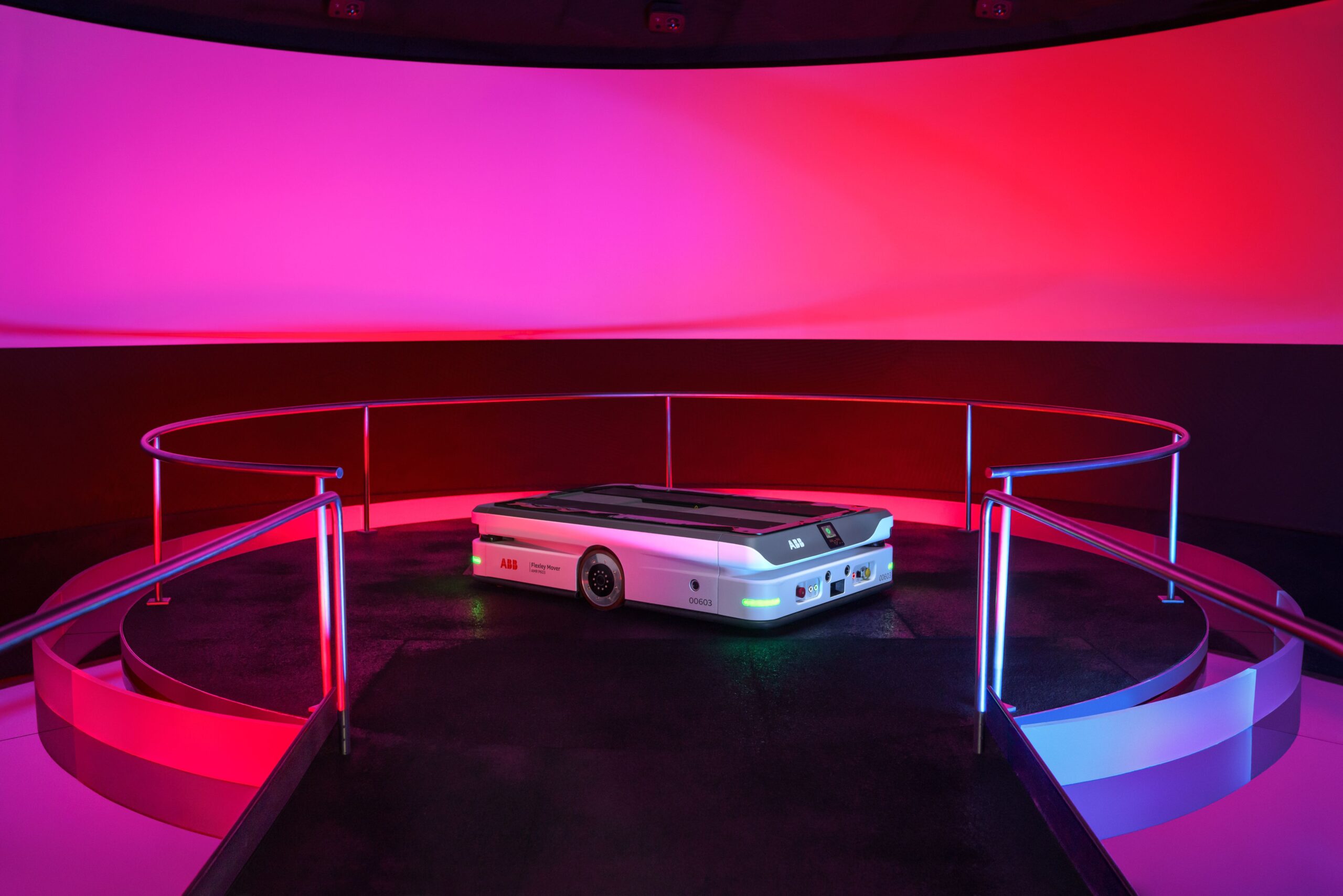
ABB Robotics’ Flexley® Mover P603 autonomous mobile robot (AMR) has won the iF Design Award 2026 in the Industry, Tools and Machinery Product Design category, based on its compact design, intelligent navigation and potential to transform performance in intralogistics applications.
“The Flexley® Mover P603 is the latest step in ABB Robotics’ approach to autonomous, software-driven intralogistics automation, where machines can operate independently while working seamlessly alongside people and other systems,” said Alfonso González, Global AMR Product Line Manager of ABB Robotics.
“This award recognizes not only the strength of the design, but also how we’re lowering the barriers to automation through more autonomous and versatile robotics (AVRTM) that can do more things, in more places, and do it faster, safer and smarter.”
The P603 was selected by judges for its combination of smart engineering, intelligent software and autonomous functionality in a single solution. Its navigation system, AI-powered by ABB Robotics’ Visual SLAM technology, enables precise movement without the need for fixed infrastructure, which speeds up commissioning by up 20%, compared to other navigation systems, and makes it less complex.
A compact footprint allows it to operate efficiently in space-constrained environments, while integrated load sensing ensures the safe handling of loads of up to 1500 kg. Together, these capabilities give manufacturers a versatile, future-ready solution that streamlines material flow and supports rapid adaptation to changing production needs.
Introduced in 2025, the Flexley® Mover P603 is designed to boost output and improve material flow while reducing setup time and infrastructure requirements. Its quick installation and ability to operate in dynamic environments make it well suited to facilities looking to modernize operations without disruption.
A structured approach is best for identifying risks, closing safety gaps, and achieving compliance across industrial environments.
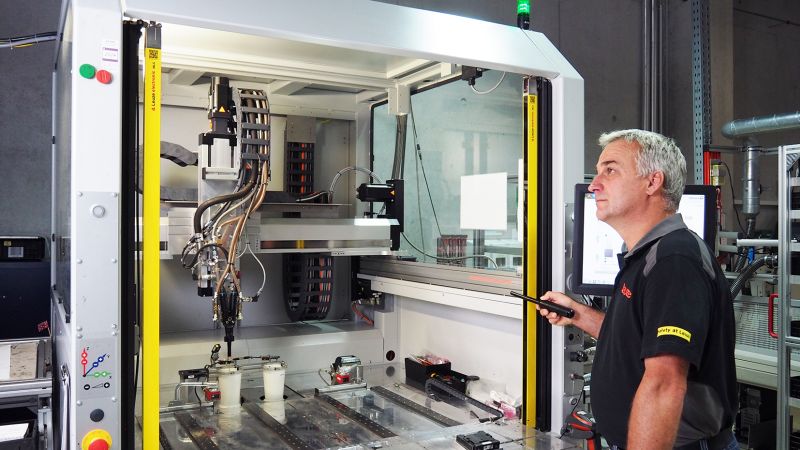
What if your next site inspection were scheduled for tomorrow? Any system operators who feel nervous about this prospect should take a critical look at their internal processes. The good news is that, with the right approach, risks in industrial automation can be reliably identified and eliminated in good time before the next inspection date. Frank Bauder, Head of Safety Services at Leuze, explains how.
Seamless machine and system safety is the foundation of reliable and efficient operation in industrial automation. Regular risk assessments play a key role here by identifying weaknesses in the safe operation of machines. Experience shows that most problems arise long before an actual inspection – often due to negligence, time pressure, ignorance, or limited budgets. Leuze’s safety expertise and safety solutions help operators achieve safe and reliable operation. The support is divided into seven steps:
Step 1: Identify risks Safety begins with transparency: All relevant risks must be identified, including at least mechanical and electrical risks, while taking the machine’s limits into account. Furthermore, the condition of any protectiven devices (e.g., safety sensors and controls) must be documented to detect any tampering or wear. A safety check from Leuze provides the necessary clarity by summarizing the results in a report.
Step 2: Assessing risks (EN ISO 12100) The next step is to objectively assess the identified risks, classify them in accordance with standards, and derive risk-mitigating measures. The risk analysis thus forms the basis for all subsequent technical decisions and investments. The safety experts at Leuze prepare conclusive risk assessments, including the development of safety functions, recommended risk-mitigating measures, and a description of remaining residual risks.
Step 3: Create a safety concept The safety concept describes the implementation of all risk-mitigating measures. It is ideally suited for discussing and determining feasibility, practicality, and user-friendliness with all parties involved, thereby avoiding misunderstandings. Based on this jointly agreed safety concept, the safety specialists from Leuze develop the detailed implementation and plan the verification and validation. This is underpinned by comprehensive industry and application knowledge, enabling practical and sustainable implementation.
Step 4: Focus on safety solutions in the concept Traditionally, implementation is planned and developed according to the concept. All activities, from the idea to the selection of components, implementation, and verification of effectiveness, must be carried out completely for each machine or application. Traditional safety concepts often reach their limits in complex applications, for example, with changing formats (changing pallet loads) at muting stations. In these cases, more sophisticated safety solutions are required that are precisely tailored to the task at hand. Leuze offers solutions that are specifically geared to the application requirements – covering the entire process from task analysis and safety architecture to comprehensive documentation.
Step 5: Implement and commission the safety solution A detailed analysis of the given application’s system layout is crucial. Only on this basis can the appropriate safety components (e.g. safety sensors or switches) be selected for the application and the corresponding device parameters defined. Success is also ensured thanks to commissioning and training on site by safety experts and product specialists.
Step 6: Prove effectiveness During verification and validation (proof of concept), the correct design and effectiveness of all safety-related components and functions are proven through tests, measurements, and fully documented testing under real-world conditions.
Step 7: Document and inspect regularly All necessary documents, such as the risk assessment, measurement reports, and CE declaration of conformity, are provided and form the new actual status. A consistent level of safety is guaranteed through recurring inspections of protective devices and regular risk assessments to ensure compliance with the ‘state of the art’. This ensures both operators’ safety and the machine’s availability for production throughout its entire service life.
Seven steps and an experienced safety partner at your side: System operators who follow these guidelines can enjoy peace of mind, even if the next site inspection is scheduled for tomorrow.
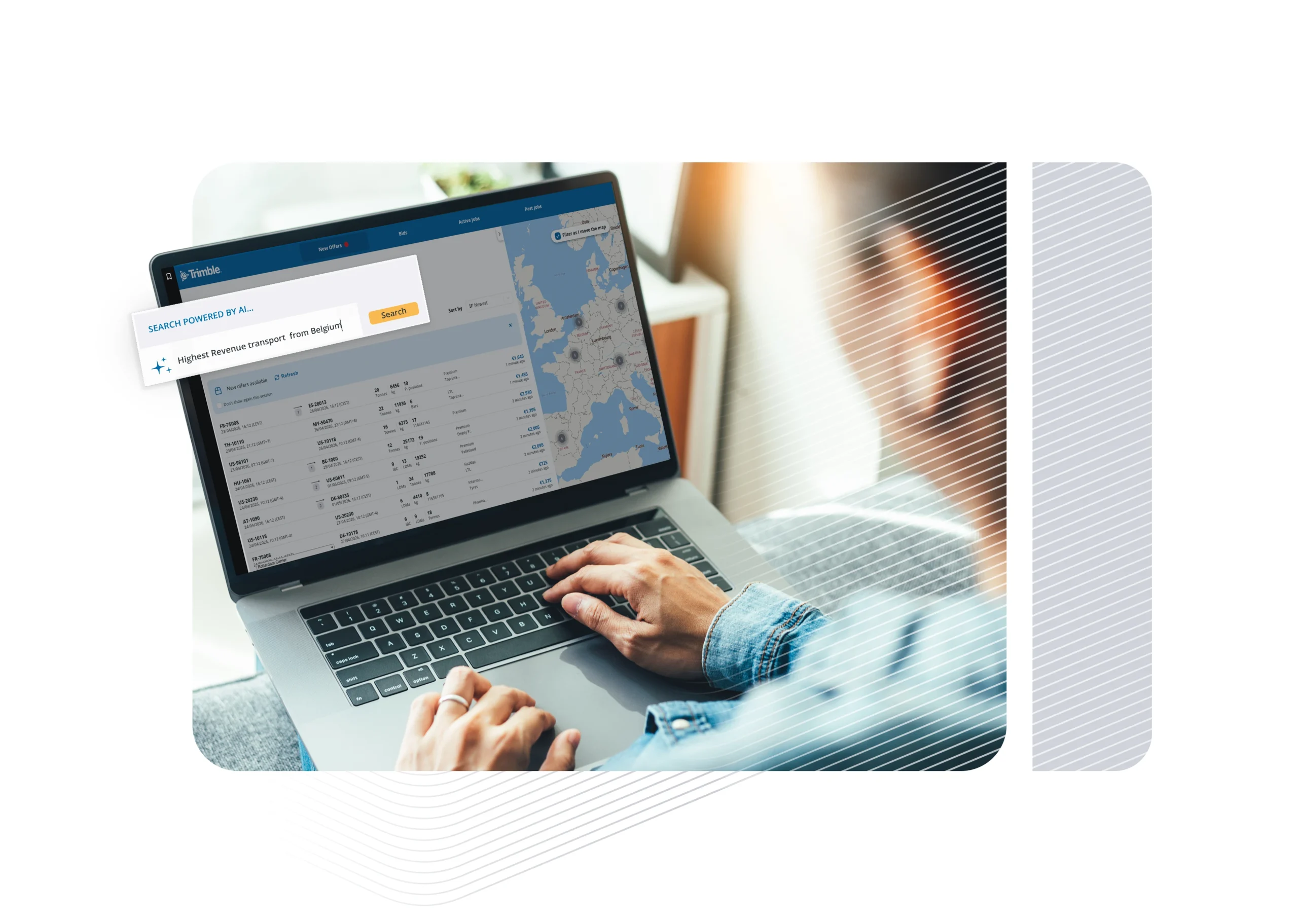
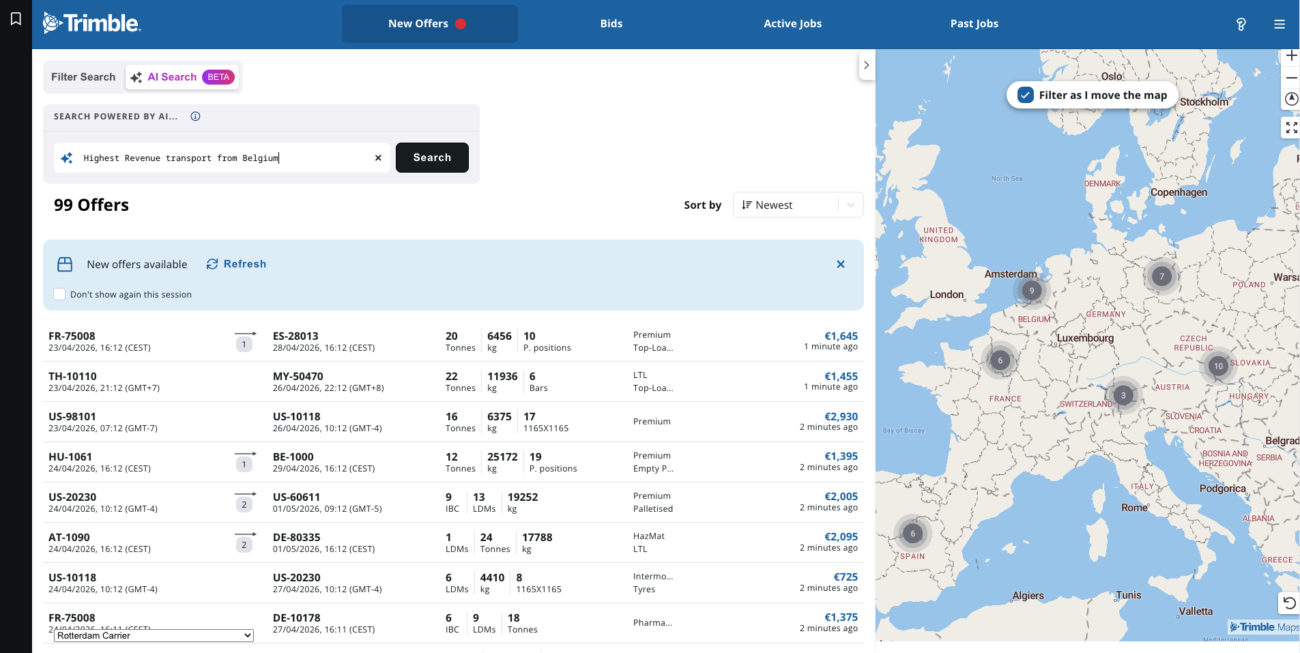
Transporeon, a Trimble company, has announced that it has launched Natural Language Search, a generative AI feature designed to simplify how carriers find freight in Transporeon Autonomous Procurement. The feature is now available to all Autonomous Procurement carrier users across Europe and North America.
The new capability allows users to type conversational queries like ‘reefer loads from Houston to Atlanta picking up in the next 48 hours’ and immediately receive matching results with AI-powered Buy-It-Now offers, turning what was once a multi-step filtering process into instant booking.
For carriers and dispatchers scanning hundreds of customised AI-powered offers in Autonomous Procurement, every minute spent navigating lists and toggling through filters is time not spent booking profitable freight. Carriers usually know what they’re looking for: a specific lane, equipment type or pickup window. Until now, they’ve had to translate that need into multiple clicks. Natural Language Search removes that friction entirely.
Based on pilot data, the tool interprets user intent with over 90% accuracy and rapidly returns results, allowing carriers to surface the most relevant loads.
“We started this project because we kept hearing the same thing from carriers: they think about loads naturally, but traditional search tools required them to translate that into filters and menu selections,” said Jonah McIntire, chief platform officer of transportation and logistics at Trimble.
That translation gap was slowing people down and Natural Language Search eliminates it. You just type what you need and the AI does the rest, delivering a faster, more intuitive experience that helps carriers act on the right opportunities more quickly.
The feature was piloted with a large US brokerage serving 790 active carriers, and is now available to all Autonomous Procurement users across Europe and North America. 79% of the carriers in the pilot used the AI tool to successfully complete at least one search. Usage was mostly desktop-based (72%), with 28% of searches coming from mobile devices, reflecting how carriers increasingly access freight marketplaces on the go. Early data also indicates the feature can increase query-to-booking conversion by as much as 25%.
“The new AI search is very quick and comfortable to use,” Alice Kostandova, senior logistics coordinator at West Motor Freight, said. “It saves me a lot of time and is much faster than setting regular filters.”
Subscribe
Get notified about New Episodes of our Podcast, New Magazine Issues and stay updated with our Weekly Newsletter.