The Year of the Pallet Shuttle

Beth Marshall, Movu Sales Director for the UK looks at the take-aways from the big intralogistics shows in Europe and the USA.

Springtime sees the logistics Industry gathering at the hubs for intralogisics innovation and networking: LogiMAT in Stuttgart, Germany during March, closely followed in April by the US show MODEX in Atlanta. Both of these major events attracted enthusiastic crowds seeking solutions to their intralogistics challenges, generating a noticeably positive atmosphere. With Movu having a busy stand at both events, it presented the ideal opportunity to learn more about the technologies and innovations shaping the market.

Despite the current geopolitical turbulence, there was a real buzz about the shows – reflecting the optimism in the market. It was clear that investments are being made to gain efficient warehousing for the future, particularly for smaller projects, and retrofitting was another popular topic of conversation with companies seeking to make the most of their existing space rather than find a new building. Growing businesses not yet ready to make very large investments at the outset, want to increase the number of locations in their current space, negating the cost, complication and risk of a warehouse move.

Strong demand for pallet shuttles

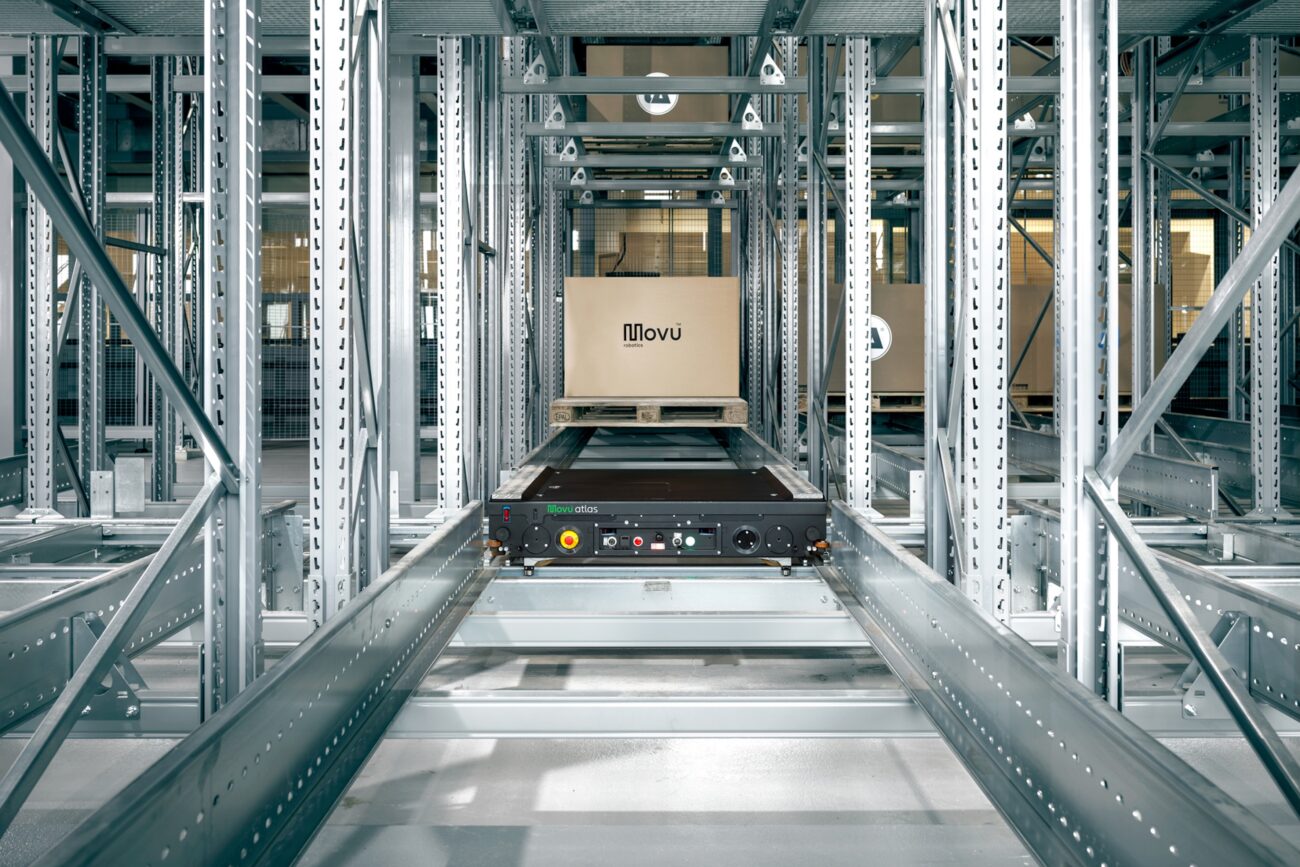
While just prior to the Covid pandemic there was a proliferation of Autonomous Mobile Robots (AMRs) at these exhibitions, 2026 was clearly the ‘year of the pallet shuttle’. Everywhere you looked, suppliers from all corners of the globe, were showing examples of the technology.

The strong increase in demand for pallet shuttles over the last several years is due first and foremost to the solution having no single point of failure, as is the case with stacker crane based automated storage and retrieval systems. A pallet shuttle solution can be scaled up whenever needed and is more cost efficient in terms of energy – obviously a vital contribution to increasingly important warehouse sustainability targets, in addition to helping to dampen the impact of unpredictable energy costs.

While it was interesting to see the influx of pallet shuttles to the market, it is easy to understand how perplexing this can be for customers. Our advice is: there is much more to a pallet shuttle supplier than the shuttle itself – focus on the whole solution.

The growing interest in pallet shuttle technology is not purely restricted to saving space compared to conventional pallet racking or stacker crane based systems in main storage areas of a warehouse. People are increasingly seeking to leverage the cube efficiency and operational benefits of the technology in wider applications, such as forward shipping buffers, where a rack can make use of marshalling area space to buffer goods for onward delivery. In a manufacturing facility, a buffer can hold goods pulled out of storage until they’re needed again on a manufacturing line.

Single source supply

Owned by stow Group, Movu’s unique position as a supplier of racking, shuttles and software enables the business to offer as a complete, integrated solution as a single source supplier, contributing to 200 projects sold globally since stow commenced its robotics business in 2021. These are solutions designed to ensure that no warehouse is left behind when it comes to adopting automation – from a small family-run business to a large corporate. In the UK, both ends of the scale are experiencing rapid growth: small companies starting out on automation and larger companies trying to consolidate their network into one large warehouse. Pallet shuttle technology is making a big contribution to a tangible shift to automation in the UK

In 2026 the UK is cited as one of the most important automated warehousing markets. This is quite a step change for a market that traditionally relied on manual picking and forklift truck operations. While recruitment for warehouse work is not the problem it once was, finding skilled people remains an issue. For example, a lack of people training to be a forklift truck driver is impacting costs so operations are looking to eliminate forklifts, relying on either electric pallet trucks, which do not necessarily require a skilled operator, or turning to automation.

Increase density to mitigate risk

Among the other drivers shifting warehouse operators towards automation is the need for greater storage density – allowing businesses to store more goods and mitigate supply chain risk in a turbulent world. Operations wanting to go higher to achieve density are struggling to get planning permission on high buildings. While warehouse availability generally isn’t as scarce as it used to be, there is a lack of smaller urban warehouses. This, in addition to the costs of running a network of smaller warehouses has led to the ‘close to consumer’ fulfilment trend reducing in significance.

The frozen market is doing very well boosted by a huge demand for frozen food, as well as pharma and ecommerce operations. Shuttle technology is perfect for these sectors. Third party Logistics (3pl) operators – particularly the new, up and coming brands – are seeing the modular scaleability, flexibility and reliability of automation provided by shuttle systems and reappraising their ROI models.

With its heritage as part of the stow Group, Movu stands out because it makes the racking in which shuttles operate in addition to manufacturing the atlas 4-way pallet shuttles themselves. What’s more, it has its own software and its own lift design.

As Movu is accountable for every part of the solution, customers can trust its plug and play pallet shuttle technology and know that it will be supported in the years to come. Offering scaleability for business growth, the modular nature of Movu’s 4-way shuttle system avoids the need for a large initial investment, with users being able to add more shuttles and racking as they continue to grow. And to handle peaks, Movu has a short-term rental fleet.

This technology isn’t an innovation for Movu, it is simply what the company does, as was demonstrated at LogiMAT and MODEX.

Prologis Signs Cainiao

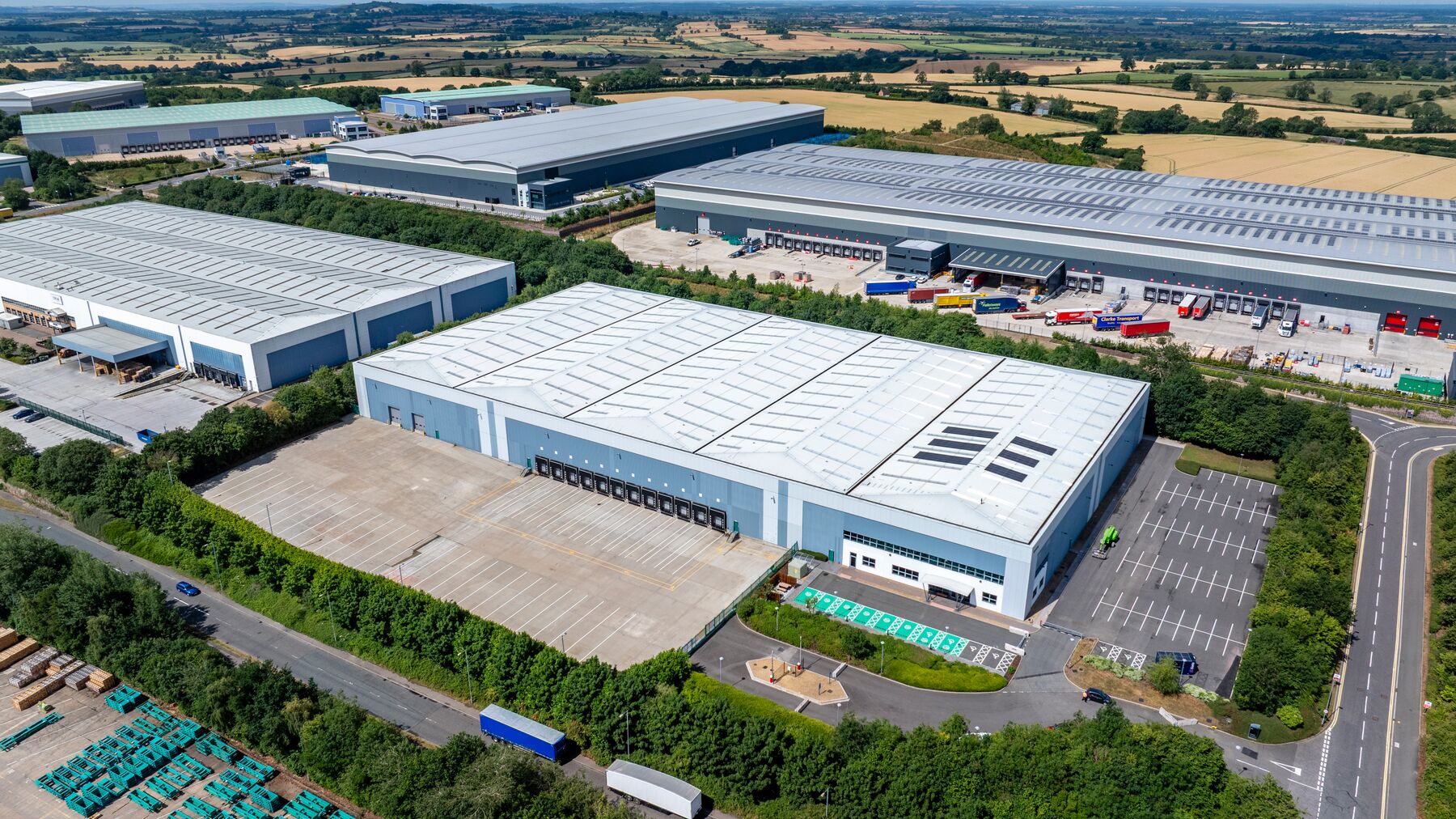
Prologis UK has secured a 10-year lease with global ecommerce logistics provider Cainiao, part of the Alibaba Group, marking a significant expansion of its UK operations.

Prologis Apex Park DC4’s recent refurbishment was delivered with a strong focus on sustainability, featuring advanced LED lighting, a solar PV array and EV charging infrastructure, resulting in an EPC A rating and supporting lower carbon operations.

The 150,911 sq ft DC4 enables rapid operational ramp-up with the installation, through Prologis Essentials, of wide aisle racking providing 20,028 pallet capacity. This allows Cainiao to move in quickly and handle high-volume operations from day one.

Sun Beibei, Vice President of Global Supply Chain at Cainiao, said:

“By signing a 10-year lease at Prologis Apex Park, we are making a clear, long-term commitment to the UK market. This significant investment reflects our confidence in continued growth and reinforces the stability and reliability of the logistics services we deliver to customers across the region.”

Prologis Apex Park offers the location, specification and flexibility we need to support our continued growth in the UK. The ability to move quickly through leasing and into a facility that is already optimised for high-volume operations was a key factor in our decision. We look forward to working with Prologis as we expand our network.”

Tom Price, Leasing Director at Prologis UK, said: “Cainiao’s decision to locate at Prologis Apex Park reflects the strength of the Midlands as a core logistics location, as well as continued investment from Chinese ecommerce businesses into the UK. As an existing global customer, we were able to move quickly on commercial terms, enabling this transaction to complete”

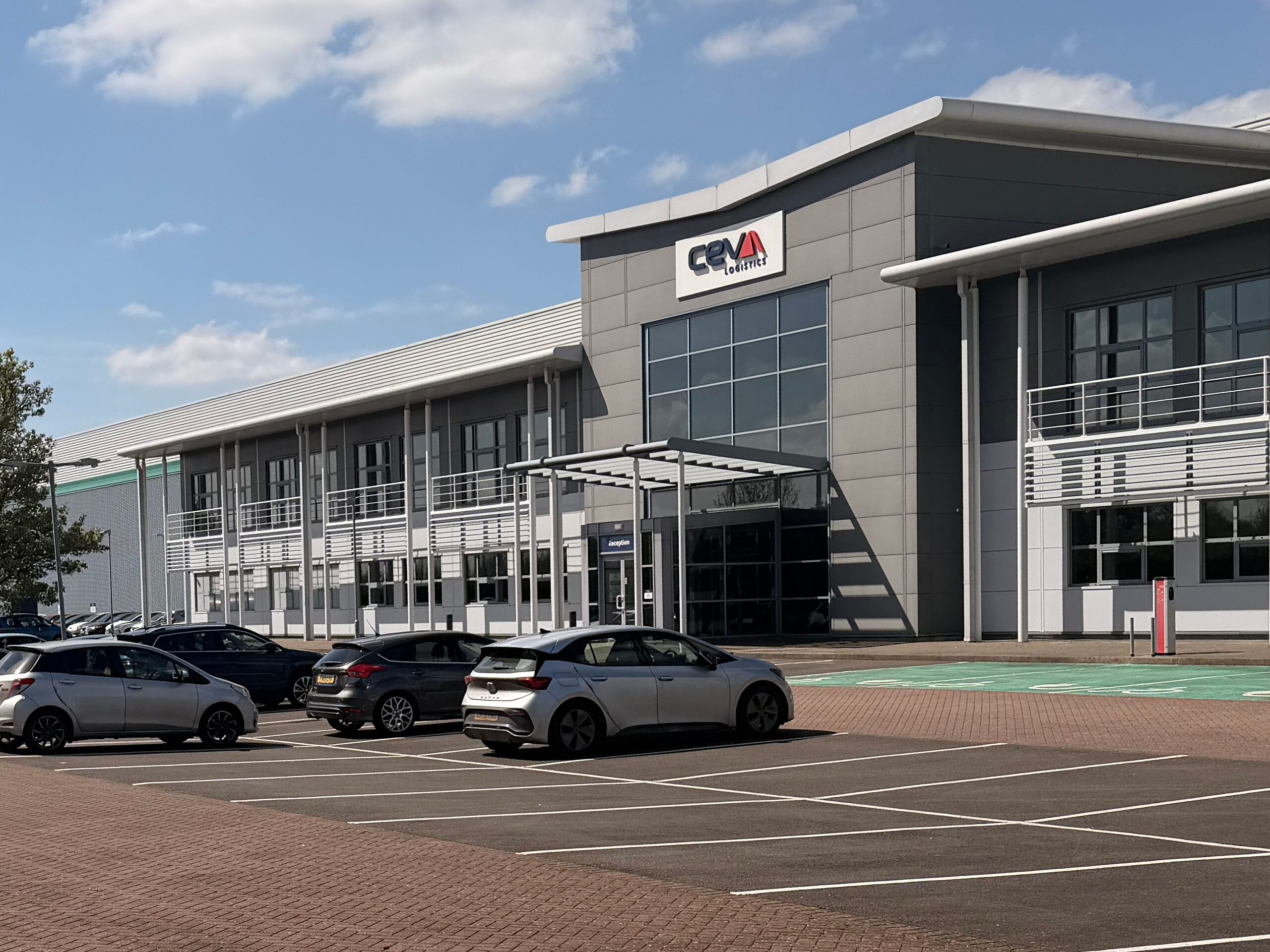
The letting brings Prologis Apex Park to full occupancy, following the recent leasing of DC3 to DHL. The park is home to major global customers including CEVA Logistics, XPO Logistics, Cummins and Hankook, reinforcing its position as one of the Midland’s premier logistics locations with strong connectivity and access to an established labour pool within the Midlands’ ‘golden triangle’.

A final opportunity remains at the park, with DC11 offering a 91,000 sq ft build-to-suit unit with full planning consent.

Port of Tyne Autonomous Logistics

The North East Automotive Alliance (NEAA), alongside the Port of Tyne, Oxa, and a consortium of leading industry and academic partners, has successfully delivered the P-CAL (Port Connected and Automated Logistics) project, marking a major milestone in the region’s journey to become a leader in Connected and Automated Mobility (CAM).

Delivered through the UK Government CAM Pathfinder programme, P-CAL was designed to push the boundaries of autonomous logistics by deploying and validating a fully autonomous terminal tractor within a live port environment. Building on the North East’s earlier 5G CAL and V CAL initiatives, the project moved autonomous technology from proof of concept trials into a complex, safety critical, real world operational setting.

Paul Butler, CEO of the NEAA, said:

P-CAL represents a defining moment in the North East’s journey from pilot projects to real world autonomous operations. This project has demonstrated not only technical capability, but the strength of collaboration across industry, academia and government. The learning gained here will shape future CAM deployment and reinforces the region’s position as a national leader in connected and automated mobility.

Over the course of the project, the consortium successfully designed, integrated and tested an autonomous container transport solution capable of operating on a busy quayside. The scope of work included the deployment of a fully autonomous terminal tractor supported by a secure, resilient mesh communication network, the capability to integrate with terminal operating systems, real time co-ordination with live crane movements, and the implementation of a robust cybersecurity framework to enable safe, remote and automated operations.

Critically, the system was developed and tested within a newly defined and highly complex ‘Operational Design Domain’, reflecting the realities of a working port environment where traffic density, variable conditions and human interaction present unique challenges.

Graeme Hardie, Operations Director at the Port of Tyne, said: “Delivering autonomous logistics in a live port environment has been a major step forward for the sector. P-CAL has shown what’s possible when innovation is applied to real operational challenges, improving safety, efficiency and sustainability. The Port of Tyne is proud to have played a leading role in a project that will influence how ports across the UK and beyond approach automation.”

The project was delivered by a strong regional and national partnership led by the NEAA, bringing together the Port of Tyne, Oxa, Nissan, Newcastle University, Angoka, Logisteed UK Limited (formerly Vantec Europe) and Womble Bond Dickinson. This collaboration combined deep expertise across autonomous systems, logistics, cybersecurity, academia, legal compliance and industrial operations, demonstrating the strength and maturity of the North East’s CAM ecosystem.

Paul Newman, Founder and CEO at Oxa, said: “The success of P-CAL proves how autonomy will enable the future of resilient logistics operations. Through the project, we’ve demonstrated that existing work vehicles can be turned into a digital workforce – successfully completing autonomous container movements in a dynamic quayside environment, while providing worksite intelligence necessary for real-time industrial optimisation.

P-CAL provides a blueprint for how ports and industrial hubs worldwide can deploy autonomous technology to drive productivity, efficiency and safety.

Cyber resilience was a fundamental requirement of the project, ensuring that connected systems could operate safely and securely within critical infrastructure.

Shadi AR, CTO at ANGOKA, said: “Cyber resilience has been fundamental to the success of P CAL. The project has demonstrated how secure, purpose built digital infrastructure can enable safe and trusted autonomous operations in critical industrial environments. This work sets an important example for the future of connected logistics and industrial automation.”

P-CAL demonstrated that autonomous movements can be carried out safely and reliably in a controlled area of the port and strengthens the case for a much larger deployment. The next phase must examine how the system performs across broader port operations, including the added pressures of multiple vehicles working alongside people, equipment and live commercial activity.

The project has generated valuable technical, operational and regulatory insight that will inform future deployment of CAM solutions across ports, logistics hubs and industrial sites nationwide. It also highlights how autonomy can be put to work for people. By augmenting the capability of the existing workforce, autonomous systems can take on repetitive or more hazardous tasks, allowing skilled workers to focus on higher-value roles. This is particularly vital for the North East, ensuring the region remains at the forefront of industrial evolution while creating a more resilient and tech-enabled labour market.

Mark Cracknell, Programme Director at Zenzic, said:

P-CAL is a strong example of how government and industry can work together to accelerate the commercial readiness of CAM technologies. Projects like this are vital in turning innovation into deployment, creating high value jobs and ensuring the UK remains globally competitive in connected and automated mobility.

As the project closes, the outcomes and learning from P-CAL will continue to shape future CAM initiatives, investment opportunities and policy development, both regionally and nationally. By progressing from controlled trials to live operational deployment, the North East aims to have reinforced its position at the forefront of the UK’s CAM landscape.

Automation Warehouse Solution in Hungary

One of Hungary’s largest autonomous warehouse investments has been completed in Páty, within the new 32,000 m² logistics centre of Gebrüder Weiss Ltd. In response to growing logistics demands and labour market challenges, the company has established a fully automated very narrow aisle warehouse complex using Jungheinrich’s technology and expertise.

At the facility, Gebrüder Weiss provides complex warehousing, transhipment, transport, and distribution services for a dedicated customer – covering processes from raw material receipt and storage to production supply and global distribution.

Automated high-bay warehouse with 28,000 pallet spaces

“In the automated warehouse hall, autonomous guided vehicles perform repetitive, high-volume load handling tasks with outstanding safety and efficiency. Within the closed system, which has a capacity of 28,000 pallets, six very narrow aisle trucks handle pallet storage and retrieval without human intervention, fully aligned with the system’s performance requirements,” said Balázs Bencsics, Logistics Solutions Product Manager at Gebrüder Weiss. The vehicles deployed are Jungheinrich Mobile Robots of type EKX 516a, specifically engineered for automated very narrow aisle applications and high-bay storage environments.

The very narrow aisle high-bay warehouse not only addresses logistics labour shortages but also provides a solution to limited storage capacity, enabling optimal utilisation of available space. Pallets are stored at heights of up to 10 metres. “The system can handle five pallet height variants and move up to 120 pallets per hour. The trucks are charged during an entire shift, allowing the warehouse to operate continuously in two shifts without the need for recharging,” explained András Zupán, Project Manager at Jungheinrich, outlining the system’s technical capabilities.

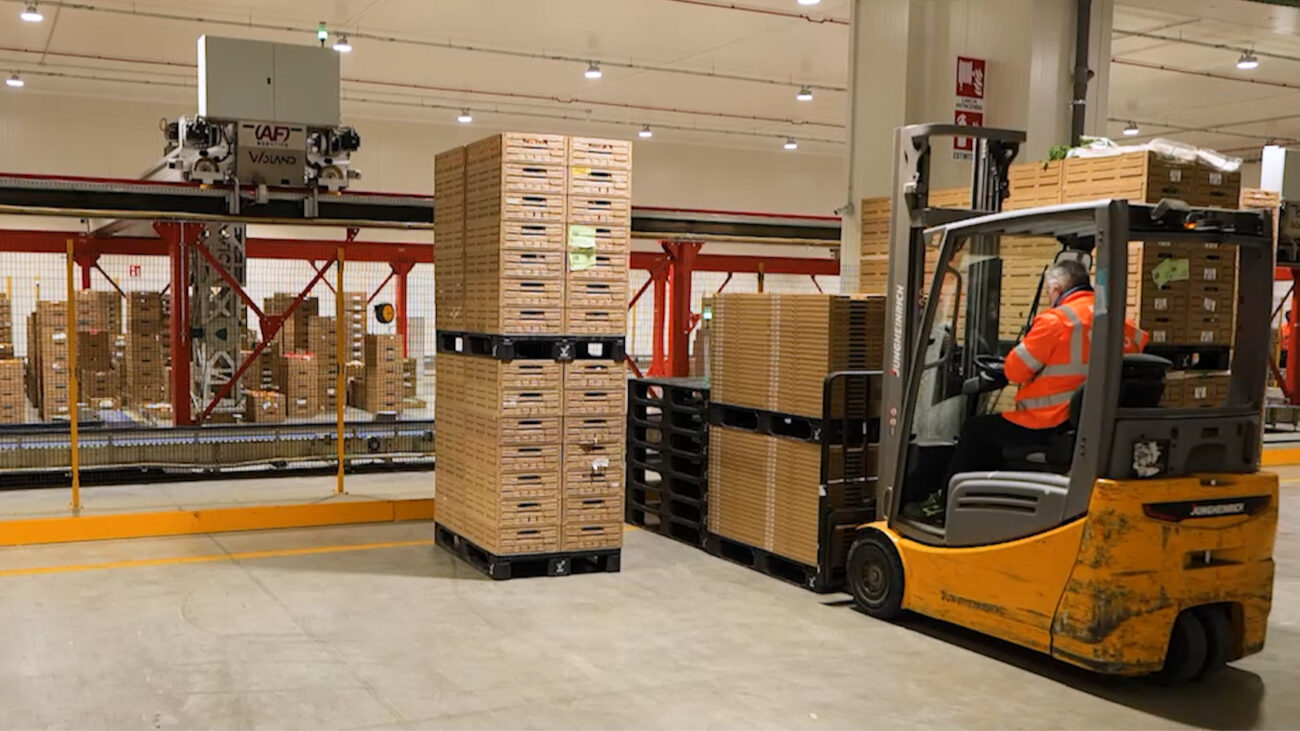
The manual and automated zones work closely together: forklift operators place pallets on cantilever transfer stations in the pre-zone, where contour control sensors check dimensions before the goods enter the automated system. The same transfer points are used for retrieval. The system is connected via interfaces to both the Jungheinrich and Gebrüder Weiss WMS systems, ensuring seamless information flow,

added Zupán.

Step-by-Step implementation during ongoing operations

Bencsics added that the implementation took place in several phases, during ongoing and continuously expanding operations.

Construction began in March 2024, with the automated system built zone by zone, and it has been operating at full capacity since July 2025. Initial employee concerns were addressed through active communication and training. We placed great emphasis on making it clear that automation is not about redundancies, but about creating new opportunities within the organisation,

“We are extremely proud that automation has led to significant resource savings. The integration of new and existing systems has not only enhanced operational efficiency but also elevated the level of human expertise. This improvement is evident across all roles — from site managers to warehouse operators, IT, and Lean specialists. Deepening system knowledge has taken collaboration to a new level,” said Bálint Varga, Managing Director of Gebrüder Weiss Ltd.

Sustainability and further expansion plans

In 2023, Gebrüder Weiss built two warehouse facilities in Budapest where storage, material handling, and order picking are largely automated. The operations are supported by photovoltaic systems that supply carbon-free energy to the trucks and the 36 electric vans used for daily deliveries in Hungary.

As part of further automation efforts supporting the robotic system at the Páty warehouse, the company has launched a new investment within its development programme running until 2026. Future goals include further automation of manual processes – particularly in raw material picking and optimisation of internal pallet transport.

Iran War Supply Chain Shock

Retail supply chains may take 3-5 months to recover from the Iran war, meaning shoppers could face paying higher prices this Christmas, even if peace talks clear a safe passage through the Strait of Hormuz in April.

According to logistics company Advanced Supply Chain (ASC), it could take until at least mid-July for transportation costs to start trending down toward levels seen before the start of the Middle East conflict in February 2026. By this time, most retailers will have ordered Christmas stock and absorbed supply chain costs inflated by the Iran war.

Stuart Greenfield, UK and European Sales Director at ASC, explains:

Recent disruptions show that supply chains usually undergo a two-phase adjustment. They initially stabilise to absorb the immediate shock of an event such as a war, before entering a longer period of rebalancing and some form of normalisation.

The invasion of Ukraine in 2022 and Houthi attacks in the Rea Sea in 2023, indicate that it takes around 3-5 months for this first phase, while the second phase can be much more prolonged. There are many different factors in play in terms of the disruption caused by the Iran war, however, it’s reasonable to think that it will take a similar amount of time for retail supply chains to start rebounding.

Reopening the Strait of Hormuz will create a trickle-down effect, which starts with clearing oil tankers and vessels stranded in the Strait, and then dealing with the backlog of other delayed and suspended shipping schedules. This overlaps with retailers typically placing festive orders throughout June to September. Seasonal demand could intensify the heightened pressures and costs already being felt throughout supply chains.

Impact of previous supply chain shocks:

  • Russia’s invasion of the Ukraine in February 2022 contributed to the highest crude oil prices (inflation adjusted) in March that year, since 2014. Prices started to decline around three months later in June 2022.
  • The Freightos Baltic Index shows month-by-month container freight prices from 2023 – 2024 started to stabilise during March – May 2024, after a period of volatility following Houthi attacks on vessels in the Red Sea, which started in October 2023.

Supply chain shocks caused by the Iran war:

  • The International Energy Agency (IEA) reports that around 390 vessels, including 210 laden tankers, were trapped in the Strait of Hormuz when the Iran war started on 28 February.
  • Transpacific shipping container rates to the West Coast have climbed $700 for a forty-foot equivalent unit (FEU) container and nearly 40% since just before the war to more than $2,400/FEU, with Asia – N. Europe rates up 20% and $500/FEU to $2,900/FEU.
  • Oil prices have topped $100 per barrel during the Iran war, rising from approximately $72 per barrel at the start of the conflict.

Greenfield concludes:

There’s a lot of focus on scenario modelling and forecast planning in retail supply chains to accelerate adjustments to the shocks caused by the Iran war. Emphasis is on finding ways to mitigate rising costs, such as alternative route planning, improving loading to maximise transportation capacity, and eliminating any inefficiencies and wastage. It’s clear there are wide-ranging efforts to avoid the impacts of the Iran war pushing up retail selling prices for shoppers this Christmas.

Regulation Advice for Wooden Packaging

The EU Packaging and Packaging Waste Regulation (PPWR) has recognized wooden packaging as compliant. Reusable wooden packaging is no longer treated as waste—and that’s a meaningful shift. So, what does this mean in practice for manufacturers and end users? Edita Jogminienė (pictured, below), CEO of wooden packaging manufacturer and provider Analote, advises.

Tighter rules for plastic packaging

The PPWR is designed to cut packaging waste, improve recycling rates, and phase out hazardous materials. It entered into force on February 12, 2025, with full implementation across EU member states required by August 12, 2026.

The regulation reshapes how the packaging market works. It sets stricter sustainability and circular-economy standards, with a clear emphasis on reducing waste, extending packaging reuse, and making recycling more efficient — while also pushing for materials that are safe for people and the planet.

Unsurprisingly, single-use plastic packaging faces the steepest climb. Recycled content requirements will rise, and traceability and reporting obligations will tighten. According to Eurostat, adapting to these changes could cost the logistics sector up to €610 million. As the rules grow stricter, plastic packaging is set to become both more expensive and more complex to manage.

Opportunities for wooden packaging innovation

As companies search for plastic alternatives, many will naturally turn to more sustainable options — wooden pallets, crates, and cardboard. Reusable packaging brings real practical benefits: simpler reporting, a lighter regulatory burden, a more reliable supply, and a clearer path to meeting sustainability targets.

Of course, wooden packaging producers and suppliers will also face changes. In the short term, rising demand may put pressure on supply chains. Demand is likely to grow for high-quality, durable (‘heavy’) pallets, standardized systems (like EPAL), and repair solutions.

At the same time, manufacturers will need to sharpen their offer — tailoring packaging to specific products and logistics requirements. Wood traceability will also move up the priority list. Companies that invest early in process improvements, automation, and customer education around reuse and labeling will be best placed to lead.

There is still time to get ready. The new rules are more demanding, but they are also clear and well-founded. They bring much-needed structure to the market — and the push for sustainability and efficiency is set to drive real growth in reusable, eco-friendly packaging.

Smart Compliance for EU and UK Fleets

Samsara has launched an industry-first dynamic Smart Compliance solution for fleets across the EU and UK. The platform enables a proactive approach to tachograph (tacho) compliance, helping organisations manage critical elements of driver safety and regulatory workflows in one place.

Designed for compliance managers and safety leaders across industries, Samsara’s Smart Compliance integrates prevention, management, and coaching into a single, open platform.

Traditional compliance often requires managing multiple, disconnected systems for tacho downloads and telematics. This creates administrative burdens and increases the risk of legal fines. With 60% to 80% of EU fleets operating across borders, managing these complexities is a daily challenge.

Samsara claims to be the first platform that eliminates the need for fragmented, legacy systems by seamlessly consolidating AI-based safety, telematics, and comprehensive compliance into a single experience. As one of the first in the industry to offer proactive pre-infringement audio alerts, it aims empower drivers to correct errors in real time before they result in infringements.

While other solutions offer a patchwork of tools, Samsara provides a one-stop shop with advanced rulesets for 17 European countries. This unified approach gives organisations the accurate insights they need to scale cross-border operations while keeping their people safe and their supply chains resilient.

“Previously, we would wait for the infringement report and deal with everything in bulk, which could take most of the day,” said Matt Crossland, UK Area Manager at Mulgrew Haulage Ltd, one of the first customers to trial Smart Compliance. “Now everything is in one place—the infringement, manager response, and driver acknowledgement — and it takes about two minutes per infringement with Smart Compliance. Instead of looking back at last month’s infringements, we review yesterday’s, deal with them immediately, and send them straight to the driver digitally to fully understand what happened. This reduces what previously took a day, to a matter of minutes.”

Key innovations for smarter operations

  • In-cab alerts: Real-time warnings help drivers avoid errors and stay safe before an incident occurs.
  • Centralised dashboard: Organisations can manage everything from tacho downloads to infringement resolution in one central location, increasing speed and accuracy.
  • VDO-powered European rulesets: Leveraging industry-leading infringement analysis from VDO across 17+ countries, with ongoing updates to support evolving EU regulations.
  • Digital coaching workflows: Integrated tools for driver debriefs and self-acknowledgment turns data into meaningful, actionable coaching.
  • Compliance KPIs: High-level dashboards allow managers to track improvements and identify trends at a glance.

The stakes for maintaining compliance have never been higher. In 2024, tachograph offenses accounted for 58% of all DVSA HGV prosecutions, and the regulatory landscape continues to evolve. Starting in July 2026, these requirements will extend to cross-border LCVs over 2.5 tonnes, putting additional pressure on international fleets. For many organisations, the risk of non-compliance goes beyond financial penalties; it can lead to the loss of their operator’s licence, making a unified, reliable compliance platform an essential part of their long-term resilience.

By moving to an integrated, data-driven system, fleets can reduce administrative costs and significantly cut down on fines. With costs of up to £5,000 per infringement and the risk of suspension or loss of an Operator’s License, proactive compliance is critical for fleet operations. This approach also boosts driver retention by replacing punitive measures with helpful, respectful coaching.

“Our customers’ operations in Europe are some of the most complex in the world, and there is a huge opportunity to use AI to spot risks and avoid infringements,” said Praveen Murugesan, VP of Engineering EMEA. “Smart Compliance takes the guesswork out of compliance by automating the toil that office teams grapple with every day. We’re super excited to provide the technology that keeps these essential supply chains moving safely.”

Forklifts with Permanently Integrated Lithium-ion

Integrated lithium-ion batteries provide design engineers with a range of opportunities to enhance vehicle ergonomics. Linde Material Handling (MH) leverages this benefit in its new Linde Ei model series of electric counterbalance forklifts. The three- and four-wheeled models, which are available with load capacities ranging from 1.4 to 2.0 tons, are technically based on the standard Linde E electric forklifts with a classic replaceable battery system. However, the new Ei models offer significant added comfort and safety thanks to their innovative energy concept, which utilizes an integrated lithium-ion battery.

The new Linde Ei14 – Ei20 electric forklifts are designed for light to medium-duty applications in single- or two-shift operations at temperatures as low as minus 20 degrees Celsius. This makes the Linde Ei models a cost-effective yet highly ergonomic alternative for companies that have previously used electric forklifts with lead-acid batteries for their intralogistics material flow operations. Unlike lead-acid batteries, which require overnight charging, forklifts equipped with (integrated) lithium-ion batteries can be recharged during operation, such as during breaks. Lithium-ion batteries are maintenance-free and do not release battery gases during charging, eliminating the need for a separate, ventilated charging room. This frees up space that can be used for other purposes. The need for constant monitoring of the battery acid level and topping off water is eliminated as well. The optional onboard charger further increases operational flexibility, as it can be used with any standard outlet.

Ergonomics reimagined

The major advantage of the integrated lithium-ion battery is the additional cabin space it provides. Eliminating the traditional battery compartment has increased the driver’s legroom by 35 percent, significantly surpassing the industry average. This allows for a more relaxed seating position during the workday, increasing the driver’s well-being, motivation and long-term health. At the same time, the entry step is only 40 centimeters above the ground, making it very comfortable to get in and out.

“This low yet wide entry design leads the entire vehicle class,” says Richard Bozem, Senior Strategy and Portfolio Manager at Linde Material Handling. “The design provides exceptional comfort in daily use, and it enhances safety as well. Beyond that it is especially advantageous in this payload class, where drivers frequently leave their vehicle to perform other logistical tasks.”

High-level performance

Similar to the Linde E14 – E20 electric forklifts with replaceable batteries, models with integrated batteries feature a 48-volt drive system and maintenance-free asynchronous motors. This provides sufficient power for their full range of tasks. Thanks to swivel steering on the three-wheeled version or the Linde combi steering axle on the four-wheeled version and their compact dimensions, these forklifts achieve high handling performance, even in tight spaces.

Safety first

As with all Linde vehicles, the safety features of these models represent a key part of the brand’s DNA. The slim mast design offers excellent all-around visibility, while integrated standard assistance systems provide additional stability. For example, the Linde Curve Assist automatically adjusts driving speed in curves based on the steering angle, while the Linde Load Assist uses pressure sensors and a lifting height indicator to control tilting, lifting, and traveling functions to prevent tipping accidents. Optional assistance systems such as the Linde Speed Assist (automatic speed adjustment when entering warehouses), Linde Safety Pilot (load monitoring) and Linde Safety Guard (warning zones) provide additional safety.

Fully connected upon request

The Linde Ei14 to Ei20 models are part of the Linde 12XX forklift generation. These models have been developed from the ground up and feature an electric/electronic system architecture and comprehensive sensor technology. This enables a wide range of digital functions. With the optional data transmission unit, operating hours and error codes can be wirelessly and securely transmitted to fleet management or service applications. System updates and additional vehicle functions can be activated via over-the-air software updates.

Multimodal Corridors Gain Ground

As ongoing disruption across key global shipping corridors continues to impact trade flows, logistics service providers are helping customers maintain cargo flows by integrating sea, rail and road networks that are increasingly critical to supply chain resilience.

As cargo owners navigate geopolitical uncertainty, port congestion and climate-related pressures, the ability to move goods seamlessly across connected transport modes is becoming a growing competitive advantage. Industry projections show the global multimodal transport market is expected to grow to nearly $160 billion by 2032, representing a $60.7 billion growth opportunity driven by demand for more agile, visible and reliable supply chains.

This includes coastal and feeder shipping services that connect regional ports, alongside rail and road solutions that extend cargo moves inland, enabling more integrated, end-to-end logistics across key trade corridors.

For DP World, this is not just a future trend. It is already being operationalised across the company’s global network. Through its Marine Services business, DP World connects more than 200 ports worldwide and supports 23,500+ sailings annually, with its Shipping Solutions business handling approximately 6 million TEU, creating the coastal and feeder connectivity that underpins global trade flows. These services are increasingly integrated with inland logistics capabilities, including rail and road, helping customers move cargo more efficiently across key trade corridors.

This corridor-based approach is becoming more important as supply chains evolve from linear, point-to-point models into more connected regional networks. As trading patterns become increasingly shaped by resilience, regionalisation and speed to market, businesses need transport systems that can flex across multiple modes while maintaining reliability and visibility from origin to destination.

DP World is responding by strengthening the links between ports, marine services and inland logistics to create more joined-up supply chain solutions. This includes expanding coastal and feeder connectivity beyond major hubs, improving inland access through rail and road integration, and enabling greater coordination across the end-to-end cargo journey.

These capabilities position DP World to support customers as trade becomes increasingly corridor-driven and operational resilience becomes a defining requirement.

Ganesh Raj (pictured, above), Global COO, Marine Services, DP World, said:

“As supply chains face increasing disruption, the ability to connect ports, marine services, rail and road into integrated trade corridors is becoming essential. DP World is helping customers maintain reliability and efficiency by enabling more flexible, connected cargo flows across these networks.”

DP World explores these trends further in its new whitepaper, A $60.7 Billion Opportunity: Multimodal Transport and the Future of Global Trade, which examines how integrated transport networks are redefining the movement of goods across regional and global markets. Download the whitepaper here

New Operating Concept for Multidirectional Forklifts

Hubtex is taking the ergonomics and user-friendliness of its multidirectional forklifts to the next level with a new operating and control concept. Developed on the basis of extensive real-world customer feedback and the growing integration of advanced assistance systems, the new concept brings these elements together in a unified, intuitive user interface.

At the heart of the new concept are the latest generation of the Information Terminal (HIT4), a newly developed joystick with extended functionality, and a display controller. Together, they form an operating system specifically designed around the needs of multidirectional forklift operators. Beginning in the second quarter of 2026, the system will be introduced as a standard feature in various configurations across Hubtex’s multidirectional forklift product lines.

Central Info Hub

The Information Terminal (HIT4) serves as the operator’s central source of information, clearly displaying all relevant truck data, including wheel position, travel speed, and battery status, along with information from integrated driver assistance systems. The aim is to create a more standardised operating experience while making vehicle control even more intuitive for operators.

The central display consolidates machine, energy, and safety information in a clear and structured way. Icons, colour coding, and plain-language messages are aligned for quick comprehension. Alerts, warnings, and fault messages are prioritised so operators can immediately identify the most critical information in any situation. This helps reduce training time, simplifies transitions within mixed fleets, and improves process reliability in narrow aisles as well as indoor and outdoor applications.

As the direct successor to the HIT3, the HIT4 builds on a familiar operating logic while advancing it significantly. The display features standard touchscreen functionality and, in the PHOENIX series, can also be operated via a display controller with clearly arranged function keys – even when wearing gloves. Adaptive brightness control automatically responds to changing lighting conditions, while manual adjustment options ensure the screen remains easy to read, even from angled viewing positions.

Ergonomics Refined: The New Joystick

Hubtex has also comprehensively redesigned the joystick. The development objective was clear: to preserve the functions operators already know and trust, make the transition easy for existing customers, and deliver a noticeable improvement in ergonomics.

The new joystick stands out with its redesigned grip and enhanced tactile and visual layout. Features such as a newly shaped thumb rest and added functionality support greater comfort during long shifts. All controls are positioned for easy thumb access, while tactilely distinct, illuminated buttons enable safe, intuitive operation even in low-light environments. A centrally positioned directional rocker further supports frequent changes in travel direction and contributes to more ergonomic, lower-fatigue operation.

Display Controller Designed for Rugged Industrial Use

Another key element of the new operating concept was developed specifically for the PHOENIX series, where a wide range of assistance systems – particularly for narrow-aisle applications – are often integrated. The combination of the HIT4 display and the display controller makes these systems much easier to operate.

Typical assistance-system prompts shown on the display, such as guidance on ideal racking position or appropriate travel speed, help operators maintain smooth, focused driving without obstructing visibility of the load or travel path with additional monitors. With the new display controller, Hubtex is reinforcing its focus on rugged, industrial-grade usability. Designed specifically for demanding working environments, the controller enables safe, intuitive operation – even with gloves.

At the same time, it reduces the need for operators to reach towards the display and speeds up repetitive tasks. In combination with the HIT4, it creates a clear and ergonomic separation between travel and work functions, helping operators work more efficiently and safely.

Greater Transparency in Operation

The new system also offers clear advantages for service and maintenance. Structured diagnostic paths, clearly labelled parameters, a detailed event history, and optional remote access enable faster troubleshooting and help reduce downtime. Its modular architecture also makes it easy to integrate future functions without changing the familiar operating logic – an important foundation for upcoming assistance and safety features.

Overall, the combination of touchscreen, controller, and joystick reduces hand movement, speeds up repetitive actions, and enables precise manoeuvering in confined spaces. At the same time, it allows new assistance systems to be integrated without adding unnecessary complexity for the operator. Starting in the second quarter of 2026, the new operating and control concept will be rolled out step by step across all PHOENIX models, with additional product lines to follow.

Subscribe

Get notified about New Episodes of our Podcast, New Magazine Issues and stay updated with our Weekly Newsletter.