Most warehouse leaders are still grappling with how to implement automation without overwhelming their teams—or their budgets. But what if the secret to smarter, faster warehouse transformation lies in tiny, strategic steps rather than giant overhauls? In this episode, Mike Morgan from OPEX reveals how beginning with small automation projects can lead to massive long-term gains without the risk of costly mistakes.
As automation technology becomes more accessible, many companies make the mistake of overestimating what their team can handle or trying to deploy full-scale systems too early. Mike shares real-world examples and explains why focusing on incremental wins—like simple sortation engines or targeted pick systems—can build trust, deliver quick ROI, and set the foundation for more advanced automation later. You’ll discover why starting small reduces risk and how these tiny gains compound into a resilient and adaptable warehouse.
We break down critical insights on integrating automation seamlessly into existing operations, the importance of change management, and the real role of AI—from predictive maintenance to digital twins – helping warehouses become more agile in a volatile supply chain world. Mike also discusses how automation and AI are no longer just tools for efficiency but strategic enablers of flexibility, resilience, and environmental sustainability.
Perfect for logistics managers, warehouse operators, and tech executives eager to avoid pitfalls and maximize their automation investment, this episode offers actionable guidance to start small, grow steadily, and prepare your warehouse for a future where flexibility is king. Whether you’re just exploring automation or planning your next step, these insights will help you unlock continuous improvement and avoid common pitfalls.
Tune in and learn how to turn strategic patience into unmatched warehouse success.
The UK government has announced that the 5p cut in fuel duty will be extended for a further 12 months, a move welcomed by the freight and logistics sector as operators continue to face significant cost pressures.
The announcement, which also includes a 12-month holiday on vehicle excise duty (VED) for HGVs, is intended to help businesses manage rising operating costs and ongoing supply chain challenges.
Responding to the news, the British International Freight Association (BIFA) said the decision showed that government is listening to industry concerns.
Steve Parker, BIFA director general, said:
BIFA has been a strong supporter of a campaign around fuel duty and we are glad to see that the government has taken onboard our concerns… The announcement of a 12-month holiday on vehicle excise duty for HGVs should also help the freight forwarding and logistics businesses that BIFA represents cope with the higher costs affecting the international supply chains that they manage.
Fuel remains one of the largest costs for road freight and logistics operators, with many businesses continuing to deal with inflationary pressures, volatile energy prices and increased wage costs.
While welcoming the extension, BIFA reiterated its call for longer-term measures to provide greater certainty for the sector.
Parker added:
BIFA has consistently called for long-term certainty and a dedicated fuel duty stabilisation mechanism rather than incremental, temporary postponements… The association has long pressed for the introduction of an essential user rebate to support the competitiveness of British freight and logistics companies. We will carry on with our lobbying on those matters.”
Industry stakeholders have argued that maintaining lower fuel duty rates is essential to supporting supply chain resilience and helping logistics businesses continue investing in fleet renewal, sustainability initiatives and operational efficiency.
The latest extension is expected to provide short-term relief for haulage, freight forwarding and logistics companies across the UK as the sector continues to navigate challenging economic conditions.
Manhattan Associates Inc. has announced the launch of ‘Solution Design Studio’, a new AI-powered workspace that allows business users to configure complex supply chain systems in their own words. Part of ‘ActivePlatform’, this innovation marks the next phase of the company’s Agentic AI strategy, moving beyond individual agents to a platform where AI now helps design, configure and extend the entire supply chain commerce experience. This solution is designed to completely transform the speed and efficiency of the traditional solution design and configuration experience.
Solution Design Studio sits alongside ProActive®, where customers create extensions to Manhattan’s applications, and Agent Foundry, where they build AI agents. Instead of navigating multi-step configuration screens, business users can simply create blueprints – living, business-language descriptions of how specific parts of their warehouse, transportation network or broader operation should run. These blueprints can be authored directly in Studio’s word like, endless-scroll editor or uploaded from existing documents. Users then review, edit and approve each section before deploying, at which point the platform’s agents translate the blueprint into live configuration across Manhattan Active solutions. By interpreting business requirements and transforming them into structured, natural-language designs, Solution Design Studio simplifies how organisations move from intent to execution, within defined guardrails.
Designed expressly for business users such as warehouse operations leaders and transportation managers, rather than architects or developers, Solution Design Studio keeps the blueprint as the system of record. As operations evolve, users can simply update the blueprint and redeploy, keeping the system continuously aligned with the current business reality. This enables teams to manage business intent directly, while Manhattan’s platform handles the complexity of translating that intent into operational configuration.
“As supply chain and commerce grow more complex, the design and configuration phases are often where speed-to-value suffers,” said Sanjeev Siotia, executive vice president and chief technology officer at Manhattan Associates. “Solution Design Studio simplifies configuration by translating it into natural language for business users, helping customers move faster.”
“During testing, Solution Design Studio autonomously and successfully configured the majority of ActiveWarehouse using externally created designs. What once took months can now be done in minutes, saving significant time.”
Design Studio is already in use with Manhattan’s own services teams in targeted implementations, with the full studio experience expected to begin rolling out to customers in the coming quarters too.
For years, warehouse productivity has been driven primarily by technology: automation, robotics, warehouse management systems, and artificial intelligence. While these tools are essential, they overlook a key reality: logistics remains a labour-intensive environment. In many processes – especially picking – people make decisions, execute tasks, and ensure quality every day.
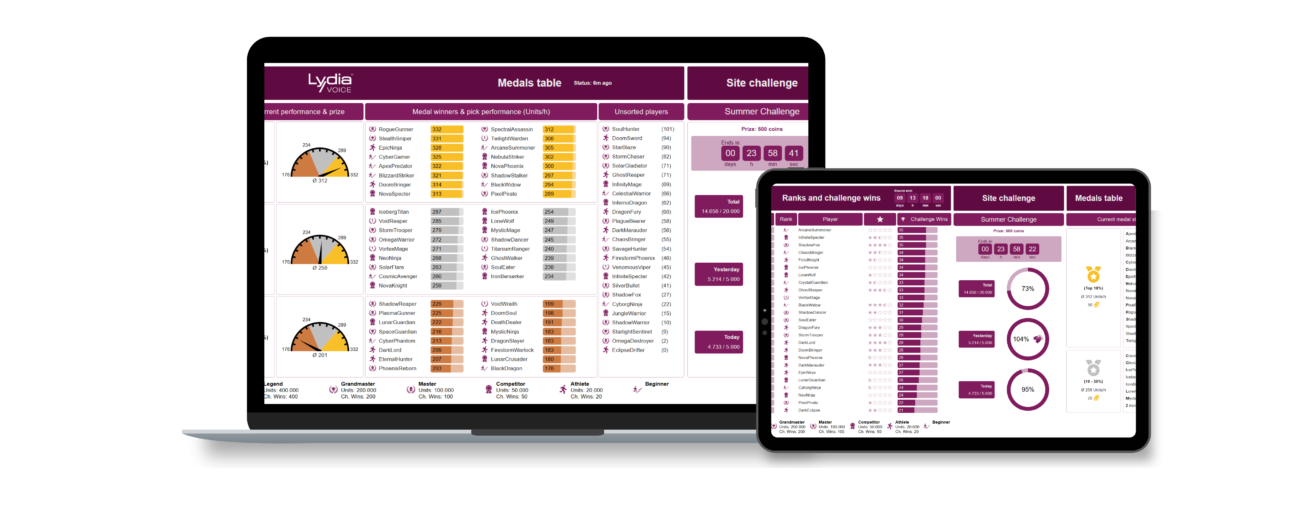
This is where warehouse gamification becomes relevant. Rather than a novelty, it provides a structured way to connect motivation, focus, and performance within daily operations. Motivation, attention, and purpose directly influence outcomes, yet many systems still optimise workflows without offering meaningful feedback to employees. Gamification addresses this gap by embedding recognition and progress into the workflow itself.
Invisible Nature of Daily Work
Warehouse work is highly standardised. Processes are optimized for efficiency, leaving little room for deviation. While this ensures stability, it also creates invisibility: strong performance often goes unnoticed in real time. Feedback is typically delayed and indirect, delivered through KPIs or reports rather than during the activity itself.
As a result, employees often receive attention only when errors occur. Motivation is treated as a personal trait rather than something shaped by system design. In times of labour shortages and high turnover, this becomes a structural issue. When work feels repetitive and unrecognized, employees are more likely to disengage or leave.
Research consistently shows that motivation, focus, and perceived meaning impact performance and quality. Yet many systems remain silent – they measure and control but fail to communicate.
“Motivation does not arise from incentives alone. It develops when people see progress and feel recognised,” says Tim Just (pictured, below), CEO of LYDIA Voice at EPG.
“Two factors are crucial: context and timing. Feedback must be directly linked to the activity and delivered at the right moment. If it comes too late, it loses relevance. If it interrupts the workflow, it becomes counterproductive. Many gamification approaches fail because they operate outside the workflow. Extra screens or disconnected ‘game layers’ may create short-term interest but do not improve the work experience itself.”
Gamification as a Feedback Structure
Effective warehouse gamification is not about games but about structured feedback. It makes progress visible, provides orientation, and integrates recognition into daily tasks. Elements like coins, levels, or challenges are not the goal – they translate performance into tangible signals. For this to work, gamification must not add complexity. It should require no extra actions and must integrate seamlessly into existing processes.
Integration Matters
The effectiveness of gamification depends largely on technical integration. Systems must understand operational context – distinguishing between active work, travel time, and phases of concentration.
“Voice-based systems offer a strong foundation because they are already embedded in workflows”, adds Just. “When gamification is integrated into these systems, feedback can be delivered naturally, for example during walking phases. This avoids distractions while maintaining focus on the task.”
Visibility Without Harmful Comparison
Performance visibility must be handled carefully. Public rankings and constant comparisons can demotivate, especially in diverse teams. Sustainable motivation comes from making individual progress visible without exposing employees to pressure.
Mechanics such as personal levels, badges, or team challenges support this approach. Team-based goals strengthen collaboration and create a shared sense of purpose rather than competition.
Evidence from Research and Practice
Studies on intrinsic motivation highlight three key drivers: visible progress, immediate feedback, and a sense of competence. Warehouse gamification supports these when integrated closely with processes. Practical implementations confirm this: when gamification is part of the system rather than an add-on, it becomes accepted and naturally used. Productivity improvements emerge as a byproduct of better engagement.
Motivation as a System Component
The central insight is that motivation is not a ‘soft factor.’ It is a measurable and designable element of warehouse operations. Properly implemented gamification creates a system language that acknowledges effort, visualizes progress, and supports long-term performance.
As companies seek to increase productivity without adding complexity, motivation plays a larger role than often assumed. Warehouse gamification can contribute significantly when tightly integrated into workflows. The key is not the game itself, but how feedback, progress, and shared goals become part of daily execution.
New research shows tariffs are becoming a real-time execution variable, driving leaders to experiment with new routes, shift transportation modes and turn compliance into a competitive advantage.
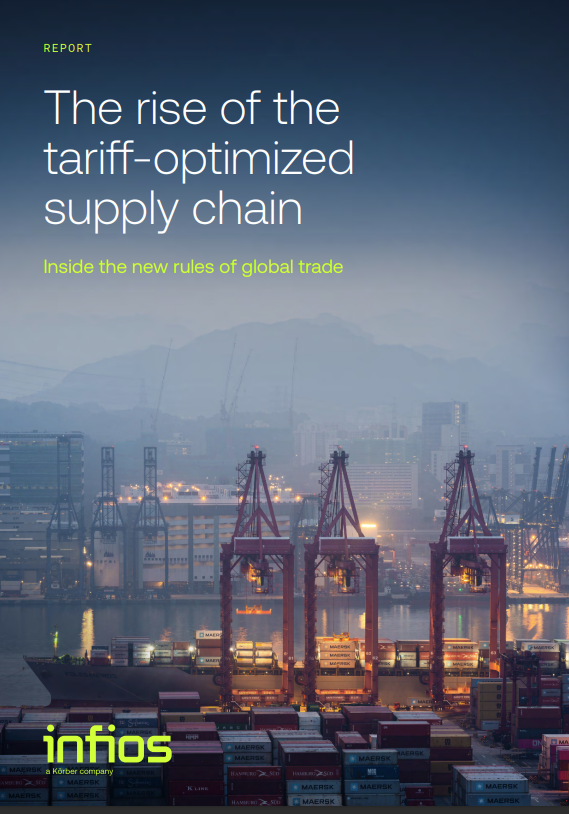
Infios, experts in intelligent supply chain execution, has published a new proprietary research report, “The Rise of the Tariff-Optimized Supply Chain: Inside the New Rules of Global Trade,” showing how the 2025 U.S. tariff policy created a structural break in global trade and permanently changed how companies execute their supply chains.
Based on year-over-year analysis of more than one million U.S. customs entries, the report finds that tariffs are no longer a predictable cost line item. They are a live execution variable that companies actively manage through classification, mode selection, routing, warehousing and financial sequencing.
“At Infios, one of our guiding principles is ‘Thinking Ahead’, helping customers to anticipate change instead of reacting to it after the fact,” said Ed Auriemma, CEO at Infios. “This research highlights how global trade patterns are evolving and where companies are adjusting routes, transportation modes and execution strategies in response. Organizations that recognize those shifts early and respond quickly will be best positioned to deliver execution without interruption.”
The report identifies two distinct phases of response. In the initial shock period, importers experimented with ‘panic routing,’ short-term mode shifts and temporary United States-Mexico-Canada Agreement (USMCA) surges. The 50%+ duty bracket, which had barely existed before 2025, spiked sharply before settling at a lower but still elevated level. And with urgency overriding cost discipline, air freight and truck share both rose as speed became the priority. Over time, the behaviors that lasted created a structural and deliberate redesign for global trade execution.
“What we’re seeing isn’t just a shift in sourcing or supplier mix. It’s a fundamental change in how trade is executed,” said Don Mabry, SVP, Global Trade Solutions at Infios.
“Tariffs have introduced a level of volatility that companies can no longer manage with periodic adjustments or manual processes. Organizations able to sense change early, evaluate options quickly and reconfigure execution paths will outperform those operating within rigid, single-path systems designed for a more stable world. The organizations that treat trade execution as a dynamic discipline, not a back-office function, are the ones gaining a durable competitive advantage.”
Notable findings include: • Effective duty rates reached 20–80 percent higher in some categories due to tariff stacking. • Air freight increased by ~12 percentage points and stayed elevated, while ocean freight declined ~10–12 points and did not rebound, signaling that mode choice is now used as policy-risk insurance, not just cost optimization. • Truck freight rose ~8 points, reflecting sustained nearshoring and demand for more stable, shorter supply chains. • Bonded warehouse usage jumped from ~10 percent to ~16–18 percent of entries and kept climbing, signaling that duty deferral is now mainstream. • Harmonized Tariff Schedule (HTS) classification complexity nearly doubled from ~6 to ~11.6 sequences per entry, pushing many organizations beyond what manual compliance workflows can support. • Shipment value rose ~78 percent while entry counts fell ~7 percent, indicating consolidation and “smarter shipping,” not a retreat from trade.
Not all sourcing shifted equally. Consumer goods and light manufacturing diversified away from China; specialty chemicals and industrial components stayed dependency-bound regardless of tariff exposure. At the same time, entirely new trade corridors emerged while others collapsed under policy pressure. The data reveals a supply chain landscape in motion: new corridors opening, unviable ones falling away and early signs of manufacturing relocation, making route intelligence a strategic asset, not a logistics afterthought.
Infios’s analysis concludes this is not a sourcing story, but an execution story. In a volatile policy environment, flexibility beats efficiency and execution precision is key. Companies thriving will be those that can sense change early, evaluate options quickly and reconfigure execution paths before conditions force their hand.
The report introduces a consistent definition for this new operating model: a tariff-optimized supply chain, which treats duties as a live execution variable, actively managed through classification, mode selection, routing, warehousing and financial sequencing, rather than as a fixed cost to absorb. In an environment where volatility is structural, those capabilities are what will separate the leaders in global trade.
Subscribe
Get notified about New Episodes of our Podcast, New Magazine Issues and stay updated with our Weekly Newsletter.