Sodium-ion Battery Field Trial for Trucks

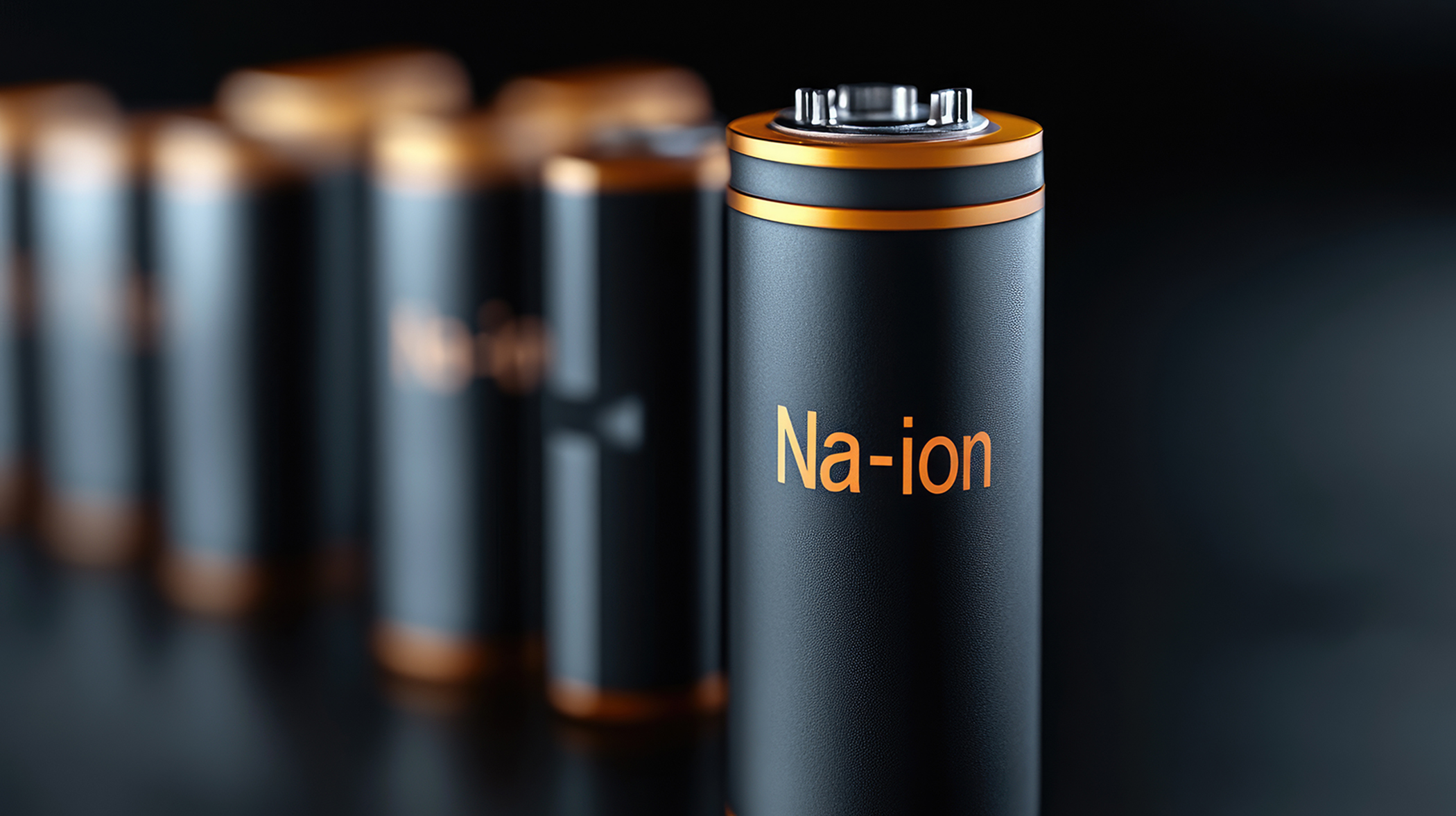
Jungheinrich has reached another milestone in the development of sustainable energy storage solutions and is launching field trials of sodium-ion batteries in industrial trucks at selected customer sites. With this move, the company is underlining its role as a driver of innovation in material handling and its commitment to the further development of cutting-edge battery technologies.

Innovation for sustainable logistics

Sodium-ion technology is regarded as a promising alternative to conventional lithium-ion batteries. Greater availability of raw materials, lower costs and a better environmental footprint characterise it. “We are working intensively on new battery technologies so that we can continue to offer our customers high-performance, sustainable and cost-effective solutions in the future,” explains Martin von Werder, Head of Technology Development at Jungheinrich.

Field trials for real-world applications

As part of the current project, vehicles are being fitted with lithium-ion batteries and tested in real-world customer use. The aim is to validate the performance and reliability of the new technology under a wide range of operating conditions, thereby gaining valuable insights for series production. The first prototypes have already been successfully built and tested in forklift trucks.

The advantages of sodium-ion technology are clear: sodium is widely available as a raw material worldwide and is not subject to geopolitical constraints. Furthermore, it offers Sustainability benefits – such as more resource-efficient production and good recyclability. Cheaper raw materials and components reduce manufacturing costs, thereby improving cost efficiency.

Research and development as the key

Jungheinrich works closely with international cell manufacturers and research partners to further develop the technology and tailor it to the specific requirements of material handling. Laboratory and field tests carried out to date have provided important insights into the service life, performance and safety of the batteries.

By testing the sodium-ion battery, Jungheinrich is reaffirming its commitment to embracing innovation at an early stage and playing an active role in shaping it. The aim is to pass on the benefits of new technologies to customers as quickly as possible, thereby contributing to sustainable and future-proof logistics.

Charge Card Tailored for Electric Trucks

A new charge card designed specifically for transport operators running electric commercial vehicles is being launched. The DKV Card +Charge Truck provides access to more than 3,000 verified truck-compatible charge points at competitive rates across more than 17 European countries. The card expands DKV Mobility’s existing portfolio and forms part of the company’s e-mobility growth strategy. The aim is to make the transition to alternative drivetrains as smooth as possible for its customers.

While electrification in the passenger car and company car segment is already well advanced, it is still in its early stages in road freight – but gaining momentum: regulatory requirements, ambitious CO₂ reduction targets, and the first available series-production electric commercial vehicles are all driving the shift. At the same time, transport operators face new challenges, particularly around access to suitable charging infrastructure, route planning, and the integration of different billing and energy systems.

Sven Mehringer, Managing Director at DKV Mobility and responsible for Energy & Vehicle Services, says:

“Energy management for commercial vehicles is becoming more complex – more drivetrains, more providers, more billing systems. The DKV Card +Charge Truck gives fleet operators a clear answer: one card for all drivetrains, all services, one invoice. With this, we are actively advancing our transition to a leading integrated mobility platform.”

Unlike passenger cars, truck charging stations must meet significantly higher requirements: adequate clearance heights, wide access lanes, sufficient maneuvering space, and charging capacity that can handle the energy demands of heavy vehicles. DKV Mobility therefore assesses every truck charging station in its network against clearly defined minimum standards. These include a roof clearance of at least four meters, an access width of at least 2.7 meters, and sufficient space for comfortable maneuvering. Stations must also accommodate vehicles of at least nine meters in length. The bar is set high on charging capacity as well: more than 80 percent of the 3,000-plus locations offer charging speeds exceeding 300 kW.

Tim Dambor, Director Product Management eMobility Roaming at DKV Mobility, adds:

“For electric truck drivers and dispatchers, reliability is what matters most. Our verified network and real-time overview in the app give both the confidence that the next station is within reach and that the vehicle can actually charge there.”

At many truck-compatible locations, operators also benefit from competitive charging rates. Prices per station, charging time, and kilowatt-hours consumed are displayed transparently and in real time in the DKV Mobility App. As with all charging transactions across the DKV Mobility network, the company guarantees that every kilowatt-hour comes from 100 percent renewable energy sources. The card also provides access to additional services at selected locations, including repair, tire service, vehicle washing, and parking. If no truck-compatible charge point is available nearby, drivers can also access DKV Mobility’s full charging network of around 1.2 million charge points.

The DKV Card +Charge Truck is available across Europe starting today. It is particularly well suited for transport operators navigating the transition to electric mobility: the card covers both charging for electric trucks and fueling for conventional vehicles – all through a single card and one unified invoice.

Agentic AI Stack Powers Action in ERP Workflows

Enterprise resource planning software supplier Epicor has announced new functionality and a structured approach to designing, building, and deploying a network of vertical AI agents that execute work directly inside the ERP systems that run the make, move, and sell economy.

As ERP evolves from a system of record into a system of outcomes, Epicor is delivering AI that moves beyond insight to action. Introduced at Epicor Insights 2026, the latest advancements include Epicor Lux, the company’s agentic design system, as well as the Epicor Prism Agent Foundry, and a new wave of Epicor Prism agents addressing high value, decision-critical enterprise workflows. These capabilities strengthen Epicor Prism as a foundation for responsible, outcome-driven AI, bringing agentic design, custom agent creation, and intelligent execution together.

“Our customers operate in complex supply chain environments where decisions must be executed quickly and with precision,” said Vaibhav Vohra, President and Chief Product and Technology Officer at Epicor. “Today, with Prism, we’re enabling intelligence that can execute inside the system of record, all while preserving the controls and accountability ERP was built for.”

Enabling users to build what comes next

Epicor’s approach is built on a structured, unified stack that spans planning, creation, and execution:

  • Epicor Lux: Establishes a consistent framework for agent design, governance, and security
  • Epicor Prism Agent Foundry: Provides a guided workspace environment for building and customising AI agents.
  • Epicor Prism Agents: Within ERP workflows, agents operate to execute actions across data, processes, and decisions.

At the core of this approach is Epicor Lux, Epicor’s agentic design system. More than a traditional UI framework, Lux is designed to help humans and AI agents communicate with ERP systems dynamically, while enforcing consistent user experience and security standards across all agents built with Epicor Prism.

As the control framework for agentic innovation, Lux ensures that every agent looks, feels, and behaves like a trusted Epicor product. It is designed to help users understand context, confidence, and potential consequences while keeping humans in the loop. Building on Lux, Prism Agent Foundry provides a guided, self-service workspace that enables customers and partners to build custom vertical-specific agents directly within the Epicor platform.

Prism Agent Foundry enables customers to use their data to create agents tailored to their specific business goals, while supporting an increasingly open agentic ecosystem. Customers will be able to orchestrate workflows and visibility tooling across ERP while their agents operate safely within Epicor’s enterprise governance guardrails.

Proof at scale: AI already operating in production ERP environments

These advancements build on Epicor’s existing production AI footprint, with its agentic vision already delivering measurable results. The Prism Knowledge Agent alone processes more than 70,000 requests per month, supporting users inside Kinetic, Prophet 21, and Propello applications, providing in context learning for users to complete tasks with greater efficiency and confidence.

In parallel, Epicor operates the largest opt in ERP dataset, supporting inventory and transactions across roughly 40 percent of the estimated $54B U.S. independent wholesale automotive aftermarket, based on light and medium duty parts distributors. This breadth provides additional context into operational patterns, helping customers better understand activity across their business and support more informed decision making.

Those benefits translate directly into day to day operational gains. “Prism delivers ~85% faster shipment tracking by collapsing multi system lookups into a single click, single view experience-enabling near instant customer responses and higher customer confidence,” said Daniel Epler, Chief Financial Officer, Tuffaloy Products, Inc.

Together, this combination of scale, embedded intelligence, and contextual insight provides the foundation needed to responsibly apply AI within complex supply chain workflows, helping customers move beyond isolated use cases and take action more consistently in their operations.

New agents now available

In addition to Agent Foundry, Epicor continues to develop purpose built, industry specific agents engineered to deliver capabilities beyond what general-purpose tooling can achieve. The company also introduced a host of new and forthcoming Prism agents designed to address time-intensive, decision-critical workflows, including:

  • MRP Log Agent – Analyses MRP output logs so users can better understand why MRP recommendations were made.
  • Freight Spend Agent – Combines ERP and shipping data to identify carrier discrepancies, reconcile variances, and prevent ongoing freight leakage.
  • Reasoning Agent – Helps users move from answers to action by synthesising Epicor ERP data, documents and context.
  • Quick Ship Tracking Agent – Provides fast access to shipment tracking information using PO, SO, or customer names, helping teams quickly understand shipment status.
  • Quick Ship Freight Insight Agent –Delivers shipment volume and performance insights at the carrier and facility level, enabling logistics decisions based on pattern analysis.
  • Prophet 21 Prism Business Rules Agent – Allows P21 users to create and modify business rules from natural language prompts while preserving platform governance.
  • EDI Agent – Enables Kinetic users to ask plain-language questions about EDI document status, investigate errors, and review transaction status.
  • CPQ Snap Assistant – Increases efficiency for CPQ administrators during configurator development and maintenance.
  • Smart Data Capture Agent – Extracts and validates complex documents across AP and compliance workflows.

More than 30 additional Epicor Prism agents are in development, including financial planning and optimisation, compliance, invoicing, logistics, and sustainability use cases.

“AI only succeeds in production when it’s grounded in reality. That requires deep industry knowledge, a trusted ERP data model, and enterprise grade security. All of which are capabilities that uniquely position Epicor to bring AI into real supply chain execution at scale,” Vohra continued.

A practical step toward cognitive, outcome driven ERP

Looking ahead, Epicor also outlined its long-term vision for predictive, network-level insights across the supply chain, leveraging opt in, anonymised data across its customer community. Together, these advancements represent a practical step in Epicor’s long term direction toward cognitive, outcome-driven ERP where intelligence executes within the systems businesses depend on the most.

Trailer Manufacturer Builds Technology Centre

Kögel Trailer GmbH aims to advance the strategic development of its production site in Choceň, Czechia. Through a multi-million Euro investment, the subsidiary is being transformed into a modern technology centre, significantly expanding production capacity. The site is set to play an increasingly important role within the company’s production structure in the long term.

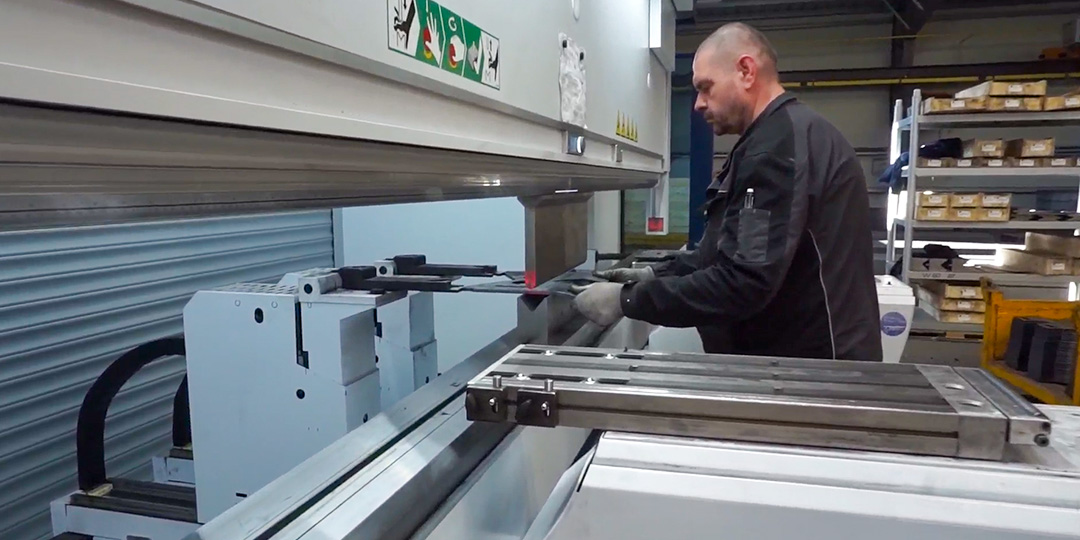
The first phase of measures was successfully implemented last year, when an existing warehouse was transformed into a fully equipped production facility, spanning approx. 1,000 square metres. The facility is equipped with a new automated laser cutting centre and a state-of-the-art edging and bending machine.

Optimisation of Production

This big investment will accelerate frame production while improving cost efficiency across the entire production process. At the same time, it will strengthen security of supply, as production processes can be organised with reduced reliance on external supply chains. In addition to frames for Kögel semi-trailers – several hundred per week – complete trailers are also manufactured in Choceň. The introduction of modern manufacturing technologies has also created additional jobs at the site. Output will be gradually increased over the coming months, with full utilisation of the plant’s capacity expected by 2028.

The new systems are supplied by Trumpf, a technology company based in Ditzingen, and a leading supplier of machine tools and lasers for industrial manufacturing. Trumpf provided comprehensive project support, from system installation and process integration through to successful commissioning.

“The Choceň site has been a key component of our production strategy for many years and is of major strategic importance. With this investment, we are specifically enhancing our manufacturing expertise and securing a reliable supply of frames for our semi-trailers,” explains Markus Siegner, CEO of Kögel Trailer GmbH.

Ready for the Future

Additional investment in the Czech site is planned for the course of this year. The aim is to continuously modernise production processes and ensure that the site is well equipped to meet future requirements. To this end, a new robotic welding system for tipper bodies and trailer frames is scheduled for installation by summer 2026, alongside a solar power system, due to come on stream shortly to provide additional electricity for production.

The plant in Choceň has belonged to Kögel since 1996 and is a key component of Kögel’s trailer production. Around 350 employees currently work there.

Subscribe

Get notified about New Episodes of our Podcast, New Magazine Issues and stay updated with our Weekly Newsletter.