AI-Powered Supply Chain Execution in Warehouses

Infios has announced expanded AI capabilities within its warehouse management solutions, introducing targeted, high-impact use cases designed to improve operational efficiency, accelerate decision-making and simplify day-to-day warehouse management.

As supply chains grow more complex and disruption accelerates, organisations need systems that can respond as quickly as conditions change. Infios AI makes this possible by combining enterprise knowledge, real-time data and intelligent automation to turn operational signals into coordinated action that senses, acts and decides in real time.

“AI in the warehouse needs to move beyond experimentation to delivering real operational impact,” said Richard Stewart, EVP, Product and Industry Strategy at Infios.

“With Infios AI, we are embedding intelligence directly into execution workflows, so when conditions change, operations can analyse, recommend and increasingly, take action in real time. This is how we help organisations move from reacting to problems to continuously optimising execution.”

Purpose-built AI use cases deliver immediate value

As part of its WMS portfolio, Infios is introducing a focused set of AI-powered capabilities that reduce manual coordination and operational friction in daily warehouse operations, enabling teams to act faster and more consistently:

Intelligent Error Resolution

Using real-time WMS data, Infios AI helps warehouse operators quickly diagnose and resolve issues such as blocked orders or misplaced inventory. Users receive root-cause insights and recommended actions to keep warehouse operations moving, reducing manual intervention and accelerating resolution within existing workflows:

• Frees up experienced staff for value-added work
• Reduces time spent investigating errors
• Eliminates manual, multi-step troubleshooting
• Improves order throughput and inventory accuracy

AI-Powered Knowledge Assistant

Infios AI embeds product and process knowledge directly into the chat interface, giving operators instant answers in natural language without waiting for supervisor support. By synthesising product documentation and company-specific operating procedures, it delivers targeted, actionable responses for all operators:

• Eliminates need for manual document research
• Improves execution consistency and adherence to operating policies
• Accelerates onboarding and training

Warehouse Associate Coaching

Infios AI analyses labour performance data and generates personalised coaching guidance in real time. It surfaces root causes and recommends actionable improvements so supervisors can deliver timely feedback without manual research:

• Reduces manager preparation time
• Enables personalised coaching for every associate
• Improves workforce productivity through consistent guidance

Advancing the future of warehouse operations

These innovations extend Infios’s vision for Intelligent Supply Chain Execution into the warehouse – transforming operations from manual, reactive processes to systems that analyse, recommend and increasingly, take action.

By embedding AI directly into daily workflows, Infios enables warehouse leaders to shift from data gathering, issue investigation and repetitive manual intervention to proactive decision-making and efficient operations that drive performance at scale. These innovations represent the next step in delivering execution without interruption — bringing real-time, coordinated decision-making deeper into day-to-day operations.
Ewals Cargo Acquires VOS Transport

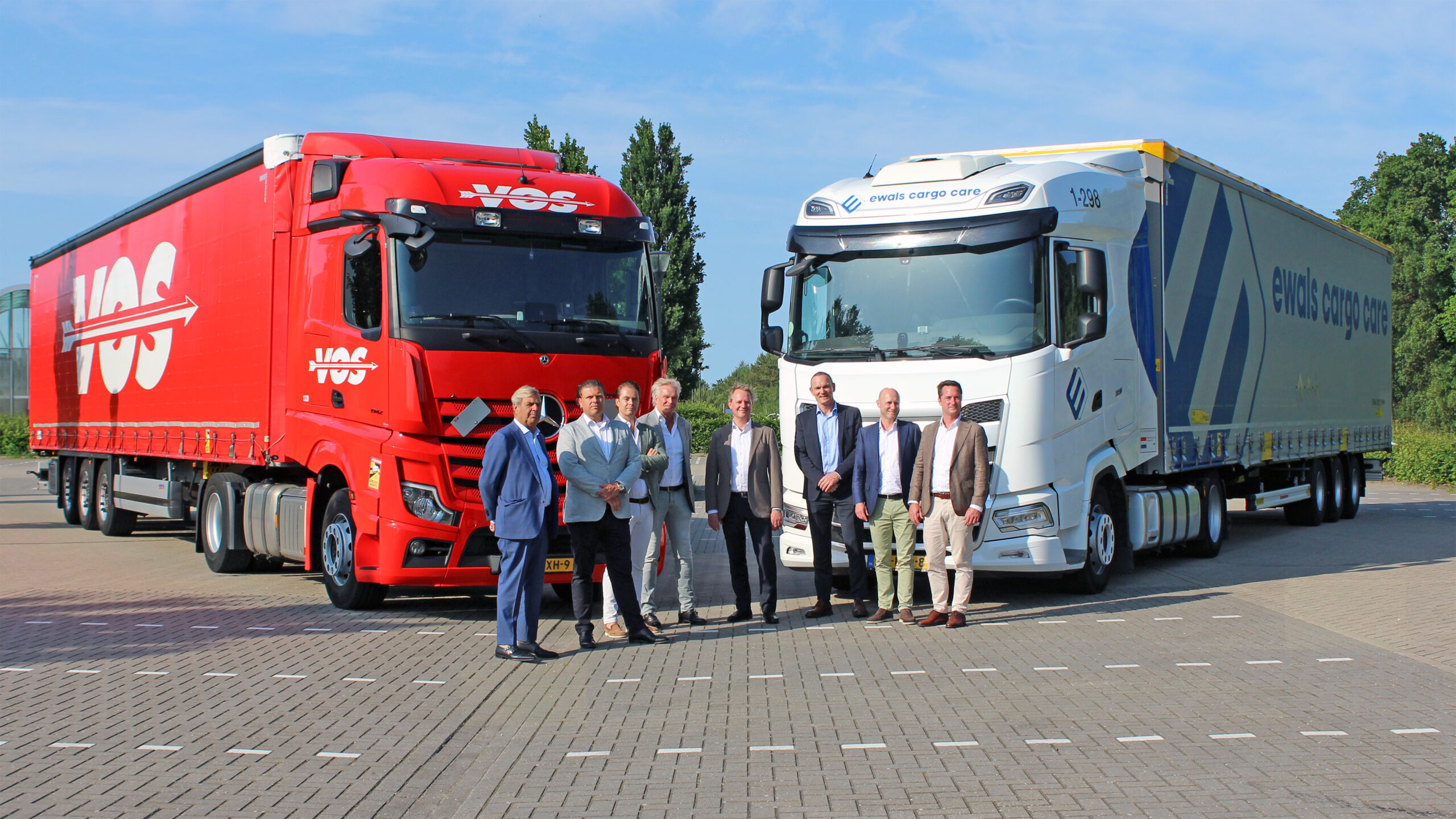
Ewals Cargo Care is taking an important next step in its long-term strategy with the acquisition of Vos Transport Group. This milestone accelerates the development of a stronger, more connected and future-ready European logistics network.

By combining two family-owned companies with complementary strengths, expertise and networks, Ewals aims to build a combined organisation positioned for sustainable growth across Europe. This step reflects a deliberate choice to strengthen capabilities in part loads, LTL and groupage, while continuing to build on the multimodal Full Truck Load network.

The company says this is not just about growth through acquisition, but about combining people, expertise and ambitions to build something stronger, with a shared future as one organisation.

Two family-owned companies, one shared ambition

Ewals Cargo Care and Vos Transport Group share a strong cultural foundation. Both are family businesses built on long-term thinking, entrepreneurship, quality and a strong focus on people. These shared values form the basis for a successful collaboration and make this acquisition a natural fit. By combining strengths, the ability to deliver reliable, flexible and high-quality logistics solutions to customers and partners is reinforced.

With this step, Ewals Cargo Care strengthens its position as a pan-European logistics provider and accelerates its long-term strategic ambitions to:

  • develop a resilient, asset-based FTL network across key European corridors, combining road, rail and ferry to ensure flexibility and reliability
  • expand a network of trusted carriers and partners, improving capacity, predictability and the balance between supply and demand.

Step by step towards a combined organisation

Vos Transport Group will become part of Ewals Cargo Care within a dedicated Part Loads division and will continue to operate as a distinct business unit under its current leadership. This approach ensures continuity and clarity for employees, customers and partners, while creating the conditions to gradually integrate both organisations.

As Bram Ewals, CEO of Ewals Cargo Care, explains:

“We are proud to welcome Vos Transport Group to Ewals Cargo Care. From the very beginning, it was clear that as family-owned businesses we share the same values: long-term thinking, craftsmanship, commitment and a strong focus on people. Vos Transport Group stands out as an innovative and sustainable player in the market. By joining forces, we create new opportunities for our customers and partners and build a stronger future together.”

Jules Menheere, Managing Director of Vos Transport Group, adds:

“This marks an exciting new chapter for Vos. We remain true to who we are, while benefiting from the strength of a broader European network. It allows us to grow, innovate and continue delivering the reliability our customers expect, together with Ewals Cargo Care.”

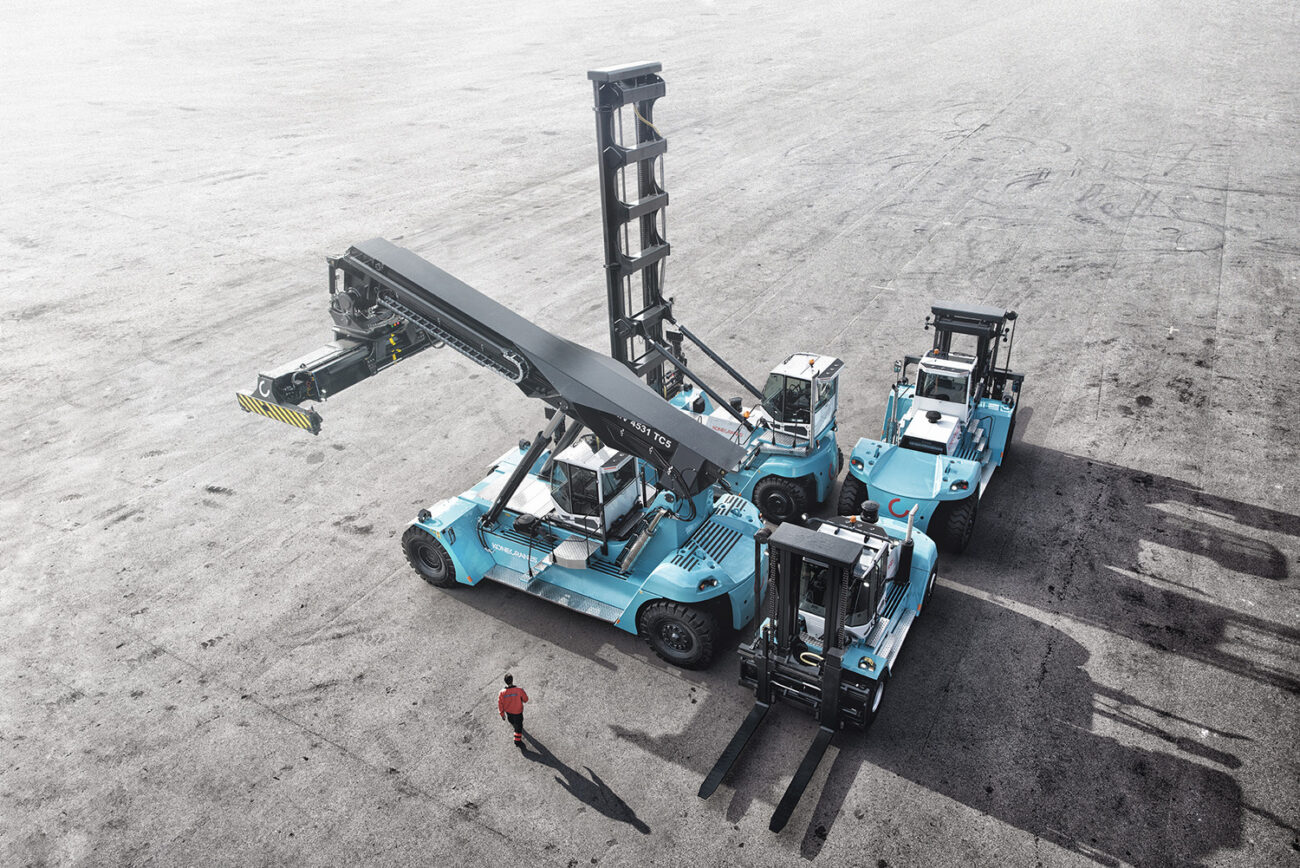
Lift Trucks Built for Your World

In logistics, uptime matters. It depends on equipment that fits the real work on site. From busy warehouses to heavy-duty yards and terminals, lift trucks affect safety, productivity and sustainability.

Every logistics operation is different. Lift trucks working in steel or paper mills, ports, inland terminals etc handle different loads and work in different spaces. Duty cycles also vary. This is why many businesses look for equipment that are built for their needs, rather than a standard solution.

One supplier, Konecranes Lift Trucks, sums this up in a simple promise: ‘we build lift trucks designed for your world’. The team works closely with customers to understand the job, then delivers trucks that match the application and the working environment. Konecranes has been building heavy-duty lift trucks since 1959. Customer feedback still guides how trucks are specified, built and supported. This helps ensure that improvements are based on real operating conditions.

Safety and ergonomics designed in, not bolted on

In logistics, safety supports performance. A safe, comfortable and healthy operator environment helps reduce incidents, fatigue and unplanned stops — especially in multi-shift sites with mixed traffic. Konecranes lift trucks combine heavy-duty performance with safety-focused design and ergonomics to support steady, reliable work.

‘Safety never ends’ is a motto to remind us that safety needs continuous attention. Sites change over time, and risks can change too. That’s why it helps to combine built-in safety features with clear procedures and regular training. Practical focus areas include good visibility from the cabin, controlled load handling, stable performance in tight areas, and service routines that keep brakes, steering, tires and hydraulics in reliable condition. Connected monitoring can also support safer operation by highlighting impacts, usage patterns and maintenance needs before they become incidents or downtime.

Increase uptime with preventative maintenance

With Konecranes ‘TRUCONNECT’ telematics solution, users gain real-time visibility into lift truck performance — from energy consumption and battery health to shocks, idle time, and traffic routes. This data supports proactive diagnostics, expert technical support, and smarter decisions to improve safety and productivity.

Performance data is securely transmitted to the ‘yourKONECRANES’ customer portal, where on-demand reporting helps track key KPIs, control costs, reduce downtime, and plan preventive maintenance — reducing unexpected stops, planning maintenance ahead of time, giving you higher uptime and lower total cost of ownership.

Global reach, local support

Konecranes Lift Trucks supports customers through a worldwide distributor network. This helps provide local expertise, service and spare parts, so trucks can keep working wherever operations are located.

“Customers tell us they need trucks that are strong, safe and reliable. That is why we focus on heavy-duty performance, operator-friendly design, connected tools like TRUCONNECT® for maintenance planning, and local support through our distributor network,” says Patrik Lundbäck (pictured, below), VP Sales & Distribution at Konecranes Lift Trucks.

For logistics leaders, the message is clear. A lift truck partner should adapt to your operation, support safety and help protect uptime as needs change. Whether the goal is higher throughput, safer multi-shift work, or a lower-emission energy choice, solutions designed for your site can help deliver measurable results.

Electrification and environmental impact

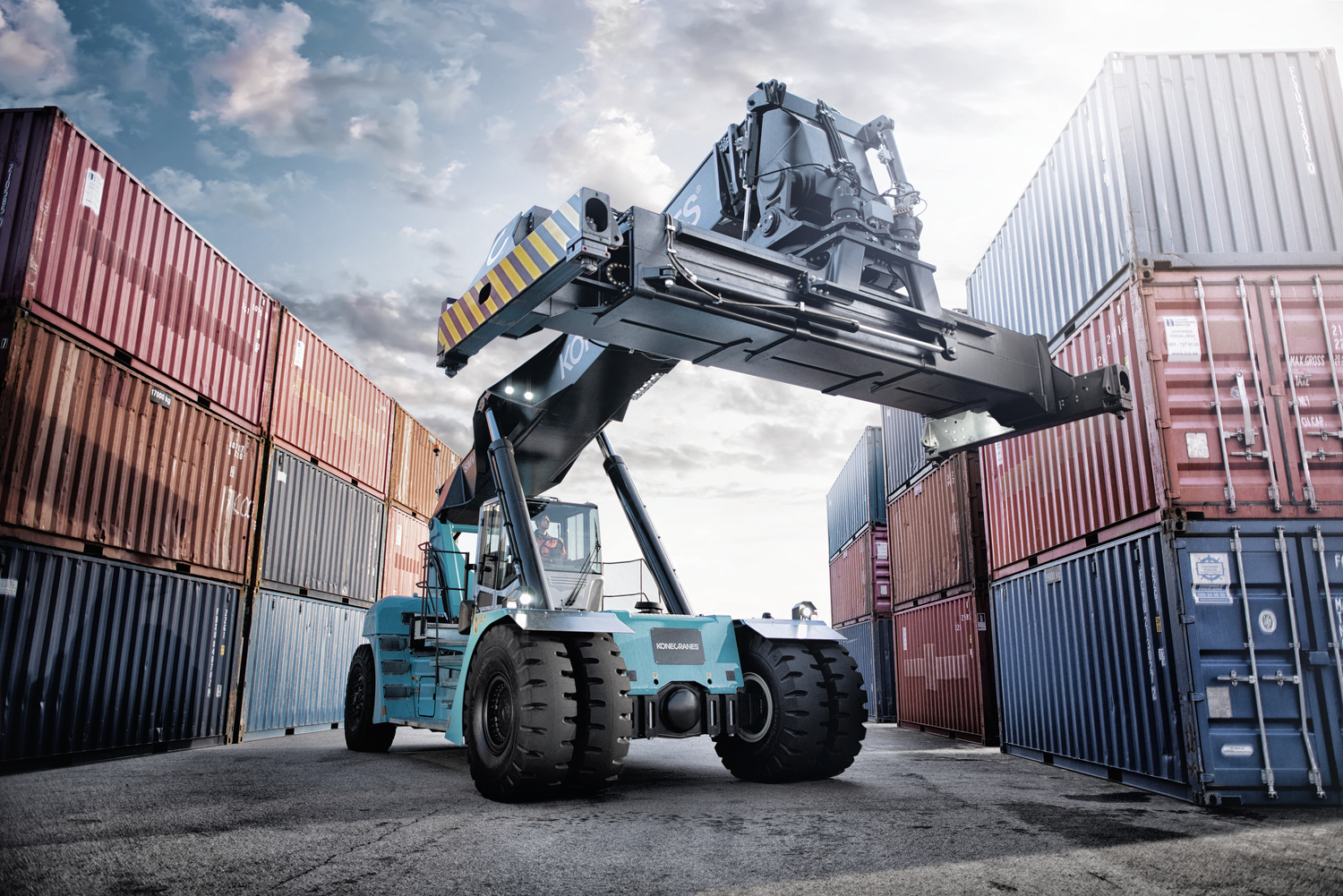
Electrification is becoming more common in logistics. It can help reduce tailpipe emissions, improve the working environment with lower noise levels and vibrations and support stable and even more productive day-to-day operations. Konecranes’ electrified portfolio for heavy-duty work includes electric forklifts, electric empty container handlers and electric reach stackers.

There are different ways to start. The latest ‘Generation C’ lift trucks can run on HVO100 (a fossil-free chemical copy of diesel). This can reduce fossil-based CO2 emissions by up to 90% and still uses familiar refuelling routines. If customers want to cut fuel use further while staying with a combustion driveline, then there are eco-efficiency options such as ‘Flow Drive’ for selected models, designed to reduce fuel consumption while maintaining full performance and increasing active operating time.

For full electrification, Konecranes offers electric lift trucks designed for heavy-duty applications. The electric forklifts, empty container handlers and reach stackers use efficient Li-ion batteries, with low energy consumption and zero tailpipe emissions. They also include secured digital solutions to monitor performance, with access to the yourKONECRANES customer portal.

Konecranes also offers flexible battery and charging set-ups for its electric models. For selected trucks, Battery as a Service (BaaS) is available — allowing customers to purchase an electric truck without the battery and subscribe to a Li-ion battery set-up that fits their duty cycle. The subscription is a monthly fee based on actual usage, with performance monitored remotely in real time through the customer portal. This model helps balance CAPEX and OPEX, supports optimal battery performance over time, and can reduce concerns around battery degradation, renewal and future upgrades.

Whether you start with alternative fuels and drivelines or are ready for an electric fleet, the key is fit. The right solution depends on your loads, duty cycle and operating conditions. With different power options and connected monitoring, logistics teams can improve environmental sustainability while keeping productivity at the centre.

Key Factors Driving Change in Transit Packaging

Transit packaging has come of age. Booming internet sales have supercharged the use of transit packaging, making it a focal point for environmental regulation and a must for automation. Chris More, UK Sales Director at Packsize, looks at what’s happening.

Understandably, companies put a lot of effort into their product packaging, as colours, messaging, innovative designs and materials all help sell the merchandise. Transit packaging: not so much. But things could be changing.

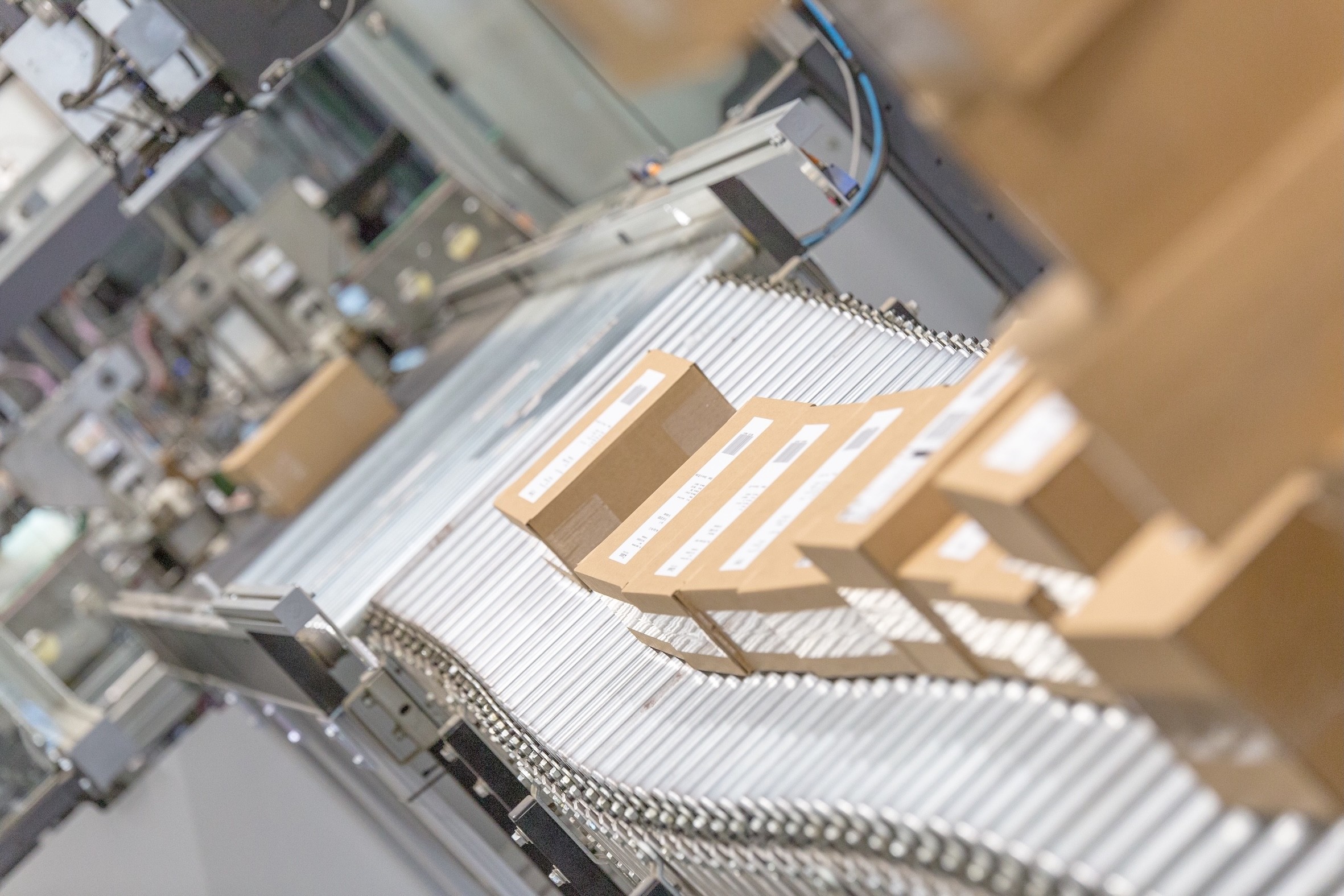
A whole raft of factors is set to focus attention on the humble boxes, cartons and containers in which goods are shipped. The materials and designs of transit packaging, and the way in which they are packed, need to be reconsidered, as do the opportunities offered by advanced ‘right-size’ automated packaging technology in all its varied formats and levels of automation

We identify seven key drivers for change which should lead packers to opt for automated ‘right size’ packaging solutions over traditional methods.

  • Environmental regulations: New packaging regulations at both national and EU level will really begin to have an impact. Core regulatory and administrative elements of the EU’s Packaging & Packaging Waste Regulations will start to be applied from this August – and of course will apply to UK firms selling into the EU, or Northern Ireland. Meanwhile, the UK’s own Enhanced Producer Responsibility Regulations – comparable to, although not identical with, parts of PPWR – are also ramping up. EPR will apply ‘fees’ to different packaging materials, with the aims of reducing environmental impact, promoting sustainable packaging design, and meeting the local authority costs of handling packaging wastes – hence it’s a ‘fee’ rather than a ‘tax’. The rules are complex but potentially apply to any business that ‘places goods in packaging’ and turns over more that £1 million, although if, for example, goods are packed into cases with another company’s branding, it may be the latter that is responsible for the fees.
    It is too early to know what impact this regime will have, and indeed whether the fee structure has managed to avoid unintended consequences. But for the moment there are clear incentives to reduce the use of packaging material. In terms of transit packaging, right-sizing each box for every order makes perfect sense for minimising exposure to these regulations.
  • Output and efficiency: While ecommerce levels have fallen back from Covid-era highs, more and more companies are adopting these channels. Growth is particularly seen in small items and in small, even single unit, quantities. Consumer expectations of fast response times, regardless of peak seasonality, and their unforgiving attitude to transit damage require reliable and efficient packing operations which can cope with peaks without being overly expensive in less busy periods.
    ‘Right-size’ auto boxing lines can produce at up to 1,300 boxes an hour – the best manual packers manage is 30-40. Businesses keen to compete on reliable, volume output will need to look to scaling transit packing operations using less manual labour and more flexible automation.
  • Flexibility: The mix of product sizes and weights, and of single item and multi-line orders, to be packed is becoming ever more complex, requiring a greater range of pack shapes and sizes. This trend is set to continue. To cope, the packing operation must be able to deal with orders of differing profiles and for different customers in whatever sequence they are presented.
    The management systems on ‘right-sizing’ machines treat each order individually, from the appropriate feedstock to the correct labelling. Greater flexibility to tailor-make each box specifically to suit an individual order provides significant gains for businesses.
    As an example, fully-automated solutions offer complete flexibility, capable of producing a vast variety of box sizes at great speed – with each box sized specifically to an individual order – or alternatively, producing the exact same-size box over and over again, all in one seamless flow or mixed sequence, as required and on-demand.
  • Reduced inventories: Maintaining stocks of pre-cut box sheets, in an ever-increasing range of shapes and sizes, is costly in materials, in warehouse space, and in material management – and with demand increasingly hard to predict in detail, there is a continuing risk that the required size/shape is out of stock, necessitating wasteful use of a larger box. ‘Right-size’ automation allows the full range of shapes and sizes to be produced from a single feedstock – freeing up warehouse space and potentially, removing the need for an expensive warehouse move.
  • Reduced package volumes: We know that consumers are increasingly annoyed to receive their orders in grossly over-sized boxes with wasteful use of void fill. The operators of pick-up locker systems also want to reduce pack sizes to maximise the efficiency of their lockers. Oversize packs waste space in trucks, and of course carriage is charged volumetrically. Right-size transit boxes reduce logistics costs and please consumers.
  • Labour costs: As is well known it is becoming increasingly hard to attract reliable labour for unglamorous tasks, often in antisocial hours. Meanwhile, increases in minimum wage, in employer NICs, and extensions of employment rights, render that labour ever more costly. One or two operators deployed to right-size technology, in its varied offerings, can do the work of up to 20 manual packers.
  • Flexible finance: There is an expanding range of leasing and other financing options available to fund investment in packaging automation, and although the details seem to change with every financial statement, tax breaks and other benefits are increasingly available.

At Packsize our broad range of right-size packaging solutions typically reduce the use of corrugated board by up to 30% and cut void fill required by up to 80%, which of course is often in the form of non-recyclable polymers. Reduced volumes also have the potential to decrease road traffic, and well-fitted boxes can also reduce transit damage and consequent waste – all, important, cost saving factors with significant environmental gains

What Removal of £135 Threshold Means for Supply Chains

For years, the £135 de minimis threshold operated as a structural assumption baked into the import model of tens of thousands of UK small businesses. Goods arriving below that value attracted no customs duty. The entire parcel-by-parcel drop shipping architecture — direct from Chinese supplier to UK consumer — was built on that assumption.

Architecture is now being dismantled

The UK government’s consultation on reforming customs treatment of low-value imports confirmed that the existing relief will be removed, with new arrangements applying tariffs and tighter data requirements to consignments currently declared under the £135 threshold. The volumes involved are not marginal. The government’s own materials note that the number of low-value parcels entering the UK tripled between 2021 and 2024. The policy response is driven partly by competitive pressure from domestic retailers, and partly by the UK’s G7 commitments to address systemic risks in low-value trade flows. With the EU removing its own equivalent threshold by July 2026, the UK faces immediate pressure to prevent regulatory arbitrage pushing redirected volumes onto its border.

For supply chain operators, the immediate consequence is a cost structure problem. When fixed entry fees — customs processing, data submission, compliance overhead — are applied to individual low-value consignments, the unit economics of small-parcel direct shipping deteriorate rapidly. The per-unit overhead that was previously absorbed by the duty exemption is now exposed. For businesses operating on thin margins sourcing commodity products from China, this is not a minor adjustment. It is a fundamental change in what constitutes a viable fulfilment model.

The supply chain implication is consolidation

The shift from individual parcel shipping to bulk cargo consolidation is the operational response that preserves margin. By aggregating shipments into consolidated freight before UK customs entry, importers reduce the number of individual declarations, distribute fixed compliance costs across larger consignment values, and regain the per-unit economics that the de minimis model previously delivered by other means. This is how larger importers have always operated. The reform is, in effect, forcing smaller businesses to adopt a supply chain architecture that enterprise-level operators already use.

We are already seeing this shift in real time. Businesses that previously relied on parcel-by-parcel shipping are coming to us to restructure their entire China-side operations. The policy change has not created the problem — it has made an existing structural vulnerability impossible to ignore

Andrii Tkachuk, Founder, ChinaExpert UK

This transition has a direct infrastructure consequence on the China side. Premium warehouse rents across Greater China declined sharply through 2025, with the overall market remaining under sustained pressure and regional vacancies intensifying, according to Cushman & Wakefield’s Q4 2025 report. In Hong Kong, average prime warehouse rents fell 12.5% year-on-year to their lowest level since Q4 2021. On the Chinese mainland, low-demand locations saw landlords adopt price-for-volume strategies to maintain occupancy. The result is a warehouse market where consolidation hubs are available at structurally lower cost than they were two or three years ago. For UK importers restructuring their supply chains toward bulk consolidation, this creates an unusually advantageous entry point into China-side warehousing.

The longer-term supply chain picture adds further complexity. McKinsey’s 2026 analysis of global trade geometry notes that China’s role has shifted increasingly toward supplying machinery and intermediate goods underpinning manufacturing supply chains globally, not only finished consumer goods. For UK businesses in manufacturing or technical procurement, this structural dependency means that supply chain disruptions — route closures, port congestion, geopolitical friction — do not simply delay a consumer product. They freeze a production input. The Red Sea disruptions demonstrated precisely this dynamic: extended transit times on high-value assembly shipments created working capital exposure that inventory planners had not modelled under previous operating assumptions.

The combined effect is a supply chain environment in which operational structure matters more than it did under the de minimis era. Businesses that treated China sourcing as a series of individual transactions — each parcel, each shipment handled reactively — are now confronting a model where consolidation strategy, China-side warehousing, customs compliance architecture, and freight planning must be coordinated as a system rather than managed as separate decisions.

The £135 threshold did not just provide a duty exemption. It allowed a particular approach to supply chain management to remain viable. Removing it does not simply add cost. It removes the structural support for an entire operational model — and forces the businesses that relied on it to replace that model with something more robust.

Subscribe

Get notified about New Episodes of our Podcast, New Magazine Issues and stay updated with our Weekly Newsletter.