
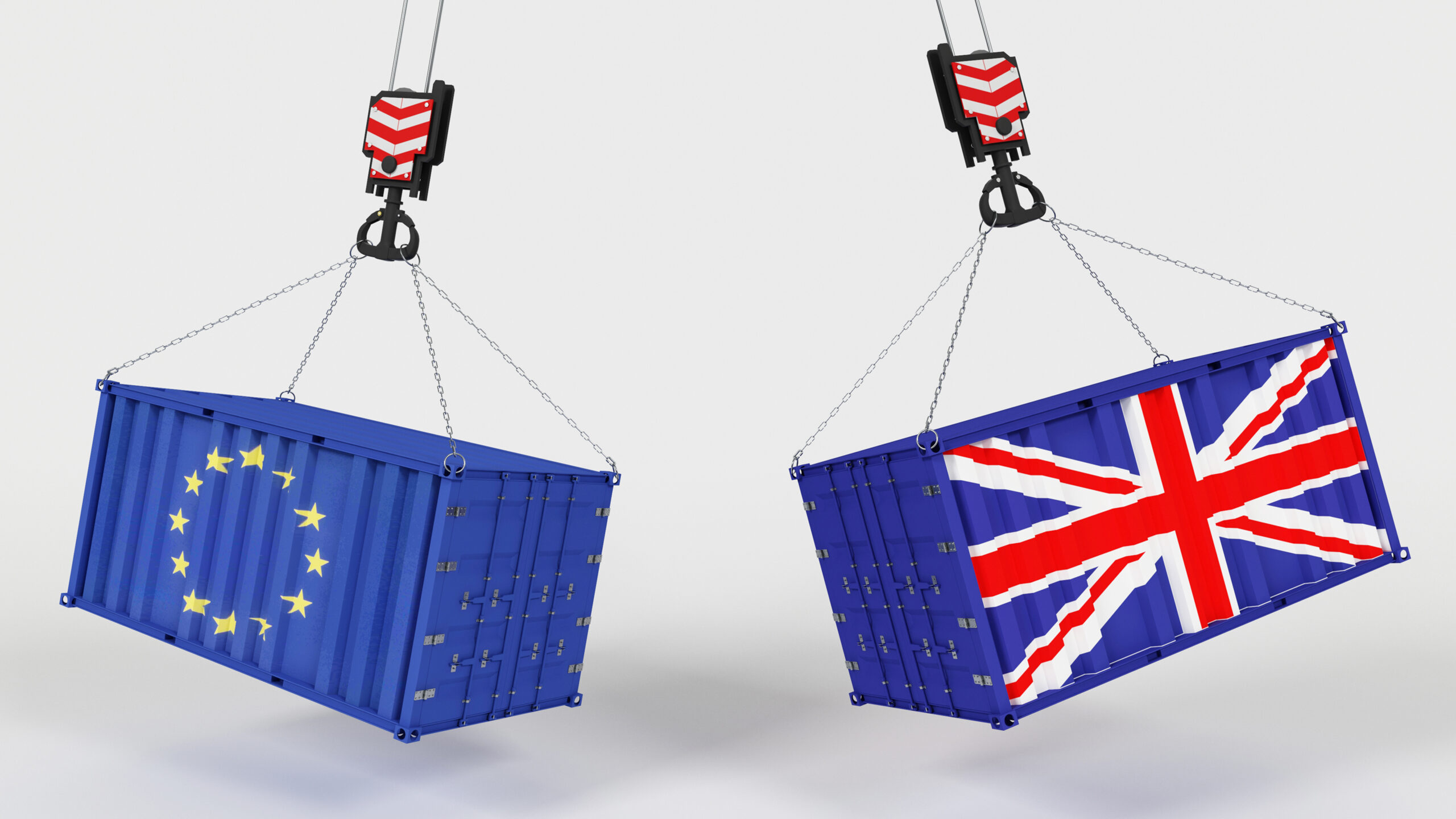
Brexit: A Decade of Friction

Ten years ago this month, the UK voted to leave the European Union. At the time, many within logistics and supply chain management warned that introducing barriers into what had become one of the world’s most efficient trading relationships would create complexity, cost and delay. A decade later, those concerns appear well founded.

For businesses involved in cross-border trade, Brexit has fundamentally altered the operating landscape. Customs declarations, rules of origin requirements, border checks and regulatory divergence have added layers of administration that simply did not exist before. What was once the routine movement of goods between the UK and continental Europe has become significantly more complicated.

The economic picture reflects this reality. Numerous studies suggest the UK economy is smaller than it would have been had it remained within the European Single Market. Business investment has suffered from prolonged uncertainty, while many exporters – particularly SMEs – have struggled with the additional bureaucracy. In logistics, the promise of frictionless trade was replaced by a world where the management of friction became a daily operational challenge.

Brexit was never solely an economic decision. For many, it represented sovereignty and greater national control. But for those responsible for moving goods across borders, practical realities matter more than political slogans.

This leads to one of Brexit’s less-discussed consequences.

Whenever systems become more complex, someone finds a way to profit from that complexity. Over the past decade, an entire ecosystem has emerged around helping businesses navigate the post-Brexit environment. Customs specialists, compliance consultants, software providers and logistics operators have stepped in to help companies manage the new requirements. Many have delivered genuine value and expertise. Others, however, recognised a commercial opportunity in the disruption itself.

Some of the logistics industry’s most vocal Brexit supporters were also well positioned to benefit from the additional complexity it created. A world where more paperwork generated more fees. One where greater uncertainty increased demand for specialist services. The vultures were circling then and did not take long to feast on the carrion of post-Brexit Britain.

That may sound harsh, but market disruption always creates winners as well as losers. The distinction lies between those solving problems and those exploiting them.

If there is a positive note on this tenth anniversary, it is that supply chains adapt. Logistics has always thrived on overcoming obstacles, and the past decade has demonstrated that even when politicians redraw the map, supply chain professionals will still find the most efficient route through it.

The lesson from Brexit is not that supply chains cannot cope with friction. It is that they should not have to. Every additional barrier carries a cost, and those costs are ultimately borne by businesses, consumers and economic growth itself.

UK Port Adopts Vacuum Lifting for Pipe Handling

B&B Attachments has successfully supplied two vacuum lifting systems to Associated British Ports (ABP) at the Port of King’s Lynn, providing a safer and more efficient method of handling large-diameter water pipes throughout the vessel discharge and storage process.

The specialist vacuum lifters have been introduced to support the handling of coated water pipes arriving at the port, enabling operators to safely lift and transfer multiple pipes without the need for traditional mechanical clamping methods. The systems provide reliable vacuum lifting, helping to improve both operational efficiency and safety during vessel discharge operations.

The solution was selected following discussions between B&B Attachments and ABP’s operations team, who were seeking a safer handling method for large cylindrical loads while maintaining productivity on the quayside.

The vacuum lifting attachments use advanced suction technology to securely grip the pipe surfaces, allowing operators to lift and position the loads with greater control while reducing the need for personnel to work in close proximity to suspended loads.

The introduction of the vacuum lifters forms part of ABP’s ongoing commitment to improving operational safety and investing in innovative cargo-handling solutions.

Andy Constable, Head of Operations at Associated British Ports, in East Anglia, said:

Safety is always our primary consideration when handling cargoes of this nature. We were looking for a solution that would allow us to offload large water pipes safely and efficiently. The vacuum lifters supplied by B&B Attachments have delivered exactly that, giving our operators greater confidence and control during discharge operations.

The handling process utilises two vacuum lifting systems. A 25,000kg capacity crane, fitted with a vacuum lifter, is used to safely discharge the water pipes from the vessel onto a shunter wagon. The shunter then transports the pipes along the dock to a storage yard, where a second vacuum lifting system, mounted on a 42,000kg reach stacker, offloads and stacks the pipes ready for onward transportation.

Both vacuum lifting systems are capable of handling up to three 14-metre-long pipes in a single lift, with a nominal lifting capacity of approximately 10,000kg. The units feature radio-controlled individual vacuum pad isolation, interchangeable battery packs and interchangeable vacuum pads to accommodate the two pipe diameters being handled at the port.

Working closely with ABP throughout the project, B&B Attachments specified the vacuum lifting systems to suit the dimensions, weight and surface characteristics of the pipe cargoes being handled at King’s Lynn.

Steve Egginton, Key Account Manager at B&B Attachments, said:

Every lifting application presents its own challenges, particularly when dealing with large cylindrical products such as coated water pipes. By working closely with the team at ABP in King’s Lynn, we were able to provide a vacuum lifting solution that integrates seamlessly with their crane and reach stacker operations while delivering significant safety and productivity benefits…

Vacuum lifting technology offers a highly effective way of handling difficult loads without mechanical gripping or slinging arrangements. We are pleased to support ABP with a solution that improves operational efficiency while reinforcing safe working practices on the quayside.

The project with ABP highlights B&B Attachments’ ability to deliver bespoke handling solutions for customers across a wide range of industries. By understanding each application’s unique challenges, B&B works with customers to specify the most suitable attachment or lifting system, helping to improve safety, efficiency and productivity in sectors including ports, logistics, manufacturing, construction, warehousing and recycling.

Strait of Hormuz deal opens 60-day window for shipping industry

A new agreement between the United States and Iran has reopened the Strait of Hormuz to commercial shipping and established a 60-day negotiation period that could shape the future operating environment for one of the world’s most important maritime trade routes.

The memorandum of understanding, signed this week following months of disruption and conflict in the Gulf region, allows vessels to transit the strait without fees during the negotiation period while wider discussions continue on security, navigation and longer-term arrangements for the waterway.

The Strait of Hormuz is one of the world’s most strategically important maritime chokepoints, handling a significant share of global oil, LNG and bulk commodity movements. The route has experienced severe disruption since February, leading to vessel backlogs, increased insurance costs and delays across international supply chains.

While commercial traffic has begun to recover following the agreement, industry observers warn that a return to normal operating conditions is unlikely in the short term. Shipping activity remains constrained by navigational risks, mine-clearance operations and elevated war-risk insurance premiums. Hundreds of vessels have accumulated in the region during the disruption, creating a substantial backlog that will take time to clear.

Data from maritime analysts indicates vessel movements through the strait increased immediately after the agreement was signed, providing an early indication that operators are gradually resuming transits. However, shipping companies and insurers continue to assess security conditions before returning to pre-conflict operating patterns.

A key issue for the logistics and shipping sectors is what happens after the 60-day negotiation period expires. Iranian authorities have indicated they intend to introduce a system of maritime service fees for vessels using the strait once the current toll-free arrangement ends, although the details and legal framework remain subject to negotiation.

The agreement also provides a framework for further talks between Washington and Tehran on broader political and security issues, with both sides seeking a longer-term settlement that could stabilise traffic through the waterway. Analysts remain cautious about the prospects of reaching a final agreement within the 60-day timeframe.

For supply chains, the reopening of the Strait of Hormuz removes an immediate threat to energy and commodity flows, but logistics providers are likely to continue facing elevated costs and operational uncertainty until navigation risks are reduced and insurance markets return to more normal conditions. Industry experts suggest full recovery of shipping activity could take several months, even if the current ceasefire and negotiation process remain on track.

Morrisons HGV Strike Threat Withdrawn

A threatened strike involving nearly 500 HGV drivers supplying Morrisons stores across northern England has been called off after Unite reached an agreement with Eddie Stobart over the use of agency labour.

According to Unite, drivers based at Morrisons distribution centres in Wakefield, Stockton-on-Tees and Northwich had voted in favour of industrial action on 4 June. However, negotiations between the union and Eddie Stobart resulted in a deal before any strike action took place.

The dispute focused on the company’s use of agency drivers. Unite had claimed that around 40% of drivers at the Stockton and Northwich sites were agency workers and argued that directly employed drivers were being replaced by workers on less secure contracts with weaker terms and conditions.

The drivers are responsible for supplying Morrisons supermarkets with grocery products across northern England. Unite had previously warned that industrial action could lead to delivery disruption and shortages on store shelves.

The union announced that the threat of strike action had ended after Eddie Stobart signed an agreement addressing concerns that Unite described as “union-busting”.

Although the drivers are employed by Eddie Stobart rather than Morrisons, the dispute also placed pressure on the supermarket retailer. In May, a spokesperson for Culina Group said the company had been engaged in ongoing consultations with Unite regarding a long-term strategy for driver recruitment and retention amid continuing driver shortages.

Unite has described the outcome as a positive result for the affected drivers. The dispute highlights ongoing tensions within the UK road transport sector over the balance between agency labour, directly employed drivers and collective bargaining, particularly within supermarket supply chains where disruption can have an immediate impact on product availability.

Not All Rack Protectors Are Created Equal

Independent testing reveals why appearances can be deceptive when it comes to protecting warehouse racking.

Walk around any major logistics trade fair and you’ll find a variety of rack protection products on display. Brightly coloured, made from various polymers and elastomers, many of them appear remarkably similar to the untrained eye. Their manufacturers will all claim they are robust, effective and capable of protecting valuable warehouse infrastructure from forklift impacts. But in reality, are they all the same?

Sentry Protection Products believes the answer is a resounding no. In fact, the company argues that significant differences exist between products that, at first glance, appear almost identical. The challenge, however, is proving it to those charged with specifying the product, on whose shoulders the responsibility of running a safe workplace falls.

Everybody claims to have the best rack protector… That’s a hard fact. You go to a trade show, look through brochures or visit websites, and every product sounds fantastic. But not everybody can be the best – that’s simply impossible. We wanted to find a way to cut through the marketing hype and get to the facts.

says Jim Ryan, founder of Sentry Protection Products.

The issue is an important one. Pallet racking forms the backbone of modern warehousing operations, supporting hundreds of thousands of tonnes of inventory every day. Damage to rack uprights caused by forklift impacts remains one of the leading causes of rack failures, potentially resulting in injuries, damaged goods, operational disruption and costly repairs.

Rack protectors are designed to absorb impact energy and help preserve the structural integrity of the rack, yet while many products look alike externally, their performance characteristics can vary significantly.

The reality is that customers often assume a rack protector is a rack protector… If they can’t see a meaningful difference, human nature says they’ll choose the cheaper option. The problem is that they may not be comparing like with like.

Jim explains.

The answer was to create from scratch a testing protocol that spelled out clearly and objectively the difference in performance that exists between outwardly visually similar products. Sentry commissioned Element Materials Technology, an independent testing facility based in Michigan, to design and conduct a comparative evaluation of a range of rack protection products available on the market.

The brief was straightforward, but far from simple: develop a testing methodology that would assess each product under identical conditions, using the same criteria, while ensuring that the only variable was the rack protector itself.

Compression testing was selected as the most appropriate approach. “Compression is a common denominator when it comes to rack protection,” says Ryan. “Ultimately, what matters is how much force a protector can absorb before it bottoms out and stops doing its job.”

The independent test measured the compressive force resistance of each protector and its ability to recover following sustained loading. Each product was compressed between a rigid beam and a flat plate, with pressure steadily increased until either visual failure occurred or a predetermined load threshold was reached. The evaluation included Sentry’s Rack Sentry and Rack Sentry CONTOUR products alongside several other well-known competitor brands operating within the market.

The results proved illuminating. Testing found that Rack Sentry demonstrated the highest level of performance, with Rack Sentry CONTOUR ranking second. In practical terms, both products were able to absorb higher levels of force before losing effectiveness compared with the alternatives tested.

“The more energy a rack protector absorbs, the more it protects the rack upright behind it,” Ryan explains. “Our goal wasn’t to embarrass competitors. It was to provide meaningful information so that customers could make informed decisions based on performance rather than assumptions.”

For warehouse operators under constant pressure to control costs, that distinction matters. The consequences of selecting inappropriate protection extend far beyond the initial purchase price. Rack repairs, damaged stock, operational downtime and the potential safety implications of structural failures can quickly outweigh any savings achieved through choosing a lower-cost product.

“Testing gives people confidence,” concludes Jim Ryan. “We’re not asking customers to take our word for it. Independent testing provides transparency. It allows them to understand what they’re buying and why performance differences matter.”

Subscribe

Get notified about New Episodes of our Podcast, New Magazine Issues and stay updated with our Weekly Newsletter.