Doosan Launch low-cost NXE Series Electric Forklifts

Doosan has launched the NXE Series – a versatile range of four-wheel electric counterbalance forklift trucks suited to the needs of the small-to-medium size enterprise (SME), or where occasional usage or light duties are the norm.

This electric equivalent of Doosan’s ‘value’ GX IC engine range, offers all the advantages of electric power in a series of competitively priced four-wheel models, giving occasional users a reliable low-cost ‘buy new’ alternative to purchasing a second-hand or reconditioned forklift truck.

Available in four models – B20NS, B25NS, B30NS and B35NS – across a capacity range from 2.0 to 3.5 tonnes, the new Doosan NXE Series is engineered to deliver high performance, reliability and safety at a reasonable cost. Productivity is maximised through the combination of a highly efficient IP67 rated Curtis AC controller, high performance motor and robust drive axle – giving optimum power and control over travel and lifting/lowering speeds.

The versatility of electric power is now available to occasional users in a durable and reliable low-cost forklift truck, making it a viable alternative to increasingly regulated IC Engine equivalents. Electric power offers clean operating performance both inside the warehouse and outside in the yard.

Safety-enhancing design features of the new Doosan NXE series include: excellent all round visibility with a clear view forward through the mast, a low front cowl to reduce blind spots and an electronic foot brake for fast, responsive braking.

Safety features include: anti-roll back on slopes, automatic speed control when cornering, automatic parking brake, ISO 3691 hydraulic locking valve – preventing unintentional lowering and tilting of the mast – and an operator sensing system that only allows the truck to operate when the driver is seated. In addition, a large anti-slip plate and entry grab bar make it easy and safe for the driver to climb on and off the vehicle.

The water and dust-proof IP67 rated Curtis AC controller protects against moisture, even when immersed to a depth of one metre, ensuring optimum power and performance throughout, with smooth and responsive travel and hydraulic operation.

Performance is further assured with the IP54 rated AC motor, offering full protection in wet weather, and the single drive axle transmits power and torque with minimal noise.

Braking is made simpler. Unlike conventional hydraulic brakes, the e-motor foot brake directly controls the power delivered to the electric motor – reducing maintenance costs.

Designed for full operator comfort, the spacious cab design offers extra knee clearance, a low step height and floor plate for easier driver access, and excellent all-round visibility for safer manoeuvring with greater awareness. Further features include, ergonomically designed hydraulic levers, with a forward and reverse switch incorporated, making changing direction smooth and effortless, and a full colour display highlights key information on the status of the truck.

The NXE Series has been designed with ease of maintenance in mind. Using a laptop key truck performance parameters can be simply adjusted – no need for special tools – and the fuse and CAN port are centralised for convenience. Access to the battery is straightforward too, with an easy-lift-up hood cylinder and tool-less removable side panel.

Click here for more foklift technology news

New Production Hub: Recipe for Increased Capacity

Dematic has announced completion of a significant project for Gousto, a UK leading recipe box provider, to create a new flagship automated fulfilment centre in Spalding, Lincolnshire. The new production hub, where Gousto’s recipe boxes are created and sent out for delivery, will increase the company’s capacity beyond the 5 million meals per month currently being delivered to homes across the UK.

To meet increased customer demand, Gousto initiated an investment programme designed to step up its capacity, including accelerating plans for multiple new fulfilment centres and creating an additional 1,000 jobs by 2022.

The Company’s second fulfilment centre in Lincolnshire is scheduled to be operational before the end of 2020. Funds from a recent funding round put the value of the business in excess of US$1 billion thus achieving it ‘Tech Unicorn’ status. This will bring forward the opening of a further two Dematic-designed automated facilities which will significantly increase Gousto’s production capacity by automating its fulfilment systems to improve efficiency and throughput.

Timo Boldt, CEO and Founder of Gousto, said: “The UK recipe box market has come of age in 2020, with the lockdown restrictions accelerating trends that were already firmly underway and new customers by the thousands being won over to the variety of meal choice and the convenience of high quality, fresh ingredients being delivered directly to their door.

“As our business continues to thrive and grow, it’s vitally important we have the infrastructure in place to meet rapidly rising levels of demand, whilst providing the best experience for our customers. Automation is at the heart of this strategy for Gousto. Being the only provider in this space with fully automated production facilities enables us to offer by far the most choice and at the lowest price point for our customers. This technology and our partnership with Dematic helps us cement our market leadership.”

Andy Blandford, Managing Director of Northern Europe at Dematic, said: “Gousto is one of the real success stories of the past few years — success that’s now been supercharged by the rise in popularity of recipe boxes.  At these high volumes, when menus and products change on a regular basis, it’s simply not possible to fulfil orders using manual solutions. Automation has provided Gousto with the answer, and they are reaping the rewards with over 100% year-on-year growth.”

All of the new fulfilment centres are powered by Gousto’s proprietary algorithms alongside Dematic’s automation technologies increasing  daily volumes, pick speed and accuracy, whilst reducing costs.

Following the completion of this latest fulfilment centre, plans are now being developed for a new, even larger automated facility. Intended to come online in 2022, this Dematic-designed project is expected to more than double Gousto’s capacity again.

Dematic also announced a new project win in Denmark this August for retailer Reitan Distribution


Greater Flexibility, Safety and Productivity: Fully-automatic

They never get sick, make no mistakes and work tirelessly around the clock: Automated industrial trucks offer a wide range of clear advantages.

Linde Material Handling has updated its comprehensive product range  wih the second-generation Linde R-MATIC reach truck and an additional Linde L-MATIC HD model. The experience Linde has gained from past projects involving over 50 vehicles has gone into the further development of its reach trucks. The resulting performance characteristics ensure greater productivity, safety and flexibility.

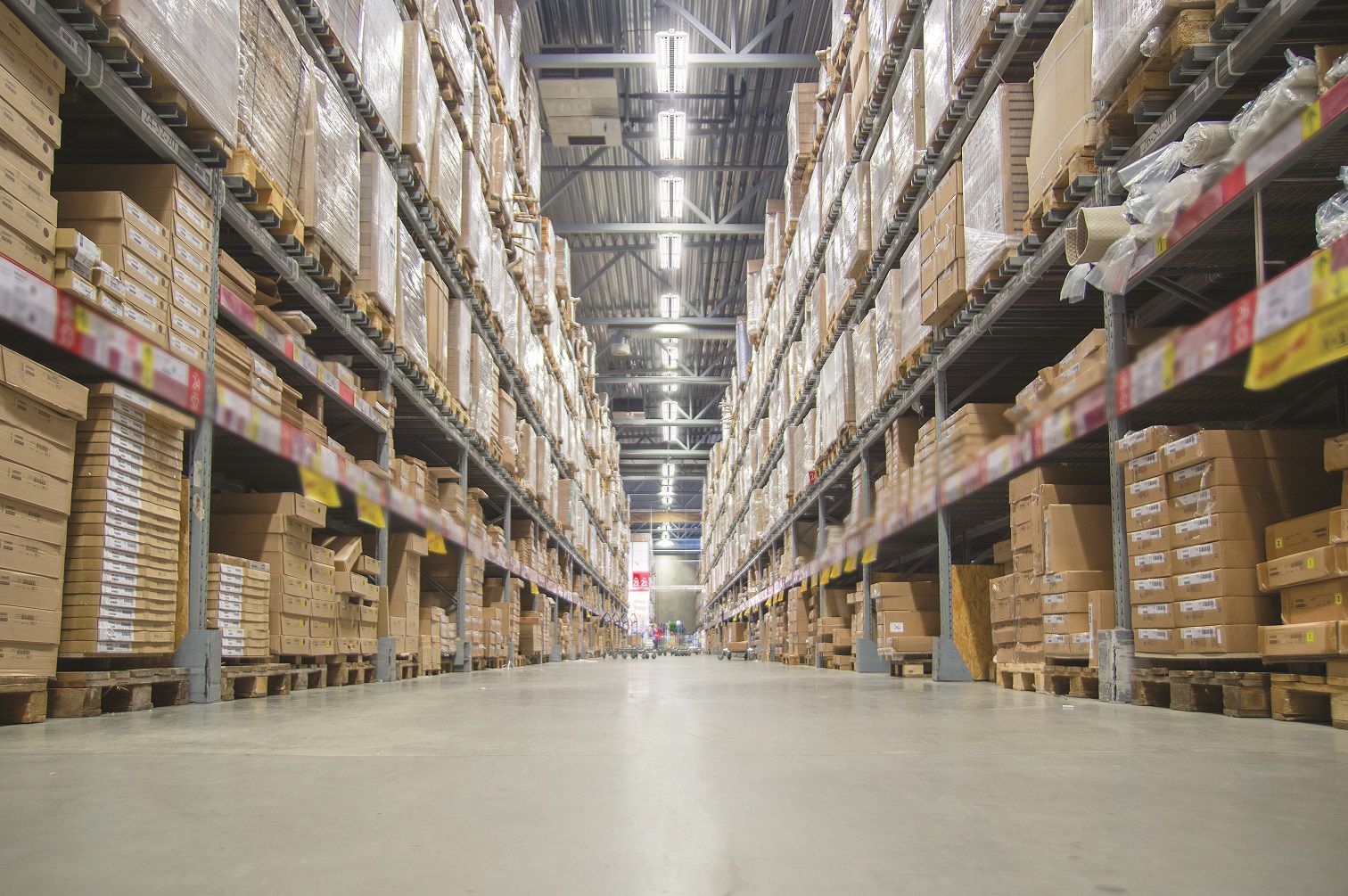
 Pallet warehouses play a central role as material buffers both in industrial manufacturing processes and in distribution centers. Storage and retrieval operations in high-bay racking systems are usually standardized processes entailing a high degree of repetition. As a rule, the narrower the distances between the rows of shelves and the more precise the positioning of the individual pallets, the more efficient the warehouse. This is exactly what makes pallet storage systems the ideal field of application for automated equipment such as the Linde R-MATIC reach truck and the Linde L-MATIC HD pallet stacker.

The new Linde trucks can work with maximum precision even in the tightest of spaces: With a length of 2,520 millimeters and a width of 1,565 millimeters, the Linde R-MATIC (1.6-ton load capacity) is the only automated hybrid reach truck on the EMEA-market that can maneuver in aisles as narrow as 2.90 meters. Software-controlled, the vehicle can store pallets with extremely high accuracy even at lifting heights of more than eleven meters. “The design, maneuverability, load handling and precision of these automated industrial trucks are decisive for the performance of the overall system,” says Alexandra Mertel, Product Manager Automation & Intralogistics Solutions at Linde Material Handling: “These criteria are crucial for enabling the pallets to be placed precisely at the intended storage locations and for pick-and-drop cycles to be improved.”

With the help of an infrastructure-free laser navigation system, the trucks dynamically steer their way through the warehouse, receiving transport orders directly from the warehouse management system via the central control unit.

The trucks receive a noticeable productivity boost from the auto-calibrating 3D camera that is equipped with a new software generation. Not only does this camera recognize the dimensions of the pallet markedly better, it can also see deeper into the pallet, which makes picking up the pallet and placing it down much more precise – whether on the ground, on roller conveyors or on the shelves. At the same time, the automated vehicles are able to transport a greater variety of pallets. This is ensured by relative image recognition algorithms developed exclusively for Linde Material Handling that have been validated in extensive tests.

As is standard practice at Linde Material Handling, the automated trucks meet the highest safety requirements. Four scanners are integrated into the vehicle at floor level, producing a 360-degree safety field around the vehicle and constantly screening for obstacles. The standard equipment also includes additional emergency stop switches, the well-known Linde Blue Spot and the Dynamic Mast Control system, which provides valuable assistance at great lifting heights. Optionally available equipment includes a sensor that detects overhanging loads and a second, higher-positioned 3D camera that can generate time savings in load handling.

The two Linde L-MATIC HD models with 1.6- and 2.0-ton load capacity feature all around safety equipment as well, including side bumpers, standard and optional scanners, emergency stop switches and optical and acoustic warning systems. Here too, load detection is via the innovative 3D camera.

Reach trucks and pallet stackers are designed as a hybrid solution, allowing the operator to take control of the truck at any time and switch to manual mode. Another new feature is the autonomous charging ability. Equipped with fast-charging batteries, the automated industrial trucks drive to the charging station independently for recharging.

“In addition to the appropriate technology, a provider’s consulting expertise also plays a decisive role in automation projects,” says Product Manager Alexandra Mertel from Linde Material Handling. In order to find a suitable solution for a particular customer, numerous parameters must be checked during the planning stage. “We first need to completely understand the customer’s expectations. Only then can the system be developed and the trucks configured in detail.” Here, specialists from Linde Material Handling work closely with different departments on the customer side (e.g. Purchasing, Logistics, Engineering). “For this purpose, we have set up our own implementation team to ensure the reliable commissioning of the vehicles. This enables us to provide comprehensive support to our customers,” emphasizes Mertel.

New Wood Packaging Recycling Targets

The Timber Packaging & Pallet Confederation (TIMCON) has welcomed Defra’s interim wood packaging recycling targets for business, which have been released for 2021 and 2022. The figures are based on responses received from the 2019 consultation on packaging reform and with consideration of the current market and have been reduced from 48 per cent to 35 per cent.

TIMCON secretary general Stuart Hex said: “We are pleased to see this reduction on wood packaging waste targets, as the high PRN prices experienced previously added a significant cost burden to the manufacturers of wooden pallets and packaging.

“Every other packaging material, including plastics, glass and metal will see an increase in targets from next year, which is a positive sign that government now recognises the clear difference between these and the unique environmental credentials of wooden materials, which are one of the key components of a truly circular, sustainable economy and the need to encourage more reuse before recycling.

“The release of these revised figures is an encouraging step, but the UK industry is still operating at a marked disadvantage to its counterparts in Europe, for whom targets are 15 per cent, rising to a maximum of 30 per cent by 2030. The disparity between these and our artificially inflated targets continues to make our businesses comparatively less competitive.

“It is vitally important that TIMCON works closely with the Wood Recyclers Association and the Wood Panel Industries Federation to ensure that their concerns that the drop in target will mean that valuable wood material does not get lost to Chapter IV biomass.

“TIMCON continues to advocate reuse and repair of our products as the preferred option, moving to the recycling stage only when they have reached the end of their useful life. Wood pallets and packaging are widely recovered, repaired, reused and then recycled for

panel manufacture, animal bedding or as energy. They remain the most cost effective, sustainable option for packaging materials – and this needs to be reflected in future packaging waste regulations.”

Wood prices rose earlier this year due to a reduction in mill operations and closures, combined with an upswing in domestic home improvement/DIY projects during the lockdown period from March. The increases were further fuelled by the relaxation of restrictions during the summer, which caused increasing demand as construction projects have resumed quickly.

Two New Hand Pallet Trucks Launched

Clark has launched two new hand pallet trucks for different customer requirements. The trucks are the HPT Eco and the HPT Premium.

Built by Clark, one of the worldwide market leaders in the industrial truck business, both the HPT Eco and the HPT Premium are designed for loads with a maximum of 2,500 kg. Both units are characterized by a robust design and easy operation. Their sturdy frame is powder-coated for high resistance to wear and tear, thus guaranteeing a long service life. Lifting and lowering of the load is done manually by a hydraulic pump. The operator can lift and manoeuvre weights of several tons with very little effort. The proportional valve allows the forks to be lowered smoothly and sensitively even with heavy loads. The pressure relief valve protects against overloading the lift truck. The equipment runs very smoothly during moving, lifting and lowering. The hand pallet trucks also score points due to their low unladen weight and manoeuvrability. This is particularly advantageous when space is limited.

For a high handling performance, both units can optionally be equipped with Quicklift (quick lift) and thus loads up to 150 kg can be lifted and moved quickly in the warehouse. Both hand pallet trucks are equipped with entry and exit rollers and are available with different roller designs (nylon, rubber or poly) and fork lengths. Thus, wherever pallets or other load carriers have to be picked up and transported, Clark hand pallet trucks ensure ergonomic and efficient work processes at low purchase and maintenance costs.

Maximum productivity with minimum effort

The HPT Eco was designed for lighter applications. It has a unladen weight of 69 kg and a maximum steering angle of 190°. Thanks to the large steering angle of the tiller, the hand pallet truck is manoeuvrable in extremely narrow spaces. With a net weight of 63 kg, the HPT Premium even has a maximum steering angle of 205° and is designed for demanding customers. The robustly designed frame as well as the drawbar ensure that the HPT Premium is highly stable even in tougher applications.

Both vehicles are characterized by their simple operation: The HPT Eco has a curved drawbar and the handle for operating the hydraulics is angled. On the HPT Premium, the tiller is more ergonomically designed. For this purpose, it has been made slightly smaller and the handle has been wrapped to ensure good grip. Both machines require little maintenance and can be operated without additional technical equipment. The Premium machine has a quick mounting system for quick attachment or replacement of the drawbar.

Earlier this year Clark announced they had also boosted their warehouse truck range with new lithium trucks

Diomaster Floorblock Labelling Solution Released

inotec UK, has expanded its warehouse identification range with its new Diomaster 250 PC Floorblock TRANS HUW (Diomaster Floorblock) labelling solution. Developed by inotec in France and now available in the UK, the protective Diomaster Floorblock labelling system is ideal for warehouses which print their own labels on-site.

inotec specialises in warehouse solutions, barcode security and RFID labelling.

The Diomaster labelling solution is a high-quality blank polycarbonate label cover protecting self-made labels which are fixed to the floor within a solid cast aluminium frame (Floorblock).

Logistics facilities which handle frequently changing stock items and stock layouts, often face the issue of own-printed labels not being sufficiently durable. The Diomaster label solution allows users to place their printed labels inside a 2-3 millimetre recess within the aluminium Floorblock which is screwed to the floor.

The polycarbonate Diomaster cover sits on the top of the label and adds extra protection from foot and truck traffic in the warehouse, as well as potential daily wear and tear. This ensures complete protection for the efficient readability of labels. Not only can the label under the Diomaster cover be easily replaced as and when required but also, the Floorblock unit can be easily unscrewed and repositioned.

David Stocker, sales director at inotec UK comments: “The Diomaster Floorblock solution is a great addition to our warehouse labelling product range. The combination of the label cover with the aluminium label holder creates a robust system for warehouse identification marking – even when printing your own labels on-site.

“Damaged or unreadable labels cause operational delays which can have significant financial implications. If labels can’t be scanned or locations found, it can cause serious disruption in the supply chain. The Diomaster labelling solution prevents this to ensure warehousing identification performs at an optimum level. We are now able to offer this cost-effective and long-lasting labelling solution to all our UK customers.”

For more innovations in the logistics sector you can browse the latest issue of Logistics Business here

Logistics Property a Major Contribution to UK economy, Report Reveals

Activities taking place inside logistics buildings owned and managed by Prologis in the UK are making a major contribution to the UK economy, according to a report compiled by independent advisory firm, Oxford Economics.

The study’s economic impact model found that activities carried out by customers operating across the entire Prologis UK portfolio, which includes 22 Prologis Parks in the Midlands, South East and London, make a significant contribution to the national economy, with goods flowing through the buildings equivalent to approximately 2.6% of UK GDP1.

The study is the second to be conducted by Oxford Economics – the first being published in 2017. This year, as well as providing UK-specific data, the report provides an interesting snapshot of the growth of Prologis’ global estate, which today spans 19 countries and covers almost 1 billion sq. ft. In 2017, the company’s global estate covered 684 million sq. ft. The ‘Future Flow of Goods’ study also reveals that customers operating within Prologis warehouses in the UK employ 32,500 direct employees2.

Robin Woodbridge, head of capital deployment at Prologis UK, said: “This global study confirms the importance of the logistics sector to economies around the world, not least here in the UK, where the value of goods flowing through the buildings on our industrial parks have an estimated economic value equivalent to 2.6% of UK GDP.

“The study also comes at a critical time, with the volume of goods ordered online in the UK increasing significantly during the pandemic, pushing demand for logistics services to unprecedented levels. Based on the demand we are currently seeing for warehouse and other distribution facilities; we expect the economic contribution of our estate and its activities to continue to increase.”

A separate study published by the Centre for Retail Research has revealed that online retail sales in the UK are higher than in any country in Continental Europe. The study estimates that total online retail sales in the UK will rise to £99.3 billion in 2020, up from £76 billion last year. It also estimates that while some contraction is expected in 2022, online retail sales in the UK will remain high.

Robin Woodbridge said: “There has been a seismic shift in the nation’s shopping habits during the pandemic and many experts believe that things are unlikely to return to pre-COVID levels. This has led to a spike in demand for logistics space. To avoid a shortfall in the future, we’re already working hard to identify land and property suitable for conversion or development in the areas where it is most needed, for example, areas earmarked for industrial logistics development in London.”

Prologis’ estate in the UK covers more than 26 million  sq. ft. Many of its buildings are purpose-built to meet customers’ needs and are leased to SME’S or large household names such as Tesco, Sainsburys and Amazon. Among its key industrial property assets is the UK’s premier rail-connected logistics park at Daventry International Rail Freight Terminal (DIRFT).

Prologis appointed Gavin Quinn earlier this month to strengthen its London market.

1  Based on 2019 data, as per the Oxford Economics report.

2 The study defines ‘direct employees’ as jobs and activities that are directly attributable to Prologis warehouses.


Port of Amsterdam Set for New Rail System

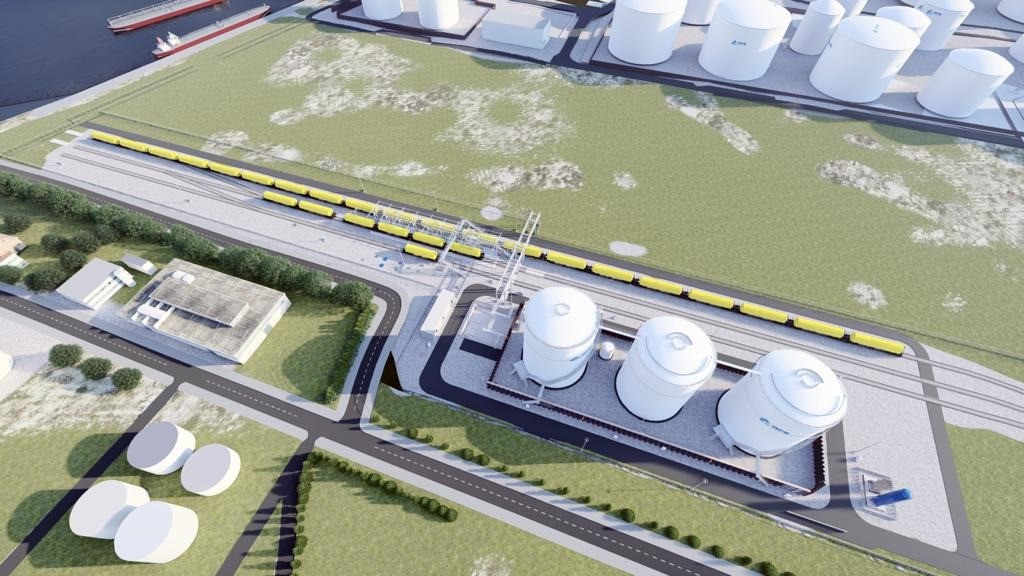
The Port of Amsterdam has announced the construction of a new railway line. The  port will be working with GPS Group, a storage and logistics provider, and VARO Energy a downstream energy company active in North West Europe.

This investment is the next step in GPS’s strategic partnership with VARO. VARO, on the other hand, will support GPS in maximising opportunities across its markets and will continue to play a vital role in the logistics provider’s ambitious expansion plans.

The new railway line and ethanol storage tanks are set to connect to 17 Class 1 tanks in the Port of Amsterdam, the world’s largest trading and blending hub for gasoline and its components. The Port of Amsterdam, which GPS has worked closely with in the developments of its plan, is a partner and important supporter of the project, which is a great fit with its own strategic objectives relating to sustainability improvements.

The new development will expand and secure GPS’ future at the Port of Amsterdam site and will provide a more environmentally friendly alternative mode of transport. In addition, this new logistics option will provide greater flexibility to the supply chain of VARO and an important transport alternative to respond to variations of the Rhine’s water levels. The project constitutes an important upgrade to the port infrastructure that will see the storage and blending facilities of GPS connect with the main railway system of The Netherlands and Europe.

The new infrastructure is the latest development in GPS’ ambitious plans at the Port to continue to grow its facilities at the site and boost value added services. Last year the business expanded its Class 1 certified storage capacity from 148,500 m3 to 282,500 m3, allowing it to scale up its capabilities and fulfil growing demand for its services. The latest phase sees the new state-of-the-art facility upgraded once again to just under 300,000 m3 storage with the addition of the railway line aiming to support growing production needs especially for biofuels and gasses. The expansion is partly being financed through increased debt following a successful refinancing by GPS Amsterdam. The increased debt has been provided by existing lender NIBC and new lender Hamburg Commercial Bank AG.


Eric Arnold, CEO at GPS, says: “This is an important investment that will open up a whole range of new possibilities to support both our client’s and our own further expansion plans, especially in the important focus area of ESG, where we aim to continue to identify more environmentally friendly logistics alternatives for our clients and sustainable business cases in growth segments such as biofuels and gases.”


“It is the second expansion investment in our Amsterdam terminal in under a year and represents our commitment to unlocking the full potential of the site with truly world-class assets that help our clients thrive in a changing environment. VARO and the Port of Amsterdam are important partners in this project and in our future growth plans.”


Roger Brown, CEO of VARO Energy, comments: “This is yet another important step forward in our strategic partnership with GPS, which I believe shows the commitment from both sides to the success of the Amsterdam Terminal both today and for many years into the future. VARO already plays an important role in delivering renewable biofuels to its customers across Europe. This expansion of the Amsterdam terminal facilities significantly increases our ability to blend and distribute such renewable fuels in line with VARO’s overall growth strategy in this sector.”

Recycling Firm invests in Hiab Multilifts

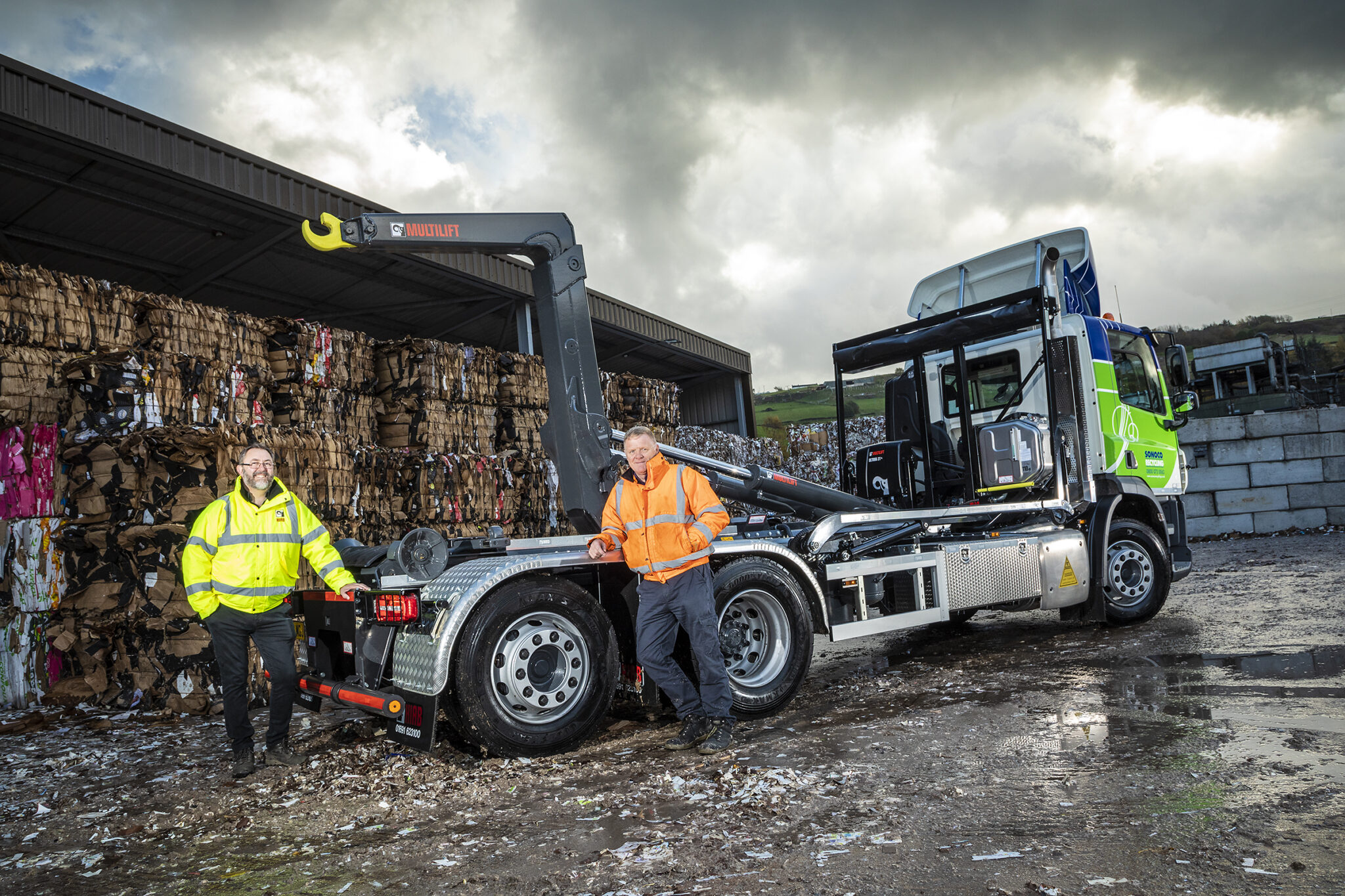
Three new Hiab MULTILIFTS have been bought by Yorkshire-based waste management firm Sonoco Recycling as part of its ongoing modernization programme.

The hookloaders join a 15-strong fleet which operate across Halifax collecting and redistributing commercial paper and cardboard waste for recycling.

Brian Rhodes, logistics and procurement manager for Sonoco Recycling said: “We have a fleet of vehicles dedicated to the collection of waste paper and cardboard – nine of these are hookloaders.

“We have seen an increase in the number of requests for smaller collections from SMEs as businesses implement new recycling strategies to improve their carbon footprint and save money,” he said.

“To manage this increase in demand we have invested in three Hiab MULTILIFTS because we know they’re one of the most reliable brands in the market. One driver can travel up to 50,000km a year, so it’s really important that we have equipment that keeps moving.

“Thanks to the build quality of the MULTILIFTS hookloaders, we have fewer issues with the equipment. This means less downtime which keeps my customers and my team of drivers happy, because they also want to finish on time.”

Dek Butler, MULTILIFT specialist for Hiab UK said: “Recycling and waste management is a sector which demands high-performance equipment. Our multilift hookloaders are built to perform so waste management is a key sector for us.

“I’m confident Sonoco’s three new hookloaders will help it manage its growing customer base in the region. We’re proud to be a valued supplier for a globally-recognised company.”

Earlier this year Hiab announced the launch if the MULTILIFT Optima 15S and MULTILIFT Optima 25S hooklifts for two and four axle trucks to complete its MULTILIFT Optima product range.

Sustainability has arrived in Supply Chain Management

Sustainability in supply chain management remains a hot topic despite the Covid-19 pandemic.The results of a recent study by consulting firm Miebach Consulting GmbH suggest that a successful turnaround towards sustainability can be achieved if consumers first rethink and transform this new way of thinking into action and demand.

Nevertheless, according to Thorsten Gensmer, Director, Miebach Consulting, companies should not sit back: “Those who think ahead now and lay the foundation for sustainable business activities can profit greatly from the newly developing market. Collective actions with a complete cradle-to-cradle approach are necessary for greater climate protection goals in the supply chain. The high level of planned initiatives shows that this can already be worthwhile now! ”

These are the results of the current sustainability study by Miebach Consulting. In mid-2020, the international supply chain consultancy examined which strategies and measures companies are taking to make supply chains sustainable – and to what extent sustainability and corporate goals can be combined.

277 companies took part in the global online study, including an unusually high proportion of managing directors (18%), which illustrates the importance and strategic significance of the topic.

The motivation for sustainability

With regard to the most recent and the next planned initiative, the majority of respondents cited an improvement in efficiency with an average of 14%, or a cost reduction with an average of 15% as motivation. This is followed by topics such as CO2 reduction (7%), green packaging or the reduction of plastics in general (7%). Sustainable measures based on ecological or social motivation, such as employee health and safety (1%) or environmental protection (1%), are rarely mentioned.

Sustainability in supply chain management is gaining in importance

The surveyed companies have implemented an average of 16 sustainability initiatives in their companies. For the future, however, the surveyed companies plan to almost double (+97%) the number of sustainable initiatives already implemented within the next few years. This suggests that sustainability in supply chain management will gain in importance.

High resource input and complexity discourage

In general, sustainable initiatives are considered less attractive if they require a high level of resource input, such as the development of reverse logistics, which is rated at just 4.2 out of 10 points. Even already complex topics, such as network planning, which is rated 4.6, are perceived as less important. Therefore, resource-saving and relatively simple measures are generally preferred.

Miebach is a gloabl supply chain consultancy firm, operating in over 20 offices and has developed its presence in the UK in the last few years.

Subscribe

Get notified about New Episodes of our Podcast, New Magazine Issues and stay updated with our Weekly Newsletter.