Turkish Logistics Firm Fevzi Gandur Opens Istanbul Airport Warehouse

Fevzi Gandur Logistics is a leading logistics service provider in Turkey with a 71 year history. The company continues to offer a wide range of integrated logistics solutions, serving a number of geographical markets. The company also continues to invest in its capabilities, the latest investment being a warehouse in the newly opened Istanbul Airport. The airport is one of the largest in the world and is expected to become a major passenger and air cargo hub in the region.

The warehouse provides storage, packing, and handling services for export and import cargo before and after their flights. Other than providing a cost advantage, the warehouse Fevzi Gandur Logistics to offer value added services to a number of customers and industries.

Fevzi Gandur Logistics is an established player in the international land freight business, operating an FTL and LTL service between Turkey and Switzerland, Poland, Czech Republic, Hungary and Slovakia. The company deploys its own modern trucks and trailers, supplemented by capacity sourced from third party suppliers. Ali Gandur, Co-CEO of Fevzi Gandur Logistics, mentiones that Turkish companies trading with Europe are looking for a fast and flexible service.

Thanks to a network of expert and experience partners throughout the world Ali Gandur believes that the company can act as a global company with local expertise.
“In order to be stronger in the global sense, we prefer to work with local leaders. ” Ali Gandur says and adds that the experience of local companies is too valuable for companies that do not know enough about the country and regions.

Aside from its investments in Turkey, Fevzi Gandur Logistics is also very active abroad and thanks to strong business relationships, it has a significant portfolio and strength especially in America and Asia. The IATA certificated company is able to provide advantageous services and pricing for airfreight and sea freight.

Continued Growth Prompts Investment for Dachser UK

2018 was a progressive year for Dachser UK with the appointment of a new UK Managing Director, Mark Rollinson, combined with the expansion of its operations and the opening of a second logistics centre in Northampton. This confidence was based on a strong financial performance with UK sales turnover increasing by 9% to £84.1 million. This is the result of increased export business and healthy growth in contract logistics services, the latter seeing a number of new customer contracts secured.

Investment for the future remains the theme this year as construction of a new 5,175 square metre logistics centre in Rochdale remains on track to open in September. The development of the 3.7 hectare (9.2 acre) site represents a EUR 16 million (GBP 14.4 million) investment by the company.

Commenting on the company’s progression during 2018 and recent months, MD Mark Rollinson (above) said, “Our significant investment is proof of Dachser’s commitment to the UK market and our optimistic view on the future import and export trade with the rest of Europe, which is evidenced by our strong growth figures last year. We will continue to leverage our pan-European road freight services and given the continued uncertainties surrounding Brexit, we will remain agile and responsive to our customers’ needs in light of possible changes to their European supply chains.”

The new Rochdale Logistics Centre will be connected to Dachser’s comprehensive branch network through daily direct freight services, providing extensive domestic and European distribution and warehousing services. In addition, Dachser’s established ‘Interlocking’ programme ensures further development of air freight, sea freight and international supply chain management services.

Bolstering the expansion of Dachser’s operations in the North of the country is the appointment of a new Sales Manager for the region, Marion Simpson. Since joining Dachser in a business development role in 2013, Marion has contributed significantly to the success and growth of the Rochdale branch. Marion will also continue in her role as a Chem-Logistics specialist, Dachser’s network-wide corporate solution servicing the chemical industry.

Explaining the potential of her new role in facilitating customer access to these services, Marion Simpson commented, “With a new facility on the horizon and an exceptionally dedicated and enthusiastic team, I am very excited about the future of Dachser in the UK. Dachser’s global supply chain management and strong reputation for professionalism, reliability and high quality service will support importers and exporters in the region to maintain their economic growth.”

Doosan to Debut Rugged Electric Truck Range at IMHX

Korean forklift maker Doosan will be showcasing two new tough counterbalance ranges at IMHX 2019 (Hall 19, Stand 19G80) – its B15R-7 three-wheel and B45X-7 four-wheel series of electric forklift trucks.
Advanced 3-wheel electric B15R-7 Series

With three new models covering a capacity range from 1.25 – 1.6 tonne, the compact and versatile Doosan B15R-7 Series is particularly well suited to the flexible needs of the small business – and being battery powered, offers the clean handling performance demanded by the Food & Drinks sector.

As a tough all-rounder, durability for outside duty is assured with a rugged rear-drive axle, IP65 rated Curtis controller and IP20 PAL brushless AC motors – offering maximum resilience to water and dust. Also included as standard is Doosan’s industry leading sealed, oil-cooled disc brake system, which is virtually maintenance free and lasts up to five times longer when compared to conventional shoe brakes. The sealed units protect against outside elements such as dirt, water and grit, ensuring top-rate braking performance for enhanced safety and increased productivity.

With a tight turning circle, smooth and responsive acceleration, and a conveniently placed direction switch on the hydraulic control lever for switching direction of travel quickly and easily, the all-round performance of the B15R-7 Series promises a boost to productivity inside or outside the warehouse. What’s more, when equipped with the optional side ‘roll-in & roll-out’ battery facility, batteries can be simply and effortlessly changed for multiple shift operations.

Rugged 4-wheel electric B45X-7 Series
Doosan’s powerful new range of four-wheel electric counterbalance forklift trucks – the B45X-7 Series – offers greater durability, enhanced productivity, increased visibility and an extensive range of safety features as standard.
With four new models covering a capacity range from 4.0 – 5.0 tonne, businesses across a broad spectrum of industry – from manufacturing, wholesale distribution and food & drink to engineering, building supplies and transport & warehousing – will benefit from the improved capability, power and performance of Doosan’s latest mid-range electric trucks. The versatility of electric power is now available in a durable and reliable vehicle, built for working long-shifts outdoors in wet or dusty conditions – making it a viable alternative to increasingly regulated IC Engine equivalents.

Having a tighter turning circle than its predecessor, smooth and responsive acceleration, and a conveniently placed direction switch on the hydraulic control lever for switching direction of travel quickly and easily, the all-round performance of the B45X-7 Series promises a boost to productivity inside or outside the warehouse.
Safety is foremost in the design of the new B45X-7 Series. Prominent safety features include: Anti Roll Back for preventing accidental movement of the vehicle when stopped on a slope, Automatic Speed Control that adjusts the travel speed for safer cornering, and an Operator Sensing System that immobilises the truck and locks all hydraulic functions when an operator leaves the cab.

Further important safety-enhancing design features included as standard are: a clearer view through the mast, an easily accessible emergency stop button on the dashboard, a high visibility driver’s safety belt, large entry step and grab handle for easy access, LED lights and an overhead guard mounted flashing beacon.

New versatile electric pallet truck
Also making its debut at IMHX in September will be Doosan’s new versatile, 1,500kg capacity electric pallet truck – the BPSC15E-7 – offering an exciting glimpse into Doosan’s feature-rich warehouse truck range, to be launched in the UK in 2020. The BPSC15E-7 has a built-in charger, long-life batteries and a compact chassis for extra maneuverability.

Doosan will also be displaying its extensive range of powerful ic engine counterbalance models, ranging from 1.5 – 25 tonnes capacity. Details to be revealed nearer to the show.

Brian Grady, Sales and Marketing Director at Doosan Industrial Vehicle UK Ltd, says: “Environmental legislation continues to get tighter and businesses will need to consider very carefully how they invest in their forklift truck fleets going forward. Electric vehicles are certainly gaining ground in applications that were once considered only suitable for ic engine trucks – and there are tough electric trucks available now that can efficiently lift very heavy loads. But ic engine vehicles will still play a significant role for some time to come, and visitors to the show should look out for those diesel engines that are compliant with Euro-Stage V regulations, and yet do not need wasteful and lengthy DPF regeneration regimes.”

In addition to these important product developments, Doosan plans to offer the visitor a glimpse of the future with some of Doosan’s advanced technologies and innovations – all part of a journey of discovery that will highlight the scale and scope of Doosan as a $21 billion global engineering business, involved in everything from power plants, engines and construction equipment to consumer goods.

UK TMS Specialist Makes Key Senior Appointments

National road transport management software specialist Mandata Ltd has appointed two senior managers as it continues to expand its workforce to meet strong demand for its technology.

James Stafford (above) joins as regional sales manager for the North East and West of England while Marie McDermott comes in as customer relationship manager for the South West.

Providing dedicated support to haulage and logistics companies, Stafford will be responsible for new business development across the North of England, working with operators investing in transport management systems to deliver improvements and operational savings.

He brings over eight years’ sales experience to a role that will also see him working closely with Mandata’s national account management and professional services teams on advanced digital software solutions for the haulage sector, which include a range of new integrated apps.

Marie McDermott will be drawing on her experience of working within the road transport industry to build and maintain customer relationships. Providing them with on-going support and advice, Marie will ensure they make the most of their investment in Mandata solutions.

The latest recruits are part of a year-long programme to equip the business with key personnel to drive ongoing advances in technology and continuous improvements.

Mandata is a UK leader in the provision of integrated transport and logistics software for companies operating in all sectors of the road transport industry. Its software automates and simplifies complex processes and enables operators to plan, manage, monitor and invoice work with one centralised system.

PSI Implements ERP Solution for Industrial Metals Customer

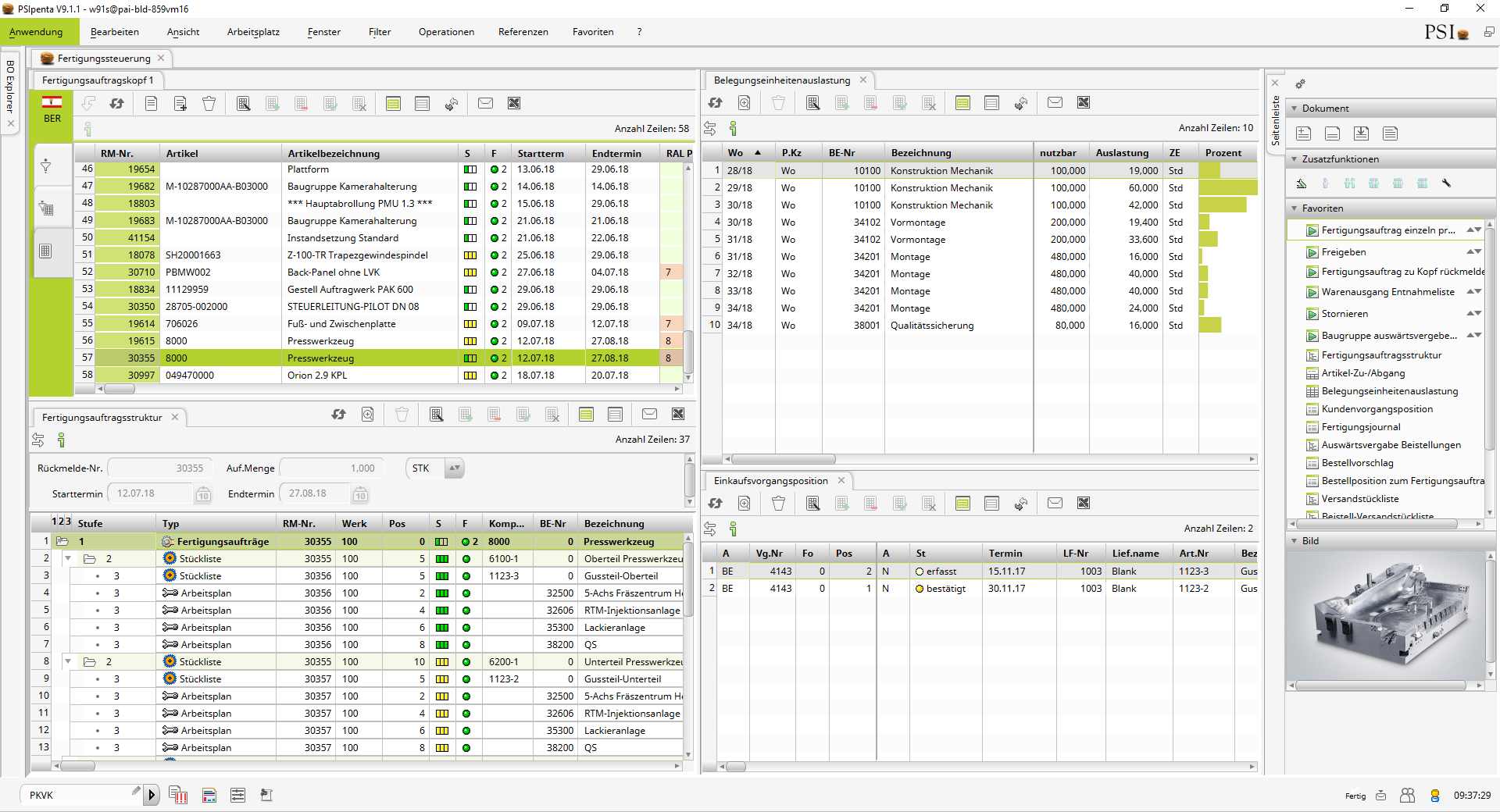
PSI is to implement its PSIpenta version 9.2, PSIpenta/SCM Automotive ERP system and a basic MES package for industrial customer König Metall. These are to replace the previous system and unify the formerly heterogenous software landscape.

In the first phase, the modules SCM automotive, control station, production data acquisition, storage location management, cost accounting, service management, workflow, sales planning, project management and quality management will be implemented at the main plant in Gaggenau. König Metall operates additional plants in Poland, Italy, Canada, Portugal and Russia and can rely on the multi-site functionality in PSIpenta for these sites.

König Metall opted for PSI’s ERP solution, which already covers the customer requirements in the standard version, due to the strong functionalities and the industry knowledge in the automotive sector. In addition, no further subsystems were necessary. However, the intensive contact during the entire sales process as well as the professional preparation of the workshops and reference customer visits were particularly decisive.

For more than 100 years, the König Metall Group has been machining sheet metal, tubes and pipes to customer specifications at seven sites worldwide for the metal and electronics industry, automotive, silencer and airbag industry, for mechanical engineering and various other sectors. The company is, among others, a tier 1 supplier to Daimler AG.

Based on its own software products, the PSI Group develops and integrates complete solutions for optimizing the flow of energy and materials for utilities (energy networks, energy trading, public transport) and industry (mining, metals production, automotive, mechanical engineering, logistics). PSI was founded in 1969 and employs more than 1.900 persons worldwide.

DP World Starts Work on New London Gateway Warehouse

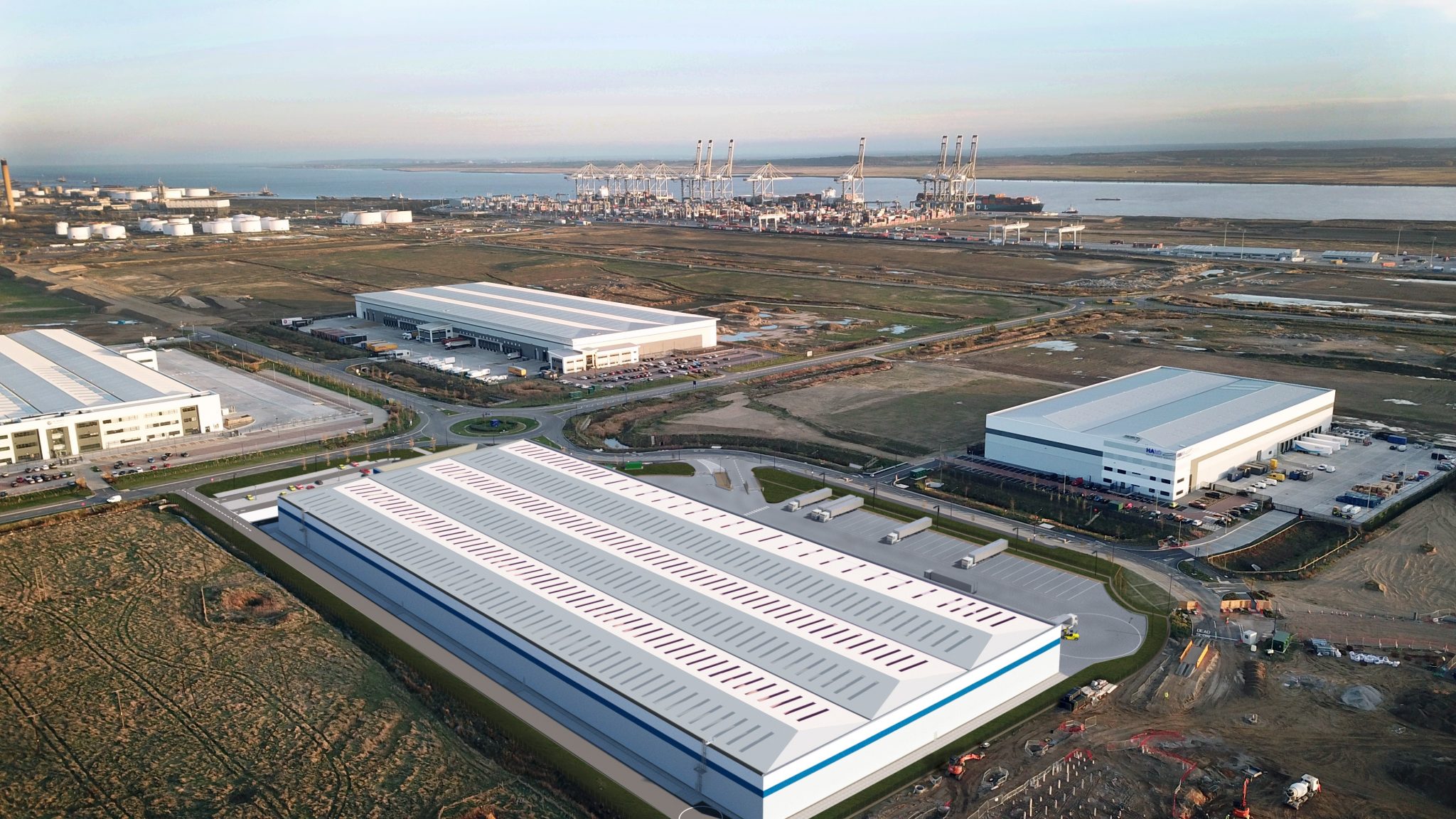
DP World has started work on a new 231,000 sq ft warehouse at its London Gateway Logistics Park. Named LG231, the facility – which is sited on the north of the 9.25million sq ft Logistics Park, located just 25 miles from Central London – will be ready for occupation in December 2019.

The new build offers occupiers and operators the ability to significantly reduce supply chain carbon emissions by being located at the heart of the UK’s densely populated, South Eastern consumer market and on the same site as one of the world’s fastest growing, best connected ports, with excellent road and rail links. Readie Construction has been appointed as the principle contractor for the development which will comprise 218,945 sq ft of warehouse space and 11,970 sq ft of two-storey ancillary office. In addition, the facility’s yard will have a depth of 50 metres, it will have 12.5 metre clear eaves height, 68 HGV spaces – including 28 dock levelers – and 50kn/m² floor loading.

It will neighbour a growing base of Logistics Park occupiers, including UPS, Lidl, Made.com, CMA CGM, Halo and Dixons Carphone. Work started on-site during May, with planning consent obtained from Thurrock Council in less than 28 days thanks to the Logistics Park’s Local Development Order. Construction of the warehouse will be Planet Mark accredited, meaning carbon consumption during the build has been considered and reduced at every possible opportunity. This ensures occupiers can operate more sustainably from a Grade A, BREEAM Excellent centre that has been constructed to the highest sustainable standards.

DP World London Gateway will be offering more details on LG231 at Multimodal tomorrow (Tuesday, June 18) when Oliver Treneman, Park Development Director, will be presenting at the DP World Multimodal café at 3pm. All are welcome to attend. Oliver Treneman, Park Development Director, DP World London Gateway Logistics Park, said: “We’re delighted to have started work on LG231, a new development at DP World London Gateway Logistics Park. “Interest in the Logistics Park is high, with around four new leases having been signed in the last 18 months. This new facility gives us the ability to meet the growing needs of our customers quickly with a high-spec building, which – above all – offers unrivalled flexibility.

“We are willing to explore short term leases, from five years – giving prospective occupiers the flexibility they need in complex and volatile times, in a multimodal, market-centric location that can be the catalyst for reducing carbon emissions, while increasing supply chain efficiencies.”


Trade-ins “As Popular With Businesses As With Consumers”

Trade in schemes are not new, from car scrappage to trading in mobile phones. And it’s easy to see why. Customers get the latest vehicle or device, their redundant piece of kit is taken off their hands and recycled, where possible, and they are usually offered some kind of financial incentive for doing it.

And the practice works well in industry too as Printronix Auto ID has found, which has led it to relaunching its popular trade in-trade up scheme.

It’s a double-whammy when organisations can take advantage of the improved performance of newer printers at discounted prices while simultaneously ensuring their traded in devices are disposed of safely and responsibly.
Under the scheme, Printronix Auto ID is inviting companies running its discontinued T5000 machines, or other industrial thermal barcode printers, to trade them in and trade up to T8000 devices, while enjoying discounts of up to 7%.

By trading old T5000s for new T8000s, businesses would notice a real difference in performance and features. The T8000 is similarly rugged but offers 40% faster print speed and six times faster processing speed. It also has eight times more memory than its peers.

The T8000 is Energy Star compliant, which means it has been independently certified to save energy and money, and protect the climate. It also has a full colour, high resolution, icon-based 3.4” display panel which makes for easier navigation compared to the T5000’s LCD display. The T8000 offers a quick change memory card (QMQC) and the industry’s most extensive library of printer emulations including PostScript/PDF printing.

But crucially with this trade in-trade up scheme, by participating, businesses are relieved of the burden of disposing of their old machines, they can feel confident knowing their old devices are being recycled responsibly. Printronix Auto ID is very mindful of its WEEE responsibilities. It works with a professional Europe-wide waste management company that collects the old devices and disposes of them in line with EU standards.

The aluminium and steel chassis of Printronix Auto ID printers are the reason the devices prove so robust in industrial environments. Both metals are highly prized so it’s good to know their value is being recycled elsewhere.
Reverse logistics processes are playing an increasing role in reducing waste and improving sustainability so it’s heartening to see suppliers like Printronix Auto ID committing to the return, recycling and reuse of its products.

The Printronix Auto ID trade in-trade up scheme is open to any European business. To participate, companies need to supply the printer model and serial number of the device(s) they are trading in. They can either do this by contacting their local reseller, or by applying online via the web link printronixautoid.com/trade-in/. Once firms have had their trade-in accepted and the purchase order (PO) placed, the new T8000 will be delivered.

No later than 10 days after the new printer has been received, the traded in T5000(s) have to be ready for collection by the scrapping company otherwise the discount can’t be awarded.

Under the scheme, firms in the EU can trade in/trade up as little as one device. For European companies outside the EU, the minimum number of old industrial printers to be traded in and traded up is five.
This offer cannot be used in conjunction with any other promotions and terms and conditions apply. The trade in/trade up scheme runs until September 30, 2019.

For more information, visit www.printronixautoid.com

Industry View: Peer-to-Peer Collaboration Efficiency

Blockchain – all hype or something you should be thinking seriously about? Container logistics specialist Container xChange carried out an interview with the Boston Consulting Group’s Camille Eglof:

“This would be the biggest innovation in the industry since containerisation!” says Bloomberg. And Wartsila adds that Blockchain is the “next big revolution in shipping”. Blockchain is a hype and you probably have already heard about countless benefits and examples of how the technology will disrupt logistics. However, “the best networks are often the hardest to create” says Camille Egloff, the Boston Consulting Group’s Global Head of T&L. Her newest report Resolving the Blockchain Paradox in Transport and Logistics points to the fact that 88% of the people who responded to her survey say that blockchain will disrupt the industry, yet nearly three-quarters (74%) say that they’re exploring opportunities only superficially or haven’t thought about blockchain at all. Why is that so? We interviewed Camille and discussed different strategies that you can use to benefit from such technology-based networks without investing too much time and money.

Blockchain seems to be far away for most SMEs – especially given the “blockchain paradox” that you outlined in your recent BCG study. What first steps do companies need to take to get ready for blockchain?

In our view, the benefits of being among the first to join these collaborative efforts far outweigh any advantages of a cautious approach. First movers can both influence the development of standards and ensure that the solutions they would like to apply in their own operations are among those widely adopted among the value chain. Late movers risk finding themselves shut out – particularly if competitors are already participating.
A good way to start is to make sure your own data and systems are consistent and up-to-date. Learn about the technology, obtain a deep understanding of the limitations and identify current pain points. Before launching blockchain at scale, a company should conduct proof-of-concept tests to check viability of potential applications. Create APIs (Application Programming Interface) that allow you to share your data with different platforms! For those proofs of concept, the company should then design plans to implement at scale and commercialize in stages.

How can T&L overcome fragmentation and create data standards, especially when some companies benefit from the lack of transparency?

Overcoming fragmentation is not all in or nothing! It’s everyone’s own decision to think about what data is really crucial as a competitive advantage or differentiator and what is not and could potentially be shared. For starters, we expect the emergence of consortia with shared interests that start to create (semi-) public data pools. Moreover, 3rd party platforms that act as “connectors” in the industry will play an increasingly important role by transforming different data standards into one “format”. For industry participants, it will require a certain level of commitment to test a new platform though. I can only advise to be open for some level of data sharing, sign up for a short-term contract and optimize the way you use the platform over time. Start with a limited data pool only and then increase collaboration via APIs—for example when you’re fully convinced by the services the platform offers.

You mention that traditional technologies are still the right choice for transactions and processes that involve a small number of parties who already know each other – What are viable alternatives to create efficiency in peer-2-peer collaboration?

Although blockchain is often the best option for creating trust, traditional technologies are still the right choice for transactions and processes that involve a small number of parties who already know each other or for whom it is easy to establish a single, indisputable source of truth. There are two viable blockchain alternatives to foster peer-2-peer collaboration in logistics: Firstly, you can always set-up bilateral APIs if you already know your partner very well and just want to improve efficiency in collaboration. And secondly, in cases where bilateral trust is not there yet, companies can join neutral platforms or clearing-houses that are operated by a trusted 3rd party. These platforms can then make sure that transactions are secured, and network members can trust each other. Moreover, they can also improve efficiencies through paperless document transfer or easy to use payment handling even without educating yourself on the underlying technology itself.

An example for such a platform is Container xChange which was created out of BCG a few years ago. The neutral online platform creates transparency in container logistics and connects you to more than 300 container users and owners with only a few clicks. Even if you’re not 100% sure about what data you want to share via API, you can sign-up for their platform and find new one-way partners or use their comprehensive container tracking system. And thinking about the workload of your own IT-teams: Another benefit of such a platform is that it helps to avoid creating APIs for every single company your work with—the number of interfaces you need to create is limited to 1.

Companies are concerned to join such platforms or blockchain networks when they’re owned by one of their competitors. Who could own such a network to mitigate mistrust?

With BCG we see two potential ownership structures in order to establish a network with a high level of trust. A peer-2-peer collaboration network could be owned by either a large industry consortium or by a neutral tech-based company with no own interests in logistics. While it is certainly complicated and time consuming to bring a larger group of companies involved in container logistics together, there are some existing examples such as INTTRA in its early days.

Today, some companies and small consortia are trying to gain traction—such as IBM/Maersk—but they are struggling as companies do not want to give their data away to a competitor. A tech player or a completely neutral platform with no own interests in shipping could solve the problem. Again, xChange comes as a handy example by providing a completely neutral platform without any industry investment. More than 300 companies use the platform already and its processes and technologies make sure that members can trust each other.

How can companies identify the one platform that really helps them get ahead?

As BCGs analysis indicates, most industry participants have not taken a deep look at blockchain’s potential applications. Our analysis of the opportunities makes clear that companies should be investing time and effort in order to take advantage of the benefits that those technologies promise. To get started, companies need to map out processes and pain points within their organization to understand what they really need. Examples could be a difficulty to balance out liquidity for containers in specific locations, time consuming and paper-based processes or something completely different. Once you have identified your paint points, scout the market and identify SaaS offerings that could solve the biggest issues first. Oftentimes there is no such thing as the one and only platform that covers all of your needs—but many platforms allow for “bundling” and connections via API. In the end it is an investment! It takes time to find the right solutions and test different tools or platforms in the beginning, but it helps you save huge amount of time and costs once you figured out how to use a specific platform properly.

Automotive Logistics Specialist Confirms CSR Commitment Initiatives

For the 7th consecutive year, GEFCO, a world leader in complex supply-chain solutions and European leader in automotive logistics, has confirmed its commitment to CSR initiatives.

In 2018, the Group continued improving its sustainable development performance while applying innovative approaches to find ever more effective and environmentally friendly solutions.

A strengthened CSR framework

Since signing the United Nations Global Compact in 2009, GEFCO has promoted the development of environmentally friendly technologies and ensured the protection of human and labour rights in the fight against corruption. Its ethical code guarantees that all employees comply with these guidelines, while an Ethics Committee ensures that they are properly monitored and implemented on a daily basis.

In continuing to accelerate its sophistication and understanding, GEFCO undertook a major piece of long-term risk analysis exploring CSR issues from both its own perspective and that of all external stakeholders. The resulting insight forms the basis for approaching and prioritising risks, and better structuring the company’s approach to CSR challenges. With a holistic and quantified view of risk, GEFCO is able to ensure sufficiently robust policies are in place to address each challenge and keep track of progress in a meaningful way.

Stéphane Milhet, Executive Vice President Human Resources and CSR at GEFCO: “As an organisation, GEFCO’s choices and actions have a profound impact on our partners, our employees, and on the environment. We can help shape territories, strengthen local economies, and make a positive difference throughout the world”.

An improved environmental performance

• Optimised, cleaner and increasingly connected transport

For the second consecutive year, GEFCO achieved a 2% avoidance of carbon emissions relating to transport thanks to specific actions undertaken in 2018. This figure is in line with the objectives set and made possible by optimising transport flows, improving the vehicle fleet and promoting multimodal solutions that offer concrete alternatives to road transport. Innovation is also a key driver with new technologies. Other innovative solutions are also being studied, such as the electrification of vehicles and connected transport. In Spain and Czech Republic, GEFCO has started implementing services using double-trailer trucks with lengths between 25 and 30 metres, which increase loading capacity and productivity, limiting the number of trucks on the road and CO2 emissions.

• Energy-efficient operations

With 300 sites around the world, GEFCO ensures that impact on the environment and neighbours is minimised with ambitious targets for reducing energy consumption and landfill use, while increasing recycling and energy recovery. In 2018, 69% of the Group’s waste was recovered or recycled and 59 of its business lines had achieved ISO 14001 certification.

• A CSR performance certified by EcoVadis and CDP

In 2018, GEFCO was certified Gold by EcoVadis. This certification reflects an advanced level of performance in the four areas monitored by EcoVadis: environmental impact management, HR practices, ethics and professional conduct and purchasing policy. In 2018, GEFCO scored two more points than in 2016, reaching a score of 64 out of 100. The Group is once again among the top 5% of companies in terms of CSR, out of the 30,000 evaluated by EcoVadis worldwide.

GEFCO also obtained a “B” on the CDP (formerly Carbon Disclosure Project) questionnaire on climate change. CDP manages the global information disclosure system that enables companies, cities, states and regions to measure and manage their environmental impacts. The organisation gives ratings from A to D. With this rating, GEFCO ranks above the sector average.

• A partnership CSR approach

GEFCO works daily with its partners, customers and stakeholders to achieve the highest standards of responsibility, true to its “Partners, unlimited” culture. At the end of 2018, 1,478 road transport providers had signed the GEFCO’s Responsible Purchasing Charter (RPC), representing 76% of regular route spending.

Innovation, a shared value

GEFCO operates in a rapidly changing environment, with new technologies transforming both production processes and consumer trends. Turning these challenges into opportunities demands an innovative approach, and GEFCO has worked hard to place innovation at the core of the company’s strategy, fostering it at every level of the organisation. Its objective is to lead the future of the supply chain through high value-added, efficient and sustainable solutions for customers.

In 2018, the Group launched the GEFCO Innovation Factory, empowering every employee to invent and explore innovative ideas, with the potential of developing them into solutions to support business growth. At the same time, GEFCO has partnered with Techstars, a global start-up accelerator which gives the Group access to a unique innovation ecosystem and a number of innovative and sustainable solution opportunities.

The GEFCO CSR Report 2018 is available here: https://www.gefco.net/en/about-us/csr/

Victa Railfreight Development Courses on Show at Multimodal

Victa Railfreight, a well-established award-winning provider of rail-based training courses, is launching a new programme to coincide with Multimodal 2019.

Victa’s Railfreight Development Courses will take delegates through the principles of transporting freight by rail in the UK, moving into operations, regulatory and infrastructure matters and logistics. The courses will include visits to ports, yards and terminals to help delegates understand the potential for rail freight within the current transport infrastructure set-up, providing the knowledge that will allow decision makers to make informed choices regarding the movement of bulk freight. The courses are four, day-long sessions over 13 weeks, which can be bespoke for a specific organisation or open courses for anyone interested in the development and growth of rail freight in the UK.

Neil Sime, Managing Director of Victa Railfreight said: “We have long believed that one of the key barriers to the development of rail freight as a viable logistical solution is a lack of knowledge of the sector’s potential. Our Railfreight Development Courses have been designed to correct that situation.”

For more information and how to book a course email: en*******@***************ht.com.

In addition to these courses Victa offers a range of operational support services, including training and assessment, management services and advice.

See Victa at Multimodal, Birmingham (June 18-20), on Stand 4074.

Subscribe

Get notified about New Episodes of our Podcast, New Magazine Issues and stay updated with our Weekly Newsletter.